fbpx

June 12, 2019

West Point’s Milestone: 1,000 Jewish Graduates

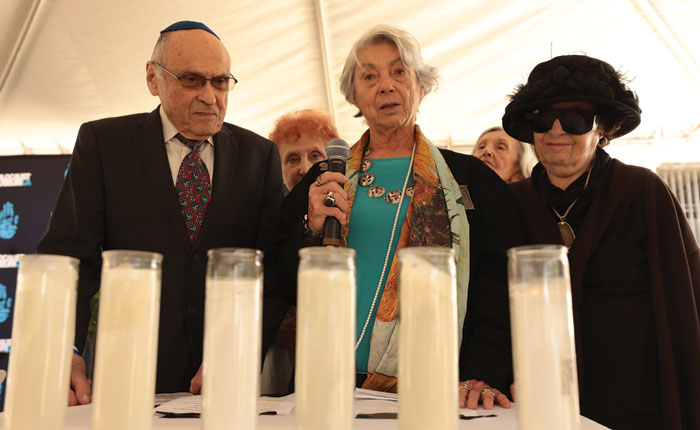
On June 2, graduation day at the United States Military Academy, the class of 2019 pushed the total number of Jewish West Point graduates past the 1,000 mark. I volunteered to chair the event recognizing the milestone but didn’t count on how much I would learn.

Jews have been part of West Point since Simon Levy joined the first class of 1802. He was the first of the “tribe” that is still flourishing as an integral part of the military academy, whose leafy campus is situated along the Hudson River in upstate New York. I am an older grad (1955-59) who remembers being asked if there were other Jewish students. It’s clear that over time, the West Point Jewish experience is a story not fully recognized, but times have changed. The landmark 1,000th Jewish graduate acknowledges a bond between the Jewish community, West Point and our nation. We embrace as full partners. This was palpable when I corresponded with so many of our invited alumni. 

When I was a cadet, religious affiliation and attendance were required. All cadets marched to a small chapel located at the post cemetery on Sundays. Our services were conducted by a visiting rabbi or cadet. They were held in an old cadet chapel; we just covered existing religious items that were present. Don’t get the wrong idea. If desired, cadets could maintain a kosher food regimen. Being Jewish was not a problem.

Change came. A group of graduates and non-graduates saw the need for a Jewish chapel, and so they raised funds. Now, as the West Point Jewish Chapel Fund, it provides support for chapel maintenance and Jewish cadet activities. Change is often slow but I got an awakening to life as it is today. It is tougher academically and physically and everyone thrives together. And the U.S. Military Academy supported our special milestone. The superintendent spoke at our baccalaureate and stayed for our oneg. We all appreciated that visit and his obvious enjoyment.

The Jewish choir has performed at synagogues, at the White House for two previous presidents, and at the United Nations. I missed the breadth of that excitement. There is a thriving Hillel program, trips to Israel with Birthright and other international trips — most recently to Brazil. I missed that. Women are 25% of the corps today. Missed it. There’s a Jewish Warriors’ Weekend with other academies’ and colleges’ students, whose goal is to share what Jewish West Point life is like and the importance of the academy’s motto: Duty, Honor, Country. Missed that. An annual plebe (freshmen) retreat where new plebes meet all chapel cadets and the chaplain. Missed that. The annual celebration of the life of Col. Mickey Marcus, a Jewish West Point graduate, who died fighting for Israel and is buried at West Point. Missed that, too.

But how terrific is it that it all happens. An annual seder is still held, often attended by senior West Point officers. The Jewish Chapel is critical to a flourishing Jewish life at West Point. Its website provides a link to Jewish graduates to see events at “their” chapel. It is also a place of worship for civilians based at West Point. And cadets train to be lay leaders certified to conduct services when no chaplain is available.

In 1984, the Jewish Chapel joined the landscape in continuing a legacy of openness, learning and standing tall for the principles of peace, love, honor and strength. 1802: a start. 2019: a milestone. With this milestone, the West Point Jewish Chapel and Jewish graduates feel the deeply etched relationship with their historic and revered alma mater, West Point. n

West Point Jewish Chapel Fund is not affiliated with, nor speaks for West Point. It is an independent organization supporting the Jewish Chapel cadet activities.


Joel Kampf is a member of the West Point Jewish Chapel Board.

West Point’s Milestone: 1,000 Jewish Graduates Read More »

Great Catch, Champ

“When a father helps a son, both smile; when a son must help his father, both cry.” — Yiddish proverb

“My father gave me the greatest gift anyone could give another person: He believed in me.” — Jim Valvano 

For the past few months, I’ve had the pleasure of watching my neighbor Aaron teach his kids how to catch a ball. When a father is playing catch with his son or daughter, there are few things in life that bring more happiness. It’s total enjoyment to the max. It’s amazing to see the smile on a child’s face when he or she looks into his or her baseball glove and unexpectedly sees the ball there. Then when they grab it and hold it up in triumph, it’s unbelievable. What’s better than that?

After a child learns how to ride a bike or catch a ball, life moves quickly from there. In a brief span of time, there’s a good chance my neighbor’s kids will be as good as, if not better than, he is at games they play. That’s the way it is and that’s the way it’s supposed to be. Soon after teaching my kids pingpong, they were all beating me at the game. I rarely win when we play Rummikub, a tile-based game. I hate losing to them and they hate losing to me, so at least we are even. 

When my kids were little, on Saturday mornings, we would walk 15 or 20 minutes to shul, depending on how much fighting, crying and stalling took place. Fifteen to 20 minutes alone with my children — priceless. When your kids are older, how much private time do you get with them? Generally, not a lot. 

I know it’s a cliché to say childhood goes by fast, but it’s true. They are children for around 6,000 days (unless they go to college and graduate school, then maybe 15,000 days). In the blink of an eye, they’re all grown up. 

“Hey, young dads, I have an idea for you. Have what I call a 1960s day.”

I have only sons and it’s hard to think of a better feeling than for a father to watch his sons grow up, become menschen and be able to take care of themselves. It’s beyond comforting and beyond belief. It’s one of those “maybe I did something right” moments. When they get married and you see them not only taking care of themselves but also helping care for another person, it is mind-boggling.

One of my rabbis who has nine kids once said to me, “There has to be a God. We could not have done all this on our own.” He meant that to raise a bunch of kids and shepherd all of them out into the world as good and decent people is a miracle and demands assistance from above. I believe that. 

I think the greatest thing I got from my father is that I knew, with every fiber of my being, that my father loved me. If you’re a young father and you transmit that to your kids, you’ve done a lot. Knowing a parent loves you can take you very far in this world. 

My father didn’t spend much time with me. He was busy working. But during the time we spent together, he was present. When I was growing up, there weren’t a lot of distractions. In the car, we had no cellphones, no iPads, no nothing. Our entertainment was looking through the windshield. When we got into the car, we had a subpar AM radio that broadcast something called “talking.” That’s how two people find out things about each other. Today, people do that on YouTube. 

Hey, young dads, I have an idea for you. Have what I call a 1960s day. Have a day when you leave all the electronics at home. Take the children out for a ride or to a ball game or a movie and lunch. Then maybe one day, your kids will look back and say to their kids, “One of my favorite things to do was when me and my dad left our cellphones at home and went out for the afternoon.” Then one day, they can get into their driverless cars, look through the windshield and see things they’ve never seen before.


Mark Schiff is a comedian, actor and writer.

Great Catch, Champ Read More »

Laughter Is Serious Business

As a kid, I wanted to be Erma Bombeck when I grew up. With book titles such as “If Life Is a Bowl of Cherries, What Am I Doing in the Pits?” and “A Marriage Made in Heaven … or Too Tired for an Affair,” Bombeck poked fun at herself and at life’s foibles and frustrations with comic genius.     

At the height of her success, the Great Erma was syndicated in 900 newspapers with a readership of 30 million. She was more than just a professional role model; her laughter was cathartic. I was born in 1960, so my childhood played out against the backdrop of the Vietnam War, violent protests in the streets and on college campuses, political assassinations and the drug culture. I was frightened by it all, and my world felt insecure.  

When I was 9, my 17-year-old brother, Allan, died in a car accident. Chaos and loss were no longer just on TV or in Newsweek magazine. They had hit home. As I struggled to cope amid an ocean of grief, comedy offered me a lifeline. My mom and I watched “The Carol Burnett Show,” “Rowan & Martin’s Laugh-In,” “The Odd Couple” and other shows that delivered witty wackiness. It was such a relief to laugh, and the closest thing to therapy any of us had.  

After I graduated from college, I got a day job writing for health care magazines, while at night, I pecked away at my typewriter working on humor columns. When my first humor column appeared in a major daily newspaper, I was so excited to hold it that my hands shook.  

Years later, as a minivan-driving wife and mother of four children, and occasional caretaker of goldfish and a guinea pig, I mined the motherlode of material, just like Bombeck had. I sold more columns and published my first humor book, “Carpool Tunnel Syndrome: Motherhood as Shuttle Diplomacy.” I’d never get anywhere near my role model’s stratosphere of professional success, but I was grateful for what I’d achieved. Besides, my husband and I were raising a Torah-observant family, and if we did it right, that would be achievement enough.      

In the midst of my excitement over my publishing milestone, things spiraled downward. My mother was diagnosed with end-stage cancer and told she had only weeks to live. Terrorism in Israel was claiming lives every week. Then terrorism hit home on the day I was scheduled for my first speaking engagement — Sept. 11, 2001.  

My goals as a humor writer suddenly seemed embarrassingly trivial, even self-absorbed. I asked my rabbi: Should I focus on serious writing because of the serious times we lived in?

 “As I struggled to cope amid an ocean of grief, comedy offered me a lifeline.”

“Absolutely not,” he said. “We need to laugh now more than ever. Your work is important.” 

Even though humor had been a balm in my own life during dark times, I still couldn’t shake the feeling that my work was superficial. Then I received an email that staggered me. It was from a woman who had read an excerpt from my book in Woman’s Day magazine while in a doctor’s waiting room. “I want you to know you saved my life today,” I read in total disbelief. “I was so depressed by my medical condition that I wasn’t sure I wanted to keep fighting. You made me laugh, and it made all the difference.”

The notion that a short column of light humor had “saved her life” seemed like an impossible overstatement but she believed it. That was all that mattered. I never again doubted that writing for laughs was in its own way, serious business. 

Sure, the money would have been better had I stayed in the field of health care journalism, but I’d also have collected fewer notes from people grateful for the lifeline of laughter on a hard day. Over the years, I have learned to appreciate that whatever small legacy I leave in words will have accrued more intangible rewards. Knowing that I could deliver small doses of laughter as medicine is something that would have made Erma Bombeck proud.


Judy Gruen’s latest book is “The Skeptic and the Rabbi: Falling in Love with Faith.” Read more of her work here.   

Laughter Is Serious Business Read More »

Drowning Out Jeers, Polish Soccer Fans Applaud Israeli Anthem

(JTA) — Thousands of Polish soccer fans attending a match in Warsaw between their national team and Israel’s applauded during the playing of the Jewish state’s anthem.

“Hatikvah” was played just before “Mazurek Dąbrowskiego” on Tuesday ahead of the match, which ended with Poland winning 4-0. When some fans began whistling during the playing of the Israeli anthem, the predominantly Polish crowd responded with applause that drowned out the whistling, the Israel Football Association wrote on Twitter.

“Thank you for an inspiring sporting spectacle. See you in Jerusalem,” a spokesperson for the Israeli association wrote on Twitter.

The Euro qualifiers match came at a sensitive time for Polish-Israeli relations, which have suffered over the past year as politicians from both countries made provocative statements about Holocaust-era complicity and restitution.

Stewards and security guards took extraordinary precautions to prevent the eruption of violence during the match, which ended without incident.

On its Facebook page, the Polish Football Association, or PZPN, characterized its victory as a “pogrom,” drawing protests. The Russian-language word, which to many harks back to anti-Semitic violence but in Poland is sometimes used to describe major defeats in sports, was removed from the Polish club’s Facebook post.

In Poland and elsewhere, the word is used to describe also other forms of bloodshed, including the so-called Galician Slaughter, or uprising of 1846, in which Polish peasants killed hundreds of non-Jewish noblemen. The episode is characterized as a pogrom in the Polish Szkolnictwo learning portal, among other resources.

Drowning Out Jeers, Polish Soccer Fans Applaud Israeli Anthem Read More »

Where Is Jewish Pride?

Perhaps the most surprising part of the D.C. Dyke March, which sought to ban rainbow flags embossed with the Star of David, was how surprised many people were by it.

I mean, where have they been for the past decade? 

Demonization of Israel, and by extension Jews, has now been fully normalized on the left, as part of a broader campaign to replace Israel with “Palestine,” in the false name of social justice.

The decision of the organizers to explicitly allow the Palestinian flag was far from incidental. “We choose to prioritize Palestinian lives and justice in Palestine over lazy symbols,” wrote the organizers. What sentence better sums up what “intersectionality” has become, or perhaps has always been? Does anyone really think a similar message won’t prevail at the Democratic National Convention in 2020?

I fully respect how A Wider Bridge, Zioness and the Anti-Defamation League chose to deal with the Dyke March’s ban: call it anti-Semitism and essentially force their way in. But I don’t think it’s ultimately effective — the problem of leftist anti-Semitism grows exponentially every day — and it is not, in my opinion, the dignified liberal Jewish response. 

Jews should not be groveling to be part of groups that hate us — we should not be forced to pray to the false god of identity politics. 

Moses gave us a blueprint on how to deal with situations like this. Throughout most of our history, we were not in a position to follow this blueprint. Today we are.

But in the name tikkun olam, many of us have forgotten that in order to be a light unto nations we first have to be a light for ourselves. We have come to tolerate hate against Jews that we would never tolerate against any other group. But we can’t help anyone else until we strongly unify ourselves against hate from both the left and the right.

“Jews should not be groveling to be part of groups that hate us.”

The normalization of anti-Semitism on the left is based on an easily refutable set of lies about Israel and Jews repeated over and over again on campuses, in the media and, now, in Congress. The Jewish liberal response is not to beg the perpetrators and pawns of these lies to be part of this pre-genocidal hatefest. The liberal Jewish response is to correct the lies — to tell the truth over and over again; to pull funding from any group or university that continues to employ anyone who perpetuates the lies; and perhaps most important, to stand tall throughout the process.

The purportedly Jewish organizer of the D.C. Dyke March didn’t know that the Star of David has been a symbol of Judaism for thousands of years. Many on the left apparently don’t know that Israel is a bastion of freedom for women and the LGBT community — that gay Palestinians flee to Israel for protection. Meanwhile, criminalization of homosexuality is the norm in Muslim countries, with nine retaining the death penalty. Beheadings and stonings are common responses.

A truly liberal left would hold Israel as an example of what LGBT rights would look like in the Middle East. Instead, Israel is falsely condemned, and citing Muslim homophobia is considered Islamophobic. Clearly, much work needs to be done — and it should be done in tandem with the Muslim Reform Movement.

Second, liberal Jews should walk away from hate groups and create truly liberal spaces — spaces that reteach liberalism through tolerance, respect, justice and compassion. Personally, I would also walk away from the word “progressive” — let the haters have it — but I understand the argument not to do so. For years, I’ve been told to walk away from the word “liberal,” but I refused. Today, most media outlets use leftist to refer to the illiberalism on the left.

Finally, there has never been a better time to enhance our Jewish pride through wearing those “lazy symbols” — the Star of David, the kippah — that have kept us as a people through centuries of persecution.

When we stand up with dignity against our oppressors, we show oppressed groups all over the world how to face lies, bigotry and ignorance — how to act as a free people. Liberalism stems from the essential principles of Judaism, and Zionism is a subset of liberalism. It’s time to fully own that.


Karen Lehrman Bloch is an author and cultural critic living in New York City.

Where Is Jewish Pride? Read More »

Jewish Candidate for Seattle City Council Subject of Violent Anti-Semitic threats

(JTA) — A Jewish candidate for Seattle City Council has been subjected to anti-Semitic threats on the online message board 8Chan and on social media.

Ari Hoffman, a married father of three, is one of nearly 50 candidates for seven of the nine council seats. The primary is scheduled for Aug. 6 and the general election is Nov. 5.

The original 8Chan post, first reported by the Middle East Media Research Institute, or MEMRI, identifies Hoffman and says he has an Israeli flag hanging outside his home. The post asks what should be done about him.

8Chan is an online message board that since its launch in 2013 has been a nearly lawless space for free speech, much of it hateful or dangerous, according to MEMRI.

MEMRI reported that the comments on the post included “violent calls to action in addition to nonviolent content.”

At least one comment called to kill Hoffman and to burn the flag. Another suggested throwing a Molotov cocktail at his home. Another comment features an ethnic slur about his son seen in a campaign photo. A nonviolent comment suggested that someone run against Hoffman and fly a Palestinian flag.

Hoffman has contacted police repeatedly about stolen campaign signs, and alleged that some two dozen signs were stolen from the yards of Jewish homeowners.

The American Jewish Committee has called on Seattle leaders to condemn the threats.

Hoffman, a graduate of Yeshiva University, is running on a conservative platform. He is a supporter of the NRA and is allied with the group Safe Seattle, which claims local officials are failing to crack down on crimes committed by the homeless.

Jewish Candidate for Seattle City Council Subject of Violent Anti-Semitic threats Read More »

The Story That Moved Me to Write

I didn’t think I wanted to be a weekly columnist until I read a column by comedian Mark Schiff. I’ve never told him this, but I’ll tell him now.

In August 2006, I had just moved with my kids to the Pico-Robertson neighborhood when, on a whim, I decided to write a column about our new life in this very Jewish ’hood. It was a one-off, just something to get out of my system, but the Journal asked whether I could do it weekly. I agreed to try, but I wasn’t sure my heart would be in it, week after week.

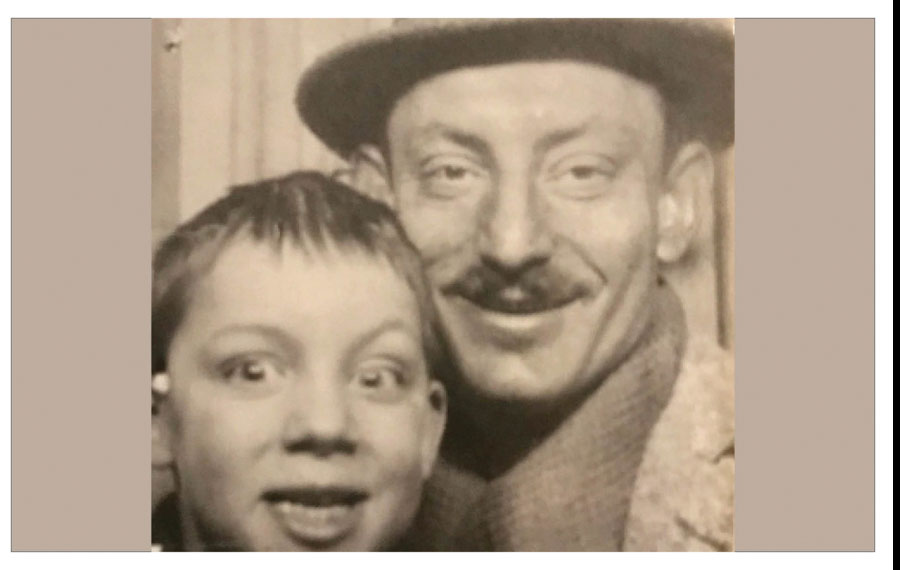
Then I read this poignant column by Mark Schiff. It was about his father who had died of cancer years earlier. Let me share some highlights.

When Mark found out his father was ill, he spent a lot of time in New York, where his parents lived.

“One of the good things about being a road comic is you can live anywhere and book yourself out of wherever you are,” he wrote. “Road comics have no office. So New York became my base.”

His father loved watching him perform.

“He thought I was the funniest person in the world,” Mark wrote. “I guess you are the funniest person in the world if someone thinks you are. My dad and mom came to see me at least a hundred times before he died in 1988. He would come and see me wherever I was doing a show. And he always got dressed up for the show.”

The column had this matter-of-fact tone. No melodrama. Just a heartfelt reflection of how a comedy career helped Mark forge a special bond with his father.

“The column had this matter-of-fact tone. No melodrama. Just a heartfelt reflection of how a comedy career helped Mark forge a special bond with his father.”

But there was a singular moment later in the column that especially moved me. Before we get to it, here is how the story unfolded:

“I remember when my dad had just gotten out of a hospice, and they sent him back home to die. The night he came home, I had a show to do. I said, ‘Dad, maybe I should stay home instead.’ He wouldn’t hear of it. ‘You go and be funny.’ I did.

“About three days later, I had this gig about two hours away in upstate New York. That afternoon, we were all sitting at the dining room table when my dad said in the weakest of voices, ‘Can I come with you tonight? I’d really like to see your show.’

“I knew what he was saying. He was saying: ‘I really want to see you one more time before I die.’ ”

This was the moment when I lost control of those little drops that sometimes come out of our eyes:

“So off we headed to my gig. It was a cold winter night, and a light snow fell for most of the drive. We didn’t talk much on the way up. As I remember, my dad slept most of the way, anyway. I kept looking at him as he slept in the car. I cried most of the way up, but that was OK; I was with my dad.”

For a while, I couldn’t get that image out of my mind. A father and a son on a long, quiet winter drive at night, the father all dressed up to see his son perform one last time.

The father seemed to know he had just enough strength to see one more show, so he slept during the drive to conserve his energy. For the comedian-son, the only way to honor the moment was to cry.

It was a final show of fatherly love; a last effort to get joy and laughter from a son. And the son was preparing to deliver. 

A few weeks after reading the column, I bumped into Mark at the local Coffee Bean. I didn’t know him well. Our kids went to the same school and I would run into him here and there.

“I wanted him to know that his story made me choke up, that I couldn’t stop thinking about that long, quiet drive with his father.”

It didn’t matter. I spoke to him like a best friend. I wanted him to know that his story made me choke up, that I couldn’t stop thinking about that long, quiet drive with his father. I was in full Sephardic, over-the-top mode.

Mark, in his signature dry tone, just replied, “Hey, thank you.”

What I didn’t tell him that day in the fall of 2006 was that his story touched me deeply as a son and as a father, and that it moved me to come up with stories and ideas of my own that would also touch others.

So, from that day on, I never stopped writing.

Happy Father’s Day.

The Story That Moved Me to Write Read More »

June 14, 2019

June 14, 2019 Read More »

Chef Geoff Baumberger and Executive David Miller on the success of Restaurant Harvey & Ed’s

Cameron Mitchell Restaurants is an independent, privately-held restaurant group known for developing compelling dining concepts, offering outstanding cuisine complemented by genuine hospitality. Cameron Mitchell founded the company in 1993 on the powerful guest philosophy, “The answer is yes. What is the question?” Today, that commitment to delivering extraordinary guest experiences fuels 36 restaurants under 17 different concepts with locations in 13 states, including the nationally-acclaimed Ocean Prime brand, now coast-to-coast in Beverly Hills, Boston, Chicago Columbus, Dallas, Denver, Detroit, Indianapolis, Naples, New York City, Orlando, Philadelphia, Phoenix, Tampa and Washington, D.C.

Within the CMR group is Harvey & Ed’s, a classic delicatessen with an elevated modern culinary twist located in the North Shore district of Columbus, Ohio. Harvey & Ed’s pays homage to Cameron Mitchell Restaurants President David Miller and VP of Ocean Prime Mitch Miller’s father and uncle — best friends and brothers-in-law. The two could often be found at their favorite delicatessens enjoying each other’s company over a good cocktail and a plate of food.

Chef Geoff Baumberger recently joined the Harvey & Ed’s team, boasting an impressive tenure with Cameron Mitchell Restaurants and 16 years of experience working in fine-dining restaurants around the country. After a brief interlude working with Mastro’s Restaurants in Arizona, Baumberger returned to the Cameron Mitchell family at Ocean Prime New York and most recently as Executive Chef at Ocean Prime Beverly Hills.

Following a recent trip to Columbus, I had the pleasure of doing Q&A with both David Miller and Chef Geoff Baumberger; Baumberger was excited to return home to Columbus at Harvey & Ed’s as Executive Chef. More on Harvey & Ed’s can be found online.

Jewish Journal: Harvey & Ed’s is named after some people from your lineage. When in the process of starting up the restaurant did that come about?

David Miller: Harvey was my uncle, Ed was my dad and they also were best friends.

JJ: How does Columbus Jewish fare compare to that of Los Angeles or New York-style Jewish fare? Or is it all the same to you?

DM: Every market has its own twist due to the origin and density of Jewish people in the market. We just took the approach of being respectful of the history of this fare but adding our own culinary twist evolving some classic dishes.

JJ: How would you describe Harvey & Ed’s to someone who has not yet been there?

DM: A modern American restaurant inspired by the classic Jewish delicatessens across our country.

Geoff Baumberger: Harvey & Ed’s is our take on a modern American restaurant, inspired by the classic delicatessens that our namesake Harvey and Ed would frequent years ago. We have everything from a wide selection of “noshes” to start the meal, great sandwiches like the classic Reuben and Turkey Rachel, our crowd favorite Klein Grinder and Patty Melt, to comfort food favorites like the Cabbage Rolls or our Baked Spaghetti with Garlic toasted Challah Bread and the Braised Brisket Dinner with Roasted Vegetables and Sherry Reduction.

We offer a wide selection of inspired handcrafted cocktails, draft beers and wine. There is really something for everyone. Our atmosphere is warm and inviting, with a wide open dining room that has enough tables to push together for friends and family to all join one another.

JJ: Who or what initially inspired you to become a chef?

GB: My initial desire to be a chef came from cooking with my grandfather during family Holidays like Thanksgiving. He had no formal training but he enjoyed cooking and was good at it. I didn’t realize the importance at that time but seeing how food brings people together was a big inspiration that helped to kickstart my career.

JJ: Where do most of the recipes for Harvey & Ed’s come from?

GB: Most of the recipes for Harvey & Ed’s were developed by the team of chefs that opened the restaurant and a few of our regional chefs within the company. Some of the recipes were family dishes that were tweaked to use in a restaurant setting but started out as something that was passed down.

JJ: Prior to relocating to Columbus, I believe you worked in both New York and Los Angeles. What is it that you like best about the city?

GB: That is true, my two most recent stops were at our Ocean Prime locations in both New York City and L.A. Being from the area, I grew up just north of Columbus and all of my family still lives here. After spending time in quite a number of places across the country I just felt like the time was right to come back closer to home and enjoy more time with my immediate family.

JJ: How did you wind working within the Cameron Mitchell Restaurants organization?

GB: While still in school I had a former instructor who thought I should check out the company because they had heard such great things. It was close enough to home to get some experience while I was still young and Cameron was a graduate of the Culinary Institute of America, which was the school I was attending.

JJ: Are there any plans for Cameron Mitchell Restaurants expand further into L.A. or to other markets?

DM: We are always looking to expand our Ocean Prime concepts nationwide.

JJ: What is your favorite item on the Harvey & Ed’s menu?

DM: Cream Herring and chopped liver.

GB: My favorite item on our menu would be the Hash & Eggs on our Brunch menu. I have so many favorite sandwiches that I couldn’t pick just one. The Hash & Eggs has pastrami and schmaltz potatoes, brussels sprouts, melted farmers cheese and eggs done anyway. It’s an easy one to enjoy and Saturday and Sunday Brunch is when our restaurant is the most lively for sure!

JJ: Finally, any last words for the kids?

GB: I was inspired to do what I enjoyed at a young age by people around me pushing me to be the best I could be. Don’t be afraid to work hard to get wherever dreams may take you. Hard work and dedication helped me get to where I wanted to be. Find a good person or mentor to help guide on the path to success!

Chef Geoff Baumberger and Executive David Miller on the success of Restaurant Harvey & Ed’s Read More »