fbpx

June 12, 2019

Translating the Taste of Gazpacho

When I opened the first Mexican restaurant in Uganda and hired local cooks, not only had my team never experienced any of the dishes I’d put on the menu, most of them had never even eaten at a restaurant before.

As hard as this was to fathom, I stubbornly refused to compromise on the breadth of my menu and, as a result, had to train the staff in the face of enormous hurdles. It’s difficult enough to train new staff in an American kitchen, where the line cooks can relate to the taste of the dishes, but imagine trying to transfer “taste knowledge” to someone who doesn’t recognize the flavor profile of anything on the menu. 

For months before the opening, I assembled my newly hired team of cooks, bakers and waitstaff, many of whom barely understood English, and cooked the entire menu repeatedly and fed it to them each day. While my young hires watched me cook with looks of confusion and trepidation on their faces, I too watched them as they ate, trying to determine by their expressions, which were equally puzzling to me, how my food was settling on their virgin palates.

Of the many challenges I faced during those first months — staff who barely understood me, suppliers who saw only dollar signs in the color of my skin, and the predominant sexism that made being a female boss of a kitchen a daily struggle — probably the single biggest challenge was trying to teach flavors to people who didn’t share my taste memories. I learned the hard way that my Ugandan customers may not necessarily be able to cross the boundaries set by their own cultural food norms, but I also learned to convey the taste of a food by finding the similarities present in every cuisine. Strangely, it was my first experience teaching my staff how to make an Israeli classic that illuminated my understanding of a Spanish one.

Gazpacho, the Andalusian favorite that is eaten daily by harvesters whose long summer days at work in the fields are broken up by this cooling and refreshing soup, has become a staple on menus all over the globe. When the days turn long and tomatoes are ripe in gardens and markets, you’d be hard-pressed to find a restaurant menu without gazpacho on offer. Because my father is a gazpacho aficionado, I had sips of it from his spoon many times, but it wasn’t until I tasted one of the umpteen versions in Spain that I was moved to order it myself. 

Rather than the chunky, red version I had tasted in the U.S., one that seemed akin to eating an insipid, watery salsa, the gazpacho of southern Spain is a full-bodied, orange-hued affair, balanced and nuanced in flavor, bursting with freshness and vitality. On days when you’re too hot to chew, gazpacho is Spain’s answer to a smoothie: savory and bright, not eaten with a spoon or from a fancy bowl, but from a small simple glass, sometimes nestled in ice but more often straight from the heat of the fields.

I was instantly captivated by my first taste; Spanish gazpacho seemed to be an entirely different animal from any others I’d tried, yet something about it was hauntingly familiar. The scent drove me crazy for ages, the memory snagging on the periphery of my taste buds like a melody I was unable to hum — I’d catch a whiff but then couldn’t quite place the notes.

Then one day, while teaching my new staff how to make an Israeli chopped salad, it hit me straight in the nostrils. There it was — that perfume, the scent of green pepper and onion, of ripe tomatoes and the unmistakable freshness of cucumber, each vegetable in harmony yet singing its own tune, none overpowering the other. I quickly threw the salad in the blender, bewildering the bejesus out of my crew, who must have thought their new boss had gone mental. 

I added some garlic, the soft white middles of a few bread rolls we had baked the day before, and a large glug of the olive oil and lemon juice dressing I’d just taught them to prepare. And even before I tasted it, I knew by the tint that was intensifying like a sunrise from the bottom of the blender that I’d just hit the jackpot. Gazpacho, in all its modest glory, is in its essence a liquid Israeli salad, one with the bread you use to soak up the juices at the bottom of the bowl thrown in for fortification. No wonder I was in love with it at first sip. 

I added a few spoonfuls of the pico de gallo we’d made earlier for benefit from the mild heat of jalapeno, an ice cube to thin and chill, and ran the blender another 30 seconds. I poured it into glasses and drizzled it with olive oil and a drop of red wine vinegar to approximate the taste of the more traditional sherry vinegar.

“It’s katchumbari!” my student chefs proclaimed excitedly, recognizing the taste of the common Swahili tomato, onion and chile salad/condiment served with roasted meat all over East Africa. 

How far my Israeli salad-turned-gazpacho traveled from its past, when it was only a paste of bread, salt, garlic, olive oil and vinegar, carried by Roman legions along the shores of the Mediterranean and migrating toward its Spanish grandparents. It lingered long enough to pick up tomatoes from the Andes and almonds from the Moorish influence of North Africa, producing distinct regional varieties.

Gazpacho remains exotic even as it’s become common, as humble and unpretentious as its taste is extravagant, the culinary culmination of a thousand summers spent working in the fields, a single sip able to easily translate an ancient taste memory from one culture to another.

GAZPACHO
4 slices day-old bread, crusts removed
3 ice cubes
2 cups cherry tomatoes or 5 medium-sized, ripe red tomatoes
1 small Persian cucumber (about 1 1/4 cups), peeled, chopped into large pieces
1 stalk celery
1 medium green pepper, pith and seeds removed
1 jalapeno pepper, pith and seeds removed (optional)
1/2 medium yellow onion, cut into chunks
2 cloves garlic, peeled
1 1/2 teaspoons sea salt, more to taste
1/4 teaspoon black pepper
Juice of 1 lemon
1 teaspoon red or white wine vinegar or sherry vinegar
2 pinches of sugar
1/2 cup good olive oil, preferably Spanish, plus more for drizzling
1 teaspoon balsamic reduction, optional garnish

Place the bread slices in a bowl with a bit of water to soak for a few minutes, then squeeze out excess water. Place ice cubes at the bottom of a blender and then add all remaining ingredients (except for balsamic reduction), including soaked bread. I use cherry tomatoes as they are sweeter and have thin skins. If using regular tomatoes, they must be blanched in boiling water and peeled when they’re cool enough to handle.

Taste gazpacho and adjust seasonings to your liking. Soup should be thick, almost to smoothie consistency. It can be thinned out to desired thickness with a few extra tablespoons of water. Store in refrigerator in a glass jug or bowl and stir before serving. 

Pour into chilled glasses and drizzle a bit of olive oil on top and a few optional drops of balsamic reduction.

Makes 15 small juice glass-sized portions.


Yamit Behar Wood, an Israeli-American food and travel writer, is the executive chef at the U.S. Embassy in Kampala, Uganda, and founder of the New York Kitchen Catering Co. 

Translating the Taste of Gazpacho Read More »

Simon Wiesenthal Center, AJC Criticize Jewish, Israeli Scholars Urging Germany Not to Recognize Anti-BDS Resolution

The Simon Wiesenthal Center and the American Jewish Committee (AJC) both voiced support for the German parliament’s May resolution condemning the Boycott, Divestment and Sanctions (BDS) movement as anti-Semitic after 240 Jewish and Israeli scholars condemned the resolution.

The scholars issued a June 3 statement calling for the German government to not endorse the German parliament’s resolution, accusing the resolution of being “deceitful” because it “ignores the explicit opposition of the BDS movement to ‘all forms of racism, including anti-Semitism.’ The BDS movement seeks to influence the policies of the government of a state that is responsible for the ongoing occupation and oppression of the Palestinian people. Such policies cannot be immune to criticism.”

They added that “the three main goals of BDS – ending the occupation, full equality to the Arab citizens of Israel and the right of return of Palestinian refugees – adhere to international law, even if the third goal is undoubtedly debatable. We are shocked that demands for equality and compliance with international law are considered anti-Semitic.”

Associate Dean and Director of Global Social Action Agenda at the Simon Wiesenthal Center Rabbi Abraham Cooper told the Journal in a phone interview that “any Israeli academic who signed this [statement] doesn’t earn my respect until they resign,” calling their actions hypocritical.

“BDS today equals a global campaign to delegitimize, demonize and ultimately get rid of Israel, and they don’t hide it anymore,” Cooper said. He argued that the BDS movement initially claimed that they only wanted to leverage Israel to make concessions toward peace in the Israel-Palestinian conflict, but today BDS openly calls for Israel’s destruction, which is anti-Semitic, Cooper said.

“Maybe some people in Israel didn’t get the memo, or some people, because their positions are guaranteed because Israel’s a democracy, so whatever they say they can’t be fired,” Cooper said. “Then I guess they’re free to say whatever they want and we’re the ones collectively – Israelis and supporters of Israel around the world – that get to pay the price for their freedom to denigrate Israel.”

AJC Los Angeles Regional Office Assistant Director Siamak Kordestani said in a statement to the Journal, “When the goal of a movement is to end Israel as a Jewish and democratic entity, and when Israel is subjected to disproportionate and selective punishment among the nations of the world, then that movement is anti-Semitic in effect if not in intent. It is commendable that the Bundestag [parliament] recognized this reality.”

The German government is still mulling over whether or not to adopt the German parliament’s resolution. Germany’s Interior Ministry supports it but the Foreign Ministry opposes it, according to Haaretz. If the government approves it, Germany would be the first nation in the European Union to adopt the position that BDS is anti-Semitic.

Simon Wiesenthal Center, AJC Criticize Jewish, Israeli Scholars Urging Germany Not to Recognize Anti-BDS Resolution Read More »

Weekly Parsha: Nasso

One verse, five voices. Edited by Salvador Litvak, Accidental Talmudist

The Lord spoke to Moses saying, “Speak to Aaron and his sons, saying: this is how you shall bless the children of Israel, saying to them, ‘May the Lord bless you and protect you. May the Lord deal kindly and graciously with you. May the Lord bestow his favor upon you and grant you peace.’” –Numbers 6:22-26


Miriam Mill
Chassidishe wife, mother and president of Tzaddik Foundation

The Priestly Blessing starts with the phrase “Yevarechecha HaShem veyishmerecha” — “May God bless you and protect you.” Since God told the Kohanim, “So shall you bless the children of Israel,” the blessing should be in the plural, “yevarechechem” but it’s not. “Yevarechecha” is in the singular. Why? The Taamei HaMinhagim gives a beautiful answer. 

Before the Priestly Blessing, the Kohen recites the blessing, “Who has sanctified us with His commandments and commanded us to bless His nation of Israel be’ahavah, with love.” (Shulchan Arukh, Orach Chaim 128:11). Although the Kohanim are indeed blessing the entire congregation, they do so in the singular in order to indicate that God desires to bless the Jews with the unity that results when love prevails. The Kohanim, who serve in the Temple, bring God’s blessings to the people but only when love exists among the Jewish people. It is as if love fuels and directs the power of the Shekhinah, divine presence, which resides on the Kohen’s fingers during the Priestly Blessing toward each Jew, thus blessing Am Yisrael with so much good. 

We are told that the Second Beit HaMikdash, Holy Temple, was destroyed because of sinat chinam, baseless hatred, and that unconditional love will rebuild the final Holy Temple. May we learn to love one another if only because we are part of God’s chosen nation and see the rebuilding of the Beit HaMikdash immediately, bringing peace, prosperity and wisdom to the world.

Rabbi Mendel Schwartz
The Chai Center

I was fortunate to receive a scholarship so I could study for my master’s degree in rabbinics in Melbourne, Australia. One evening, we played hooky and went downtown to watch “Fiddler on the Roof.” As a rabbinic student, I was amazed to hear the actors sing verses from this week’s Torah portion in two separate songs. “May the Lord protect and defend you …”

And the 3,000 gentiles in the exquisite theater cheered wildly. That made me proud. More than 50 years after its original opening, the show is stronger than ever, playing recently at the Pantages on Hollywood Boulevard. This makes me even more proud.

But why the craze? Why the fascination?

Now we have a new show taking the world by storm: “Shtisel,” a series available on Netflix. And everyone who sees it looks at Charedim, the very Orthodox, in a more empathetic and positive light.

When you learn about a group by having dialogue with one person at a time rather than hearing stats or generalizations, you come to fathom them at a much deeper level. You learn the character of individuals by breaking bread in their house, speaking with their siblings and having tea with their parents, which is what “Shtisel” did for us.

The more we thus encounter Jews we haven’t previously met, the more our Jewish community as a whole will flourish. And to that, let us all say, “Amen!”

Rabbi Yosef Kanefsky
B’nai David-Judea

The second sentence of the blessing, here translated as “May the Lord deal kindly with you,” is rendered more literally, “May the Lord shine His face toward you.” While the image is arresting, the precise meaning is enigmatic. 

Rabbi Jacob Sforno suggested that the blessing here is that God illuminate our eyes so that we can see the wonder that God created in the world, and the beauty that God placed in the Torah. God’s “shining His face toward us” is God helping us to behold things that are in plain view, but which in the bustle of daily life, we fail to perceive. The beauty of the people around us, the affection of the people who love us, the magnificence of the hills and birds and trees. The profundity of a mitzvah to always judge others favorably, the thrilling craziness of loving others as we love ourselves, the revolutionary and life-altering command to take every seventh day for God, for family, for community. 

There are gifts hidden in plain sight. Until God blesses us with the light that shines from His face. 

While the biblical command to convey this blessing is directed at the Kohanim alone, it has been the tradition since at least talmudic times that — without the formal Temple trappings — all of us routinely share this blessing with others, in particular with our children on Friday night. When we do so, we should stop and ask ourselves, “How can I help realize this blessing? How can I help others see the beauty and the wonder?” 

Rabbi Ilana Grinblat
Vice president of community engagement, Board of Rabbis of Southern California

May God bless you with all the good things in life and keep you from the bad.

May God smile on you and give you beyond what you deserve. 

May God face you and grant you peace.

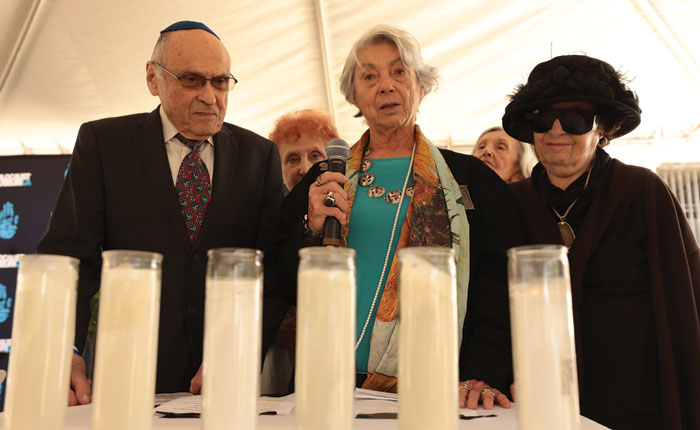
Rabbi Elliot Dorff recited this blessing before an open ark, ordaining the new Ziegler School rabbis. 

Since receiving that blessing 18 years ago, I’ve attended many inspiring Ziegler School ordinations. This year’s ceremony was more euphoric than ever. With 700 people gathered in a tent, the evening began with upbeat music, and during the ceremony, two ordinees, Rabbis Joshua Warshawsky and Ariel Wolpe, performed on guitar a song they composed for ordination. Rabbi Bradley Shavit Artson called them “rabbis and rock stars.” 

At the ceremony, Rabbi Jonathan Hodson taught a talmudic passage wherein two rabbis discussed the fear that “the Torah would be forgotten from the Jewish People.” (Ketubot 103b). This age-old worry is one we share today. How do we keep the Torah alive and relevant for the next generation? 

The ceremony itself offered an antidote to that angst. If our Judaism is only serious and somber, the next generation might run for the hills. Yet, if our Judaism is passionate, joyful, musical and moving, there’s no reason to worry. 

Since Jewish history has included manifold tragedies, there are times when we need to mourn. Yet, whenever possible, the default setting of our faith should overflow with joy and gratitude for the miracle of life. 

May God bless us all with jubilance.

Rabbi Gail Labovitz
American Jewish University

Often, when the rabbis sought to understand a word or passage in the Torah, they turned to other instances of those words or ones like them in Scripture for clues to their meaning and implications. Thus, in Sifre Bamidbar, the earliest midrashic work on the Book of Numbers, this short blessing is linguistically and conceptually connected to other places in the Bible where mentions of blessing, protection, grace, divine light, peace, etc., appear. 

As just one example, to be “protected” can mean divine protection from malevolent or dangerous outside forces, both human and of the natural world: “See, the guardian of Israel neither slumbers nor sleeps. … By day the sun will not strike you, nor the moon by night. The Lord will guard you from all harm …” (Psalm 121:5-7). We also need protection from our own base impulses, our sinful appetites: “For the Lord will be your trust, and will guard your foot from the snare” (Proverbs 3:26). Additionally, we pray that both parties to the covenant between the Jewish people and God will maintain — protect — that fundamental relationship, “If you heed these rules and maintain and do them, the Lord your God will maintain faithfully for you the covenant …” (Deuteronomy 7:12). And so too for each key word in the blessing. 

When the priests bless the people or we bless our children with the words of this blessing, all of these associations are invoked. In rabbinic exegesis and in our hearts, may this already rich blessing continue to grow and overflow in meaning!

Weekly Parsha: Nasso Read More »

The Only Child

They were older than the other parents, 

gray and pale, with consonants that gargled
when they said come in.

They played Beethoven sonatas on their hi-fi
and taught us how to sing the “Ode to Joy.”  

They didn’t tell us not to color on the table
or be careful not to spill the milk
when elbows zigzagged outside lines.

The mother baked fresh strudel when I played there
and the father watched us nibble them
with proud brown eyes.

Their daughter’s bed was canopied with ruffles —
at its foot a flounced pink vanity
with lipstick samples left by Fuller Brush.

They let her feed her doll real food
in her old high chair,
and write blue numbers on its arm
to show that it belonged to her —
like they did.


Paula Rudnick is a former television writer and producer who has spent the past 30 years as a volunteer for nonprofit organizations.

The Only Child Read More »

How Jewish Women Are Being Harassed Online for Fighting Anti-Semitism

As a Jewish woman who frequently shares her opinions on social media, I’ve been targeted online by white supremacists, communist bots from China, die-hard Donald Trump fanatics, Polish nationalists and Laura Loomer (before she was yanked off every kind of social media known to man). But the worst abuse I’ve received has been from my political home: the left.

Whenever I speak up against anti-Semitism, hordes of liberal men dogpile me, informing me I have a “bad take,” and calling me “stupid,” a “dumba– s—,” “fragile,” “delusional” and a “basic, petty worm.” Sometimes, they send me images of male anatomy or animals defecating. My critics have gone as far as to mock my appearance and advise me to get plastic surgery, or simply tell me to drown.

Unfortunately, I’m not alone.

Although all sorts of women experience abuse online, Jewish women face obscene sexual harassment for speaking out against hate. What’s more shocking is that the attacks come from progressive circles. Despite the left’s emphasis on gender equality, progressive men cruelly and consistently mob online Jewish women who are fighting anti-Semitism.

“Any time a Jewish woman, especially on Twitter, speaks up about anti-Semitism, we get hordes of trolls in our mentions, trying to silence us,” said Rafaella Gunz, a journalist for Gay Star News who lives in New York City. The 25-year-old has received messages telling her “Judaism is a racist cult, worse than Nazism” and “go f— yourself you white supremacist zio fascist b—-.”

“Not only do they despise people taking a stand against anti-Semitism (especially true on the left in my experience), but when the person taking a stand is a woman, there is a much more visceral reaction,” Gunz wrote in an email. “They call us words they wouldn’t call men: b—-, c—, whore.”

Kaitlyn Abas, a 26-year-old waitress in the United Kingdom who is active on social media, agrees. “I’ve seen more Jewish women, including myself, get abused more than men,” she said. “I think they see us as weaker. Clearly, they’ve never met a Jewish woman in their lives because if they had, they’d know how strong we are.”

To me, these attacks are a direct response to Jewish women’s strength. Many of us are unapologetically outspoken against bigotry. When our foes notice how determined Jewish women are in the face of anti-Semitism, they try to intimidate us with floods of misogynist abuse.

While Natalia Sloam, assistant managing editor at Linkwell Health, said she’s often called “condescending phrases such as ‘pet, sweetheart or darling,’ ” other women assert they’ve been threatened with promises of violence.

“What we are seeing is none other than victim blaming, carried out by the activist community that popularized the term.”

“I’ve been told to go back to the gas chamber. I’ve been told I should be raped, repeatedly,” said Elayna Tell, a personal assistant in Washington, D.C., who said she has experienced dogpiling from progressive men online.  “Simply because I speak about the Jewish experience as a Jewish woman.”

These attacks are rooted in anti-Semitism and misogyny.

After college student Ellen Borenstein called out anti-Semitism on Facebook, a man taunted her, writing, “I’ll send you a box of Kotex.” When Chicago-based 39-year-old Naomi Schmahl spoke up against anti-Semitism on the left, she was sent messages calling her a “Nazi whore” and “b—-” and to “go get f—ed but don’t reproduce, the world doesn’t need any more of you neocons running around.”

“I’ve been threatened. I’ve been called everything from a Jewish b—- to a baby killer to a Satan worshipper,” Abas said. “I feel alone. I feel sick. I feel like no one really cares. Each abusive message drains me as a person. I took out ‘Jewish’ from my Twitter bio so I’d get less abuse.”

Few are more explicitly Jewish on Twitter than Tablet contributing editor Carly Pildis. “I have been harassed by both the left and the right,” Pildis told me. “It’s definitely a trend.”

But for others, the attacks overwhelmingly have come from left-wing voices.

“I get more anti-Semitism from the left than I do the right, at the moment,” noted Abas, who predominantly is targeted for speaking out against anti-Semitism within the British Labour party. Sloam, who lives in London, is in the same boat. “It is absolutely extraordinary to me that this comes from Labour members,” she said. “They are supposedly the ‘anti-racist’ party, but since [Jeremy] Corbyn has become [the party’s] leader, everything has changed.”

According to Carly Susman, New York-based junior art director at the advertising agency Soubriet Byrne & Associates, the problem has crossed the Atlantic. “I see so much of it happening, specifically in spaces that pride themselves on being diverse and welcoming — anything from the Women’s March, [Rep.] Ilhan Omar’s tweets, other leftist spaces. I feel defeated and unwelcome pretty quickly,” the 27-year-old said.

In the case of prominent New York Times opinion editor Bari Weiss, speaking out against anti-Semitism involves being called a b—-, whore and “bislut.” Some of her critics, one of whom said, “do not call yourself a lefty. You are nothing but an Israeli whore,” refer to her as a “worthless stupid c—” and wish for her violent death.

Now, Weiss is explicitly a liberal. But progressives are the first to attack her, along with scores of other left-wing Jewish women.

“I’m a registered Democrat but don’t always agree with the far left, as a lot of harassment comes from them,” said Renae Ison, 36, a customer service representative in Louisville, Ky. “I regularly feel dogpiled by them.”

“We not only get intimidated by the right, we are also incessantly harassed by the left — and this includes way too many Jewish men,” said Sara Bobkoff, a progressive writer living in the Netherlands. “If Jewish men put the focus on Jewish women, they can deflect from being targeted themselves and show loyalty in a movement where their role is precarious to begin with.”

When Schmahl accused liberal Jewish cartoonist Eli Valley of normalizing anti-Semitism, she was dogpiled. “I’ve been harassed by Neo-Nazis before but I’ve never had this level of sexual violence directed at me,” she tweeted.

What is the justification? If a woman criticizes anti-Semitism on the left, she is betraying progressive values. “If I speak up about anti-Semitism on the other side of the aisle, I get labeled as some sort of Republican enabler and not on the left,” progressive activist Schmahl said.

“Although interviewing many Jewish women who’ve faced this made me feel validated, it didn’t make me feel better.” 

For these men, social justice is a loophole to harass Jewish women without being called out as sexist. They rationalize we are the real threats to progressive ideas such as gender equality if we speak out against anti-Semitism demonstrated by people with whom they are politically aligned. In their eyes, they are the true feminists. Women are simply getting in the way.

When Schmahl went public with the abusive messages she received from criticizing anti-Semitism on the left, more liberal men shamed her for speaking out against the harassment. “I don’t know who you are trying to impress by making your conversations public on Twitter but it’s a low blow,” a man who identified himself only as Chris wrote to her. “It might do you some good to get a tougher skin,” Chris said. “The thing that I hope you understand is airing these comments publicly only strengthens the right. I know women who get inappropriate messages like this from overzealous people, they certainly don’t tweet about it publicly because they know it can be used against the left, they understand that there’s a greater good involved.”

For Chris, the greater good involved not ever coming forward with the sexism Schmahl experienced from progressives. “Your energy and time would be better spent going after conservatives and those fake lefties who enable them, these are the real culprits of sexism, misogyny and anti-Semitism,” Chris wrote, deciding that liberals who called a strange woman on the internet a whore weren’t the real misogynists. “I would also encourage you to consider deleting your thread with the messages you received from Eli’s followers and in the future think about how your tweets about others may hurt real progressives.”

(From left) Author Ariel Sobel and Sara Bobkoff, progressive writer from the Netherlands.

Chris is right. There are real progressives hurting from sexism, misogyny and anti-Semitism. But it’s not men like him; it’s women like Schmahl. Not only is the left demanding our silence on anti-Semitism, but also on sexist harassment we receive for speaking out against it. If a Republican terrorizes a woman, it’s despicable; if a Democrat does it, it’s “overzealous.”

The rationale behind the abuse is creative. Many liberal men are desperate to sexually harass a woman on behalf of another woman. Criticized Ilhan Omar’s tweets? There are plenty of “Bernie Bros” (angry male supporters of presidential candidate Bernie Sanders) ready to call you a dumb b— in her (and what they see as feminism’s) defense. God forbid, if, like 97% of Jews, a woman supports Israel’s right to exist, anything goes. Everyone knows it’s disgusting to call a woman a whore, but according to this crowd, if you call her a “zio whore,” she deserves it.

What we are seeing is none other than victim blaming, carried out by the activist community that popularized the term.

“We not only get intimidated by the right, we are also incessantly harassed by the left — and this includes way too many Jewish men.” — Sara Bobkoff, progressive writer from the Netherlands

“Misojewny,” “anti-Semisogny” or whatever term you’d like to use to describe hatred of Jewish women, exists on the left, just like misogynoir, the hatred of black women. Although these prejudices take different forms, both are rooted in the desire to take down the most vulnerable woman in the room. Jewish women often are blamed for others abusing us, particularly if we have a controversial stance on Israel. This makes Jewish women easy targets for progressive men.

Some people might think these scenarios are cherry-picked. This article began as an investigation of harassment against Jewish women by anyone and everyone, but scores of victims kept pointing their fingers to the left.

That’s not to say Jewish women don’t receive harassment from the right. Ariel Gold, the staunchly anti-Zionist national co-director of CODEPINK, the women-led grassroots peace and justice organization, has been subjected to misogynist hate from men who believe she encourages anti-Semitism. Gold said she recently received a message that read “suck big fat Nazi d— you kapo b—-,” along with a picture of male anatomy. She’s also been told, “I hope all your Arab friends rape you at once” and received verified death threats.

“I think they see us as weaker. Clearly, they’ve never met a Jewish woman in their lives because if they had, they’d know how strong we are.” 

I spent months this year with my picture as the pinned tweet of a white supremacist’s Twitter feed, which was devoted to spreading “profiles” of predominantly Jewish women and their anti-racist tweets as proof Jews are “trying to replace the white race with black people.” The humiliation and targeting I experienced was unbearable.

But it haunts me that the self-identified feminists I should be able to go to for help in these scenarios are not speaking out against this behavior. In fact, I find harassment from the left to be much crueler and consistent; others find it unbearable.

For Sloam, the harassment has reached a breaking point. “I’ve been on Twitter for 10 years and I am seriously considering changing my screen name. It’s my real name and I feel vulnerable,” she said.

I put on a tough front, but I feel vulnerable, too. 

I’ve tried blocking and reporting. Still, these men remain fixated on me, regularly attacking me long after I’ve had a “block” party. The worst part is that some women who dislike my opinions are all too happy to join in on the misogynist dogpile. These liberals rail against me because by speaking out against left-wing anti-Semitism, I am somehow “not progressive enough.” The truth is, no woman — progressive or not — deserves to be sexually harassed, whether she votes Republican, Democratic, Libertarian, Communist or Labour.

“I put on a tough front, but I feel vulnerable, too.”

Although interviewing many Jewish women who’ve faced this made me feel validated, it didn’t make me feel better. The women quoted are among the few who felt safe enough to use their names. Some were so terrified of more harassment, they made sure their social media handle wouldn’t be included in this story.

To break this cycle of abuse, I’d like to make less an argument than a plea. When you see a Jewish woman being dogpiled, come to her defense. When someone on Twitter gets “ratioed” (has much more disapproving comments than likes), it’s not a joke. It’s a rabid mob hellbent on silencing us, intent on damaging our mental and emotional health.

Please, jump in and tell the perpetrators they are engaging in sexual harassment. The progressive abusers often identify as feminists. Nothing would unsettle them more than getting called out for mistreating women. We have to recognize this for what it is: sexual harassment tinged with anti-Semitism.

Regardless of our gender, we must speak out against this abuse, and not just for women whose opinions we agree with — or even women we like. For women, Jewish or otherwise, to have voices in our society, we need the right to disagree without being mobbed, threatened and humiliated.


Ariel Sobel is a screenwriter, filmmaker and activist, and won the 2019 Bluecat Screenplay Competition. Her website is arielsobel.com.


CORRECTION: An earlier version of this story misattributed a quote. Chris wrote, “It might do you some good to get a tougher skin.”

How Jewish Women Are Being Harassed Online for Fighting Anti-Semitism Read More »

Star Wars: David Strikes Back

Let’s be serious: No participant in a Dyke March feels “threatened” when a Star of David appears on a rainbow flag. Not unless he or she is told they are supposed to feel threatened. Not unless he or she is told to pretend that the star is the equivalent of a swastika or a Ku Klux Klan sign, a symbol of death and terror. 

Let’s get serious. We want to be serious. And yet, here we are again trying to make sense of the nonsense, trying to persuade the unpersuadable, trying to converse with those who have ears but hear not. At times it appears that controversies such as the D.C. Dyke March Star of David Pride flag controversy are no more than a cunning attempts to dumb down Jews by forcing them to counter ridiculous arguments and juvenile provocations. Let smart and savvy Jews waste time on explaining why marching with a Star of David Pride flag is a legitimate practice. If they have a good argument, we can always move to ban blue shirts or white blouses, or decorative fringes, lest anyone feel threatened by their suggestive meaning. 

Interestingly, Israelis this week also were faced with the legitimacy of gay symbols. In Israel’s case, the symbol is a man: Amir Ohana. Last week, Ohana became the first openly gay minister in Israel’s history. Ohana has a spouse and children and a political career. For at least a few short months, he will be the minister of justice. A cause for celebration? Eh … well. … There is this small issue of him being a member of the Likud party, and of a right-religious coalition. Ohana, some Israelis argue, is a pinkwashing machine. Behind him lurk the ugly policies of ultra-Orthodox bigots, of annexation supporters, of anti-gay activists. 

Some people will never be happy. Not even when a right-wing prime minister — Benjamin Netanyahu — appoints a gay minister to make a point. What was the point? Israel is a liberal country that won’t be subjected to rigid halachic rules. Thus, the appointment of Ohana came a day or two after an Orthodox contender for the job declared that his aim is to promote ancient Hebrew law as the law of the land. Netanyahu used Ohana as an effective response. More a pink paint-balling than a pink-washing.

Netanyahu made this move because of the challenge posed by his most threatening new nemesis, former minister Avigdor Lieberman. In case you missed the previous chapters: Lieberman was the man standing between Netanyahu and another term as prime minister. His explanation (some say reason, some say excuse) for doing this was straight forward: The Likud-led coalition caves to ultra-Orthodox demands and forgets about the majority of Israelis who aren’t religiously practicing. This was an effective attack because Lieberman had the power to sabotage one coalition, but also because it can be used to strengthen Lieberman and make it possible for him to sabotage another coalition. 

Ohana is Netanyahu’s “Exhibit A” that Likud won’t accept an ultra-Orthodox dictate. In the coming months, depending on what the polls say about the state of the campaign, we can expect more such exhibits. To win the next election, the prime minister needs a right-wing bloc of 61 plus seats without Lieberman. One poll, from last week’s Maariv Daily Newspaper, made it seem possible. Other polls are less definitive. If Lieberman gains more seats because of his position, say seven or nine, Netanyahu must compensate for these gains by having a bloc of 70 seats or so. This means that every vote counts. This means that small parties that cannot cross the threshold won’t do. 

Netanyahu is under no illusion that radical gays will suddenly vote Likud because of the appointment of Ohana. In Israel, many gay leaders and organizations also eye a gay political conservative with great suspicion. Ohana is gay but he supports robust security measures. He is gay but wants to curb the power of the supreme court. He is gay but doesn’t believe in a Palestinian state. He is a gay man who raises an Israeli flag, a Star of David, proudly, fearlessly, unapologetically. Maybe this is not just a message to Israelis about the possible compatibility of being gay and being hawkish. Maybe this is also a message to non-Israeli gays who pretend to feel “threatened” by a Star of David on a rainbow flag. The message is: Booo!

Editor’s note: A handful of marchers were allowed to carry Pride flags featuring the Star of David at the D.C. Dyke March on June 7.


Shmuel Rosner is senior political editor. For more analysis of Israeli and international politics, visit Rosner’s Domain at jewishjournal.com/rosnersdomain.

Star Wars: David Strikes Back Read More »

The Mevo Modi’im Kid

Leah Silver was at a wedding on Lag b’Omer when she saw the headline on her phone: “Mevo Modi’im Destroyed in Fire.” Harrowing photographs displayed the charred remains of the village — a metal staircase, an air conditioner’s motor, a molten pile of Matchbox cars amid endless ash drifts.

Her brother Noam told her via text that the home he shared with his wife and two children was nothing more than a pile of embers. Forty-five of the community’s 50 homes in the moshav were destroyed. A dusty pink trailer, Silver’s childhood home was so much greater than the sum of its 600 square feet. For as long as she can remember, every Friday the cold floor tiles would transform into soft sponge with mattresses that covered every available inch. Her parents would receive hundreds of phone calls a week from strangers asking to be invited for Shabbat.

That trailer was Silver’s childhood home. What the Silvers lacked in material wealth they made up for in spiritual wealth. Shabbat songs, Torah-speak and cresting nigunim (melodies) would vibrate through the house as guests dined on homemade pesto, almond spreads and wholegrain challot (the Silvers were “crunchy” decades before it became a thing.) Silver’s mother, Nechama, was a disciple of Rabbi Shlomo Carlebach and lived in his House of Love and Prayer in San Francisco before following him to Israel, where he founded Mevo Modi’im. 

For Silver, 31, art, music and dance were always a big part of her life. Although her guitar-strumming silhouette was ever-present leading candlelit jam sessions and the haunting tone of her singing voice would fill dark Jerusalem pubs, she stopped short of taking her music to the next level. “Music, especially nigunim, opens the soul to a spiritual experience. But I never wanted to do it professionally,” she said.

“A 600-square-foot dusty pink trailer was one of the few that partially survived the Mevo Modi’im blaze.” 

At college, she studied video editing. In her free time, she studied African dance. But it was ceramics, a discipline she had delighted in since childhood, that ultimately reigned supreme. Today, Silver has a studio in Jerusalem’s picturesque Ein Karem neighborhood where she teaches ceramics and creates hand-painted jewelry and Judaica. She called her business Tribal Star. The star is a proxy for her Jewish identity while the tribal aspect — a hallmark of all her pieces — is inextricably connected to growing up in a tribe.

“Moshav kids,” as Silver calls Mevo Modi’im’s second generation, always shared an invisible bond. “We’re all deep souls. We’re also complicated and a bit crazy,” she said, her dark green eyes swirling in laughter. “At the end of the day, they’re the only ones who can really understand me.”

Silver was 22 when her father, Shmuel, died suddenly, and it marked the beginning of a change for her. Many of the “moshav kids” had already moved out and even those who stayed took less interest in communal affairs. But the Lag b’Omer fire that consumed houses and memories also ignited something in her peers. “Suddenly, after all these years, they stepped up,” she said. 

They joined the community’s union; they rallied Knesset members and lobbyists to their rebuilding cause, doing everything to encourage a phoenix — a better, stronger, more united moshav — to rise from the ashes.

The Mevo Modi’im Kid Read More »

The Burden of Freedom

“How does it feel to be here?” I asked my father while we were standing inside the magnificent rotunda of the U.S. Capitol a few weeks ago, during his first trip to Washington, D.C., for the annual AIPAC Policy Conference.

“I feel burdened,” he responded.

“Burdened?” I exclaimed. “Here?!

“Yes,” my father said. “Here, I’m weighed down with the burden of freedom.”

Can freedom be burdensome? That depends. 

Three decades ago, my father and mother, along with their two young daughters, escaped the destruction of the Iran-Iraq War and the anti-Semitic aftermath of the Iranian revolution, and were admitted as protected refugees by the United States. This June will mark 30 years since our arrival in Los Angeles after temporary resettlement in Italy, through the help of HIAS, formerly known the Hebrew Immigrant Aid Society.

The redemptive space that was where the blessing of our asylum was made possible is the U.S. Capitol. 

It was there that Congress passed the Refugee Act of 1980, which created a permanent and systematic process by which protected refugees could resettle in this compassionate country. 

For many years, I dreamed of taking my father to visit the Capitol. Standing in the space where American lawmakers decided the fate of his family, he felt a sense of unequivocal joy that was nonetheless mired with the despondency of reality. 

That despondency began in Italy more than 30 years ago, when my father tried desperately to bring his mother, father and other relatives out of Iran. The attempt failed for many reasons, and we never saw them again.

But during these past 30 years, my father has enjoyed the freedom and opportunities that make day-to-day life in this country something of real quality.

In this country, while he was witnessing his oldest daughter — my sister — graduate with a master’s degree from Harvard University in 2006, some of our family members in Iran were living under the rule of then-president Mahmoud Ahmadinejad, who made even the most oppressive Iranian leaders look like progressives.

“Can a person ever truly be free if he is still emotionally shackled to another’s physical oppression?”

In this country, while my father was welcoming the birth of his first grandchild in 2009, Iranians were being murdered in the streets for demanding free and fair elections during the Green Revolution. 

By the time his fourth grandchild was born here in 2017, my father was receiving news from Iran that the country’s dismal economy was making daily life so unbearable that there was a national shortage of infant formula, prompting mothers in some provinces ro give their babies sugar water instead. 

Can a person ever truly be free if he is still emotionally shackled to another’s physical oppression? It depends on how much burden that person is willing to place on his or her own shoulders. 

There’s also another aspect to my father’s “burdensome freedom,” and that entails the infinite possibilities that this wonderful country offers. 

Back in Iran, my father was the revered man of the house, and both our family and Persian culture in general imposed certain norms that his daughters were expected to follow. 

Here, the life that my sister and I enjoy has come against the backdrop of the “wild, wild West” of American freedom (and the glory of women’s rights); this means that for the past 30 years, my father couldn’t dictate how his daughters chose to test their freedom. 

For my sister, that meant attending Harvard, 3,000 miles from her family. For me, my chutzpah with testing freedoms began the day I moved into the college dorm. Those stories are best saved for another time. 

Watching from the sidelines, our father had to trust in his daughters’ sense of responsibility and morality, while knowing that his will, however reasonable, was no match for our newfound American freedoms.

There’s also another burden: the overwhelming loss of control that comes with unfettered access to information in this country. 

I’m referring to the fact that in Iran, the regime controls the media but at least its citizens know what they’re getting: blatant propaganda that can’t be masked as anything else. 

Like other Americans of his generation, my father, who is 70, is so enthralled by the sheer amount of “news” — especially on YouTube — that he often has a hard time distinguishing what’s legitimate and what’s not. 

That, too, is the price of ready access to information. I would never go back to state-controlled media, but I wish that my father would frequent fewer “media” sites dedicated to topics ranging from which world leaders are secretly Jews (he takes great pride in this “information,” even if it was posted by anti-Semites) to which members of Congress have had firsthand experience with extraterrestrials. 

I implored my father not to share any “exciting” developments he had seen or heard on YouTube during our time in Washington because we were joined by 20 young Jewish professionals from Los Angeles who constitute 30 Years After’s Maher Fellowship, the nation’s only young leadership training program for Iranian-American Jews.

It was a blessing to have seen my father — my rock and my teacher for everything ranging from Zionism to American patriotism — interact with the Maher Fellows, all of whom were born in the U.S. They asked him about what life was like in Iran, and he was bewildered that none of them had heard of his favorite YouTube channels.

On our last day in Washington, we stood inside the Capitol — me, my father, and 20 first-generation Iranian-American Jews — and thanked America for our freedoms. 

“Please,” I begged my father. “Don’t feel so burdened. Look at me. Look at them,” I said, pointing to the Maher Fellows. “We exist here because of you … because of our mothers and fathers.”

“I know, Tabby, and thank God for this country,” my father observed, but not before adding, “Let’s see if we can visit the actual room where Congress meets and find a few aliens.”


Tabby Refael is a Los Angeles-based writer and director of 30 Years After’s Maher Fellowship.

The Burden of Freedom Read More »

Israel of the Heart

I stood on a wobbly paddleboard in the Mediterranean Sea in my pajamas, feet apart, arms at my sides, trying to balance. The water was gentle, warm and clear off the coast of Tel Aviv — far calmer than the Pacific in Los Angeles, where I live. It was my first time in Israel. I was jet-lagged but excited — or as excited as one can be after a 10-hour redeye from New York before the first cup of coffee. I’d woken at 8, slipped on my flip-flops and headed to the hotel restaurant before dressing, propelled as if by an ancient biblical force to try Israeli salad for breakfast.

Israeli salad — chopped tomatoes and cucumbers soaked in lemon — is ubiquitous in this nation of citrus and vines. It turns out it’s also awesome, or shaveh in Hebrew, as the omelet chef told me, sprinkling feta over eggs. “ ‘Shaveh’ means ‘equal,’ but also ‘awesome.’ ” Each word in Hebrew contains layers of meaning, with its three-letter root relating it to all others with the same root. Awesome connects to equal. Equal relates to beautiful, as I later learned. One cannot call something beautiful unless its inside and outside somehow match. Beauty requires a connection between the surface and the soul.

Despite being Jewish and having worked for a decade as a travel writer in my 30s, it never had occurred to me to travel to Israel before. It hadn’t seemed personally relevant or essential. Also, it sounded dangerous. But since moving to Los Angeles from New York five years ago, I’ve become increasingly moved by religion, as improbable as this may seem. Or perhaps it’s probable. SoCal is the font of so many spiritual movements; perhaps getting excited by the religion into which I was born is a natural reaction to life on the West Coast. When I was invited to join a mom’s empowerment trip to Israel in the fall, organized by AISH LA and the Jewish Women’s Renaissance Project (now called Momentum), I found myself eager to go.

I realized that first morning at the hotel that I had a lot more energy for travel back in my globe-trotting 30s. I hunched over my coffee cup in a torpor, suddenly longing to be back in my 20s or 30s, when I was perky, youthful and more beautiful on the surface; when a stranger might stop to talk to me on the street just because; when everything felt possible and new; and when a foreign trip could change my life.

“My experience also mattered.”

After salad and coffee, I felt slightly more energized. Touching the Mediterranean Sea felt like what had to happen next, even before dressing and buying walking shoes for the group trip I’d join later. I poured another cup of coffee and carried it with me through the hotel lobby, across the highway and down the stone stairs to the beach. The beachfront was hushed, serene. A group of elementary school kids played volleyball on the sand. I heard the whack of the ball and the shout of instruction in Hebrew over the quiet breeze. Tel Aviv is an urban beach with a vacation feel a little like Santa Monica or even a city in the Caribbean. But it’s also heavier. You can feel the weight of history under the light, clear air. 

A row of showerheads stood at the sand’s edge. An old man was rinsing his feet, holding onto a metal pipe for stability. He was burly and stooped, dressed in bathing trunks. A few strands of white hair were combed over his skull. Hearing the flap of my shoes, he looked up as I approached. His light-brown eyes shone from behind a sea of wrinkles. He smiled and said something in Hebrew. When I stared blankly, he stepped closer. “It’s hot,” he said, in heavily accented English.

“Oh. Yes,” I said.

“Where you are from?” he asked. His own mother was from Russia, he told me, and his father from Italy. He looked like anyone’s Jewish grandfather back in the States. He’s probably a Holocaust survivor, I thought. “Are you married?” he asked. When an older man with an intense gaze and cracked teeth asks if you’re married, there’s really only one right answer, even if you’re divorced as I am. 

“Yes,” I said.

“Kids?”

“Yes. I have one son.”

“How old?”

“He’s 10.” I smiled, thinking about my son, back home with his dad. Ten is such a great age. At 10, my son is fun, interested in everything but not too busy with his own friends to want to spend time with me. On the phone the night before, he’d looked at the map of the world in his bedroom. “Can you see Tunisia?” he’d asked.

“Ten! You are young!” The old man bent forward to kiss me on both cheeks, hands on my face, just as my Russian great-aunts, Auntie Rene and Auntie Syl, had done years ago. They’d hold my face in a two-handed grip as if I, like too many others, might slip away.

“I wanted to touch the sea. I took his blessing, and the luck, and headed toward the water. Near the shore, two women were doing yoga on paddleboards lashed to a floating dock.”

The old man brushed my hair out of my eyes, then motioned toward my hand. He turned over his own palm to show me the lines. He wanted to read my palm. I gave him my hand. He looked at my palm, his brow furrowed in confusion. “You should have two kids,” he said, touching the two parallel lines below my pinky. “See? Two kids. You should have two.”

“I know,” I said. I sighed. The weight of my own world rushed back to me. I’d been in Israel less than 12 hours and this stranger had noticed a major fact of my life I have not been able to reconcile, to settle into and feel centered about. I’d wanted two kids my whole life and assumed I’d have them, “You’re right,” I said, nodding. “I should have two.”

“What happened?”

How to explain? Two miscarriages, fertility treatments and finally, in vitro fertilization. The IVF had worked the first time and we’d had our son. We’d also had 21 embryos left, frozen, waiting to be defrosted into at least one more child. Or two, statistically speaking. We’d felt no rush. Sure, we were older, but we had so many embryos. Then, the marriage began to falter. We’d implanted a handful of the remaining embryos in the midst of the emotional chop. One had begun to develop, then stopped, aborting itself one chilly night, leaving me clutching my knees to my chest in pain and disappointment. Then, my husband and I separated. We tried again for another child with our remaining embryos — why not? Sure, we’d gotten the order wrong; usually, you have your two children first, then you divorce. But five years later, who would care which life event had preceded which?

That transfer didn’t take, either. Then there were none: no more embryos and no more husband. No more time. We’d split up when I was 46, used our remaining embryos at 47. Now, six years later, standing on the beach in Tel Aviv, I was single and over 50. I’d aged out of fertility by pretty much everyone’s estimation.

“What happened?” the stranger — or was he a distant relative? — asked again. “Did one die?”

I looked at him, this community forefather. His explanation for my tiny little family suddenly seemed like the truest one. “Yes,” I said, nodding. “That’s what happened. One died.”

He kissed me again, with the intense focus of bestowing a blessing. “You want to get coffee?”

I wanted to touch the sea. I took his blessing, and the luck, and headed toward the water. Near the shore, two women were doing yoga on paddleboards lashed to a floating dock. I loved yoga and paddle-boarding! I located the paddleboard vendor reclining in a folding chair on the sand, talking to a super-fit woman in a long-sleeved performance bathing suit. She had the thick, dark, shaveh hair that’s also ubiquitous in Israel.

“It’s 100 shekels to rent a board,” the vendor told me. “But I’ll give it to you for 50 if you just want to go for a short time.”

I hesitated, motioning down at the sleepwear I was still wearing: black, drawstring cotton pants and a pale-blue tank top.

“Pajamas are good,” the woman said in that insistent Israeli way. “You should do it.”

I pulled the wide board into the sea, climbed on top and paddled out, rocking a bit over the water. I’d paddle-boarded back home, at Marina del Rey. The ocean there is frigid and choppy, cut through with boat traffic. Snaggletooth sea lions rear up inches from your board, threatening to topple you.

The sea here was different. It was quiet, calm, and had a mystical feeling. I faced away from the land, toward Tunisia, reached up for the sky in a sun salutation, then folded over, placing my hands on the board. The water was so clear, I could see a school of small black fish curving under my board. I closed my eyes, feeling the board roll over the waves.

“This is Israel. The center of three religions, a land lanced by history, buoyed by miracles. Anything could happen. I could slip out of my reality and into another,” I thought. If any place makes you think reality might bend in a flash, it’s Israel. I could stand up into another era, a different storyline, a better life — one with two kids, a successful marriage, a better house and more love.

The board pitched and I lost my balance. I grabbed onto the board, banging my ankle as my legs slid into the sea. I scrambled back up, pajamas soaked, and lay flat for a moment, breathing heavily. Another reality could be a whole lot worse, I realized with startling clarity. Something different could be truly terrible, if you don’t get to choose.

I was aware of Israel as a haven for refugees, survivors of so many things. People suffer in the U.S., too. Back home, I’d just spent time with immigrant moms at the Adelanto Detention Center in the high desert, indefinitely incarcerated, away from their children in a private, for-profit prison because they lacked the right paperwork for legal entry into the U.S. yet couldn’t farm enough food to feed their kids in their own countries. My relatives, too, had lacked the right paperwork in country after country, century after century, and had the laws and boundaries changed on them at will. That could have been me. In Israel, it felt possible, and very dangerous, to give back what I have for a chance at another roll.

“You have to know what’s best about a place (and a person) to understand it. Then, if you feel changes must be made, you have an ideal to point toward.”

I stood up slowly and moved through another sun salutation, holding firm.

Later, I joined 200 women from around the globe for an eight-day spiritual sprint through Israel — the land and the story — organized to encourage Jewish mothers to bring more Jewish practices and values into their homes. The trip was organized and heavily subsidized by AISH and Momentum. The Israeli government recently joined as a sponsor. It’s like Birthright for Moms.

“It’s like propaganda,” said a friend in L.A., also Jewish, a woman deeply concerned with social justice and actively involved in a synagogue and immigrant rights in the U.S. She’s also concerned about nationalism and intolerance in modern Israel. “They want you to be a Zionist. I hope you’re going with a critical eye.”

“Nooo,” I’d said. “I’m going with open eyes.” This was my first time in Israel; of course, I wanted to see what those who love it had to show me. You have to know what’s best about a place (and a person) to understand it. Then, if you feel changes must be made, you have an ideal to point toward.

Forty of us from L.A. rode in a bus from the beach to Independence Hall, from Tel Aviv to Jerusalem. We spent hours sitting on padded chairs in hotel banquet rooms for lengthy lectures on Jewish values: generosity and courage, gratitude and learning, keeping a peaceful home. Two stars of the Orthodox women’s lecture circuit led these talks: Nili Couzens and Adrienne Gold — both smart, inspiring Americans-turned-Israelis. I took copious notes.

You have to thank God for your lacks, Couzens insisted from the stage. She was wearing a floor-length skirt and a modest-yet-fashionable green blouse that matched her green eyes. It’s your lacks, your deficiencies, that provide a partner with an opportunity to give. Giving to others is what brings the greatest joy.”

“Your lacks also propel you to reach toward God,” Couzens said. “Your lacks give you a reason to pray for something. God, too, wants to have a relationship with us.”

We saw the sites, trekked after tour guides and bobbed in the Dead Sea. Everyone was moved all the time. On Friday, we were in Jerusalem. We walked slowly down to the Western Wall through the narrow streets of the Old City, holding onto railings to avoid slipping over cobblestones worn smooth over the years, squeezing ourselves against buildings any time a car wanted to pass. On the huge plaza in front of the wall, a hundred teenagers in sweatshirts and tennis shoes were singing Israeli songs, jumping up and down and clapping. They waved Israeli flags, whirling about in a circle across the stones. They had their arms draped over one another’s shoulders and they shouted with an amazing freedom — the voices of being young, being safe and of being at home in Israel.

We all stopped to take videos, wiping our eyes. We moved down the sloped plaza toward the wall. The Western Wall, actually the remains of a platform on which the last temple of the ancient Israelites stood, has horizontal chinks on its face, and pigeons and doves nesting on ledges. Pale-green air plants sprout from the stone, cascading down.

Religious women wearing headscarves and long skirts were praying. Others sat on plastic chairs scattered about, with prayer books in their hands. Our group walked past to the wall itself. I found a free spot among the women and placed my hand on the stone alongside everyone else. I felt self-conscious, like a character enacting a well-worn scene, a meme. Cue the iPhone. Yet, my experience also mattered. I stood with one hand on the Western Wall and thought about my own life.

We’d been told the traditional Jewish way to pray is to praise God, ask for what you want, then thank God. Standing in Jerusalem, I thought about what to ask. What did I want, really? What would I most deeply like to change? Looking at my own life from that great distance, it looked pretty good. Pretty beautiful. Shaveh. My sunny home. My funny child. My kind co-parent to whom I’d once tried to be married. We’d adjusted our relationship to one that enables us to have a peaceful home (or homes).

If I could pray for anything and have it come true, I realized, I’d pray to hold onto what I have — to grip it in both hands and not let it slip away. I’d pray for my life to continue as is.

On my first-ever trip to Israel, standing at the Western Wall in a whirl of other women’s tears, the truest prayer I could conjure up was one of thanks for what I have.

For information about the Momentum mom’s trip to Israel (or the dad’s trip) visit the website.


Wendy Paris is a writer living in Los Angeles. She is the author of “Splitopia: Dispatches from Today’s Good Divorce and How to Part Well” and the co-author of “Buy the Change You Want to See: Use Your Purchasing Power to Make the World a Better Place.”

Israel of the Heart Read More »

An Encounter Meant to Happen

There is something about New York City that drives me closer to my personal “d’mimah dakah” (still, small voice). That voice inside of me that connects my footsteps with the path ahead of me; that has a preternatural instinct of what street corner to turn at and which street light to wait for. All of this is apparent to me in New York City, where it seems that every day seems to lead me to some encounter of greater design revealed.
On a recent trip to New York City with my daughter, I walked to Central Park with the intention to treat her and my friend’s daughter to a carriage ride in the park. When we entered the park at 81st Street, the driver of an idling carriage informed me that he was waiting on a client. Ready to relinquish that activity and “find a new dream,” an Asian man on a bicycle-shaw pedaled up to us. “I know of another horseman who can take you now,” he offered, and invited us onto his bicycle carriage for a short ride to Tavern on the Green. Some still small voice in me said, “Go.”

Arriving at Tavern, I spotted a man loitering beside a horse and carriage, like a magical merkavah awaiting our arrival. As our group stepped off the bicycle-shaw, I said to the carriage driver: “Hi, I’m Lori. Are you free for a ride now?” The man introduced himself as Ariel. Recognizing that his name is a Hebrew name, I asked him in Hebrew where he was born. From this inquiry, I learned that Ariel was a veteran of the Golani Brigade when he served in the Israel Defense Forces, serving during the Yom Kippur War through the Lebanon War in the ’80s.

We rode through Central Park, singing “L’cha Dodi,” the children belting out the words and Ariel’s smile growing wider with delight. He turned for a moment, and said, “Do you know this one?”:

“HaYom Yom Shishi … HaYom Yom Shishi, Machar Shabbat … Shabbat Menucha. Hayom Kulum Ovadim Machar Shabbat … Shabbat Menucah … Shabbat Menucah. HaYom Yom Shishi … Shabbat Menucah.”

“This was a song we sang every Friday when growing up on kibbutz. Do you know it?”

Hearing the murmurs of children from swings nearby, I smiled with recognition. Ariel said that his wife teaches kindergarten at the Solomon Schechter School in White Plains, and he was a congregant of Rabbi Avi Weiss’ in Riverdale and brought goats (goats!) to the Hebrew school annually to teach children how to feel connected to the Earth and its creatures. He impishly added, “I had to keep them at my house afterward as they had nowhere else to go.”

He saw my delight. I told him that I was a “rabbah,” and creating a progressive community to make Judaism open and relevant for everyone on the periphery. I said that our community also loved inviting in goats, most recently as we sang “Chad Gadya” while doing goat yoga at the end of our Passover seder. He laughed with delight, in a way that only a kibbutznik can.

He told us, “I will remember this day. This made my year! And more! To sing these songs on Yom Shishi, in the park, on this carriage, with you all singing. I will remember this always.” 

I extolled a Shehecheyanu and an “amen!” Indeed, the moment was magic. It was a bit of what I think we all seek as we navigate the streets of our lives: a connection to the wind of our souls, an affirmation from the still, small voice that we are in the right place at the right time, an experience of pure connection. 

Ariel is a treasure. In our magic New York moment, a small piece of Eden was redeemed. As we near the end of the Book of Vayikra, and enter into our great narrative of our walk through the wilderness, Bamidbar, may we all keep our senses open for guideposts home along the way. Ariel was a holy malacay haSharit (ministering angel), for me; and a reminder that there are signs everywhere leading back home.


Rabbi Lori Shapiro is the founder and artistic director of The Open Temple in Venice. 

An Encounter Meant to Happen Read More »