Reaching Acme Smoked Fish in Brooklyn requires traversing worlds: through Chasidic Williamsburg, full of modestly dressed Chasidim, and then through Hipster Williamsburg, where tattooed young adults bike while balancing green smoothies. Before arriving at low warehouses in Acme’s neighborhood, you pass through Williamsburg’s waterfront district, edged in shiny new high-rises.
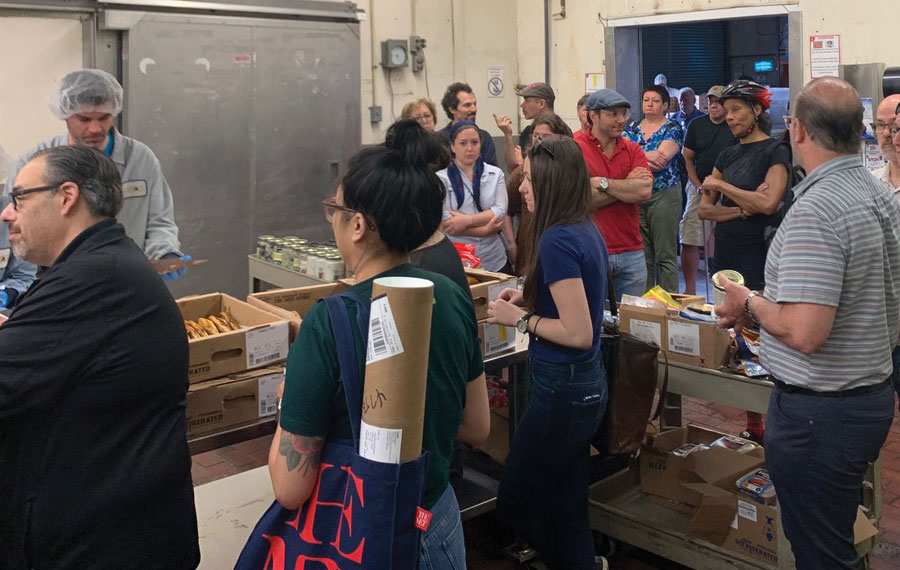
A block into Greenpoint and you’ve reached the promised land, where people line up to enter Acme Smoked Fish’s warehouse, which opens at 8 a.m. every Friday to hundreds who come from all over New York City for prices chopped like so much whitefish salad.
Recently, computer scientist Giro Cavallo attended his first Fish Friday. His colleague Maxim Sviridenko, a mathematician, brought him along. Sviridenko has been coming to Fish Fridays for 15 years, starting shortly after he moved to the United States from Russia. He first encountered Acme while examining packaged fish at Zabar’s, the famed Upper West Side appetizing emporium. “I wondered, ‘Who is Acme?’ ” he said, and then started making the trip Friday mornings.
“It sounded interesting, so I came with him,” Cavallo said.
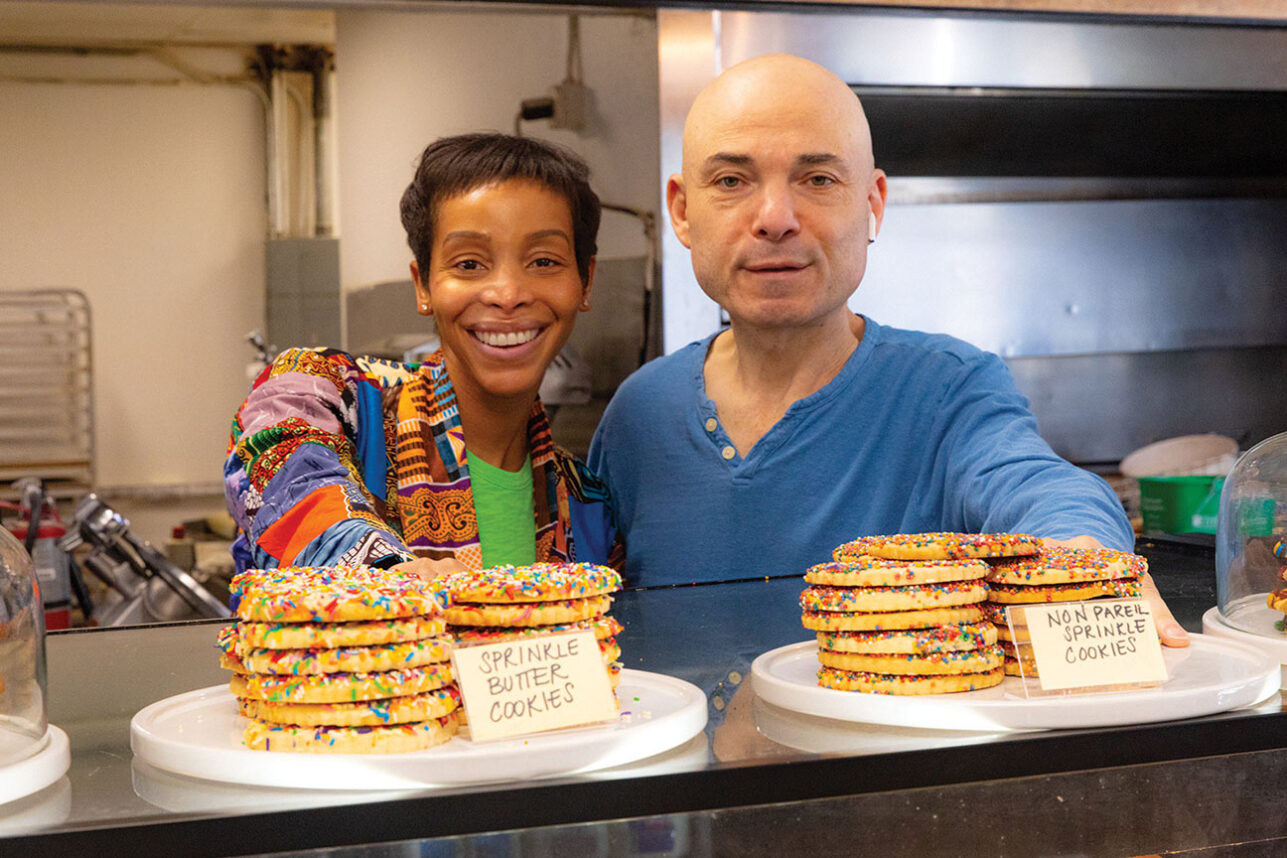
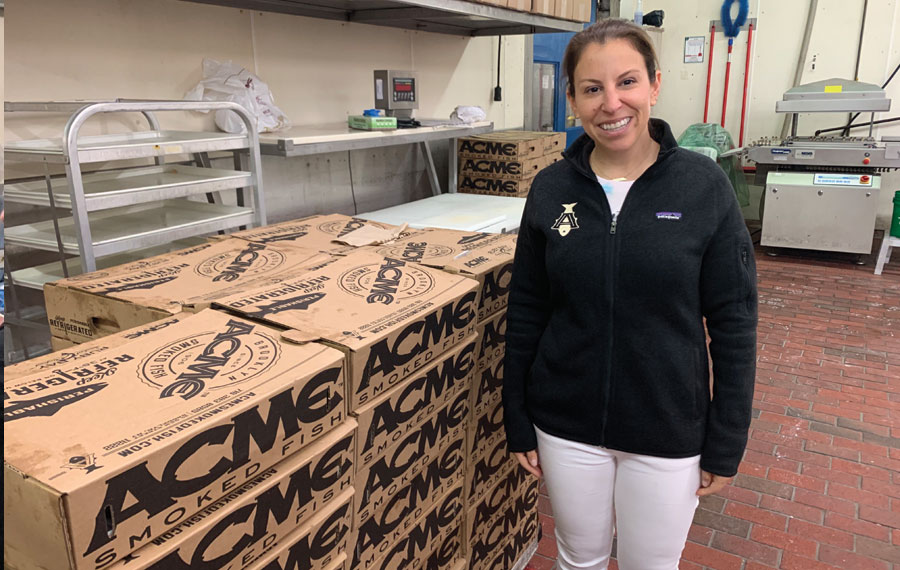
Acme’s 65,000-square-foot production facility and offices continue to blossom in the hands of its fourth generation of Jewish family owners. Emily Gindi, 40, is Acme founder Harry Brownstein’s great-granddaughter. He arrived in New York from Russia in 1905 and in1906 became a smoked fish jobber. He’d buy piscine delights from Lower East Side smokehouses and distribute them in a horse-drawn carriage to appetizing shops throughout the city. In 1941, Rubin Caslow married Brownstein’s daughter, Charlotte. By then Brownstein had started a smoked fish company in Brownsville, where sons Joe and Morty joined him. In 1954, Harry, his sons and Caslow opened their own smokehouse on Gem Street. They called it Acme so it would be regarded as the pinnacle of piscine perfection. And listed first in the phonebook.
“Fish is in my blood. People say, ‘Do you get sick of eating it?’ and I don’t. But my husband says that like a shoemaker’s child without shoes, I don’t bring it home enough.” — Emily Gindi
Caslow’s sons Eric and Robert joined the business in the 1970s. Today, Robert’s son Adam and Eric’s son David are co-CEOs and co-owners. Emily is co-owner and manages customer service. She joined the company full time in 2003 but stepped back in 2010 to raise the three children she has with husband Nathan Gindi, who works in real estate.
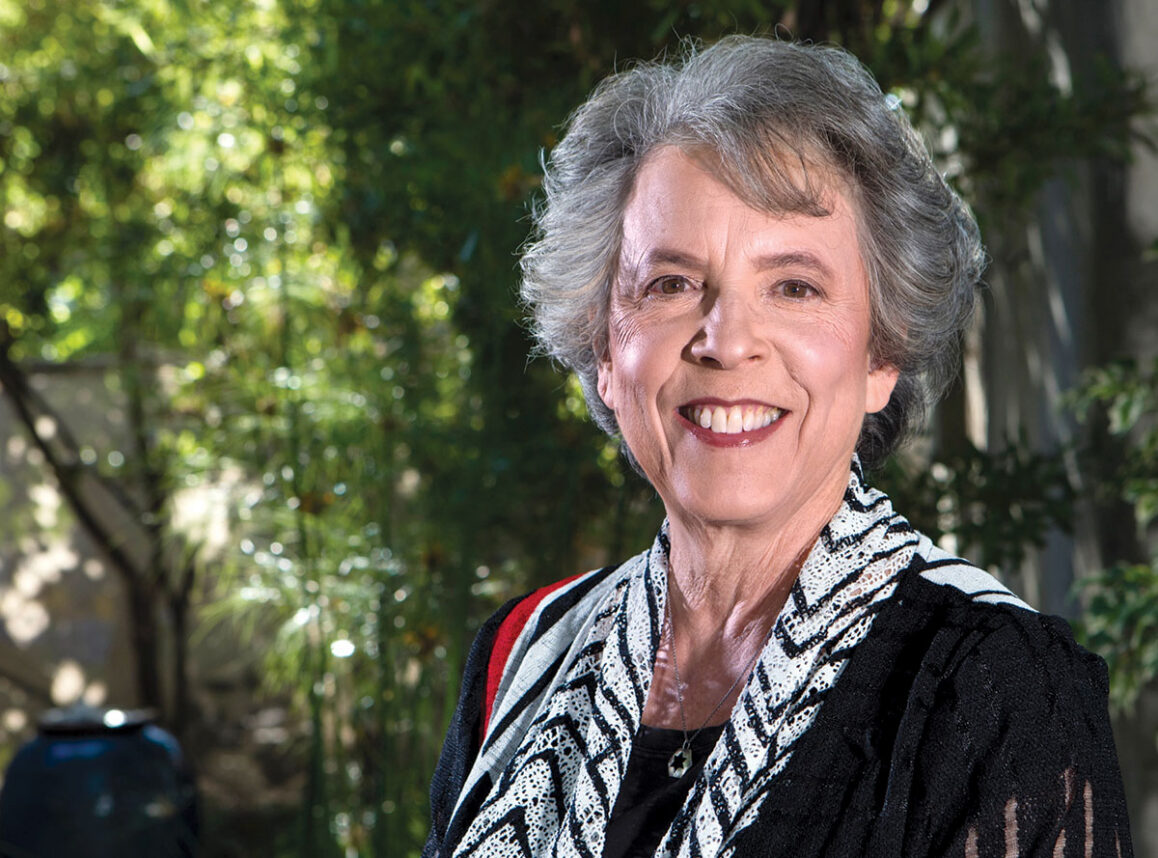
“We have an unwritten rule that it’s blood relatives only and I think it’s why we’ve survived to the fourth generation,” Gindi told the Journal. She returned to Acme in 2016. In her youth, she’d come to Acme with her dad and stick a hand into a herring barrel and pull out a snack. “Fish is in my blood,” she said. “People say, ‘Do you get sick of eating it?’ and I don’t. But my husband says that like a shoemaker’s child without shoes, I don’t bring it home enough.”
In Harry Brownstein’s time, there were countless fish smokehouses. Now only Acme remains, plus a couple of small artisanal firms, Gindi said.
Acme sells more than 15 million pounds of smoked fish and pickled herring every year. “It’s 10 times bigger than it was when I came,” she said. Then “it was still a Jewish food, meant for bagels and Sunday brunch and Jewish holidays. Now everybody eats it.”
Today, Acme offers mesquite- and dill-flavored fish plus salmon and tuna poke bowls packaged at its Brooklyn plant. Four years ago, the company opened a 100,000-square-foot cold smoke plant in North Carolina. Trailer trucks bring product to Brooklyn daily, which Acme then ships to Costcos, supermarket chains and delis around the country — from New York City’s iconic Russ & Daughters (read about their pop-up LA store here.) to Los Angeles’ famed Canter’s Deli.
Acme will soon move distribution to Newark, N.J., roomier than tiny Gem Street, which gets blocked with 15 Acme trucks setting out each morning and returning in the afternoon.
In the future, Gindi hopes Acme will be a name requested at deli counters like Empire meat. “People ask for a pound of lox and they’re getting Acme but don’t know it,” Gindi said.
Her biggest wish? That Acme will accommodate any of the 10 offspring of the current owners, including her own, if they one day want to become the fifth generation leading the family fish business.
Debra Nussbaum Cohen is the Jewish giving maven at Inside Philanthropy and is a freelance journalist living in New York City.