fbpx

December 12, 2018

What’s Happening: ‘Chichester Psalms,’ ‘Torah L.A.,’ Poker Tourney

FRI DEC 14
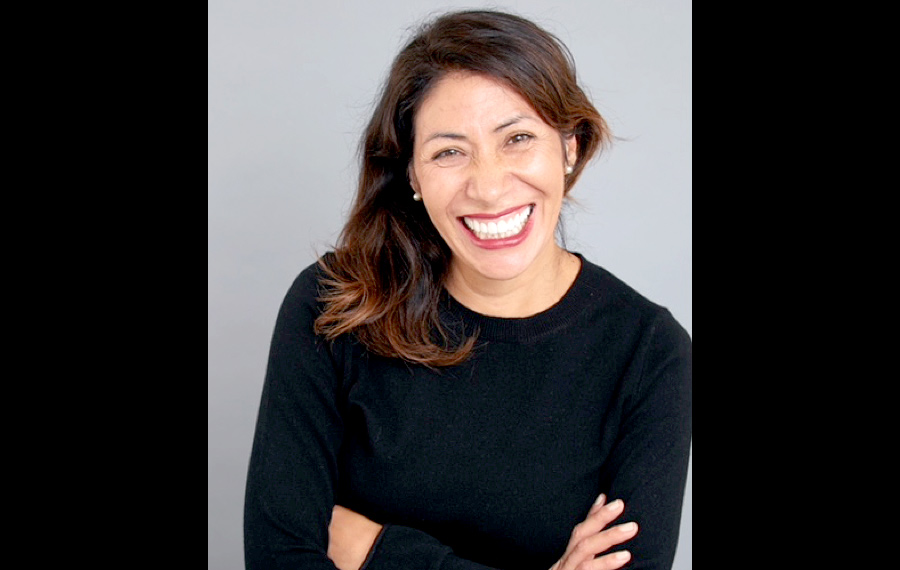
Emiliana Guereca Zeidenfeld

Women’s March L.A.
One month before the Jan. 19 Women’s March Los Angeles, Women’s March L.A. founder and Temple Isaiah congregant Emiliana Guereca Zeidenfeld appears as the Friday night Shabbat speaker at Temple Isaiah. In conversation with Co-Senior Rabbis Joel Nickerson and Dara Frimmer, Zeidenfeld shares the history and philosophy of the Women’s March and addresses recent controversies, including allegations of anti-Semitism lodged against the organization’s leaders. A Q-and-A follows. 5:45 p.m. pre-oneg; 6:15 p.m. Shabbat service. Oneg and dinner follow. 8 p.m. conversation. Free. RSVP required for oneg and dinner. Temple Isaiah, 10345 W. Pico Blvd., Los Angeles. (310) 277-2772.

Rimonim Shabbat
Valley Beth Shalom’s final Rimonim Shabbat of the year features dancing, singing, prayers and a promise to transform participants. “Rimonim” is Hebrew for “pomegranates,” and tradition teaches that each pomegranate contains hundreds of colorful seeds representing the 613 good deeds each Jew must perform. As one good deed leads to another, the goal is for the sacred music of a Rimonim Shabbat to inspire those present to perform an act of lovingkindness. Dress is casual. 6 p.m. snack and schmooze. 6:30 p.m. Rimonim service. Free. Valley Beth Shalom, 15739 Ventura Blvd., Encino. (818) 788-6000.

David Broza

Zimriyah Choral Shabbat
An evening of tefilah and music at Adat Ari El features the L.A. Zimriyah Chorale performing the late Leonard Bernstein’s “Chichester Psalms,” under the direction of Nick Strimple. Dinner follows. The chorale prayer experience is in place of the 6 p.m. Shabbat service. 6:45 p.m. dinner. 8:00 p.m. service. $24. Service is free. Adat Ari El, 12020 Burbank Blvd., Valley Village. (818) 766-9426.

SAT DEC 15

Broza & Friends
Israeli singer and guitarist David Broza continues his annual holiday tradition of performing Israeli and Spanish songs that carry a message of peace, love and understanding. Broza displays his multiple linguistic talents when he sings in Hebrew, English, Spanish and Arabic. He brings the full body of his work to the stage with the backing of the New York-based “Trio Havana,” led by flute virtuoso Itai Kris. Additional special guests slated to perform. 7:30 p.m. $64–$109. The Broad Stage, 1310 11th St., Santa Monica. (310) 434-3200.

SUN DEC 16

“1945”

“1945”
A rural Hungarian village whose residents feel guilty about their complicity in World War II is the setting for the film “1945,” which follows two Holocaust survivors returning home after being liberated from concentration camps. The survivors’ presence reminds the residents of how they stole Jewish property years earlier. After the screening, a discussion follows on today’s political and racial oppression and what moral responsibility Jews may share in it. 9:30 a.m.–noon. Free. University Synagogue, 11960 Sunset Blvd., Los Angeles. (310) 472-1255. RSVP to jimruxin@yahoo.com.

Poker Tournament

holds its seventh annual Texas Hold ’em Poker Tournament. Professional dealers, prizes, business and personal sponsorship opportunities and even mini massages by professional masseuses highlight the event. If you do not play poker, take lessons before the tournament or enjoy casino games, drinks and dinner while others are competing. Or, hang out in the sports lounge and watch the L.A. Rams –Philadelphia Eagles game on a big-screen TV. Must be 21 to attend. Volunteer opportunities available. 4 p.m. doors open. 4:30 p.m. poker lessons. 5 p.m. tournament. $175 tournament entry. $80 non-poker entry. Kol Tikvah, 20400 Ventura Blvd., Woodland Hills. (818) 348-0670 ext. 214.

Moving Beyond Hate 
Tim Zaal, a former Skinhead who now works for the Museum of Tolerance’s Hate to Hope program, appears in conversation with Temple Beth Am Rabbi Matt Shapiro. Some of Zaal’s past racist and political affiliations include serving as L.A. recruiter and propagandist for the White Aryan Resistance and director of the Southern California chapter of the Hammerskin Nation. After an audience Q-and-A with Zaal, Matthew Friedman, senior associate regional director at the Anti-Defamation League, assesses the current state of white supremacy. 7 p.m. Free. Temple Beth Am, 1039 S. La Cienega Blvd., Los Angeles. (310) 652-7353.

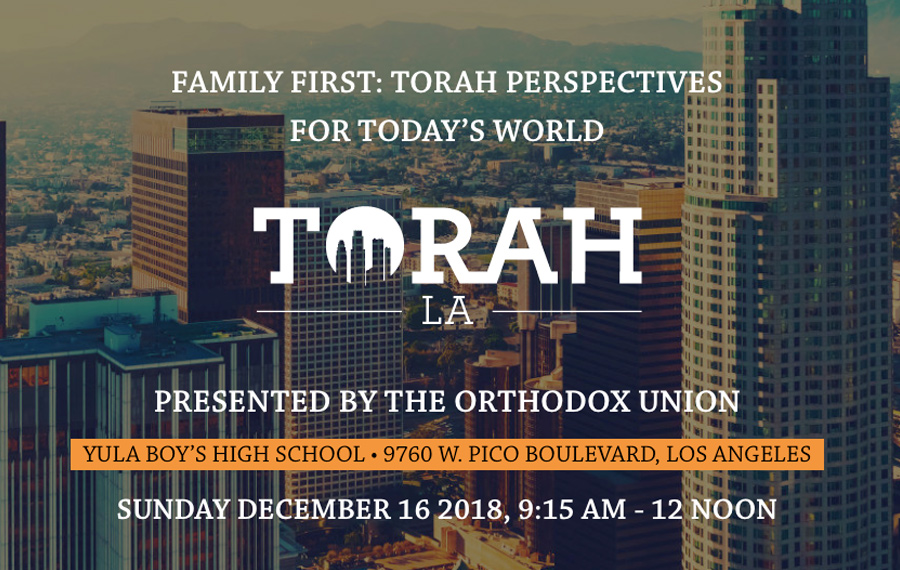
Orthodox Union Convention: ‘Torah L.A.’
The annual four-day Orthodox Union West Coast Convention concludes with “Torah L.A.” Exploring the theme of “Family First: Torah Perspectives for Today’s World,” rabbis discuss topics including “Strengthening Our Relationships,” “Current Halachic Controversies” and “Family Relationships in Tanach.” Free and open to the public. Pre-registration required. 9:15 a.m.–noon. YULA Boys High School, 9760 W. Pico Blvd., Los Angeles. RSVP at adlerl@ou.org/yarmusd@ou.org or (310) 229-900, ext. 200 or 201.

“Big Ideas, Bold Future”
This entry in American Jewish University’s “Big Ideas, Bold Future” series features AJU’s vice president, Rabbi Bradley Shavit Artson, and UCLA professor/co-director of the Mindful Awareness Research Center Daniel J. Siegel tackling some big questions: What is consciousness? What is the relationship between brain and mind? How do thinking and feeling connect? How does our awareness connect us to the world around us? What can we do to hone our consciousness for good? The two scholars will approach them from different perspectives in a wide-ranging and mind-expanding discussion. 4 p.m. $10. AJU Familian Campus, 15600 Mulholland Drive, Bel Air. (310) 440-1572.

MON DEC 17

Yula Comedy Night
The lineup at YULA Girls High School’s annual Comedy Night includes Mark Schiff, Eli Lebowicz, Don McMillan, Michael Rayner, Brian Kelly and Sunda Croonquist. Enjoy an evening of food, drink and laughter. 6:30 p.m. doors, 7:30 p.m. Advance purchase: 1 ticket $125, 2 tickets $200. At the door: 1 ticket $135, 2 tickets $225. VIP preferred seating $500, includes 2 tickets. The Writers Guild Theater, 135 S. Doheny Drive, Beverly Hills. (310) 203-0755.

TUE DEC 18

“According to Oslo”
Members of IPF Atid, the young professionals network of the Israeli Policy Forum, spend an evening of conversation with Mor Loushy, co-director of the 2018 documentary, “The Oslo Diaries.” Clips of the film will be shown and Loushy will discuss the film, which follows the unsanctioned peace talks between Israelis and Palestinians in the 1990s. Ages 21-39 only. Beverages and kosher desserts served. 7:30–9 p.m. Free. Sinai Temple, 10400 Wilshire Blvd. (310) 474-1518.

WED DEC 19

JNet Holiday Party
It is holiday party time for the Pacific Palisades branch of JNET, which means enjoying dinner, entertainment and door prizes with the Jewish community’s business networking group. For the final JNET meeting of the calendar year, all are welcome, including first-timers. 6:30–9:00 p.m. Free. Kehillat Israel, 16019 Sunset Blvd., Pacific Palisades. (310) 459-2328.

THU DEC 20

Herb Alpert and Lani Hall

Herb Alpert and Manhattan Transfer
Stepping into the downtown spotlight to celebrate the holidays with a doubleheader, jazz icon Herb Alpert and singer Lani Hall, Alpert’s wife of 41 years, along with the Manhattan Transfer headline an evening of familiar melodies at Walt Disney Concert Hall. 8 p.m. $49–$99. Walt Disney Concert Hall, 111 S. Grand Ave. (323) 850-2000.

L.A. Jewish Community Sing
People of all ages, regardless of musical experience, come together to sing, socialize and schmooze at Sinai Temple’s monthly Jewish Community Sing. Michelle Green Willner leads the program, accompanied by guitarist Chris Haller, pianist Jeffrey Silverman, and drummer Scott Beardman. Kosher refreshments provided. 8–9:30 p.m. Free. Sinai Temple, 10400 Wilshire Blvd. (310) 474-1518.


Have an event coming up?  Send your information two weeks prior to the event to ryant@jewishjournal.com for consideration. For groups staging an event that requires an RSVP, please submit details about the event the week before the RSVP deadline.

What’s Happening: ‘Chichester Psalms,’ ‘Torah L.A.,’ Poker Tourney Read More »

The Bible Under a Microscope

The plainspoken title of “How Old Is the Hebrew Bible?” by Ronald Hendel and Jan Joosten (Yale University Press) poses a simple question, but the answer is a work of scholarship that offers an elegant solution to an enduring mystery.

For pious Jews, of course, the Bible was given by God to Moses at Sinai, but scholars have long debated when, where and by whom these writings were first set down. Some revisionist historians insist that the Bible in its entirety is a product of the Hellenistic age, but according to Hendel and Joosten, the truth is much more complicated and much more intriguing. Some passages represent “the oldest age of biblical literature,” predating the period when King David and his successors reigned in ancient Israel, perhaps as early as 3,000 years ago. Other passages — and some entire books — were arguably composed during or after the Babylonian Exile of the sixth century B.C.E. The most recent books of the Bible are dated as late as the second century B.C.E.

These theories of age-dating are explained — and often criticized — in “How Old Is the Hebrew Bible?” The authors point out that the Bible “is a brittle text, fracturing under the slightest pressure,” and they point out the “strata and fragments” that serve as dating tools to place a particular passage at a specific point in history.” Spelling, vocabulary, “conscious archaizing” of late texts, and even scribal mistakes show “how the language and text change over time.” 

Hendel is the Norma and Sam Dabby Professor of Hebrew Bible and Jewish Studies at the University of California, Berkeley, and Joosten is the Regius Professor of Hebrew at the University of Oxford. Their book is the latest title in the Anchor Yale Bible Reference Library, a series that seeks “to present the best contemporary scholarship in a way that is accessible not only to scholars but also to the educated nonspecialist.”

 “It’s a kind of whodunit in which words serve as clues and a lens through which we can learn new and wonderful things about the ancient writings the world regards as sacred scripture.”

Some knowledge of Hebrew is required to appreciate the fine points of argument, but any reader who can parse the Hebrew text of the prayer book or the Hertz Bible will be able to understand the evidence that the authors find in the ancient scriptures. In one example, the Hebrew name of King David is spelled ﬢ וּ ﬢ (daled, vav, daled) in the Tel Dan inscription, which dates to the ninth century B.C.E., but the same name is predominantly spelled ﬢ וּיּ ﬢ (daled, vav, yod, daled) in Chronicles, Ezra, Nehemiah and other biblical books that originated several centuries later during the Persian period. The addition of the internal yod in David’s name, the authors explain, “is characteristic of later spelling practices, as reflected in the Second Temple-period texts and inscriptions.” So the presence or absence the yod is itself a time marker.

The authors describe in detail how the language in the various books of the Bible can be assigned to one of three major categories — Classical, Transitional, and Late Biblical Hebrew. But they also point out outliers, including fragments of genuinely archaic language preserved in passages that were composed in Classical Bible Hebrew, and intentionally “archaized” fragments appearing in texts that were composed in Late Biblical Hebrew. The Dead Sea Scrolls, which were written in “Qumran Hebrew,” and the early Greek and Aramaic translations of the Bible allow scholars to triangulate on the age and origins of the Masoretic Text, which has long been regarded as the definitive version of the Hebrew Bible. The presence or absence of “loanwords” from Aramaic, Persian and Greek and “pseudoclassicisms” can be used as a kind of linguistic fingerprint to identify the era when a particular passage was first composed or later redacted.

The use of Late Biblical Hebrew, by way of example, betrays the claims of ancient authorship that have come to be associated with some books of the Bible. “The book of Daniel is situated with the sixth century but has since long been unmasked as a writing of the Hellenistic age because of its manifest allusions to the Maccabean wars,” the authors write. “Ecclesiastes is fictively attributed to Solomon but is similarly recognized as one of the latest books of the Hebrew Bible.”

Similarly, when the First Book of Chronicles depicts the delivery of what the authors call a “fund-raising speech for the temple,” King David asks for the donation of “ten thousand darics,” which was “the most expensive coinage of the Persian era.” Yet the daric did not come into common usage in ancient Israel until several centuries after the presumed lifetime of David, and the mention of darics points to the Second Temple era. “In the book of Kings, David dies well before the preparations for the temple construction,” the authors point out. “In Chronicles, David is the nation’s founding father who initiates all of the major royal and religious institutions.”

Indeed, the back-dating of a biblical story is often undercut by the choice of language. The book of Daniel, as noted above, may be set in the time of the Babylonian Exile, but when the biblical author describes the royal orchestra in the court of Nebuchadnezzar, he identifies five instruments by their Greek names. “There are perfectly good Aramaic words for these kinds of instruments,” Hendel and Joosten argue, “but the author used Greek words to provide an aura of prestige and foreign elegance.” 

“How Old Is the Hebrew Bible” bears a weighty subtitle: “A Linguistic, Textual and Historical Study.” Indeed, it is a serious monograph that confronts some of the hottest controversies in biblical scholarship. But it is also a kind of whodunit in which words serve as clues and a lens through which we can learn new and wonderful things about the ancient writings the world regards as sacred scripture.  


Jonathan Kirsch, attorney and author, is the book editor of the Jewish Journal.

The Bible Under a Microscope Read More »

Illinois Board, Florida Town Reportedly Condemn Airbnb

An Illinois state board and a town in Florida have each condemned Airbnb for its recent decision to no longer provide listings for Israeli communities in Judea and Samaria.

According to the Washington Free Beacon, the Illinois Investment Policy Board Committee on Israel Boycott Restrictions voted unanimously on Wednesday to declare Airbnb as being in violation of state laws for engaging in a type of Israeli boycott. Airbnb has 90 days to respond, or else it will be blacklisted by the state.

“This is a watershed moment for anti-BDS [Boycott, Divestment and Sanctions] laws in America,” a former Illinois official told the Free Beacon. “If I’m an investor looking at a possible IPO next year, this is very worrisome.”

On Tuesday night, the town commission for Surfside, which is located in Miami-Dade County, voted unanimously to condemn Airbnb as being in violation of its contract with the town, according to Bal Harbour Mayor Gabe Groisman:

According to StandWithUs, Vice Mayor Daniel Gielchinsky introduced the resolution, stating: “Let’s make South Florida a shining light and beacon of truth, good and love prevailing over hatred, evil and hypocrisy throughout the world!”

“BDS is a campaign disguised as anti-Semitism,” StandWithUs CEO Roz Rothstein said in a statement. “We have a responsibility to speak up against hate and condemn this actions Airbnb from city hall to the Governor’s mansion. We applaud the efforts of the Vice Mayor and Governor-elect [Ron] DeSantis. We urge other cities, counties and states to follow their lead.”

DeSantis has said that he will determine if Airbnb is in violation of the state’s anti-BDS laws.

The city of Beverly Hills has also condemned Airbnb’s decision as an example of “hatred, prejudice, ignorance and hypocrisy.”

Airbnb did not respond to the Journal’s requests for comment at publication time.

Illinois Board, Florida Town Reportedly Condemn Airbnb Read More »

Jewish Latina’s Unique Perspective on Local News

Television journalist, producer and five-time Emmy Award-winner Giselle Fernandez brings three decades of experience to her new anchor job at Spectrum News 1, the cable provider’s hyper-local news channel. A Latina and a Jewish woman born in Mexico to a Jewish mother (née Eisner) and a Spanish-Catholic father, she also brings a unique perspective when covering the diverse communities and people of Southern California.

“I think my greatest contribution to Spectrum comes from my multiethnic, multicultural background,” Fernandez said. She grew up all over the Southland, in East L.A., Hollywood, Northridge and Westlake Village. “I see things from a much broader lens and have a great appreciation what our collection of communities have to offer. I’m not covering communities of ‘the other.’ I am the other.”

Fernandez is on the air daily from 5 until 9 a.m., which means rising at 1 a.m. to arrive at work by 2:30. Taking on such a daunting schedule at the age of 57, Fernandez said it gives her more time to spend with her 12-year-old daughter but she also really wanted the job. 

Fernandez, who previously worked for CBS, NBC and KTLA, said she missed reporting. “I’m actively involved in many boards and charities that specifically deal with underserved communities, health care and education — that has been my life off the air,” she said. “This was a chance to go back to basics and tell community stories, get people engaged in stories that affect them personally and build trust and unity at a time when we really need it. It’s so in my passion zone. I really feel that I won the lottery.”

 “I was not quite Mexican enough to be Mexican and not Jewish enough because I wasn’t raised in a Jewish household. I always felt like I was on the outskirts until I created my own identity.” ­

— Giselle Fernandez

Spectrum News 1 has been covering the rise in hate crimes and vandalism against Jews in the Southland. “Synagogues have had to beef up their security because of threats and vandalism. Orthodox women in Hancock Park have had their wigs pulled off. These are stories I advocate for,” Fernandez said. “Local is global. If we can address the ills of our own community and shine a light on them, we have a chance to activate community interest and engagement. That is our mandate and it’s certainly mine.”

Fernandez also hosts Spectrum News 1’s weekly primetime interview show “L.A. Story,” airing Mondays at 8 p.m. “We focus on impact-makers in business, the arts, innovation, the sciences,” she said. Guests have included Lakers owner Jeanie Buss, actress-choreographer Debbie Allen and L.A. Mayor Eric Garcetti, with whom she shares cultural similarities.

“I talked with him about being a fellow ‘kosher burrito,’ his immigrant background and why he feels he should potentially throw his hat in the ring for a run in 2020,” she said. “He spoke very boldly against President [Donald] Trump and why he felt California would be best served with someone like him at the helm.”

Of her own Jewish background, Fernandez said, “I was not quite Mexican enough to be Mexican and not Jewish enough because I wasn’t raised in a Jewish household. I always felt like I was on the outskirts until I created my own identity.” 

Her DNA test results showed she is 49 percent Ashkenazi Jewish and 51 percent Spanish. But she believes that her father’s ancestors may have been Jews who converted to Catholicism but secretly practiced Judaism. She has always had Jewish friends and was drawn to Jewish culture. But it wasn’t till CBS News sent her to Israel to cover the Gulf War in 1991, that she found a deeper connection to her roots. She studied with an Orthodox rabbi upon her return. Ultimately, she realized that she wasn’t cut out for that level of observance. “But I always credit my Halachic training for my interviewing skills,” she said. 

Today, she is a member of Wilshire Boulevard Temple, where she had her bat mitzvah at age 50, and her daughter Talei will have hers next June. Fernandez adopted Talei at birth from Guatemala. “I want to be a voice for the voiceless and stand up for victims of oppression and those who are less fortunate,” Fernandez said. “I identify those as Jewish values and teach them to my daughter. ‘You are here to make this world a better place.’”

Taking inspiration from the fictional Nancy Drew and real-life peripatetic journalists Nellie Bly and Margaret Bourke-White, Fernandez set her sights on a journalism career at the age of 7. “I wanted to travel the world and live a life telling stories of human beings, how we managed and triumphed,” she said.

Fernandez has been to Somalia, Panama and Haiti covering crises, but Israel, where she’s returned many times since the Gulf War, stands out in her memory, and she hopes to return with her daughter. 

Another memorable experience was competing on “Dancing With the Stars” in 2006, despite her elimination in the third round. “I was devastated because I didn’t get the chance to do the Paso Doble (dance step) and honor my father. But I loved the experience,” she said.

Owning a bed-and-breakfast and visiting India are on her bucket list, but not in the near future. “I think it’s really remarkable that I get the opportunity to work in my dream profession at this stage of my life,” she said. “As Jews know, how we tell our stories can inform our history. So of all the things I’ve done in life, this is one of the most important jobs I’ve done.”    

Jewish Latina’s Unique Perspective on Local News Read More »

It’s a Christmas Eve Tradition: ‘Fiddler on the Roof’

What does a Jew who doesn’t fancy the traditional visit to a Chinese restaurant do on Christmas Eve?

In Los Angeles, the hottest ticket to mark the holiday may be for the 11th annual “Fiddler on the Roof” extravaganza that Laemmle Theatres expects to fill its eight locations throughout the Southland.

“In the very beginning, only about 100 people showed up,” said Greg Laemmle, proprietor of the eponymous movie-house chain. “This year, the eight theaters will hold around 1,800 people, and based on last year’s attendance, we expect an early and complete sellout.”

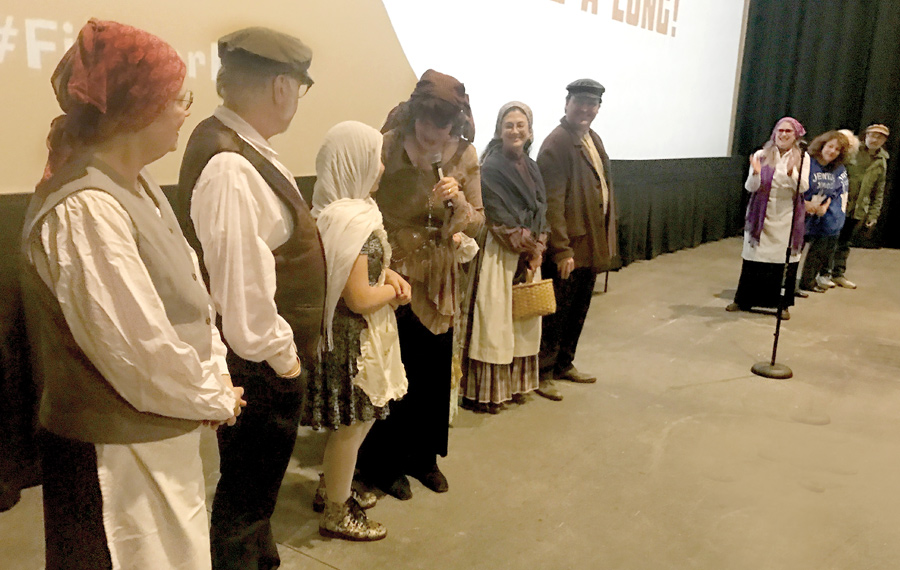
The evening is scheduled to start with a screening of the classic movie version of “Fiddler,” with the audience encouraged to sing along to such songs as “If I Were a Rich Man,” “To Life” and “Matchmaker, Matchmaker.” Patrons are encouraged to arrive in costumes modeled on the musical’s characters, and prizes will be given for the best creations.

At each of the venues, a host or hostess, usually with a show-business background, is expected to keep the action going by leading the singing, quizzing patrons on “Fiddler” trivia, and passing out the prizes.

Laemmle urged patrons not to hold back.

“Here is your once-a-year chance to be the star of the shtetl,” he said. “Sing your heart out alongside Topol and the other screen legends. And it’s OK if you haven’t memorized all the songs. We provide the lyrics.”

The initial idea for the show’s format came to Laemmle when he attended a screening of “The Sound of Music” at the Hollywood Bowl, where the audience sang along lustily.

For Jews, the Christmas season often has a special meaning, depending on their backgrounds and historical memories.

“My grandmother was born in czarist Russia, and when she came to America, she used to tense up and get nervous with the approach of Christmas. That was the time when the pogroms started in the old country,” Laemmle said.

Although the “Fiddler” evening is aimed primarily at a Jewish audience, non-Jews also attend. However, there is wide disagreement on the actual numbers, with Laemmle estimating that audiences were “largely Jewish, but not exclusively so.”

USC adjunct professor Gary Wexler, who hosted a past “Fiddler” evening at the Laemmle theater in Pasadena, had a more evenly balanced estimate.

Wexler said that during his warm-up banter, he asked how many audience members were not Jewish and, to his surprise, more than half raised their hands.

Wexler said he remembered thinking, “Don’t these people want to be with their families on Christmas Eve singing Christmas carols, rather than “If I Were a Rich Man” or “Anatevka”?

Other former hosts related experiences with more heavily Jewish audiences, among them Naomi Ackerman, founder of the Advot Project, which works with disadvantaged youth.

“What I found most extraordinary was how people knew every word of every song in the movie,” Ackerman wrote in an email. “Not to mention that people were fighting over who would answer the trivia questions. How amazing that people knew so many little tidbits and information about this production…. It was a warm and haimish evening, and we felt like we re-created Anatevka, with all its goodness, at the Laemmle theater.”

 “Here is your once-a-year chance to be the star of the shtetl.” — Greg Laemmle

USC professor Ron Wolfson described the audience mix as “kippah-wearing Orthodox Jews, leaders of Conservative and Reform synagogues, secular Jews, rabbis, Israelis, Persians and Russians.”

Since its Broadway debut in 1964, “Fiddler” has been staged constantly somewhere in the world, as author and journalist Barbara Isenberg documents in her book, with arguably the longest title ever — “Tradition!: The Highly Improbable, Ultimately Triumphant Broadway-to-Hollywood Story of Fiddler on the Roof, the World’s Most Beloved Musical.”

Among other tidbits, the book reveals that the play’s first draft bore the title of “The Old Country,” then was tentatively changed to “Tevye” and later to “Not So Long Ago, Not So Far Away.”

Stage producer Hal Prince had the final say, and he opted for “Fiddler on the Roof” because the title suggested immediately that the then-unknown play was a musical.

Testifying to the durability of the musical is its current national tour and fifth Broadway revival.

A month ago, a performance at the Hippodrome Theater in Baltimore was marred when a middle-aged man stood up during intermission and started shouting “Heil Hitler! Heil Trump!”

With the recent killing of 11 worshippers at a Pittsburgh synagogue fresh in mind, numerous audience members panicked and rushed for the exits. It later turned out that the man had been drinking heavily and meant to express his opposition to President Trump by comparing him to Hitler.

Asked for comment on the incident, Laemmle said he realized that “security is on people’s minds” and that he had taken necessary precautions without compromising the event’s Jewish tone.

“When Christmas Eve occurs during the Hanukkah period, we display a lighted menorah In the lobby, and when it coincides with Shabbat, we say the blessings over the wine and challah,” he said.

All performances at the eight Laemmle theaters will start at 7:30 p.m. on Monday, Dec. 24. Tickets, which can be purchased online at Laemmle.com/Fiddler, are $18 for adults and $15 for seniors and children, with further discounts for Laemmle Premiere Cardholders.

It’s a Christmas Eve Tradition: ‘Fiddler on the Roof’ Read More »

Sharsheret Gala, Multifaith Celebration of Israel

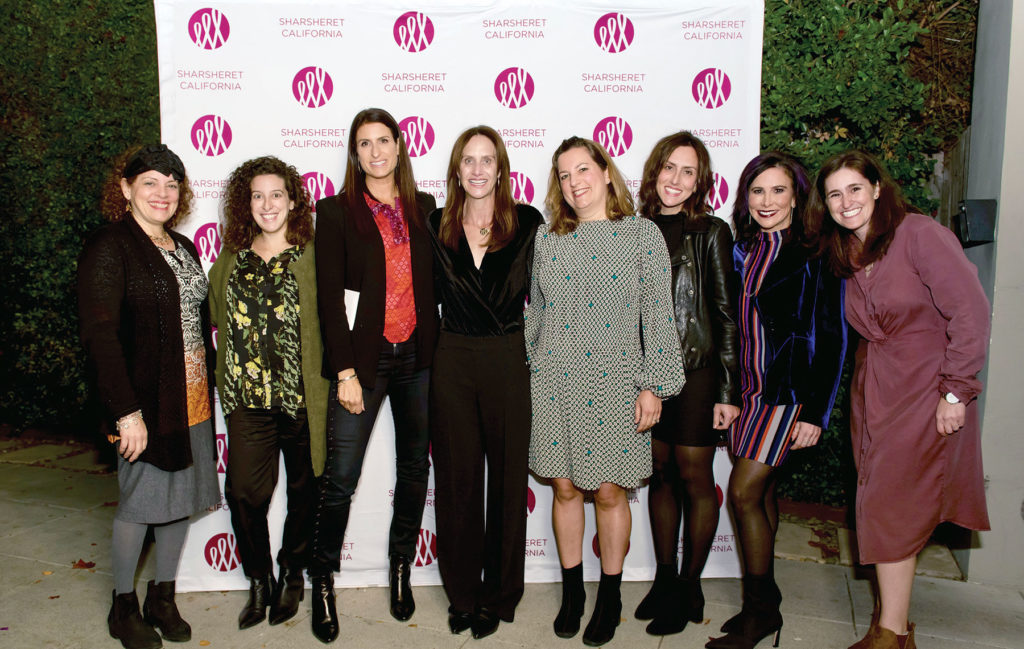
About 160 people gathered at the Hancock Park home of Lisa and Josh Hofheimer on Dec. 1 for “Love, Light and Life Under the Stars,” Sharsheret California’s second annual celebration. The event drew supporters and friends of the national nonprofit, which provides assistance to young Jewish women and their families after a diagnosis of breast cancer or ovarian cancer. 

The program spotlighted the stories of survivors who had been supported by Sharsheret after diagnosis. One survivor, Laura Osman, had found out through a genetic test that she was positive with the BRCA1 gene, which has been shown to increase the risk of cancer. 

“I knew that fear and feeling sorry for myself was not an option,” Osman said, noting that during her treatment and recovery she was “surrounded by an army of friends, family and Sharsheret.”

Jenna Fields, regional director of Sharsheret’s Los Angeles office, shared Sharsheret’s origin story, noting that its late founder, Rochelle Shoretz, started the organization so that Jewish women would not have to face breast or ovarian cancer alone. This year, 100 educational programs across California were held with Sharsheret’s help. 

Courtney Mizel, a member of the Sharsheret board of directors, who was diagnosed with breast cancer nine years ago, said the L.A. office had fielded 303 callers this year, up from 60 in its first year, 2017. 

“Think of how much we’ve done and how much more there is to do,” Mizel said. “The evening not only celebrated the achievements of the California regional office, but allowed people to experience what the organization’s founder intended when she chose the name Sharsheret” — which translates to “chain.” “We are inextricably linked as a community that is directly affected by breast and ovarian cancer.” 

“I like to take something positive from every experience,” said Lisa Hofheimer, who received vital support services from the organization after she was diagnosed with breast cancer in 2002. “Sharsheret is definitely one of those things.” 

— Esther D. Kustanowitz, Contributing Writer


Members of the Iglesia Evangélica Latina church in downtown L.A. proudly blow shofars during their celebration of a “Night To Honor Israel.” Photo by Karmel Melamed

Blasting shofars, waving flags and joyfully singing Israeli songs, close to 400 local Latino evangelical Christians and Jews gathered at a downtown L.A. church on Nov. 29 to celebrate a bilingual “Night to Honor Israel.” 

The event, held at the Iglesia Evangélica Latina church was organized by the Christians United for Israel (CUFI), a national pro-Israel nonprofit. The gathering was CUFI’s inaugural Southern California event rallying support for Israel among their Latino members.

“Without a doubt, this event will go down in history as one that lifted up Israel and the Jewish community for years and decades to come,” CUFI National Hispanic Outreach Coordinator Peter De Jesus said.

In addition to CUFI leaders addressing the crowd, local Jewish community speakers included Daniel Gold, vice president of Israel education and advocacy at the Jewish Federation of Greater Los Angeles; Sinai Temple’s Rabbi David Wolpe; and Eitan Weiss, deputy chief of mission at the Consulate General of Israel in Los Angeles, who praised CUFI members for their support for Israel.

“Tonight is also special because it is the 71st anniversary of the U.N. General Assembly voting for a resolution to create the modern state of Israel,” Weiss said. “We know that a large part of our survival all of these years would not have been possible without the help of you in the Christian community. And on behalf of the State of Israel, I thank you from the bottom of my heart for your support.”

Those in attendance not only prayed for Israel but also vocally pledged support for L.A.’s Jewish community, which in recent weeks has encountered various anti-Semitic attacks.

“It was essential for us as Christians to stand shoulder-to-shoulder with our Jewish brothers and sisters here in Los Angeles at a time now when they are facing an increase in anti-Semitic attacks and let them know they are not alone,” said CUFI National Diversity Coordinator and Pastor Dumisani Washington.

The event’s organizers said they were planning additional pro-Israel events in the coming year in an effort to bring together Jews and Christians.

— Karmel Melamed, Contributing Writer


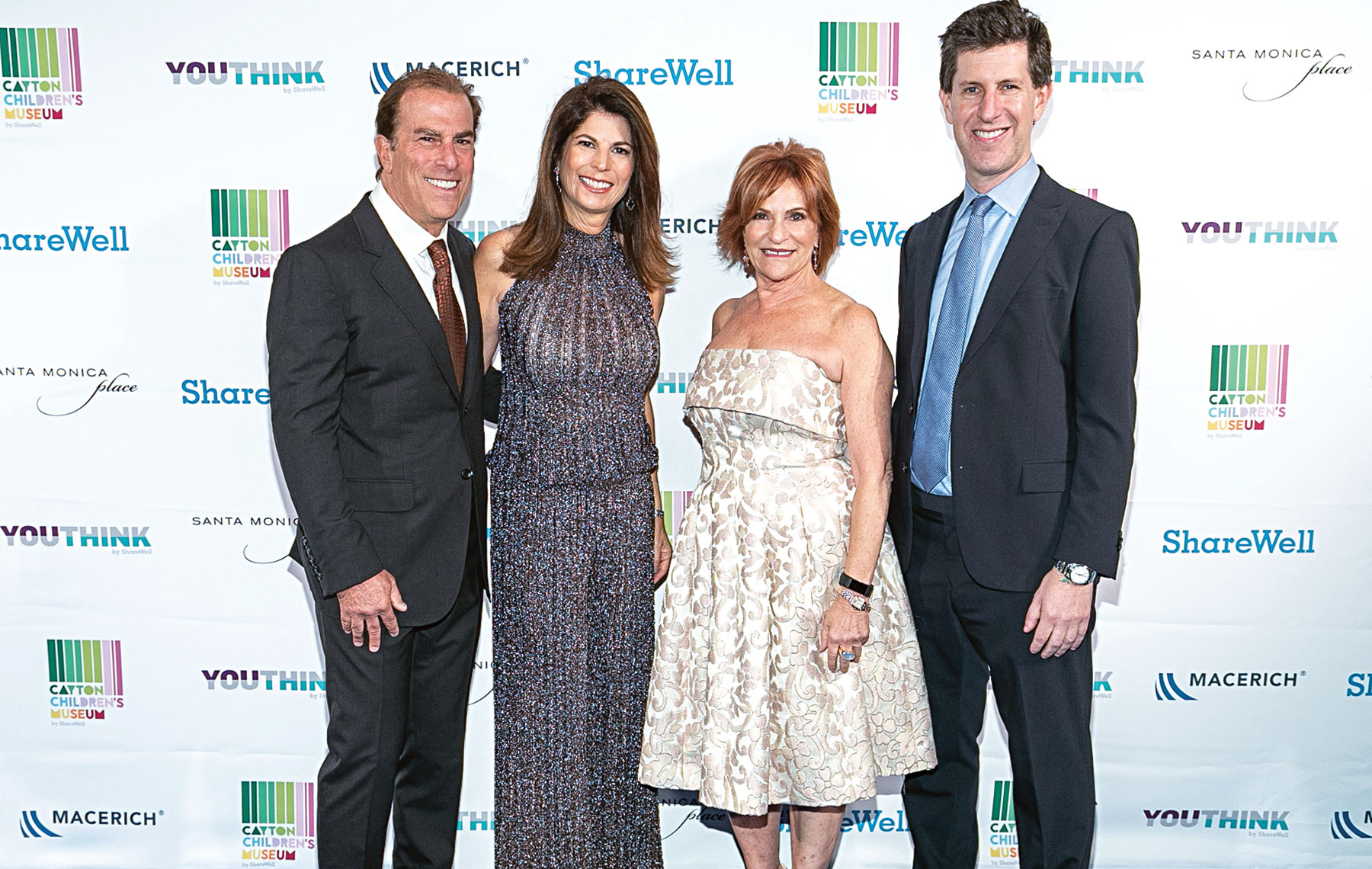
From left: ShareWell Gala honorees Barry and Andrea Cayton, Sandra Stern and Craig Erwich. Photo by Rich Polk, Getty/Wire Images

The nonprofit organization ShareWell celebrated a significant upcoming event at its 18th annual Discovery Award Dinner at the Skirball Cultural Center in November. The organization’s Zimmer Children Museum will relocate in early 2019 from its current home at the Jewish Federation of Greater Los Angeles building on Wilshire Boulevard in Beverly Grove to a 21,000-square-foot space atop the Santa Monica Place shopping mall in Santa Monica. The new facility will be renamed The Cayton Children’s Museum in honor of a gift from Barry and Andrea Cayton.

“The Caytons have a long, philanthropic history of giving back to the community, and we are thrilled they have chosen to champion our transformation,” ShareWell founder and CEO Esther Netter said in a statement. 

Barry Cayton is founder and president of Audio Command Systems. Andrea Cayton, his wife, is vice president of the board of the Los Angeles Museum of the Holocaust and is active in Jewish philanthropy.

The Nov. 7 event’s approximately 600 guests included Netter and Courtney Mizel, vice chair of the ShareWell board of directors. Comedian Demetri Martin emceed the evening, which raised $750,000 for the organization’s mission of providing programs and experiences for youth. 

Along with the Caytons, the event honored Craig Erwich and Sandra Stern for their contributions to ShareWell. 

In addition to the Zimmer Museum, ShareWell operates youTHink, which empowers middle school and high school students to embrace social responsibility.

— Debra Eckerling, Contributing Writer


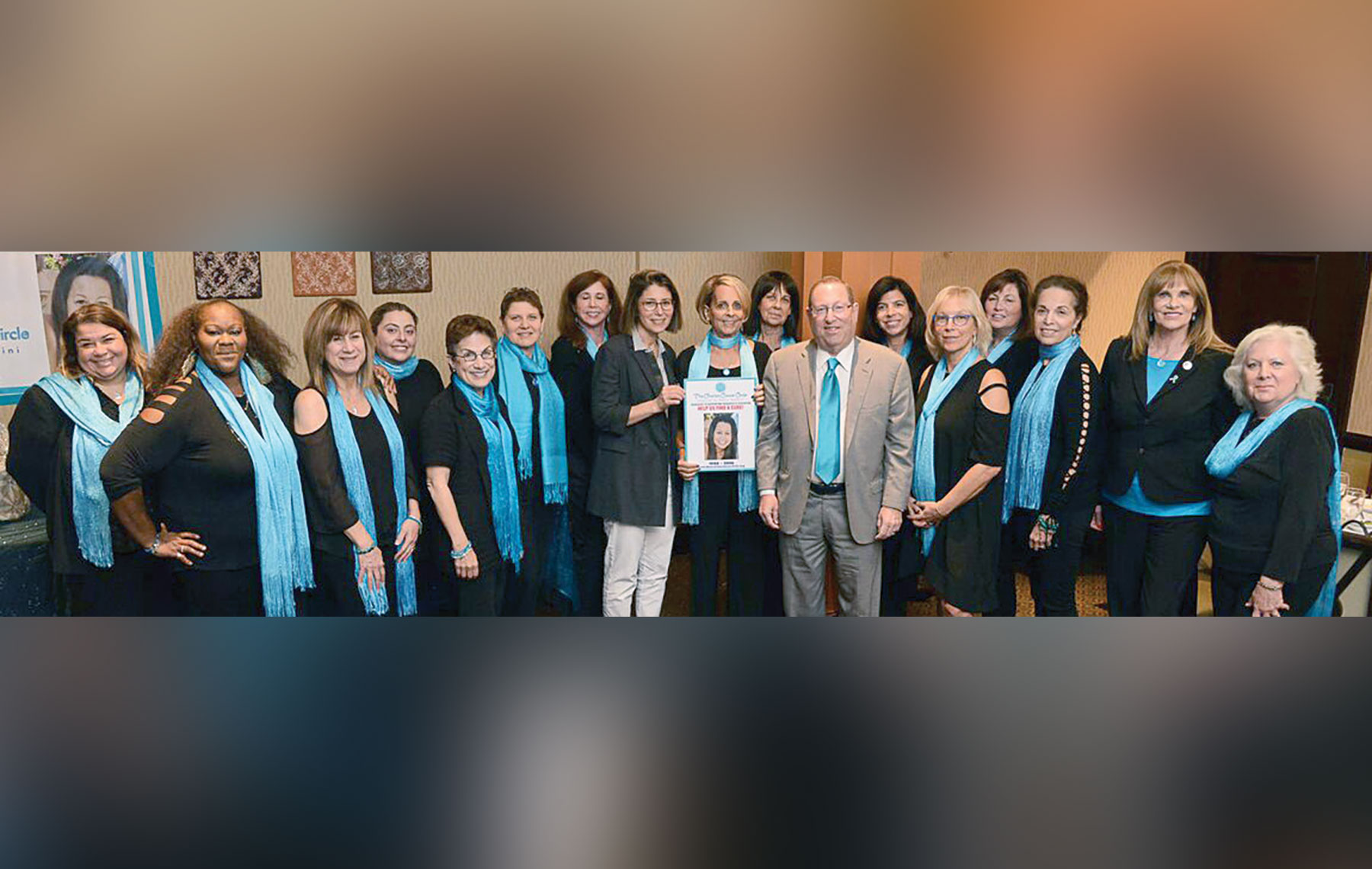
Supporters of the Ovarian Cancer Circle gathered for the group’s seventh annual luncheon on Nov. 15 at Ruth’s Chris Steak House. Courtesy of Ovarian Cancer Circle

The Ovarian Cancer Circle, inspired by the late Robin Babbini, held its seventh annual fundraising luncheon on Nov. 15 at Ruth’s Chris Steak House in Woodland Hills. 

Ovarian Cancer Circle founder and President Paulinda Babbini, Robin’s mother, welcomed a sold-out room of more than 200 guests, including L.A. City Councilman Paul Koretz.
The guest of honor was Sanaz Memarzadeh, a gynecologic oncologist and the director of the Gynecologic Oncology Discovery Laboratory at UCLA. 

The Ovarian Cancer Circle dedicated all of its fundraising to support Memarzadeh’s research lab. As of 2018, the group had raised approximately $500,000 in donations benefiting the laboratory, Babbini said.

In her remarks, Babbini spoke about her daughter, who was diagnosed with ovarian cancer at the age of 17 and died three years later, in 2006.


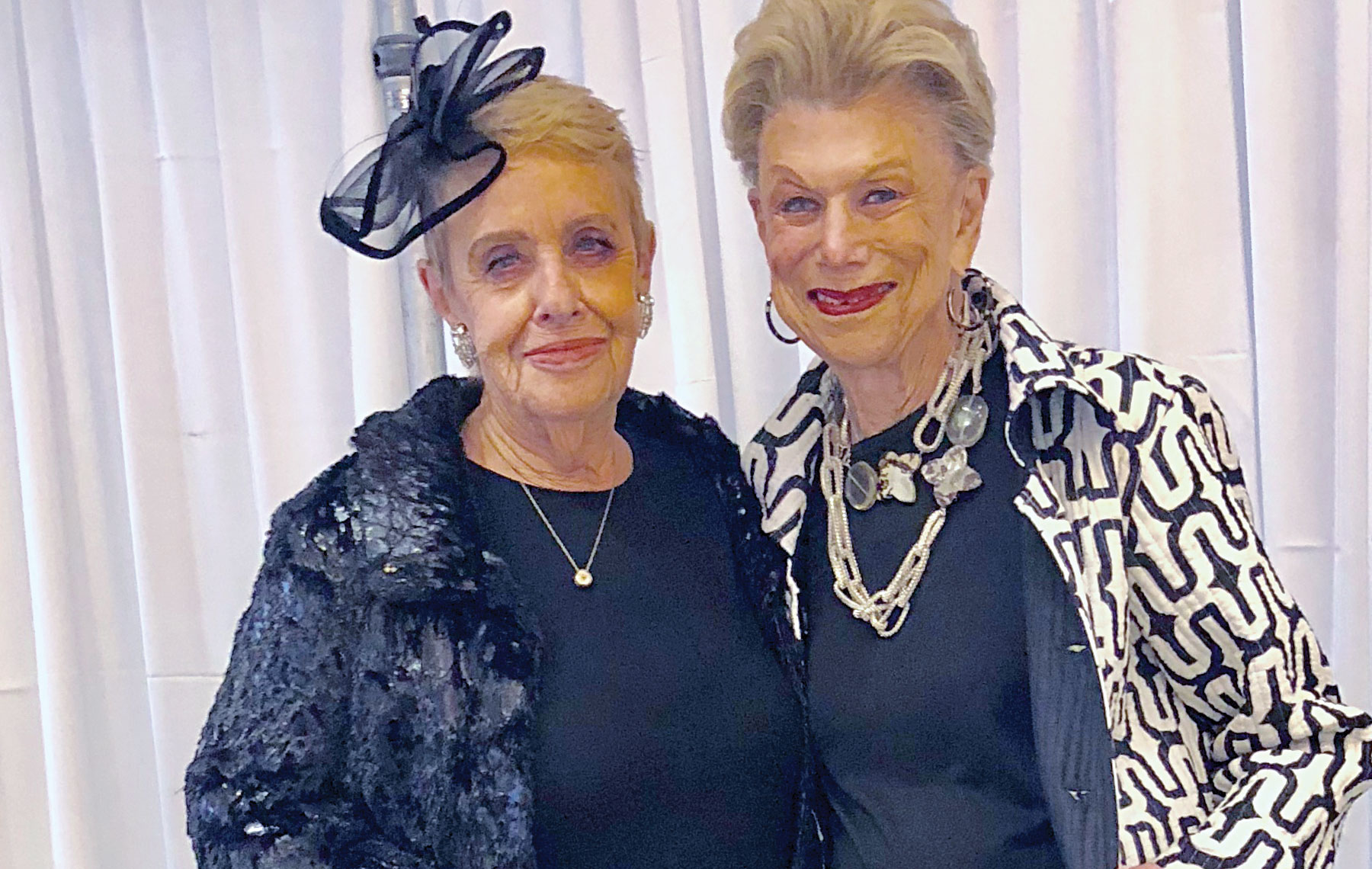
Harriet Rossetto, founder and clinical director of Beit T’Shuvah and Annette Shapiro, president of Beit T’Shuvah’s board of directors, prepare for the catwalk at the organization’s Haute Couture High Tea and Fall Fashion Show.

Rehabilitation organization Beit T’Shuvah held its Haute Couture High Tea and Fall Fashion Show on Nov. 11 at its Culver City campus.

The event showcased the talents of Beit T’Shuvah’s residents, alumni, community members and volunteers and featured designer clothing from the organization’s thrift store.

 Among those in attendance were Harriet Rossetto, Beit T’Shuvah’s founder and clinical director; and Annette Shapiro, its board president.

Pat Train Gage and Heidi Bendetson co-chaired the event; and Shapiro, Cookie Miller, Sharon Polansky, Virginia Maas, Tiffany Calig and Barbara Tell served on the event committee. 


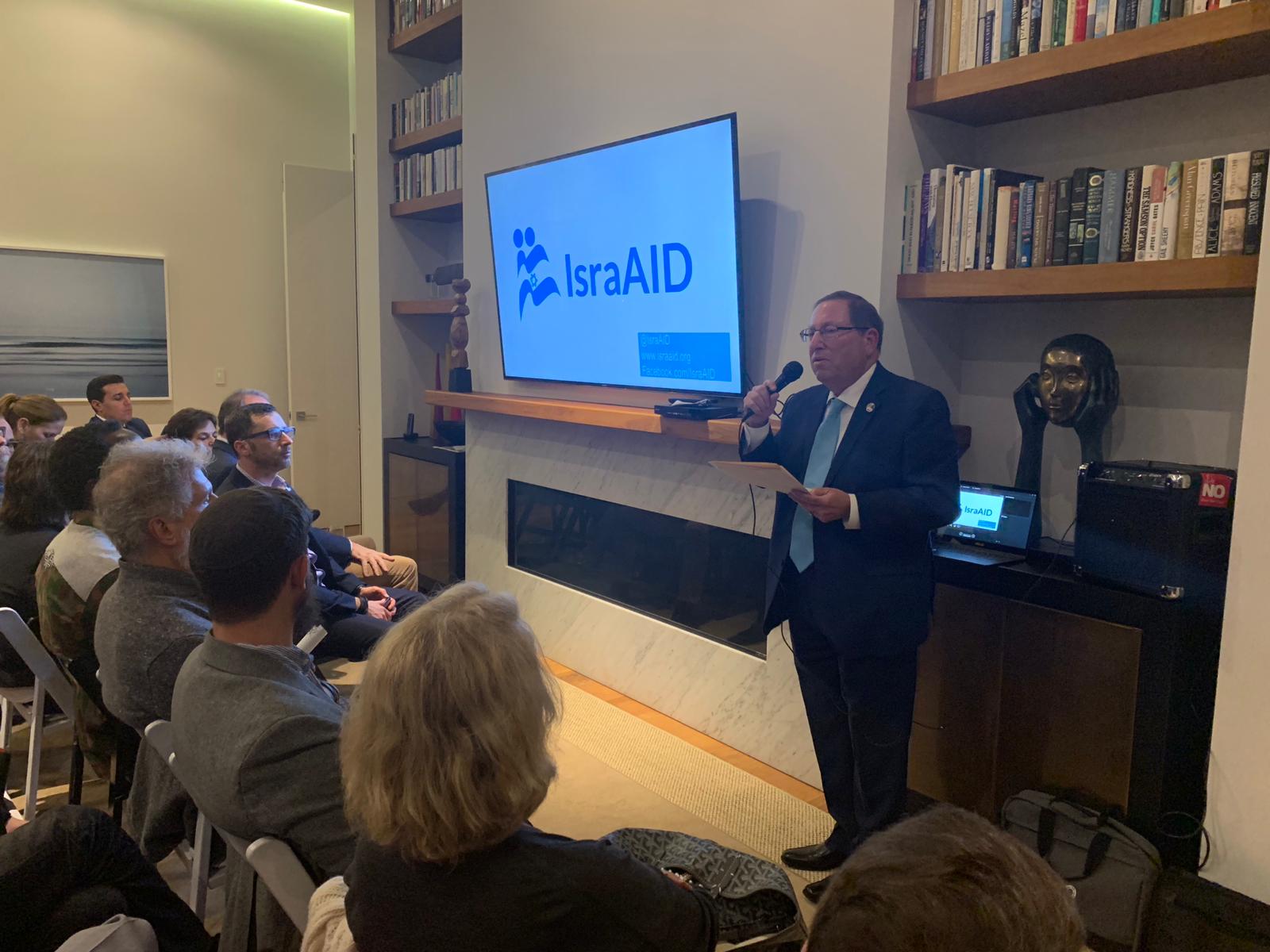
Paul Koretz speaking at IsraAID’s event. Photo courtesy of IsraAID

IsraAID held an event on climate change Dec. 11 discussing what’s next for California at a private residence in Holmby Hills.

Seth Davis, IsraAID CEO, shared the organization’s current work in Paradise and Chico, as well as other disaster areas. Los Angeles councilmember Paul Koretz was in attendance and said that “IsraAID is more critical than ever, in California, U.S. and around the world.”

Tel Aviv University atmospheric physicist Colin Price also spoke,  previewing the disaster-response training series that IsraAID will launch in Los Angeles and the Bay Area in January. IsraAID Humanitarian Professionals Network (IHPN), will equip professionals with the skills and knowledge to deploy on relief missions or respond to local disasters.

For more information about IsraAID visit their website.

— Erin Ben-Moche, Contributing Writer

Sharsheret Gala, Multifaith Celebration of Israel Read More »

Giving the Gift of Life to Infertile Couples

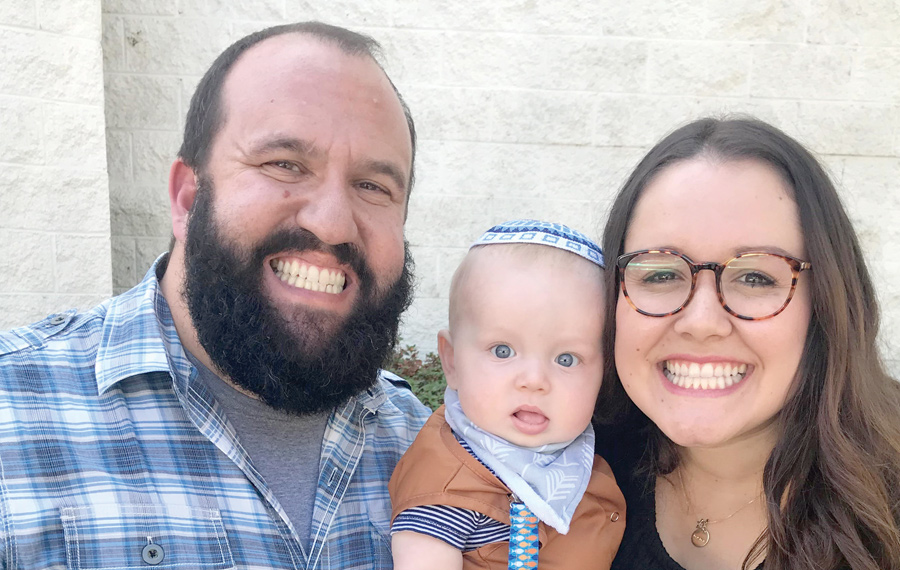
For three years, Los Angeles residents Michael Schwartzbach and his wife, Breanna, struggled to become pregnant. They went to different doctors and tried various methods of in vitro fertilization (IVF), but nothing worked.   

They then discovered Dr. Nurit Winkler from the Los Angeles Reproductive Center. Unlike other doctors, Michael said Winkler was personal with them and gave them hope that IVF could work. She also told them about Hasidah, a nonprofit organization that provides grants and interest-free loans to couples with fertility issues. They applied for and received a $5,000 grant towards IVF.

“It was hard, because we didn’t know how we’d pay for [IVF] or where to go,” Michael said. “Thank goodness for organizations out there that help out couples in need.”

With the Hasidah grant, together with a loan from the Jewish Free Loan Association, help from family and a credit card, the Schwartzbachs were able to pay for the $40,000 treatments and conceive. Today, their son Rowen is 10 months old.

The Schwartzbachs are among the many couples that Hasidah has helped. The organization, which Rabbi Idit Solomon and her husband, Steven, started in 2013, has helped bring 12 babies into the world to date, with five more on the way. They give an average of $10,000 per grant, according to Idit, and founded the organization after they experienced their own fertility problems.

“But what about the people who are trying to have kids? We’re not helping them?”

 — Idit Solomon 

The Solomons, who live in Northern California, spent three years trying to conceive a child. “Every month was another failure,” Idit said. “It’s not like every month you start over again. It’s like you’re carrying all the wounds from before.”

At the same time, Idit was running a department of Jewish education, which supported families financially so they could lead a Jewish life. But she noticed they weren’t focusing on couples that couldn’t have kids.  

It seemed like an irony that we’d spend all these resources for people with kids, but what about the people who are trying to have kids? We’re not helping them?”

The Solomons ended up having two miscarriages during the course of five IVF treatments and spent close to $100,000, some of which was covered by insurance. With the help of donor eggs, Idit carried her first children, twin daughters, and then had another daughter. Although her fertility treatments worked, she knows it’s a tough process.

“I’ve spoken to hundreds of people going through this,” she said. “It’s bittersweet work. They are extraordinarily grateful but risking their financial futures.”

With Hasidah, which translates to “stork” and has a root word that means “chesed” (loving-kindness), Idit hopes to help eliminate some of that financial burden. When deciding whom to give grants and loans to, the organization looks at three categories: medical, financial and personal. The personal aspect covers whether the couple have a Jewish vision for their family. 

The Schwartzbachs, who teach at Temple Judea in Tarzana and Emek Hebrew Academy in Sherman Oaks, and recently celebrated the High Holy Days with Rowen, are doing just that. “Navigating it and figuring out how to do it all is the hardest part,” he said. “Luckily, there are organizations out there willing to help.” 

Hasidah’s next round of IVF grants and interest-free loans is open until Jan. 9, 2019. and people can apply on its website. 

Idit said that she is happy to give back, because she not only went through it
herself, but she knows how important it is in a spiritual sense. “In Judaism, our focus is on family life,” she said. “It’s the most amazing gift I could ever help someone with.”

Giving the Gift of Life to Infertile Couples Read More »

Teens and Holocaust Survivors Gather at Sinai Temple

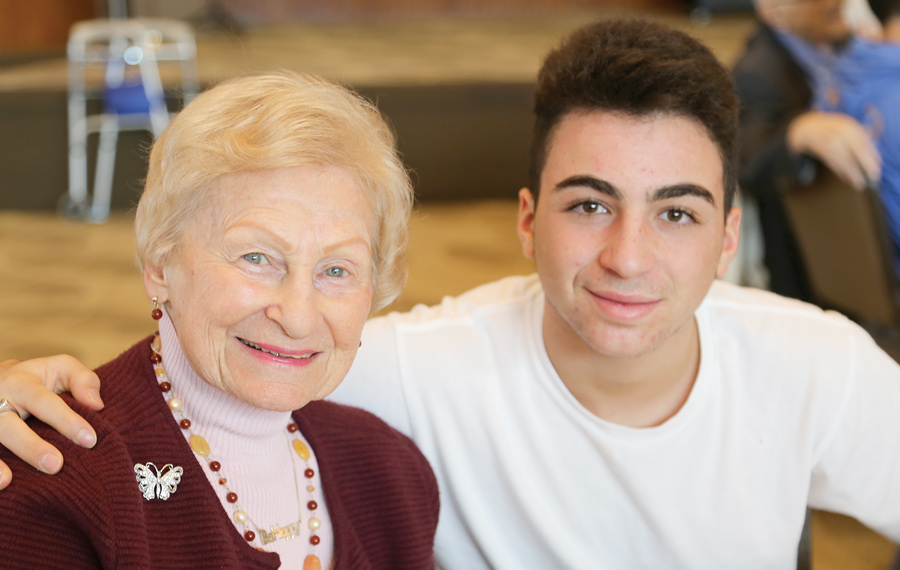
Thirteen-year-old Leah Khorsandi is no stranger to Holocaust survivors, having met several at an annual gathering when she was a student at Sinai Temple’s religious school. However, she told the Journal that meeting survivors at a brunch held by the synagogue earlier this month was extra special. 

“Now I have a one-on-one experience,” she said following the get-together designed specifically for survivors to meet teens. “I could ask questions and have a real conversation.”

Around 70 survivors and Sinai Temple teens attended the Dec. 2 event, which was created 10 years ago by religious school director Danielle Kassin. 

“To have so many survivors in a room, to have a chance to hear not one story but 10 stories, that to me is an optimal experience,” Kassin told the Journal. “This is our history. This is our people. This is where we come from. These are our heroes. And this is who we honor.”

Joseph Alexander, 96, said he has been coming to the event since its inception. Many of the teens knew him from previous years and greeted him enthusiastically. The Polish native lost his parents and five siblings in the Holocaust. He survived 12 concentration camps and said “nothing is off limits” when it comes to questions about his life.

“This is our people. This is where we come from. These are our heroes. And this is who we honor.” — Danielle Kassin 

“It is more important today to talk about this when there’s not too many survivors left,” he said. “When we’re gone, there won’t be any witnesses.” 

Indeed, every year when Kassin and Sinai Temple Millennial Director Matt Baram reach out to the survivors on their list (which took hundreds of hours to compile), they learn that several have died.

“It’s really sad because every year there’s less and less,” said Maya Laaly, 14, who, together with Khorsandi, spent most of the morning at a table with sisters Frances and Fraania Legasz. Frances is 93 and Fraania is 90. 

Some survivors brought photographs and documents to share, including their passports and pictures of themselves as babies or toddlers with relatives they had lost. The teens and survivors could take pictures together in a photo booth. Some survivors also took photos together. Many have become friends over the years, having met at past events or as volunteers at the Los Angeles Museum of the Holocaust or the Museum of Tolerance.

David Wolpe, Sinai Temple’s Max Webb Senior Rabbi, addressed the attendees and said, “Each year, this is one of the most beautiful and wonderful events we have. I hope that you will tell the teens your stories so that we can carry them on throughout the generations. Enable us all to remember both the tragedies and survival of our people.”

The teens did receive some guidance in advance of the event from their teachers on how to interact with the survivors. The main message was: Be human with them. Get to know them a little. 

Among the stories the students heard was that of 77-year-old Carol Roth. She shared that when the Gestapo came to her village in Belgium, she was hurried through a trap door in her dining room and hidden in the cellar. Raised Catholic from the ages of 2 to 12 by a family she credits with saving her life, Roth did not learn she was Jewish until she was nearly 13 and on a boat to the United States with an aunt. “There was the Statue of Liberty,” Roth recalled. “I started crying. I didn’t know why I was crying.”

Nathan Farzadmehr, 13, said the experience of being among so many survivors and hearing some of their stories was emotional. “It makes you feel sad,” he said. But, he added, “I think they feel like people appreciate them. It’s an amazing experience because later on you’re not going to be able to do this. We can pass down their stories.”

Teens and Holocaust Survivors Gather at Sinai Temple Read More »

JFLA Increases Cap for Fire Victims

The nonprofit Jewish Free  Loan Association (JFLA) of Los Angeles has increased its personal emergency loan cap to $15,000 for those affected by the Woolsey Fire, while small business impacted by the fires can apply for up to $30,000 in loans. JFLA has been offering interest-free loans to Los Angeles and Ventura County residents on a nonsectarian basis since 1904.

“Jewish Free Loan is pretty well positioned to help in emergency situations, whether it’s fire, an earthquake, a medical issue, any emergency,” Executive Director Rachel Grose told the Journal.  

JFLA quickly got the word out about their availability to help following the fires. However, once the organization grasped the depth of the losses, it raised its regular $5,000 personal loan cap.  

“People need to rebuild,” Grose said. “And a lot of times, even if insurance is going to cover everything, there’s a lag time. They still need clothing and basic essentials: pots and pans, sheets, blankets. They are out-of-pocket for those items, and not everyone has the savings to cover that.”

Among those the JFLA has already helped since the November fires is a 77-year-old widow whose mobile home burned. “Everything she owned was destroyed, so we gave her a loan to help with moving expenses and to purchase everything new,” Grose said. 

 “We’re going to be here as long as people need [loans] for the fires.” 

— Rachel Grose

Another woman, whose house survived but was left without power, had to stay in a motel. She received a JFLA loan to pay that out-of-pocket, short-term expense.

Grose said despite many people’s immediate needs, they aren’t necessarily emotionally ready to move forward. “They need to absorb the shock, assess what they need and understand what their insurance is going to pay for,” she said. “One of the things that we’ve been hearing is that a lot of the insurance plans don’t help with smoke damage.”

Fire victims can apply for a JFLA loan by filling out the pre-loan application at www.JFLA.org. Intake staff will then call them to go over the details. 

After that, applicants will meet with a loan analyst to discuss their budget, what they need and what kind of loan they can afford.

“Normally the clients come in and meet with a loan analyst, but in some cases the borrowers don’t have transportation because of the fire,” said JFLA Outreach Manager Batya Ordin. “We’re willing to do the interview over the phone or Skype when that’s necessary.”

Applicants will need guarantors for their loans and once all the paperwork is in order, the information will be presented at the weekly loan committee meeting. “The loans are reviewed, the checks are issued and the clients are notified,” Grose said. “They can come in and pick up their check or we can mail it to them.”

JFLA currently has nearly $11 million in microloans out in the community, ranging from $500 to $50,000.  Loans are available for a variety of needs including life events, home healthcare, fertility treatments and adoption, post-high school education, children with special needs and women fleeing domestic violence. JFLA loans accrue neither fees nor interest.

“Our underlying goal is to make these loans to help people,” Grose said. “We’re going to be here as long as people need [loans] for the fires and afterwards for all their other needs.”  

JFLA Increases Cap for Fire Victims Read More »

A Unique Spin on Sephardic and Ashkenazi Fare

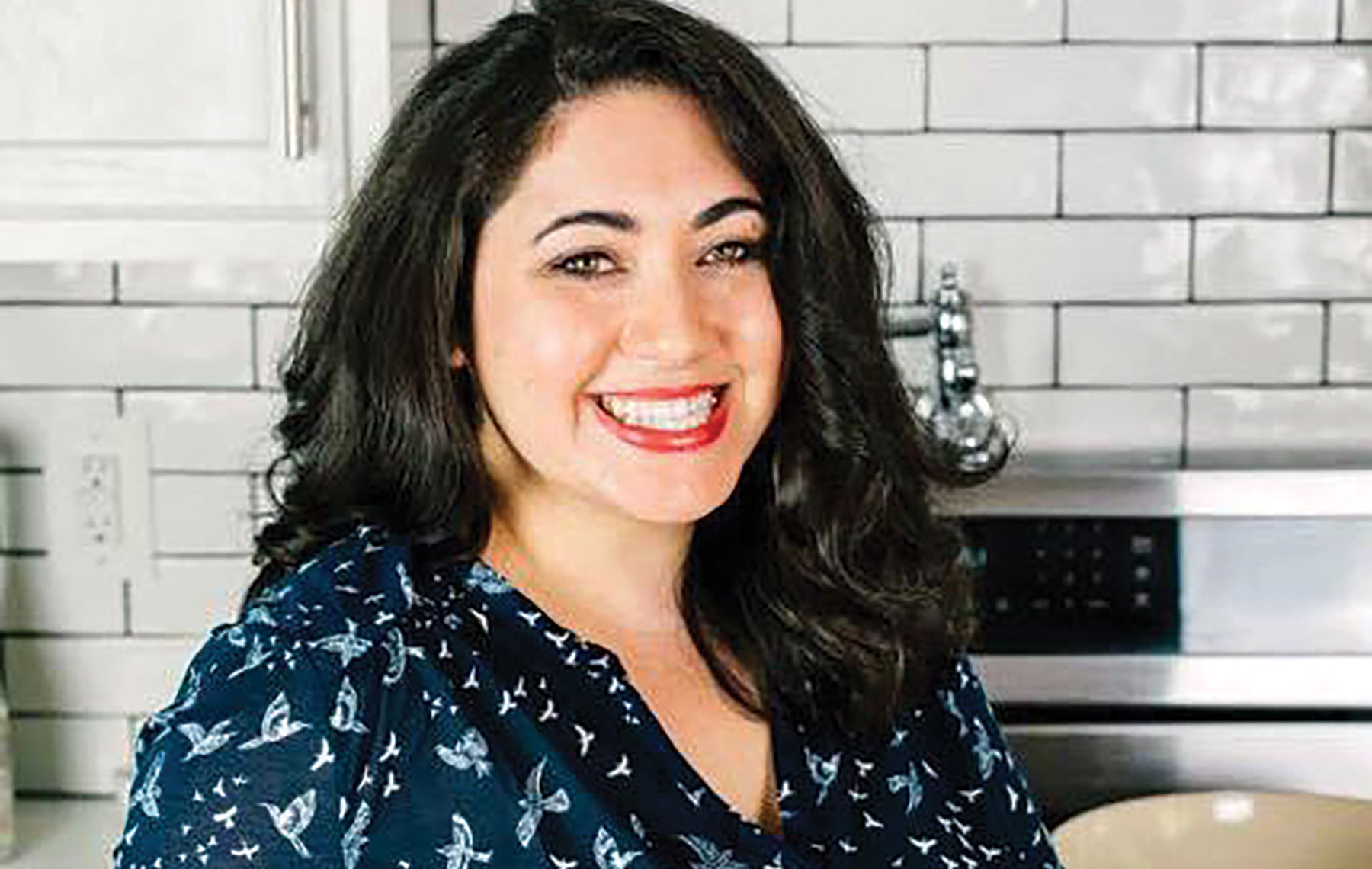
Whether it’s lemon saffron matzo ball soup or garlic rosemary challah, food blogger turned cookbook author Samantha Ferraro (“The Weeknight Mediterranean Kitchen”) loves putting her unique spin on Jewish fare. The key, she believes, is to respect the recipe and still have fun with it.

“When I started my blog, I was really focused on understanding the classics,” Ferraro said. “I knew I liked to cook and I really wanted to revisit a lot of recipes that I grew up with. I wanted to do something more fun, more colorful and vibrant, because Jewish food is awesome, [but] sometimes it can be really simple.”

Born in Manhattan, Ferraro, 35, grew up in Brooklyn, N.Y. When she was 14, her family moved to Kailua-Kona, Hawaii, and then to Southern California when she was 21. Two years ago, together with her husband, Joe Ferraro-Shey, they moved to Bellingham, Wash. 

Samantha Ferraro

Ferraro’s mother is Sephardic and her father Ashkenazi. Ferraro found combining the culinary influences from both traditions made for the most interesting meals. For example, “Matzo ball soup is really simple,” she said. “But you can elevate it [by adding] something more exotic, like saffron or lemon peel. Everyone and their bubbe has a matzo ball soup recipe, so you can’t say yours [is better], but you can put a spin on it to make it your own.”

There are many latke recipes on Ferraro’s website, including one inspired by an Indian dish called aloo gobi. Ferraro took those flavors — turmeric, spicy chili and curry powder — and included them in her latkes. She then made a cilantro chutney to go with them. “Being inspired by other cultures and putting their flavors into Jewish food is delicious,” she said.

“I love how passionate Jewish people are about their food.”

— Samantha Ferraro

Then there’s one of her favorites: rugelach cookies. “My grandmother made them all the time when I was growing up,” she said. “It’s traditionally made with chopped nuts and some kind of jam filling in the middle, and you roll it up into this little croissant cookie.” 

Ferraro combines her Sephardic and Ashkenazi traditions to create a variety of rugelach, including savory versions with ricotta cheese, herbs and Parmesan cheese. “Recently, I did a rosemary and fig rugelach to welcome the fall with a sweet, savory flavor,” she said.

Lemon Saffron Matzo Ball Soup

Ferraro started her blog, LittleFerraro Kitchen.com, in 2011. In it, she explores food and recipes from all cultures. She said she learned to cook from other people, from traveling, from inspiration and from trial and error. She would type up what she made for dinner, take pictures with a point-and-shoot camera and post them.

“I was just cooking random stuff,” she said. “I think my first recipe was [one with] tomatoes, because I loved tomatoes so much.”

As she continued to post, readers began commenting on her recipes. 

“The wonderful thing about Jewish food is that it’s so connecting,” Ferraro said. “I love how passionate Jewish people are about their food. That’s exactly what I wanted to do — connect with people over very similar recipes. It just kind of snowballed from there.”

A Unique Spin on Sephardic and Ashkenazi Fare Read More »