fbpx

May 30, 2018

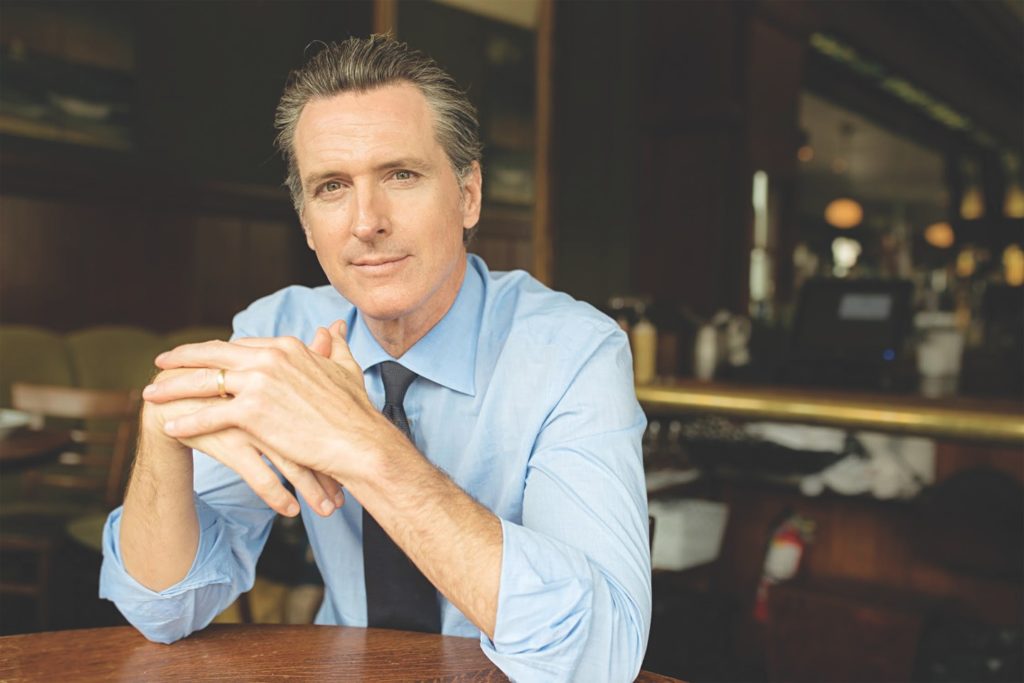
Gavin Newsom

Jewish Journal: What do you believe are the top two issues facing the state and how would you address them?

Gavin Newsom: Tackling our affordability crisis head on will be the first issue I tackle. That includes my commitment to universal health care, building the 3.5 million housing units we need by 2025, and rethinking about education as a lifelong pursuit.

I’m a firm believer in universal preschool but also believe that intervening at 3 years old is already too late. We need to double-down on the readiness gap by emphasizing prenatal care and the first three years of a child’s life, when nearly 85 percent of brain development occurs. 

We’ll couple our robust early-childhood system with college savings accounts for every incoming kindergartener, linking the next generation to the promise of higher education. We’ll create full-service K-12 community schools with wellness centers, arts education, computer science and after-school programs. We’ll guarantee two years of free community college tuition, create pathways to quality jobs and reduce debt for students pursuing a bachelor’s degree, and reinvest in public higher education.

JJ: As a proponent for a single-payer health-care option for California, how would you go about implementing this?

GN: The phrase “health care is a human right” is more than a political cliché. It’s a sacred promise we must keep, which is why I’ll ensure California leads the way on a plan to guarantee quality health care for everyone financed through a single-payer model like Medicare. We can create a more efficient, effective and comprehensive health-care system that works for patients and providers alike, available regardless of one’s ability to pay, pre-existing medical conditions or immigration status, and including coverage not only for physical, but also mental and behavioral health issues. 

The status quo isn’t working. A UCLA study determined that Californians are already spending $367.5 billion annually on health care — and that number continues to escalate. We must end the costly conveyor belt of paperwork and co-pays and allow providers to focus on patient care. 

As mayor [of San Francisco], I created Healthy SF, which even today remains the only citywide and countywide universal health program in the nation. The program has paid for itself many times over in the form of preventative care and healthier outcomes. It’s time to do the same for the state.

JJ: How would you address the massive sinkhole that has become the construction of the bullet train?

GN: I was one of the original supporters of high-speed rail and supported it then for the same reasons I support it today: It holds the promise to create thousands of jobs, improve mobility for Californians, generate tens of millions  [of dollars] in economic development, improve air quality and help us reduce greenhouse gas emissions. 

But I have also consistently expressed concerns with the long-term funding plan — particularly that projected federal and private funding hasn’t materialized — and the updated business plan underscores those profound challenges. I have confidence in the new leadership of the Authority appointed by Gov. Brown and, with this project underway, our focus must now be on vigilant oversight — learning from prior mistakes, demanding the project stay on time and on budget and attracting and retaining private-sector partners.

JJ: Earlier this year, your Republican opponents vowed to maintain attacks against you over your 2007 affair with Ruby Rippey-Tourk. How do you deal with these attacks — especially in light of the #MeToo movement?

GN: Those are deeply misleading attacks, and it’s the height of hypocrisy from unabashed Donald Trump loyalists.

JJ: Would you continue current Gov. Jerry Brown’s stance to stand up to the Trump administration and Republican leadership in areas where Californians don’t agree with the current administration’s agenda? 

GN: California’s values aren’t just a point of pride, they are the very fabric of the state’s history, identity and future. At a time when actions by the Trump administration are further disenfranchising the poor, women and people of color, California must step up and defend its residents — advancing policies grounded in both compassion and innovation.

California is the fifth largest economy in the world, and continues to show the world that an economy can thrive when it protects workers’ rights, environmental protections, civil rights and vulnerable communities. 

I believe we have an economic and moral imperative to protect our state’s immigrants and help them thrive, particularly our students, who are the future of our state’s workforce and economic growth. That’s why I’ve defended California’s status as a sanctuary state, called for the state’s public colleges and universities to be sanctuary campuses, and added my voice calling on Congress to pass a clean DREAM Act.

It is outrageous that the Trump administration has proposed removing protections for public lands, opening up the Arctic and our coastlines to oil drilling, and pulling out of the Paris climate agreement. Despite these challenges, California will continue to lead the nation and the world in clean energy, conservation and the fight against climate change.

I have boldly led the charge for major social change campaigns my whole life. I believe that the state government ought to reflect the values of its people, not the other way around. More than ever, America needs California’s example to prove that old fears and prejudices need not be the new normal, and to match resistance with results.
Gavin Newsom Read More »

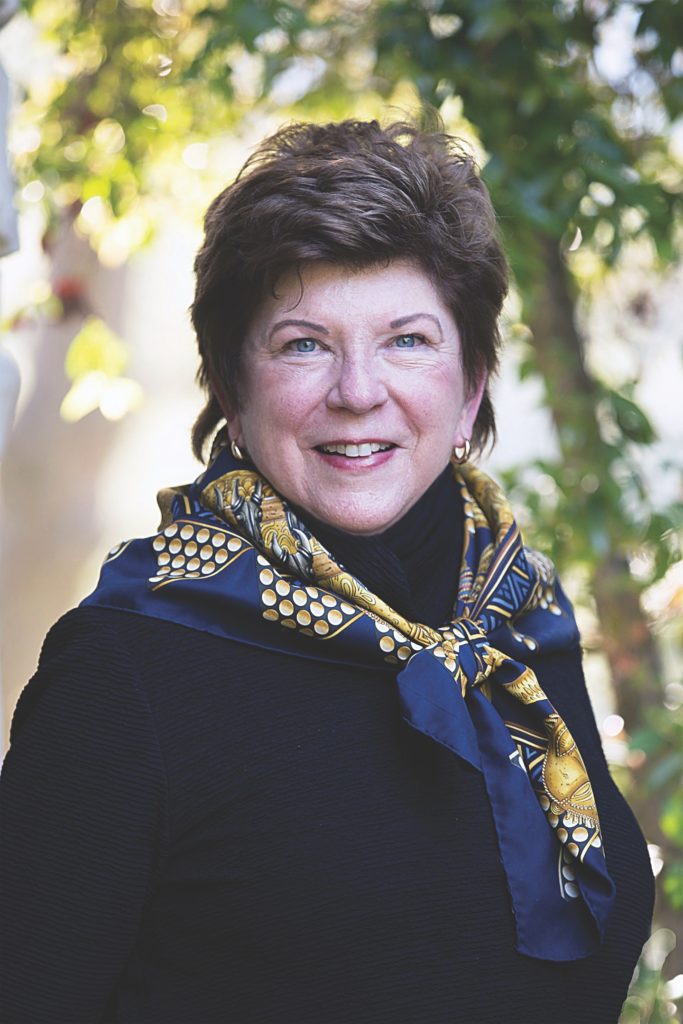
Delaine Eastin

Jewish Journal: What is the first thing you would tackle if elected? 

Delaine Eastin: I would declare a state of emergency as it relates to homelessness in California. It isn’t just in San Diego or Oakland or San Francisco. It’s everywhere. We have a winter rotating homeless shelter in Davis where I live, which is a college town. We have 12 percent of the nation’s population in California but 25 percent of the homeless are here. 

Longer term, I’m obviously very focused on education, and I believe California needs to make a full-court press to improve education, starting with better child development for working moms, universal preschool and mandatory full-day kindergarten. Kindergarten is not mandatory in California, which is shocking.

JJ: You are the only candidate advocating for the repeal of the Costa-Hawkins Rental Housing Act. Does this tie in with your homeless initiative?  

DE: Costa-Hawkins came about because it was believed it would mean more apartments would be built, but quite the opposite has happened. We’ve built almost no rental housing over the last 10 years. We’re not building enough housing generally, but certainly not enough rental housing.

JJ: You’re a proponent for single-payer health care. How would you go about implementing that?

DE: About 70 percent of the money that would be needed is already on the table. It’s Medicare, it’s Medicaid; public employee retirees all have public access to health care. Then you could do something like a gross receipts tax on businesses that have received over $2 million, let’s say. And with those additional resources, you could pay for that. It’s the ounce of prevention that’s worth the pound of cure. There are lots of people who want to talk about the costs of single-payer, but I want to talk about avoided costs, like emergency room visits that cost a fortune. 

JJ: How would you deal with the increasing problems associated with the high-speed rail project? 

DE: Other countries are doing some amazing things with high-speed rail and, in general, I think it’s a good thing. But I do think, a) there hasn’t been enough honesty with the public about the true cost; b) that the management needs to be a lot more nimble and we need to do a better job of holding costs down; and c) we need to identify a better revenue stream to pay for it. If you borrow the money to build something, it costs three times as much. If you did something like an oil severance tax — 33 states produce oil. Only one doesn’t have an oil severance tax and that’s California. Instead of running up costs by borrowing money, we’re going to ask voters to vote for this tax. We’re going to dedicate it first to build high-speed rail and then to transportation improvements generally.

JJ: Do you think it’s important that you’re the only woman running? Is it something you feel you should highlight?

DE: We have great research institutions in this country, and the research shows when you get a critical mass of women, that the values fundamentally change. More is invested in families, education, in health care and in senior care. Guess what? Those are my values. That’s where I think we should be increasing our investment. Budgets are statements of values. At the end of the day, California needs to get its values straight. That means we’ve got to find a way to put our children first and women tend to be more likely to do that. I worked hard all my life. I was a women’s studies coordinator back in the late ’70s. I was a founding member of the National Women’s Political Caucus. I was on the Rutgers Project 2012 to elect more women. I’m not just a woman. I’m a woman whose been fighting to elect women for my most of my adult life.

JJ: In light of the #MeToo movement, what would you do to ensure that your administration has a transparent reporting system?

DE: When I was superintendent of public instruction, over half of the leadership of the department was female. I will do that as governor. We will make sure there is more diversity, not only in terms of gender but in terms of race. We will make sure that we end the pay inequities in California state government and we’ll put pressure on the private sector to close those gaps in pay. One of the things I will do is have a leadership that looks like California in ethnicity and gender in every way, and we will have people who are more nimble and ready to change things that need to be changed. 

JJ: While other candidates have launched attack ads, you have an ad that shows clips of your competitors praising your ideas. What was the impetus behind that ad? 

DE: I think it reflects that people think I make sense and that I have good ideas and they echo what I say. Also, it would be good to have a governor that makes sense. I would govern by seeking the opinions of the people that work for me and with me. 

JJ: You’re running against some pretty high profile candidates and some people know little about you. Does that concern you? 

DE: Of course, that’s why I’m working so hard. That’s why I’m out and about talking to people all over the state. I’ve been in Folsom, Mount Shasta, El Centro, San Luis Obispo — a lot of places where mainstream candidates aren’t going. They’re counting on using television to reach those voters. It’s hard to have been off the stage for some years and try to re-enter, but if I can get in front of enough people, they like what I have to say. The question is: Can I get in front of enough people? If I can be heard, and I’m working very hard to be heard, I can win.

JJ: Would you continue current Gov. Jerry Brown’s stance to stand up to the Trump administration and Republican leadership in areas where Californians don’t agree with the current administration’s agenda? 

DE: I do think one of the nice things of having been a political science professor is that I do understand the history of our country and the Constitution. For many years, I watched as many people used the 10th Amendment to argue for discriminatory policies. I think now it’s exciting to use the 10th Amendment as a way to protect the people who live here and protect the values we hold. When Trump pulled us out of the Paris climate accord, the world looked at us as if we were stepping back into the Dark Ages. When you hear people who support Trump argue that the sea rise is because more rocks are falling into the ocean, you have to think, “Oh my God.” One out of every eight Americans lives in California. I think it is important that a leader with a brass backbone is going to stand up for the Constitution of the United States and the Constitution of the state of California.

Delaine Eastin Read More »

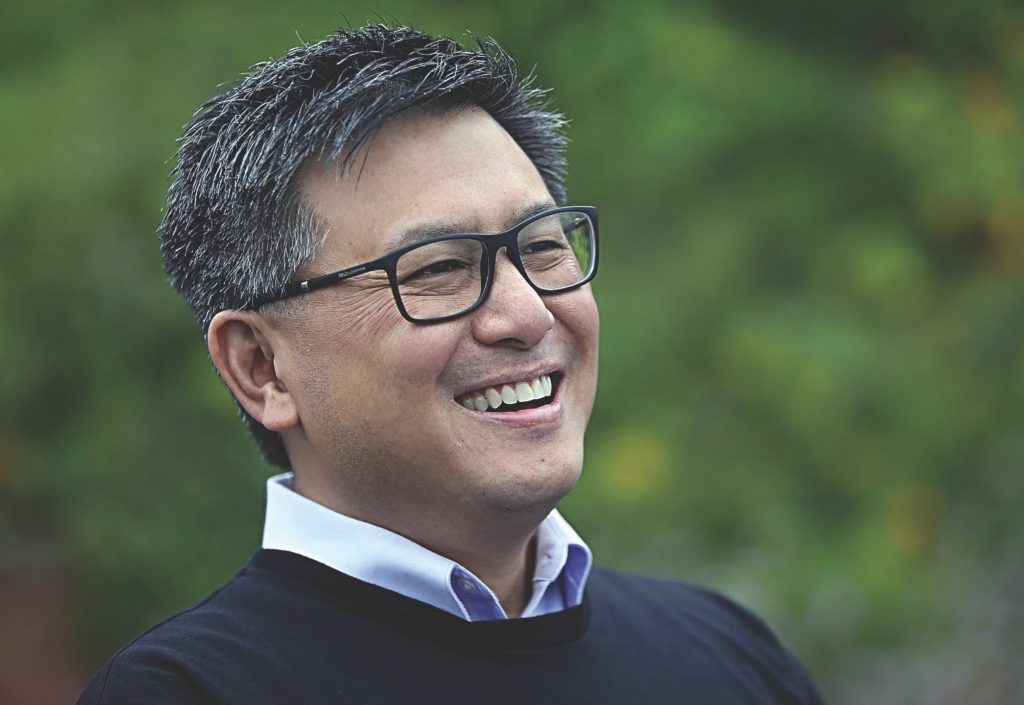
John Chiang

Jewish Journal: The latest polls show you trailing your more well-known opponents, including Gavin Newsom and Antonio Villaraigosa. Does that concern you? 

John Chiang: It does not. The fact that millions of dollars of attack [ads] have been waged against us by Gavin Newsom shows that we are moving up in the polls. I think we’re making strong progress.

JJ: You’ve also launched attacks on your opponents. Do you feel this detracts from campaigning, when most voters just want to know what your policies are?

JC: It’s important to provide your vision for California and also to point out a clear picture of what people say and what people do. That’s an important aspect of campaigns and it’s part of our democracy. We’re happy to engage in putting up my record of fiscal responsibility and getting California through difficult times.

JJ: What is the first thing you would tackle if elected?

JC: Education. Education is the key to the American dream. It’s why my parents came to this country. They made extraordinary sacrifices. But America has and always will be the most aspirational place on earth, and it starts with education. We have too many communities in the state of California where kids aren’t getting the best opportunities, and I want to close that gap. I want to make sure that kids can grow up and pursue their dreams, and that can only be possible in a global economy if they get a very wide, very deep and diverse education.

JJ: You’re a proponent of single-payer health care. How would you implement that? 

JC: That’s a good mountain to climb. I’m the candidate who has a history of overcoming legal, logistical and financial hurdles. I helped create Secure Choice [now CalSavers Board] — a retirement savings plan. I would take that history and experience of successfully moving tough projects and bring it along with single-payer by trying to move it through a Trump administration, trying to overcome financial challenges and trying to overcome the legal challenges. 

JJ: How would you deal with the ever-increasing problems associated with the high-speed rail project? 

JC: Part of that contemplation is making sure you go out and find private-sector funding. I’m the one who has a record of reaching out and meeting and trying to introduce private-sector investors to the high-speed rail authority. I’d lead international delegations, which I think are important. We celebrated recently that California became the world’s fifth largest economy. Part of that is understanding international investment, international trade and extraordinary diversity, whether it comes from Israel, the Middle East, Asia, Latin America, Africa. There are massive investors all across the globe. We’re going to have to go out, reach out to them, and package this in a manner that creates incentives in the private-sector to invest in high-speed rail.

JJ: How important would it be to become the first Asian-American governor?

JC: This is just evidence of the brilliance of America. Despite all the high hurdles and the friction, America is a country that welcomes immigrants. If elected, I would just continue the promise of what America is about. When people come from other countries, they struggle, overcome ugly bigotry and discrimination, and yet their child has an opportunity to wake up every morning like I do, to do what I am passionate about and serving others to make sure that every Californian can live in a place that gives them the best opportunities to succeed, which is the American dream.

JJ: Would you continue current Gov. Jerry Brown’s stance to stand up to the Trump administration and Republican leadership in areas where Californians don’t agree with the current administration’s agenda? 

JC: If you ask my colleagues on both sides of the aisle, I am a person of goodwill who acts responsibly in trying to fight for Californian values. I will work with the administration and President Trump to fight for who Californians are; fight for building an economic ladder that is open to all; fight for social inclusion. But I will stand up to President Trump when he acts contrary to what’s in the best interest of California, and I’ve had to do so in a number of areas. 

I will continue the battle if the president tries to act irresponsibly on climate change. Climate change has a dramatic impact on California’s economic prosperity, of physical health from sea level rise to clean air, to environmental justice issues. That’s why, as a member of the State Lands Commission, I voted against offshore drilling. 

On gun reform, we can’t continue to have our kids getting shot and losing their lives in school. Kids are our most precious resource. We have to make sure they’re safe. If it requires leadership that challenges the gun lobby and the NRA, then so be it. 

On health care, we want everybody to get accessible, affordable health care. When President Trump and the Republican Congress started action against Obamacare, as the state’s treasurer I came up with the idea of emergency lifeline grants to try and keep the doors open for California’s 1,200 community clinics. We don’t want Californians to have to make decisions between paying rent or taking care of a sick child.

I will fight for Californians. That’s a fundamental difference between me and the other [candidates]. While others are tweeting or making bold statements, we need leaders who are taking real action. 

JJ: In light of the #MeToo movement, what would you do to ensure your administration has a transparent reporting system?

JC: This issue has fallen off the map in this campaign. It means we’re not listening and seeing people. You need leadership so that victims and survivors know that there is somebody they can trust. What separates me from the others in this race is I see them, I hear them, and I am the only candidate who has a specific plan to stop sexual harassment. If that plan is not in place on Day One [of my tenure], I will push to ensure that it is. It’s tragic that this conversation has been lost over the past few months. 

John Chiang Read More »

Travis Allen

Jewish Journal: What’s the first thing you will tackle if elected?

Travis Allen: Job No. 1 is to cut taxes and repeal the gas tax. We’re actually going to do that on election night in November. In my first 100 days in office, I’m going to reverse the illegal sanctuary state [status] by gathering the signatures to call a special election so the people of California can reverse this illegal and unconstitutional law. In my very first budget, I’m going to defund Gov. Jerry Brown’s high-speed rail and refund the money back to California taxpayers.

JJ: How would you do that without violating federal grant agreements, and what would you do with the infrastructure that’s already in place?

TA: Whatever money has been spent is nothing compared to the potential cost of the high-speed rail. The current estimate is $77 [billion] to $100 billion, and it’s over a decade behind schedule. Californians don’t want the high-speed rail and we certainly don’t need it. There’s one section we’re going to leave standing. It looks like a bridge. I’m going to leave it with a sign on it that says “Jerry Brown’s Legacy” so that Californians will always remember that’s all he ever gave us.

JJ: Does it concern you that President Trump endorsed your Republican rival John Cox? 

TA: I’m the only candidate that voted for and supported the Republican candidate for president, Donald Trump. John Cox is a failed politician for starters. He’s previously run for U.S. president, U.S. Congress, U.S. Senate, even county [Recorder of Deeds] in Illinois and lost every single time. We were a little bit surprised by [Trump endorsing Cox]. This is Republican establishment politics at its very worst. [Congressman] Kevin McCarthy convinced Trump that because of Cox’s money, he’d be able to make it to the [California gubernatorial runoff]. Unfortunately, everyone knows there’s no way John Cox could ever be elected or could ever beat Gavin Newsom. So once again, the establishment Republicans have sold out the Californian people. 

JJ: California was just named the world’s fifth largest growing economy. How would you protect DACA recipients and the thousands of undocumented workers who contribute to that economy?

TA: That’s not a correct statement. Immigration is the responsibility of the federal government. As the next governor of California, I will ensure we will enforce federal immigration law. We’re going to secure our border. It’s not legal to hire people in this country illegally. 

JJ: Do you support President Trump’s proposals to loosen EPA regulations in California?

TA: Every Californian wants a clean environment, whether you’re Republican or Democrat. The president understands clearly that this country belongs to the citizens, not unelected bureaucrats in government agencies. I will ensure that we once again have a thriving timber industry and healthy forests in the north of the state. We’ll have a thriving, driving industry in gold country. We are, after all, the Gold Rush state. We will once again have the ability to utilize our own domestic energy and become energy self-sufficient. 

JJ: You’ve also said you want to reform the California Environmental Quality Act (CEQA). What is your plan for doing that?

TA: CEQA has been used as a weapon by organized labor groups to stop development across the state of California. We’ll dramatically shorten the time needed to not only get approval for projects in California but also streamline the regulatory and court process so we can actually build once again in California.

JJ: What will you do to protect Californians from increasing gun violence, especially in schools?

TA: I have an A and an A+ [rating] from the NRA [National Rifle Association] and the Firearms Policy Coalition, because the Second Amendment is our right, not a privilege. I introduced legislation to make California a shall-issue CCW [concealed- carry weapon] state, giving every Californian the ability and the right to protect themselves, whether you’re old or young, rich or poor, man or woman. Furthermore, we’ll get rid of the handgun roster of the California Democrats. And lastly, we’ll get rid of the ammunition registry of Gavin Newsom. We will allow our children to be protected while in school by licensed and trained individuals. No longer will little old ladies have to walk in fear. Criminals will now think twice because that little old lady and everyone else in California will have the ability to protect themselves. 

Travis Allen Read More »

Signs of Anti-Semitism at Florida State

Indications of anti-Semitism at Florida State University (FSU), originating in its Students for Justice in Palestine (SJP) chapter, have been uncovered, according to a new report by the pro-Israel watchdog organization Canary Mission.

According to the report, 36 percent of social media posts of FSU SJP members “were endorsements or promotion of terror as well as calls for intifada and violence against Jews.”

As examples, the report cited that SJP has issued several posts in support of Popular Front for the Liberation of Palestine (PFLP) terrorists Rasmea Odeh and Leila Khaled, referring to the former as a “freedom fighter” and a “Rosa Parks” figure. Odeh had been convicted by an Israeli military court of being behind a 1969 bombing of a Jerusalem supermarket that resulted in the deaths of two Hebrew University students.

The report also noted that SJP posted a photo of a quote from Khaled in support of International Women’s Day in March 2017. Khaled took part in two airplane hijackings in 1969 and 1970 as a member of the PFLP.

Additionally, the report highlighted SJP’s frequent defense of Palestinians who attempted to attack Israeli soldiers with knives during the November 2015 intifada.

“Brutal military occupation uses violence to quell peaceful resistance,” SJP wrote at the time. “And we wonder why resistance turns to armed struggle? To knives?”

One of the SJP students highlighted in the report was Albert Kishek, the former co-president of the chapter who once tweeted, “long live hzballah,” a reference to Iran’s terror proxy Hezbollah. Another SJP student was Betty Kishek, who tweeted in June 2013, “Facebook and Yahood – the cause of all the worlds problems.” Yahood is Arabic for Jews.

One SJP activist, Yousef Mohamed, tweeted in 2013, “Where do black Jews sit? Wait for it…IN THE BACK OF THE OVEN.” Another, Reem Zaiton, tweeted in November 2016 that she wanted to “f– up a Zionist,” per the report

The full report can be read here.

Signs of Anti-Semitism at Florida State Read More »

What Are We Willing to Do as Individuals?

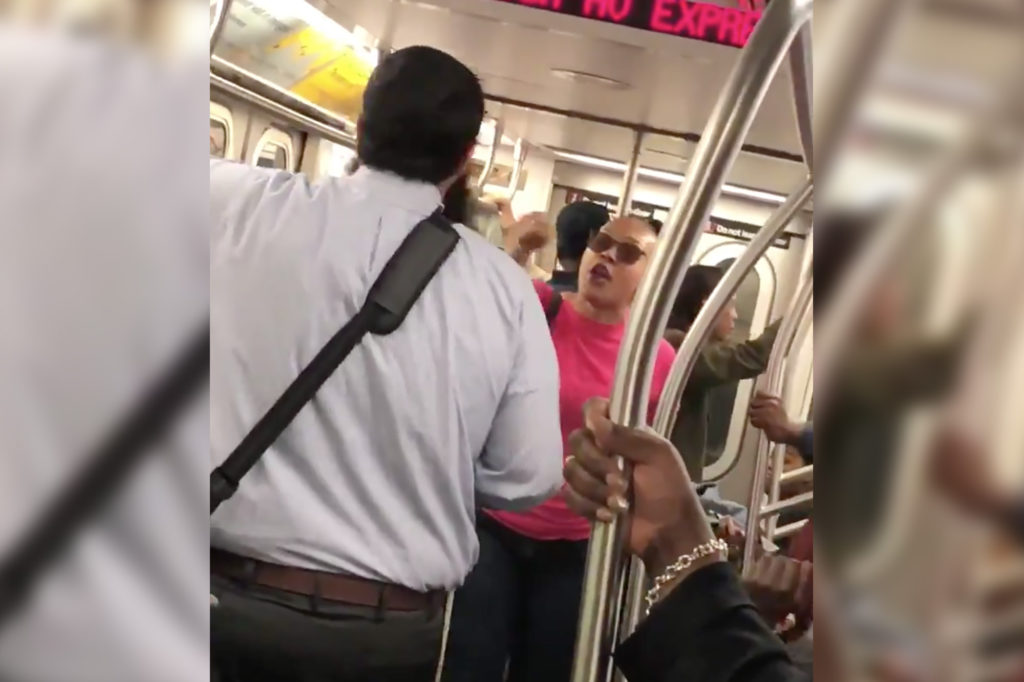
This week, a bizarre situation broke out on the Bronx-bound New York subway. A Black woman walked onto the train with her three children; nobody got up to give her their seats. At that point, a second Black woman began ranting about the supposed injustices of the New York public. According to an Orthodox Jewish witness, Yossi Wolfe, the woman ranted, “If it was a Jewish family, y’all would have gotten up.” At that point, Wolfe — who was standing — stated, “Can we please not make this a racist thing?”

That prompted the woman to new heights of anger. “Judaism is not a race,” she stated. “It is a religion … I’m schooling your ass. You guys think you’re so f—ing smart, but guess what? I’m gonna teach you a lesson on this f—ing train today.” 

Wolfe interjected, “No ‘you guys.’ I am a person. You are a person.” 

To which the ranting woman responded, “No! No! We are different. Understand that. You know why? Because your people treat my people different in our community! The f— you talking about.” When Wolfe demurred, she continued, “You treat us different in our community. You don’t even rent to us. What the f— are you talking about? … You said I was racist, so I’m addressing your people. You said I was racist, right? Because I brought up Judaism, right?” The woman continued by stating that she wasn’t calling Jews “dirty” or saying “they stink,” she was just explaining the “difference between racism and prejudice-ism.” 

Most of this discussion was caught on an electronic device and posted on Twitter.

In fact, being Jewish is both a racial and a religious attribute. And in fact, it’s racist to claim that Jews are somehow — as a group — discriminating against Black Americans, particularly without data to support such an accusation.

But perhaps the most striking aspect of the video is the behavior of others on the subway. No one appears to get up to make room for the first woman and her three children — an act of common courtesy. Also, no one appears to interject to tell the ranting woman that her words are nonsense — in fact, one of the other passengers can be heard agreeing.

As I see it, both of these problems boil down to a single problem: lack of personal responsibility.

Are we willing to give up our subway seat? Are we willing to stand up when someone is ranting in racist fashion? 

First, it is our job to constantly reassess our own performance of acts of kindness. Are we doing enough, when we see a single mother with three kids, to make her life just a little bit easier? Did we cut someone off in traffic, simply because the bustle of everyday life makes us impervious to seeing one another as individuals, worthy of respect and protection?

Second, it is our job to stand up against actual prejudice when we see it — even if it’s politically incorrect to do so. Modern intersectional politics suggests that the ranting woman’s opinion takes precedence over the opinion of the Orthodox Jewish man because she’s Black and he’s Jewish — and that therefore, he has suffered less discrimination than she has. But she is, in fact, spouting racist tropes — racist tropes supported by prominent personages ranging from Al Sharpton to Louis Farrakhan over the years. Why doesn’t anyone rise to defend Jews other than the Orthodox Jewish man?

It’s easier to be an observer in life. The man who posted the video on Twitter later issued a message: “I ask you all, is Anti-Semetism [sic] a real thing? Yes. Is being human a real thing? Yes. Is gentrification a real thing? Yes. Is prejudice a real thing? Yes. Let’s ask ourselves these tough questions before hitting send on a tweet. Be blessed y’all.”

But that’s a cop-out. All of these issues may be real. The question is what we do about them. Are we willing to give up our subway seat? Are we willing to stand up when someone is ranting in racist fashion? What are we willing to do, as individuals, to make the world a better place, rather than merely recording the chaos around us, shrugging, and then lecturing one another about the unsolvable problems that apparently plague our society?

What Are We Willing to Do as Individuals? Read More »

The Golden Race

FIVE CANDIDATES MAKE THEIR CASE TO LEAD CALIFORNIA

Californians will go to the polls on June 5 to vote for — among other things — candidates in the primary election for governor. The top two vote-getters, regardless of party affiliation, will take part in a runoff on Nov. 6.

Recent polls have shown that current Democratic Lt. Gov. Gavin Newsom is the frontrunner, with a close battle for second place heating up between Democratic former Los Angeles Mayor Antonio Villaraigosa and Republican businessman John Cox, who recently was endorsed by President Donald Trump.

The Journal reached out to the top six candidates — four Democrats and two Republicans. All but Cox agreed to be interviewed. Cox’s spokesman, Matt Shupe, told the Journal that Cox “has been very busy, especially since he was endorsed by President Donald Trump.” Cox, 62, who lives in Rancho Santa Fe in San Diego County, was endorsed by the president on May 18. Travis Allen, John Chiang and Delaine Eastin spoke with the Journal by telephone, while Newsom and Villaraigosa responded to questions via email.

Eastin, the former state superintendent of public instruction, is the only woman running and has major education proposals. Republican candidate Allen wanted Journal readers to know about the anti-boycott, divestment and sanctions (BDS) legislation he sponsored in the state legislature, saying, “I wrote legislation to stop California from doing business with our strongest friend and ally in the Middle East, and I’ve been to Israel nine times.” Chiang pointed out that he is the only candidate who has a clear anti-sexual harassment and assault policy on his campaign website.

Click the candidate to read their interview:

Travis Allen
Age: 44
Party: Republican
Resides: Huntington Beach
History: Current 72nd District Assembly member
Website: jointravisallen.com

John Chiang
Age: 55
Party: Democratic
Resides: Torrance
History: Current state treasurer, former state controller
Website: johnchiang.com

Delaine Eastin
Age: 70
Party: Democratic
Resides: Davis
History: Former state superintendent of public instruction, former 20th District Assembly member, former 18th District Assembly member
Website: delaineforgovernor.com

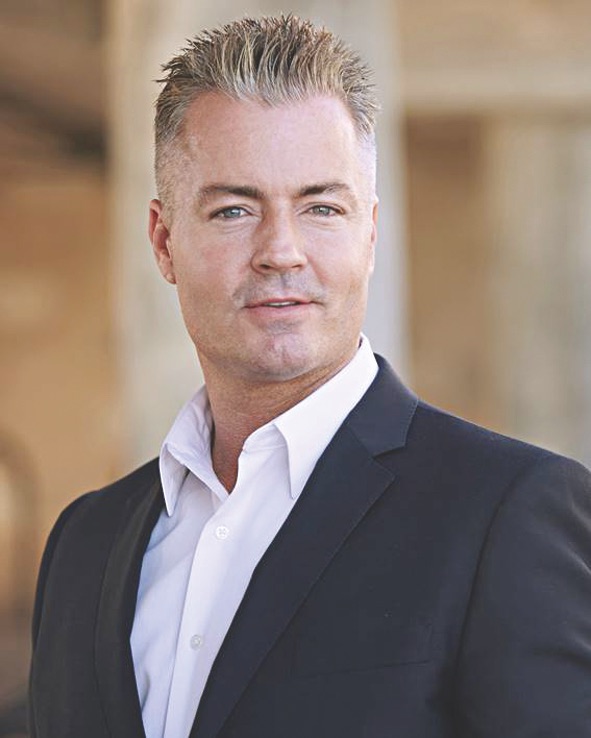
Gavin Newsom
Age: 50
Party: Democratic
Resides: Marin County
History: Current lieutenant governor, former San Francisco mayor, former San Francisco Board of Supervisors member
Website: gavinnewsom.com

Antonio Villaraigosa
Age: 65
Party: Democratic
Resides: Los Angeles
History: Former Los Angeles mayor, former Los Angeles City Council member, former Assembly speaker
Website: antonioforcalifornia.com

The Golden Race Read More »

The Torah of Time

A famous rabbinic principle of interpretation holds, “There is no such thing as early or late in the Torah.” 

At first glance, this is rather mysterious, because the Torah seems to tell a story that, like most stories, goes in one temporal direction. It begins with the creation of the world, continues through the birth of the Hebrew people, and follows the family tree generation after generation until the moment when Moses dies, on the verge of entering the Promised Land. 

However, looking more closely, there are indeed some confusing snags in the time-space continuum of the story. Perhaps most famously, the fact that Moses receives the five books of the Torah … midway through the second book. 

Which raises a couple of questions. How can Moses receive a story written in past tense, containing the future? And specifically, how, in the Torah’s last chapters, can Moses describe his own death? 

Of course, modern text scholars would answer that the stories are not literally true; after all, the Torah (unlike some modern media) does not pretend to be journalism. 

But that takes all the fun out of the koan-like question of linearity and time in Torah. The most creative interpretations come from the rabbis who are attached to the literal meaning of Torah, and therefore need to find poetic solutions to its paradoxes. They offer explanations: Maybe the Torah was given like a tightly furled bud, which unfolded its petals through time. Or maybe Moses did glimpse his future, and transcribed God’s words in ink until the last paragraphs, when he dipped his quill into his own tears to describe his death. Or perhaps linearity is not the only way to understand time; perhaps “there is no such thing as early or late in the Torah.” 

This idea of malleable chronology may seem to some like an ancient cop-out, but I love it. I love how it resonates with modern astrophysics and our understanding of bendable space-time, and our inner psychological realities. The truth is, we do not experience time as strictly linear. Stories contain currents and eddies of one another; our past is embedded in our present; our future is seeded in our past. So it is with Torah, which we read over and over through time, looking to the past to understand the present, and to create a better future. 

When I began studying Jewish texts at age 20, one of my teachers described the annual Torah reading as a spiral staircase that we ascend, one more round each year. We hear the same stories each year — but we are different, and so the stories are different. We chant them through the seasons, gripping onto the heavy wood handles, turning the scroll as the earth turns.

Maybe the Torah was given like a tightly furled bud, which unfolded its petals through time.

I remember being moved by a saying by the wonderfully named sage, Ben Bag-Bag. He said, about the Torah: “Turn it and turn it, for everything is contained within it.” The entire world is contained in the Torah — the entire scope of human experience. That infinite possibility is a constant; we are the variable, each year ready to understand a little bit more. 

Before my students’ bat mitzvah ceremonies, I always tell them: “I want you to know that we have not reached the limits of Torah. As you get older, you will need deeper, more complicated sources of strength and advice. You can always come back to our sacred texts. They will grow along with you.” I want them to understand the Torah will continue to be there for them as older teens and adults, in moments of trouble as well as joy, of questioning and crisis as well as celebration.

I sometimes think of time as the medium in which we humans are created: As an artist paints in oils, or a writer makes a world in fiction, we exist in time. And, like Torah, time is at once forward-moving and mysteriously circular. Each year we return to May, to August, to December; in the ancient Babylonian lunar months the Jewish calendar still keeps, we find ourselves again in Nisan, in Av, in Kislev. New moon, full moon, new moon, full moon — each month the same, but each month different. 

We are children in spring, then older children the next. We grow into adults, and springtime carries with it a bit of the taste of childhood. And if we are lucky, we will walk among the spring blossoms in our old age, too.

The Torah of Time Read More »

Sex and the City

As the web of lies surrounding the Beacon School’s moment of silence for terrorists continues to confound — the principal now has a gag order on all staff — parents who send their kids to progressive schools have been complaining more openly about the various oddities that adhere to the word “progressive.” It seems that Beacon may have opened a Pandora’s box of grievances.

Many of the complaints fall under the realm of “gender.” Students at some progressive schools are being taught that “infants are randomly assigned a gender at birth”; masculinity is seen as so evil that one principal replaced all balls with jump ropes; dressing and posing in anything but gender-neutered conformity is seriously frowned upon.

Meanwhile, at my son’s elementary school uptown, the kids have been happily freed from the endless winter. And with no political agenda constraining their liberation, I’ve noticed an interesting development in his third grade: The girls were back to chasing boys, and the boys were loving every minute of it.

For nearly three years, the two groups have been separate but equal, appalled by the mere thought of being near the other group at the park. But this spring, the chasing, “kidnapping,” “handcuffing” and water-blitzing of boys returned with gusto.

But sexuality — both male and female — is an integral part of feminism.

I love watching the girls who chase boys at this age. They tend to be confident, sassy, brave beyond reason — they know what they want, and nothing is going to get in their way. My strong-willed son is a bit of a challenge for them, but they typically succeed in their endeavors. After one particularly impressive feat of kidnapping, I asked if they would come over whenever I’m having a problem with him. (Much to his faux distress, they said, “Sure!”)

I’ve also noticed the beginnings of a new behavior: flirtation. One girl in particular throws her head back and laughs whenever the boys say something in the realm of 9-year-old humor. She lounges back and coyly looks at my son, only to tease him mercilessly. This newfound tool, it seems, only adds to her confidence.

And it’s not lost on the boys. I don’t want to say they melt, but I think the flirtatious girls could get the boys to do pretty much anything, except maybe relinquish all video games.
Flirtation, of course, is the way females have tried to civilize males for centuries. Lacking a feminist foundation, feminine wiles only went so far, but they did get some things done, like marriage proposals.

The original feminists had no problem with flirtation or women’s sexuality in general. In fact, they were far more focused on removing Victorian constraints on female sexuality. Not only was a woman’s sexuality an essential part of her, it was thought to be profoundly empowering. Which is in part why Victorians wanted to constrain it.

In the past few decades, self-proclaimed feminists — doused in nonsensical “gender theory” — have become the new Victorians. They’ve told women that femininity means weakness. That female sexuality is exactly the same as male sexuality, and since male sexuality is inherently bad, female sexuality must also be bad and thus constrained.

They’ve been so focused, in other words, on not “objectifying” women that they ended up erasing women.

But sexuality — both male and female — is an integral part of feminism. Not superficial sexuality, like wearing minimal clothing at inappropriate times, but a sexuality that comes from your soul. A sexuality that defies both age and beauty.

The lies being taught to young women today are just as dangerous as the lies taught to young women in the 18th and 19th centuries to prevent them from knowing they even had a sexuality.

Moreover, if the #MeToo movement is going to lead to any positive change on the female side, it will be that women will fully recognize that their sexuality is powerful and thus learn when and how to use it.

As I watch these young, confident girls chase my son around the playground, I hope that by the time they reach high school and college, the Stalinistic trend of teaching them that their sexuality is bad, that “real feminists” are gender-free, will be as quaint as Victorian era dogma.

Because, these are the girls who will indeed rule the world, and they’ll use all of their God given charms to do so. Just like Wonder Woman.

Sex and the City Read More »

Anti-Israel Protesters Disrupt UCSB Meeting

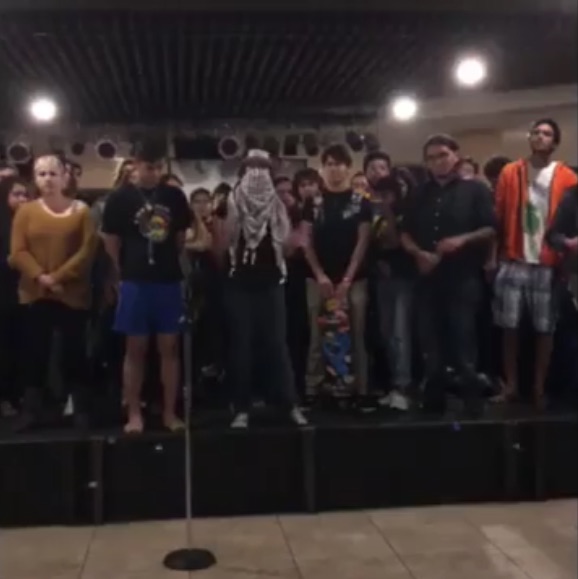
The swearing in of UC Santa Barbara’s new student senate board on May 23 was derailed when a group of around 60 anti-Israel protesters stormed the stage.

According to UCSB’s student newspaper, the Daily Nexus, the protesters were angry that the student senate’s Israel divestment resolution had been changed the week before from requiring a 50 percent majority plus one vote to pass, to requiring a two-thirds majority.

Shortly before the motion to swear in the new board, the protesters wrestled the microphones from the student senators with chants of “Shut it down! Shut it down!”

One of the students, identified by the Daily Nexus as Justice Dumlao, declared they were engaging in “an act of civil disobedience” because they felt the change in the resolution’s technical status was “illegitimate and unfair.”

In a video posted to Facebook by UCSB’s Students Supporting Israel (SSI), a student asked Dumlao if there was some way for the student body to “come together” and have a discussion about the resolution.

“The disruption was offensive and disrespectful, and demonstrates how divisive BDS is to the campus climate.” — Rabbi Evan Goodman

Dumlao responded, “When people are changing a resolution based on their own personal opinions that come out of nowhere in Week 7 of a senate meeting, how am I supposed to have a constructive conversation about it?”

A female student involved in the disruption added, “How can you ask for a dialogue when we can’t even say anything?” She later added that the disruption sprang from desperation.

Toward the end of the video, a female wearing a bandana over her face shouts, “I am a Palestinian and I have to hide my f—ing face for the sake of my family, for the sake of my people who are dying –– dying! –– because of our money funding companies that are profiting off our deaths.”

The student senate was forced to adjourn the meeting and multiple senators left the room. Michelle May, president of Gauchos United for Israel, told the Journal that she saw the protesters banging on tables and holding their phones in the faces of the student government members, which likely contributed to them leaving the meeting.

“I think it was partially because they felt it was impossible for the meeting to continue properly and because it was a little bit scary,” May said.

UCSB’s SSI condemned the disruption as an “abominable display of aggression and intimidation, which caused many to feel targeted and unsafe as pro-Israel and Jewish students.”

“Associated Students UCSB should represent all students on this campus, acknowledging and actively listening to all of their constituents,” the group said in a statement. “It is not a place that should allow for any one group of students, regardless of political affiliation or opinion, to take control of its meetings and silence the voices of other students.”

SSI accused members of Students for Justice in Palestine (SJP) of taking part in the protest. May told the Journal that she saw SJP members participate in the disruption but didn’t know if they had organized it. As of press time, neither UCSB’s SJP nor the Associated Student Senate had responded to the Journal’s request for comment.

Rabbi Evan Goodman, executive director of Santa Barbara’s Hillel, told the Journal in a Facebook message, “The disruption of the opening meeting of the newly elected senate was offensive and disrespectful, and demonstrates how divisive BDS (Boycott, Divestment and Sanctions) is to the campus climate. We urge student leaders to work for the good of the entire student body.”

Anti-Israel Protesters Disrupt UCSB Meeting Read More »