
Week of May 11, 2018
Week of May 11, 2018 Read More »


With European powers either unable, or unwilling, to meet his demand to “fix” the Iran nuclear deal, President Donald Trump on May 8 followed through on his threat to “nix” the Joint Comprehensive Plan of Action (JCPOA), as it is formally known, and re-impose “the highest level of” economic sanctions on the Islamic Republic of Iran.
“At the heart of the Iran deal was a giant fiction — that a murderous regime desired only a peaceful nuclear energy program,” Trump asserted. “We will not allow a regime that chants ‘Death to America’ to gain access to the most deadly weapons on Earth.”
The president in January warned that he would scrap the accord unless its “disastrous flaws” were addressed, and, to this end, had for months been lobbying France, Great Britain and Germany to formulate a side agreement to eliminate the JCPOA’s so-called “sunset clauses” — which remove limitations on Iran’s ability to enrich uranium in just over a decade — as well as curb the Islamic Republic’s ballistic missile program and involvement in fomenting unrest in the Middle East.
The question now is: What comes next? While Tehran threatened to take measures “stronger than [Trump] imagines” now that the United States has backed away from the deal — including “vigorously” jump-starting its uranium enrichment program — the Iranian regime is believed to have contingency plans for the continuation of the accord without American participation. In fact, Iranian President Hasan Rouhani kept this door open, saying on May 7 that “what [Tehran wants] for the deal is that it’s preserved and guaranteed by the non-Americans.”
While Trump vowed to continue working with allies to find a “real, comprehensive and lasting solution to the Iranian nuclear threat,” most analysts agree that it is exceedingly unlikely that Tehran will abide by any such process. In fact, Iran’s foreign ministry issued a statement describing the White House’s move as “illegal and illegitimate.”
By contrast, initial contacts by The Media Line with opposition sources in Tehran suggest that Ayatollah Ali Khamenei’s critics were energized by Trump’s words, which included a direct address to the “long-suffering people of Iran … [with whom] America stands.”
The president in January warned that he would scrap the accord unless its “disastrous flaws” were addressed.
For his part, Israeli Prime Minister Benjamin Netanyahu appeared on national television just moments after Trump’s speech in order to reaffirm his support for the “brave decision.” This, while no doubt cognizant of the fact that Washington’s move raises the heat on Iran, whose rulers may conclude that they have little to lose by unleashing their proxies on Israel.
Efraim Kam, a former colonel in the research division of Israel Defense Forces Military Intelligence and currently a senior fellow at the Tel Aviv-based Institute for National Security Studies, said that “it is more likely than unlikely that the Iranians will respond,” although he does “not think there will be a major war, but instead a [tit-for-tat] exchange.”
Indeed, the Israeli army is on high alert in the north, where municipalities were ordered on the day of Trump’s announcement to unlock public bomb shelters over what the military called “unusual Iranian forces” in Syria. The Iranian mullahs may even determine that opening a front against Israel is in their best interest, using the conflagration as justification to restart their atomic program, if not make a full-out dash for a nuclear bomb.
Uzi Rubin, the former head of Israel’s Arrow defense program, developed jointly with the U.S. to neutralize the threat posed by longer-range ballistic missiles, concurs that “there is a very high potential for an intensification. Iran has spoken of a reprisal [against Israel] but the question is how it will be expressed. The Iranians are good chess players and will do something that will give them the maximum benefit with minimum damage.”
By ditching the JCPOA, then, Trump effectively opened Pandora’s box in the Middle East tinderbox. Many world leaders have warned that such action could lead to a large-scale military confrontation, not only involving the Jewish state and Sunni Arab countries, but also potentially the United States and Russia, which has re-emerged as a force in the region.
In the past, historians have described such conflicts — those involving multiple players and pitting global powers against one another — as world wars.
By Nixing Iran Nuclear Deal, Trump Opens a New Chapter in Volatile Mideast Read More »

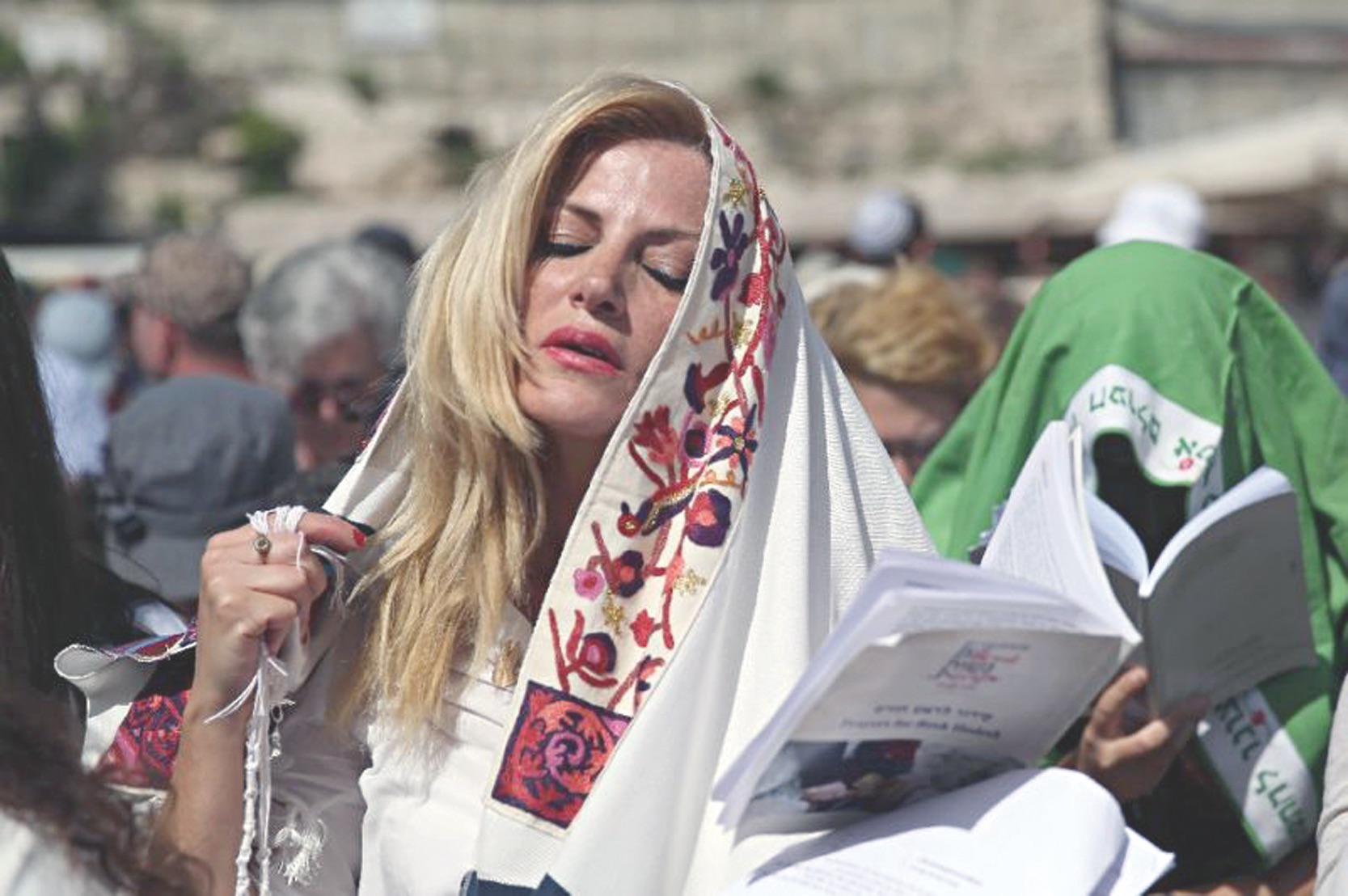
In 2009, Rabba Sara Hurwitz made history when she became the first Orthodox woman to earn public ordination at the Hebrew Institute of Riverdale (HIR), an established modern Orthodox synagogue. Later that year, she and her teacher, Rabbi Avi Weiss, then the spiritual leader of HIR, founded Yeshivat Maharat (YM), a New York seminary that ordains Orthodox women as “full spiritual and halakhic leaders.” In other words, as rabbis, but without challenging halachic limitations around what women can and cannot do.
Today, almost a decade later, there are 19 YM graduates working in clergy positions within and beyond the Orthodox community, and another seven will join them after ordination later this month. But for the 28 women currently enrolled in YM’s beit midrash, the year of the #metoo movement has unleashed new questions around the entrenched power structure of the Orthodox community and how it affects the growing number of women working to claim their place as leaders.
Hurwitz, 41, talked to the Journal about the “#metoo” effect on the modern Orthodox community, the power imbalance in traditional Judaism and how she squares the fact that even as a “rabba,” she doesn’t count in a minyan.
Jewish Journal: On May 9, you led an event at Yeshivat Maharat called “The complicated nature of power.” Why is the acquisition of power so complicated for Orthodox women?
Sara Hurwitz: As an institution that is training women to be authorities, we became very mindful during the #metoo movement [about] what our responsibility was in terms of helping our students know how to protect themselves, but also how to help them manage the dynamic between being authorities and protecting against authority. We realized this was a unique position for Orthodox women who, on one hand, are trying to protect [themselves] from harassment and power, and on the other hand, are trying to gain power.
JJ: What impact has the #metoo movement had on Orthodox women?
SH: The conversation has given women some language and confidence in speaking out about uncomfortable situations that they’ve been in. We all have had upsetting statements made about our bodies when we’re on display. [#Metoo] has given students and faculty a little bit more confidence in pushing all of us to come up with a more formal system of reporting and to explicitly create parameters around what’s appropriate.
JJ: Is the Orthodox community echoing the broader culture in terms of women coming forward to report sexual harassment and assault?
SH: I definitely think there’s more silence. We’re a traditional community that has used halachah as its guidepost and part of that system has been to be insular and to not have a system of reporting externally. That sentiment of not airing our dirty laundry still resonates for Orthodox people. But I certainly see a shift happening. It’s no longer possible to dust things under the rug.
Rather than throwing out the whole system, I’m really invested in trying to create change from within. I think about expanding the walls of the beit midrash rather than breaking down the whole building.
JJ: Do you see any connection between the power imbalance in Orthodox Judaism and the ability for a man to more easily abuse his power?
SH: It’s definitely a patriarchal system and men have held [the only] positions of authority for far too long. Our model is trying to ensure that women [be] seen as authorities in addition to men — not to usurp authority, but to create a system where both men and women are shaping communal conversation in partnership.
JJ: Earlier this year the Orthodox Union (OU) reaffirmed its opposition to ordaining women. How did you feel about a decision that essentially delegitimizes your work?
SH: The question about what to call women is just splitting hairs. We know there’s a tremendous need. In the last several months, we’ve [had] 20 phone calls asking to hire women or take an intern either in Hillels, schools or synagogues, so we haven’t felt a backlash in terms of placement. We’ve created a need, and the OU has put their imprimatur on the fact that there is a need.
JJ: As a spiritual leader, how do you reconcile your desire to share your gifts with the implicit limitations of a tradition that tells you you literally don’t count in a minyan?
SH: Rather than throwing out the whole system, I’m really invested in trying to create change from within. I think about expanding the walls of the beit midrash rather than breaking down the whole building. It’s true that I don’t count in a minyan, but I can create a certain experience for people davening in that space that resonates with my congregants.
JJ: Do you hope for an Orthodox Judaism that is inclusive of women in all aspects?
SH: I like to focus on all that women can do. I know it’s probably frustrating I’m not answering your question directly.
JJ: Are you careful because you think you’ll be deemed too radical or do you really not wish for that much change?
SH: Rabbi Yitz Greenberg always says that in order to be a really successful leader you have to be just a little bit ahead of your community, and make sure that you’re bringing them along; but if you’re too far ahead of your community, you’re just seen as a kook. I think about that statement often.
JJ: Where is the most glaring lack of power for Orthodox women right now?
SH: What I see more and more is that girls are choosing to opt out of having more of a religious experience because they don’t have any role models for what a serious religious female leader looks like. In school they’ll see a [woman] who leads tefillah in the morning, but there isn’t the more authoritative female leader. And I think girls are opting out of the religious community in droves because they’re becoming apathetic [about their possibilities within] religious life.
JJ: Do you think increasing openness to women within the Orthodox community will inevitably extend itself to other forms of openness like gay marriage, or more inclusion for intermarried couples?
SH: Obviously inclusion is always important and we always want to be thinking about and embracing those who don’t fit within our halachic system. What I really hope is that it will become very normal and natural to have women be equal partners in the communal conversation, and I think that when you have more wisdom and more perspectives, there is a tendency towards thinking about inclusion.
JJ: Why should you not be allowed to sign a ketubah as a witness to marriage when some guy in the congregation who may know half of what you know is allowed to be a witness?
SH: Look, there’s a system that me and others in the tradition buy into. It doesn’t mean we have to be happy about every aspect of the system. But for me, at least, there’s a willingness to fully embrace it and at the same time engage in the struggle. Being a witness is a halachic category that doesn’t have such good reasons for why it should be gendered, but it is. So we still have to struggle and contend with that.

The drop-off in congregational membership, the aging of mainstream religious supporters, and the corresponding rise in the number of nonpracticing Jews represent some of the striking indicators of a religious free-fall that today defines American Jewry. These demographic realities pose significant challenges to our respective liberal Jewish movements. In this post-modern world, it is time to reinvent liberal Judaism.
Nor are these patterns of religious disengagement distinctive to American Jewry. The 2015 Religious Landscape Study sponsored by the Pew Research Center confirms similar trends within Christianity. The data among Protestant mainstream congregations indeed are striking and instructive. Since the 1950s, mainstream churches have represented only one-fifth of all Protestant congregations. In the past 50 years, mainstream church membership has declined by more than one-quarter to roughly 20 million people. We are the beneficiaries of the American church experience and the behavior of the broader marketplace, where institutional transitions are the norm.
In the 19th century, American Judaism adopted the denominational patterns of the Christian world. Today, the luxury of maintaining these various distinctive religious expressions that dot the Jewish landscape can no longer be sustained. We are the inheritors of a bifurcated system of multiple, even duplicative and competitive forms of Jewish offerings that may no longer be structurally, ideologically or economically viable. “Silo Judaism” is not the model for 21st-ccentury American Judaism. More to the point, can we establish a shared understanding of what liberal Judaism might represent for this century?
Proposals for religious recalibration are occurring across the landscape among American church organizations. Mergers and collaborative arrangements are driving institutional transformation elsewhere within American society. Over the past several decades, there have been various constituencies within the liberal Jewish camp seeking primarily to reinvent the structures and functions associated with the institutions of liberal Judaism. “Synagogue 2000 (3000)” operated as a manifestation of this approach to change specific activities and operational cultures. Various think tanks and individual writers have put forth articles and books offering new models of liberal Jewish practice in line with the changing operational framework that today is defining and shaping American religious life. In several different quarters, one finds proposals introducing alternative dues structures, governance arrangements and management models.
The very idea of “denomination” or the imposition of such terms as “affiliation,” “membership” and “dues” reflect language and practices that are out of favor with millennials. But the issues before us must not be seen as merely a structural reinvention of liberal Judaism.
Do we really require separate denominational movements that reflect the ideological mix of a liberal Jewish tradition formed more than a century ago? The structural patterns currently in place within American Judaism are based on a competitive economic model. It will be incumbent on the Jewish community to emulate what others in the nonprofit sector already have established. The practice of institutional competition will need to give way to a culture of collaboration.
In moving forward with these ideas, will we be able to find common ground among our rabbinic leaders and synagogue laity representing our respective movements? What forms of intellectual synergy can occur among seminary scholars? Ultimately, how might our congregations and seminaries benefit from such cross-denominational exchanges, and what will be the impact on the quality of Jewish life for congregants and those beyond its doors?
Can anyone imagine in this city, for example, that instead of having three seminaries for the training of our next generation of liberal clergy and Jewish professionals, we consider the merger of the American Jewish University, Hebrew Union College-Jewish Institute of Religion and the Academy for Jewish Religion? Is it possible to envision that if one belonged to one congregation within Los Angeles that synagogue membership would permit individuals and families the opportunity to enjoy the resources, services and activities of the affiliated liberal institutions that are part of the Reform, Conservative, Reconstructionist and Renewal communities of Southern California?
What might be the possibilities of a collaborative religious educational system, enabling our kids to study in jointly sponsored, community-supported Jewish learning centers? Could we establish a program ensuring that all kids affiliated with one of our participating congregations be guaranteed a Jewish camping experience or the opportunity to become part of one of our youth movements? Can we consider a collective effort to invite every young family to enroll their kids in Jewish pre-school programs underwritten in part by synagogues, foundations and federation? Can we conceivably imagine our institutional rabbis operating as community resource educators?
We are reminded that “movements,” and for that matter, religious institutions in general, were designed to be vehicles for permitting our congregants the access points to express their Jewishness. And indeed, over the past 150 years, our synagogues and schools in this nation did successfully assist Jews in articulating their personal and collective religious expressions. This has been no small accomplishment, as our seminaries and umbrella synagogue organizations have served these past generations of our people, helping them to construct a viable and dynamic collective Jewish experience. As the religious economy expanded, we as a community benefited from the competitive presence of multiple institutional options, where American Jews have enjoyed an array of choices.
On a number of occasions in American history, this society has experienced periods of religious revivalism and renewal. American Judaism has been responsive to these trends. Throughout the course of American-Jewish history, we can identify various patterns of institutional expansion, only to be followed by countervailing periods of organizational integration, leading to mergers or to the formation of new entities designed to expand upon the work product of their predecessor institutions. Organizations, we need to realize, experience a form of life expectancy. When they no longer resonate with the body politic, they atrophy and become caught up in the economics of downsizing, ultimately leading to their demise.
In formulating any new arrangements, it is imperative that any such joint initiatives respect the legitimacy of the principles of faith and halachah of our various partners. Indeed, there are creative ways to give standing to these distinctive and essential expressions.
However, in today’s Jewish marketplace, it is necessary to consider innovative forms of Jewish religious expression, and the proposals introduced above merely represent a few of the exciting possibilities. Without rethinking our existing system, we will continue to witness a patchwork of institutional practices, possibly leading to further decline and ultimately to the demise of some of the core components of this experiment in Jewish-liberal religious culture, a condition not radically different from what has been unfolding within Protestant America.
The attention here toward re-creating this religious model is driven by the emergence of a “new American Jew.” These transformational behavioral changes are taking place as Jews enter the fourth and fifth generations of their American experience. Younger Jews are increasingly modeling the social mores of the mainstream culture. The shift away from the collective welfare of the community to a distinctive focus on the “sovereign self” may represent the central feature to this new order. In this context, “individualized choice” has minimized the value and primacy of institutional affiliation. What seems to be evolving is the emergence of a different type of American Jew and a privatized American Judaism.
The very idea of “denomination” or the imposition of such terms as “affiliation,” “membership” and “dues” reflect language and practices that are out of favor with millennials. But the issues before us must not be seen as merely a structural reinvention of liberal Judaism. More immediate and compelling will be the messages we seek to convey as a religious tradition in an age when new social behaviors and patterns of institutional loyalty are strikingly different. Are we in a position to reach out to those who describe themselves as “seekers” and others who define themselves as religious “nones,” individuals who no longer view themselves as having any formal ties to a faith community? Do the liberal voices of American Jewry have something compelling to share with contemporary audiences?
It is an age when those who hold congregational affiliation and those who sit outside our synagogue doors are struggling with the same issues about the essence of life, the role of ritual, the importance of faith, the nature of our connection to Israel, definitions of God, etc. This may be an extraordinary moment to energize these conversations and create new models of practice by providing a framework for reimaging contemporary liberal Judaism.
American-Jewish liberal religion represents a broad spectrum of ideas, practices and rituals, and that in reality ought to be seen as the strength of such a collective endeavor. Four principles will need to drive this national conversation concerning our future, where our movements’ leaders together envision a new framework for collective action:
Intellectual engagement: We have much to learn and share with one another. To date, such exchanges have occurred sporadically but now need to be systematic and with intention.
Economic entrepreneurship: There are multiple ways in which our movements can creatively collaborate in order to construct new economies of operation and in turn be able to reach out to serve more Jews who remain disconnected and unaffiliated. The changes that are occurring on the ground must be driven in part by the realities that exist today around America’s “religious economy,” which has not maintained its competitive edge. Rising costs along with diminishing numbers do not represent a prescription for maintaining the status quo or growing our messages.
This venture will not occur without the presence of a bold and creative cohort of Jewish leaders who are prepared to ask the difficult and unsettling questions, setting aside their egos and self-interests in favor of embracing the revolution that must occur within board rooms and beyond.
Political partnerships: This moment marks an appropriate point to frame a shared progressive Jewish agenda, especially at a time when many within our communities of faith are seeking the input of religious leadership in being responsive to the social and cultural challenges before us.
Collective responsibility: Our movements have a unique opportunity to serve the thousands of Jews who today simply define themselves as “just Jewish” as well as to reach out to college students and young adults bereft of an understanding of the richness of Judaism, its traditions and core values.
Beyond the Jewish world, we now have evidence about the various beneficial aspects of such a mega-union of congregations and related institutions within American Christianity; I would argue the merits of a collaborative model can capture the best that each of these individual institutions and movements can provide. Possibly more significant, and clearly more impressive, are the structural and policy changes being introduced into the Roman Catholic Church by Pope Francis, who is constructing a new vision of how the Vatican and the other primary instruments of church practice will be organized. Even more dramatic are the new messages of the Roman Catholic Church today around critical issues of a spiritual and social context designed to appeal to a different generation of believers.
Successful synagogues, innovative “startup” models of religious engagement, and other forms of creative spiritual expression ought to be our first laboratories of learning. Inside the Jewish world, there already exists ample evidence of the integrative practices associated with our movements, as curriculum, liturgy and professional personnel are crossing institutional borders on a daily basis. Synagogue mergers involving at times congregations from different denominational tracks are taking place, further confirming that the seeds for this national endeavor already have been set in motion.
For most of those sitting in our pews, attending our camps and day schools and studying in our religious school classrooms share a similar mindset about their Jewish religious encounter. Their behaviors reflect an inherent sameness in terms of how they understand and practice contemporary Judaism. For certain, denominational labels and loyalties do not generally shape their identities as 21st- century Jews. Yet, most liberal Jews take great pride in being Jewish and in acknowledging their shared Jewish connections with other like-minded co-religionists. But as active participants in this age of consumerism, our congregants fully appreciate the costs associated with “doing Jewish.” The lay and professional leaders involved in operating synagogues and providing for our national organizational systems ought to foster a conversation on the Jewish future keeping in mind the collective interests and social behaviors of the thousands of families and individuals who will be the beneficiaries of this new partnership.
What might be the essential benefits that emerge from such an initiative? These may well include an expansion of programmatic and service options, the introduction of operational efficiencies, expanded brand recognition, the growth of political influence, the capacity to encourage and promote professional excellence, the acceleration of social media and the introduction of other forms of communication technology. In managing its contentious relationships with the religious and political authorities inside the State of Israel, a united liberal Jewish voice would seem to be of particular importance.
Four key components will be essential for leading this denominational transformation:
Embrace the challenge: Vision and the capacity for audacious thinking must trump mediocrity and narrow options.
Leadership assertiveness: This venture will not occur without the presence of a bold and creative cohort of Jewish leaders who are prepared to ask the difficult and unsettling questions, setting aside their egos and self-interests in favor of embracing the revolution that must occur within board rooms and beyond.
Reaffirming the essential: Reclaiming the essential and the sacred of our tradition ought to be the essence of this new venture, as we empower and engage the next generation of liberal Jews.
Build from the bottom: Historically, we organized from the top down; in this culture, the principles of best practice require that we build from the bottom up as well. This is about testing different models of educating and involving Jews as it is about redesigning the roles that rabbis, educators, cantors and communal professionals perform in serving our youth, embracing our elderly and educating our young families and in transforming our institutions.
The re-envisioning of American Judaism needs to begin. It offers, in my mind, a variety of unique opportunities and no doubt, a level of unknown challenges. Such conversations will require creative leaders operating out of a different organizational paradigm. It calls upon communal institutions and funders to rethink the economic framework of how we invest and reallocate resources necessary to frame this new organizing model.
Steven Windmueller is the Rabbi Alfred Gottschalk Emeritus Professor of Jewish Communal Service at the Jack H. Skirball Campus of the Hebrew Union College-Jewish Institute of Religion, Los Angeles. Windmueller’s writings can be found on thewindreport.com. A version of this article originally appeared on eJewishphilanthropy.com.
Reinventing Liberal Judaism Read More »

Imagine that you are living 400 years after the destruction of the Second Temple in 70 A.D., and your parents are trying to convince you that the Jewish people must never stop praying to return home to Zion; that we should never lose hope.
I don’t know about you, but I might say something like this: “Hey Mom/Dad, no disrespect, but it’s been four centuries! Can’t we get a hint? This ain’t happening.”
Now, you can replicate that scene 400 years later, and 400 years after that. Indeed, for 1,878 years, one Jewish generation after another had to believe beyond all hope that the Jewish people would one day return to the land of their biblical ancestors. That eternal yearning was grafted into the very prayers and texts that sustained these generations through their nomadic journeys, which often included pogroms and persecution.
Fast forward to our own generation. My grandfather, who had a thriving business selling teas in Casablanca, was a religious man who was well aware of the Jewish yearning to return to the Holy Land. When his large family moved to Israel in the early 1950s, they went through severe hardships. Still, he kissed the ground and said, “I’m never leaving.” Israel for him meant coming home.
If we look at our disappointments in isolation — whether from the right or the left — we won’t feel the soul of Israel.
In our hip and cynical world, there’s little room for this kind of sentimentality. We much prefer hard-nosed analyses, hard-nosed criticism or hard-nosed talking points to promote one side or another. We’re not inclined to incorporate what I call the “goosebumps” of the Israel story.
A more sophisticated term for what I’m talking about is “context.” As Herb Keinon wrote recently in The Jerusalem Post, “Everything needs context. Nothing can be judged fairly if it is seen standing alone, isolated, disconnected from the past, from its surroundings. Nothing. Not a person, definitely not a state.”
Yearning to return home for 19 centuries is emotional context, and it’s easy to overlook. As Keinon writes, “We get so caught up in the daily news — the terrorism, the wars, the corruption — that we lose sight of the bigger picture.”
Keinon concedes that “Sovereignty, independence, running a country, developing an economy, fielding an army and fighting war after war is a messy business” and that “perhaps we haven’t lived up to our own lofty expectations.”
But if we look at our disappointments in isolation — whether from the right or the left — we won’t feel the soul of Israel.
I felt that soul a few weeks ago when I walked out of my Tel Aviv hotel on the morning of Yom HaZikaron. Beachgoers, taxis, pedestrians, security guards and merchants were busy making the urban noises of a bustling and vibrant town. Then, at exactly 11 a.m., a long siren sounded. Everyone froze. Drivers got out of their cars. People stood at attention. For two long minutes, Israelis throughout the country froze in place to honor the more than 25,000 souls who have sacrificed their lives to build and protect the state.
As I reflected on that scene, which overflowed with emotion, I couldn’t help thinking of Jewish activists in the United States who constantly demonstrate against Israel, usually in reaction to how Israel deals with the Palestinians.
These demonstrations have failed to influence Israeli policies. They are utterly devoid of context. They’re disconnected from the past (such as Israeli peace offers that were rejected) or the present (the desire of groups such as Hamas to invade and destroy Israel). In isolation, these protests look more like PR stunts to make protestors feel good about themselves.
Yearning to return home for 19 centuries is emotional context, and it’s easy to overlook. As Herb Keinon writes, “We get so caught up in the daily news — the terrorism, the wars, the corruption — that we lose sight of the bigger picture.”
But they’re missing more than political context; they’re also missing the emotional context of what it means to come home after 1,900 years. When you feel that emotion, the criticism can’t help but be more loving, more measured.
The idea that Jews of more than 100 nationalities can gather in their ancient homeland and create a thriving sovereign state — with all of the blunders and flaws that come with creating any sovereign state — is a miracle that Israel’s critics should keep in mind when they criticize. Not as an afterthought that precedes a “but,” but as a deeply ingrained thought that permeates any fair and nuanced view of the Israel story.
Criticism of Israel goes much farther when it comes from a loving place. When it devolves into bitterness and anger, it’s got nowhere to go but to a choir of like-minded critics. It’s got no chance to open minds, let alone change them.
For too long, critics of Israel in the Jewish community have hidden behind the cliché of “tough love.” But tough love that hides the love is only tough.
We don’t have to tell our kids anymore to keep praying for the return of Jewish sovereignty. We made it. The 1,900-year dream has come true. When you feel those goosebumps, it’s a lot easier to criticize with love, and to make others feel that love.
Israel with a Side of Goosebumps Read More »