fbpx

May 9, 2018

The Sweet Torture of Kitchen Life

I’ve just come home from work. I’m covered in burns and cuts to the point where the heat from my shower stung so much I had to turn off the hot water halfway through. I have so many scars on my hands, so many broken nails, that my manicurist regularly scolds me. I’m fueled by espresso and adrenaline and haven’t eaten anything since yesterday. Did I even eat dinner last night? Despite some shockingly expensive insoles, my legs ache so much I could ice myself until tomorrow and do yoga religiously, but nothing can undo the damage of 14 straight hours on my feet. I think for most people, this might sound torturous, but for a chef, it’s just a typical day.

You may wonder why anyone would do it. What would possess a sane person to get up at 5 a.m. to pick herbs in the dark and risk a snake bite (yes, that happened), drive to work in the rain on bumpy and dangerous roads and then spend the day brutalizing her body? The best way I can describe it is as an addiction like running or smoking.

But it also seems like a requirement; like breathing and sleeping, the action of a hot kitchen with its pleasurable intensity, its flames and sparks, its relentless physical push and pull is intoxicating. When you are 20 orders deep, headphones on, smoking oil and woks in the air, backed up against continuous deadlines that come within seconds of one another, you find a place deep inside of you, a sweet torture that creates a temporary vacuum in the air and electrifies it.

Like a fly, you circle the web of your nemesis. You try to come as close as you can by stepping around an edge without falling in because the memory of the last time you got eaten alive still stings. Unfortunately, the only way around your predicament is preparation so exhaustive and precise that running a marathon seems like a walk on the beach. Add to that the fact that your fate depends on the consciousness and the physical and mental acuity of others. You can be on track with your orders, but if your co-chefs are not on their game, you will go down in flames alongside them, inevitably and cataclysmically like a Sunfish sailboat in a perfect storm.

Like your favorite lover, chefs will decant a seduction onto your plate and the better we get to know you, we will chase what you like until you catch on that you’re ours.

Then there are the sounds and smells of a professional kitchen, as musical in and of themselves as a favorite song on a repeat. “Order in!” shouts an expeditor and, like a starter’s pistol at the beginning of a race, the body reacts viscerally. You know you’re on, and for another hour or two, you will become so enmeshed, so deep in the weeds, so deliciously absorbed, you will barely feel it when you pull focaccia out of a 600-degree oven with your bare hands. When your mezzaluna falls apart, its handle still slick from olive oil, because you have so forcefully pushed it into the rosemary and garlic-scented crust, unless the sight of blood gushing forth from your hand stops you, it will barely register.

And then there are your customers. The way they look at you when you’ve remembered — without being reminded — that they hate cilantro. Or the way a child will run up to hug you with stars in their eyes because they still remember that time you presented them with a sprinkle-laden Mickey Mouse-shaped pancake. The flash of adoration you see when you watch someone take a bite of warm challah that you’ve braided and adorned with your prayers. The look that says you’ve stirred a memory — of a grandmother or a wife or an aunt far away — its innocence so pure it makes you buzz as though you’ve drunk a glass of champagne too quickly.

Absorbed in the act of icing a cake, I often look up to find my customers silently watching me, completely engrossed in my task and with looks of appreciation so intense that sometimes it makes me blush. My greatest pleasure is making customers one-bite spoon treats when I am finishing off a dessert and have leftover bits. Some cake crumbs, a swath of cream and a drizzle of dulce de leche piled onto a spoon and handed to someone having a tough day may as well be a life preserver thrown out to the drowning — so simple, yet so powerful.

In my mind there is a Rolodex: Michelle hates sweet potatoes; extra onions for Carmelita; Jenny likes her eggs soft; JoJo doesn’t want oil in her salad dressing. My only talent — that of remembering people’s likes and dislikes when it comes to food — has paid off in my kitchen life. Like typing — a skill that seemed so pointless once — has become one of my greatest advantages. Seemingly insignificant details about hundreds of people’s preferences flash through my mind all day, and along with those details, a connection to that person that remains long after they have gone. Not adding chile to Meghan’s food but making Kevin’s food extra spicy may not seem like a very big deal in the scheme of life but it’s the very essence and language of a kitchen.

Somehow, all the bruises and failures of kitchen life evaporate when I present someone with a cake, buttercream flowers strewn about in shades of their favorite color, and they burst into tears of joy. People know when you are giving them a piece of yourself and when your heart is in the game. But unlike a revealing “tell” in a game of poker, in the kitchen, when you have shown your hand, you are left without the option to fold. Chefs will go all in every single time. Like your favorite lover, we will decant a seduction onto your plate and the better we get to know you, we will chase what you like until you catch on that you’re ours.

The seemingly relentless disappointments that go hand in hand with the pursuit of anything this demanding is not for the easily discouraged. Since life naturally ebbs and flows in swirls of sorrow, delight and impermanence, one solution to disheartenment is to try to catch a wave of joy and ride it as far as you can.

Like the fly, it’s instinctual for us to try to avoid the web. But in the kitchen, as in life, perhaps the only thing that may keep us from the silky clutches of the spider is a fierce trajectory toward our passion.

Yamit Behar Wood, an Israeli-American food and travel writer, is the executive chef at the U.S. Embassy in Kampala, Uganda, and founder of the New York Kitchen Catering Co.

The Sweet Torture of Kitchen Life Read More »

Mother’s Day

When the sandbox is overturned
And the cucumber shoots are heavy with tiny crystals
I chant summer summer summer
And walk upstairs
This is how it is now:
I lose my patience over and over
Only to find it waiting for me
Calling me
Not by my name
But by the name mother.

Alicia Jo Rabins is a writer, musician and Torah teacher based in Portland, Ore. She currently is working on a memoir. Her second poetry book, “Fruit Geode,” will be published by Augury Books in October.

Mother’s Day Read More »

Giro D’Italia in Israel: People of the Bike?

More than 600 foreign journalists from every corner of the globe flew to Israel last week, but unlike other mass invasions of the international press, it had nothing to do with war or diplomacy.

They were in Jerusalem to cover the first leg of the Giro d’Italia, one of the cycling world’s top three Grand Tours, along with the Tour de France and Vuelta a España. It was the first time that any segment of the three Grand Tours has taken place outside Europe, and the first time an Israeli team has taken part in the Giro.

Known as the “Big Start,” the Israeli segment, from May 4-6, was by far the most prestigious sporting event in the country’s history.

The timing, just days prior to the 70th anniversary of Israel’s founding according to the secular calendar, amounted to a public relations coup at a time when many around the world are trying to vilify and delegitimize Israel. In fact, pro-Palestinian activists accused the Israeli government of “sports-washing” — attempting to deflect the world’s attention away from the Palestinian-Israeli conflict and weekly Palestinian “March of Return” demonstrations along the Gaza border.

Late last year, 120 pro-Palestinian nongovernmental organizations, sports clubs and Boycott, Divestment and Sanctions (BDS) activists pleaded with the Giro’s administrators not to hold the event in Israel. Doing so “will both cover up Israel’s military occupation and discrimination against Palestinians and increase Israel’s sense of impunity, encouraging continued denial of Palestinians’ U.N.-stipulated rights,” the European Coordination of Committees and Associations for Palestine (ECCP) wrote in a statement.

Israeli government officials and the Giro’s Israeli organizers rejected these accusations and expressed hope that the race would spur a wave of tourism and goodwill toward Israel.

The officials readily acknowledged that Israel, a small arid country with a fledgling bike culture, was an unlikely place to host a cycling Grand Tour.

“This project has been created against all odds,” Ran Margaliot, co-founder of Israel’s professional team, the Israel Cycling Academy (ICA), told reporters at a press briefing. “It’s not normal to have pro-cycling in Israel. Not even regular cycling.”

Despite the presence of many recreational bicycle riders, cycling has long been considered an amateur sport in Israel. That changed in 2015 when Margaliot and businessman Ron Baron launched the ICA, Israel’s first-ever professional cycling team. Its goal was to enable the country’s best cyclists to compete in the international arena. Less than three years later, Israel was invited to compete in the Giro.

The team could not have achieved its goals without the financial backing and moral support of Sylvan Adams, a Canadian billionaire and competitive cyclist who made aliyah in 2016. The Big Start cost $33 million, most of it paid for by Adams. It was Adams who lobbied Mauro Vegni, the Giro’s director, to bring a segment of the race to Israel.

“I don’t think he thought I was being serious,” Adams said of their meeting in Italy two years ago. “I asked him to come to Israel, and he saw a beautiful country with good roads, with a cycling culture. He saw that Israel is democratic, open, tolerant, free and safe.”

Adams, 58, a physically fit man with white hair whose eyes sparkle with enthusiasm when he talks about Israel and cycling, recalled that Vegni began to mull the idea of expanding the “Giro brand” outside Europe.

“I asked the Giro director to come to Israel, and he saw a beautiful country with good roads, with a cycling culture. He saw that Israel is democratic, open, tolerant, free and safe.” — Sylvan Adams 

“It took a whole year of negotiations,” Adams said of the deal, which the two men sealed a year ago.

The businessman said nearly 1 billion people watched the Giro last year, so hosting its first leg in Israel “is like inviting 1 billion visitors to Israel. We’re inviting them to know us better. To see our beautiful country and our warmth. They will almost certainly be surprised and impressed. This is not what they were expecting.”

Adams said few people outside Israel realize that nearly 21 percent of Israeli citizens are Arab. “There are Arabs in the [Israel Defense Forces], Arab judges, including one serving on the Supreme Court. There are Arab policemen and Arab ambassadors,” he said.

Adams, who has a daughter living in Los Angeles and a second about to move to L.A., said he lobbied to start the Giro in Israel for three reasons: to get Israelis excited about cycling, to showcase Israel as a tourist destination and to bring top Israeli athletes to the Grand Tour.

“This is the first time we have two horses in the race,” he said, referring to the two Israeli cyclists, Guy Sagiv and Guy Niv, who earned a place on the team’s international roster of Giro cyclists.

Prior to the race, Israeli Tourism Minister Director-General Amir Halevi predicted that it would immediately inject “tens of millions” of shekels into the local economy and that the media exposure would lead to record levels of incoming tourism in the future.

Some 3.6 million tourists visited Israel in 2017, a 25 percent increase over 2016. Every 100,000 additional tourists leads to the creation of 4,000 direct jobs and 3,700 indirect jobs, according to the tourism ministry.

The Giro provided the ministry with the impetus to promote Israel as a sports tourism destination, a new marketing angle for a country known for its history, holy sites and culture.

“Given that Israel is a relatively small country, hikers and bikers can enjoy the experience of desert, mountains, valleys, urban terrain and more, all within a few hours’ distance from each other covering the entire country,” the ministry said in a press release.

For members of the ICA, the Giro was less about promoting tourism than about drawing Israelis to recreational and competitive cycling.

Days before the Big Start, the Tel Aviv municipality announced that it is building the Sylvan Adams Velodrome, the Middle East’s most state-of-the-art indoor cycling center, according to the city. Once completed, it will meet Olympic standards. Adams hopes the 2021 World Junior Championships for track cycling will take place at the velodrome.

Although there were many memorable moments just prior and during the race, the sight of cyclists from Bahrain and the United Arab Emirates riding through the streets of Israel filled Israelis with pride and the hope that peace with its neighbors might just be possible. Many shared photos of the teams on social media.

The day before the start of the race, Yad Vashem, Israel’s Holocaust Remembrance Center, hosted participants of the Israel Cycling Academy and leadership of the Giro d’Italia at an event posthumously bestowing Commemorative Citizenship of the State of Israel on the late Gino Bartali, a three-time Giro d’Italia champion who helped save hundreds of Jews during the Holocaust.

In 2013, Yad Vashem recognized Bartali as a Righteous Among the Nations. His name is engraved on the Wall of Honor in the Garden of the Righteous Among the Nations on the Mount of Remembrance. A devout Catholic, Bartali acted as a courier for the Italian resistance against the Nazis and distributed forged documents. A modest man, he refused to speak about his deeds.

Looking back on the week, Baron called the Giro Big Start “the biggest present we can give Israel for its 70th birthday. It is a miracle, and so is this team.”

Michele Chabin is an award-winning journalist who reports from Jerusalem.

Giro D’Italia in Israel: People of the Bike? Read More »

ARTIST OF THE WEEK: Gal Gadot

Gal Gadot on being a Mom

Gal Gadot cuddles with her daughter Alma, now 6, in an Instagram photo. Said Gadot: “How to be a mom in 2017: Make sure your children’s academic, emotional, psychological, mental, spiritual, physical, nutritional and social needs are met while being careful not to overstimulate, understimulate, improperly medicate, helicopter or neglect them. … How to be a mom in literally every generation before ours: Feed them sometimes.”

ARTIST OF THE WEEK: Gal Gadot Read More »

Today I Called My Mother

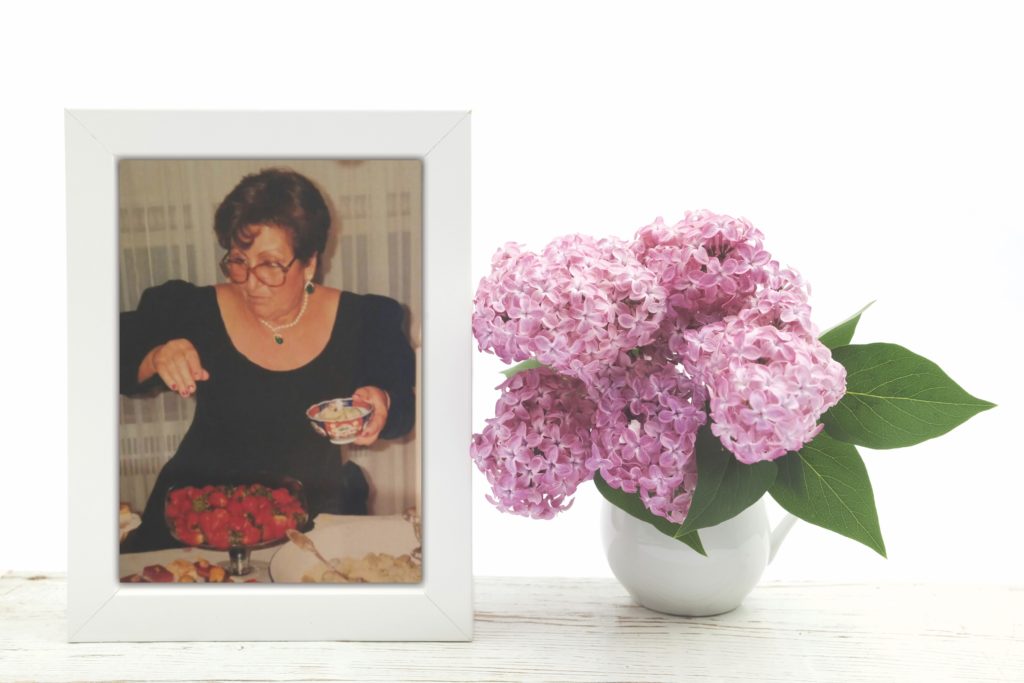
Today I called my mother. She didn’t answer me. She probably was busy with something more important. There was a time when one of her sons or her daughter would call her, that she’d drop everything — whatever she was doing — to listen to her beloved child’s voice, to hear from each one of us, to feel supported, protected by our strength, our love, to reassure us, to bless us, to compliment us, and, when needed (which was often), to rebuff us! It wasn’t that long ago when a call from her children was more important than anything.

And so my heart sank, tight and constricted, as I understood today for the first time, after eight years of her absence, that I will not speak to her anymore, that I will not see her again.

I might as well invoke her voice, her gestures, her eyes, her whole face, and imagine her laughter lighting up a room, her speaking animatedly and telling stories in that strange and funny way unique to her. I won’t see or live those moments anymore.

I won’t be able to tell her of my sorrows, small or great. I cannot share my torments or my joys, nor give her my love or my tenderness. Nor be able to satiate, more importantly, my crippling need for it myself!

Because she and she alone knew how to listen to me, take her time, reflect on my life and situation, advise me wisely and always keep me rational. She had this power. She knew how to get to the core of me, by being simultaneously firm and tender.

I miss all of her: the taste of her cooking, her formidable presence, her humor and strength. She, the cement of the family; she, the family.

Her way of being and behaving! She was always authentic and straightforward to a fault. Without pretenses or false modesty, she would take on everyone and everything on her own, if that’s what she needed to do, and without flinching. And she would win. Against all odds, she would battle Goliath after Goliath, like it was nothing, supporting the family and keeping her children happy and oblivious to her struggles and battles. She was afraid of nothing and nobody, except perhaps God, whom she regarded in highest esteem, whom she sincerely loved and whom she respected as a good and honorable person. … God reminded her of her father, whom she revered.

After the premature death of my father, it was she who had to take up the torch and single-handedly ensure the survival of her numerous progeny, whom she loved more than anything.

Philosopher, psychologist, pedagogue, doctor, nurse, star chef (the hypnotic and delicious scents, flavors and spirit of her dishes linger in my head, in my soul and in my heart), when we needed her to play one of those roles, she shifted among them and more.

And it was her influence that made us believe that not only did we all love one another, but that we could never do without one another, that no matter the circumstances, distances and disasters, we would remain together. Connected. She made us believe that we were an unstoppable team when we were united. That the traditions she had created with cleverly cooked dishes, feasts, with nights filled with lights, birthdays, weekly family meetings, Shabbats, love and tenderness, too, would resist time’s erosion and hold strong even in her absence.

She counted on me or, I guess, one of her other children to keep these traditions alive. She had confidence in us. She had confidence in most of us — some of us, at least. But she had been mistaken, as mothers often are.

No one is here anymore to help dwarf the distances, to hold family peace summits, to mediate misunderstandings, to mend bruised egos and patch up wounds, big and small. No one to do what she knew how to do so well.

And in this family, it’s hard to be wrong when everyone thinks they are right.

“It’s his fault, not my fault.” “He started it!”

Like perpetual children, the blame is forever placed on the other brother.

And the only one to end our feuds was our mother, this character so formidable and so present in all our lives, until her death became our death.

She was an exceptional personality or, more precisely, an extraordinary character. Strength and a larger-than-life presence emanated from her despite her size. An authority, an inner assurance guided by her morality and her dignity, she was as pure a woman in every sense of the word.

After the premature death of my father, it was she whom had to take up the torch and single-handedly ensure the survival of her numerous progeny, who she loved more than anything. She was so sure of us, so sure of us, that we couldn’t fail simply because of her will alone. Her belief in us made us a kind of invincible.

I mourn her today more than at the moment of her final departure. I did not realize at this point what her absence would do or undo. Sometimes, it is much later that one realizes the obvious truths.

I look back and see only happy pictures of us: the hilarious faces of my brothers and sister, the tender look of my mother, the sweet smile of my father, pictures of births, bar mitzvahs, weddings, birthdays, all the Jewish holidays and parties besides. The sounds of laughter and songs! Nights when she effortlessly organized — as if it were normal or natural — dinners for 10 or sometimes 100 people, while doing a million other things, and on a last-minute whim.

Beach photos featuring yellowed images of the happy days when our father, this sweet, kind and humane man, was alive, with an ever-present sun shining in the background. Memories of trips to Venice, Paris, Monaco, Jerusalem, or a rare and nostalgic return to her hometown, frozen in Kodachrome in a box lost somewhere.

As in life, the beautiful times have been filtered and meticulously curated with intelligence and finesse, isolating moments of joy, happiness and laughter;  miraculously forgotten, as if swallowed by time and space, are all the moments of sadness, misfortune and rain.

Without our parents, and our mother in particular, we are fluttering aimlessly and violently in the wild gusts of air. It was she who held the string, guiding us away from harmful rocks and trees, making sure our kites flew straight and strong and high. It was she who made her children dance to the sublime rhythmic heartbeat that radiated her love and tenderness.

Orphaned, we became disconnected kites, tightrope walkers with no net and no crowd to cheer us on. I had no idea I would miss her presence this much, how even the most minor activities would be affected. That it would hurt like the loss of a first love, a true love — that had crafted, nurtured and protected my heart.

She left, radiant, without suffering, but it is those she left behind who suffer today and who call for her help to return; the tiny space between a kiss, the sweetness of a caress, the breath of a sigh, a little of our innocence, a little of our candor, a little of our childhood, a little of our youth, a little bit of our carelessness. We want it back.

And you, Mom, how are you?

Are you being treated well, wherever you are?

I’m sure you are making them laugh as you always did. As you used to make people laugh until they had tears in their eyes, when you the visited homes of friends who were in mourning, bringing a note of hope, an accent of youth and life, a note of gentle madness to mix with their sadness, and you left them laughing, almost joyous. And it is as if, suddenly, in the frozen winter of their distress, you made magic appear, a smiling and sunny spring, a rainbow of ephemeral happiness … and love! And I know that somehow you are still doing that.

You spoke to God every day. Is he now listening to you now that you’re so close to him?
In your lifetime you opened the windows, rain or shine, and you spoke to him as if he were a friend, a brother, a father. You weren’t afraid of him. On the contrary, you joked with him, you told him everything as if he were the best of confidants, the most intimate of friends. And you believed so strongly in him that it is impossible for him not to exist, not to be there in the flesh and waiting patiently to hear all of your stories!

Can you make him intervene in our favor? May he give us grace, patience, serenity, success, health and millions and millions of dollars!

That he should stop all these wars — so terrible, so cruel and so useless!  That he make peace reign once and for all in this dreadful disorder called life! And that he gives us and our loved ones — I repeat — all of our loved ones, but primarily your children, millions and millions of dollars! (It should go without saying that this would not apply to our enemies!)

Do you have this power?

Does he have this power?

Or did he delegate to man and woman the capacity of decision and he remains a simple spectator-observer, neither present nor absent of our universe, of our humanity dehumanized, quartered, decomposed and so beautiful? So proud and so full of itself! So sublime and so derisory! So outdated and so grandiose!

Tell me, Mom? Do you have companions where you are?

Friends?

Do you sing sometimes like you used to?

Do you celebrate the holidays you loved so much like when you were on Earth?

Are there really harps and violins, great rabbis with white beards, supernatural angels who watch you like a flock of sheep, resting on beautiful white clouds?

I wonder!

Have you been able to see Dad? Your parents? Your brothers? And your daughter? Your darling little Jacqueline, whom you lost so young, when she was only 4 years old, and whom you mourned all your life.

Have you finally found her again? Her name was the last word you whispered before you went to the other side, you believed so strongly you would be reunited and in the end I really think that you could not wait to be with her again. Finally!

But what about us? Did you stop to wonder what we would become without you? How lost we would be?

You have let all your children go except for her — she, whom you always loved more than all of us because she left you so early, without being able to see her legendary beauty and intelligence shine throughout the world. Such is the way with those who leave us.

In the end, death is a strange and selfish thing, and it cares very little for the living. It doesn’t care about problems or worries; it leaves unceremoniously without so much as a goodbye or a thank you. It moves on, and it asks you callously to do the same.

You have been gone eight years, and I think of you every day.

I mourn your absence but evoke your beautiful presence so full of song and joy as much as I can.

And you, which universe are you living in now?

Can you come back here? For just a little? A tiny bit! For one day? For one hour? One minute? Just long enough to hug me one last time, long enough so I can tell you once more that I love you, time enough to give you one last farewell!

Today I called my mother. She didn’t answer me.

When will she answer me? When, tell me when, will she call me back?

Bob Oré Abitbol is an author, poet and playwright who was born in Morocco and immigrated to Canada before moving to Los Angeles.

Today I Called My Mother Read More »

‘Avengers: Infinity War’ and the Power of Evil

One of the most endearing elements of superhero stories is that the good guy always wins, but in the real world, that’s not always the case.

SPOILERS AHEAD!

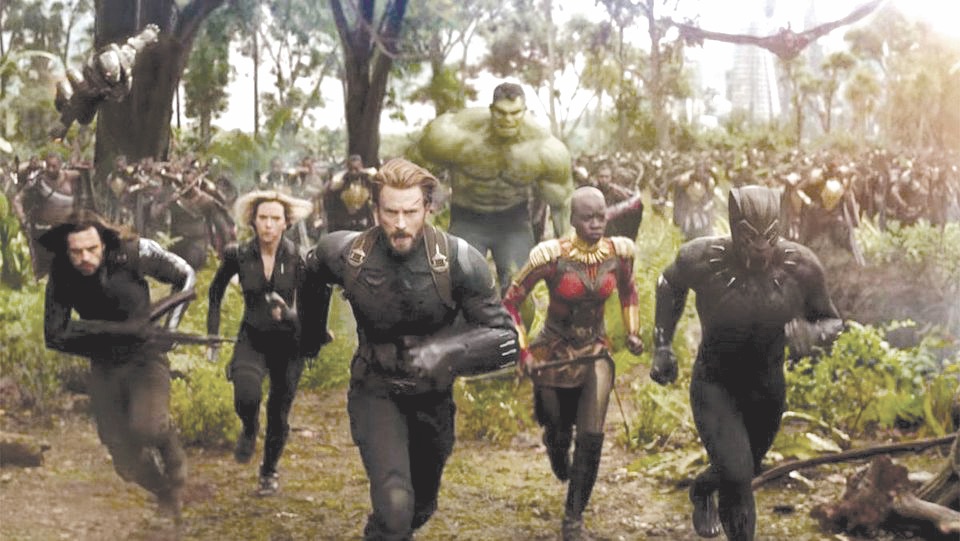
That’s why the ending of “Avengers: Infinity War” is so shocking, because Thanos — the bad guy — wins. I keep thinking about sweet Peter Parker, moody teen Groot, and all the other casualties of the Infinity Gauntlet. But most of all, I find myself thinking about how Thanos — the embodiment of evil — could win. There has to be a mechanism within the Marvel Cinematic Universe that explains this.

I think the answer is in the Torah in the story of Korah’s rebellion. Moses and Aaron led the Israelites from Egypt to the Holy Land. Moses was the de facto king and Aaron the high priest. Korah, a Levite, led a rebellion challenging the authority of his cousins Moses and Aaron to exclude him from the priesthood.

A contest of competing sacrificial fire pans determined the victor. The moment of truth arrives and God commands Moses and Aaron to separate from the group. Then, a Godly fire consumes Korah and his rebellion forces. Adding insult to injury, the ground opens and swallows them whole.

Reb Tzadok of Lublin (1823-1900) writes that God commanded Moses and Aaron to leave the area because the rebels had a special power that could have defeated them. Had they stayed with the group, they, too, would have been consumed by the fire. The good guys would have lost.

One who has pure intentions and is willing to give everything he or she  has to a holy cause — even a cause that is not correct — is given this superpower.

What were the rebels special powers? Reb Tzadok says it was their pure intentions and willingness to sacrifice everything for a holy cause. Incredibly, the rebels wielded this power even though they were wrong. One who has pure intentions and is willing to give everything he or she has to a holy cause — even a cause that is not correct — is given this superpower.

That explains Thanos. He had to exchange the life of a true love for the Soul Stone. His adopted/kidnapped daughter Gamora laughs when she hears this condition because she believes that Thanos is so evil that he has no true love. But Thanos begins to cry and it quickly dawns on Gamora that she is going to be the sacrifice. Thanos throws her into the abyss and the stone appears.

Thanos is not purely genocidal. He is a utilitarian fundamentalist. He truly believes that it is best for the universe that he erase half the population. We call this a holy cause.

Thanos was willing to sacrifice his true love for the sake of his holy cause. There’s great power in these things. Thanos completes the Infinity Gauntlet and with a snap of his finger uses his power to murder fifty percent of all living things, leaving us to marvel and mourn the loss of several beloved superheroes. Such is the power of giving everything we have to a holy cause.

Eli Fink is a rabbi, writer and managing supervisor at the Jewish Journal.

‘Avengers: Infinity War’ and the Power of Evil Read More »

The Meaning of Life in Four Difficult Steps

In my previous column, I ended with the question: How do we defend our hearts when someone is not acting lovingly toward us? Let’s cut to the chase. Here are the four steps: Do your duty. Find bliss when possible. When you can’t find bliss, be resilient. Everything makes a difference.

“Do your duty” does not provide an immediate answer to life’s questions, but this guidance helps organize consciousness. I have counseled many people stuck in anger. Inevitably, this involves venting and blaming, and wanting my counsel in how to change the other person. “Do your duty” turns the pointer of consciousness away from the other person, and onto yourself. Your duty, when you are angry, is “thou shalt not.” You can be angry, but do not express it. Remember the four C’s: No criticizing, complaining, condemning (including accusing, blaming, labeling, unkind comparing, contemptuous gestures of face and hands, etc.) and no escalating conflict.

When anger tempts you, run it through what I call the wisdom mill, not the bottling factory. For example, ask yourself what you want the other person to do. Not understand, know, realize or be aware of. What I want them to do now — a clear, rational, achievable behavior, with a time stamp on it. Not, “I want to be affirmed.” Instead, “I would like you to praise me.” Yes, that clear. It feels weird to say such a thing, but that is what “I want to be affirmed” often means.
(Sometimes people say, “But they should know what I want if they loved me” and I think “What are you, 14?”).

Here is a life truth: We couple up with people who, by definition, regularly don’t know what we want and/or don’t know how to give it. There is a reason for this, that I will discuss another time.

Doing your duty often reminds you that you are not center of the universe, that you often will not get your way.

A corollary to, “No Criticizing, Complaining, Condemning or escalating Conflict”: Never try to persuade a resistant person to do, know, understand, realize or be aware of anything. Just ask them for what you want, and be ready to take no for answer. And decide what you are going to do next.

If you are going to do nothing, do nothing. Arguing typically won’t make it better. Whatever you are going to do, don’t be petty, passive-aggressive or resentful. That never makes things better.

“But,” people observe, “then they just get their way!” Yes, doing your duty often reminds you that you are not center of the universe, that you often will not get your way. And they were probably going to get their way anyway, just after lots of arguing.

I find that couples and families, or any group of people brought together by common purpose, find the bliss inherent in human relationships when they work on reducing toxic speech between people, and reduce toxic emotions within.

And when (heaven forfend!) someone aside from you gets their way, be resilient. However meaning in life is constructed, it is not from “I get my way or I will get angry or depressed.”
Judaism is a spiritual path of duty. We observe mitzvot, commandments, whether one focuses on the moral or the ritual. Leviticus 19:18 does not say, “Do not seek revenge nor bear a grudge unless you are really angry; if that’s the case, then go ahead a bear a grudge.” People say, “But it is natural to resent people who have hurt you.” Well, if it were not human nature to resent, then the Torah would not command against it. The Jewish tradition understands human nature; it just demands that we transcend it. One might say that transcending the pitfalls of human nature (the yetzer ha-ra) is at the core of Jewish spirituality.

The pits of human nature are often bridged in the smallest of ways. In a difficult conversation, the smallest act of empathy or remorse, as the case may be, can lead back to the bliss of finding meaning together.

In sum, when someone else might be shirking their duty, you do yours. You be the one who leads on the path back to the beauty possible in human relationships. Be resilient – don’t give in to the pitfalls in human nature.

As you will see in future columns, everything matters.

Rabbi Mordecai Finley is the spiritual leader of Ohr HaTorah and professor of Jewish Thought at the Academy of Jewish Religion, California.

The Meaning of Life in Four Difficult Steps Read More »

An Ode to Motherhood

When I was in my early 20s, I gently placed motherhood into the realm of: There is no question I want to do this, but later, much later. First, I need to explore and change the world. Oh, and I also need to prove beyond a shadow of a doubt that I am equal to men.

This was part of the message I was ingesting from feminist leaders at the time, and it felt OK because I was nowhere near ready to “settle down.” There was another part to the message, though, that didn’t feel right: Women shouldn’t value motherhood as our mothers and grandmothers had. Bearing children “reduces women to their wombs.” Motherhood, we were told, was “unfeminist.”

Compared with the intersectional mess that feminism has now become, this theoretical gobbledygook — which was not even remotely part of original feminism — almost seems quaint. The problem is, it affected a generation of women. Women who put off child-rearing until it was too late; women who had children, but then spent too much time away from them; women who would preach to other women that motherhood “destroys one’s identity.”

Perhaps because I, too, waited until it was almost too late, perhaps because I had a wonderful career before I had my son, I think I am able to look at all of this with some objectivity. And I would like to send to women in their 20s today a very different message: Motherhood — in all of its beauty, glory, wonder and exhaustion — will compare with nothing else you will ever do in your life. But it is not for every woman. It doesn’t make a woman a woman, but precisely because it is a role, a responsibility that is so profound, only each woman can know if it is right for her.

What is unfeminist? The devaluation of motherhood and, as a result, children. One of the saddest sights I see every year in New York City: A beautiful day at the park, strollers are lined up one after the other — with kids old enough to walk unhappily strapped in. A bevy of nannies sit and chat, seemingly unbothered by the miserable state of their charges.

Motherhood — in all of its beauty, glory, wonder and exhaustion — will compare with nothing else you will ever do in your life.

There are, of course, wonderful nannies who love the children they care for as their own. But let’s be honest here: They typically work for women who don’t “privilege” their careers over their kids.

It’s true: motherhood, especially in the early years, wears you out in ways you never thought possible. (I remember evenings of binge watching “The Good Wife,” not because I loved it but because I literally didn’t have the energy to find a better show.) But if you make it central to your identity, you will experience levels of joy and fulfillment that no job or no career can possibly touch.

And the effects of good mothering on children are profound. Can a father make up for a deficit of good mothering? Sometimes. I have met extraordinary fathers. But, in general, mothers and fathers bring different, often overlapping skills to the parenting table.

When I see a great mother, I don’t care what career she had before or will have after her kids are grown. (Motherhood is a lifetime role, but the in-house years are roughly 10 to 15.) When I see a great mother, I am in awe of her ability to tap into layers of patience, compassion and empathy that other women just shout about. I am in awe of the magnitude of her emotional capacity, an emotional intelligence that can understand the 1,500 different types of crying.

Yes, we can all laugh at overprotective Jewish mothers. But perhaps it’s not a coincidence that there’s a surfeit of Yiddish proverbs on the subject: “Mothers understand what their children cannot say.” “One mother achieves more than a hundred teachers.” “God could not be everywhere so he created mothers.”

I remain in awe of my own mother, who provided me with an ability to see every moment of motherhood — the good, the boring, the sleep deprived — as precious, as a gift from God. And although she was able to experience only the first two years of my son’s life, I believe I am honoring her memory by trying, each day, to reach for the highest ground that she herself provided.

Happy Mother’s Day.

Karen Lehrman Bloch is an author, cultural critic and mother living in New York City.

An Ode to Motherhood Read More »

Pity Mahmoud Abbas

Only a confirmed hater of Palestinians — and a confirmed anti-Semite — could believe that they have the leadership they deserve.

Permit me to explain.

Last week, Palestinian leader Mahmoud Abbas blamed the Jewish behavior of usury and money lending for causing the Holocaust. This isn’t the first time that Abbas has engaged in bizarre theories of history. Year ago, his doctoral dissertation, written while he was a student at Patrice Lumumba University in Russia, was on the “secret” relationship between Nazism and Zionism. Six million was exaggerated. He was a soft-core Holocaust denier.

Only this year, he reiterated that often repeated myth that the Jews have no attachment to the Temple Mount, none to Jerusalem or to the land of Israel, the Bible — archaeological evidence and religious practice of 2,500 years notwithstanding.

Now an elderly, sick man of 82, Abbas has been president of the Palestinian National Authority — to some, the State of Palestine — for 13 years and will go to his grave with no accomplishments to his name as the leader of his people. Divided between Gaza and the West Bank, they are ever more distant from statehood.

His achievements: He has become the No. 1 ally of Israel’s right-wing intent on having a one state solution, a Jewish state.

And he has become the No. 1 enemy of those of us who support a two-state solution because he has little credibility and alienated all but the most extreme for support for Palestinian statehood. Any possibility of a two-state solution will have to await not only a change in Israel’s current attitude but, more significantly, a change in Palestinian leadership.
He twice has rejected reasonable offers from former Israeli Prime Ministers Ehud Barak and Ehud Olmert, walking away, as did the late Palestinian leader Yasser Arafat before him, without even countering an offer of his own, afraid that he might be assassinated or go down in history as having betrayed his people’s most maximalist goals.

One must view Mahmoud Abbas as a pathetic figure and pity his people who hold onto him because they can’t imagine another way.

He even has alienated support within the Arab world, which no longer sees the Israel-Palestinian conflict as the central issue of the Middle East. Many Arab leaders view the Sunni-Shite conflict as more fundamental, and Israel as an indispensable force against Iran dominance.

I am beyond anger. Anger is based on expectations and disappointment when those expectation are not met, but I have no expectations from Abbas. Time has passed him by, his place in history is now secure. He has achieved nothing. Challenge yourself to name one positive accomplishment by him.

So one must view Abbas as a pathetic figure and pity his people who hold onto him because they can’t imagine another way.

Still, I cannot rejoice in the magnitude of his defeat because unlike the Israeli right and their American-Jewish supporters, I think that Israel desperately needs a two-state solution because it cannot sustain a Jewish state and a democratic state while still retaining control over so sizable a population that has no desire to be ruled by Israel. Day in and day out, we witness the cost of occupation not only to the Palestinian people but to Israeli democracy.
Nothing can happen until Abbas is no longer in power; the only way for something to happen is for the Palestinians to reverse the pressure on Israel by presenting a credible possibility of co-existence.

And again, the hypocrisy of some global institutions is glaring. When Abbas touched the sacred cow of the Holocaust, he was forced to retreat. He offered an apology: “Sorry to offend,” “didn’t mean to attack Judaism as a religion.” Yet when he denies Jewish ties to the land of Israel and to Jerusalem, its capital under David and Solomon and the locus of Jewish prayers since 70 C.E., many are silent and UNESCO and others endorse his fantasies. And then they wonder why Israel turns rightward and inward, scorning those institutions that should be pressing Palestinian leadership not to follow the path to perdition.

Michael Berenbaum is director of the Sigi Ziering Institute and a professor of Jewish Studies at American Jewish University.

Pity Mahmoud Abbas Read More »