fbpx

March 7, 2018

Women’s March Issues Statement Addressing Farrakhan Controversy

After being under fire for one of its leaders attending a Louis Farrakhan speech, the Women’s March issued a statement on Mar. 6 addressing the issue.

The statement claimed that the Women’s March was committed to fighting against “anti-Semitism, racism, misogyny, homophobia, and transphobia.”

“Minister Farrakhan’s statements about Jewish, queer, and trans people are not aligned with the Women’s March Unity Principles, which were created by women of color leaders and are grounded in Kingian Nonviolence,” the statement read. “Women’s March is holding conversations with queer, trans, Jewish and Black members of both our team and larger movement to create space for understanding and healing.”

They then claimed that they had been silent over the Farrakhan controversy for nine days because they have been “holding these conversations and are trying to intentionally break the cycles that pit our communities against each other.”

Anti-Defamation League (ADL) CEO Jonathan Greenblatt praised the Women’s March for their “strong statement”:

However, others felt that the Women’s March statement was too weak and didn’t adequately address the controversy:

https://twitter.com/JamesHasson20/status/971099622717448192

The controversy started when Women’s March co-president Tamika Mallory attended the Nation of Islam’s Saviour Day, where Farrakhan issued a speech that was laced with a variety of anti-Semitic conspiracy theories. Mallory and the rest of Women’s March leaders remained largely silent about it until the Mar. 6 statement.

Mallory and two other Women’s March leaders, Carmen Perez and Linda Sarsour, have prior connections to Farrakhan’s Nation of Islam that were not addressed in the statement.

Women’s March Issues Statement Addressing Farrakhan Controversy Read More »

Palestinians Changing Laws on ‘Honor Killings’

March is a special month for women. There was International Women’s Day on the 8th and Mother’s Day in the Palestinian territories is on the 21st. This March, in particular, is also special for Palestinian women for another reason: No longer will men receive reduced sentences for “honor killings.”

Palestinian Prime Minister Rami Hamdallah announced new rules, to be approved by President Mahmoud Abbas, changing the laws allowing men who murder, assault and rape women in the West Bank to receive significantly reduced sentences.

A total of 18 Palestinian women were killed in “honor killings” in 2016, according to the Palestinian Public Prosecutor’s Office.

For instance, “marry your rapist,” “honor killing” and other antiquated laws, which Palestinians in the West Bank inherited from their former rulers, the Hashemite Kingdom of Jordan, may be nixed.

According to protocol, only Abbas can amend the Palestinian legal code through a presidential decree, as the Palestinian parliament has been defunct since 2007.

The Palestinian Council of Ministers decided to to abolish Article 308 of the Penal Code that allows rapists to avoid punishment if they marry the victim within five years. In addition, government officials decided to amend Article 99 of Penal Code No. 16 of 1960, which grants judges the ability to dramatically reduce sentences if the case has “extenuating circumstances,” including the murder of women on grounds of “family honor.”

“Murdering women is a huge red line regardless of the cause.” — Haifa Al-Agha

“Murdering women is a huge red line regardless of the cause, moment of anger or anything else,” said Haifa Al-Agha, the Palestinian minister of women’s affairs. She explained that modifying Article 99 is extremely important and marks a turning point for women in Palestine, as judges can no longer reduce sentences for murder under any circumstances.

“We closed the door in front of everybody,” Al-Agha asserted, pointing out that for the past eight months, the Ministry of Women’s Affairs, Ministry of Justice and other women’s associations and organizations have been intensively preparing the needed evidence and materials to change the laws.

Al-Agha further revealed that Palestinian women will soon be legally afforded more authority over their children, including the ability to open bank accounts for them, request travel documents and passports on their behalf, and transfer them from one school to another without permission from the father.

“This is the beginning, there will be more changes, but step by step we will fight all of the unfair laws against women in Palestine,” Al-Agha said.

Ali Abu-Diab, the Palestinian minister of justice, points to the establishment of a legal committee to review Palestinian laws that regulate civilian sectors.

“The committee will work to update and edit the laws,” he explained, adding that the committee will act in accordance with the principles of equality and social justice in order to harmonize the Palestinian legal framework with the international treaties and conventions that Palestine is a party to.

“Canceling the mentioned articles will solve a lot of problems within the Palestinian society,” Abu-Diab said, noting that certain laws have enabled men to take advantage of women. “With the latest move, no party can ease the punishment on any murder under the name of honor in Palestine as no one has that authority anymore.”

In 2011, Abbas made changes to the Palestinian legal code with the aim of preventing “honor killings,” but some related laws have remained in place, thereby precluding comprehensive change.

Nevertheless, Amal Al-Jobeh, an employee of the Women’s Center for Legal and Administrative Guidance, confirmed that the cases of violence against women decreased after 2011.

“We started feeling that there is a deterrent from killing women in the West Bank,” she said, adding that murder is incentivized when there is minimal legal recourse available to the victims. “In so many cases, women have been killed for other reasons like inheritance, but murderers took advantage of the law to get away with it.”

Al-Jobeh also stressed that crimes against women are not exclusively a legal issue, but rather have a cultural component. Accordingly, she believes it is crucial to raise awareness of the plight of women in the Palestinian territories.

To this end, a petition has been circulating for the past six months calling on Abbas to do away with the measure that allows judges to use their discretion in murder cases that have “extenuating circumstances.” Initiated by Palestinian women’s rights groups, the petition has garnered more than 12,000 signatures.

Last year, Jordan’s lower house of parliament voted to repeal the so-called “Marry Your Rapist” provision. The move was approved by the Jordanian parliament’s upper house and then signed by King Abdullah II, whose royal committee recommended that it be revoked.

The law still remains in several other countries in the Middle East, however, including Iraq, Bahrain, Kuwait and Syria.

Palestinians Changing Laws on ‘Honor Killings’ Read More »

Is 50 the New 40?

In December, I attended my friend Abby’s 50th birthday party. A party for someone’s 50th is not one you can miss. It’s a milestone, but not like climbing Mount Kilimanjaro (which she’d done in her 40s), or having a baby (which I’d done in mine). It’s more a time of reckoning. Even for those not actively engaged in a midlife crisis, hitting 50 means that whatever path we’ve taken has left others definitively untraveled. Any number of potential life streams have coursed right past us, plunged over a waterfall and out of our lives.

Fifty is like 40 once was. You’re glad you made it but would prefer to have a portrait in your closet doing the aging while you carry on, getting free cookies from baristas hoping for your number.

For Abby’s party, 10 of us gathered for drinks in the Lobby Lounge of the Fairmont Hotel & Bungalows in Santa Monica, down the street from my apartment. Then we retired to the hotel suite she’d booked for the weekend, ordered shishito peppers and flatbread, and drank some more. Two Brazilian friends joined us, and as anyone with Brazilian friends can tell you, this means dancing around the living room for hours, while drinking more Champagne.

I miss dancing around in hotel rooms (or bars or high school gyms). I used to dance without a care all the time. Now, I’m always thinking about what has to happen next: My son needs a bath; the dog needs to go out; the car needs be moved.

Abby lives in Manhattan, but has been working on a book all winter in Los Angeles — crashing on various people’s couches and spare beds, staying in hotels, taking off for Vegas or Utah or Glendale at a whim.

I floated around like that in my 20s and 30s; I lived in five states and Paris before moving to California. This footloose lifestyle can sound enviable, especially when viewed from behind the windshield of an SUV stuck in traffic on the way to another school event. But for me at this age, traveling is not as appealing as staying put. I want to live my life where it is, connecting to the people I already know. Still, for Abby’s 50th, for some reason — let’s call it Champagne — I was totally in that youthful freewheeling feeling, dancing around with a kind of abandon I do miss.

“We worry about losing touch with our younger selves. Why don’t I dance around in hotel rooms all night?

Around midnight, we left her bungalow room for the hotel’s Bungalow bar, an amazingly appealing physical space generally made unbearable by the throngs of 20-somethings and teens with fake IDs rushing their shot of being older. We had an entire central section of couches reserved. There we sat, solidly, all of us over 50, drinking and watching the youngsters trying to pick up one another.

A man and woman stood near our group, both tall and blond and smiling. The guy seemed to be about my age. The girl looked young enough to be his daughter. I stared at them, trying to figure out their relationship. I became oddly fixated on this pair, partly because he was the only stranger in the room close to my age, and he’d smiled at me in a way that suggested he wasn’t on a date.

“Is that a dad and his daughter, or a guy with a much younger date?” I asked the friend sitting next to me.

My friend glanced up from his Scotch. “They’re definitely on a date.”

“Are you sure?” I traveled a lot with my divorced dad when I was a teen, and had been in public settings where strangers definitely questioned our relationship. This couple had that same vibe, at least to me. “Don’t their pointy chins and wide, bright eyes kind of match?”

“She’s not as young as you think she is, and he’s not as old,” my friend said,  matter-of-factly.

I put on my glasses to see better. “Well, maybe you’re right,” I said, squinting in an attempt to make wrinkles appear around the woman’s mouth.

By this time that couple had become aware that we were talking about them. They sat down on one of our reserved couches and watched us watching them. I leaned over to Abby. “Is that a dad and his daughter or are they on a date?”

Abby pulled up herself and addressed the man, then sank back into her couch and turned to me. “It’s a dad and his daughter. They’re from South Africa.”

“See!” I said to my friend. “I’m going to talk to them.”

I sidled up next to the dad. “So. Are you visiting from South Africa?” I asked.

They live in L.A., it turned out. He is divorced. His daughter’s skin was so flawless, up close, she looked airbrushed. He’d moved to L.A. 30 years ago, he told me, after graduating from college in Texas.

“I went to college in Texas, too,” I said, smiling in what I hoped was still an enchanting way, like back when I was in college. I’d become good friends with two guys who were actually from South Africa during my first semester, I remembered. “When I returned to Michigan for Thanksgiving, my mother said, ‘You have to be the only person who goes to Texas for college and winds up with South African accent!’”

The man laughed. “There are a lot of South Africans in Texas,” he said, in that fabulous South African accent.

We discussed L.A. traffic. Parenting. The conversation lagged. “These guys I knew from South Africa were tennis players,” I said, slowly pulling those years back into my memory.

“I play tennis,” he said. “A lot of South Africans do.”

“Yeah. They’d come to Houston to play on the college team,” I said.

“I played tennis in college,” the handsome stranger said. “What university did you go to?”

“I went to the University of Houston.”

“I was on the University of Houston tennis team.” He looked at me more closely. “What were the names of the guys you knew?”

An image of one slowly came into focus. Dark hair, swarthy. “Well, one guy was Earl,” I said.

“Earl? Earl?! That’s my best friend in the whole world! That’s unbelievable.” He turned to his daughter and said, “She knows Earl!”

“You know Earl?” I said. “That’s crazy!” It wasn’t as if we were in a bar in Houston and had run into each other. This was L.A., native to neither. I’ve moved around so much that running into anyone I know from my past feels like reconnecting in outer space.

He found his phone to show me photos of Earl, who now lives in Israel, and is married with three kids. He texted Earl my name to see if he remembered me. “What was the name of the other guy?”

“Well. He had a big mane of blond hair.” I remembered that. “Oh! The other guy was Mark!”

“Mark! I’m the Mark! I’m the Mark! I’ve always had long hair! I just cut it two years ago!” He turned to his daughter.

“He had long hair,” she confirmed, sort of listening, sort of looking around for other underage kids out with their parents.

Mark showed me a picture of himself with long hair. It was dark in the bar, and hard to see. But an image of him at 19 or 20 was suddenly very clear in my mind. These two men had been a huge part of my freshman year. I’d moved to Houston alone, and met people from halfway across the world. I’d thought of myself as adventurous and outgoing, intrepid and open-minded. “I have photos of you in my album at home,” I realized. “Wearing your powder blue tennis shorts, lying on my bed. With the big hair. Do you remember how we all went to Rosh Hashanah dinner with some South African family you knew? We were sitting at a round table in the kitchen, and Earl sat down and said, ‘I was thinking, I want to go sit with those cool, older college kids. And then I realized, I am the cool, older college kids.’ ”

Running into Mark made me wonder how many other people from my first 50 years might be hanging around. Maybe someone I already know is outside at the coffee shop right now.

Mark laughed. But he didn’t remember Rosh Hashanah, or much else from that time. I’m pretty sure I made out with him, which he also couldn’t recall.

I made him take my phone number to contact me when he heard back from Earl, but he wasn’t really interested in rekindling this friendship. It clearly hadn’t had the same impact on him as on me.

Still, his lack of memory (and current lack of interest) didn’t affect my own experience with him back then, or how amazed I was to run into him now. I moved to L.A. a handful of years ago. As I discovered, it’s hard to move across the country when you’re in your late 40s, divorced and working for yourself, and build a community. Yet here was this person I once knew, drinking with his daughter right down the street from my apartment. That coincidence felt incredible.

And incredibly hopeful. Sure, I’m the age of the parent now, whereas once I was the daughter, but running into Mark made me wonder how many other people from my first 50 years might be hanging around. Maybe someone I already know is outside at the coffee shop right now. Maybe an old boyfriend is biking along the ocean in Manhattan Beach. Every other person in L.A. is from Cleveland; certainly some of these transplants were characters in the earlier volumes of the story of my life.

We worry about losing touch with our younger selves. Why don’t I dance around in hotel rooms all night? Why can’t I do a back-walkover anymore, and what does this say about my decreasing flexibility more broadly? Encountering Mark made me second-guess this concern; maybe we hang onto ourselves more than we realize. What other aspects of the first half of our lives really do stay with us? What abilities and freedoms persist?

The run-in at the Bungalow bar felt comforting on a deeper level, too. Part of the midlife reckoning is the realization that we’re on the downslope of life, no matter how many times we go to the gym to dig in our heels. These crazy chance meetings suggest the possibility of some mystery or magic. For those of us without a resounding belief in an afterlife or a grand deity, it’s comforting to think that we could be wrong after all. There might be some grand plan, despite our skepticism, some cosmic seating chart of people who are at our life’s table. Just because we haven’t seen the guest list doesn’t mean no order exists.

***

I got to sleep at around 3 a.m. The next morning, I called my mother. She remembered the South Africans clearly, and was just as astonished by this late-night encounter as I was.

“I wish I went out dancing and drinking until 3 more often,” I complained. “It was so fun!”

“I think when you get older, you still do that kind of thing, but it wouldn’t even be fun every week,” my mom said.

I thought it would be fun every week. I sat on the couch in my pajamas thinking about this. Two hours later, I was still in my pajamas. I couldn’t get up. Abby and the Brazilians were in bed until 2. The friend I’d been sitting with at the bar had gone home and thrown up.

This is a big reason why we don’t drink all night at this age. We can party like it’s 1999. We just can’t get up the next day into 2018.


Wendy Paris is a writer living in Los Angeles. She is the author of “Splitopia: Dispatches From Today’s Good Divorce and How to Part Well.”

Is 50 the New 40? Read More »

Jewish Law as Rebellion: A Plea for Religious Authenticity and Halachic Courage

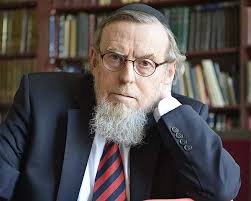
As I’ve been a close student of Rabbi Dr. Nathan Lopes Cardozo’s for many years and am very familiar with his philosophy, I found myself excited and eager to read his latest book: Jewish Law as Rebellion: A Plea for Religious Authenticity and Halachic Courage (Urim Publications, 2018). I was not disappointed. In this masterful work, Rav Cardozo not only critiques the great challenges that Jews face in the world but also lays out an inspirational and comprehensive vision of contemporary Judaism, one where, “Halacha’s main [function] is to protest against a world that is becoming ever more complacent, self-indulgent, insensitive, and egocentric” (21). 

Most Jewish definitions of the purpose of halacha (usually translated simply as “Jewish Law”) is about halacha’s function as being in “service of God” or “submission to God.” This “sacrifice,” in turn, means we might have to silence our values, our philosophies, our relationships in order to fulfill the commandments as provided by the Jewish texts. Such an approach has often been coupled with a frozen thinking that halacha cannot change. Yet, so many committed to a life driven by halacha find themselves in moral paralysis, stuck between a harsh status quo and an enlightened consciousness that attempts to push humanity towards something called progress. Rather than feeling at peace with our blind submission to a higher truth, Rav Cardozo lays out a substantially different vision of halacha:

The purpose of Halacha is to disturb [emphasis added]. To disturb the world that cannot wake up from its slumber because it actually thinks that it is alive and well. This is not only true of the secular community, but also many religious communities that have fallen victim to the daily grind of halachic living while being disconnected from the spirit of Halacha, which often clashes with halachic conformity just for the sake of conformity. Many religious people convince themselves that they are religious because they are “frum.” They are conformists, not because they are religious but because they are often self-pleasers, or are pleasing the communities in which they live (21).

So often, liberal education (in the classical sense) is discouraged because yeshiva teachers know that the moment students become open-minded about the broader world, the ensuing curiosity and creativity become dangerous to the current situation. If an enterprise is about answers, rather than questions and submitting not struggling, piety not seeking, authority not empowerment, then the holy system is put at risk. Indeed, as Rav Cardozo explains:

It is time to start thinking big about Halacha. Great opportunities are awaiting us and too much is at stake to let them pass by. For too long, Halacha has been jailed in compartmentalized and awkward boxes. It is time to liberate it. Most religious Jews are not aware that Halacha has nearly become passé. They believe it is thriving. After all, Halacha is very “in” and there are more books on this subject than ever before. Despite this, it lacks courage. We have fallen in love with—and become overwhelmed by—an endless supply of all-encompassing but passive halachic information, which does not get processed but only recycled. We only tolerate and admire bold ideas when they provide us with profit-making inventions—when we feel our empty pockets—but not when they dare challenge our hollow souls (35).

Even more so, Orthodox Jewish education today generally prioritizes Talmud study and the intricacies of halachic observance but ignores the broader world of secular philosophy, spirituality, problem-solving, emotional intelligence, and relationship-building. While the Talmud is an incredible repository of rhetoric, debate, and radical epistemology, its worldview is of its time. That doesn’t discount it as a foundation of understanding our tradition and our world, nor does it mean that it should be discounted. On the other hand, keeping the Talmud as the sole focus of secondary Jewish education does a disservice to future generations of leaders. The Talmud needn’t serve as an isolated pedagogic tool, but as a springboard to explore the wondrous, manifold ideas that hover in the ether. Unfortunately, this approach is not the case, and Rav Cardozo pinpoints what happens when this stagnant form of learning is the norm:

Jewish education today is, for the most part, producing a generation of religious Jews who know more and more about Jewish observance, but think less and less about what it means. This is even truer of their teachers. Some are even Talmudic scholars, but these very scholars don’t realize that they have drowned in their vast knowledge. The more they know, the less they understand…Doing so, they rewrite halachic Judaism in ways that are totally foreign to the very ideas that it truly stands for. They are embalming Halacha while claiming it is alive, because it continues to maintain its external shape (36-37).

Religion, at its best, is about embracing wonder and mystery with humility, rather than hiding away in the narrow straits of certainty. “The quest for certainty paralyzes the search for meaning,” Rav Cardozo writes. (37). Yet there continues to be so much money thrown at kiruv programs (programs that steer unaffiliated, secular Jews with urgency towards an immersive ultra-Orthodox lifestyle) that some young people who are searching for meaning are steered in a wrong direction:

Outreach programs, although well intentioned, have become institutions that, like factories, focus on mass productions and believe that the more people they can draw into Jewish observance, the more successful they are. That their methods crush the minds of many newcomers who might have made a major contribution to a new and vigorous Halacha is of no importance to them. The goal is to fit them into the existing system. That their outdated theories make other independent minds abhor Judaism and Halacha is a thought they do not seem to even entertain. To them, only numbers count. How many more people did we make observant. Millions of dollars are spent to create more and more of the same type of religious Jew. Like the generation of the Tower of Bavel, in which the whole world was “of one language and of one speech” (Bereshit 11:1), we are producing a religious Jewish community of artificial conformism in which independent thought and difference of opinion is not only condemned, but its absence is considered to be the ultimate ideal. WE have created a generation of yes men. We desperately need to heed what Kierkegaard said about Christianity: “The greatest proof of Christianity’s decay is the prodigiously large number of [like-minded] Christians” [1] (38-39).

Rather than striving for religious and spiritual authenticity, we are taught to replicate and emulate: “Spiritual plagiarism (a term used by Heschel) has been adopted as the appropriate way of religious life and thought,” write Cardozo (39). The problem here lies not only with religious institutions but in the home as well:

Parents today who are worried by their children’s lack of enthusiasm for halachic Judaism do not realize that they themselves support a system that systemically makes such passion impossible. What today’s Halacha desperately needs is verbal critics who could spread and energize its great message. It needs halachic Einsteins, Freuds, and Pasteurs who can demonstrate its untapped possibilities and undeveloped grandeur (40).

To borrow a phrase, Judaism dare not become an opiate for the masses. Instead, Judaism is here to awaken us from our slumber, to challenge our beliefs, and to make us think and work for spiritual growth:

Just like art, one cannot inherit Halacha and one cannot receive the Jewish Tradition. One must fight for it and earn it. To be halachically religious is to live in a state of warfare. The purpose of art is to disturb; not to produce finished works, but to stop in the middle, from exhaustion, leaving it for others to continue. So it is with Halacha. It still has scaffolding which should remain while the building continues (40).

Now, one may think that Rabbi Cardozo is being reckless and suggesting we change everything, that we tear down all the structures that have supported Jewish thought since the days of our ancestors. This notion couldn’t be further from the truth. Some conclusions in our courageous quest may lead us down a more progressive path while others may lead us down a more conservative path. The roadmap is not perfectly clear, nor are the answers pre-determined. He explains:

I am not advocating revisionist positions, presented just for the sake of being novel or to justify certain behavior. History has shown that such approaches do not work and often lack the genuine religious experience. We should not be overanxious to encourage innovation of doubtful improvement (41).

Some might think that its risky to embrace bold change in parts of the halacha, in our community building, or in our education. On the other hand, it is riskier to stay in the rat race of maintaining the status quo while ignoring the bigger forces that tug at our souls:

Broad change is not just window dressing, and it can be painful. It is liberating and refreshing, but comes with a price. Without it, though, not only is there no future for Halacha; there is also no purpose. What has been entirely forgotten is that the Torah was the first rebellious text to appear in world history. Its purpose was to protest. It set in motion a rebel movement of cosmic proportions, the likes of which we have never known (42).

All of halacha can be taught as a rebellion. For example, we don’t submit to Shabbat. No! We embrace Shabbat! We embrace Shabbat as a subversive way to honor worker rights, animal welfare, environmental justice, and self-care as no one and no thing can be worked or objectified during the Holiday of Rest. We don’t just submit to Kashrut. We embrace Kashrut! We follow the strictures of a kosher diet as a mechanism to deepen our moral and spiritual intentionality around ethical consumption. Each halacha likewise becomes a vehicle for self-change and social-change. We will continue to lose a lot of Jews from our communities if we just stay the path where halacha becomes less intellectually rigorous and less morally relevant to our times:

As long as our religious educators continue to teach Jewish texts as models of approval instead of manifestations of protest against the mediocrity of our world, we will lose more of our young people to that very mediocrity. Halacha, in its essence, is an act of dissent, not of consent. Dissent leads to renewal. It creates loyalty. It is the force that compels the world to grow (43).

Today, the Jewish world is heavily polarized. One camp is ultra-Orthodoxy that believes halacha cannot and should not change. Another camp is secular and finds no interest in halacha at all. Worse, they find it offensive and backwards. It is time that we develop a middle camp more deeply that truly values the potential of halacha and moves it into the twenty-first century in ways that are open, inclusive, loving, just, and wise. This may be the most crucial enterprise for the Jewish people. Rabbi Cardozo’s fascinating new book inspires us to roll up our sleeves and to become pioneers as we reorient tradition as the vanguard of an inspired Jewish future.

[1] M.M. Thulstrup, “Kierkegaard’s Dialectic of Imitation,” in A Kierkegaard Critique, ed H.A. Johnson and N. Thulstrup (NY: Harper, 1962), 277

Rabbi Dr. Shmuly Yanklowitz is the President & Dean of the Valley Beit Midrash, the Founder & President of Uri L’Tzedek, the Founder and CEO of The Shamayim V’Aretz Institutethe Founder and President of YATOM, and the author of thirteen books on Jewish ethicsNewsweek named Rav Shmuly one of the top 50 rabbis in America and the Forward named him one of the 50 most influential Jews.


Jewish Law as Rebellion: A Plea for Religious Authenticity and Halachic Courage Read More »

RIP, Uncle Shmuel

Shmuel Rosner died last Friday night. He was almost a hundred years old.

My phone buzzed with the news on Saturday night, when I was in New York en route to Washington, and my instinctive reaction was: So now there are just two of us left.

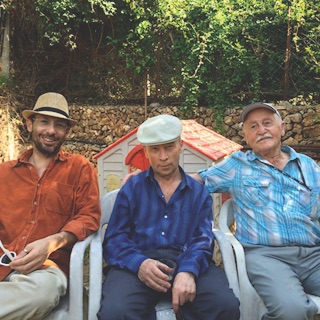
I was growing up as the third Shmuel Rosner, the most junior, in my extended family. There is me, born in 1968; there is my uncle, my father’s brother, born in 1940; and then there’s “Uncle Shmuel,” my great uncle, my father’s uncle, born in 1918. Most of his family, whom he left behind in Poland, perished in the Holocaust. But Uncle Shmuel had an older sister, my grandmother, who immigrated to Palestine in 1933 and then convinced her parents to let Shmuel join her a year later. He was 16 years old.

Whenever I saw him in recent years — which wasn’t much — he tended, as is the habit of old people, to repeat a story I’d heard many times before. You should know, he’d tell me, that only thanks to your grandfather I am still alive. The young Shmuel was an idealistic communist, and when the Spanish Civil War broke out in 1936, he became restless and decided to board a ship and join the anti-fascist forces. My grandfather spent a whole night of convincing to stop him from doing this. His trump card was an emotional plea: I promised your parents to keep you safe — and that’s why they let you come here. If you want to go to Spain, he said, you must go back to Poland first and release me from the commitment I’ve made.

We were three Shmuels. One of the pre-state generation, one growing up with the state, one born when the state was an established reality.

Instead of going to Spain, Shmuel joined a young group that established a kibbutz in northern Israel. The patron of this group was a legendary figure, Alexander Zeid, a founder of the first defense organizations of the growing Jewish Yishuv. Zeid was ambushed and killed by a Bedouin in 1938, on his way to meet with members of the kibbutz. When Uncle Shmuel celebrated his 80th birthday, almost 20 years ago, the family boarded a bus and visited the famous statute of Zeid on his horse, not far from where he was murdered.

On kibbutz Alonim, Shmuel met his future wife, they had three children, then moved around until they landed in the city of Ra’anana. His sister, my grandmother, died 45 years ago, but he kept going. Fifteen years ago or so, I remember bumping into him at a wedding. His hand was in a cast, broken. What happened, I asked him. Oh, he said, I climbed up a tree and fell. Maybe, I suggested, at 85 it is time to quit climbing trees. He waved me off impatiently. Yes, that’s what everyone says.

We were three Shmuels. One of the pre-state generation, one growing up with the state, one born when the state was already an established reality. I am not sure it is fair to expect more Shmuels in the next generation. The name Shmuel is hardly fashionable, and thus the children and grandchildren would be understandably reluctant to use it for their own children.

Uncle Shmuel had three children, 11 grandchildren. If I am not mistaken, the number of great-grandchildren is about the same, but keeping track becomes more difficult with every new generation. There are artists in his extended family, and business people, and accountants, and high-tech entrepreneurs and a former air force pilot. Most of his family lives in Israel, but some left and live in other countries. A hundred years is a long time. And the last hundred years were especially long for Jews.

I was thinking about Uncle Shmuel as I was making my way to Washington, to attend the annual AIPAC policy conference. As he was laid to rest, I was surrounded by people wearing suits, speaking English, discussing politics, getting ready to lobby the world’s most powerful parliament on behalf of the Jewish state. It was disorienting but also strangely comforting.


Shmuel Rosner is senior political editor. For more analysis of Israeli and international politics, visit Rosner’s Domain at jewishjournal.com/rosnersdomain.

RIP, Uncle Shmuel Read More »

David Light’s View of Zombies, Being Married to a Rabbi and the Trump Era

David Light, 44, is a Los Angeles-based comedy writer whose first produced feature — Disney Channel’s “Zombies” — premiered last month to an audience of more than 10 million. Co-written with partner Joseph Raso, the song-and-dance musical tells the story of star-crossed high-school freshmen (a zombie and a cheerleader) who learn to love each other despite their differences.

Outside of Hollywood, Light is best known as the “rebbetzin” at IKAR, the politically progressive activist community founded by his wife, Rabbi Sharon Brous. “When I was going around for meetings when I first got to town, the idea that I was a comedy writer was not particularly interesting, but the fact that I was married to a rabbi was — and still is,” Light said. We caught up with him last week to discuss the relationship between Jews and Zombies, how Camp Ramah inspired his writing career and why Hollywood could be a vehicle for decency.

Jewish Journal: The last time I interviewed you was in 2007, for a story about what it’s like to be married to a rabbi. Now you’re a big Hollywood writer. Which job is harder?

David Light: (laughs) Don’t you mean which job is more fun?

JJ: “Zombies” is about a zombie and a cheerleader who are both outsiders. How does being Jewish give you insight into the marginalized, especially since American Jews today are so well integrated?

DL: Being Jewish makes you both an insider and an outsider, and we’re constantly balancing between those worlds. I grew up the Jewiest kid in public school, so navigating that taught me a lot and gave me experiences to draw from.

JJ: Can you elaborate on how being Jewish informs your writing?

DL: I went to Camp Ramah in the Poconos (in Pennsylvania), [and] there was ‘mail day,’ when you’d send a letter home to prove you were alive and surviving at camp. But I figured out how to game the system, since [the counselors] weren’t checking content; they just wanted an envelope. So I started to address empty envelopes and send them home, week after week. After like, six weeks, I finally got a “package” slip — and [I] opened it up and it was empty. My mom totally one-upped me. When I got home, I was grounded until I could write a letter for each week of camp. Out of that moment, I fell in love with writing.

“What I love about zombies is that they’re this working-class monster.”

JJ: “Zombies” incorporates the timeless appeal of people from different backgrounds being attracted to each other. How do you reconcile that cultural trope with the fact that you’re part of a tradition that discourages intermarriage?

DL: Ugh. [laughs] So you’re asking me to answer why ‘star-crossed lovers’ and make the case for not marrying out of the tribe?

JJ: I’m just curious how you square “loving the other” as a broad cultural value with the fact that Judaism discourages the intermingling of difference when it comes to romance.

DL: Look, I think we’re living in a profoundly indecent time. It just feels like the world is so polarized right now and we wanted to do a movie that values open heartedness and decency. And in the Disney canon, a movie about humanity makes sense; but right now, it feels countercultural. So we thought if our cheerleader could find a way to open her heart to a monster, that there’s real humanity to that.

JJ: Even if the monster is, say, the NRA?

DL: Oh, gosh. That’s the Rorschach you’re putting on this?

Some of us might have different ideas about who the monster is. So are we talking about being open-hearted to all monsters or to a certain kind of monster?

I don’t think being a card-carrying NRA member makes you a monster. But I do think we should hear more voices coming from those members who are more moderate about gun control and sensible reform. I keep wondering, where’s the law enforcement that’s in the NRA? How can they possibly want more assault rifles on the streets?

JJ: Movie monsters have often been a political or cultural metaphor for the prevalent fear of the moment. What do your zombies represent?

DL: Are you asking me, “Are the Israelis or the Palestinians zombies?” (laughs) What I love about zombies is that they’re this working-class monster. They don’t have the sex appeal of a vampire or the cool powers of a witch. They’re just relentless; they keep coming. The [Centers for Disease Control] even did a whole zombie-preparedness campaign because it helped people think about, “What if it all goes wrong? What if the apocalypse really does come?”

JJ: IKAR, the community your wife, Rabbi Sharon Brous, founded, and which you helped build, has developed a national reputation for political activism. How are things going during the Trump era?

DL: IKAR was founded during the (George W.) Bush years, so we were forged in the fires of resistance. I think there was a lot of core value alignment during the (Barack) Obama years and now we’re back to a moment of resistance and opposition.

David Light’s View of Zombies, Being Married to a Rabbi and the Trump Era Read More »

The Many Facets of the Sephardic Spirit

Attempting to pin down the essence of the Sephardic spirit is akin to trying to nail Jell-O to a wall. Is it a religious outlook? A political viewpoint? An embracing of cultural traditions and mores? An overarching worldview? Or some version of all of the above?

The answer, of course, is, “It depends on whom you speak with,” because, as the age-old tradition goes: Speak to two Jews and you’ll get three opinions. However, everyone interviewed for this article agreed that there is a definite uptick in Jews from all backgrounds wanting to learn more about Sephardic traditions that go beyond the basic, “Don’t Sephardim eat rice on Passover?”

The Classical Sephardic Worldview
Los Angeles Rabbi Daniel Bouskila is director of the Sephardic Educational Center (SEC), which reaches out to young Jews and focuses on a Jewish way of life inspired by the teachings of Maimonides, known as the Classical Sephardic Worldview. With headquarters in Jerusalem and centers around the world, the SEC is focused on building a new generation of spiritual and community leaders that can be modern, progressive and inclusive, but still follow halachah (Jewish law).

For Bouskila and other Sephardic religious leaders, this is the Sephardic “spirit,” — a philosophy that embraces all Jews. “I’m 53,” Bouskila told the Journal, “and when I was growing up, Sephardic Judaism was at best a cultural footnote. It was, ‘Here’s what Sephardim eat, and here’s a museum exhibit on their colorful dress or a henna celebration,’ but there was no discussion of Sephardic ideology, philosophy or halachic rulings.”

Bouskila went to Jewish day schools, and Yeshiva University and learned nothing of Sephardic traditions. “It just didn’t exist anywhere,” he says. “It wasn’t part of the historical narratives of teaching Jewish history.”

Today, though, he says, there are programs, events and panels all over the world that focus on Sephardic texts and Sephardic rabbis and their teachings.

“Is the Sephardic spirit a religious outlook? A political viewpoint? An embracing of cultural traditions and mores An overarching worldview? Or some version of all of the above?”

Next week (March 15-17), the SEC is co-sponsoring Seattle-born and New York-based Rabbi Marc D. Angel as the scholar in residence at the Sephardic Temple Tifereth Israel on Wilshire Boulevard. Angel will speak on, among other things, the Classical Sephardic Worldview. And on March 18, Angel and Bouskila will co-sponsor an educators’ conference together with de Toledo High School Rabbi Devin Villarreal for teachers in Los Angeles’ Jewish day schools on how to incorporate Sephardic history, halachah and customs into the Jewish day school system.

“I do think there’s a growing awareness among Sephardim to reclaim their own roots to get back to the strength of their cultural traditions,” Angel told the Journal in a telephone interview from New York. “And there is also a growing interest among non-Sephardim. It’s not just about the food and music anymore. [Sephardim] also have strong intellectual traditions in Jewish law and philosophy that are all part of the equation.”

Part of that equation is a Sephardic tradition that doesn’t follow the Ashkenazi mold of Orthodox, Conservative, Reform, Reconstructionist and other streams of Judaism.

“[Sephardim] have basically had a philosophy that I call intellectually vibrant, compassionate and inclusive,” Angel says. “Trying to synthesize the general principles that bring it all together, I’d say it’s 1. Joy in life; 2. A very optimistic religious worldview; 3. A strong sense of solidarity with the Jewish people as a whole; and 4. A sense of personal self worth or interiority.”

Growing up in a Sephardic community in Seattle among Turkish Jews and Jews from the Island of Rhodes,  Angel says, “I didn’t know there was such a thing as Jewish guilt until I moved to New York. In Seattle, life was happy, religion was joyous and everyone was family-oriented.”

This, Angel says, stems from Sephardic Jews coming mainly from Muslim countries, where they lived in sunny climates and had sunny views of life. “Things like Jewish humor and Jewish guilt don’t apply to us. Ashkenazim came from cold places like Poland and Russia, and living in a Christian world was very different to living in a Muslim world.”

Bouskila says even the definition of “Sephardim” needs to be clarified. “I don’t ever use the term ‘Mizrachi” (Easterners) he says. “There’s absolutely no precedent for the term in Jewish history, Sephardic history, in halachah or in the prayer book.”
Rather, he says, it was a term born with Ashkenazi Zionism. He notes that when the Iraqi-born Rabbi Ovadia Yosef — Israel’s Chief Sephardic Rabbi from 1973 to 1983 — spoke of the halachah of Sephardim, he meant the whole umbrella of Sephardim, not just those who descended from Spain.

Solutions to Political and Religious Problems
Los Angeles immigration attorney Neil Sheff is also the international president for the SEC, and has been involved with the organization since its inception in 1980.

He believes it’s Sephardim who could be at the forefront of solving some of both Israel’s and the Diaspora’s most pressing problems.

“Sephardim often have a really keen experience in terms of how they lived with, related to, dealt with and coexisted with Muslim populations, but unfortunately, Israeli society and government has never looked to the Sephardic community for insight into that. A lot of people say if there were Sephardic Jews in charge of either the government or the peace process, we would probably have found a way to get together with our neighbors a long time ago.”

Sheff, along with Bouskila and Angel say the classical Sephardic approach to problems also could heal the terrible rifts when it comes to issues ranging from stringent views on kashrut, the role of women, fertility issues and the “Who is a Jew” debate and concerns over conversion.

“If the traditional, classical Sephardic approach to ‘Who is a Jew’ and conversion would be followed, we would have much more happiness in the Jewish world and we wouldn’t have these constant fights among different denominations,” Sheff says. “Unfortunately, especially the more right you go in Orthodoxy, each tries to outdo the other one so they add on requirements that have no basis in law.  The Sephardic approach is moderate. It just requires you to show your allegiance and do a few things, but doesn’t require you to become an ultra-Orthodox Jew in order to be counted as a Jew.”

“If the traditional classical Sephardic approach to ‘Who is a Jew’ and conversion would be followed, we would have much more happiness in the Jewish world and we wouldn’t have these constant fights among different denominations.” — Neil Sheff

However, Angel says he believes Sephardim in Israel are moving toward more Ashkenazic/Charedi models. “Regrettably, in Israel and the Diaspora, this [Classical Sephardic Worldview] tradition is breaking down, so Sephardim, even if they’re not formally identifying with Orthodoxy, Conservatism or Reform, they are being drawn to into these types of orbits — a more extremist model,” Angel says.

This is where organizations like the SEC can come into play, Sheff says. He agrees with Angel, saying there is greater polarization in both Ashkenazic and Sephardic communities, with a shift in more extremism mostly to the right of the spectrum. “They’re basically trying to keep up with the Joneses on how ‘black’ they can be in their dress and outlook and thought processes.”

It’s precisely because of this sharp veer to the right that Sheff feels more people are seeking to learn the moderate Sephardic approach to halachah. “That’s why we’re encouraging educators to come and learn [with us at SEC],” he says.

Embracing the Cultural Traditions
And although Sephardic rabbis and teachers want the larger Jewish world to embrace this classical worldview, there always will be a fascination with Sephardic customs and traditions that can in fact create further inroads into Sephardic Jewish life.

At Temple Emmanuel in Beverly Hills, Rabbi Sarah Bassin decided three years ago to hold an annual Mimouna celebration (the Sephardic tradition of a feast held the day after the end of Passover), for young Jewish professionals.

“We had a really diverse young professionals board and we strategically decided we wanted to highlight different subsets of Jewish culture,” Bassin told the Journal. It started with a Cuban-Jewish event, then an Indian-Jewish event and that led to the Mimouna event.

“On a philosophical level, I think the American-Jewish context is one where we do have all these different fusion touch points of subsets of Jewish culture,” she says. “That’s what America does. It takes from all these minority cultures and then they get folded in and adapted and morphed into their own Americanized version.”

That, Bassin says, is part of what she hoped to cultivate and facilitate — “helping Ashkenazi Jews embrace the [Mimouna] experience and see that this is now something that can be part of their [overall] Jewish experience.”

Embracing Sephardic culture on the academic level is also happening at UCLAdino — an organization formed eight years ago to spread knowledge of Ladino — the Judeo-Spanish language — to students on campus and nationwide.

UCLAdino Director Max Daniel is a graduate student in Jewish Studies in the Maurice Amado Program in Sephardic Studies. There’s a large academic interest worldwide in studying Ladino, Daniel says. In addition, he says, “it’s part of my heritage and connects me to our culture as Sephardic Jews.” Daniel’s father was a native Ladino speaker who was born before World War II in Salonika, Greece.

At 25, Daniel is less than half Bouskila’s age, but he too says he grew up with a Jewish Day school education (in Chicago) but with zero focus on Sephardic culture, philosophy or tradition. “It was all Ashkenazi culture and the languages we focused on were Hebrew or Yiddish. What brings me to [the Ladino] group is that sense of reclaiming and almost relearning our heritage.”

“There is also a growing interest among non-Sephardim. It’s not just about the food and music anymore. [Sephardim] also have strong intellectual traditions in Jewish law and philosophy that are all part of the equation.” — Rabbi Marc D. Angel

Daniel says it struck him that he’s the first generation in his family to not grow up speaking Ladino. “My ancestry and heritage is important to me and [studying Ladino] is a concrete thing I can do. It exposes me to the texts and the culture and a lot of the mediums and the emotions of the language.”

Daniel believes there’s a definite interest in the Ladino language and Sephardic heritage or spirit that he says could be attributed to a renewed effort by Spain and Portugal to connect with Sephardic Jews. “On the academic side, they realize they’ve neglected these histories and communities for some time,” Daniel says.

He also believes that Jews from Sephardic communities living in the United States are now more comfortable speaking about their differences, “whereas before I think they wanted to find commonalities with Ashkenazi Jews who settled here.”

At Valley Beth Shalom, Rabbi Ed Feinstein says, “It’s our job to create as many celebrations of as many different Jewish expressions as possible.” Feinstein began introducing a Sephardic High Holy Day service 10 years ago for Persian congregants, and recently implemented a monthly Sephardic Shabbat service called “Tmarim.”

Tmarim is run by Asher Levy, who grew up in the Valley Beth Shalom community and who studied ethnomusicology at UCLA. His family hails from Syria and his father is a rabbi. “We really wanted to see what would it sound like to do an entire Sephardic service and it’s become a beautiful part of our repertoire,” Feinstein says.

Much like Angel’s reference to the Sephardic joyful spirit, Feinstein says it’s wonderful to discover the “colorful aesthetic of Sephardic Jewry. They eat bright, colorful, spicy food. Ashkenazim eat gray gefilte fish. Sephardic Jewry is a colorful corrective to the restrained aesthetic of Ashkenazic Jewry.”

Feinstein believes embracing Sephardic traditions is part of American Jewry’s struggle to create a new aesthetic. “When we came to this country at the beginning of the 20th century, we brought all the models and the forms of Jewish life from [our] European communities, but those have now played themselves out. And we’re now comfortable enough in our Jewishness and ready for something brand new.”

For more information on Rabbi Marc D. Angel’s sessions at Sephardic Temple Tifereth Israel from March 15-17, please contact www.SephardicTemple.org or call (310) 475-7000.  

The Many Facets of the Sephardic Spirit Read More »

Living in Ashkefardic Times

I remember the look on Rabbi Elazar Muskin’s face when I asked him if he could transform his very Ashkenazi synagogue, Young Israel of Century, into a Sephardic experience for one very special Shabbat morning — my son’s bar mitzvah.

To say that Rabbi Muskin’s synagogue is very Ashkenazi is like saying that the Lubavitcher Rebbe is Jewish. It’s Ashkenazi plus — and I say this as a compliment. This is a shul without an identity crisis. It knows exactly what it stands for and which traditions, rituals and melodies it enjoys.

But as much as I love the synagogue (I’m a member of several shuls so my kids can experience many traditions), I just couldn’t see myself abandoning centuries of my Moroccan tradition on my son’s special day, especially with an army of Sephardic relatives flying in from Montreal and other places.

So I knew I was asking for a lot. To show some accommodation, I mentioned that I could bring in a Sephardic chazzan who would lead Sephardic services using the shul’s own prayer books. After making a small grimace, the rabbi said, politely, “Well, David, I don’t think we’ve ever done that before, but why not? Let’s do it.”

Why am I telling you this story? Because of something that happened at the conclusion of the services, when longtime member Mark Goldenberg said, as part of his weekly remarks: “For years I thought we had the perfect shul, until I heard Sephardic davening and leining (Torah reading) this morning. Today we had the perfect shul.”

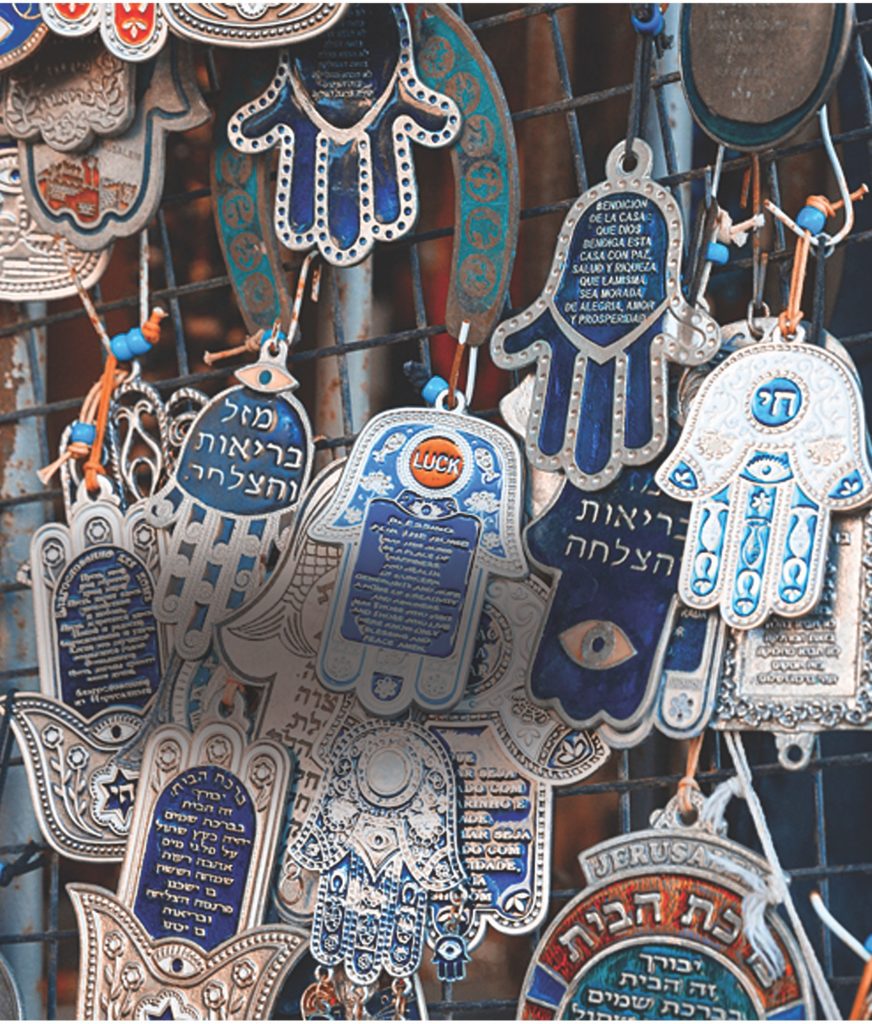
My ancestors could never have imagined a neighborhood like Pico-Robertson, where more than 40 distinct flavors of Judaism perfume the Shabbat air every week.

Maybe he was being polite because of all the out-of-town guests, but I do think Mark’s words speak to something I see more and more in the Jewish community — an embracing of Sephardic culture. It has become common for many of my Ashkenazi friends to serve Sephardic cuisine, sing Sephardic songs and inquire about Sephardic customs.

As you’ll read in our cover story this week on “The Sephardic Spirit,” for the past three years Rabbi Sarah Bassin of Temple Emmanuel of Beverly Hills has organized a celebration of a signature Sephardic custom — the Mimouna party on the night after Passover. Among other examples, Valley Beth Shalom in Encino regularly hosts Sephardic services on Friday nights.

There also seems to be a greater effort among Sephardic groups to reach out to the broader community. One of those groups is the Sephardic Educational Center (SEC), which is co-sponsoring a conference in Los Angeles next week featuring one of the premier Sephardic voices in the country, Rabbi Marc Angel from New York. Among the events will be a Sunday workshop at the Jewish Federation of Greater Los Angeles to assist Jewish educators in incorporating more of the Sephardic intellectual, cultural and Torah tradition in Jewish education.

Rabbi Angel, as well as his partner at the conference, SEC leader Rabbi Daniel Bouskila, are examples of Sephardic rabbis who love their Sephardic tradition but also feel at home in the Ashkenazi world.

This duality exemplifies the two forces that animate the delicate notion of cultural exchange: the comfort of the familiar versus the thrill of discovering the new.

It’s human nature to get attached to one’s customs, especially when it comes to something intimate like prayer melodies. Melodies have the power to bring back cherished memories of years long gone. We feel a deep bond with rituals and liturgies that have been handed down from one generation to the next and have sustained us for so long.

And yet, we are living in radically different times. My ancestors could never have imagined a neighborhood like Pico-Robertson, where more than 40 distinct flavors of Judaism perfume the Shabbat air every week. In the Casablanca neighborhood where I grew up, there was a grand total of one flavor.

Maybe this is the essential point: All Jewish traditions, by the very fact that they are Jewish, belong to every Jew.

For many of us, this modern mingling is bound to disrupt our habits and ignite our curiosity gene. There are Ashkenazi melodies that bring tears to my eyes; Chassidic melodies that stir my soul. I get to taste them anytime I want. Many years ago, I had a group of Ashkenazi friends at our synagogue in Venice Beach who insisted that we pray Sephardic style on Yom Kippur. They couldn’t get enough of it. They were blown away that these melodies were part of their people’s story. They felt as if the melodies belonged to them as much as they belonged to me.

Maybe this is the essential point: All Jewish traditions, by the very fact that they are Jewish, belong to every Jew. Are the traditions different? How could they not be? Sephardic Jews, who are diverse in their own right, have a unique, rich and varied history, with their own cultural, geographical and religious influences. How could the customs and melodies not be radically different?

But walk into any Ashkenazi and Sephardic synagogue and you’ll discover something comforting and also extraordinary: No matter how radically different our melodies may be, the words themselves are pretty much the same. Just ask Rabbi Muskin.

Living in Ashkefardic Times Read More »

Week of Mar. 9, 2018

Week of Mar. 9, 2018 Read More »