fbpx

November 16, 2017

TABLE FOR FIVE: Five Takes on the Weekly Parsha

PARSHA: TOLDOT, Genesis 25: 21-23

“Isaac pleaded with the Lord on behalf of his wife, because she was barren; and the Lord responded to his plea, and his wife Rebecca conceived. But the children struggled in her womb, and she said, ‘If so, why do I exist?’ She went to inquire of the Lord, and the Lord answered her:

Two nations are in your womb,

Two separate peoples shall issue from your body;

One people shall be mightier than the other;

And the older shall serve the younger.”

Tova Hartman
Dean of Humanities at Ono Academic College, Israel

As we continue to read through Genesis, we realize that the “original sin” of the book is not the use of “seduction” by Eve, but our matriarchs’ collusion in a tragic zero-sum game. This becomes especially evident in these verses, which introduce the tumultuous saga of Jacob and Esau. There, the Lord informs Rebecca that two nations are warring within her previously barren womb and that when they emerge, “one people shall be mightier than the other, and the older shall serve the younger.”

Just as Sarah expels Hagar because there is not enough room for both Isaac and Ishmael, Rebecca accepts the fact that one of her sons, mightier than the other, will crowd out his brother. She ensures the outcome by helping Jacob deceive his father. Esau alone resists this world order. When he returns from hunting to learn that his father already has given away his blessing to Jacob, he does not accept Isaac’s action as a fait accompli.

Instead, Esau asks the fundamental question: “Have you but one blessing, father?” (Genesis 27:38).

In this alternative theology, Esau teaches that there could be more than one blessing. In fact, the zero-sum mentality is one of the tragedies of our world. This is especially so in Israel, where we almost habitually presume one people’s claim to the land to the exclusion of all others. Why not dignify both claims, both histories? “Does God have only one blessing?” asks Catholic theologian Mary Boys. The God I choose to believe in does indeed have multiple blessings.

Rabbi Noah Farkas
Valley Beth Shalom
Often when we try to explain our way out of suffering, we cause more pain — even if we never intend to do so.

God is still getting to know the human heart in Genesis and perhaps oversteps in the case of Rebecca. What we know clearly is that Rebecca, the mother, suffers inexorably. God tries to placate her with a political explanation, but the text never says that she was consoled by God’s words. In fact, one easily could say that God adds to her suffering, because the conflict between the brothers will become an eternal conflict between whole nations. From this perspective, Rebecca actually suffers twice in God’s eyes: once for her pregnancy and once for her children’s fate.

The Chasidic master Levi Yitzchak is helpful here. In her travail, Rebecca utters the word anochi, which mystically seems to refer to God’s utterance of anochi (I am) in the first of the Ten Commandments. The “I am” of God is linked to the “I am” of Rebecca. In her pain, Rebecca displaces God’s explanation of suffering even before it is taught to her. She teaches us that we should never treat suffering as a means, but instead as an experience unto itself.

To explain away suffering is to actually cause more suffering. The way out of suffering is not through reasoning or explanation but through presence and response. Thus, the cry of the mother is heard louder to me than the voice of Father in Heaven. Like God’s, Rebecca’s cry is a commandment of sorts, for us to respond to woe not by rational explanation but in love and presence.

Rabbi Ari Schwarzberg
Shalhevet High School
The struggle in Rebecca’s womb typifies the pattern of sibling rivalry throughout Genesis. Beginning with Cain and Abel and ending with Joseph and his brothers, the book depicts a cycle of fraternal strife in which the younger child repeatedly emerges as the torchbearer of Abraham’s legacy.

But if we take a closer look at this theme, the chosen status of the Abrahamic line is not granted willy-nilly to the younger sibling. The right to the family name is earned through the refinement that comes from enduring trying moments and traumatic events. Isaac encounters death at the Akedah while Jacob and Joseph spend years of their lives exiled from their families. Sarah, Rebecca and Rachel battle with infertility, and Leah lives much of her life in the shadow of her younger sister.

In sum, our matriarchs and patriarchs do not live lives of tranquility, nor is their status achieved merely by virtue of their genetic code. Perhaps this is the meaning behind God’s response to Rebecca. Yes, God says, struggle will forever be part of the human condition. But inherent in that struggle is the capacity for growth and change. Each of our ancestors faced adversity, and through those experiences they were transformed into our patriarchs and matriarchs — indeed, the younger child became the exalted one. As we read these stories, let us also commit ourselves to God’s promising destiny that our challenges and difficulties need not seal our fate as being perpetual “younger siblings.”

Rabbi Denise L. Eger
Congregation Kol Ami

Amazing! Prayers are answered by God. Isaac and Rebecca cry to God about their infertility. And God answers with the promise of twins. For most of us, prayers are not answered so quickly — especially prayers about infertility issues. Often, those who want children cannot ride the roller coaster of trying to get pregnant using available science and technology.

We don’t talk enough about the pain of infertility. We should. We Jews tend to marry at older ages, following extensive education and professional tracks. Marrying late, or not finding Mr. or Ms. Right, can make conception more difficult, time-consuming and expensive. Infertility treatments can take the romance out of the process. As a result, many Jews have fewer children than did their forebears.

For a community concerned with continuity, this issue demands attention. The Jewish Free Loan Association in Los Angeles offers interest-free loans for the great expense of in vitro fertilization, a technique used to overcome infertility. We ought to lift up more opportunities for adoption and assistance for families adding to our numbers through a variety of possibilities. Rebecca and Isaac prayed to God. We should, too. But some help and attention from the organized Jewish community could shed important light on this issue.

Infertility and solutions available now shouldn’t be left to prayer. They should be on our communal agenda. Let’s help families grow rather than see infertility as a badge of shame. That is my prayer. I hope it is answered.

Rabbi Haim Ovadia
Magen David Sephardic Congregation, Rockville, Md. 

Isaac was not the most talkative man, making it difficult for Rebecca to communicate with him. He loved her deeply and focused his prayer not on himself as childless, but on her. Rebecca loved and respected Isaac, but her experience taught her that a woman’s voice is not heard in a man’s world.

Her parents arranged her marriage without consulting her, retracting only when not offered a fair price. Rebecca bypassed established practices and spoke to God directly, probably never revealing details to Isaac. God tells her that she will be the progenitor of two great nations that will struggle for hegemony. One of these nations, God says, will overpower the other. Up until this point, everything was clear, but the problem started with the last three words of verse 23. Those words can be understood as saying that the greater will serve the smaller, or that the greater will be served by the smaller (compare with Job 14:19).

It is also not clear what the yardstick is for greatness or smallness. Is it age, physical stature or future political and military prowess? Even if she had told Isaac about her prophecy, the two of them might not have agreed about who is great and who is small. Isaac might have also argued that he needed to obey the natural flow and the let the boys shape their own identities and destinies.

Rebecca decided to take matters into her own hands and guarantee the fulfillment of the prophecy, plunging her family into rivalry, distrust and chaos.

TABLE FOR FIVE: Five Takes on the Weekly Parsha Read More »

You’re Welcome to This Gratitude Leaf Banner

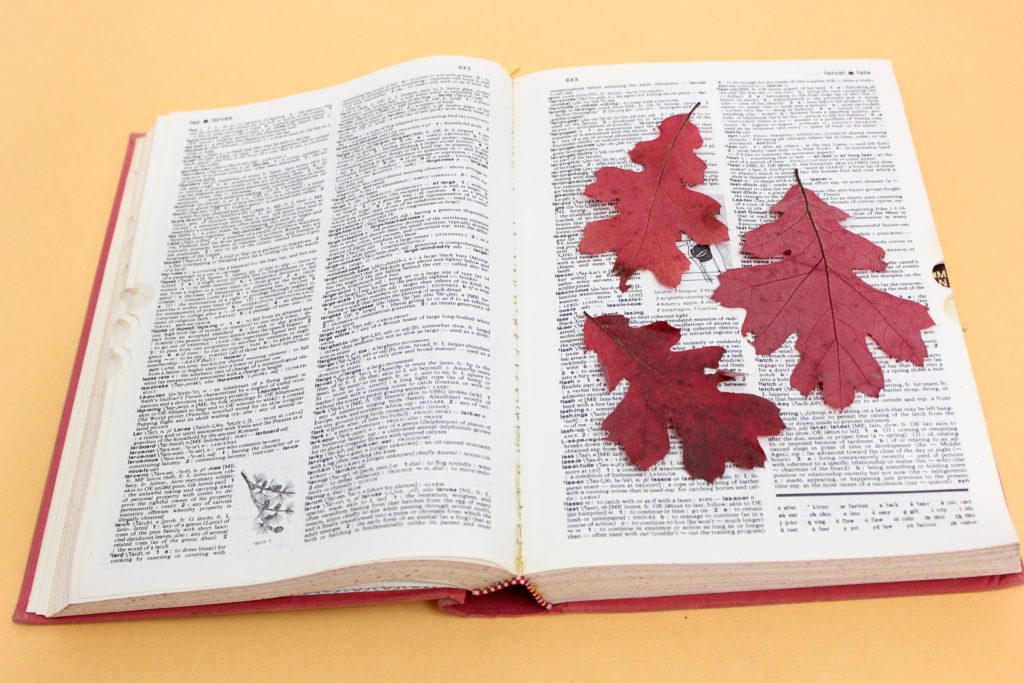
Gratitude is a feeling we always should have in our hearts, not just in November when Thanksgiving is upon us. That’s why this banner is such a great reminder to be grateful for our blessings all year round. Made with fallen leaves, the letters spelling out the word “gratitude” are written with a paint marker. The banner would look beautiful on a fireplace mantel, bookshelf or even on a front door. And to all of you checking out this project — thanks!

What you’ll need:
Fallen leaves
Thick book, like a dictionary
Oil-based white marker
Glue or hot glue
Ribbon

1.

1. Collect leaves that have fallen in your yard or neighborhood. Leaves that have turned color, rather than green leaves still on the tree, work best as they can be dried easily. You will need nine leaves to spell out G-R-A-T-I-T-U-D-E.

2.

2. Position the leaves between the pages of a thick book like a dictionary so they can be pressed. Place a heavy object on the book, and allow the leaves to dry for at least four days.

3.

3. With a white oil-based marker (Sharpie makes them, and you can find them in an art supply or crafts store), write one letter on each leaf. Follow the instructions on the marker, as it takes some patience before the ink flows.

4.

4. Glue the tip of each leaf onto a piece of ribbon using regular glue or a hot glue gun. Glue it to the back of the ribbon so you can’t see the glue residue. And make sure your ribbon is long enough to tie or tape the ends to an anchor point.


Jonathan Fong is the author of “Walls That Wow,” “Flowers That Wow” and “Parties That Wow,” and host of “Style With a Smile” on YouTube. You can see more of his do-it-yourself projects at jonathanfongstyle.com.

You’re Welcome to This Gratitude Leaf Banner Read More »

What’s Happening in Jewish L.A. Nov. 16-23: Vulture Festival, Dennis Prager and ‘War of the Worlds’

FRI NOV 17
“WHY JUDAISM MATTERS”

During a Kabbalat Shabbat service, Temple Israel of Hollywood Rabbi John Rosove discusses his new book, “Why Judaism Matters: Letters of a Liberal Rabbi to His Children and the Millennial Generation.” Rosove’s work, presented in the form of letters from a rabbi to his sons, is a guidebook for Reform Jews who find it difficult to engage with Jewish orthodoxy, beliefs, traditions and issues in the 21st century. A dinner follows services and the discussion. 6:30 p.m. Free. (RSVP required for dinner). Temple Israel of Hollywood, 7300 Hollywood Blvd., Los Angeles. (323) 876-8330. tioh.org.

“BERNSTEIN ON STAGE”

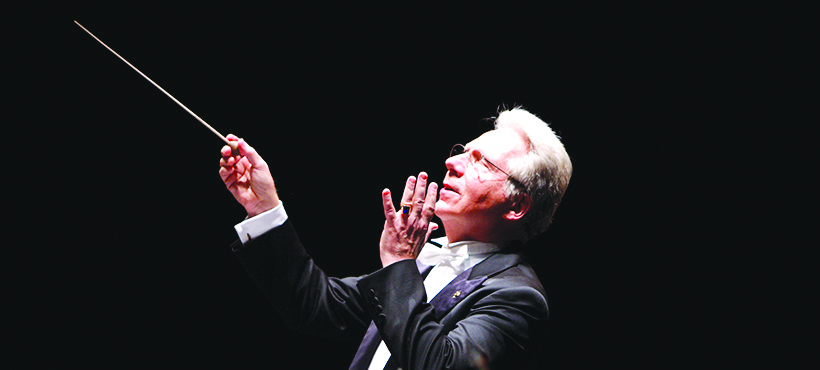
John Mauceri conducts the New West Symphony in an evening of the music of Leonard Bernstein, honoring the centennial of the famed composer’s birth. The concert will also feature the Gay Men’s Chorus of Los Angeles, the Women of Areté Vocal Ensemble, the California Lutheran University Choir, Suzanna Guzmán, Davis Gaines, Celena Shafer and Casey Candebat. 8 p.m. Tickets $58–$73. Valley Performing Arts Center, 18111 Nordhoff St., Northridge. Also 8 p.m., Nov. 18, Thousand Oaks Civic Arts Plaza, 2100 Thousand Oaks Blvd., Thousand Oaks; 3 p.m., Nov. 19, Oxnard Performing Arts Center, 800 Hobson Way, Oxnard. (818) 677-3000. valleyperformingartscenter.org.

GRATITUDE SHABBAT: CELEBRATING UNITY AND THANKSGIVING

Wilshire Boulevard Temple brings together its Rabbi Susan Nanus, the American Jewish University Choir led by conductor Noreen Green, and the BYTHAX Gospel Choir led by composer, vocalist and conductor Diane White Clayton in a joint Shabbat concert that mixes poetry, prayer and song. A community Shabbat celebration follows. 7:30 p.m. Free. Wilshire Boulevard Temple, Glazer Campus, 3663 Wilshire Blvd., Los Angeles. (213) 388-2401. wbtla.org.

“A FUNNY THING HAPPENED ON THE WAY TO THE FORUM”

Comedy — tonight! An ancient Roman slave tries to gain his freedom by helping his master woo a young woman in the bawdy farce “A Funny Thing Happened on the Way to the Forum,” with music and lyrics by Stephen Sondheim and a book by Burt Shevelove and Larry Gelbart. Ancient Rome is turned on its ear in this raucous Tony Award-winning musical featuring mistaken identity and dizzying plot twists. (Intended for adult audiences; may contain adult language and situations.) 8 p.m. Thursdays and Fridays; 2 p.m. Saturdays; 3 p.m. and 7:30 p.m. Sundays. Through Dec. 31. Tickets $45–$52. Garry Marshall Theatre, 4252 W. Riverside Drive, Burbank. (818) 955-8101. garrymarshalltheatre.org.

SAT NOV 18
VULTURE FESTIVAL L.A.

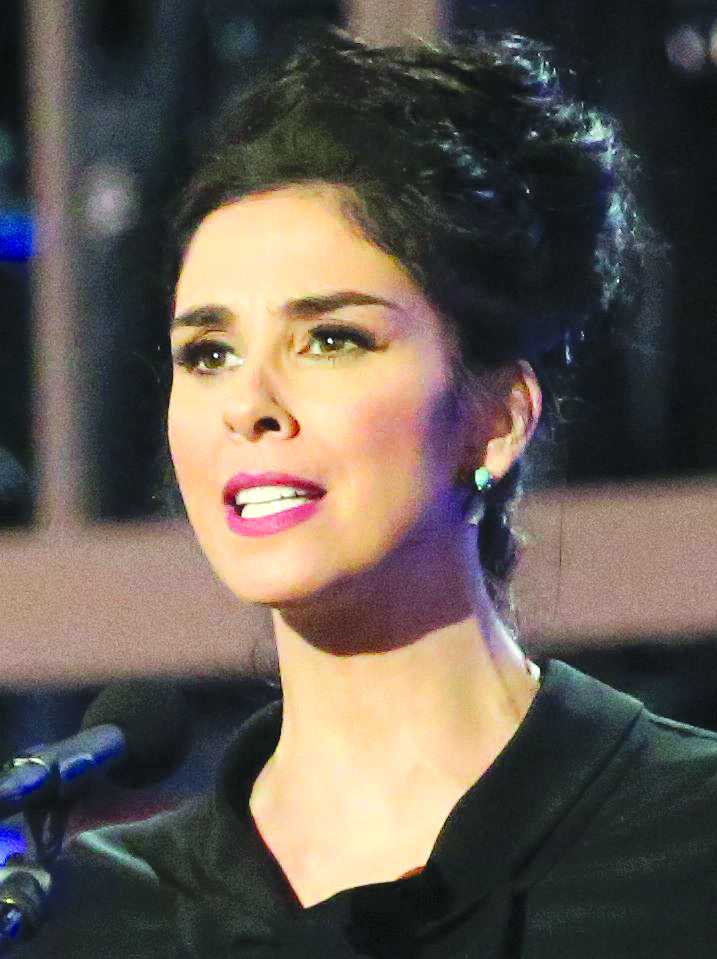
Sarah Silverman
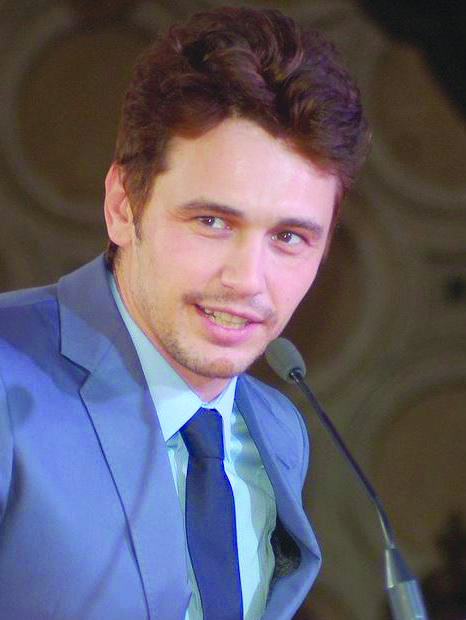
James Franco.
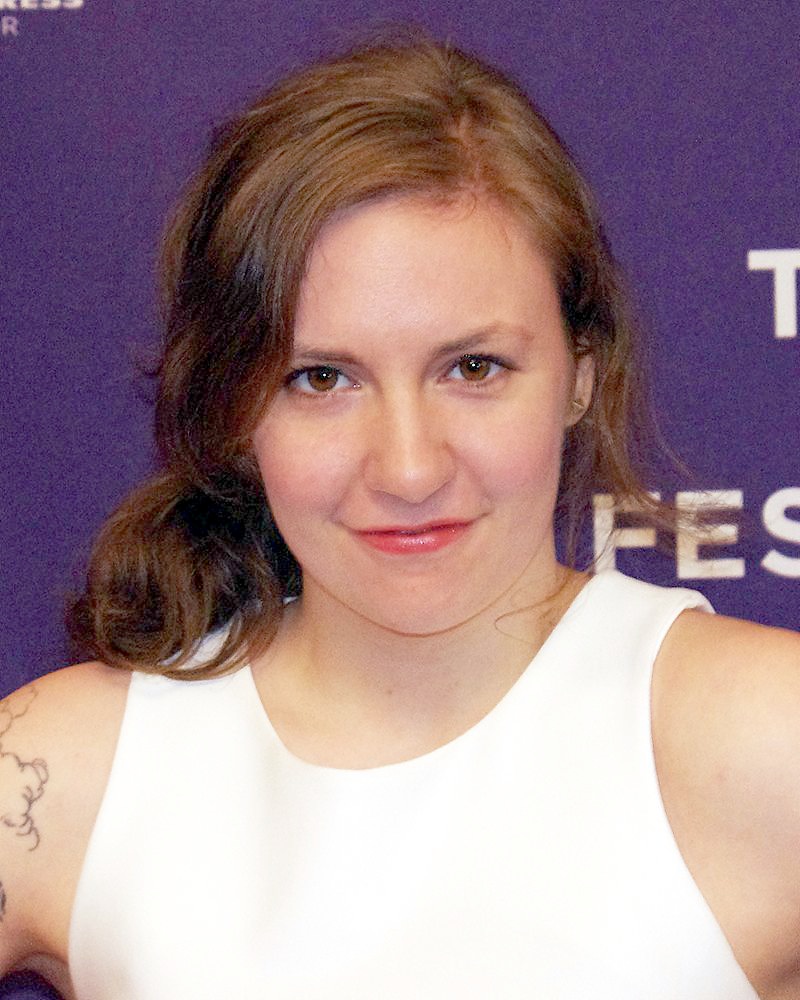
Lena Dunham.
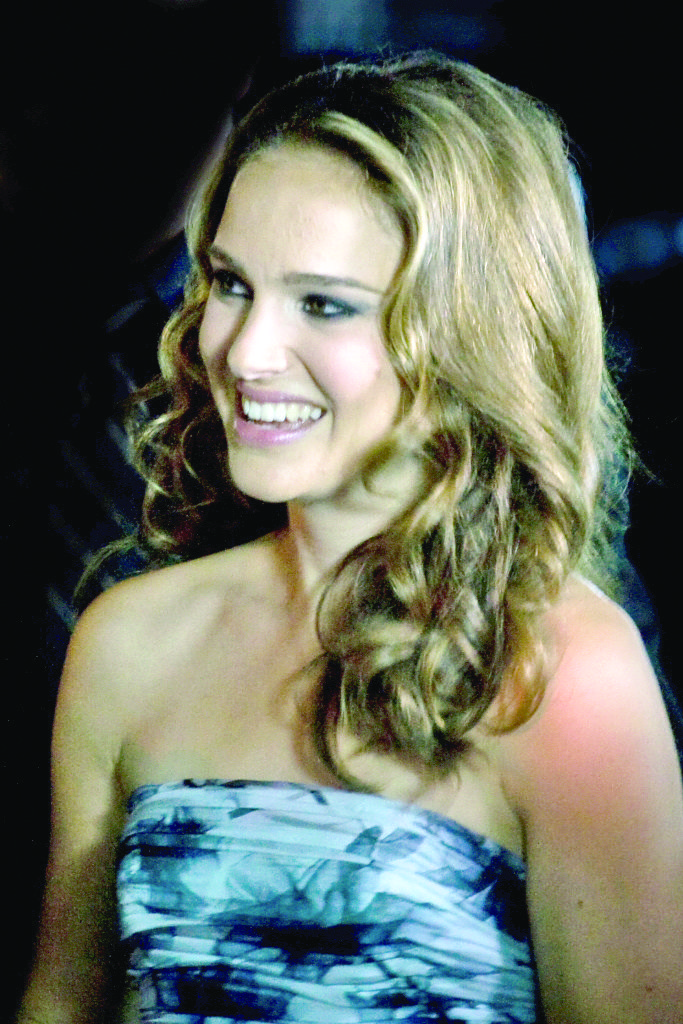
Natalie Portman.

Hollywood Jews, including Sarah Silverman, James Franco, Lena Dunham, Natalie Portman, Damon Lindelof, Eugene Levy, Rachel Bloom and Joshua Malina are among the stars appearing at this two-day festival in Hollywood. From a panel on “Stranger Things”: Inside the Upside Down, to a discussion with the women behind HBO’s “Girls” on The Panel of Their Generation (or at least a panel of a generation), this is the ultimate festival for any pop-culture fan. Organized by politics and culture magazine Vulture. Through Nov. 19. 11 a.m. Saturday–9 p.m. Sunday. Various prices. The Hollywood Roosevelt, 7000 Hollywood Blvd., Los Angeles. vulturefestival.com.

“WAR OF THE WORLDS”

The Los Angeles Philharmonic, featuring Israeli-American opera director Yuval Sharon, up-and-coming Jewish composer Annie Gosfield, and members of the L.A. Phil New Music Group, re-creates Orson Welles’ 1938 original radio script, incorporating Gosfield’s satellite and machine and industrial sounds. Admission to the concert includes entry into “Noon to Midnight,” which lets attendees roam Walt Disney Concert Hall for a day of pop-up performances featuring L.A.’s top new-music ensembles. Noon, 2 p.m. $25-$58. Walt Disney Concert Hall, 111. S. Grand Ave., Los Angeles. (323) 850-2000. laphil.com.

DENNIS PRAGER

Nationally syndicated radio host and New York Times best-selling author Dennis Prager will discuss “Supporting Israel and Maintaining Conservative Traditional Values in America’s Contemporary Cultural Climate” during a special Shabbat morning service. After the service, the founder of Prager U will participate in a Q-and-A session over a catered lunch. Childcare available. Seating is limited. 9:30 a.m. $40 members, $60 nonmembers. Sephardic Temple Tifereth Israel, 10500 Wilshire Blvd., Los Angeles. (310) 475-7000. sephardictemple.org.

SUN NOV 19
“NAZISM IN THE U.S.”

Beth Ribet, who holds a doctorate in social relations from UC Irvine and a law degree from UCLA, discusses Nazism in American institutions and history, its relationship to white supremacy and what it means today. Attendees explore opportunities to mobilize and respond. Coffee and bagels served. Co-sponsored by Sholem Community and LGBT congregation Beth Chayim Chadashim. 10:30 a.m.–12:30 p.m. Free. Westside Neighborhood School, 5401 Beethoven St., Los Angeles. (310) 984-6935. sholem.org.

MAAGALIM CYCLING EVENT

Israeli and Jewish families with special-needs children come together for a day of cycling, karate, fitness, pumpkin decorating and more. Professional cyclists will
provide instruction to those who have never ridden a bike. Israeli Scouts (Tzofim) will attend and partner with kids with special needs. Organized by Maagalim, a new organization aiming to provide more opportunities for inclusion for special-needs families. 11 a.m.-2 p.m. Free. IAC Shepher Community Center, 6530 Winnetka Ave., Woodland Hills. (818) 288-8108. maagalimcircles.org.

“HITLER, MY NEIGHBOR: MEMOIRS OF A JEWISH CHILDHOOD, 1929-1939”

Historian Edgar Feuchtwanger participates in a talk and book signing for “Hitler, My Neighbor: Memories of a Jewish Childhood, 1929-1939.” The book is Feuchtwanger’s account of being a young boy from a prominent German-Jewish family in Munich when Nazi party leader Adolf Hitler moves into the building across the street. The boy watches from his window as terrible events unfold. 3 p.m. Free (RSVP required). Los Angeles Museum of the Holocaust, 100 S. The Grove Drive, Los Angeles. (323) 651-3704. lamoth.org.

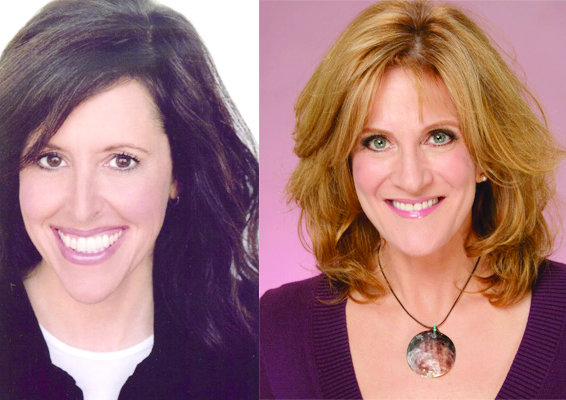
CAROL LEIFER AND WENDY LIEBMAN

The two headliners at Whizin’s Stand-Up Comedy Showcase have starred in comedy specials on HBO, Showtime and Comedy Central. Carol Leifer is a four-time Emmy Award nominee for her writing on “Seinfeld,” “The Larry Sanders Show” and “Saturday Night Live.” Wendy Liebman has performed on late-night shows hosted by Johnny Carson, David Letterman, Jay Leno, Jimmy Fallon and Jimmy Kimmel, and was a semifinalist on “America’s Got Talent.” 4 p.m. $25. David Alan Shapiro Memorial Synagogue Center, American Jewish University, 15600 Mulholland Drive, Los Angeles. (310) 476-9777. wcce.aju.edu.

“E.T. THE EXTRA TERRESTRIAL IN CONCERT”

American Youth Symphony (AYS), a laboratory for skilled high school musicians, performs John Williams’ legendary score for “E.T. The Extra Terrestrial,” accompanying a screening of the iconic Steven Spielberg film. AYS Music Director Carlos Izcaray and conductor Jon Burlingame lead the symphony. The event features a Q-and-A with industry leaders, moderated by Burlingame. 4:30 p.m. $11-$15. Royce Hall, UCLA, 10745 Dickson Court, Los Angeles. (310) 470-2332. aysymphony.org.

MON NOV 20
“NIGHT OF 80 SHABBATS”

Today is the final day to register as a host for the Builders of Jewish Education’s (BJE) “Night of 80 Shabbats” on Dec. 1, when
Shabbat dinners are served in homes across Los Angeles. The initiative marks the 80th anniversary of BJE. Young adults and millennials who host a dinner could be eligible to receive $10 per person in food expenses, up to $150, from One Table, which brings Shabbat to people of all backgrounds who are in their 20s and 30s (restrictions apply). For additional information, visit bjela.org/night-80-shabbats-0.

REZA ASLAN AND RABBI SARAH BASSIN

Join Reza Aslan, best-selling author of “Zealot,” and Rabbi Sarah Bassin of Temple Emanuel of Beverly Hills as they discuss God and the concept of the divine, from prehistoric times to today. Part of the Behrendt Conversation Series, in partnership with Chevalier Books. A copy of Aslan’s new book, “God: A Human History,” is included with the price of admission. 7 p.m. $25 online; $35 at the door. Temple Emanuel of Beverly Hills, Corwin Family Sanctuary, 300 N. Clark Drive, Beverly Hills. (310) 288-3737. tebh.org.

INTERFAITH THANKSGIVING SERVICE

Seven congregations comprising the Pacific Palisades Ministerial Association, including Reconstructionist synagogue Kehillat Israel, participate in an annual evening of prayer, music, readings, meditation and fellowship. A patio reception with hot beverages and other refreshments follows. 7 p.m. Free. Self-Realization Fellowship Lake Shrine Temple, 17190 Sunset Blvd., Pacific Palisades. (310) 459-2328. ourki.org.

“SUDDENLY, A KNOCK AT THE DOOR”

Writer Eitan Katzen is visited by a bearded man, a survey taker and a pizza delivery woman in this original play by Robin Goldfin, based on stories by award-winning Israeli author and filmmaker Etgar Keret. Brandishing weapons, these visitors hold the writer hostage and demand a story. For these three strange muses, Katzen begins to weave his tales, played out on the stage by the same characters holding him captive. The staged reading is directed by Jeff Maynard. Free with RSVP required. 8 p.m. Lenart Auditorium, Fowler Museum at UCLA, 308 Charles E. Young Drive North, Los Angeles. (310) 208-3081, ext. 108. international.ucla.edu/institute.

For more events in Jewish L.A., visit http://jewishjournal.com/calendar/.

What’s Happening in Jewish L.A. Nov. 16-23: Vulture Festival, Dennis Prager and ‘War of the Worlds’ Read More »

With Donor-Advised Funds Philanthropy Is No Longer Limited to the Uber-Rich

You might think the largest charitable organization in the United States is a billionaire’s foundation or a brand-name charity. The truth is, it’s a bank.

In 2016, a division of Fidelity Investments with more than $16 billion in assets became the largest charity in the United States, according to the Chronicle of Philanthropy, thanks to a financial tool that has come to dominate giving in America over the past decade: donor-advised funds.

“They’re a fast-growing philanthropic vehicle for the Jewish community — for philanthropy in general in the country, but especially for the Jewish community,” said Andres Spokoiny, president and CEO of the Jewish Funders Network, a national consortium of Jewish community donors.

Donor-advised funds, or DAFs, are funds held by nonprofit organizations in the name of a private donor, according to the Internal Revenue Service. Although a so-called “sponsoring organization” assumes control over the money, donors can advise it to disburse funds to other nonprofits of their choice. And while donors get the tax exemption upfront, they can disburse their funds at a later date.

Although DAFs have been available to donors since at least the 1990s, they have seen an explosion in the last decade, not least in the Jewish community.

Dan Rothblatt, senior vice president of philanthropic services for the Jewish Community Foundation of Los Angeles, said in an email to the Journal that DAFs make up $536 million of The Foundation’s profile of $1.1 billion in charitable assets, or more than half, as of Dec. 31, 2016.

That number is up sharply from five years ago, with a nearly 50 percent increase since 2012, Rothblatt said.

The national growth rate in DAFs has at times been even greater. Between 2010 and 2015, contributions to DAFs nationally more than doubled, from $9 billion to $22 billion, according to a study by the National Philanthropic Trust.

“DAFs are one of the fastest-growing segments of philanthropy for numerous reasons,” Rothblatt wrote. “They’re quick and easy to establish and avoid the costs and administrative complexities of charitable instruments such as private foundations.

DAFs represent a particularly valuable tool for small and mid-sized donors whose wealth is insufficient to make setting up a private foundation worthwhile, Spokoiny said.

“Let’s say you have $10,000 to give,” he said. “You’re not going to create your own foundation. So the thinking is that a $10,000 donor can actually do philanthropy in an easy and user-friendly way.”

Spokoiny noted that DAFs face a number of practical limitations. For one, a DAF cannot employ staff to issue grants or vet potential donation recipients, he said. Moreover, they fundamentally rely on trust: Once a donor signs over his or her funds to a sponsoring organization, they legally belong to that organization, he said.

Even detractors acknowledge the effect the funds have had on the charitable giving.

Citing federal statutes, tax law professor Ellen April of Loyola Marymount University wrote in an email, “the donor must cede legal control to the exempt organization sponsoring the fund.”

This arrangement can — and does — lead to complications, for instance when a donor wishes to give to a nonprofit seen as contrary to the mission of the sponsoring organization.

DAFs also may be problematic because of a feature that often is seen as an advantage: Unlike private foundations, which are required by law to disburse 5 percent of their holdings each year, DAFs have no such restriction. In a letter to Congress in July, Ray Madoff and Roger Colinvaux, law professors at Boston College and the Catholic University of America, respectively, wrote that even as the amount contributed to DAFs has risen in recent years, charitable giving overall has stagnated. “This suggests that DAFs are not increasing overall giving, but instead are attracting dollars that would otherwise be contributed to active nonprofits,” the professors wrote.

Spokoiny echoed that concern, saying that DAFs could potentially become vehicles for donors to “park money.”

Overall, though, the philanthropic sector remains bullish on the funds. Spokoiny said that all major Jewish community foundations now offer donors the option of setting up DAFs.

And even their detractors acknowledge the effect the funds have had on the charitable giving.

In their letter to Congress, Colvinaux and Madoff wrote, “From their infancy in the 1990s when the first commercially affiliated funds formed until today, DAFs have grown to dominate the charitable landscape.” n

With Donor-Advised Funds Philanthropy Is No Longer Limited to the Uber-Rich Read More »

The Journey of a ‘Single Mother by Choice’

“How many of you bother reading all the emails from your kid’s school?”

When a presenter asked that question at a Tel Aviv conference for working mothers, it was met with peals of laughter and the shaking of heads. Only one woman in the entire auditorium raised her hand.

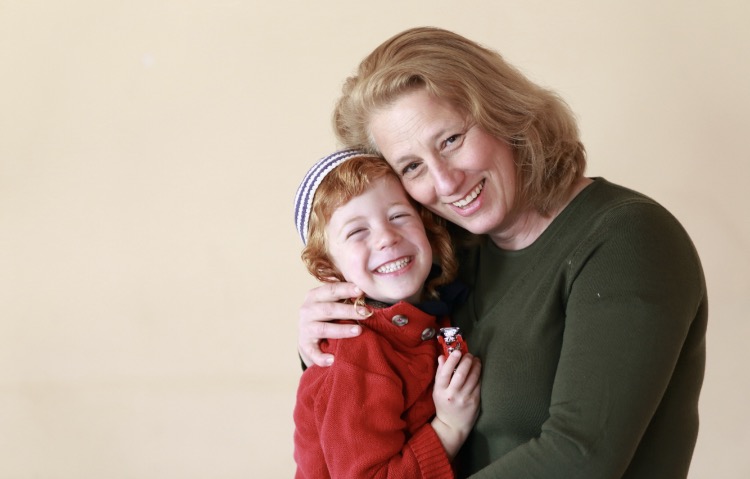
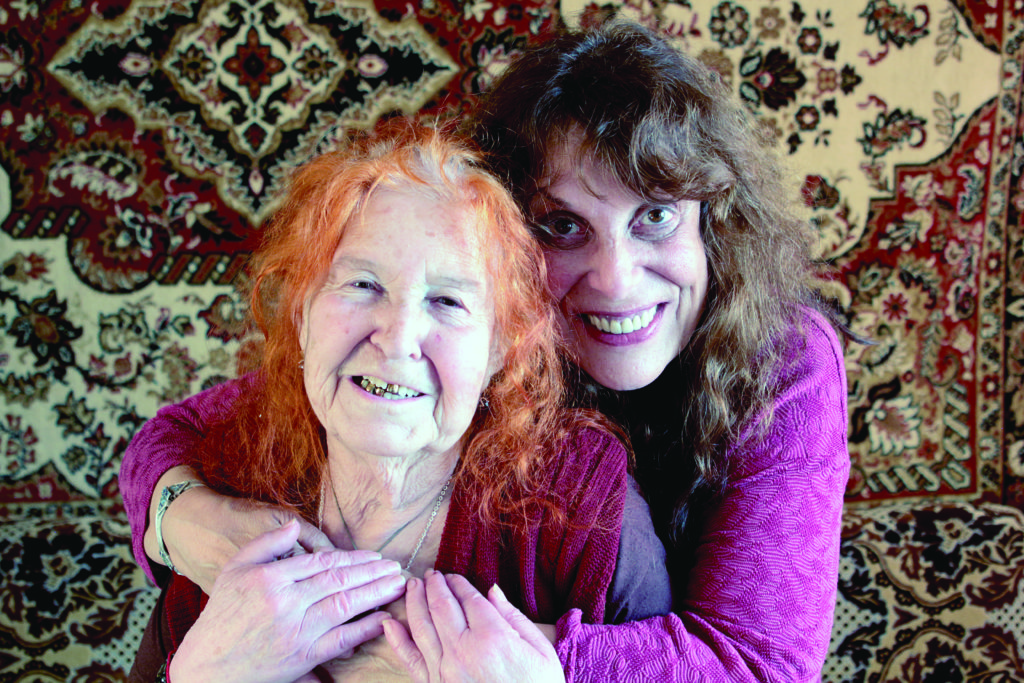
Yael Ukeles reads every note regarding her 6-year-old son, Amitai. She attributes her conscientiousness to the “tremendous power of choice” that brought Amitai into the world.

Part of a growing network of religious women who have chosen to raise children without a partner, Ukeles is a co-founder of KayamaMoms, an organization that supports such women and advocates for their needs in the wider community. Bordering on a misnomer, she said, the term “single mother by choice” fails to incorporate the emotional anguish that comes with the choice between being a single mother and not being a mother at all.

“You speak to any single mom by choice — Jewish or not Jewish, in America or in Israel — and it’s really the same story,” she said.

Unmarried and approaching 40, Ukeles realized that if she wanted to become pregnant, she would need to act quickly.

“I felt angry — well, maybe angry is too strong a word — but I felt pressured at having to make this choice. But I understood that no decision is a decision,” Ukeles said.

So she started to do research, speaking to psychologists, financial advisers and, being an observant Jew, to rabbis. She also had to let go of her lifelong vision of what her future would look like.

“The literature calls it ‘mourning the dream,’ ” she said, adding that clinging to vestiges of some ideal long past its expiration date was an irresponsible way to bring a child into the world.

“That child shouldn’t feel anything but 100-percent wanted,” she said.

Apart from letting go of ingrained paradigms, Ukeles’ advice to women considering to go it alone is to, well, not go it alone. Although she credits her family with being “150 percent on board” with her decision, it was really her community of Tekoa — a mixed religious-secular community in the Gush Etzion bloc south of Jerusalem — that eased much of the burden.

“Find a community that you want to live in and raise a child in and be a part of that community by giving,” she said. “Give, give, give.”

That way, she said, by the time you need to ask for help, you’ll already have a built-in support network.

“I felt pressured at having to make this choice. But I understood that no decision is a decision.”

As her voice cracked, Ukeles recalled the exhilaration she felt at Amitai’s brit milah.

“It was beyond … just beyond. … When I walked into the room, I felt this swell, literally a wave of love and support. Every time I think about it I almost can’t breathe because it was just so beautiful.”

Six years on, is Amitai aware of his uncommon origins?

“Oh sure, we speak about it constantly,” Ukeles said.

Ukeles told Amitai before he turned 2 about how she wanted to have a baby, so she went to a doctor. When he was a bit older, she added that she had wanted to get married but didn’t find anyone, so she went to a doctor.

“And then I added a little biology,” she said with a laugh.

She has revealed to her son details about the sperm donor so that “it’s not a ghost in the house.” She has information about the donor because she used an American sperm bank. Israeli law requires that sperm and egg donors remain anonymous.

Still, in most ways, women wanting to become single mothers have it easier than their U.S. counterparts. In religious circles, the subject is less taboo in Israel, so there are more single mothers by choice than in comparable U.S. communities. And the state covers fertility treatments, which can be prohibitively expensive in the U.S.

To date, Ukeles — with KayamaMom co-directors Dina Pinner and Dvori Ross — has supported some 80 women in Israel and the U.S., and welcomed more than 100 KayamaMom babies into the world.

Although she never imagined her “Plan B would be this awesome,” she said, she hasn’t entirely lost sight of Plan A: “I’m still hopeful that I’ll find myself in a nurturing relationship someday.”

The Journey of a ‘Single Mother by Choice’ Read More »

‘The Mighty Atom’ Is at Heart of Grandson’s Film

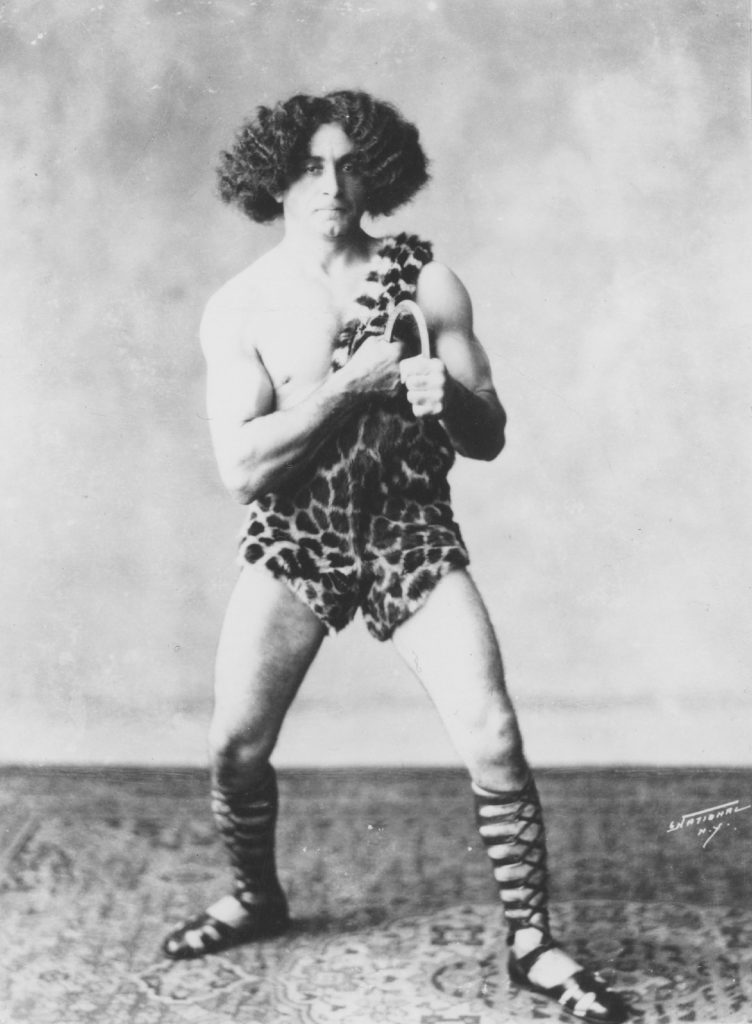
Joseph Greenstein stood only 5 feet 4, but he could bend iron bars with his bare hands, bite through chains with his teeth and pull an airplane tied to his long hair. Known as The Mighty Atom, the pint-sized Samson was a Polish-Jewish immigrant who nearly died from tuberculosis as well as poverty and pogroms in the old country. But in the United States in the 1920s and ‘30s, he found fame as a strongman and later worked as a an advocate for his product line of herbal remedies.

Forever the entertainer, at age 84 in 1974 he was bending spikes in front of fellow hospital patients just before his death from bladder cancer. His grandson, Steven Greenstein, was only 5 years old at that time, but in a recent telephone interview from his home in Washington, D.C., he told the Journal that Joseph Greenstein “had a personality that loomed large, and his presence was felt in my house and is to this day.”

“Forty years after his death, he still holds several records.” — Jerry Greenstein

Steven Greenstein has now released a documentary, “The Mighty Atom,” that pays tribute to both the showman and the man. It is available for streaming on iTunes, Amazon and Google Play.

Over 20 years, Steven, a television and TV commercials director, collected photos and stories from relatives and other sources until he had enough to begin making the film in early 2015. A year into the project, he found an audiocassette of a 1967 radio interview with his grandfather, which he then used it as a narrative thread throughout the film.

The story includes biographical points, anecdotes and elements of the Jewish immigrant experience that, Steven said, made his grandfather “hungry and made him want to be special. Nothing was given to him. He had to be spectacular to break out of that and make a living.”

The documentary also features interviews with physiology experts and modern-day strongmen who put The Mighty Atom’s abilities into context. It tells of the filmmaker’s late uncle, Mike, who at age 93 appeared on “America’s Got Talent,” pulling a loaded station wagon with his teeth.

Joseph was a devout, proud Jew who grew a beard and wore the Star of David on his costume after he witnessed the beating of a rabbi in Brooklyn in 1928.

“It was important that his Jewish identity was recognizable,” his grandson said.

In the documentary, the filmmaker suggests that The Mighty Atom might have inspired Jerry Siegel and Joe Shuster to create Superman. He can’t prove it, but he is more convinced about other connections, including the comic book hero The Atom (of whom there are several incarnations) and Michael Chabon’s novel “The Amazing Adventures of Kavalier & Clay.”

In the novel, “There’s a Jewish strongman … named the Mighty Molecule, who bends steel. It’s clearly my grandfather,” Steven said.

He believes his grandfather deserves as much recognition as other renowned Jewish athletes such as baseball players Sandy Koufax and Hank Greenberg, and swimmer Mark Spitz. “There’s no reason what he did is any less of an athletic achievement,” he said. “Part of why I wanted to make the film is he should be on that list.”

Joseph had five sons and five daughters, and the boys became part of his strongman act. “We never made a big fuss about it. It was our norm,” Jerry Greenstein, Joseph’s youngest and only living son and Steven’s father, said in a telephone interview. But there was always competition among the sons to top each other and break their father’s records.

Having segued from the strongman act to stand-up comedy and a career in paper products sales, Jerry at 88 still has some skills. He hopes to replicate his brother Mike’s stunt when he turns 94, he said.

Both Greensteins believe that Joseph would love the documentary. “He liked being the center of attention,” Jerry said. “And he’d be proud that people are recognizing him for what he accomplished. Forty years after his death, he still holds several records.”

Steven hopes his grandfather’s example will illustrate that “we’re all capable of a lot more than we think,” he said. “I’m proud of him as a human being and for what he’s shown the world you can do.”

“The Mighty Atom” is available for streaming on iTunes, Amazon and Google Play.

‘The Mighty Atom’ Is at Heart of Grandson’s Film Read More »

Race to Aid Eastern Europe’s Forgotten Survivors

In 1941, Iraida Solomonova, an 18-year-old slave laborer in Kuibyshev, U.S.S.R., was arrested by the NKVD, the Soviet secret police. She was tortured and jailed for a year.  She then spent 10 years in a Kazakhstan gulag, where she endured hard labor, hunger, insect infestations and malaria before exile to Siberia.

Now 93 and living in Kishinev, Moldova, Solomonova is a survivor of two heart attacks and suffers from hypertension and thrombophlebitis. She has difficulty walking and has not ventured outside for several years. Her gas stove leaks and her 1958 refrigerator needs replacing.

Solomonova is one of 1,000 or more people The Survivor Mitzvah Project hopes to help as the end of 2017 — the peak season for charitable giving — approaches. Zane Buzby, the project’s founder, is preparing the year’s final distribution of funds, poring over lists of Eastern European survivors who are new to the program or need additional assistance.

This year to date, Buzby has brought in more than $500,000 to help just over half of the 2,300 impoverished, ailing and mostly forgotten survivors in Belarus, Estonia, Latvia, Lithuania, Moldova, Slovakia, Russia and Ukraine on The Survivor Mitzvah Project’s current roster. She hopes to raise at least an additional $250,000 by year’s end to assist Solomonova and other survivors, whom she defines as any Jewish man, woman or child impacted by the Holocaust.

“It’s always a race to the finish. We don’t have any source of guaranteed institutional funding,” Buzby said.

The Survivor Mitzvah Project (survivormitzvah.org) has been a grass-roots effort since 2001, when the former actress and television sitcom director/producer traveled to Lithuania and Belarus to visit her grandmothers’ former shtetls. There, she encountered eight elderly survivors, living alone in Vilnius or remote Belarusian villages, poor and forgotten.

When Buzby returned to Los Angeles, she couldn’t get them out of her mind — survivors such as Zeydl Katz, then 80 and toothless, covered in dirt from digging up potatoes, his only food supply for the long winter. She began sending them money.

Zeydl Katz offers Buzby apples on her 2001 visit to Volozhin, Belarus.
Photos Courtesy of The Survivor Mitzvah Project Holocaust Educational Archive

The list of survivors quickly grew to 35 and kept expanding.

“I thought once I told people about these survivors living in such conditions, the major philanthropists and the Jewish welfare organizations would immediately step in,” she said.

They didn’t. So by 2008, Buzby had founded The Survivor Mitzvah Project, got 501(c)(3) status as a public charity, and started helping more than 750 survivors in five countries with financial aid for food, medicine, heat and shelter on a total budget of $209,000.

“These destitute survivors are forced to choose every day between food, heat and medication.” — Zane Buzby

Buzby,  a CNN Hero in 2014 and a recipient of the Anti-Defamation League’s 2017 Deborah Award, has relied mostly on individual donors. “These people who are compelled to help these last survivors are, and always have been, the lifeblood of the project,” she said.

Individual donors account for 91 percent of all contributions, mostly small donations averaging $150, with some up to $5,000 or $10,000. The project receives some larger contributions from corporate and family foundations.

In 2016, the project’s best year to date, it raised $711,185. All donations go directly to help survivors, except those earmarked specifically for general support, which include an annual contribution for overhead from the project’s co-founder, Chic Wolk, 91, and help from foundations for translators. Buzby takes no salary.

The project wants to ensure that each survivor — each of whom has been vetted — receives $150 a month, or $1,800 a year, for adequate food, medication and heat. But the need always has exceeded the resources, and providing all of the survivors on the current roster with $1,800 a year would require $4.1 million.

With less than $1 million a year, Buzby and her staff are forced to triage, distributing funds according to need. Crisis situations, such as hospitalizations, surgeries, expensive medications, caregivers and broken windows, are covered by a small emergency fund.

Over the years, the project has been life-changing for survivors, providing emergency aid as well as friendship and hope.

Anna Israelevna, 93, from Kherson, Ukraine, wrote to Buzby: “Thanks to The Survivor Mitzvah Project, I stay alive, I am warm, I have food, and because you helped me, I was able to have the operation on my eyes, and now I can see.”

Like most American Jews who Buzby meets, she once believed that the majority of Eastern European Jews had been murdered by the Nazis or had emigrated to the United States or Israel.

But many thousands were — and still are — struggling in Eastern Europe and the former Soviet Union. Their current pensions average $75 a month, just $18 a month above the line the World Bank established in 2015 for measuring extreme poverty. Some pensions, particularly in Moldova, are as low as $10 a month.

“These destitute survivors are forced to choose every day between food, heat and medication,” Buzby said.

These are survivors who receive no compensation or only a minimal, one-time payment of reparation funds from Germany as negotiated by the Claims Conference, and who receive no or minimal goods and services from the Joint Distribution Committee.

Data culled in September 2017 from 530 Survivor Mitzvah aid applications show that 69 percent of survivors do not have enough food; 73 percent cannot pay for doctors, hospitals or medication; and 50 percent need help with daily tasks or home improvements.

As they age — most are in their mid-80s to mid-90s — and encounter more health issues without health insurance or government assistance, their situation becomes more urgent.

And the number in need continues to grow.

The Claims Conference recently changed eligibility requirements for survivors in the former Soviet Union, cutting off compensation funds to 3,000. Many of those are seeking aid from The Survivor Mitzvah Project, which already has helped more than 100. (To help all 3,000 would require $5.4 million a year.)

Buzby also received the names of 70 survivors from Father Patrick Desbois’ organization Yahad-In Unum, which locates and marks the Einsatzgruppen killing fields of Eastern Europe and interviews aging witnesses. Buzby began collaborating with Desbois in 2015.

Buzby receives additional names from other survivors and volunteers in Eastern Europe.

Since her initial trip in 2001, Buzby has made 12 expeditions to Eastern Europe. She’s had the opportunity to see firsthand the impact that the project has made in survivors’ lives.

Mina Zalmanovna, now 83, whom she visited in Pinsk, Belarus, in 2007 and again in 2016, now walks less painfully and without canes, and can treat her diabetes and heart problems thanks to previously unaffordable Western medications. She has a new gas stove, replacing a wood-burning unit, new windows to protect her from rain and snow, and new curtains.

“You are my rescuers,” Zalmanovna wrote.

Buzby is planning an expedition to Moldova, where more than 1,200 survivors are scattered across 16 cities and villages. But first she needs to raise at least $120,000 to distribute.

More than 75 years since the start of World War II, Buzby is hoping major funders will step in so every survivor on her list can be helped and she can begin the search for the tens of thousands still out there suffering.

“Everyone has to die,” Buzby said. “But for a Holocaust survivor to die of neglect, what does that say about us as a people?”

Race to Aid Eastern Europe’s Forgotten Survivors Read More »

Moving & Shaking: CNN’s Blitzer Honored by LAMOTH, Tour de Summer Camps, FIDF Gala

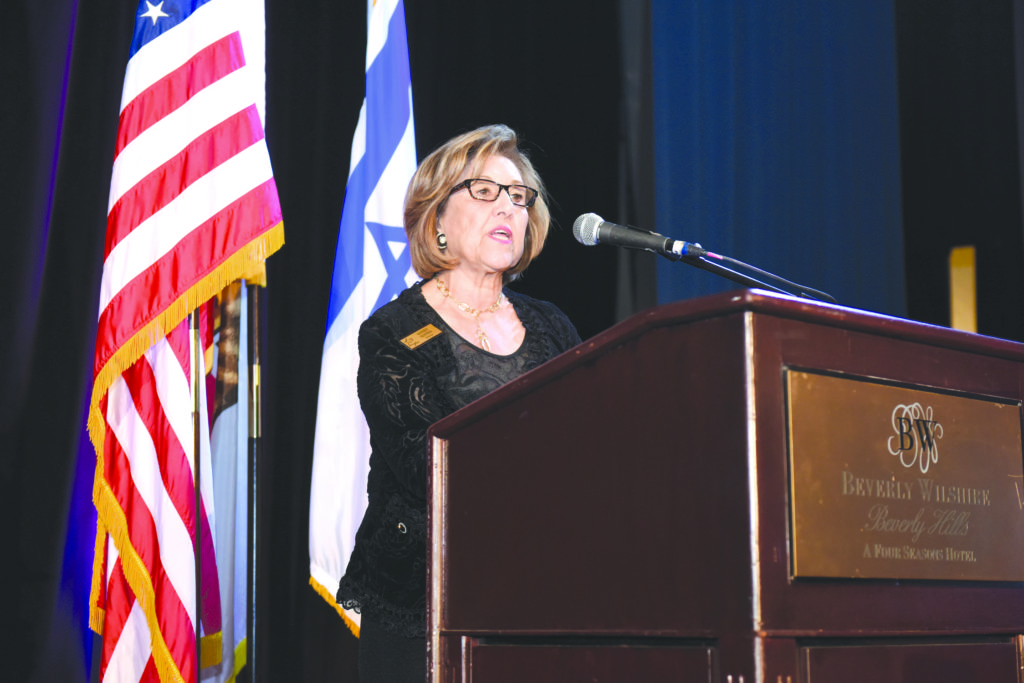
Wolf Blitzer accepted an honor from the Los Angeles Museum of the Holocaust (LAMOTH) on Nov. 5 at the Beverly Wilshire hotel. The CNN anchor discussed what his late Holocaust-survivor parents from Poland experienced before coming to the United States.

Blitzer’s mother, Cesia, was a forced laborer in an ammunition factory in Germany. She secretly distorted the bullets she made in the hope that the bullets would misfire and kill Nazis instead of Allied soldiers.

“That was how she survived the war,” Blitzer said. “She was a very powerful woman.”

In Munich after the war, Blitzer’s father, David, observed people standing in a long line. He didn’t know what they were waiting for but assumed it must be good since so many people were doing it.

After a half-hour of being in the line, his father asked a woman in front of him what everyone was waiting for, Blitzer said.

“‘America. They are giving visas for America,’” Blitzer said the woman responded. “My dad says, ‘Visas for America?’ It did not enter his mind he could come to America.”

LAMOTH President Paul Nussbaum presented Blitzer with the museum’s honor. During his acceptance speech, Blitzer, 69, said he thought of his parents as he reported on Nazis marching in the streets in Charlottesville, Va., shouting, “Jews will not replace us.”

“As I was reporting the news about that on CNN, I thought of my mom and dad, who would’ve been so stunned to hear those words shouted here in the United States of America. They wouldn’t have believed it,” he said. “This was a country they loved so much. They would never have believed in this day and age they would have heard slogans like that in the U.S.”

The hundreds of attendees included LAMOTH’s Executive Director Beth Kean and Education Director Jordanna Gessler; filmmaker Aaron Wolf and more than 70 survivors.

Manijeh Nehorai, founder and director of ETTA’s Iranian American Community Division, is honored at the organization’s 20th anniversary gala. Photo courtesy of ETTA

The Iranian-American Community Division of ETTA, which serves the housing and social services needs of disabled adults in the Los Angeles Jewish community, held a gala on Oct. 25 at the Beverly Wilshire hotel that celebrated 20 years of fundraising. The ceremony honored Manijeh Nehorai, founder and director of the Iranian-American Division for more than 22 years, and featured a congratulatory message from Farah Pahlavi, the former empress of Iran.

“It was a great privilege to be recognized by ETTA,” Nehorai said. “Over my more than 20-year association with ETTA — along with the board, staff and volunteers — we have worked hard to provide much-needed programs and services to individuals with special needs. The growth of ETTA continues to be phenomenal, and it is gratifying to be part of such an influential and important organization.”

More than 550 people attended the event that also included a fashion show by Iranian native and acclaimed designer Simin Couture, featuring ETTA clients and ETTA Young Professionals.

“Recognizing Mrs. Nehorai is long overdue,” said ETTA Executive Director Michael Held. “We are thrilled the Iranian Division board of directors, along with the greater Iranian community, will have the opportunity to express their gratitude for all she has done, and continues to do. Through her vast experience, professional training and dedication, she has changed the hearts and minds within the Iranian community and bettered the lives of the many Iranian clients and their families we serve.”

Throughout the past 20 years, the Iranian-American Division has been assisting ETTA, an affiliate of OHEL Children’s Home and Family Services, in providing programs and services to aid people with disabilities and their families.

Virginia Isaad, Contributing Writer

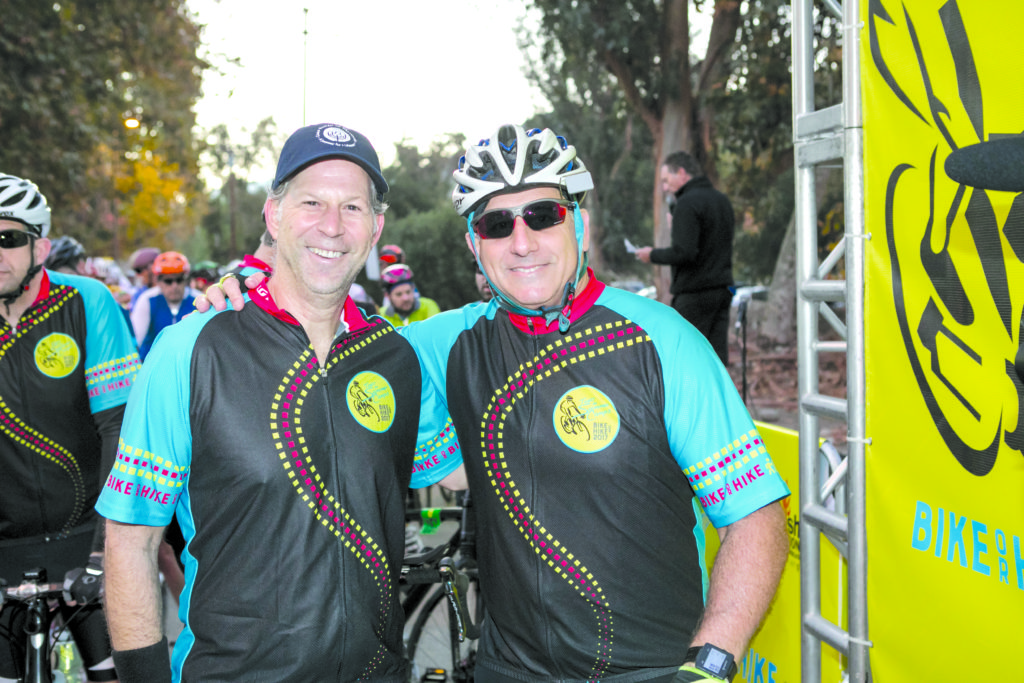
From left: Jeffrey Kaplan and Rodney Freeman participate in the Jewish Federation of Greater Los Angeles’ fifth annual Tour de Summer Camps. Photo by Howard Pasamanick Photography

The Jewish Federation of Greater Los Angeles hosted its fifth annual Tour de Summer Camps on Oct. 29, starting at Camp Alonim at the Brandeis-Bardin campus of the American Jewish University in Simi Valley.

More than 650 cyclists and hikers who participated in the communitywide event raised a record-breaking $1.2 million for scholarships for kids to attend Jewish summer camps.

“The entire community has embraced this special event,” said ride master Rodney Freeman. “Tour de Summer Camps has become a day to celebrate the good in our community, which has resulted in almost $6 million raised over five years to benefit Jewish camping scholarships. My dream is that every child with the desire to attend Jewish summer camp will be able to do so, regardless of their family’s financial capabilities.”

The fundraiser, which had four bike routes of different lengths, had some new additions this year, including three hiking routes, a live band, a fun zone with a rock wall and lawn games, and a personalized bike plate.

“This event is incredibly supported and attended by the community, because we all know that Jewish summer camp is one of the greatest drivers of Jewish identity,” said Federation President and CEO Jay Sanderson.

Virginia Isaad, Contributing Writer

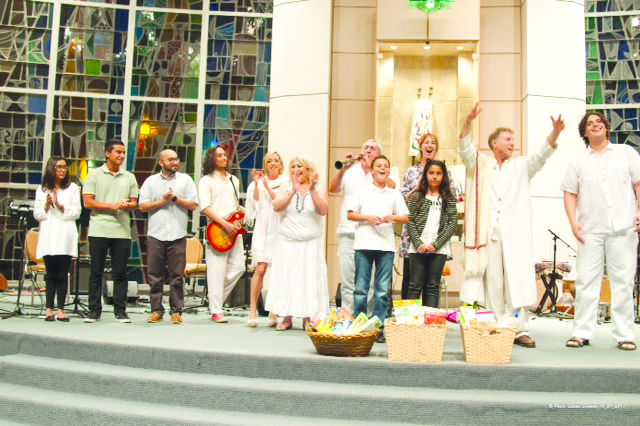
“Together As One,” an interfaith concert, featured clergy and attendees of all faiths and backgrounds. Photo by Farzana Ali

An interfaith concert at University Synagogue in Brentwood on Oct. 29, titled “Together as One,” had people dancing in the aisles to the music of the Yuval Ron Ensemble.

The nearly 180 attendees contributed canned or dried foods, underwear, socks and grocery store gift cards for homeless people in Los Angeles County.

Seated onstage below four Torah scrolls, the Yuval Ron Ensemble played traditional Middle Eastern music rooted in the Jewish, Muslim and Christian faiths. A mystical whirling dervish — a person doing a devotional dance — performed during two selections. Vocalists sang in Hebrew and Arabic, with a Spanish-language singer joining in for a heartfelt, multilingual version of “Imagine” by John Lennon.

The evening’s finale included a blessing over the donated food and clothing by clergy members from multiple faiths, including University Synagogue’s Rabbi Morley Feinstein and Cantor Kerith Spencer-Shapiro. The ensemble, joined by members of the University Synagogue choir and the Ismaili Muslim Youth Choir, then performed Leonard Cohen’s “Hallelujah” beneath a quote from Isaiah: “My house shall be called a house of prayer for all peoples.”

The event, a Days of Compassion service project organized through the office of Los Angeles Mayor Eric Garcetti, was sponsored by University Synagogue congregant Barry Silverman, the Agha Khan Council for the Western United States, Safe Place for Youth, Ward AME Church, and the St. Joseph Center.

Daniel Tamm, the mayor’s Westside representative and interfaith liaison, took part in welcoming guests.

Scarlet Michaelson, Contributing Writer

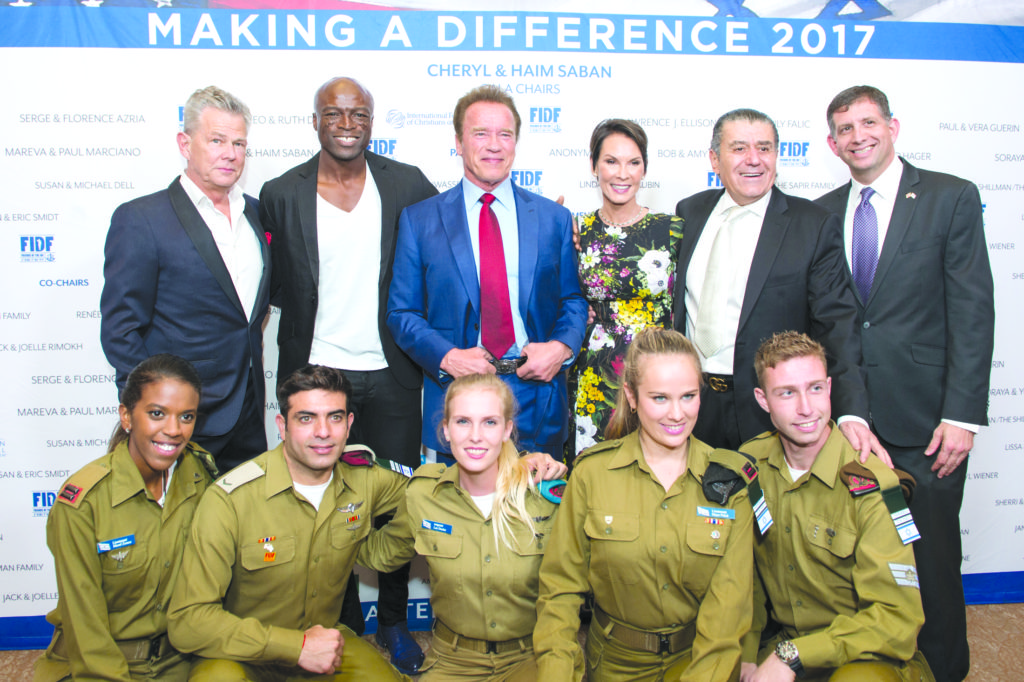
From left, back row: David Foster, Seal, Arnold Schwarzenegger, Cheryl and Haim Saban and Consul General of Israel in Los Angeles Sam Grundwerg attend the annual FIDF western region gala with IDF soldiers. Photo by Alexi Rosenfield

A record $53.8 million was raised at the annual Friends of the Israel Defense Forces (FIDF) Western Region gala on Nov. 2 at The Beverly Hilton hotel. FIDF national board member and major supporter Haim Saban conducted the fundraiser during the sold-out event that drew 1,200 guests. It didn’t take Saban long to raise the record amount of donations, thanks in large part to Oracle co-founder and billionaire Larry Ellison, who didn’t attend but donated $16.6 million.

Rabbi Yechiel Eckstein, founder and president of the International Fellowship of Christians and Jews, donated more than $5.5 million. Over the years, Eckstein has donated a total of $40 million to FIDF. Among the gala attendees were Guess founders Maurice and Paul Marciano, who also donated millions to the FIDF.

Among the celebrities attending the event were Gerard Butler, Arnold Schwarzenegger, Joanna Krupa, Katharine McPhee and Gene Simmons. Simmons, a member of the rock group Kiss and a regular guest at the FIDF gala, performed Kiss’ signature song “Rock and Roll All Nite.”

“Year after year, the support from the Los Angeles community for this remarkable event continues to amaze me, and this year’s gala is no exception” Saban said. “[My wife] Cheryl and I are grateful for the outpouring of support for these great causes and deeply honored by this year’s record-breaking donations.”

The gala featured the screening of a video called “Heroes of the IDF,” which told the stories of women combat soldiers. Today, 95 percent of IDF jobs are open to women, who serve as pilots, infantry soldiers, artillery combat soldiers, electronic warfare specialists, and anti-aircraft and naval officers. About 11 percent of combat soldiers drafted into the IDF each year are women.

Among the 17 active-duty soldiers attending the gala was border policewoman Cpl. Ravit Mor, whose life was saved by the late border policewoman Hadar Cohen, 19, after she was attacked by a male terrorist in February 2016. After being stabbed several times, Cohen shot the perpetrator but she was then attacked from behind by another terrorist and died. Mor later told the Jewish Journal about the close relationship she formed with Cohen’s parents: “It’s amazing how they supported and embraced me during that time, even though they were in pain for losing their daughter. This experience had made me stronger and taught me how to appreciate every moment in life.”

Also in attendance was Noam Gershony, the former IDF pilot whose helicopter crashed as he was heading to rescue troops during the 2006 Lebanon War. Gershony broke nearly every bone in his body, and was paralyzed from the waist down. He emerged from a deep depression not only to be rehabilitated, but to win a gold medal and share a bronze medal in wheelchair tennis at the 2012 Paralympic Games. When Gershony came on stage walking with the assistance of crutches, he was received with a standing ovation. Addressing the audience, Gershony jokingly said: “Now I can finally go out with a beautiful girl in Tel Aviv — or even a few.”

Presiding as the evening’s master of ceremonies was Israeli actress Moran Atias. The event featured special performances by singer Seal, The Tenors and David Foster & Friends.

Ayala Or-El, Contributing Writer

Moving & Shaking: CNN’s Blitzer Honored by LAMOTH, Tour de Summer Camps, FIDF Gala Read More »

A Safer Future and Foundation for Los Angeles

In the past year, in California and around the U.S. and the world there have been intense, devastating natural disasters, such as Hurricanes, major earthquakes, and right here at home, devastating fires in Los Angeles, and Northern California. And with the changing climate, and longer fire seasons, scientists continue to predict longer, and more devastating disasters to come, here in Southern California.

In many ways we are more vulnerable than ever to a major earthquake here in Los Angeles. I wonder, if as a city, we have learned from the Northridge Quake of the early ‘90’s. I worry especially for the most vulnerable people in our city- the elderly and our children, and especially those that live in unstable or outdated buildings, without the proper reinforcements to maximize the potential for residents to survive unharmed in such a disaster.  I worry about anyone living or working in a multi-level structure, where the risks are greater no matter what. Just in the last two years, there have been major fires in new low-rise construction in downtown and other areas of the city.  History has shown us that soundly constructed buildings will survive this type of natural disaster.

I’ve recently learned about some important and simple changes that one of our Los Angeles City Council members Bob Blumenfield is considering, to upgrade the safety standards for new residential multi-story buildings, that many working individuals and families will call home. Knowing that our city is at particular risk of fire, I’m grateful to city leaders for taking proactive measures to assure that the people living and working in multi-level housing will have the best chance possible to endure the worst of what may come. What that comes down to is requiring that the foundations and floors which include barrier walls of the new developments be constructed with concrete and steel, as opposed to wood, which is highly combustible and also far less secure in the event of an earthquake.

As a Rabbi, I pay special attention to what elected officials are doing in the city I call home, because it has a direct impact on the quality and security of life, for me, my community, and the many diverse communities across Los Angeles. I am not alone in this, as many faith leaders across this city and cities alike have taken stands on similar issues that have enormous personal impact.

My colleague from Temple Kol Tikvah of Woodland Hills, Rabbi Jon Hanish, wrote to City Councilmember Bob Blumenfield on this very matter, applauding Councilmember Blumenfield for his leadership in demanding the safest standards for new developments.  Rabbi Hanish wrote that “by requiring developments to utilize the most reliable and safest materials in the construction process, Los Angeles city leaders are taking a powerful and important step toward the health and sustainability of our communities. It’s important that the City of Los Angeles encourages the use of non-combustible materials when constructing a building which heavily reduces the risks associated with fires and earthquakes, and that new developments meet or exceed existing building codes.”

As religious leaders, we cannot place a value on human life, and I am pleased that a fellow member of our community, Councilmember Blumenfield, has taken the lead in guiding the City Council to enact a measure that will set a higher standard of safety. I am encouraged by the Councilman’s  leadership and pray that his colleagues at City Hall will follow in his footsteps in making sure such a simple, yet critical measure moves forward.


A Safer Future and Foundation for Los Angeles Read More »

BUILDING BOOM: Is Jewish L.A. defying national demographic trends?

If you have read about recent demographic studies claiming fewer young American Jews are marrying inside the faith and affiliating with Jewish organizations, you might think organized Jewish life in the United States is on its way out.

But Los Angeles donors have a response to those studies: Want to bet on it?

In the last two years, more than $100 million has been dedicated to renovation and construction projects at schools and synagogues across L.A., and much more is expected to be raised through ongoing capital campaigns that aim to build facilities for the next generations of Jews.

Together, these projects represent the collective optimism of a Jewish community unfazed by seemingly gloomy population studies, according to clergy, donors and lay leaders.

The projects currently underway are spread across the San Fernando Valley and the Los Angeles Basin. They consist of new schools and school expansions, custom-built synagogues and old sanctuaries in need of facelifts. And they are being carried out within the three major spiritual movements: Temple of the Arts in Beverly Hills, a Reform congregation, has plans to build a new preschool; Conservative synagogues Valley Beth Shalom (VBS) and Temple Beth Am are constructing new school buildings; and among Orthodox communities, Harkham Hillel Hebrew Academy is engaged in a $20 million renovation, while Chabad of South La Cienega (SOLA) is building a new, multi-use religious facility.

At Temple Beth Am, synagogue leadership has raised $25 million to renovate its main sancutary and construct a middle school building for its Pressman Academy day school.

“What could reflect more optimism in the school and the synagogue than that kind of effort?” said Temple Beth Am building committee co-chair Avi Peretz, who said he has donated a significant sum.

To Peretz, donations reflect a sense of obligation and a feeling of responsibility to proverbially set the table for the next generation of Jews.

Peretz recalled walking into Pressman Academy on the first day of school for his daughter, who is now 21, and saying to himself, “ ‘Wow, look what somebody built. Somebody built this school that my daughter gets to go to classes in. Somebody built it knowing full well that probably their own kids wouldn’t be the ones that got to benefit from it.’ But the sense of obligation you feel is that other people came before you and did the work that you’re benefiting from. It’s now your turn to do the work.”

The groundwork of breaking ground

Even before construction begins, planning and permitting can be complicated, time-consuming and costly.

Adas Torah, an Orthodox congregation that razed a Pico Boulevard furniture store to open a new synagogue building in September 2016, spent more than $20,000 in permitting fees alone, Los Angeles Department of Building and Safety records show.

“It’s a long process,” said Trevor Abramson, whose firm, Abramson Teiger Architects, has designed a half-dozen synagogue buildings in the past 15 years, including the project currently underway at VBS. “It takes time to draw up plans, to build consensus with the community, to get the plans approved by the community, and then also get approved by the city — and then to raise the money.

“There are some synagogues being built right now in L.A. where the wheels have been in the motions for the last three years or more,” Abramson said.

Pressman Academy’s expansion plans have been in the works for about a decade. Over that period, Temple Beth Am, directly or through its members, quietly bought eight contiguous apartment buildings on Corning Street, directly behind the temple’s La Cienega Boulevard compound. Nine years ago, it converted one building into an early childhood center, and two years ago, it razed two more to create an outdoor play space.

When Erica Rothblum joined Pressman Academy as head of school in July 2014, synagogue leadership had already judged that “the school building was bursting at the seams,” she said.

Rothblum had the idea to build a new middle school that would not just increase retention — class sizes tend to shrink as grade levels increase — but serve as the Jewish day school of the future.

“We’re not building just a prettier version of a traditional school building,” she said. “We’re actually changing how the school looks and functions. In some ways, it’s going to look more like a Google office than the school buildings we’re all used to.”

Buying in and building up

Often, the first step in a construction project is winning the buy-in of parents and congregants. “A house is really just an endeavor for an owner, but when you’re designing a synagogue or a religious building, that’s really for the whole community,” Abramson said.

Abramson’s firm designed a community center now under construction at VBS for dual use by the synagogue and its day school. Plans for that project date back 15 years, according to VBS Executive Director Bart Pachino.

Timing can depend on permitting, donor interest or even the national economy. Construction at VBS was delayed at least five years after the Great Recession as donor funds dried up, Pachino said.

Before Abramson and his employees start drawing on a synagogue project, they gather congregants for a town hall meeting about the needs for a new building.

“We like to listen to what everybody thinks the needs are,” he said. “And it’s super interesting, because some people are worried about where they can park, and some people are worried about the spiritual aspect of the synagogue, and some people are worried about saving the plaque on the wall that’s been there since 1852.”

By the time VBS broke ground in September, it had raised $26 million for the new center and for renovations to its existing buildings.

“That’s the greatest compliment a rabbi can get when somebody says, ‘I’m willing to work with you, and I’m willing to share my resources and time, and I want this to continue past me,’ ” said Rabbi Ed Feinstein, the Encino synagogue’s senior rabbi. “It’s a great statement.”

Bursting at the seams

The Montessori preschool run by Chabad of SOLA began seven years ago as a mommy-and-me group with eight children. Today, it has more than 80.

Until recently, the children gathered in the same space that served as home to four minyans — Chabad, Sephardic, teens and young couples. That arrangement presented challenges, such as having to take down folding chairs and movable walls each weekend, said Stery Zajac, the preschool’s director.

In December 2014, The Eiden Project — a nonprofit organization set up to build a new community center, mikveh and preschool for Chabad of SOLA — bought a 21,000-square-foot property at Airdrome Street and La Cienega Boulevard for $4.5 million, according to Josh Moorvitch, who runs a mortgage company and sits on The Eiden Project board.

The property was home to two car dealerships in separate buildings, one of which now temporarily houses the preschool. Recently, Chabad of SOLA began renovations to transform the empty dealership into a preschool building, Moorvitch said. After that project is completed, the congregation intends to raze the other building to create a new mikveh for men and women and a synagogue building. Moorvitch said there was a “tremendous demand” for the mikveh, as the closest one is Mikvah Esther, about 1 1/2 miles away.

Another Orthodox Jewish school, Harkham Hillel Hebrew Academy, also is  planning an expansion. Its head of school, Rabbi Boruch Sufrin, recently announced that the Orthodox kindergarten-through-eighth-grade day school would undertake a $20 million renovation.

In recent years, Hillel’s enrollment has increased some 20 percent to 650 students. After a two- to three-year renovation process, including planning and obtaining city approvals, it hopes to have a campus for 700, Sufrin said.

Before its capital campaign went public this fall, the school had quietly raised about $10 million, half of its total goal, he said.

“The project itself brings a certain amount of optimism and hope and joy about the community,” Sufrin said. “People are looking and saying, ‘Wow, I’m going to be a part of sustaining the next 20 or 30 years of the community.’ And that means a lot to these people.”

Money management

Chabad of SOLA and Pressman Academy have taken different approaches to funding their building projects.

“There are schools in this community where they’ve raised 10 percent before they begin construction, and I know heads of schools that want 100 percent,” Rothblum said.

Pressman is somewhere in the middle, having raised $25 million of the $30 million it estimates it will need — enough that it feels confident breaking ground as soon as January, she said.

Sometimes, breaking ground can accelerate the fundraising process.

“We’ve definitely had people say to us, ‘Once I see construction, you can come talk to me,’ ” Rothblum said. “I’ve had other people say, ‘Right here, right now, I’m willing to invest in this and be a leader.’ ”

While Pressman Academy waited to raise more than 80 percent of its needed funds, Chabad of SOLA broke ground on its $1.4 million preschool project after collecting about $600,000. Moorvitch said that decision was based on confidence in the generosity of community members once they see construction underway.

“In breaking ground, our goal was to have the school open as quickly as possible for our families,” he said. “It wasn’t a choice to wait around. We had to break ground, and we have to move this project along. And we’re going to do it.”

Demographics be damned

Schools and synagogues that are literally mortgaging their futures for expansions and renovations face some troubling national trends. A 2013 Pew Research Study of American Jews painted a dismal picture that some analysts have interpreted as a death knell for synagogue life in the United States. In particular, the study focused on the increasing number of “Jews of no religion,” or cultural Jews — those who check “None” when asked about their religious practice. These Jews, in turn, are less likely to affiliate with religious institutions and attend synagogue. Whereas 39 percent of Jews by religion report belonging to a congregation, only 4 percent of those in the secular demographic do, the study found.

But the synagogues and schools working their way through their respective building projects say that overall trend doesn’t apply to them.

“The Pew study is not everybody’s written destiny,” said Temple Beth Am President Susan Hetrsoni. “It’s time to take it on.”

Hetrsoni said that membership at Temple Beth Am has held steady in recent years. Valley Beth Shalom’s membership has increased over the past five years to more than 1,500 families, a fact Feinstein attributes at least in part to a growing need for spiritual connection.

“L.A.’s a funny city,” Feinstein said. “We have these giant block walls that separate our homes from each other. People don’t know their neighbors, so you want to belong to something. You want people to know who you are. People are craving that in this moment of history.”

But L.A. is not the only metropolitan area defying national statistics, he said. His clergy friends in places such as Boston, Chicago, New York and Atlanta report similarly encouraging trends.

“In lots of pockets all over the country this is happening,” Feinstein said. “I wish I could take full credit for it and say it’s the genius of my rabbinate — but it’s certainly not.”

BUILDING BOOM: Is Jewish L.A. defying national demographic trends? Read More »