fbpx

November 16, 2017

Sen. Al Franken Accused of Kissing, Groping Woman Without Consent

Sen. Al Franken (D-MN) is the latest public figure to face accusations of sexual misconduct, as a woman is now accusing Franken of kissing and groping her without her consent.

Leeann Tweeden, a radio host at KABC 790, wrote that in 2006, she was on a United Services Organization (USO) tour and Franken was the main act. Backstage, Franken repeatedly insisted that he and Tweeden needed to rehearse part of the act that involved them kissing. Tweeden resisted, but eventually said “ok” to get Franken to stop his insisting.

“We did the line leading up to the kiss and then he came at me, put his hand on the back of my head, mashed his lips against mine and aggressively stuck his tongue in my mouth,” wrote Tweeden. “I immediately pushed him away with both of my hands against his chest and told him if he ever did that to me again I wouldn’t be so nice about it the next time.”

Tweeden went on to say that she “felt disgusted and violated.”

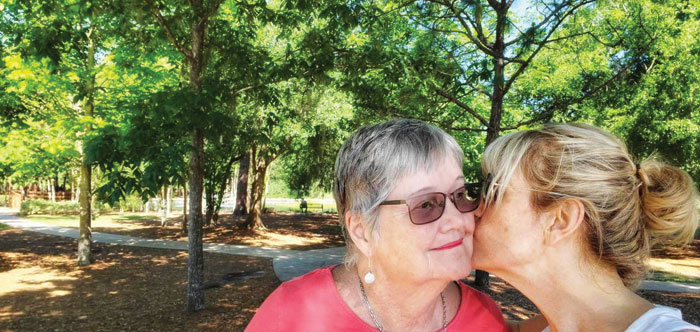
When the tour had ended, Tweeden discovered a photo of Franken groping her while she was sleeping:

Tweeden was furious, but she was initially afraid to speak out and jeopardize her broadcasting aspirations. That fear is now gone.

“Senator Franken, you wrote the script,” wrote Tweeden. “But there’s nothing funny about sexual assault.”

Franken issued a statement offering his “sincerest apologies” to Tweeden.

“I certainly don’t remember the rehearsal for the skit in the same way, but I send my sincerest apologies to Leeann,” said Franken. “As to the photo, it was clearly intended to be funny but wasn’t. I shouldn’t have done it.”

Senate Majority Leader Mitch McConnell (R-KY) is now advocating for an ethics investigation into Franken.

“Regardless of party, harassment and assault are completely unacceptable—in the workplace or anywhere else,” said McConnell.

Sen. Al Franken Accused of Kissing, Groping Woman Without Consent Read More »

Why I’m Not a Rabbi

I never thought I’d find myself in the position of deciding whether or not to be a rabbi. After all, I came from a secular family and from a young age I knew what I wanted to be when I grew up: a writer.

But after four years of studying creative writing in college and one summer working at a literary nonprofit in Manhattan, I found myself in a crisis that would eventually lead to the rabbi question.

I was 21 years old and writing was the center of my life, to the exclusion of almost anything else. A good writing day made me feel like a good person. A bad writing day made me feel like a worthless excuse for a human being. This, I began to sense, was a form of idolatry; writing could not be the most important thing in the world. Life had value apart from words on a page!

Meanwhile, I had begun to grow interested in my Jewish heritage. And I’d also begun to fall in love, inconveniently, with God.

So, at 21, I decided to stop writing entirely. Instead, I would build my life around something eternal.

I quit my job, left everything I knew and traveled to Jerusalem for the first time, with nothing but a backpack and my violin. There, I enrolled in a progressive, coed yeshiva called Pardes.

I ended up staying at Pardes for two years, studying Torah during the day and playing music in clubs or on the street at night. By the time I left, there was no question about what was at the center of my life as I prayed, studied Talmud and led Friday-night services.

When I returned to the States, I continued to play fiddle; I began to teach Torah; and slowly, very slowly, I also began to write. Like an athlete learning to hold her body correctly after a bad injury, I had to craft my sentences carefully, watching for signs of too much ego or ambition. But I was able to build a serious writing practice back into my life.

I continued to write, play music and teach Torah through my 20s, without feeling a need to choose between these sometimes disparate ways of life. But as my 30th birthday approached, I realized I was going to have to make some decisions.

What was I? An artist who loved Jewish texts and traditions or a rabbi who loved music and writing? I knew titles like “rabbi,” “musician” and “writer” were never fully accurate, that every human transcended a simple title. But I also understood that they mattered. I sensed that the path I chose would define the way I spent my days, how I paid my rent, and what was appropriate to say in public.

I found that when I leaned toward one possibility, the other self would materialize strongly. When I placed art out front, the Hebrew letters shone through, seeming to be the inner essence of that practice. But when I foregrounded the sacred books, I would feel the gentle curves of my violin’s body, notes inside my fingertips, poems burning on my tongue.

I agonized over this decision for months.

In the end, as silly as it sounds, it was cursing that finally led me to decide not to be a rabbi. I am not particularly foul-mouthed, but I wanted to be able to drop F-bombs with impunity, in my writing and in my life.

Really, looking back, I see that this was symbolic. I wanted to be able to say anything, from the esoteric to the vulgar, without the pressure of representing my people and my tradition.

So I finally recycled the rabbinical school application.

Thankfully, Judaism is not terribly hierarchical, at least in the communities in which I live and work. As a layperson, I can lead services, teach the traditions, counsel seekers, and officiate my students’ bar and bat mitzvahs.

Thank goodness for all the rabbis who bear the honor and the burden of communal representation. As for me, I’m just a wandering melamed, grateful for the tools I have to find as much holiness as I can in the world: Torah, music and writing down the meditations of my heart — from the sacred to the profane. n


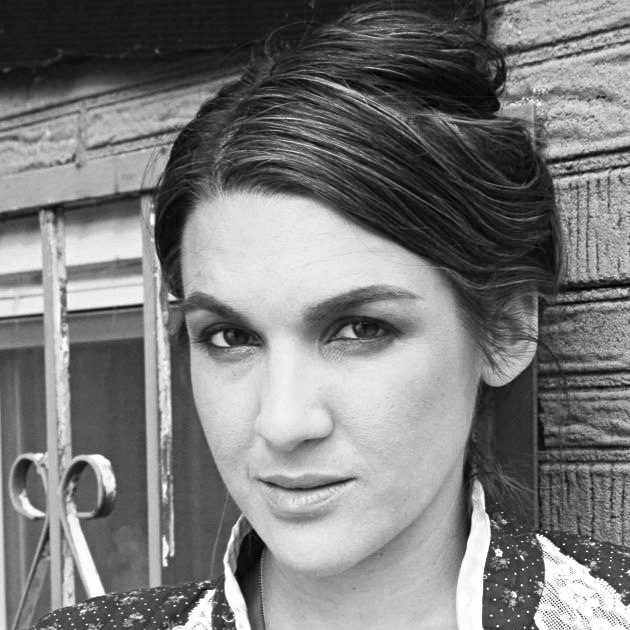
Alicia Jo Rabins is a writer, musician and Torah teacher who lives in Portland, Ore.

Why I’m Not a Rabbi Read More »

In Marseille, Jews Fear the Rising Tide of Terrorism

You can measure the safety of a Jewish community in Europe by the Jewish-star barometer: How safe do Jews feel walking around with a Star of David pendant? For the 80,000 Jews of Marseille, France — the third largest Jewish community in Europe after London and Paris — the Jewish-star index depends on your city coordinates.

“Go further north, and I would take it off,” warned my host, Nathan Peres, an Israeli-German completing his doctorate at the Sorbonne on the Jews of Lebanon. He chose Marseille over Paris largely for the laid-back atmosphere, the Mediterranean vibe (like Israel’s), and affordable prices — at least compared to Paris.

He likens Marseille’s cost of living to that of Berlin, a hotspot for Israelis. But don’t expect to find a thriving Israeli scene here. Only until 2013, when UNESCO proclaimed Marseille a “European City of Culture,” did France’s second-largest city come into its own as a tourist attraction. Jewish tourists usually opt for Nice and Cannes. (The Chabad of Marseille doesn’t hold communal Shabbat dinners for international young professionals, much to Peres’ dismay.)

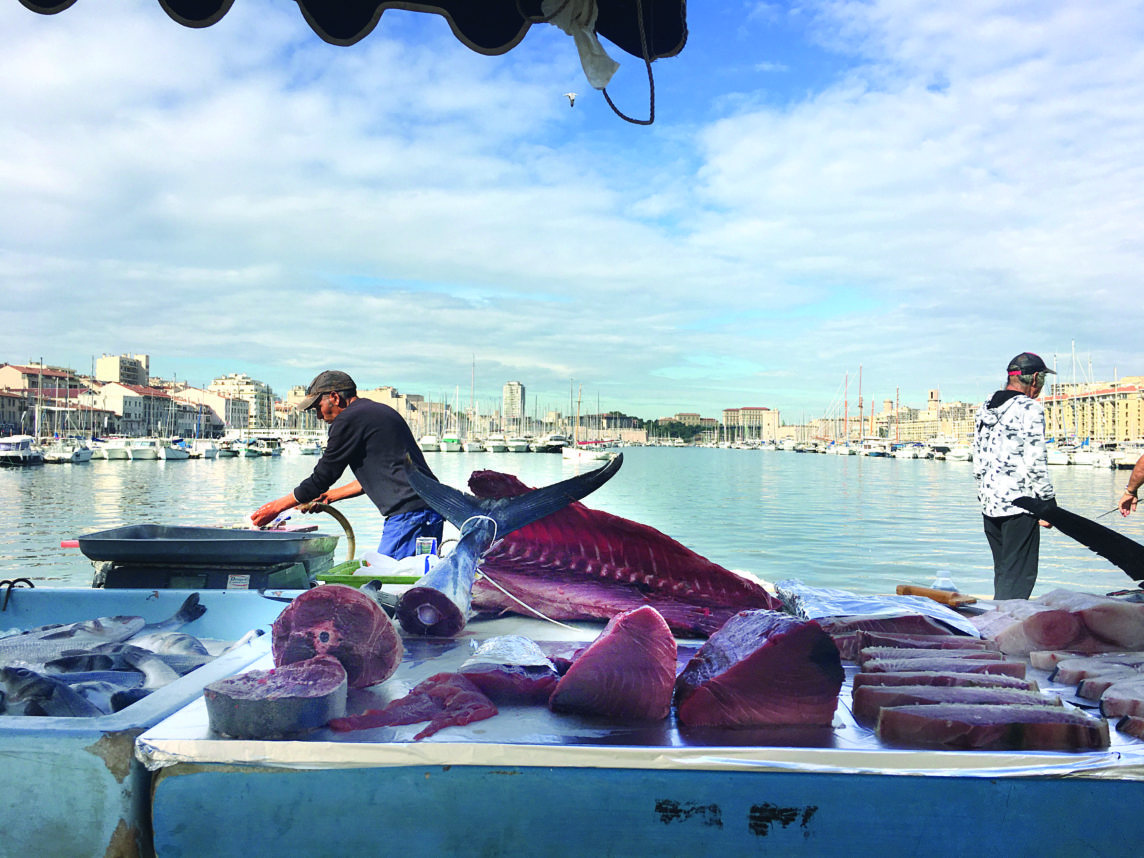
“But in the city center, you could wear your star,” Peres said. And at the colorful, tourist-trap port, the Jewish star index is favorable: about 7.5 on a scale of 10.

With historical pride as one of the world’s oldest cities, founded circa 600 BC, contemporary Marseille is a tough, working-class harbor city — not the French Riviera. Jews work largely as merchants, continuing a tradition that began when they first settled here in the Middle Ages, only to be expelled intermittently until the French Revolution of 1789 granted Jews civil rights throughout France. Before and during the Nazi march into the city in 1942, most Marseille Jews either fled or were murdered.

Wearing a Jewish star had one advantage: it granted me a personal tasting by the owner of a cheese shop, who revealed that he too was a Member of the Tribe. It was a Friday, and he said later he would recite Kiddush with his family only to work the next day, but his non-Jewish colleagues handle the sausage tastings.

The Marseille Jewish community tends to be traditional, although the majority attend French public schools during the week and Hebrew day schools on weekends. A Jewish directory lists 12 Jewish schools and 46 synagogues.

While Marseille made terror-related news twice in recent months (an acid attack struck four Americans students at the train station in September, and two young women were killed in an October stabbing incident), it has, until now, been shielded from the mega-attacks that have hit Paris and Nice.

As we walked through a bustling marketplace, Peres became cautious. Here, where African and Arab merchants sell food, spices and housewares, the Jewish-star index stands roughly at 5, even though a kosher café where espresso goes for one Euro is located a few blocks south, and Marseille is multiethnic in its DNA. The northern suburbs are, for all intents and purposes, the slums, populated mostly by indigent Muslims and gangs. There, the Jewish-star index is under 3, still better than some districts in Paris, where the index can be less than 1.

According to Hagay Sobol, a Jewish lay leader and local politician, Marseille stands a better chance of maintaining and improving Jewish security throughout.

“In the 93rd district of Paris [the northern suburb of Seine-Saint-Denis], you can’t reverse it anymore,” he said from his home apartment where he lives with his Moroccan wife. “We are all immigrants but we are all from Marseilles, and we are all French people, so the contact is easier. There is no class division like in other parts of France. It’s safer.”

Hagay Sobol. Photo courtesy of Hagay Sobol

With his pale, freckled skin, this physician and professor of medicine is a city rarity as an Ashkenazi Jew — his grandparents came from Poland at the turn of the 20th century. His parents were hidden in French homes, saving them from Hitler’s clutches. Most Marseille Jews hail from North Africa, particularly Algeria, which France declared part of its republic in 1848. The bloody French-Algerian War of 1954-1962 brought Algerian Jews and other French loyalists back to the mainland.

More representative of the demographic is Helene Londner, head of the Jewish welfare association, who came with her family as a child in 1962. Her husband, a dentist, is another of the city’s few Ashkenazim.

“There are anti-Semitic occurrences, but we are in a cosmopolitan place — it’s a port city. There is a feeling of partnership within communities,” Londner said from her apartment, which, like Sobol’s home, is decorated with Judaica on the shelves.

Those occurrences include standard “dirty Jew” slurs and an attack on an elderly Jew about two years ago. Londner’s welfare organization, partially publicly funded, has provided meals to poor Muslim families since kosher suffices for halal. To ease tensions, the Jewish community is arranging a soccer match with the organized Muslim community.

“There is a good atmosphere in Marseille, but if you let radicals take power, everything will change very rapidly,” Sobol said.

By “radicals” he means, in part, those whom Muslim radicals trigger on both the right and the left. Marseillians, like Parisians, generally love Israel and are quick to show up at pro-Israel counterprotests, but the Jewish community in France is not as politically organized as the Jewish community in the United States. There is no French AIPAC, for instance. In the spirit of equality, brotherhood and liberty, French Jews present their case as concerned French citizens and, in Marseille, as concerned Marseillans.

Natives are often proud Marseillans, such as Judith Aziza, a 36-year-old communications manager who completed a doctorate on the modern history of Marseille. Indeed, Marseille didn’t become an official part of France until 1486, so Marseillans traditionally maintain a proud local identity.

“I feel French, I feel from Marseille, and for the moment I want to stay here. I’m happy living here,” Aziza said at a bar in an alleyway of hip nightspots (where the Jewish-star index is 8). “But if you ask a friend of mine, she’ll say, ‘I want to go. I don’t feel safe here.’ ”

For Aziza, a modern golden age for Jews in Marseille has passed.

“Until Charlie Hebdo and until the kosher supermarket attack in Paris, and until the terrorist attack in Toulouse, I felt very secure in Marseille,” Aziza said. “And after that, I changed. Before I had the Star of David around my neck without any problem. I did my doctorate with the star around my neck. When I was in high school, I had a backpack from Jerusalem, and it said ‘Jerusalem’ in big letters and I had no problem. Now I can’t do that. I’d be really afraid.”

In Marseille, Jews Fear the Rising Tide of Terrorism Read More »

Letters to the Editor: New Journal Layout, Prayer, and Israel

New Look, New Content

I cannot adequately express how impressed I am with the new “Back and Forth” feature. Civil but serious, it sharply helps amplify and elucidate the perspectives of the quality voices that participate and teaches us stiff-necked readers things we would otherwise be unlikely listen to. A Kiddush HaShem to the fullest — what a wonderful way to model meaningful engagement between parts of our community and beyond. Thank you, thank you, thank you for embodying a core Jewish value with such deep, universal worth.

Kol hakavod!

Michael Feldman via email

Kudos on the new layout and typeface of the Journal. Big improvement. But as a boomer feminist, I found two recent columns written by women personally disturbing. The first was about flirting, which I at first dismissed simply as a “fluff” piece (“Why I Miss Flirting,” Nov. 10). In the second column, a mother proudly says she encourages her son to be “strong enough to be kind” (“My Son, the Maccabee,” Nov. 10). My alarm bells went off. I personally have seen men who were attracted to a damsel in distress become physically aggressive when that same woman becomes assertive. I also know of college football players (arguably men’s men) who have been convicted of rape.

Since these Journal columns have been published, more and more influential men have been outed for their alleged inappropriate sexual behavior with young men and women. Actor Richard Dreyfuss, when recently confronted, actually tried to excuse his alleged behavior by issuing a statement of direct relevance to both of these Journal  columns. He writes: “I value and respect women. … I became … the kind of performative masculine man my father had modeled for me to be. … I flirted with all women. … But I am not an assaulter. … I remember trying to kiss [his accuser] as part of what I thought was a consensual seduction ritual. … I am horrified and bewildered to discover that it wasn’t consensual. I didn’t get it.”

Women have worked too hard and too long in the fight to gain equality and independence. I hope we aren’t being asked to start all over again.

Sharon Alexander, Torrance


Building Bridges in a Time of Chaos

Thank you, Rabbi Shlomo Einhorn and the Jews United for Democracy and Justice, for your inspiring compilation “After Charlottesville” (advertising supplement, Oct. 20). Not only do you bring together teachings from the vast spectrum of Jewish leaders, sages and religious persuasions, but you also include teachings from non-Jewish leaders and traditions. By doing this, you are helping us to realize the relevancy and importance of striving to sing all four songs as written by Rabbi A.Y. Kook: the song of the individual, the song of the nation, the song of humanity, and the song of all existence. In this time of chaos, we must push ourselves beyond our ordinary boundaries, build bridges and learn from each other. It is only with an open, probing mind that we can elevate our community as well as our nation.

Also, thank you, David Suissa, for creating a forum where spirituality and practical matters can attain the perfect balance!

Mina Friedler via email


Prayers Alone Won’t Cure Society’s Ills

Ben Shapiro wrote a recent column about the power of prayer in the aftermath of the recent mass shooting in Texas (“Don’t Dismiss the Power of Prayer,” Nov. 10). One of the purposes of prayer in such cases is to provide comfort and consolation to the relatives of the victims because absolutely nothing can bring victims back to life. No human action can do that.

The unprecedented number of mass shootings during past several years shows there is a serious problem in society. Both sides agree on that. It’s obvious from Shapiro’s words that he doesn’t understand what is causing “a tsunami of rage,” neither has he the slightest idea where to look for the root causes of those events. Mr. Shapiro, with political power and authority comes the huge responsibility of providing peace and security to millions of people. The inability to fulfill that responsibility is what is causing the tsunami of rage. Such tragic events are not part of God’s plan. Period. They’re part of society, designed by humans. One thing I know in my profession: When there’s a problem with a building, we architects and civil engineers roll up our sleeves and begin to look for what’s causing the problem. And if we find out it is in the foundation, the last thing we would do is to offer a prayer. Even the most thoughtful prayer cannot do the job. Only hard work by experienced people can.

Svetlozar Garmidolov, Los Angeles


Inappropriate Topic in Torah Portion

Rather than commenting on the parsha, the extremist Open Orthodox rabbi unleashed a screed against the Orthodox Union (OU) for not aiding and abetting his agenda to promote practices that all halachic leadership of Modern Orthodoxy agrees is out of bounds (“Parsha: Chayei Sara,” Nov. 10). May the OU find the strength to remove these heretical congregations from their midst.

Saul Newman via email


Historic Evidence of Israel’s Roots 

Thank you for Judea Pearl’s story (“The Balfour Declaration at 100 and How It Redefined Indigenous People,” Nov. 10) lauding the declaration’s tacit recognition of the Jewish people’s status as the indigenous population of Eretz Israel.

It bears emphasis that the Jewish claim to indigenous status in Israel is not just a matter not of faith, but of historical fact confirmed by archaeology and science. The Merneptah Stele, inscribed on behalf of the eponymous Egyptian pharaoh (and son of Ramses II) around 1208 B.C.E., attests to the presence of a people called “Israel” in Canaan. The Tel Dan Stele, which celebrates an Aramean victory over Israel in the 800s B.C.E., mentions Judah’s royal “House of David.” Assyrian sculptures dating from 841 B.C. and 701 B.C.E., respectively, both on display in the British Museum in London, depict the Israelite King Jehu and the Assyrian siege of Lachish in ancient Judah. The Assyrian royal annals’ account of the siege declares Judah’s king Hezekiah trapped “like a caged bird” in Jerusalem, paralleling the biblical account. And population genetics studies confirm the connection of present-day Jews to an ancestral home in the Levant and the continuity of the Jewish people from ancient to present times.

Rome eventually destroyed the Jewish kingdom in a war from 66-73 C.E. and dispersed its people, but Jews never forfeited the right to return home or to reconstitute a Jewish state.

Stephen A. Silver, San Francisco


Israelis Trying to Do the Right Thing

I am a 15-year-old freshman at YULA Boys High School. I was thrilled to see “Teaching Math to Israel’s ‘Invisibles’ ” (Oct. 27) in the Journal because this story shows that Israel helps every race and religion — even Arabs — who constantly try to eradicate the Jewish state. This is also one of the many proofs that if any race or religion is in need of help, Israel is the first to offer its help. People who are not Jewish who read this story can see how the people of Israel care about everyone and are trying to be peaceful with everyone, even groups of people that try to terrorize the world. This story really has inspired me to be more involved in defending Israel when people accuse Israel of treating Arabs poorly. It especially bothers me when the media publish negative and untrue information about Israel. I love that this newspaper published very positive things about Israel. I hope other people get inspired like I did.

Daniel Dallal, Los Angeles

I strongly agree with what Shai Gul does and it will inspire others to reach out to people who need help. When most people run into situations like Shai Gul did, they most likely will run away from these problems. However, Shai did just the opposite, helping to educate people in that poor city. He conveyed kindness and empathy. He taught the “invisibles” to not be so invisible and to take a leap forward in life. By giving them this push, he managed to give them jobs and a basic education to build on. Shai Gul is an inspiration for people around the world. He should keep up what he does so others can be influenced and follow his tracks.

Eitan Ulitzky via email

Letters to the Editor: New Journal Layout, Prayer, and Israel Read More »

Filling My Children’s Cups – Toldot

I am Isaac / Tradition doesn’t esteem me / as my father and son.

To our people’s cynics / I’m a passive placeholder / set between two visionaries / one hearing God’s voice / the other communing with angels.

To them I’m the do-nothing / dull-witted middle-man / neither here nor there / coerced into submission by a father / tricked by a son / abandoned by God / who willed me slain / to test my father’s faith / thus becoming history’s most misunderstood near-victim.

My father was driven by voices / left home on a promise / and journeyed to a Place he’d never seen / a low-lying mountain shielded round about / by a cloud / beneath heavenly fire.

My son dreamed of angels / ascended ladder rungs / from land and form / into spirit and spheres.

Tradition diminishes me insinuating / that I merely built a worldly fortune / on my father’s wealth.

Dear ancestors / I’m more than this / the wellsprings I uncovered / are more than you know / greater that waters deep, calm, cool, and tranquil / their streams flow to the Source of souls.

I dug anew my father’s wells / the same the Philistines / with stopped-up hearts / and clogged souls / filled in when he died.

I and my servants dug / our thirst unquenchable / passions unleashing / hearts expecting / souls soaring / on angels’ wings.

After our digging / we found the well / and the spring / flowing in earthly and heavenly wetness.

The inflowing fountain never dries up / The well is replenished continually / and whoever drinks from its waters / merges into Oneness through supernal faith.

The wells I dug / are the same as my father’s / That is our gift to you!

I yearn that you / pour the waters into your cups / dig anew / and pour the same / into your children’s cups.


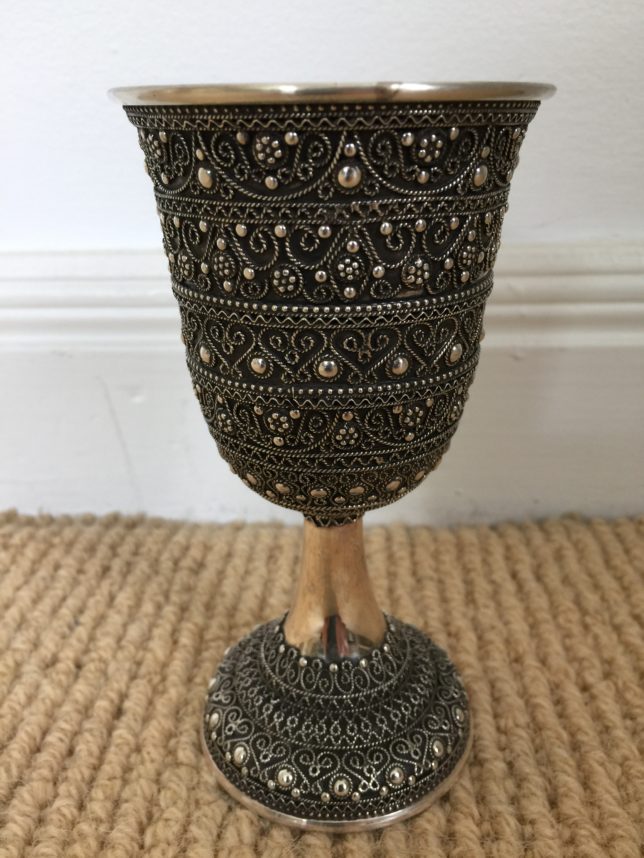
Poem composed by Rabbi John Rosove – The Kiddush Cup was created by Shevach Silversmiths of Jerusalem (Mamilla Mall)


Filling My Children’s Cups – Toldot Read More »

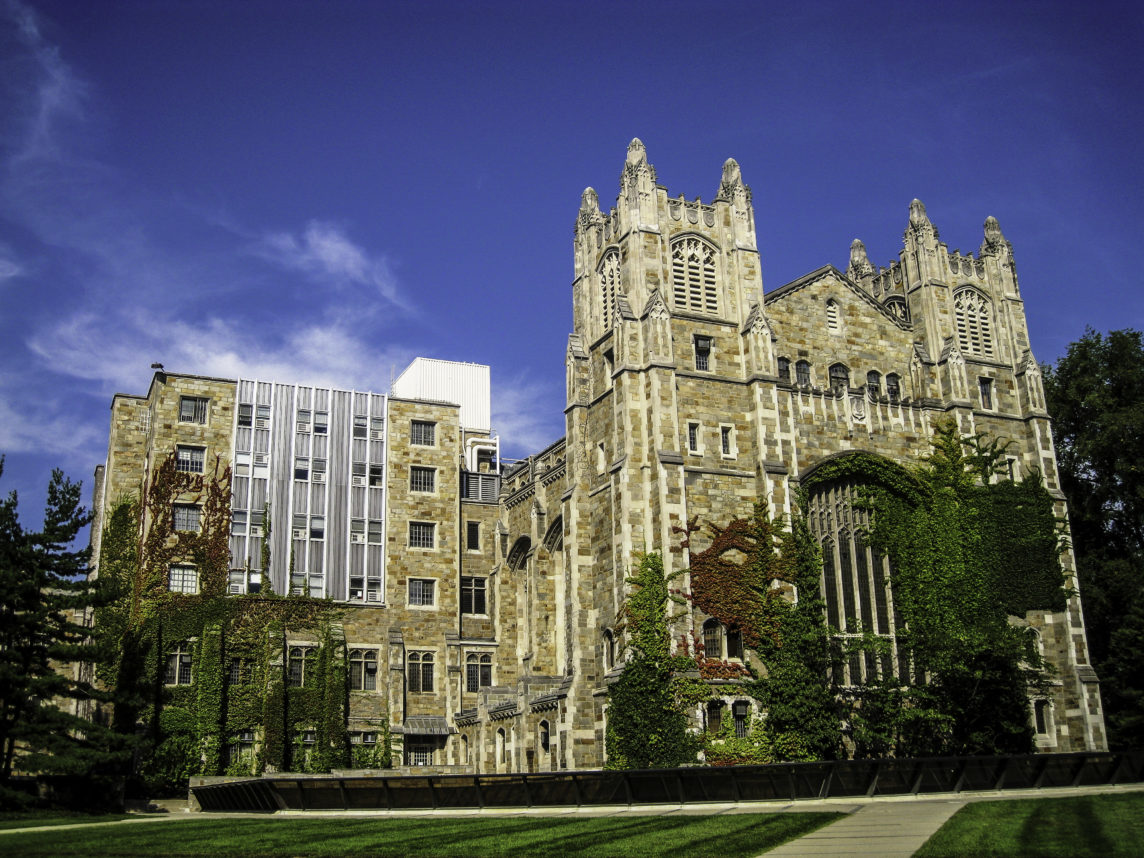
University of Michigan Student Government Passes Anti-Israel Divestment Resolution

University of Michigan’s student government passed a resolution on Wednesday morning that called for the university to form a committee to look into possibly divesting from companies that operated in Israel.

The resolution passed with a vote of 23 in favor, 17 against and five others who abstained. The vote occurred under a secret ballot with the rationale that it was necessary to protect pro-Palestinian students from being blacklisted.

Those who argued in favor of the resolution claimed that it wasn’t targeting Israel, it was giving representation to the Palestinians.

“I want to emphasize over and over again that this resolution emphasizes the voices of Palestinian students … and to give this community a voice for the first time in CSG history is to not take away from any other community,” said senior Hafsa Tout, a representative from the College of Literature, Science and the Arts.

Those against it argued that the resolution was in fact targeting Israel and the Jewish people.

“It was about singling out Israel as the sole entity responsible for the conflict between Israelis and Palestinians,” Tilly Shames, the director of the university’s Hillel chapter, told Jewish students. “And that’s an oversimplification, overgeneralization of an historically complex conflict that really can’t be attributed to one side or the other.”

Despite the resolution’s passage, the university won’t be divesting from these companies that conduct business in Israel.

“The university’s longstanding policy is to shield the endowment from political pressures and to base our investment decisions solely on financial factors such as risk and return,” said Rick Fitzgerald, the university’s spokesman.

There had been 10 prior attempts to pass the resolution, they had all failed.

University of Michigan Student Government Passes Anti-Israel Divestment Resolution Read More »