fbpx

November 8, 2017

Don’t Dismiss the Power of Prayer

This week, a mass shooter in Texas walked into a Baptist church and murdered 26 people, including more than a dozen children. Many conservatives — and many religious people more generally — immediately offered their thoughts and prayers. The most controversial figure to do so was Speaker of the House Paul Ryan (R-Wis.), who tweeted, “The people of Sutherland Springs need our prayers right now.”

This drove a tsunami of rage from gun control advocates. Actor Wil Wheaton tweeted, “The murdered victims were in a church. If prayers did anything, they’d still be alive, you worthless sack of s***.” New York Gov. Andrew Cuomo tweeted, “We have pastors, priests and rabbis to offer thoughts and prayers. What we need from Republicans in D.C. is to do something. Lead.” Keith Olbermann of GQ tweeted in less temperate fashion, “shove your prayers up your ass AND DO SOMETHING WITH YOUR LIFE BESIDES PLATITUDES AND POWER GRABS.”

It’s questionable whether some additional law would have prevented the massacre in Sutherland Springs. It’s clear from the evidence that the shooter never should have had a gun: He was convicted of domestic violence, including cracking the skull of his infant stepchild; he’d pleaded guilty to animal abuse; he’d been sending threatening text messages to his mother-in-law, who attended the church he shot up. The Air Force has openly admitted that it didn’t send his criminal record to the FBI, which would have prevented him from buying weapons under current law.

But there’s something deeper going on here with the anti-prayer tweets — something more troubling. First, dismissing prayer dismisses the value of religion more generally; second, conflating prayer-driven-action with action you like makes religion irrelevant, and your political agenda paramount.

To dismisss the value of prayer after horrific events demonstrates a lack of knowledge about prayer itself — or worse, an antipathy toward the values prayer promotes. Prayer is designed for several purposes. Prayer reminds us that while we must strive each day to prevent evil from succeeding, God’s plan is not ours; we will not always succeed in stopping evil’s victory. That knowledge suggests a certain humility, an unwillingness to surrender to the foolish optimism of utopianism. It’s why Jews say, “Baruch Dayan Emet” (“Blessed is the true judge), upon learning of a death.

Prayer also helps us see the value in others, and convey that we understand that value to others. Atheists say that prayer is nothing but empty verbiage, but how many people have been changed because they entered a prayerful community? The people who died in the church were attempting to reach out to one another and provide one another support. That’s why we pray with a minyan. It’s why we pray communally.

Finally, prayer reminds us that we must better ourselves: We must treat our friends, neighbors and family members better, correct our mistakes. We cannot change God, but we can change how God responds to us if we change ourselves. In this sense, prayer provides the impetus to action.

We have a reactionary tendency to credit our opponent’s worst intentions.

It’s this last rationale for prayer that many on the left have seized upon to the exclusion of the other two. They say, rightly, that action is one of the anticipated outcomes of prayer. That’s fine so far as it goes — but it doesn’t go particularly far when you are making the secular case for gun control, then demanding religious support for it. Just because someone disagrees with you on a remedy to a problem doesn’t mean that their prayers are insincere — or that the goal of their prayers is the same as yours.

Recognizing that simple truth would go a long way toward healing wounds that seem to be festering. We have a reactionary tendency to credit our opponents with the worst intentions, up to and including insincere use of prayer, in order to press them to embrace us, but the opposite is usually the outcome. If you alienate religious people who disagree with you by stating that their prayers are insufficient, they’re likely to stop seeking common ground. That will be your fault, not theirs: You’re cutting them off at the knees.

Just because we disagree on gun control doesn’t mean we shouldn’t pray, or that our prayers lack merit. And ripping prayer itself after dozens of Americans are murdered while praying is disrespectful to our fellow citizens and to the religious victims.


Ben Shapiro is a best-selling author, editor-in-chief at The Daily Wire and host of the conservative podcast “The Ben Shapiro Show.”

Don’t Dismiss the Power of Prayer Read More »

18 Ideas for the Jewish Future

As the nation’s premier Jewish leadership summit — the 2018 Jewish Federations of North America General Assembly — hits Los Angeles, we asked innovators, educators and community leaders to weigh in with their ideas for the Jewish future.

These are just the beginning. Over the next few months, we will be reaching out to more people for more ideas, and will publish many of them in print and online. If you’d like to contribute, send your great idea (in 100 words or less) to editor@jewishjournal.com.


Create a Reverse Birthright
Avraham Infeld, Renowned Israeli Educator

The “wow” experience of thousands of Taglit-Birthright participants is the sudden realization that what they thought being Jewish is, is not necessarily so. Israeli-Jewish youth are desperately in need of a similar experience that can be achieved only by educationally well-structured visits of thousands of Israeli youth to Diaspora Jewish communities. Ensuring our remaining one Jewish People is essential, achievable and well worth the investment. The time for a reverse Birthright is now!


Recruit Future Rabbis the Way Sports Teams Scout Talent
Janice Kamenir-Reznik, co-founder, Jewish World Watch

We are in dire need of more dynamic and innovative rabbis from diverse backgrounds and fields. To attract them, we need to proactively cull high school youth groups and university student bodies, recruiting the best and the brightest the way sports teams search for talented athletes. I propose a diverse team of excellent, highly specialized and trained recruiters, jointly funded by all of the seminaries and the national Federation system. This squad would devise a strategy and, with purposeful intention, set out to find tomorrow’s rabbis and synagogue leaders. By increasing the number of dynamic and exceptional leaders, we can reach new heights.


Introduce a New Kind of Conversion
Rabbi Yosef Kanefsky, B’nai David-Judea Congregation

In a time and place in our history when Jewish identity often is amorphous and tenuous, all of us together should adopt the practice of universal Jewish conversion. Upon reaching the age of 20, all Jews would undergo a conversion to Judaism, a ceremony that involves an articulation of faith, an affirmation of commitment and immersion in a mikveh. Naturally, the precise requirements and content of the ceremony would vary from one movement to another, from one synagogue to another, and from one Jewish organization to another; for instance, as organizations such as Jewish World Watch, StandWithUs and Bend the Arc would all have their own programs.


Promote Israel-Diaspora Connections
Zev Yaroslavsky, Former Los Angeles County Supervisor

American Jewry always has found common ground with Israel. However, there is a growing sense that the younger generation is finding less with which to identify on issues such as civil liberties and religious and political tolerance. I propose that Israel and the U.S. establish a nonpartisan Israel-Diaspora Initiative consisting of top leaders from both sides whose exclusive mission will be to nurture and strengthen the relationship. The objective would be to bring our communities closer together in shared values, understanding and mutual respect. United, Israel and Diaspora Jewry are stronger. Divided, we will sow the seeds for a growing divide.


Actively Include Everyone
Michelle K. Wolf, executive director, Jewish Los Angeles Special Needs Trust

We need full disability inclusion of every member of our community, from the smiling kindergartner with Down syndrome to the towering, young adult with nonverbal autism who doesn’t speak but has a whole universe spinning in his head. We need large-print and Braille siddurim at every synagogue, and American Sign Language interpreters at every communal function. We need to replace the stigma of mental illness with empathy. This communal embrace requires more than just nice words — it requires proactive efforts. We need inclusion to be an everyday, year-round activity that is as deeply embedded as the parchment scroll in every mezuzah.

Give People Meaning
Rabbi Ed Feinstein, Valley Beth Shalom

Addressing the General Assembly in 1965, Abraham Joshua Heschel implored us to remove two words from our vocabulary: “surveys” and “survival.” “Our community is in spiritual distress,” he said, “Our disease is loss of character and commitment, and the cure cannot be derived from charts and diagrams. … The significance of Judaism does not lie in its being conducive to the mere survival but rather in its being a source of spiritual wealth, and source of meaning. …” There is yet more jargon we need to excise: “marketing,” “engagement,” “millennials.” Heschel was right: Our community is waiting impatiently for an assertion of collective purpose and a narrative of transcendent meaning. That’s the only “big idea” that matters now.

Mentor One Another
Rhoda Weisman, dean, Graduate School of Nonprofit Management, American Jewish University

In this age of disruption and innovation, millennials and boomers have knowledge, skills, experiences, values and wisdom unique to each of them. The InBetween Fellowship would pair boomers and millennials for a year to better one another through reciprocal mentoring. From creating satisfying career paths to personal lives informed by Jewish celebration, to understanding the latest social-media technologies, both generations will help each other to find deeper meaning and relevance in their lives.
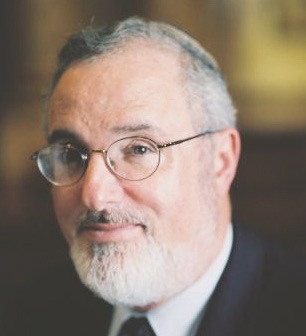

Take Judaism Seriously
Rabbi Marc D. Angel, rabbi emeritus of Congregation Shearith Israel, New York City

The Talmud (Yoma 86a) quotes the sage Abayei, who interpreted the verse “And you shall love the Lord your God,” to mean that “the Name of Heaven should be beloved because of you.” Our words and deeds should inspire people to come closer to God and Torah, not repel them from God and Torah. Here is my paraphrase of the ensuing talmudic discussion: If someone studies Torah, is honest in business, speaks pleasantly to others, people will say, “How fine Judaism is! How righteous are the Jewish people!” The one essential point is: take Judaism seriously, proudly, naturally. Do your best and do not judge others. If we live a beautiful and righteous Jewish way of life, we can indeed be a “light unto the nations” — and a light unto our own selves and our families.
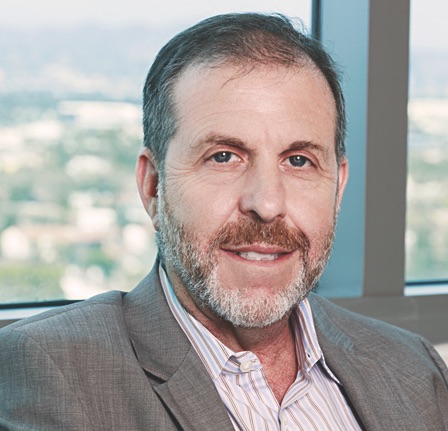

Meet Jews Where They Are
Jay Sanderson, president and CEO, The Jewish Federation of Greater Los Angeles

The single best idea for the Jewish future is not one idea. It’s a change in mindset. We need to reimagine Jewish life to be more dynamic, more accessible, more engaging and more inclusive. We have to understand that we need to meet people where they are in their lives and in their Jewish journey and not expect them to come to our institutions. We have to be open to redefining Jewish engagement and transforming our Jewish community.


Learn and Practice Dignity
Rabbi Jill Berkson Zimmerman, founder, The Jewish Mindfulness Network

The Dignity Project would be a collaborative, international dialogue process in which people and leaders from all streams of Judaism would learn together and create shared agreements for how to treat one another with dignity, and guidelines for respectful conversation. We would explore existing Jewish texts about dignity and bravely tackle the multilayered dimensions of understanding the “Other.” We would examine the underlying thought processes and behavior that has led to the debasement of women and men, as revealed in recent, widespread sexual impropriety allegations. We’d address the rampant divisiveness among opposing political conversations. We would meet cross-denominationally, online and in person.


Build Wisdom and Virtue Academies
Rabbi Mordecai Finley, Ohr HaTorah Synagogue

In addition to the other things that synagogues do, make them into wisdom and virtue academies, machon chochma umiddot. Wisdom includes insight into yourself, into others, and understanding where people are in the process of things. Virtue includes not acting in ways that are hurtful to others or your own well-being (osher in Hebrew), and reaches all the way into the transformation of character. Most people suffer because they don’t think well and because they cannot restrain their behavior (anger, for example) in a moment of stress, when the yetzer harah (the evil inclination) is trying to hijack our behavior. Help people become wise and strong!
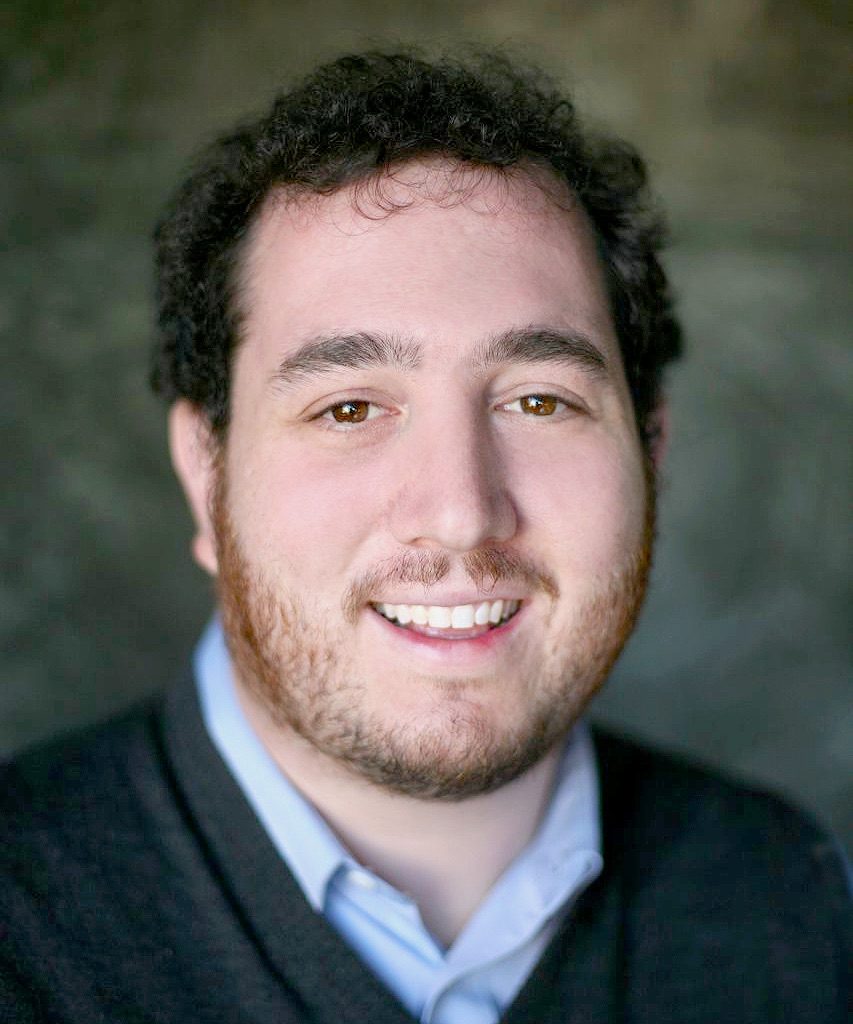

Embrace Newcomers
Rabbi Adam Greenwald, director, Miller Introduction to Judaism Program, American Jewish University

Despite the fact that nearly 1 in 6 American Jews are converts, Jews by Choice are often forgotten in our communal conversation. Last year’s Slingshot Guide to Jewish Innovation contained not a single organization with conversion as a part of its mission. This is a tremendous blind spot in our institutional ecosystem. America’s spiritual landscape is increasingly characterized by dynamic movement between religions, and Judaism’s unique blend of intellectual openness, devotion to community, and passion for ethics has the potential to be tremendously attractive to people of all backgrounds seeking meaning and identity. Our commitment to not just accepting, but deploying our resources to actively embrace newcomers to our Jewish family is essential to our future vitality.


Invest in Boomers
Rabbi Laura Geller, rabbi emerita, Temple Emanuel of Beverly Hills

Invest in baby boomers, a huge population alienated from Jewish institutions that are focused on families with young children. Boomers have time and talent and want to give back to the community. Most want to age in place. Their major fears are invisibility, isolation and dependence. In L.A., two synagogues teamed to create ChaiVillageLA, a multigenerational community that enables congregants to stay in their own homes by providing assistance to one another, enriching one another’s lives and giving back to society as part of a self-governing “virtual” village supported by Jewish values. Village members no longer feel invisible, are no longer isolated and now think not of dependence but interdependence. Temples that once were competitors now are partners. People are joining these temples in order to become part of the Village.


Expand the Boundaries
Tova Hartman, Dean of Humanities, Ono Academic College, Israel

Recently, we read that Abraham, upon seeing three approaching strangers, “ran toward them” (Genesis 18:2). Just as the mitzvah of tzedakah requires us to actively seek out those in need and then offer help, we must actively pursue welcoming. Learning from feminism about making those invisible visible, we must always ask: Whom have we ignored? Who is here, but unnoticed? The Jewish community has overdosed on who does not belong, on creating boundaries that exclude. It is time to open our communities and institutions to those who did not know they could claim them.
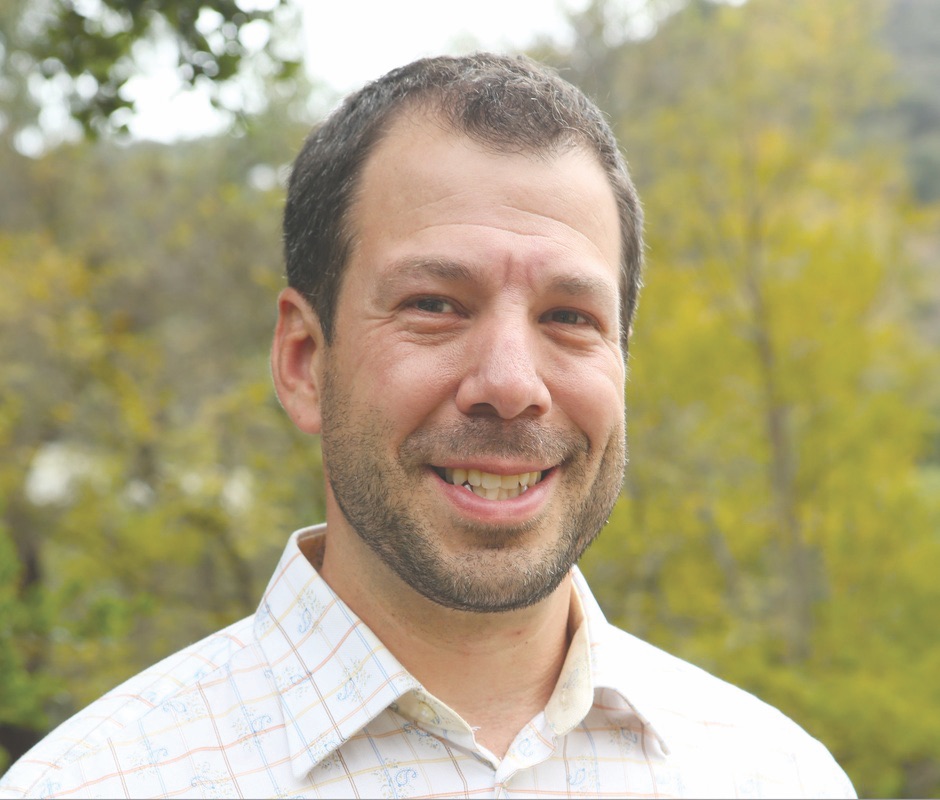

Engage High School Grads in a Year of Service
Avram Mandell, executive director, Tzedek America

I suggest a strongly encouraged and financially backed Jewish service year for high school graduates. Generation Z and millennials care deeply about social-justice issues and feel disconnected from Judaism. A Jewish year of service — supported culturally and with dollars — would benefit our country and the Jewish people. In addition to volunteering, these young people would experience supervised communal living, experiential Jewish education and communal Shabbat involvement. Let’s get them hooked on their Judaism and the idea of making the world a better place before their identities solidify and they head off to college.

Give Tikkun Olam Context
Selwyn Gerber, CPA, Community Leader

Tikkun olam isn’t a Jewish idea, per se. It’s a wonderful universalist ideal. The sentence from which it is taken has a second half — b’malchut
Shadai (in the kingdom of God) — that largely has been silenced. Without an authentically Jewish component, it fades into the contemporary culture. Building a life and a home where the Shabbat table is a sanctuary, where the Jewish calendar becomes circuit-training for the soul, where each festival becomes an authentic self-improvement opportunity and then giving broad expression to being part of the Jewish people would give tikkun olam context and authenticity.


Make Learning Hebrew Fun
Rabbi Zoe Klein Miles, Temple Isaiah

Mystics spend their lives delving into the mysteries of Hebrew, believing it is the DNA of creation itself. But who has time for that? Many Jews have trouble engaging with Judaism because they cannot follow the prayer book, and they don’t believe they have the time or mental real estate to learn. Hebrew becomes an obstacle to participation rather than a vehicle for it. Let’s make learning Hebrew an event and fill theaters and stadiums with Jews and non-Jews, teaching the Alef Bet in an exciting, trend-worthy, memorable way, with music, comedy and graphics that are as simple as possible.


Birthright Beit Midrash
Rabbi Daniel Bouskila, Director, Sephardic Education Center

“Birthright Beit Midrash” —Jewish philanthropists would fund scholarships for adult Jews to attend ten-day intensive Jewish study seminars of their choice. In these seminars, Jews would strengthen their identity through exploring Jewish texts. The texts of Talmud, Maimonides, Kook, Uziel and Agnon would become the common language of every Jew, and in the words of the great writer Herman Wouk, the new Jewish greeting will become, “What are you learning?”


18 Ideas for the Jewish Future Read More »

My Son, the Maccabee

My 8-year-old, Alexander, is a tough kid. He’s not mean or aggressive; he’s just tough and has attitude.

Increasingly, it’s annoying and difficult that he’s tough; he has turned arguing into a sport and gives new meaning to defiant. His attitude is often funny — he comes out with lines like, “This place is stacked, sugarplum” — though I try not to laugh. (Yes, “sugarplum” is me.)

With allegations of sexual harassment now an almost hourly occurrence and calls increasing for an end to masculinity, I have been thinking a lot about his toughness. Although no one has yet to blame the mothers for the sins of their sons, I do feel a special obligation to raise a mensch. And I do think it takes more work to make athletic boys, which he is, into mensches.

When I was dating in my 20s, I used to say, “I want a guy who is strong enough to be sweet.” This has proven to be true time and again. It is typically weak, insecure men who brag, harass, bully, assault, rape — who are often the biggest jerks.

So, no, I don’t think we need to neuter men, but I do think we need to refine our concept of masculinity. Toughness has to mean real, inner strength, not just bravado. We need to build and reward confidence, not arrogance.

And there’s no reason that real strength can’t be combined with respect and empathy. In fact, it’s part of it. When I’m in a bind with Alexander, I ask him to think about two of his favorite biblical characters — Moses and Joshua. He particularly likes Joshua because not only is he strong, but he’s also — as portrayed in “The Ten Commandments” — cool. “What would Joshua do?” I ask him.

It’s a question that I wish many men I’ve known had asked themselves, let alone the Harvey Weinsteins of the world.

Interestingly, the times that Alexander completely transforms into a sweet, caring child is either when I’m sick or he sees an injured animal. I’ve thought about this while reading all of the conservative calls for men to return to the roles of “protectors” of women and children. Protectors, the argument goes, would never turn into Weinstein.

Leaving aside for a second the fact that plenty of Weinsteining went on before the sexual revolution, there is a point here that shouldn’t be ignored. In the hunter-gatherer days of evolution, men felt that they had a duty to protect women and children. What if men are hard-wired for that role, and when it’s taken away from them, they act out in unhealthy ways?

I should immediately point out: This in no way undermined evolutionary feminism — women gathered. That was their job. Extended families helped to watch the children. Much of that autonomy was lost, of course, until early 20th-century feminism again freed women to not just work outside of the home, but to vote and make personal choices not based on societal norms.

What I’m arguing for is a return to two concepts that late 20th-century feminism discarded in its rush to negate sexual differences: chivalry and courtship. Masculinity needed to be civilized, not weakened. We need strong men, just like we need strong women.

Not coincidentally, the original definition of chivalry included bravery, honor and a readiness to help the weak. In other words, a mensch.

I don’t think we have to neuter men. We need to redefine our concept of masculinity.

I for one have no problem with men opening doors for me; pulling out chairs; “protecting” me in a larger, big-picture kind of way. In fact, I love when men are chivalrous. Courtship not only allows men to feel strong in a very healthy way, but it is also the surest test of a man’s real interest.

Before Mattathias of Modi’in died, when he knew that his five sons, later to be called the Maccabees, were going to have to proceed in an epic battle against the Greeks, he told them: “Hazak ve’amatz.” Be strong and brave.

Each night after I sing the Shema to Alexander, I say: “Be strong and brave like the Maccabees.” If his future girlfriends (and wife) are able to say, “Alexander is strong enough to be sweet,” I will feel that I have accomplished my duty as a mother.

A future doctor? If he wants. Far more important: my son, the Maccabee.


Karen Lehrman Bloch is a cultural critic and the author of “The Lipstick Proviso: Women, Sex & Power in the Real World” (Doubleday). Her writings have appeared in The New York Times, The New Republic, The Wall Street Journal and Metropolis, among others.

My Son, the Maccabee Read More »

The Rabbi of Mobileye

Consider this thought experiment: What if your self-driving car has to make a split-second decision to avoid a seven-car pileup in your lane by veering into another lane, thus causing a three-car pileup? If there are casualties, who’s culpable? The driver, the car manufacturer or the programmer behind the car’s decision-making?

In the eyes of Jewish law, the dilemma presents a veritable minefield. It’s one that Mois Navon, a chip engineer at automotive-vision-systems giant Mobileye, attempts to navigate in his weekly Jewish ethics class. “This is classic Torah u’madda,” said Navon, using a Hebrew phrase for the juncture between Jewish thought and secular knowledge. “Autonomous vehicles can’t be programmed without ethical thinking.”

In the early 2000s, Navon, like many in his profession, found himself out of a job following the dot-com crash. “That was a very, very bad time to be on the street, because everybody was on the street,” he recalled.

A former colleague told him about Mobileye, a fledgling, 15-person startup operating out of a house in Jerusalem’s Ramot neighborhood. The Los Angeles native found work there as an engineer.

Soon, Navon began teaching a lunchtime Torah class for a handful of secular colleagues. Nearly 17 years — and an Intel acquisition — later, his class routinely attracts a couple of dozen employees, both religious and secular.

Navon is also responsible for the company’s Jewish-related needs, from organizing afternoon prayers to affixing mezuzot in the firm’s headquarters to officiating at employees’ weddings (four and counting). All of that has earned Navon the nickname Rabbi of Mobileye.

It’s a long way from his upbringing in a secular Jewish family in Los Angeles’ Westwood neighborhood. Decades later, he’s swapped the surfing of his youth for road biking — and he still exudes a sense of fun. As his wife, Deena, puts it, “He’s not your typical computer geek and he’s also not your typical rabbi.”

The two met in the 1980s at UCLA, where Navon was studying computer engineering. On the side, Navon was becoming increasingly drawn to Jewish philosophy.

“I didn’t become religious because I was looking for something,” Navon said with a smile, “apart from an answer to the obvious question of ‘What are we doing here?’ ”

He recalled first asking that question around age 6 after learning that people die. It wasn’t until years later, under the tutelage of his boss at NASA’s Jet Propulsion Laboratory (JPL), that Navon began finding answers through Jewish wisdom.

Still a UCLA undergrad, Navon was accepted as a part-time employee at the NASA company’s image-processing department. His boss, Ray Eskenazi, was an observant Jew and soon began spending extended lunchbreaks teaching his young protégé engineering and Jewish thought.

“He’s not your typical computer geek and he’s also not your typical rabbi.” – Deen Navon

That initial learning eventually inspired Navon to become observant himself and delve into Jewish learning. After marrying in 1987 and making aliyah in 1992, he spent a year in yeshiva, later earning rabbinic ordination at Jerusalem’s Mercaz Harav Kook in 2009.

His lunchtime Torah tradition spanned continents and multinational corporations, with Navon rehashing Rashi while working for IBM in Haifa and tearing into Talmud and tuna sandwiches at a Herzliya-based video-on-demand company before he landed at Mobileye

Today, more than 400 of his Mobileye lunchtime classes can be found online. But the father of five hopes teaching Judaism will eventually be more than just a lunchtime pastime.

“I’m shifting more time and effort into teaching and learning,” said Navon, who now teaches at the Jerusalem College of Technology, which combines Torah study with vocational training. He’s also enrolled in a Jewish philosophy master’s program at Bar-Ilan University.

Although he firmly claims Israel as his home, Navon is unequivocal about his feelings toward Los Angeles.

“I’ll always look fondly back on my time there, he said. “It’s my hometown — I know every stone from Malibu to Huntington Beach.”

Does he miss it?

“Well, I miss the parking lots,” he answered before quipping, “Though now with autonomous vehicles, we’ll no longer have to worry about that.”

Rabbi  Mois Navon’s Torah classes are at divreinavon.com.

The Rabbi of Mobileye Read More »

Perspective and the Avocado Seed

For a chef, kitchen disasters are simply par for the course.

You have a 600-person catering job for an important function? “Ha, ha, ha,” says the universe. You can be pretty darn sure your suppliers won’t show up on time, your sous chef, prep chefs or waiters won’t be in a cooperative frame of mind, and anything that goes right falls under the category of suspect.

Recently, after one of these particularly brutal weeks, I found myself irritable, hungry and tired. I felt uncharacteristically troubled, and all I wanted to do was go home and take a nap. Instead, though, I decided to have a little cooking session, because, in my experience, there is no problem so great that an afternoon of puttering around the kitchen at home can’t cure it.

My first step was to go shopping because I’m a chef who inevitably has an empty fridge by the weekend. The traffic where I live in Uganda was delirium-inducing, and by the time I got to my local “Italian grocer” — even though it’s not Italian, and in fact, would barely be considered a grocery store in the more developed world — I was beside myself.

The traffic where I live in Uganda was delirium-inducing.

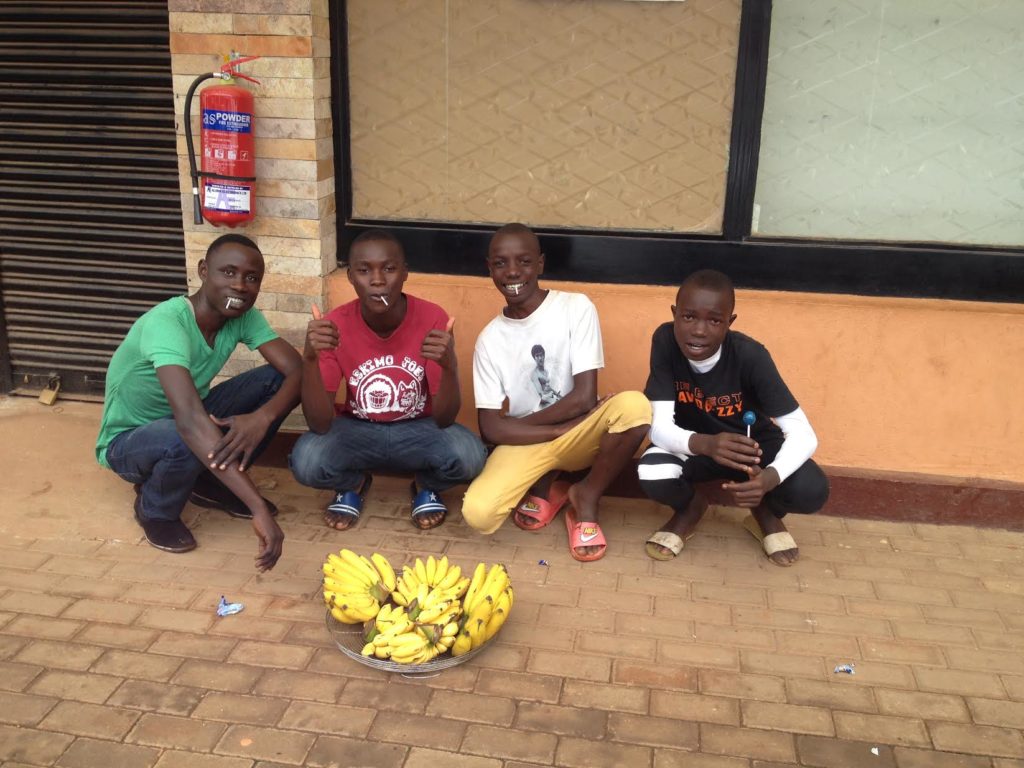
As always, I found the parking lot full of small children. I call them the banana kids because they perpetually surround my car trying to sell the same product — bananas. Not nice bananas, mind you, but overripe, ugly, fruit fly-infested, past-their-prime bananas that even a banana bread factory would shun. We always perform the same dance, these kids and I: I joke around with them a bit, they try to sell me their fruit, their little carvings, their bracelets. They range in age from around 7 and 14, and they are beyond cute — just sweet, innocent little souls who need to earn money for school fees. Watching them from inside my car in all their glorious, unaffected, youthful disarray let’s me forget my troubles for a moment.

On this occasion, I realized that I was in a huge 4X4 with enough money in my wallet to buy more food than these kids probably have ever seen at one time. Usually, rather than buying their rotten bananas, I like to buy them treats. I figure these kids rarely have sweetness in their lives or parents who can provide them anything more than the tattered clothes and shoes that have been handed down from older siblings. I’m pretty sure most of them don’t have parents to look after them at all. Perspective.

I’d recently been away, so they questioned me in typical Ugandan fashion: “Why are you lost, Auntie Yam?” a phrase reserved for people you haven’t seen in a while. I told them I was busy with work and with life. What I didn’t tell them was that I’ve just gotten done traveling, for the second time this month. It would be inconceivable to them that one could travel, or ever afford a plane ticket. I struggled to smile, but my heart just wasn’t in it. I broke the circle surrounding me and saw in their faces that they were disappointed I wasn’t spending much time with them. The sea of children parted, and I left them already anticipating my return. Perspective.

In the store, my usual fruit and vegetable vendors greeted me with hugs and kisses, shrieking with excitement. “Where have you been Yam? You are lost,” they said. I sank into the hugs and started to tell my favorite salesgirl that I was in a bad mood. “You’ll be all right. Don’t worry. Everything will be fine,” this wizened 20-year-old said, hugging me tighter and tighter with the confidence of the young mother of three that she is. Perspective.

I bought the kids some lollipops, the kind that come in a “fancy” wrapper with gum you can enjoy in the middle when you are done with the candy. I was thinking about how their eyes would light up at these sweets, a mere 600 Ugandan shillings apiece (about 15 cents) — but completely out of reach to these poverty-stricken kids. Perspective.

I went outside, already feeling better from the hugs and the thought of giving out the candy and was surrounded once again by the circle of too-ripe bananas and toothy smiles. I handed out all the lollies and watched as, one by one, a mixture of wonder and joy crossed the brow of each and every one of them.

Suddenly, the smallest of the bunch, a quiet, shy 7-year-old stepped forward and said, “Here, Auntie, we made this for you.” In his tiny hand was a small carving in the shape of a heart with my name inscribed on it.

“How did you know my full name, kids?” I asked in amazement. “What is this material you used and how did you carve it so fast?”

“It’s soft wood, Auntie, and your name is here,” another boy said, pointing at the insurance sticker on my car window. “You look sad, Auntie, and we appreciate the sweets you always give us.” I stared at the little carving in disbelief and gratitude, trying hard to swallow down tears. Perspective.

“It’s an avocado seed,” explained the oldest, “It is wet now, but it will dry and become like wood.” Sure enough, I inspected the moist little chunk and recognized that it was indeed a small part of an avocado seed roughly carved with a rusty razor blade clutched in the hand of the boy.

“Wait, Auntie, let me carve a hole in it so you can wear it near your heart.”

He removed the lollipop that I had just given him from his mouth and easily punched a hole with the stick through the soft seed, presenting me with a little pendant, now sticky from the heat and the already melting candy. Perspective.

Driving home, I felt awash in shame and guilt over how little these children have and the sweet gift they gave me. How could I feel sorry for myself when they have next to nothing yet are smiling and trying to make me happy? And then it hit me. Jewish scholars answered the question, “Who is the happy person?” long ago in the Talmud. The answer: The person who is grateful for their lot.

How can I feel sorry for myself when they have next to nothing yet are smiling and trying to make me happy?

I realized these kids aren’t unhappy. They are young and free and have their friends and siblings to play with, even though it’s in the parking lot of a ramshackle strip mall. And now they were happier still because they got an unexpected treat from the nice lady in the big green car. They’ve seen how bad things can get, how one day you have parents and the next day, they fall ill and die. They have been hungry, sick and cold, yet they are happy for what they have now. They have perspective.

But the other thing they have in abundance is gratitude. Their delight in receiving a bit of attention is greater than the joy some far more privileged people might feel. They don’t feel entitled to anything, nor do they take anything for granted.

Gratitude and perspective — that’s all anyone really needs to feel better, even after a terrible week at work. And you might even get a pendant with your name on it out of the deal, which, quite frankly, is worth more than all the diamonds and gold in the whole world.


Yamit Behar Wood, an Israeli-American food and travel writer, is the executive chef at the U.S. Embassy in Kampala, Uganda, and founder of the New York Kitchen Catering Co.

Perspective and the Avocado Seed Read More »

Week of November 16, 2017

Week of November 16, 2017 Read More »

A Moment in Time: A Lasting Impression

Dear all,

I saw this remnant of a mezuzah (a symbol which appears at the doorway of many Jewish homes) a few days ago.  The actual piece had been removed.  But its presence made an impact, both physical and emotional.


I’ve been thinking about it all week.


Whether we realize it or not, our presence makes an impact.  Long after we are gone, our soul-print remains.


What will that impression be?
Will the echo of our lives motivate people toward goodness?
Will our imprint help make the world just a little bit better?


Every thing we do makes a difference.  And so, the moment in time we create today might become the lasting impression we leave for eternity.  What do you want that moment to be?


With love and shalom,

Rabbi Zach Shapiro


A change in perspective can shift the focus of our day – and even our lives.  We have an opportunity to harness “a moment in time,” allowing our souls to be both grounded and lifted.  This blog shows how the simplest of daily experiences can become the most meaningful of life’s blessings.  All it takes is a moment in time.
Rabbi Zach Shapiro is the Spiritual Leader of Temple Akiba, a Reform Jewish Congregation in Culver City, CA.  He earned his B.A. in Spanish from Colby College in 1992, and his M.A.H.L. from HUC-JIR in 1996.  He was ordained from HUC-JIR – Cincinnati, in 1997.

A Moment in Time: A Lasting Impression Read More »

ARTIST OF THE WEEK: Laura Ben-David

“Bina,” Laura Ben-David

“This little girl, clutching one of her few possessions, had made a long journey, moving with her family from Manipur, India, to Israel just a few months before. Members of the Bnei Menashe Jews, her family was among a group to make aliyah with Shavei Israel.” — Laura Ben-David

“Bina” is part of the “Passage to Israel” international exhibition (http:/www.passagetoisrael.org/).

ARTIST OF THE WEEK: Laura Ben-David Read More »

Q&A with Charles Bronfman on Birthright and the Best Prize of All

In the summer of 1998, Charles Bronfman was sitting outside the Israel Museum in Jerusalem with fellow philanthropist Michael Steinhardt, discussing an idea: What if every young Jewish person in the world had a voucher for a free trip to Israel?

The idea struck Bronfman as implausible, but he was willing to give it a try. Two decades later, Steinhardt and Bronfman are best known in the Jewish community as the names behind Birthright.

Since 2001 — the year he parted with Seagram’s, the liquor company that made his fortune — Bronfman, 86, has been more concerned with giving away money than making it. He spoke with the Journal from his New York City office, where he was spending a few days before returning to his winter home in Palm Beach, Fla.

Jewish Journal: From your perspective, what is the greatest challenge to the Jewish people in North America?

Charles Bronfman: Keeping our relationship with Israel on a sound basis. The Israeli government reneged on its commitment regarding the Western Wall and reneged on the conversion deal. That’s the kind of thing that’s going to do onerous things to our relationship over time. What’ll happen will be that youngsters on both sides will say, “Well, they don’t give a damn about us.”

JJ: Nominations recently opened for the 2018 Charles Bronfman Prize, a $100,000 award in your name for humanitarians inspired by Jewish values. Can you tell me about past prize winners?

CB: The amazing thing to me about the prize winners is although they all have to be under 50, they have gone on to achieve greater results than they had before. They’re amazing people. I love them all. When my children gave me that prize, 15 years ago, it was one of the greatest days of my life. I cannot imagine a more loving present and more impactful present that any child could give a father. And I’m tearing up as I say this to you.

JJ: They gave you the prize as a present?

CB: They’re funding it, and it’s in my name. They set it up on my 70th birthday.

JJ: Not a lot of children have the means and connections to give that sort of birthday gift.

CB: It doesn’t have to millions of dollars. They can promise to keep the lawns on the street nice. It just has to be something that the children know that the parent or parents really appreciate, and because of my life and my philanthropic bent, nothing could have pleased me more that I could ever imagine.

JJ: I would be remiss if I didn’t ask about Birthright. Did you think it would become as big as it has?

CB: Never in a million years. This was something that Michael Steinhardt and I decided to give a shot. We didn’t know if it was going to work. We had no idea. I call it the quintessential venture philanthropy. It’s the same idea as venture capital: You’re really placing a bet, saying, “Can this thing work?” We’re thrilled, of course, thrilled right through to our bones.

JJ: How did the idea come about in the first place?

CB: It came up when both Michael and I were in Israel in the summer of ’98 and both of us had met Yossi Beilin. He was one of Shimon Peres’ boys. And Yossi had this idea that all 17-year-olds should have a voucher from anywhere in the world for a trip to Israel. Michael was sort of taken with this idea. So later, I was at a party with Michael. We were at the Jewish Museum overlooking the — pardon the expression — the Valley of the Cross, sitting on a wall, because he’d asked to speak with me. And he said, “What do you think of this idea of Yossi’s?” And I said, “That’s a scheme to bankrupt the Jewish world.” I said, “Well, this is an audacious scheme.” And he said, “Well, if it’s audacious, why don’t we try to figure it out?”

JJ: What’s next for Charles Bronfman? You don’t seem to show signs of slowing down.

CB: I am slowing down, thank you very much. I have decided that at my tender age, it’s about time to smell the flowers, son, to play some more golf and read.

Q&A with Charles Bronfman on Birthright and the Best Prize of All Read More »

Palestinian Terror Group: Israel Will Face War Soon

A Palestinian terror group issued a video on Tuesday that essentially threatens Israel and the Israel Defense Forces (IDF) with war.

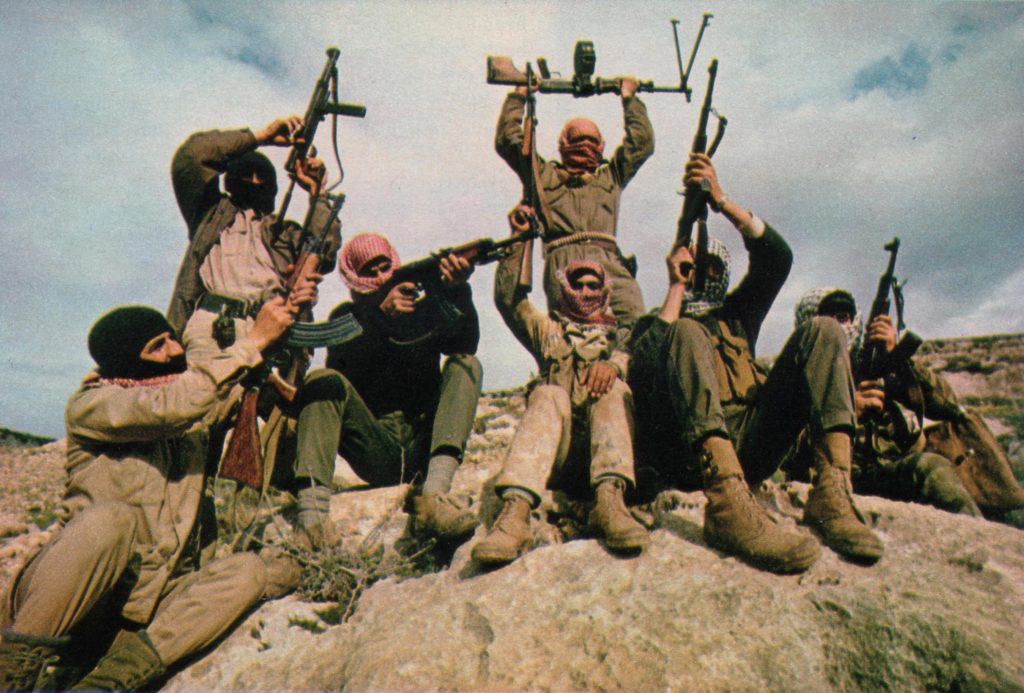
The video, issued by the Popular Front for the Liberation of Palestine (PFLP), shows terrorists adorned in black masks and uniforms running through a tunnel and then positioning themselves behind some bushes close to the border separating Israel and the Gaza Strip. The terrorists proceed to aim their weapons at a myriad of IDF vehicles and combat engineering units, each marked with crosshairs.

The video ominously warns that these targets are “in the line of fire.”

“We can reach the crimes and the aggression of Israel against the Palestinian people,” the video states. “The way of resistance is armed resistance, as long as occupation sits on the land of Palestine.”

The video also refers to “the weapon of resistance” as “a holy one.”

The full video can be seen below:

https://www.youtube.com/watch?v=61vrj_HOxX8

Palestinian Terror Group: Israel Will Face War Soon Read More »