fbpx

November 1, 2017

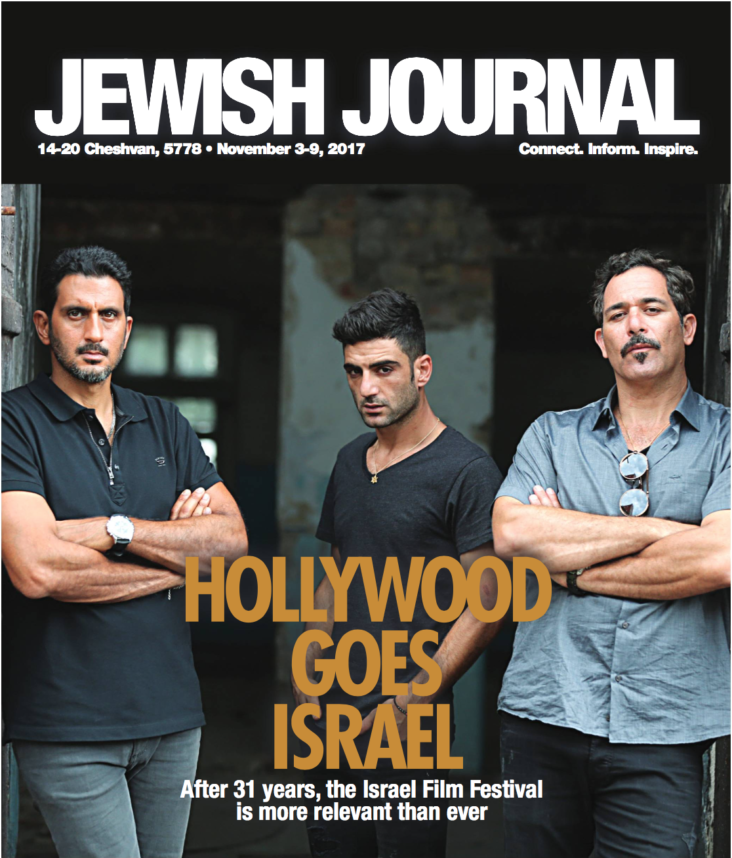
Week of November 9, 2017

Week of November 9, 2017 Read More »

What I Learned From Rebbe Nachman and Mr. Miyagi

I thought I understood the power of prayer, until I went to Uman.

Long before I reconnected with Judaism, I felt connected to God. It made no sense to me that a whole universe popped into existence out of nothing for no reason. I wanted to know our Creator. I tried many paths: philosophy, meditation, endurance sports, trance music, martial arts.

Here and there I’d catch hints of the Divine, but prayer was rarely part of the picture.

Twenty years ago, I returned to observant Judaism. My connection to prayer grew more solid as I put on tefillin and prayed every morning. But the moments that most moved me came when I was part of a rowdy congregation, especially with groups that danced and sang in the style of Reb Shlomo Carlebach.

Then, this fall, I traveled to Uman, Ukraine, to pray at the grave of Rebbe Nachman of Breslov. And I experienced another level.

Many people pray fervently, but the Breslovers, Rebbe Nachman’s Chasidic followers, add a personal component: hisbodedus. In short, they pour out their hearts as if they’re talking with a best friend. They do it out loud, every day, often with tears. Watching this, some people think they’re nuts. I don’t.

The gathering in Uman has been likened to a Jewish Burning Man festival. There’s certainly creativity, but the decadence and mind-altering substances are mostly limited to single-malt scotch. The Uman experience is intermittently loud, holy and contemplative.

Two moments stood out. Around the kever, the grave, of Rebbe Nachman, there’s a large synagogue where people pray around the clock, individually and in small groups. You hear cries of wrenching sincerity. I’ve visited the tombs of many holy figures in Israel. Each has its own energy. Rebbe Nachman’s was electric. At the tomb itself, I felt a rush of light coursing through me, and when I asked for guidance in knowing what to pray for, the answer came immediately.

As the Accidental Talmudist, I share what I love about Judaism with a large audience on a daily basis. So I prayed fervently that I should be a clean conduit for God’s light, neither obscuring it nor limiting it from a place of ego. This prayer now gives me strength before every live webcast.

The second moment was in a huge tent, singing a nigun (wordless prayer) with 2,500 guys in a tribal roar that must have pierced the firmament. It was ecstatic, rejuvenating, and I wanted it to go on forever. Every guy around me was my brother, and we were hugging strangers all day long.

Together, those moments aroused a sense of clarity.

In Uman, I didn’t just pray for life, health, love and success at work. Those blessings are crucial to everyone, and it’s good to ask for them, but all too often they are out of our control.

What I prayed for was clarity of purpose, strength to achieve it and open-minded humility in place of arrogant certainty. And as soon as I asked for help with those qualities, I felt the physical sensation of having my prayer answered.

In the 1984 film “The Karate Kid,” a bullied teenager asks a maintenance man and karate master, Mr. Miyagi, for a karate lesson, only to receive a can of car polish and a sponge.

“Wax on, wax off. Left hand, right hand,” Mr. Miyagi tells him.

The kid thinks he’s being bullied again, until those circular motions deflect an incoming punch. Then he realizes he’s been training all along, and that he can now protect himself with force and grace.

Prayer is like that. Our words and motions can easily become rote. We fulfill the commandment, but it’s only in moments of intensity that we feel its power. I experienced that intensity in Uman.

Alas, such heights are short-lived, and I have to pray regularly to keep developing those much-needed qualities. Yet, a trace of the Uman energy returned with me. I feel it now as I write these words. I feel it more when I pray.

That kind of prayer is action. It heals. It repairs. And it increases peace in the world.


Salvador Litvak shares his love of Judaism with his followers every day at facebook.com/accidentaltalmudist.

What I Learned From Rebbe Nachman and Mr. Miyagi Read More »

What Happens In Jerusalem Does Not Stay In Jerusalem

Israel is tritely known as the start up nation, the incubator for ideas and products that change our lives – usually for the better – in an increasingly high-tech world. Your ever-smaller cell phone, that GPS app that saves you 7 minutes on your commute to work, that suddenly non-invasive medical procedure and those persimmons that magically never seem to go bad, those were all created in Israel, and tested on Israelis, before getting the OK to go global.

So too, alas, with the modern scourge of undiscriminating Jihadi mass murders, occasionally referred to as terrorism by Western media. Like the most famous of technology companies, Jihadi terror tragically also uses Israel as its R&D center, and the Israeli populace, it pains me to write, as its guinea pigs.

After doing so with suicide bombings in the 90s, Palestinian Jihadists (whether of the admittedly religious Hamas variety, or of the “secular” Al Aqsa Martyrs brigades of the PLO) invented, tested and made ever more lethal truck terrorism, stabbing rampages and mass shootings through Israeli “experiments,” that is, through attacks on Israeli moms, dads, sons, daughters and grandparents. Palestinians saw that those indiscriminate and savage murders of Israeli innocents going about their day not only didn’t backfire politically or trigger any meaningful Western outrage, they instead earned Palestinians an endless stream of gushing profiles in liberal media outlets, a global pulpit, wall to wall political support, and the permanent benefit of any moral doubt with Western intelligentsia. There are many psychological reasons why this is so, why so many who might be expected to know better instead respond to plain evil with moral acrobatics, overwrought compassion and Orwellian understanding. Regardless, it is no coincidence that the mass-killing tactics developed in Ramallah, tested in Jerusalem and rewarded in Norway are becoming ubiquitous in London, Nice and, now, New York City.

If we don’t grasp that the mass murders committed by ISIS have their genesis in Yasser Arafat being rewarded for mass murder with global (including, at times, liberal Jewish) adulation, we will fail – whatever else we do to fight Jihadism. The usual methods when terror hits the West — vapid prayers, outdated diversity sloganeering, misplaced concerns over ever-yet-to-materialize “backlashes,” and narcissistic hashtags — have been turned by their sheer frequency into rancid insults that just pile onto fresh and never ending injuries. They are at best an impotent form of self therapy, at worse, an encouragement to terrorists, a sign that nothing need change in their macabre strategic calculus. It is clearly past time to look at more forceful solutions.

If we don’t grasp that the mass murders committed by ISIS have their genesis in Yasser Arafat being rewarded for mass murder with global (including, at times, liberal Jewish) adulation, we will fail – whatever else we do to fight Jihadism.

But killing ISIS thugs in Iraq and Syria, while laudable, is not enough, as this Uber driver on a legal visa turned Jihadi ought to show. Cluster bombs in Kabul and Raqqa have done little to protect those walking about on London bridges, in Paris markets or on Catalonian esplanades.

Closing borders will also do little: homegrown terrorists abound, whether they be second-generation immigrants or native converts to Islamist nihilism.

Rather, and as a first step, it is high time that we partner with Arabs and Muslims who have an interest in such and wage a concerted psychological war on the rabid religious ideas that underlie Jihad. It can be done, though explaining how exceeds the scope of this column. What is clear is that any assault on Jihadi ideas must attack that poisoned tree at its root not selectively prune only some of its most obtrusive jagged branches. There can be no exceptions in fighting terrorist ideas: the fetid poison of Hamas and Hezbullah are the same as that of Boko Haram and Al Qaeda. That remains true whether or not the former dress their primitive, supremacist savagery in talk of occupation and human rights in order to disable part of our moral immune system. That, along with the usual military means, may well make a difference. Because if Jihadist lunacy can be exported by Saudi Arabia and others via madrassas, so too can a version of Islam that is hostile to terrorism and shames it as cowardly, unmanly and sinful.

But that too, while desperately needed, isn’t enough. Which brings me at long last to my point: it is time to stop giving the Palestinians a free pass. If terrorism is rewarded or even explained away when it targets Israeli innocents, the record is unequivocal that the same terrorism will then spread to Europe, Canada, India, the US… If despicable apologists for Palestinian Jihad like Linda Sarsour and BDS are for no logical reason treated like paragons of humanism (including by how many Jews?), then so too will apologists for terrorism in Paris and Barcelona become normalized. Our willful, convenient moral blindness to the depredations of Palestinian terrorists operates as a tactical beacon to other Jihadis.

It is very comforting to think “oh, that’s different… that can’t happen to us, those attacks are not the same.” But they very much are the same. And for terrorism to fail in the West, as it must if we want to keep enjoying the fruits of the enlightenment, it has to fail everywhere. If Europe wants its streets back, it must help Israel secure hers. It has to become taboo to target any civilians, for any professed cause, at any time — not just those in European and American nightclubs.

Alas, what happens in Jerusalem does not stay in Jerusalem.

What Happens In Jerusalem Does Not Stay In Jerusalem Read More »

Seinfeld Stars in AFMDA Gala, Adelson Honored

Leave it to Jerry Seinfeld to transform the Beverly Hilton into an intimate comedy club.

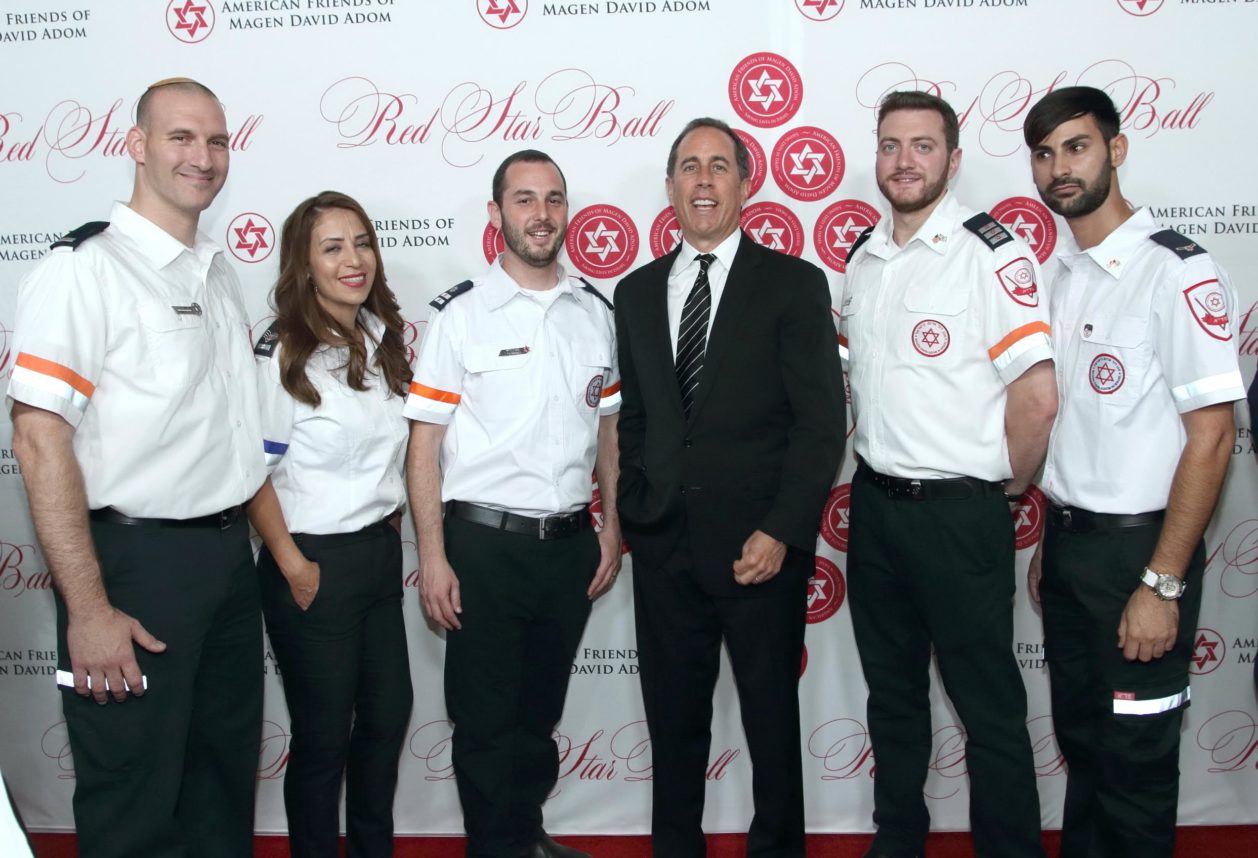
Performing a half-hour set to conclude the American Friends of Magen David Adom (AFMDA) Red Star Ball on the evening of Oct. 30, the comedic legend commanded the candlelit ballroom like he was headlining the Improv.

Seinfeld opened the evening with only a few minutes of material — joking about how Gentiles attend events for the alcohol; Jews for the rolls — but he promised he would return at the end of the night. When he returned after 10 p.m., the funnyman captured both the mood of the fundraiser and the comic sensibility he is famous for.

“It’s been a beautiful night of generosity …,” he said.  “Now, let’s get back to complaining.”

The gala raised pledges of more than $18 million, a record for any single AFMDA event anywhere in the country, according to an event spokesperson. It also spotlighted the life-saving work of Magen David Adom (MDA), Israel’s ambulance, blood-services and disaster-relief organization, serving as emergency medical first-responders for the state’s more than 8 million people.

MDA is mandated by the Israeli government to serve in this role, but it is not a government agency. Attendees did their part in assisting with its funding: Humanitarian of the Year Honorees Sheldon and Miriam Adelson pledged $12 million to the organization, and Maurice Kanbar, creator of SKYY Vodka, pledged $5 million.

Sheldon and Miriam Adelson attend the American Friends of Magen David Adom Red Star Ball. Photo by Michelle Mivzari

“My heart is in Israel,” Sheldon Adelson said. “And Israel is in my heart.”

Additional honorees Renee and Meyer Luskin received a Lifetime Achievement Award in recognition of their support for the arts and education in greater Los Angeles.

Next Generation Award winner Nikita Kahn, an actress, model and animal rights advocate, credited gala co-chair Dina Leeds with instilling in her the importance of supporting Israel.

“Her passion for Israel is contagious,” Kahn said of Leeds, who co-chaired the evening with her husband, Fred.

Additional speakers included Consul General of Israel in Los Angeles Sam Grundwerg and the Leeds’ daughter, Alisa. The latter highlighted the contributions of MDA to Israel. She has volunteered with the organization and called it a model for peace as it treats patients regardless of religion or ethnicity.

Adding a human touch to the praise, a number of MDA medics attended, including Rivka Or, a senior emergency medical technician, and Mohammed “Chamudi” Arrabi, a gay, Muslim medic.

“It makes me happy when I help somebody,” Or said.

Comedian Elon Gold; Rabbi Zvi Boyarsky of the faith-based rehabilitation organization Aleph Institute; USC Hillel Executive Director Bailey London; Jewish Journal Editor-in-Chief and Publisher David Suissa and Israeli reality TV star Yossi Dina also turned out.

Seinfeld Stars in AFMDA Gala, Adelson Honored Read More »

Letters to the Editor: Harvey Weinstein, the Kurds, Taxes and Iran deal

Weinstein-Jewish Connection

One of the few positive things to come out of the discovery of Harvey Weinstein’s serial predatory side is that all of the reports I have seen and read refer to Weinstein as an alleged “serial sexual predator,” not a “Jewish serial sexual predator.”

I still wish his last name was O’Leary, or something similar, however.

Michael Gesas, Beverly Hills


Take a Closer Look at the Kurds

Jonathan Spyer presents a compelling and fascinating description of the case for Kurdish independence (“Kurdish Independence Movement Deserves the Support of Western Nations,” Oct. 20). Spyer asserts “the West should recognize its failure in Iraq and embrace Kurdish aspirations.” That is an oversimplification.

The Iraq War yielded mixed results. Saddam Hussein, the late-20th-century mass murderer/monster (under whom the Kurds suffered) is no longer. (Saddam’s stated desire to destroy Israel and develop nuclear weapons is beyond dispute.) It is the U.S. handling of the aftermath of the Iraq War that provokes much discussion today, including the premature withdrawal of U.S. troops eight years ago, which left a power vacuum enabling the creation of ISIS.

However, the Kurds gave us the most inspiring tale of all. While Hollywood produced comic book movies like “Wonder Woman,” the Kurds transformed this legend into reality. The Kurdish female Peshmerga soldiers fearlessly confronted ISIS, the most evil military on the planet since the Nazis, while instilling terror and fear into their enemies, who believe that death from the hands of a female condemned them to eternal hell. Now there’s a good start.

Richard Friedman, Culver City


Talk About Taxes

I appreciated the recent op-ed on tax reform, “Republican Proposals Are a Good Start,” (Oct. 27) by Larry Greenfield.

While I consider myself a left-leaning, bleeding-heart liberal, I also am open-minded and willing to change my opinions if a better idea is put forward. I have come to realize that perhaps our welfare and tax systems are in need of some reform and that our current trajectory is set to fail.

I note Greenfield’s suggestions for workable changes that could be implemented to put things on a better course.

Spencer Miller via email

I think Larry Greenfield offers true and courageous points. For example, he recommends a GOP plan that focuses more on cutting income taxes for high- and middle-income earners, instead of handing out more breaks to corporate billionaires or to low-income taxpayers who don’t pay any income taxes at all. He also is fair in promoting that blue state taxpayers deduct state and local taxes on their federal returns.

Who can disagree with a call to simplify the tax code? I’d like to see a flat tax in my lifetime. I applaud his reasoned analysis.

Rick Montaine via email


Kaplan’s Artful Discussion

Marty Kaplan’s column (“When Bad People Happen to Good Art,” Oct. 27) is rational, balanced and important.  At a time when our people are dysfunctionally polarized and unable to have nuanced discussions on controversial topics, it is a pleasure to read such a reasoned argument.

Al Jerome via email


Inspired by David Katz Story

In a few days, I will be turning a third of a century old. And until I read the story by Deborah Danan about David Katz, I never “met” anyone who has the same visual situation as me (“Legally Blind Photographer Comes Into New Focus,” Oct. 20). I have 15 of the 17 markers of albinism.

Danan wrote from the heart and medical know-how to express Katz’s life as someone legally blind. Tears still come prolifically when I watch his video, “Through My Lenses,” over and over again. I would like to send a personal note of thanks to Deborah and David, but know I have to start here.

Thank you for opening the public’s eyes regarding a disability that is not very noticeable on the outside, and for giving a voice to those who do not speak.

Faith Goldman via email


Dermer and the Iran Deal

Ambassador Ron Dermer began his presentation at Stephen Wise Temple with a plea for unity, for Jews to applaud our differences and to find strength in them (“Ambassador Discusses Israel’s Perils, Success,” Oct. 27). He posited right vs. progressive, secular vs. traditional, and made a compelling case that Israel’s values are strong, at least when compared to its neighbors, and that those values, more than military, economic and diplomatic accomplishments, are the bedrock of our strength.

But then, he dramatically changed course and dove headlong into the most raucous debate that just months ago threatened the American Jewish community, namely the Iran agreement, the unprecedented Benjamin Netanyahu speech before the U.S. Congress, indeed the partisan position taken by our own Federation. He presented strong support for President Donald Trump’s speech to decertify the agreement, to change it, and was presumptuous enough to claim that a better agreement could have been achieved but for the U.S. to join executing the agreement with its co-signatories.

Mr. Dermer, where have you been? Do you realize that you are driving a wedge between those of us who believed then, and still believe, that the agreement was the best possible? That the Netanyahu speech destroyed AIPAC’s years of nonpartisanship and attempted to place the badge of shame on Democrats who supported the agreement? Don’t you understand that the agreement is not the only remedy, that the United States and others can take aggressive action to stem the Iranian threat and still honor the agreement? That the agreement had only one focus — the imminent nuclear threat — and that the agreement succeeded in dramatically reducing it?

We understand that you are Prime Minister Netanyahu’s spokesman here in our country, but we would have thought better of you than to belie your own words and be so divisive.

Louis Lipofsky via email

Regarding Tom Tugend’s report on Ambassador Ron Dermer’s speech at Stephen Wise Temple, Dermer is correct in stating that President Donald Trump should cancel or renegotiate the Iran nuclear deal.

Iran has publicly stated that it wants to destroy the State of Israel. Iranians regularly chant “Death to America” and Iran is the biggest sponsor of terrorist organizations. Iran is responsible for the deaths of over 1,000 Americans. The Iran regime has executed more people then any other country except China.

This deal gave Iran $150 billion, which it can use to fund its terrorist ambitions and its nuclear program. There are legitimate concerns about canceling the Iran deal, but the U.S. still should try to change the terms in order to prevent the deaths of innocent people around the world.

Menashe Benperlas, Los Angeles


The Heart of a Champion

I read the online article on Tal Flicker (“Israeli judo champion sings Israeli anthem to himself since Abu Dhabi wouldn’t play it,” posted Oct. 26), and I don’t think it is OK to live in a world where two types of people hate each other so much that one of them couldn’t even show the smallest amount of respect by just displaying the flag and playing the anthem of the country the winning athlete represents. I also think this is an act of anti-Semitism because Israel is a Jewish county. I disagree on the United Arab Emirates’ decision on this situation.

Daniel Harpaz via email


Protesting Kuwait Airways

I want to thank Aaron Bandler for bringing awareness to an important topic with his online story “Germany to Investigate Kuwait Airways for Israeli Discrimination,” posted Oct. 25. I strongly agree that Kuwait Airways is discriminating against Israelis and that there should be no tolerance for this. Kuwait Airways has admitted refusing to carry Israeli nationals. In December 2015, the United States found Kuwait Airways violated the law by refusing to allow Israelis to fly between New York City and London.

I feel, as a community in Los Angeles, we need to protest, as anti-Semitism is still very much alive. We can’t let it continue and have airlines deny people entrance just because they are Israeli. I would like anyone treated like this by these airlines to report it.

Ely Gabbaypour, Beverly Hills

Letters to the Editor: Harvey Weinstein, the Kurds, Taxes and Iran deal Read More »

What Became of Due Process in Campus Assault Cases?

The nightmare: You are a male undergraduate. A female friend accuses you of violently raping her on a bed in your living room. Your university charges you with sexual assault. You acknowledge that you slept for less than an hour on the bed where the woman was already sleeping.

You figure the matter will be easily resolved, since your girlfriend and another friend were sitting nearby the entire time, and both will testify that there was no rape, no physical contact and you were both asleep the whole time.

You figured wrong.

The bedrock of individual liberty in this country is that the government cannot deprive us of life, liberty or property without “due process of law.” If we’re charged with a crime, the government must provide us with notice of the charges and with a fair trial in which we are presumed innocent.

Since the law applies to all government entities, students at public universities enjoy due-process protections in disciplinary procedures. Several years ago, rumors of a “rape culture” on American campuses gained momentum. Terms such as “rape” and “sexual assault” were used interchangeably, often without concrete definitions. Unreliable statistics purported to demonstrate that a female college student had about a 1 in 5 likelihood (or greater) of being sexually assaulted at school.

Enter the U.S. Department of Education’s Office for Civil Rights (OCR), which enforces Title IX and has over the years aggressively tried to address this alleged epidemic of sexual assault. On April 4, 2011, it issued a “Dear Colleague Letter,” which created a new scheme for adjudicating accusations of campus sexual assault. It said schools would lose federal funding if they didn’t prosecute such accusations aggressively.

OCR also required schools to adjudicate these cases using the standard of “preponderance of the evidence” for finding guilt — the most minimal evidentiary standard in use, in contrast with the standard of guilt “beyond a reasonable doubt.” Faced with these requirements, schools had every incentive to impose a presumption of guilt upon male students accused of sexual misconduct. Many schools came to regard accused male students as collateral damage in their efforts to prove to OCR their toughness in prosecuting such accusations.

In 2014, the White House further pressured campuses by creating a task force on the issue. Its first report noted that schools were testing new adjudicative protocols in order to hold “offenders accountable.” The report also accorded students making accusations of sexual assault the status of “survivors” and labeled the accused as “offenders.” This introduced a presumption of guilt fundamentally at odds with basic notions of due process.

Not surprisingly, the change led to litigation by male students whose reputations and futures were irreparably damaged by campus kangaroo courts that discarded basic features of a fair hearing in order to achieve convictions.

“Rape” and “sexual assault” began to be used interchangeably, often without concrete definitions.

Back to the nightmare — a real case I’m handling. At the accused student’s disciplinary hearing the university withheld critical evidence from him until the night before his hearing but let a campus police officer testify about the withheld evidence. In doing so, and in other crucial respects, it dispensed with the formal rules of evidence to support the accuser’s claim, while applying them to hamper the defense. Finally, it reached findings that contradicted the evidence and disregarded the testimony from the two eyewitnesses that no assault had occurred. The student was found guilty and suspended for two years. His case currently is in litigation.

OCR, under the Trump administration, recently rescinded the 2011 Dear Colleague Letter, saying it had placed “improper pressure upon universities to adopt procedures that do not afford fundamental fairness,” and that many schools had adopted procedures that “lack the most basic elements of fairness and due process,” which “led to the deprivation of rights for many students.”

The important goals of eliminating campus sexual assaults and protecting the due process rights of accused students are not mutually exclusive. Both the victims of such crimes and the accused benefit when due process is guaranteed. Hopefully, the new OCR rules will restore due process to hearings that have lacked the fundamental fairness to which students are entitled.


Arthur I. Willner is a civil trial attorney and a partner in the L.A.  office of Leader & Berkon LLP.

What Became of Due Process in Campus Assault Cases? Read More »

Hartman Examines How the Six-Day War Forever Changed Jews and Judaism

Israel’s victory in the 1967 Six-Day War planted the seeds for profound dissension among the Jewish people that exists to this day.

These were just some of the sobering words that Rabbi Donniel Hartman told close to 100 attendees at a recent salon at the home of Debbie and Naty Saidoff in Bel Air.

Hartman is the president of the Shalom Hartman Institute in Jerusalem, a pluralistic research and education center focused on deepening the quality of Jewish life both in Israel and the Diaspora.

His 2016 book, “Putting God Second: How to Save Religion from Itself,” examines why Judaism, Christianity and Islam fall short of their professed goals of creating people of high moral standards.

At the Saidoffs’ salon, though, Hartman focused on how to navigate the dissension that exists as a result of the victory in the Six-Day War. That division, he said, influences Israeli policies and attitudes toward Palestinians, Zionism and secular-vs.-religious Judaism. That year, Hartman argued, was when a new trinity of Jewish life was born: power, land and God.

“1967 was the first time you could associate the words Jews and power,” Hartman said. “Throughout most of history, we had never been a people of power.”

In suddenly being able to defend Israel, the Jewish people attained a new sense of pride. “With power, you could be proud to be Jewish. David defeating Goliath is a great story,” he said. “It restructured Jewish self-understanding.”

It is pride, Hartman said, that makes possible secular Judaism, with its view that “I don’t have to love Torah in order to be a Jew; [I] just want to belong to the Jewish people.”

But the line between pride and arrogance is thin, he said. “Power can make you put your civility on hold and it begins to undermine the civility of the State of Israel itself. One of the great challenges we face — more Jews are divided between Democrats and Republicans, pro-Trump, no-Trump, Likud, Labor — is to what extent you believe power is a blessing or a curse.”

Because of the victory in 1967, the Jewish people became for the first time not just the people of the book but also the people of the land, Hartman argued. “In 1947, we accepted borders where not one of our holy sites was under Jewish control — borders which were basically disconnected from the Israel of our past.”

“Power can make you put your civility on hold.” – Rabbi Donniel Hartman

But with the capture of Jerusalem, Schem, Hebron, Bethlehem, Shilo and Bet El (among others), Jews became the people of the land. “For secular people, it became, ‘Now I want to be Jewish, not because I want to be part of Torah. I don’t need a synagogue or Torah. The land creates a connection to my identity.’ ”

The people who took the idea of land most seriously, though, Hartman said, were religious Zionists. “They always believed that when am Yisra’el (the people of Israel) lived in Eretz Yisrael (the land of Israel), that would bring about the Moshiach (messiah).”

Just like power, Hartman argued, land is a great gift. “But is it a means or an end?” Nobody, he said, wants to go back to pre-1967 borders. “We don’t want to live in a world where our existence is precarious, but when means and end get switched, you have a dilemma.”
1967 started the discourse on land — a conversation Hartman called one of the most central in Jewish life. “A whole generation of Jews says, ‘I want to talk to you about Israel, but what about the occupation?’ And you can say, ‘How can I occupy my own land?’ ”

For Hartman, what matters is precisely how much land, what Jews should do with that land, and what happens when other people are living on that land.

“There were 1 million Palestinians living between the Mediterranean and the Jordan River in 1967,” he said. “Today, there are between 4 and 6 million [depending on your political point of view]. How do you deal with that? Is compromise possible? So, has land become an end or a means? And how do we talk about that?”
God always has been a problem for Jews, Hartman said, because in the Bible Jews were the chosen people God freed from Egypt. But the God of the Bible created an expectation that reality never fulfilled, he said. “For Jews, God is phenomenal in the past and in the future, but it’s in the present that we’re having some difficulties.”

In the face of so much tragedy, the Jewish tradition embraced the notion of a world to come, since that faith helped maintain the belief that God still loves the Jewish people, Hartman said.

“But it’s in 1967 that God returns fully,” he said. “We can now say that God loves us, that he created a miracle. It was the victory after three weeks of terror when we thought a second Holocaust would happen.”

“Feeling loved by God is a nice thing, but post-’67 there begins to enter Israeli politics a sense of ‘I don’t have to worry about the seat of power; I live by different concerns.’ Today, Israel’s Givati Brigade goes to war with a badge that says ‘God is with you.’ Is that a gift or a challenge? Is it good that our soldiers believe God is fighting with them?”

Addressing the challenges posed by power, land and God is “crucial to moving forward and learning how to talk to each other,” Hartman said. He spoke of how Jews are constantly “shushing” one another, challenging others’ right to speak unless they share the same views.

While most in the audience praised the presentation, one attendee pushed back, saying that, while after 1967 Israel held Jews together, Jews who oppose Israeli policies today are “the best transmitters of anti-Semitism.”

Hartman responded, “The Jewish people don’t get to tell people you have to be connected to Israel because without that we’re facing a new black hole of global anti-Semitism. We don’t get to make Israel important through convincing everybody that the end is coming. We have to do it by having an Israel that inspires everyone.”

Hartman Examines How the Six-Day War Forever Changed Jews and Judaism Read More »

Latter Day Jew Wants Jews to Hear His Story of Love and Conversion

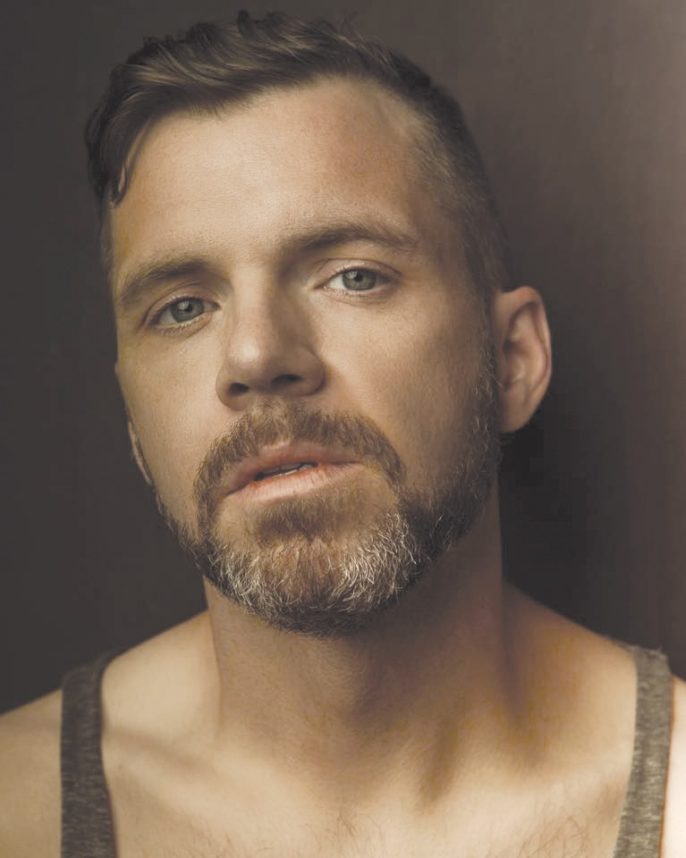
“I was raised Mormon, poor, in the Midwest; turned out kind of gay, got a little cancer, then converted to Judaism. Try putting all of that in a Tinder profile,” writer-comedian H. Alan Scott quips in the trailer for “Latter Day Jew,” a documentary-in-progress about his life’s journey.

The film will follow Scott, 35, as he prepares for his bar mitzvah at the Reform Temple Akiba in Culver City on Nov. 9.

In the trailer, Scott stumps a prospective party planner when he jokes, “How do you feel about a public bris?”

In his Silver Lake apartment, the comedian turned serious when asked why he was drawn to Judaism.

“I love the questioning, that I have freedom of thought, that I can question God, that I’m belonging to a community,” he said. “And I find Shabbat to be a very beautiful, spiritual sort of ‘timeout.’ Of course, I just also love challah bread.”

Scott was sitting in his living room, which sported an Israeli flag, books on Judaism and the Jewish icons he has loved since childhood (Woody Allen, Barbra Streisand, Nora Ephron and Lenny Bruce). One of his arms was adorned with a tattoo of TV’s “The Golden Girls,” including Bea Arthur, another of Scott’s Jewish celebrity fetishes. (He has a podcast devoted to “Golden Girls.”) His black-and-white cat, Frasier — named for another of his favorite shows — wore a magenta collar affixed with a gold-sequined bow tie.

Scott grew up in not-very-Mormon Kirkwood, Mo., a St. Louis suburb where, he said, “people would ask me if I had three moms.”

In a telephone interview, his one and only mother, Kathleen Giamanco, said she was abandoned by her parents at the age of 8, sent to an orphanage, and then adopted by a devout Mormon family. She said the Mormon upbringing she gave her son was much less strict than how she was raised.

Yet, Scott chafed at the beliefs of the Mormon church, especially its emphasis on the afterlife. “That’s a waste of time, because we’re here right now,” he said. “I’d rather focus on what I’m having for dinner.”

Scott’s baptism, at age 12, was hardly a religious experience. Decked out in a white robe too tight for his chubby adolescent physique, he was lowered into a hot tub by a hunky young missionary. “I wasn’t thinking about anything except that my head was just a couple of inches away from this attractive man’s member,” he said.

Scott’s baptism, at age 12, was hardly a religious experience.

Later, while studying at DePaul University in Chicago, Scott confided to his Jewish academic counselor that he was drawn to Judaism. She promptly forwarded him to local rabbis and Scott began reading about the religion in earnest. He continued his studies into his 20s, while working as a stand-up comedian in New York.

He thought he had plenty of time to convert — until he began feeling a persistent pain in his groin. Just after he moved to Los Angeles in the summer of 2012, Scott was diagnosed with testicular cancer and endured grueling rounds of chemotherapy.

It was at that time he decided to convert to Judaism, he said, not because the cancer made him face his mortality but “because I had the time. There was nothing grounding me and I felt lost.” He also thought the time was right to convert because he aspired to become a father one day and wanted to raise his child in a religiously grounded home.

His Jewish psychiatrist suggested he reach out to Rabbi Zach Shapiro at Temple Akiba, who happens to be gay.

“H. Alan asked me if it was common for a young, single male to convert to Judaism, and I said, ‘No, it’s not,’ ” Shapiro recalled. “He’s an incredible young soul with lots of questions.”

Temple Akiba Cantor Lonee Frailich agreed: “To see this particular person on such a unique and different journey — and do it with such grace and humor — is a beautiful thing.”

While there are no statistics on the number of former Mormons who have converted to Judaism, Rabbi Emeritus Fred Wenger of Congregation Kol Ami in Salt Lake City — that city’s largest synagogue — said he has presided over the conversions of about 60 former Mormons over the past few decades.

Devout Mormons feel an affinity for Jews, in part, because of their own exodus, due to religious discrimination, from upstate New York to the Midwest to Salt Lake City, Wenger said.

Andrew Reed, a Mormon and a professor of Jewish studies at Brigham Young University, noted that the Mormon church — formally known as The Church of Jesus Christ of Latter-day Saints — donated land for two Jewish cemeteries in Salt Lake City in the 1860s, as well as space for local Jews to hold High Holy Days services. The church’s love for the land of Israel also led its leaders to send an emissary to then-Palestine in the 1940s.

But, Reed said, there have been some rifts between the Jewish and Mormon communities, one of which resulted from Mormon church members’ pursuit in years past of their belief that they could posthumously baptize Holocaust victims such as Anne Frank.

Wenger said he has spoken to church officials about discontinuing Mormons’ proselytizing efforts aimed at Jewish youths.

Scott said he also took issue with the posthumous baptisms, as well as the church’s support of California’s Proposition 8, approved by voters in 2008, which would have banned same-sex marriage. A federal court in 2010 ruled the proposition unconstitutional.

About two years ago in Los Angeles, Scott professed his commitment to Judaism before a beit din, or rabbinical court, and then immersed in the mikveh at American Jewish University to complete his conversion.

“I love the questioning, that I have freedom of thought, that I can question God.” – H. Alan Scott

After he emerged from the water, Scott recalled, he started to shake and cry. Initially, he thought he was having a panic attack. “I kept thinking, ‘What have I done? Have I gone too far?’ ” he said. “But then I realized that it was this complete embracing of the history of Judaism and Jews. It felt so right.”

Thereafter, Scott struggled to understand how he could be “a good Jew and give back to the community.” He attended retreats of the Jewish organization Asylum Arts and, among other efforts, twice visited Israel, where he met with gay activists.

Then he met with director Aliza Rosen, who had created a CBS series on the murder of JonBenet Ramsey that Scott wanted to feature on his “Talking Crime” podcast.

Rosen recalled that during their first dinner together, she was “completely distracted because he was wearing this very prominent Magen David necklace. I asked, ‘What’s the deal with the Jewish star?’ He went on to tell me his whole story. I put down my fork and said, ‘We’re making a documentary.’ ”

Scott, who writes about gay issues and other topics for publications such as Newsweek, said he is saving jokes about becoming Jewish for his upcoming one-man show, which will be filmed as part of the documentary. He quips that his conversion means he’s finally gone Hollywood.

“In doing this documentary, I want to create a story for the Jewish community,” he said. “I want it to be an affirming story about what’s great about being a Jew.”

Latter Day Jew Wants Jews to Hear His Story of Love and Conversion Read More »

Festival Honoree Jeffrey Tambor Reveals How ‘Transparent’ Brought Him Back to His Jewish Roots

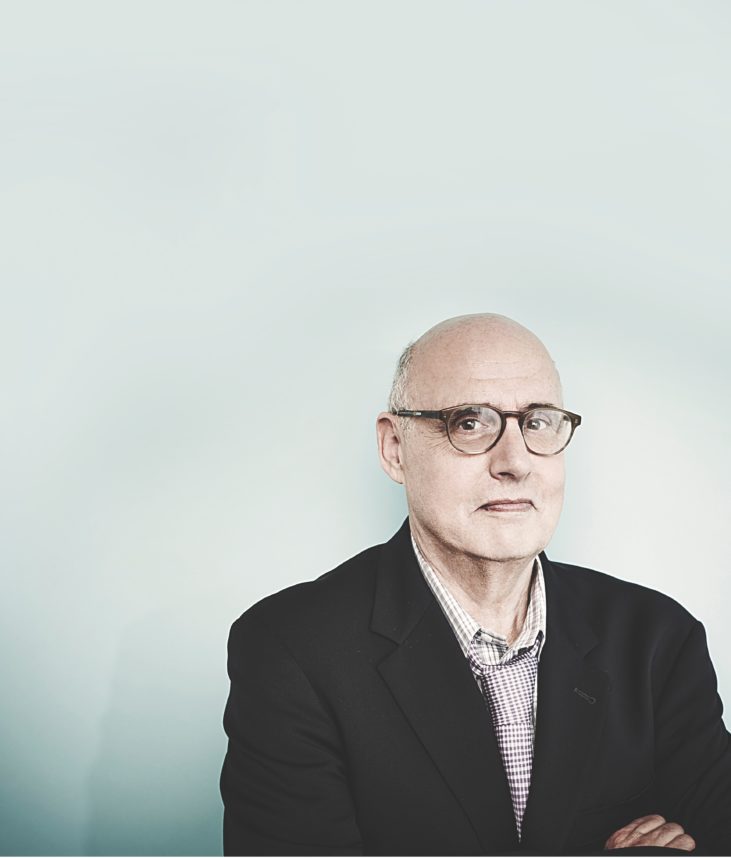
Jeffrey Tambor has won two Emmys, a Golden Globe and a Screen Actors Guild Award for playing transgender matriarch Maura Pfefferman in the Amazon Prime series “Transparent.” On Nov. 5, he will receive another honor: the Israel Film Festival’s Achievement in Television Award at the festival’s opening-night gala at the Steve Tisch Cinema Center at the Saban Theatre in Beverly Hills.

In a telephone interview with the Journal, Tambor, 73, discussed the tribute, the ways playing Maura has changed him, and how a fictional trip to Israel in “Transparent” reconnected him with his real-life Jewish roots.

Jewish Journal: What does this award mean to you?

Jeffrey Tambor: When I first got the news, I was shocked. I was really stunned by it. I went, “Aw, shucks, do I deserve this?” But I will take it! It’s such a huge honor. I thought of my mom and dad — they’d be so pleased. I saw the [clip] reel they put together and it’s astounding. But what stood out was the number of weight changes I’ve had. And you can see the hairline recede.

JJ: Have you attended the festival before?

JT: No. And I’ve never been to Israel.

JJ: Didn’t you go there to shoot “Transparent” this season?

JT: We weren’t able to go because of scheduling and shooting reasons. Only a second unit went to shoot some external scenes. The [Western] Wall was built on the backlot at Paramount. No one would have known. As a Jew, I wanted to go [to Israel] so very much — it’s a life goal. But I felt as if we did go. And I felt changed by it. That moment at the Wall was one of the most astonishing days of my acting life. I completely burst into tears because they made it look so authentic, with the background artists praying against the Wall. It was very transformative, like an awakening. This whole year [of “Transparent”] got me more in touch with my Jewish roots, shocked me awake. It’s ironic that Maura led the way, but I’m much more connected than I’ve ever been.

JJ: Do you go to synagogue? Pray more?

JT: No, I have my own way of expressing my Judaism. I’m just more in touch, more interested, more spiritual. My connection is much more strong.

JJ: What memories stand out from your Jewish childhood?

JT: I went to cheder [Hebrew school] in San Francisco at Temple Beth Shalom in the early 1950s. We put a quarter in for planting trees [in Israel] every week. My bar mitzvah ceremony was beautiful but a little stressful. It was a long haftarah. I could read Hebrew well, but I opened the Torah for the first time and there were no diphthongs or vowels, like we studied in cheder. And nobody told me that the congregation would say “amen” at the end of each phrase. That threw me off track. So I went off book at my first performance.

JJ: What does it mean to you to star in the most Jewish show on TV?

JT: People come up to me and say it’s spot-on. I love it. Sometimes we’re allowed to ad lib a little bit and these Yiddishisms that I didn’t know that I knew come out. In one scene, I was signaling to Judith Light and I said, “Farmach da pisk.” It means be quiet, shut your mouth. I’m channeling my parents, who spoke Yiddish when they didn’t want me to know what was going on.

JJ: Where would you like to see “Transparent” go from here?

JT: I don’t know — I ask them not to tell me because I want to be surprised. What I can say is what Maura finds out this season about her family will change her and connect her more to her Jewish roots. The whole family is transformed. It’s a journey, a road. We all start out in ignorance, thinking we know where we’re going, but we don’t. We all think Judaism is this or that, but it’s older and wiser than I or my character ever knew.

JJ: “Arrested Development” is coming back to Netflix. Any details?

JT: No, but I can say that it’s [creator Mitch Hurwitz’s] best season yet. It’s hilarious. He’s pulled out all the stops. I think playing Maura has given my acting strokes a little more color, and I think Oscar and George [twins played by Tambor on “Arrested Development”] are better as a result. We’ll finish in a few weeks, and around Jan. 29, we start the fifth season of “Transparent.” So this is a very interesting time for me, a very lucky time.

JJ: You have some movies coming up. Tell me about “Magic Camp.”

JT: I play the owner and head magician. I’ve never done magic, and it was not done with special effects. I had trouble. I remember the rabbit in the hat looking at me like, “Just pull me out, schmuck!” There was a certain trick with a cane that drove me crazy. But they trained me and I got pretty good at it. A magician came to the house to work with me and he performed for my family. It was one of the most wonderful afternoons we’ve ever had.

JJ: You’re also the voice of God in the animated film “Adventures of Drunky.”

JT: It’s the story of Job. My God is a little ironic. He’s Old Testament with a malevolent, satiric bent. I did a play called “J.B.” in college, by Archibald MacLeish, and I played Job. I went from Job to God.

JJ: Did you ever think you’d have so much success later in life?

JT: When I was in repertory theater in Detroit, Mich., another actor read my palm and said, “It’s going to happen for you, but very, very late.” Boy, was he right. Now I get the pleasure of playing Maura. What an honor. I thought it was going to be Lear, but it’s Maura Pfefferman. I’m very lucky. This is what I wanted to do all my life. I think we all come into this life for a purpose, and sometimes it gets revealed and sometimes it doesn’t, but I’m glad I answered the call. I have a wife and four kids — 12, 10 and twins, 8 — and just watching them evolve is one of the deepest pleasures of my life. They’re my teachers and my inspirers. I couldn’t be happier.

Festival Honoree Jeffrey Tambor Reveals How ‘Transparent’ Brought Him Back to His Jewish Roots Read More »

Trump Tramples on Rights and Religious Liberty

I’m worried about our right to religious liberty; about it being used as an excuse for discrimination; about conservative, Christian beliefs being given special treatment by our government; and about our right to religious liberty suffering long-term damage because it’s been cheapened and made partisan by extreme claims.

Some may be surprised to hear that from me. Conservatives have painted me as a secular warrior against religious liberty fighting only for reproductive justice, but I’m a person of faith and the daughter of a pastor. I’m active in the Jewish community and recently traveled to Israel to tour holy sights. Back in 2012, I did testify before members of Congress and took on Rush Limbaugh over insurance covering birth control for women at religiously affiliated organizations. Those who wished to deny insurance coverage claimed that religious liberty required they be allowed to interfere in women’s access to reproductive health care.

I don’t agree. Their interpretation of religious liberty goes much further than the constitutional framers intended, upsetting a balance between competing individual liberties: the right to practice one’s religion and the right to be free of another’s religion. That balance has been a defining characteristic of our democracy, and one that we should hold dear. It also is particularly important to the Jewish community, Muslims, Buddhists and others who don’t practice the dominant Christian religion.

That’s why it’s especially upsetting to see the damage being done by the Trump administration. Not only is this administration using religious liberty for conservative Christian beliefs as a justification to trample the rights of women and LGBTQ persons, but in the process it is undermining our nation’s long respect for religious liberty. Allowing claims of religious liberty that are so extreme has made it a partisan issue for our country, which is a sad day indeed.

Recently, the Trump administration issued regulations that allow any company, including for-profit, publicly traded Fortune 500 corporations, to exclude birth control from health-care plans if the company has a religious objection. Surely, we can agree that we have lost our appropriate balance when we’re more concerned with the religious beliefs of Chevron than with the woman who works there and can’t get the medical coverage she needs.

Allowing claims of religious liberty that are so extreme has made it a partisan issue for our country, which is a sad  day indeed.

The Justice Department also directed that federal agencies should accommodate religious objections. A homophobic federal employee need only say that religion is why he won’t process the Social Security benefits of a same-sex spouse. This policy indicates a striking lack of understanding of this country’s history of discrimination. For decades, racists claimed God’s will required segregation and criminalization of interracial marriage. We are not so far from that past.

The Trump administration continues down the slippery slope and now has argued that not only do Fortune 500 companies have a religion, but the federal government has a religiously informed “conscience,” which should supersede the constitutionally protected right of a detained immigrant to access an abortion. Thankfully, the D.C. Court of Appeals put a stop to that argument. There is nothing more personal than a woman’s decisions about her own body. She must be able to make those in accord with her own beliefs, not a different religious belief imposed on her by her government.

This concern about a government-sponsored religion being imposed on those of a minority faith is the exact reason that our forebears fled their homelands to establish a country with freedom of, and from, religion. Whether women, LGBTQ persons or people of color are being discriminated against in the name of religion or having religious doctrine imposed on their life choices by their boss or by the government, we all must stand together for our tradition of religious liberty, not the Trump administration’s vision of religious domination.

For the other side of the debate, read Dave Andrusko’s column here.


Sandra Fluke is a Los Angeles social justice attorney and the state director for an advocacy nonprofit. She is a graduate of the Georgetown University Law Center and a former candidate for California State Senate.

Trump Tramples on Rights and Religious Liberty Read More »