fbpx

October 25, 2017

Why My Teacher Became My Hero

My mother’s childhood friend — pale skin and green eyes and the kind of tameness deemed desirable in a wife — would stand before the mirror in her parents’ house and watch herself grow old. Past her prime and dangerously close to becoming “spoiled” (as in, gone rancid), she would count her laughlines and crow’s-feet, the creases in her neck, and say out loud, “I waited too long.”

That was in Tehran, 40-some years ago. My mother’s friend was 24.

My friend’s son, 20 years later, ran into an old family acquaintance here in Los Angeles. The son had been trying to get into medical school in the United States. He was in his third year of applying. “So,” the lady told him, “you never did become a doctor.” He was 27.

It’s a wretched predicament, knowing that others see you as a has-been, or feeling that you’ve failed at some crucial task of life, that your time has run out, the train has left without you and taken with it your friends and contemporaries. Maybe you weren’t as lucky or smart as they; maybe you made one mistake that cost you. And now you’re old and still waiting for love, or parenthood, or the kind of career success you know you deserve. The rest of the world has given up on you, and maybe you have, too. Maybe you’re still trying — you keep dating, try to adopt, apply for jobs, write that next book — aware that you’re probably kidding yourself, feeling like the proverbial Sisyphus.

If it hasn’t happened for you so far …

My former professor and later colleague, Shelly Lowenkopf, sat on the patio of The French Press on Anacapa Street in Santa Barbara earlier this month and described his typical day: He writes for about four hours, reads for a couple, writes for another three or four hours, reads for a couple more. One or two nights a week, he teaches writing. He’s 83 years old.

He’s published more than 35 books, edited upward of 500. He’s been editor-in-chief and publisher at more than one major house, and taught at USC and UC Santa Barbara for 50 years. He’s been mentor and guide and cheerleader to countless other writers. But he still hasn’t achieved the kind of success — the million-dollar contract, the Pulitzer Prize, an endowed chair at a major university — that he deserves. So he keeps writing, he says, because that’s the only way to get to where you want to be.

It’s a very American thing, this refusal to be beaten by life, to accept the limitations of age or innate ability or even science. What others may see as the wisdom to know when to submit to fate, Americans see as weakness, even cowardice. Here, you’re never too old; it’s never too late. But even by American standards, Shelly is remarkable.

His Instagram account is a daily tribute to the beauty of his town. His passion for engagement in local and national politics would shame most 20-year-old activists. He’s able to celebrate every one of his students’ achievements with just as much enthusiasm and generosity as he did in his own youth. He’s able to believe, still today, that books matter, words matter. His most recent book, a collection of short stories, is titled “Love Will Make You Drink & Gamble, Stay Out Late at Night.”

He’s 83.

He drives me around Santa Barbara to his usual haunts, talking about his current project and the one after that, and all I can think of is the people I knew in my childhood for whom it was always too late, and all the ones I met later, in America, whose ships never came in, and all the young people I know now, kids in their late 20s and early 30s who feel they’ve missed the window of opportunity. If you’re not famous or gorgeous or rich by now …

I try to explain some version of this to Shelly. I say something like, at some point, one has to wonder if one more book will make a difference.

And he gives me a lesson:

“You’ve got to keep moving forward,” he says, “or else you’ll become that which you were afraid of when you were young.”


Gina Nahai’s most recent novel is “The Luminous Heart of Jonah S.”

Why My Teacher Became My Hero Read More »

Me Too Versus Not Me

I’ve never been much for crowds. I remember once at a music festival pushing through a mass of people waiting to see Thom Yorke. As my friend and I tried to get closer to the stage, I felt my chest tighten as bodies closed around mine. After a brief but awkward explanation of my discomfort, we moved back out of the crowd, away from the center and toward the edge.

Some people like the energy of being part of something larger than them — being surrounded by bodies and voices into which they can disappear, becoming one of many. But I prefer the margins, where I can be both inside and outside of something.

The crowding that happens on social media is no exception.

In the aftermath of the Harvey Weinstein allegations, countless people have taken to social media with the hashtag #MeToo. In fact, my entire Facebook newsfeed has been dominated by the hashtag and by women’s stories of being sexually harassed or assaulted.

Some of the confessions have moved me to tears. Some have shocked me, and I recognize the bravery behind such admissions. But as a crowd of confessors began to converge, I also saw posts lamenting that some women who could say #MeToo are choosing not to — the implication being that refraining from doing so makes one an accomplice to all sorts of nefarious behaviors.

Well, I chose not to.

It felt intuitively wrong for me. Not for others, but for me. It goes back to being part of crowds and mass movements. In the midst of a crowd, I discover that I can’t see everything. My vantage point has changed. I become caught up in something that has the potential to turn back on itself and become counterproductive if not nurtured in the right way.

In fact, when I first saw the hashtag, I thought to myself: If I were going to create a hashtag, it would be #NotMe. Not me, I would say to potential abusers and harassers. Not me, I would say to everyone.

It’s not because I haven’t experienced what many of the #MeToo movement have experienced. I have. But I think I must have been saying all along, instead, on some level: Not me. I will not be your victim. I am no one’s victim.

I remember, nearly 20 years ago, standing near the wall of a nightclub, watching my friends dance. Even then, I preferred the safety of the perimeter to the chaos and energy of the center. A man walked by and slapped my rear end and made a crude comment that he thought I would appreciate. He hit me hard. And I was enraged. I turned around and pushed him with all of my strength without thinking about it. He was inebriated, and so he fell easily.

He was terrified. And I felt powerful. I was vindicated.

I share this not to criticize those who have shared their stories of victimhood or to suggest that they should have fought back, but to raise the question of what happens next.

What happens after #MeToo?

What happens after scores of women make themselves vulnerable as they prove how normal it is to be harassed or assaulted? What effect does highlighting the apparent pervasiveness of sexual harassment and assault have if it becomes a movement that demands that every woman identify herself as a victim?

My fear is that we will begin to see ourselves as powerless. That we will begin to see ourselves as victims first, and women second. And that in doing so, we will turn on those women who resist the #MeToo crowd, who opt for a response of a different nature.

As for me, I’m not sure I owe anyone a confession of victimhood right now.

In most cases, fighting back physically is not an option, but we can all fight back in a way that feels right to us. For many, #MeToo is the beginning of fighting back. Words create worlds, and stories string those worlds together into a meaningful chain.

But not everyone needs to be part of every movement.

We need people willing to stay on the margins as much as we need people who are willing to be the crowd that moves things along, makes things happen and makes them happen better. Crowds can carry with them the possibility of change, but let’s not forget that one voice, from the margins, can also be powerful.


Monica Osborne is a writer and scholar of Jewish literature and culture. Her book, “The Midrashic Impulse and the Contemporary Literary Response to Trauma,” will be published later this year.

Me Too Versus Not Me Read More »

A Deeper Feminism

When I lived in Washington, D.C., in my 20s, I often wore miniskirts. The prim and proper ladies there used to stare at me. This didn’t make me stop, but it did make me feel self-conscious until a friend said, “You know, it’s not that they disapprove; it’s that they wish they could wear them, too.”

I never wore miniskirts to work. I could have — there wasn’t much of a dress code — but I was eager to be taken seriously as a writer. You could say that’s a double standard, but perhaps it isn’t. I’m not sure if a guy who wore his shirt unbuttoned to his navel would have been taken seriously, either.

Once or twice I put myself in situations that could have led to unfortunate outcomes. In retrospect, I shouldn’t have done that. The one time something icky — but not scarring — happened was on a high school ski trip. I never told anyone afterward; at the time, I thought these types of things just happened.

Like many women, these past couple of weeks have made me think about various experiences I had in my late teens and into my 20s, and how I handled them. Feminism freed young women to wear miniskirts, go unchaperoned on high school ski trips, go to the apartments of older colleagues to watch movies.

Sometimes we make these choices to experiment; sometimes we make them to help us define our identities; sometimes we make them just for fun. Sometimes they end badly.

Nevertheless, the freedom to make these choices is an essential part of feminism. But there is another essential part that hasn’t gotten much attention. Along with freedom comes a need for thoughtfulness, a need to recognize reality and human nature.

We have an opportunity to deepen feminism with wisdom and even joy.

For me, that begins with facing reality. Take beauty. Contrary to Naomi Wolf’s infamous “beauty myth,” beauty is not a social construct forced upon women to keep them in the bathrooms and out of the boardrooms. Evolutionary psychology has explained why men are attracted to youth and beauty (the instinct to father healthy children), and no amount of social engineering is going to change that fact.

What can be changed is our attitudes toward beauty. When I write about art and design, I use the term “deep beauty” to describe a layered, soulful, imperfect beauty that stems from nature. Women (and men) also can strive for a deeper beauty — a beauty that resonates with soulfulness, intelligence and confidence. A beauty that doesn’t fade.

Sexuality, both male and female, also exists.

Last month, my 8-year-old son and his friend were tossing a football in Central Park when we happened upon some young women who were topless. Not surprisingly, the boys started to stare and giggle. The women scowled at me: How dare I raise a son who hasn’t been taught that this is normal and natural!

Actually, the boys’ response was normal and natural — hormones begin to kick in well before puberty. Sure, you have every right to go topless in Central Park. But don’t expect human nature to look away.

Women are equal to men but we are different. This is a reality that we should not just accept, but embrace. We should take pleasure in the differences. Do we really want to live in a sanitized world devoid of any flirting or sexual tension? Or worse, do we want to live in a world where we become so paranoid that men and women in professional situations are afraid to shake hands, let alone hug?

Yes, we need to teach males of all ages that being a respectful gentleman is a prerequisite to 21st-century masculinity. But we also need to teach females that being a strong, responsible woman is a prerequisite to 21st-century femininity and feminism.

The fact is, women who are truly in touch with their sexuality tend to be the strongest women. I’m not talking about flaunting one’s sexuality; I’m talking about a deep sexuality that comes from being comfortable with yourself.

I know a 40-ish woman in New York who runs a multinational company. She started it from scratch and never changed any aspect of herself in the process. With her infectious laugh, inspiring charm, and sensually appropriate attire, she walks into a room like a boss — but also as a woman.

That’s deep feminism.


Karen Lehrman Bloch is a cultural critic and the author of “The Lipstick Proviso: Women, Sex & Power in the Real World” (Doubleday).Her writings have appeared in The New York Times, The New Republic, The Wall Street Journal and Metropolis, among others.

A Deeper Feminism Read More »

Fixing Hollywood’s Shameful Culture

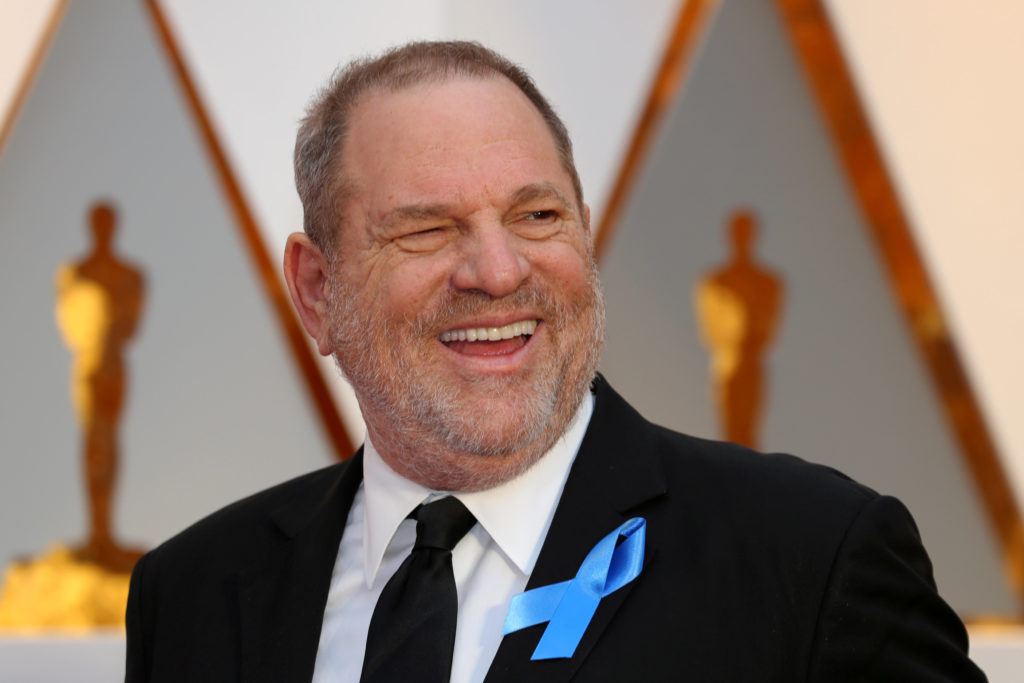
The past month has seen the near implosion of Hollywood. That’s because of the revelations about mega-powerhouse Harvey Weinstein’s regular habit of allegedly sexually assaulting and harassing women, and the apparent industry-wide willingness to look the other way.

Many on the right have correctly condemned the left’s reticence to talk about such issues when applied to heroes of the left (see, e.g., former President Bill Clinton and the late Sen. Ted Kennedy); in response, many on the left have rightly condemned the right’s newfound willingness to look the other way when its own oxen are gored (see, e.g., then-candidate Donald Trump’s “Access Hollywood” tape, the late Fox News Chairman Roger Ailes).

We all should be on the same side regarding sexual harassment and sexual assault. That doesn’t mean that we have to agree to avoid voting for those who engage in such activities (although I have done so and think doing so would be a good rule of thumb); it’s quite possible to openly admit the evils of a candidate and still feel that the candidate would be a better legislative alternative than his or her opponent. It does mean, however, that “whataboutism” is perhaps the worst response to stories of sexual harassment and assault: Just because Clinton did it doesn’t mean that Trump’s behavior is acceptable, and vice versa.

Putting partisanship aside, the question next becomes how to curb such behavior. In this arena, there’s truly only one solution: changing the prevailing societal standards, and naming individuals. The latter is easier than the former, of course — it’s a tragedy that major stars and starlets who knew about Weinstein’s reputed predations did nothing for years. It’s difficult to expect young, up-and-coming actors and actresses to speak out when victimized: Few will believe them, their careers will be ruined and they are eminently replaceable in a city where every barista has a script and every waitress wants an audition. But those who already have established themselves do have an obligation to protect those aspiring actors and actresses from predators.

Why hasn’t that happened?

This raises institutional issues in Hollywood, and the requirement that societal standards change. Hollywood has been replete with sexual assault and harassment from the very beginning. Despite its supposedly feminist credentials, Hollywood has made the general choice to favor a libertine version of feminism — with consent as the only important value — over the stricter version of feminism that decries power relationships driving sexual relationships.

Unfortunately, the first version of feminism hasn’t just won out in Hollywood, it’s won out in society more broadly, pressed forward by Hollywood. Society now condemns any limits on sexual relationships, and sees “consent” as a binary value; transactional sex is just fine, in this view, and cannot be condemned. This makes it incredibly difficult to police both sexual assault and harassment because the same set of facts can be seen as either people doing what they want to do to get ahead, or sexual exploitation. Removing meaning from sex means treating it as a purely physical act, degrading both sex and those who participate in it.

The result: more sexual confusion and less willingness to step forward and condemn egregious conduct.

Hollywood has made the general choice to favor a libertine version of feminism – with consent the only important value.

Here’s what we need, then: some rules. We need to know about — and uniformly condemn — exploitation of women by powerful men. We need to know about — and uniformly condemn — the Hollywood casting couch, which has been joked about for decades and treated as a way of life for that same amount of time. And we, as a society, have to let Hollywood know that if it doesn’t change its ways, we will take action: We will stop seeing their movies, stop watching their television shows. We will not participate in making people wealthy and famous so that they can abuse others, or watch silently as that abuse takes place.

We should listen to and respect women who tell their stories of sexual harassment and assault. But this can’t be just another hashtag campaign. We must have hard conversations because sexual dynamics are fluid and difficult to police. If we don’t, Weinstein will be just a blip — and then things will go back to business as usual until the next Weinstein crops up.


Ben Shapiro is a best-selling author, editor-in-chief at The Daily Wire and host of the conservative podcast “The Ben Shapiro Show.”

Fixing Hollywood’s Shameful Culture Read More »

Excerpts From “Hitler in Los Angeles”

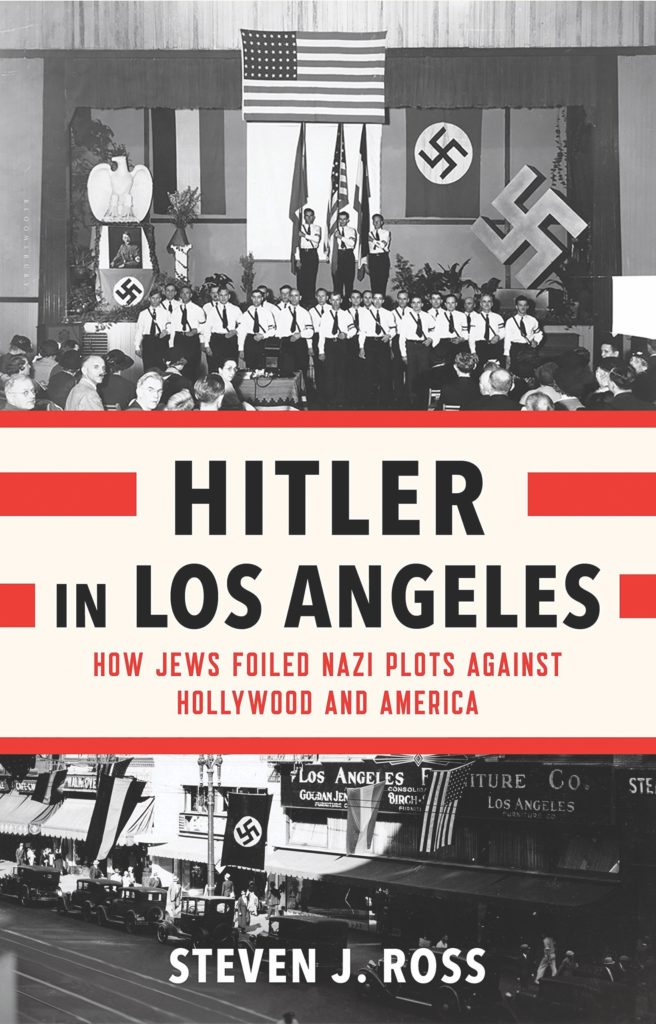
Beginning in August 1933 and lasting until the end of World War II, Jewish attorney Leon L. Lewis used his connections with the American Legion and Disabled American Veterans of World War I (DAV) to recruit military veterans — and their wives and daughters — to go under-cover and join every Nazi and fascist group in Los Angeles. Often rising to leadership positions, this daring group of men and women uncovered a series of Nazi plots to kill the city’s Jews and to sabotage the nation’s military installations. Plans existed for hanging twenty Hollywood actors and power figures, including Al Jolson, Eddie Cantor, Charlie Chaplin, Louis B. Mayer, and Jack Warner; for driving through Boyle Heights and machine-gunning as many Jewish residents as possible; for fumigating Jewish homes with cyanide; and for blowing up defense installations and seizing munitions from National Guard armories on the day Nazis planned to launch their American putsch.

From 1933 until 1945, while many Americans closed their eyes, Lewis’s operatives risked their lives to stop Hitler’s minions and alert citizens to the dangers they posed to American democracy.

This is the story of those plots, the spies who uncovered them, the men who hired them, and how a small cadre of Los Angeles Jews — including Hollywood actors and studio heads — thwarted Nazi plans to lay the groundwork for Germany’s New Order in America.

• • •

On the evening of March 13, 1934, a procession of limousines pulled into the luxurious Hillcrest Country Club on Pico Boulevard. Forty of Hollywood’s most powerful studio heads, producers, and directors — men such as Louis B. Mayer, Irving Thalberg, Jack Warner, Harry Cohn, and Ernst Lubitsch — came to hear what Leon Lewis considered so important that their meeting had to be held in the utmost secrecy. As they entered the club’s large private dining room and took their seats, each man found several copies of the Silver Shirt periodicals Liberation and Silver Ranger placed in front of him. Leafing through the publications, the Hollywood contingent was undoubtedly taken aback by a stream of vicious articles denouncing the Jewish-dominated movie industry and its immoral leaders. They likely flinched as they read a story blasting Hollywood Jews who would “rip our Divine Constitution to shreds and hand it over, heads bent low, spirits crushed, morale destroyed, to the bulbous nosed lords of international jewry.” They saw similar articles in other issues denouncing them for producing “Filth,” “Debauchment,” and “Anti-Christ Desecration.”

• • •

As the assembled group adjourned to Hillcrest’s club room after dinner on March 13, Leon Lewis knew that to persuade these tough-minded men to donate serious money, he needed to appeal to their self-interest and not just their Jewish loyalties. He planned to frighten them into generosity. Thus far, Lewis explained, he had gathered over 200 reports from his spies. Many of those findings had been disclosed during the course of the German-American Alliance trial. The moguls knew this. What they did not know was that Nazis and fascists had invaded their studios and were firing Jewish employees. Many studio heads had heard rumors about Lewis’s operation, but only a handful knew the full extent of its workings, and fewer still knew how strong the Nazi movement had grown since the summer of 1933.


Excerpted from “Hitler in Los Angeles: How Jews Foiled Nazi Plots Against Hollywood and America” by Steven J. Ross. Copyright © Steven J. Ross, 2017. Used with permission from Bloomsbury Publishing.

Excerpts From “Hitler in Los Angeles” Read More »

Q&A with Author Steven J. Ross

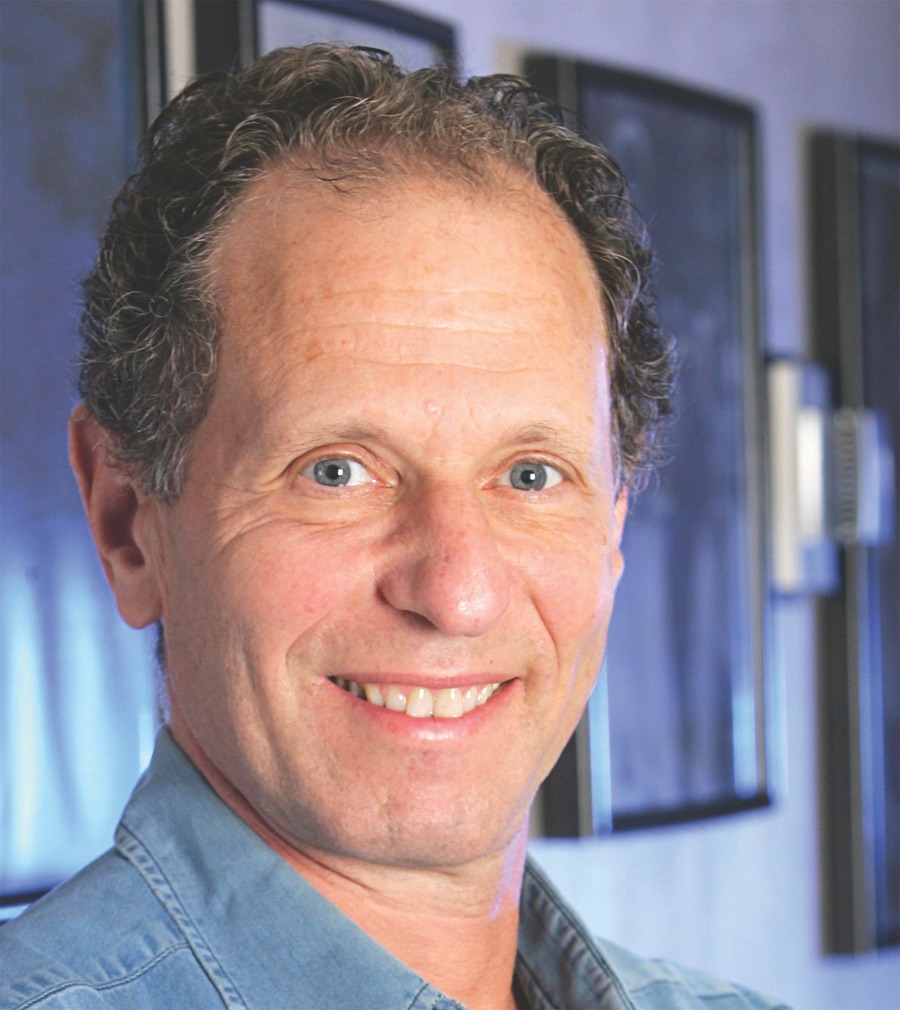
Steven J. Ross sat down with Jonathan Kirsch, book editor of the Journal, for a conversation about his new book, “Hitler in Los Angeles: How Jews Foiled Nazi Plots Against Hollywood and America.”

The USC historian talks about the how he discovered the previously unknown saga of a Jewish attorney named Leon Lewis, whom the Nazis called “the most dangerous Jew in Los Angeles,” how Lewis and his band of spies foiled more than one Nazi plot against Hollywood, and what this example teaches us about confronting anti-Semitism in our world today.

Jewish Journal: Let’s set the scene for your book: Did the Jewish community in Southern California feel safe and secure during the 1930s?

Steven Ross: From August 1933 until Pearl Harbor [in December 1941], virtually every month — if not more frequently — somebody in Los Angeles was calling for “Death to Jews.” I used to wonder as a kid, as the child of two Holocaust survivors, how could the Jewish community let it happen? As I did the research for my book, I discovered that the Jewish community of Los Angeles did fight back by conducting an espionage campaign against the local Nazis.

“I used to wonder as a kid, as the child of two Holocaust survivors, how could the Jewish community let it happen?” – Steven J. Ross

JJ: I learned everything I know about Leon Lewis, the man the Nazis called “the most dangerous Jew in Los Angeles,” from your book. Did you know about his anti-Nazi exploits before you started your research?

SR: I knew nothing about Leon Lewis or his associate spymaster, Joe Roos. They purposely kept themselves hidden from history. I stumbled upon them when I was writing “Hollywood Left and Right” and I was doing research in the papers of Edward G. Robinson at USC. That’s when I learned a lot about the Nazis and fascists in Southern California — something I never knew before — and I decided that when I was done with “Hollywood Left and Right,” I wanted to go back to that story. That’s when Leon Lewis emerged out of the shadows of history.

JJ: You introduce us to a long list of Nazi activists who were plotting against the Jews of Los Angeles in the 1930s: Friends of the New Germany, the American Nationalist Party, the California Homesteaders, the American White Guardsmen, the American Warriors — and perhaps most surprising of all — the National Legion of Mothers of America. Who were all these people and what did they have in common?

SR: The common denominator for all of them was anti-Communism. In the 1930s, a lot of people — including James “Two-Gun” Davis, our police chief — argued that every Communist is a Jew, and every Jew is a Communist. They believed that if they got rid of the “Jewish menace” in America, we would also get rid of the Communists.

JJ: Another surprise in your book is the man who served as the German consul in Los Angeles from 1933 to 1941, who turns out not to have been a dedicated Nazi after all.

SR: Georg Gyssling has been the arch-villain of Hollywood history for decades. He was sent to Los Angeles by Joseph Goebbels to make sure that the studios did not make anti-Nazi movies. He was very good at his job, and that’s why he has been seen as a villain. But I also discovered that he was the most beloved and respected diplomat in the city. He just didn’t pass the “sniff test” as a Nazi. And I found out that my gut was right. I tracked down his daughter, who lived in Morro Bay, and she told me that her father hated Hitler. “As far as my father was concerned,” she told me, “he was the German consul, not the Nazi consul, to L.A.”  What she didn’t know is that he was actively working with Joe Roos, and he was hated by the local Nazis because they thought he was too soft on Jews.

JJ: The single strangest incident in “Hitler in Los Angeles” is the Nazi plot to kidnap and hang 20 leading Jews, and the most shocking name on the death list was the famous movie choreographer Busby Berkeley. First of all, I didn’t know he was Jewish, and I couldn’t figure out why the local Nazis wanted to hang him.

SR: I didn’t know he was Jewish, either, and I was equally confounded. Maybe it was because Busby Berkeley was considered such a master of the musical. I know that Hitler watched a lot of Hollywood movies. Maybe he hated musicals.

JJ: What practical and actionable lessons do you want your readers to learn from “Hitler in Los Angeles”?

SR: The answer is vigilance without vigilanteeism. I don’t want to encourage my readers to put their own lives at risk. Leon Lewis did all of it without any violence at all. If you hear something hateful, denounce it. Stand up and speak out.

Q&A with Author Steven J. Ross Read More »

The Jews Who Fought Against ‘Hitler in Los Angeles’

More than one writer of fiction has imagined what it would have been like if the Allies had lost World War II and the West had come under Nazi occupation. That’s why the title of Steven J. Ross’ new book, “Hitler in Los Angeles,” may strike some readers as something purely fanciful. But if the phrase conjures up a nightmare, it is one that actually happened.

Ross is a professor of history at USC and director of the Casden Institute for the Study of the Jewish Role in American Life. He has been nominated twice for the Pulitzer Prize, once for “Working-Class Hollywood” and again for “Hollywood Left and Right.” His latest book already has created a buzz in the movie industry because he has written a history book that doubles as espionage thriller with a cast of characters that includes movie stars, studio moguls, entertainment lawyers, diplomats and pols, all of them quite real.

The real hero of “Hitler in Los Angeles: How Jews Foiled Nazi Plots Against Hollywood and America” (Bloomsbury), however, is a man who has been wholly overlooked by historians until now. A Jewish attorney named Leon Lewis took it upon himself to organize a campaign of espionage against the Nazi activists who demonstrated openly — and plotted secretly — against the Jewish community of Southern California during the 1930s.

“Los Angeles seemed the perfect place to establish a beachhead for the Nazi assault on the United States,” Ross explains. “Nazi plans to conquer an industry, a city and a nation were not idle fantasies. But what Hitler, Goebbels, and their American disciples did not know was that Los Angeles also served as the epicenter of Jewish efforts to spy on Nazis and thwart their plans.”

The Nazis themselves knew and feared Leon Lewis, dubbing him “the most dangerous Jew in Los Angeles” and “the ring-leader of all Jews here.”

What makes “Hitler in Los Angeles” so remarkable is the fact that Ross found his way to a story that has been overlooked by other scholars. Historians, like prospectors, aspire to find some glimmer of gold in the dross that constitutes their raw material. Ross has struck the mother lode, and he reveals a tale that expands and enriches our understanding of how Jews responded to the first stirrings of Nazi aggression in the early 1930s.

The plotters dubbed themselves with names that sound silly nowadays — the Silver Shirts, the California Homesteaders, the American White Guardsmen and the National Legion of Mothers of America — but the plans they made were in deadly earnest. They proposed to kidnap and hang 20 influential Jews, including Al Jolson, Eddie Cantor, Charlie Chaplin, Louis B. Mayer and Jack Warner. They wanted to use cyanide to fumigate the homes where Jewish families lived, and to take shotguns to Boyle Heights, then a Jewish neighborhood, in a coordinated drive-by shooting.

To oppose such enemies, Lewis was not content with boycotts, rallies and demonstrations. He worked in military intelligence during World War I, and now he put his skills to use in organizing an undercover operation against the “Hitler cells” in Southern California. Operating out of his small law office in the Roosevelt Building at Seventh and Flower streets, and assisted by his deputy, a newspaper reporter named Joseph Roos, Lewis recruited non-Jewish war veterans to join “every local Nazi and fascist group and report back on their activities.” The Silver Shirts, for example, “had maps of Los Angeles showing all the houses in which Jews lived,” a fact that made even their most far-fetched schemes seem all the more credible.

Ross, by the way, displays an impressive map as the frontispiece of his book. He pinpoints the key locations in the underground campaign that was conducted by Lewis and Roos. Thus we can see for ourselves that Wilshire Boulevard Temple was flanked within a few blocks by the meeting hall of the Silver Shirts and the headquarters of America First, and the office where Lewis ran his espionage operation was literally encircled by Nazi venues, including the German consulate, the KKK meeting hall, the American Nationalist Party headquarters, and facilities used by the American Warriors, the American White Guardsmen and the California Homesteaders.

To rally support, Lewis turned to the industry where Jews had enjoyed the greatest success — the movie business. The moguls were accustomed to being asked for gifts by Jewish charities, but now they were called upon to support to the spy operation. “He planned to frighten them into generosity,” Ross reports, and the fact that their names were on the Nazi death lists turned out to be a great motivator. By the end of the fundraising appeal, approximately a half-million dollars (in 2015 dollars) had been pledged.

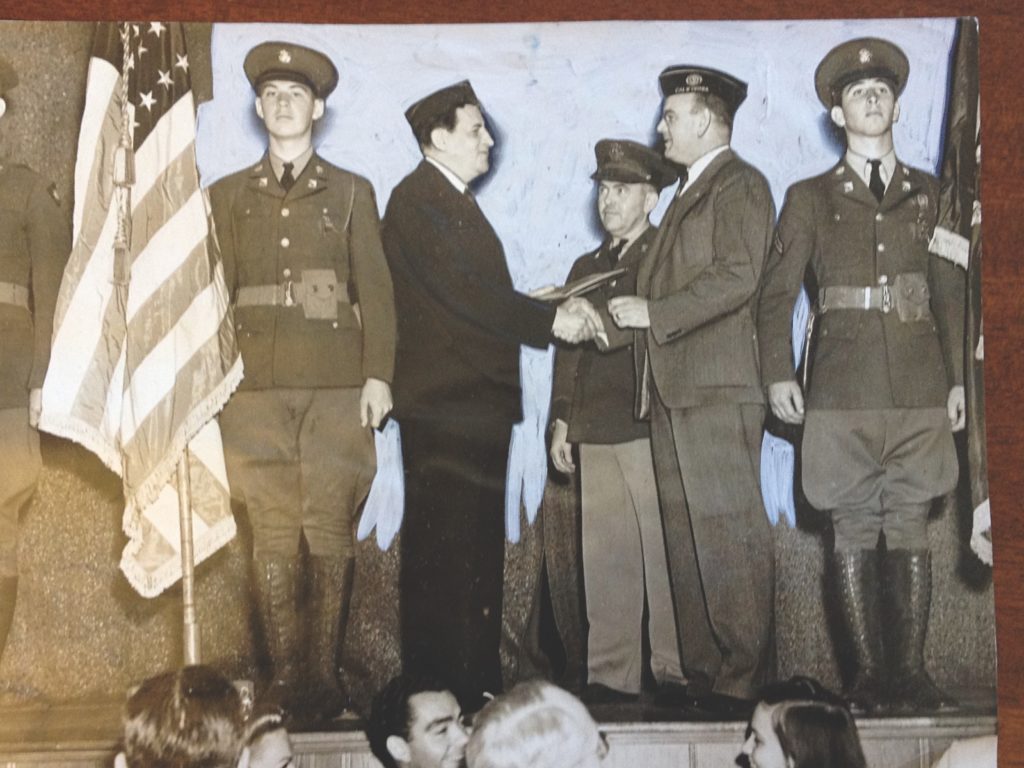
Leon Lewis receives the American Legion Americanism Award in June 1939. USC Libraries Special Collections.


Lewis and his exploits remained unsung throughout his lifetime, which is precisely what he intended. Perhaps the greatest tribute that Ross can pay to Lewis, however, is his discovery that the Nazis themselves knew and feared Lewis, dubbing him “the most dangerous Jew in Los Angeles” and “the ring-leader of all Jews here.” And their work did not end when the United States finally went to war against Nazi Germany. “No explosion rocked the Pacific Coast in part because Lewis, Roos and their agents had been carefully monitoring defense plants for potential saboteurs.”

Now that anti-Semitic chants recently have been heard in the streets of Charlottesville, Va., “Hitler in Los Angeles” must be seen as much more than an accomplished work of historical scholarship.

“Lewis, Roos, and their network of spies refused to sit back and allow their city and nation to be threatened by hate groups,” Ross concludes. “They showed us through their actions that when a government fails to stem the rise of extremists bent on violence, it is up to every citizen to protect the lives of every American, no matter their race or religion.”

Every Jew who contemplates the events of the Holocaust is morally compelled to ask himself or herself: What would I have done in that time and place? Ross brings the question very close to home. We live in L.A. now; what would we have done then? And, in Leon Lewis and Joe Roos, he finds role models who suggest a provocative answer to those questions.


Jonathan Kirsch, author and publishing attorney, is the book editor of the Jewish Journal.

The Jews Who Fought Against ‘Hitler in Los Angeles’ Read More »

Can Jewish Journalism Aim to Please?

The conventional wisdom in journalism is that if you don’t have angry readers, you’re doing something wrong. I can’t tell you how often I’ve heard this line — “If you get angry letters from the right and angry letters from the left, then you must be doing something right.” It’s as if having angry readers has become a badge of honor, an inevitable sacrifice for a greater good.

As much as I understand that sentiment, I still ask myself: Is it possible to please all segments of the Jewish community when you run a community paper? This question weighs on my mind because I love every segment of our community, and I like the idea of trying to please and nourish all of them.

It’s as if you are all guests at my Shabbat table, and I want you to enjoy the experience.

Of course, pleasing people was a lot easier when I was in the advertising business, which is all about making consumers feel good about buying a product.

But journalism is different — you can’t avoid controversial and divisive issues. I saw this when I started writing my weekly column 11 years ago. I still wanted to please my readers, but I held some strong views, which often would diverge sharply from the views of many of those readers.

So, I had to balance my need to please with my need to be honest. In searching for that sweet spot, I tried to express my opinions without triggering anger or animosity.

How do you provoke thought without provoking anger?

I reached out to people who had different worldviews, religiously and politically. I listened. I engaged. I wrote about them. I told their stories.

When I wrote political columns that displeased my friends on the left, it wasn’t uncommon to hear: “Hey, David. I didn’t agree with your last column, but I enjoyed reading it.” (That, by the way, is one of the best compliments you can give a writer.)

Occasionally, I would get a nasty letter. It could be from one of my buddies on the right (“Suissa, don’t go left on us!”) or a stranger from the left (“You right-wingers just don’t get it!”). But these were surprisingly rare.

Over the years, I grew to enjoy this weekly dance. I also learned the art of timing. Some moments, I learned, are just not conducive to unpleasant arguments. The Shabbat table is one of them. We have the whole week to argue. Shabbat is a great time for bonding. And I bonded with Jews from across the political and religious spectrum. I’m sure the Moroccan food helped.

I was gliding along comfortably in this weekly rhythm, when, one day, the stakes suddenly rose. I was offered the position of editor-in-chief at the Journal. So, after 11 years of being responsible for only 800 words a week, I would now be responsible for … about 30,000.

Oy.

If you think it’s difficult to please readers with one column a week, try it when you’re held responsible for 50 or more pages a week. How would I pull this off?

The real challenge, I have learned, is this: How do you appeal to all segments of the community without serving up mush and fluff? How do you provoke thought without provoking anger? How do you deal with the most sensitive issues without being divisive?

Ultimately, of course, you will be the judge.

From my end, after three weeks on the job, I can share a few insights.

First, when you’re dealing with controversial issues, it’s a good idea to print both sides of the argument in the same edition — and on the same page. This conveys instant impartiality. Publishing opinions without opposing views only nourishes the anger of those in the opposing camp.

Second, it’s important to find voices who struggle with the truth. These voices don’t claim to have all the answers. They value doubt. They consider all sides of an argument before leaning to one side. They’re not easy to pigeonhole.

Third, and not surprisingly, it’s crucial for a community paper to be all-inclusive. This is especially true in a city with the diversity of Los Angeles. I can say I’m blessed to have tasted this diversity for the past decade as I’ve written my weekly column. Now, I get to “cash in” on all those coffees and lunches and salons and Shabbat dinners with Jews from across the spectrum. I’m making a lot of phone calls.

Diversity, however, doesn’t apply only to people; it’s also about the subjects we cover. That’s something else I’m learning: We’ve become so obsessed with one subject — politics — we seem to lose sight of how much more this world has to offer.

As you’ll see in this week’s issue — where we cover topics ranging from current events to history to culture to Torah to food — we take this diversity seriously.

We don’t want to just be a mirror, we also want to be a window.

Needless to say, diversity in a Jewish paper includes the Jewish tradition.

I will write a separate column one day on the intersection of Judaism and journalism. For now, I want to leave you with this thought: Even though the majority of our readers may not sit around a Shabbat table every Friday night, we still want to celebrate the beauty of that ritual, as well as other rituals of our Jewish tradition.

In other words, we don’t want to be just a mirror, we also want to be a window. We want to challenge our readers to look beyond their own customs and traditions, whatever those are. Challenging our readers to open their minds to new ideas may not always be comfortable, but it’s another way we think we will please you.

Shabbat shalom.

Can Jewish Journalism Aim to Please? Read More »

Controversial film ‘One of Us’ strikes a nerve. Here are a few reactions.

The “One of Us” Netflix documentary came out on Friday chronicling three former members of the Hasidic Jewish community and how they were demonized by the Hasidic community for leaving it.

The film has elicited a myriad of responses. A lot of people have voiced their support for the film, stating that it exposes a serious problem in the Hasidic community:

https://www.facebook.com/AbbyChavaStein/posts/859239830912678


Yitzchok Adlerstein wrote in the orthodox Cross-Currents blog that the film “was extremely painful” to watch because “it was painful to witness the deep pain and suffering of three human beings, all the time realizing that there are many more whose stories are still untold.”

Others, like Amy Spiro of the Jerusalem Post, felt that the movie wasn’t representative of the Hasidic community as a whole.

“The film is powerfully shot, and tells compelling, disturbing tales,” wrote Spiro. “It is a dark, engrossing and incomplete story of hassidic life.”

Spiro wrote that one of people featured in the film admits that a lot of people in the Hasidic community “are very happy.”

“That cannot be found in any portion of the film,” said Spiro.

One of the co-directors of the documentary, Heidi Ewing, came under fire for stating in an interview that Hasidic Jews were killed in the Holocaust for not blending into society. She apologized, although some believed her comments discredited the movie.

For more Journal coverage, read Gerri Miller’s piece here and Eli Fink’s piece here.

Controversial film ‘One of Us’ strikes a nerve. Here are a few reactions. Read More »

Top 4 Reasons to Provide Health Benefits to Your Employees

Business owners understand the importance of hiring the right people for their operations. One of the ways that you attract attention from the right people is to provide benefit packages they will find helpful. Among those benefits, it’s important to provide some sort of health plan. Here are four of the main reasons that health coverage will be good for you, your business, and your employees.

Healthy Employees Don’t Miss Work Days


Access to Benecaid employee medical benefits is not just about having protections that leave the covered individual with little to no out of pocket medical costs. It’s also about being able to utilize proactive approaches to remaining healthy. An employee who is able to have regular checkups and receive care that reduces the potential of becoming ill has a better chance of remaining healthy. That translates into taking fewer sick days per the calendar year. That’s good news for you since it means tasks assigned to individual employees will not have to wait until they get back to work or be redistributed to other employees who already have full agendas.

Improved Morale


Benefits of all types send a message that the company values the employees. Few convey this sentiment better than providing medical coverage. Even small business owners have come to realize what a difference this makes to the people who work for them. Those small group health benefits mean all the more when the employees know that there are limited funds for benefits and the employer chose to put their welfare ahead of making more profit.

Reduction of Turnover


Employees who are happy don’t tend to stray. Instead, they choose to remain with the company, keep contributing to its success, and do their best to help the organization run smoothly. Providing health coverage is one of the ways to keep those employees happy.

Consider the amount of investment it takes to hire, train, and mentor a new employee, keeping the ones you already have certainly allows you to make better use of company resources. It also makes it easier to cultivate a positive corporate culture that motivates people to stay when there is little in the way of turnover.

Enhance Your Company’s Reputation


Hopefully, your company is growing. That means you will need additional employees over time. If your business has a reputation of caring for the employees, you can rest assured that more qualified applicants will show up in hopes of filling those new positions. If the benefits you offer include a reasonable health plan, expect your company’s standing to be more positive among those who are looking for a great place to work.

If you don’t provide health benefits to your employees now, it’s time to make a chance. Look into different types of health plans and find one that is a good fit. The investment will pay off in more ways than you thought possible.

Top 4 Reasons to Provide Health Benefits to Your Employees Read More »