fbpx

October 25, 2017

LAUSD Accused of Hosting Anti-Israel Teacher Course

A local pro-Israel organization has accused the Los Angeles Unified School District (LAUSD) of hosting an anti-Semitic, anti-Israel continuing education course for its teachers.

In an Oct. 20 letter to the LAUSD school board, Jack Saltzberg, executive director of a nonprofit called the Israel Group, wrote that a two-day course for L.A. educators promoted “the Palestinian cause, while blatantly vilifying and polarizing Jews and the State of Israel, based on false history, lies, mistruths, and standard anti-Semitic canards.”

He pointed out that the Fellowship of Reconciliation, whose L.A. chapter offered the course, indicates on its website that it supports the Boycott, Divestment and Sanctions movement against Israel, known as BDS. According to its website, Fellowship of Reconciliation is a national network of community organizers dedicated to rallying for “domestic and international peace and justice, nonviolent alternatives to conflict, and the rights of conscience.”

The continuing education course, “Learning About Islam and the Arab World,” took place on Oct. 14 and Oct. 21 at the Koreatown headquarters of the district’s largest teachers union, United Teachers Los Angeles. Educators who attended the course received salary points, a district metric used to allocate raises.

Taught by two LAUSD teachers, the course included a Socratic seminar titled “Palestine/Israel” and a presentation called “Palestine Today: No Way to Treat a Child,” according to an agenda the Israel Group said it obtained. Saltzberg posted the agenda and other materials he said he obtained from the course on his website, theisraelgroup.org.

The Israel Group also sent a letter of complaint to the Orange County Board of Education about a course of the same name being offered by Fellowship for Reconciliation members to Orange County teachers. That course first convened on Oct. 4 and was set to continue on Oct. 25.

Other pro-Israel groups including the Los Angeles-based StandWithUs picked up Saltzberg’s letters. StandWithUs posted a call to action on its website that included contact details for district board members and a sample letter of concern.

District spokeswoman Shannon Haber said in an email to the Journal the district received complaints from concerned citizens, but did not say if they included parents or teachers.

In a separate statement, she said LAUSD approved the course in 2013 after it was “reviewed for multicultural awareness, respect for diversity, dialogue, and non-violent conflict resolution.” The statement added that course approval “does not constitute an endorsement of the L.A. Unified. Outside vendors, educators, and foundations are encouraged to submit classes for consideration.”

School board member Nick Melvoin, who is Jewish and whose district includes parts West L.A. and the San Fernando Valley, said in an email he is working on “ensuring that there is no promotion of hate speech, violence, or religious intolerance” in professional development courses.

He said a district staff member attended the Oct. 21 session to observe whether “the program presented an unbiased view. I have heard no developments that suggest otherwise, but I have and will continue to press the Superintendent and her staff for a full report to evaluate all relevant information.”

The teacher’s union where the course took place also said in a statement it was working with the district to identify the next steps.

“The course is based on false history and mistruths.” – Jack Saltzberg

Fellowship of Reconciliation said the course was organized by a grass-roots chapter in L.A. rather than the national office in New York. Grass-roots chapters “are independent entities that coordinate their own campaigns and educational programming on a wide range of peace, justice, and human rights issues,” Ethan Vesely-Flad, the group’s director of national organizing, wrote in an email. The group’s local chapter could not be reached before the Journal’s deadline.

After receiving reports about the course, the Los Angeles office of the Anti-Defamation League (ADL) issued a statement calling it “problematic,” saying it contained “substantial misrepresentations and distortions of established historical facts, omissions of relevant facts, and inflammatory language.”

However, the ADL stopped short of condemning the district, adding “the instructor openly stated that the workshop presented only the Arab perspective of the Israeli-Palestinian conflict” and “encouraged participants to both fact-check course content.”

Saltzberg, who founded the Westlake Village-based Israel Group in 2014, said in an email that he heard about the L.A. course after a non-Jewish teacher attended the Oct. 14 seminar and sent him the course material.

He wrote that his goal is not just for the district to cancel the workshop or sever ties with the organizer, but rather “for every public school district in the nation to be on notice and warned before they decide to sponsor such an anti-Semitic and one-dimensional course.”

LAUSD Accused of Hosting Anti-Israel Teacher Course Read More »

Republican Proposals Are a Good Start

Presidents Calvin Coolidge, John F. Kennedy, Ronald Reagan and George Bush (43) all organized major tax cuts that generated significant economic growth.

Donald Trump has staked his presidency on gross domestic product rates far above President Barack Obama’s years (1.5 percent per year).  He badly needs a political victory, and the GOP needs something to show for its majority, heading into 2018.

“On the one hand,” as economists say, the Trump tax plan is overdue. Lowering corporate tax rates from 35 percent to 20 percent will make U.S. business more competitive with Canada, Europe and Asia. Apple and other large enterprises will repatriate some of the $3 trillion held offshore, creating jobs and raising employee wages.

Economist Larry Lindsey predicts that lower corporate taxes and deregulation will increase productivity, capital formation, new business startups and employee education and re-training, though growing corporate earnings have already pushed the Dow Jones industrial average, the Standard & Poor’s 500 index and the NASDAQ composite to all-time highs.

“On the other hand,” keeping popular tax deductions for home mortgage interest and charitable giving risks growing our national debt if promised economic growth does not materialize.

To generate revenue, then, the president advocates ending the federal deduction of state and local taxes. Democrats argue this is an unfortunate, partisan shot at taxpayers in high-tax states like California, New York, New Jersey and Illinois.  They are correct.

Some Republicans wrongly argue that blue states are subsidized by more fiscally prudent red states. But California is a net donor state, bearing the burden of one-third of the entire nation’s welfare cases, plus other costs associated with federal failure on illegal immigration.

The GOP tax plan, then, unfortunately favors corporate lobbyists and the super wealthy, the top 1 percent of the 1 percent, the Manhattan hedge fund billionaires and Silicon Valley masters of the universe.  These are not mostly Republicans, by the way, nor part of the Trump electoral coalition.

A wealth tax on the top 1 percent — the high-income earners who pay some 40 percent of all federal income taxes; as well as the top 10 percent — who pay some 70 percent of all federal income taxes — would ungenerously label as “rich” those taxpayers who already pay way more than their fair share, due to progressive tax rates that punish striving, sacrifice and success, and discourage investment, saving, hard work and self-reliance.

Taxes are about incentives. The late economist Milton Friedman taught that what we tax, we get less of.  As he said, “We need not more taxes, but more taxpayers.”

The GOP effort to reduce the tax rate on the middle class is popular, as is the rejection of a border adjustment tax, which would disfavor importers, retailers and consumers.

Simplifying the tax code may save individual taxpayers time and costs preparing annual federal returns.  Ending the complex alternative minimum tax (AMT) tax and the federal estate tax are good ideas, too.

Perhaps it’s time for the flat tax — real individual tax reform and simplification — or a consumption tax, which raises revenue without disproportionately hurting the working poor.

Perhaps it’s time for the flat tax.

Half of our citizens with low income now don’t pay any federal income tax, (although they do pay federal payroll, Social Security and Medicare taxes). Perhaps low-income workers should bear the responsibility of even small income taxes, too.

Joseph Isaac Lifshitz’s careful study of the biblical and rabbinic corpus, “Judaism, Law and the Free Market” offers instruction from talmudic tractate Berakhot: “One who benefits from his own labor is greater than one who fears heaven.” And from Pesahim, in a teaching of Rabbi Akiva to his son: “It is better to make your Sabbath meals ordinary than to become dependent on others.”

Albert Einstein asserted that the tax code was purposely confusing: “This is too difficult for a mathematician. It takes a philosopher.”

Former Chief Justice John Marshall noted that: “The power to tax is the power to destroy,” while Benjamin Franklin warned: “It would be a hard government that took even one-tenth of a people’s income.”

Like death, taxes are certain. Current proposals to offer some relief for hardworking citizens make good public policy.


Larry Greenfield is a fellow of The Claremont Institute and a wealth advisor in Los Angeles.

Republican Proposals Are a Good Start Read More »

Democrats Need a Tax Plan, Too

The Republican tax-reform plan is marginally less generous to the wealthy than many conservatives would like. As the GOP struggles to cobble together an actual bill that can unite their fractious party, it’s tempting for Democrats to sit back and enjoy the show.

But that’s shortsighted. How can Democrats steer Congress toward constructive reform without a proposal of their own? And how can the Democratic Party rebuild its own credibility on economic issues if it has no vision on tax policy?

For Americans, and for the viability of their own party, Democrats need to offer a progressive road map for tax reform that clearly spells out what they would change in our existing tax laws, and why. The party is going to need a coherent and principled basis for judging and improving the package that Republicans come up with, which will explode the debt while delivering the biggest tax cuts to the nation’s wealthiest families.

At the moment, Democratic tax policy can be summed up this way: Raise taxes on the rich. That’s not good enough. Though the approach may excite hardcore partisans and class warriors, it doesn’t speak to working- and middle-class aspirations for better jobs and higher wages.

Taxing the rich won’t pay for everything.

Americans want a forward-looking and concrete plan for pulling the country out of its slow-growth rut and ensuring that workers without a college degree can find middle-income jobs in today’s knowledge economy.

Rather than sit mute as Republicans flail, Democrats ought to view the coming debate over tax reform as an opportunity to show Americans what they stand for, and offer, if not a detailed tax bill, these basic progressive tenets:

A well-designed tax overhaul could breathe new life into the economy by eliminating market distortions and inefficiencies that misallocate capital. Democrats should push for ending, or at least limiting, a host of tax-preference items that channel investment into tax-favored activities rather than productive ones. They also should call for cutting taxes on startups, the most fertile source of new jobs. In the long term, Democrats should advocate for a fundamentally different way of financing government — one that taxes consumption more, and income and innovation far less.

Democrats are right when they say that America’s wealthiest families can and should contribute more. But taxing the rich won’t pay for everything. Democrats need to tap new revenue sources. For instance, they should scale back costly tax preferences for health insurance and housing that disproportionately benefit high-income households. They also should lower the payroll tax, which hits working Americans harder than the income tax. Reducing the payroll tax would create an immediate bump in overall economic growth.

Democrats should propose bringing business tax rates down to competitive levels and taxing business activity where it occurs. Not only does our outdated corporate tax system burden many U.S. companies with higher nominal and effective rates than their foreign competitors, it also gives our companies a perverse incentive to park profits overseas.

The American tax system is not just outdated. It’s positively byzantine. Streamlining the code would make it much easier for working families to file their taxes. What’s more, many of the most complicated tax preferences serve to benefit corporations and the country’s richest households. Removing or reforming these items and creating a simpler, more transparent tax code would boost public confidence in our system of voluntary compliance.

Republican leaders in Congress are backpedaling from campaign promises to pass “revenue-neutral” tax reform and reverting to the long-discredited claim that tax cuts will pay for themselves by turbo-charging the economy. As American fiscal policy suffocates under the weight of $20 trillion in national debt, Democrats can’t let Republicans get away with such nonsense. The drain in revenue would put intolerable pressure on public investment and lead to the freezing of much-needed government programs.

To help millions more Americans reach the middle class, and to define themselves as the real party of jobs and growth, Democrats need to put forward a tax plan of their own.


Will Marshall is president of the Progressive Policy Institute.

Democrats Need a Tax Plan, Too Read More »

Germany to Investigate Kuwait Airways for Israeli Discrimination

Germany is going to be investigating Kuwait Airways for their discrimination of Israeli passengers.

Alexander Dobrindt, the German Federal Transport minister, has ordered the ministry to determine if Kuwait Airways’ denial of services to Israelis breaks any of Germany’s laws.

Brooke Goldstein, executive director of the Lawfare Project, told the Journal that she wanted to “congratulate” Germany for initiating the investigation.

“I’m very hopeful that they will come to the conclusion, as we have, that Kuwait Airways is in blatant violation of the anti-discrimination laws and that there’s absolutely no excuse for that type of bigoted animus, especially given the history of Europe and Germany,” said Goldstein. “…The government should not tolerate commercial discrimination against people because of their race, religion or national origin.”

The Lawfare Project is involved in another case in which an Israeli is claiming that Kuwait Airways blocked him from purchasing a ticket from Frankfurt to Thailand simply because he was Israeli. Goldstein described the case as “pretty much open and shut.”

“Kuwait Airways has admitted that they are refusing to carry Israeli national, so there’s no excuse,” said Goldstein. “They’re in violation of the law.”

Kuwait Airways is forbidden by their government from providing services to Israelis as part of the Arab League’s 1945 boycott of Israel. Other Arab countries, like Jordan and Egypt, engage in such business with Israel despite the boycott.

In December 2015, the United States found Kuwait Airways to be in violation of the law for refusing allow Israelis to fly between New York City and London. Instead of complying with the law, Kuwait Airways decided to cease all flights between the two cities altogether.

In June 2017, the airline was reportedly facing mounting losses.

“The irony ​is ​that the Arab League boycott was instituted to bankrupt Israel and​,​ instead,​ these companies are ​willing ​t​o bankrupt themselves just to prove the ferocity of their animus,” Amanda Berman, the Lawfare Project’s director of legal affairs, told Forbes.

Germany to Investigate Kuwait Airways for Israeli Discrimination Read More »

Q&A with Barry Barish on His Nobel Prize — and Why He Never Wrote That Novel

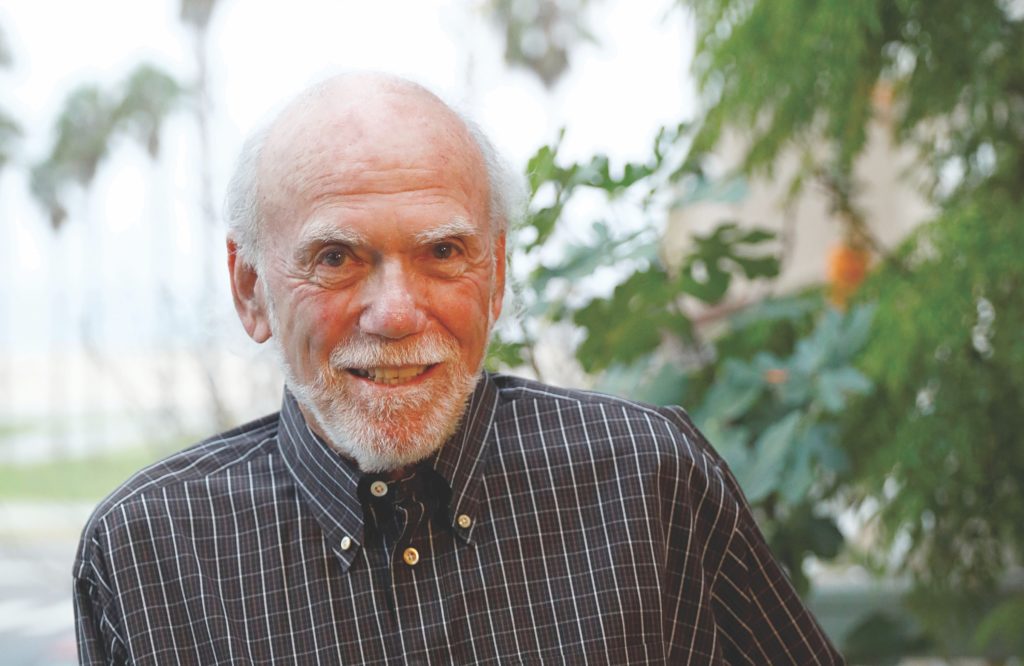
Albert Einstein published his theory of general relativity in 1915. But it would take the work of a soft-spoken Jewish physicist and Caltech professor from Santa Monica to help prove the most significant implication of that theory.

In recognition of the discovery, Barry Barish, 81, was awarded the Nobel Prize in physics on Oct. 3, along with colleagues Kip Thorne of Caltech and Rainer Weiss of the Massachusetts Institute of Technology. Their accomplishment: observing gravitational waves, phenomena that Einstein predicted in his 1915 theory. Scientists say the discovery has changed how they study the universe.

Jewish Journal: What’s the significance of your discovery?

Barry Barish: After 100 years, we have for the first time shown that one of Einstein’s main predictions is true — that there are gravitational waves. Einstein had two new predictions from general relativity. One was that light would bend. That was tested in 1919, and basically, he was proven right. The second prediction was gravitational waves, which took us 100 years to prove. The theory itself, which is thought by most to be rather obscure, you use every day, probably. Your GPS on your cellphone wouldn’t work without general relativistic
connections.

JJ: How so?

BB: The satellites are high up, so the gravitation field where they are is about a quarter of what it is for us on the Earth. And they’re going at a reasonable fraction — about a quarter — of the speed of light. So, basically, there are general relativistic corrections for that. If you didn’t make that correction and you started on the road, you’d drift off the road within a minute or two.

JJ: How is your discovery going to change the way we study the universe?

BB: Everything we know about the universe is studied by using telescopes or other instruments that look at visible light, infrared, ultraviolet or X-ray — different wavelengths of electromagnetic interactions. Only 4 percent of what’s in the universe gives off electromagnetic radiation, so we don’t have any handle on the rest. Now, we have a new way to look at the universe, looking at gravitational effects instead of electromagnetics. That’s the long-term future.

JJ: Your son, Kenneth Barish, is also a physics professor. Is he upset that he has bigger shoes to fill now?

BB: No, he’s thrilled. He works in a different field of physics, teaching at UC Riverside, so I think for him it’s all very good. I don’t think all of a sudden my shoes have gotten too big for him.

JJ: When do you go to Sweden to accept the prize?

BB: The Nobel ceremony is always on Dec. 10, no matter what day of the week it falls on. And you have to go about a week early because they have an infinite number of events. I have to wear coattails and all that kind of stuff.

JJ: Is there part of you that would rather just have a quiet ceremony and get back to work?

BB: You’ll have to ask me afterward. At this point, it sounds overwhelming. I have a hand-me-down tux that I’ve used, but I never bought one. I never have owned a suit until now.

JJ: Would you rather just be left alone to do science?

BB: Well, look, if it goes on too long, I think it will get tiring. I mean it’s tiring anyway — it’s so much. But it’ll take time to tell. Right now, it’s kind of stimulating. I’m happy to ride the wave at this point.

JJ: What keeps you busy when you’re not in the laboratory?

BB: I live on the Santa Monica Beach and bike up and down almost every day. I like exercise, and I like literature a lot and plays and things like that. When I was really young, my ambition wasn’t to do science. I didn’t really know that I could. It was to write a great novel.

JJ: Did you ever start writing it?

BB: No. Too busy doing science.

Q&A with Barry Barish on His Nobel Prize — and Why He Never Wrote That Novel Read More »

Councilman Koretz Is the Man in the Middle

Los Angeles City Councilman Paul Koretz has to navigate the tricky economic currents of a district full of Jewish activism.

I asked how he did it when we talked last week in his City Hall office. Koretz, 62, is a friendly, reserved man, well-informed on the issues, both citywide and across his Fifth District, which extends from around Beverlywood, Pico-Robertson and Fairfax into Century City and Westwood and up into the hillsides of the West San Fernando Valley.

His supporters call him a careful consensus builder who gets things done. His foes condemn him as afraid to challenge the real estate developers who are a powerful economic and political force in the district. Maybe that’s why, in conversation, Koretz is cautious, knowing the danger of a bad headline.

The project that reveals most about the changes in the district and Koretz’s tactics is the four-acre Casden West development, the brainchild of the powerful developer Alan Casden, who has projects around the city. Casden West envisions buildings up to 10 stories in height, with 595 apartments, 15,000 square feet of ground-floor retail space and underground parking for roughly 1,000 vehicles.

The project, on the site of an old cement factory, is adjacent to the Sepulveda station for the Expo light rail line, which connects Santa Monica with downtown Los Angeles and is spurring big construction projects along its route. That clearly was the driving force behind Casden West, and Casden wanted to make it big. He initially proposed buildings of up to 17 stories and potential big-box stores such as Target.

Neighbors living in nearby single-family homes rebelled, arguing that Target and another planned store would attract traffic, nullifying the Expo Line’s traffic reduction goals.

“I went to the developer [Casden] and tried to come up with something that was reasonable,” Koretz told me. “Then I said we have to vet it with the neighborhood. Casden asked for what he needed on the project to make it profitable. Ultimately, we removed almost all the commercial, we cut the big-box retailing out of it, we added more housing and moved it a few hundred feet back from the [I-10] freeway.”

A neighborhood leader, Jay Handal, chairman of the West Los Angeles Neighborhood Council, told David Zahniser of the Los Angeles Times the changes represented “a serious, serious victory for the community.”

Economically, compared to most of Los Angeles, with its vast neighborhoods of poor and working-class people, Koretz’s district seems like another, richer city. The Fifth District (CD5) has more than double the number of residents with bachelor’s degrees than the citywide average, and its affluent, largely white residents earn slightly more than $100,000 a year, 31.5 percent higher than the citywide average. About 46 percent are homeowners living in a hot real estate market.

That mixture of well-educated, politically sophisticated and affluent homeowners sometimes spelled trouble for Koretz and his predecessors, who include such famous politicians as Roz Wyman, Ed Edelman and Zev Yaroslavsky.

“Every developer wants to build in CD5,” said Koretz, surrounded by sports memorabilia in his office, including a 1988 World Series ticket signed by victorious Dodgers manager Tom Lasorda. “And every resident doesn’t want them to.”

In addition, Koretz is confronted with something his predecessors never faced — rising numbers of homeless people living in tent encampments throughout the district.

Koretz is a child of the Fifth District. He grew up in a duplex owned by his parents on Cardiff Avenue, near Pico Boulevard. His parents escaped from Nazi Germany in the late 1930s.

“My father was a professional soccer referee, the youngest in the North German soccer leagues,” Koretz said. “He came here, there was no soccer. He sold Fuller brushes door-to-door and then got a job as a waiter. He had a gift of gab. He entertained the customers. He did that the rest of his life.

“My mother was a bank teller for a while,” the councilman said. “She got robbed a couple of times at the Bank of America at Pico and La Cienega Boulevard. She was a file clerk after that.”

He recognizes that his old neighborhood has become much more Orthodox since his youth, when, he said, only two or three Orthodox families lived there.

“Last time I checked, there were six rabbis living on my [old] block. We had two or three Orthodox shuls, including the one I had my bar mitzvah in. Now I am told there are about 40. I haven’t found them all, but my favorite one that I daven in is a karate school most of the time,” said Koretz, who now lives with his family in an apartment south of Sunset Boulevard.

Politics has been part of his life since he was 10, he said. In 1969, when he was 14, he worked on Tom Bradley’s first mayoral campaign. “I went door-to-door every day, weekends, for months. I probably walked half the Westside,” he said.

An important influence was his government teacher at Hamilton High School, Wayne Johnson, who became president of the teachers union, the United Teachers of Los Angeles (UTLA). When UTLA went on strike, Koretz joined them.

Koretz graduated from UCLA, was the Southern California director of the League of Conservation Voters and executive director of the Jewish Labor Committee’s western region. He helped found the city of West Hollywood and was a council member there. He was elected to the State Assembly in 2000 and then to the Los Angeles City Council in 2009. He has a City Hall family. His wife, Gail, works for Mayor Eric Garcetti, and his daughter, Rachel, is an aide on the councilman’s staff.

As was the fate of his predecessors, Koretz finds himself in the middle of fights between land developers and homeowners. And some of the homeowner groups can’t even get along with one another.

However, Koretz is contending with two issues his predecessors didn’t face. One is mansionization, the tearing down of single-family homes and replacing them with two-story houses that extend to the property lines of the area’s comparatively small lots. Koretz has pushed through measures modestly regulating design and requiring homes to be set back more from property lines.

“But some will go up because they have already been approved [under the previous regulations],” he said, adding, “I don’t think anyone anticipated anyone would be building those giant homes on smaller lots.”

These are all problems of prosperity, and poor parts of Los Angeles would gladly face them. His second big problem is homelessness. Prosperity doesn’t shield neighborhoods from it.

Koretz concedes it is the biggest and most difficult problem he faces. Homelessness is up 18 percent on the Westside, according to the last homeless census. In Koretz’s district, it’s up 27 percent, from 924 to 1,160 people. Citywide, the homeless population totals 57,794, up 23 percent.

Los Angeles voters approved a bond issue to build housing for the homeless but the approval process for the projects is slow. So is county progress on a related measure, a sales tax increase passed by voters to provide social services and other help for the homeless.

“It’s going to take us 10 years to build 10,000 housing units,” Koretz said, conceding that his district would be “one of the least popular places” to build some of them.

I wondered if he felt a special Jewish obligation to help these very poor.

“I think for every religion, what we are living with now is not appropriate, and we’re trying to come up with every possible solution,” he said. “I don’t think it’s for a lack of trying. I think our responsibility in general is tikkun olam, to repair the world, and certainly one of the things that is most in need of repair in Los Angeles is to figure out the homeless situation.”


Bill Boyarsky is a columnist for the Jewish Journal, Truthdig and L.A. Observed, and the author of “Inventing L.A.: The Chandlers and Their Times” (Angel City Press).

Councilman Koretz Is the Man in the Middle Read More »

There’s No Such Thing As A Sinner

Some of us turn to the Sun and strum over our bodies in the shape of a rood. We play hymns over our hearts, passed down and over our DNA for generations.

Some of us turn to the moon and pluck lavender from our gardens — naked and howling. We write love songs to the low-hung clouds, as we sniff in a tidal wave that never was, along with the skin of an unfound planet home to yet nameless life, along with a hummingbird’s hiccup, all in a gust of wind. All in one inhale, we fill our hearts with the humid air, only hardly conscious of why exactly it makes us feel so full.

Some of us, move about only as much as we must to be able to spend the rest of our lives sitting, cross-legged, cross-eyed, our consciousness streaming across nebulae. Embodying everything — inclusive of nothing.

And most of us, we’re never really sure who or what we’re holding up so high. But despite this, we concede. With certainty, not always in God, but in our worship, however it is we worship, we worship.

We’re never really sure who or what we’re holding up so high.

And then, some of us won’t cross anything except that crossroad that leads to that one spot where you can get dope for ten a gram. We kick our leather feet through concrete dust and ash and scream “BURN IT ALL TO HELL!” as we tip our cups and the crown of our heads backward in a contrary bow.

And we scream to whom exactly?

Well, we’re not really sure who or what we’re holding up so high that we’re trusting that they could burn it all to hell. … We’re not really sure how high we’ve got to get to figure that one out. But despite this, despite our best efforts to flip the mountaintop upside-down and into a syringe, our subconscious concedes, and we, too, worship.

We may run to God or with wolves, by the light of violet flames, or into concrete caves, we may run however we like, but we may not outrun our mortal allegiance to worship, bringing us to our knees someway. Somehow. However it is, we worship.


Hannah Arin is a junior at Pitzer College pursuing a double major in religious studies and philosophy.

There’s No Such Thing As A Sinner Read More »

Week of November 2, 2017

Week of November 2, 2017 Read More »

Teaching Math to Israel’s ‘Invisibles’

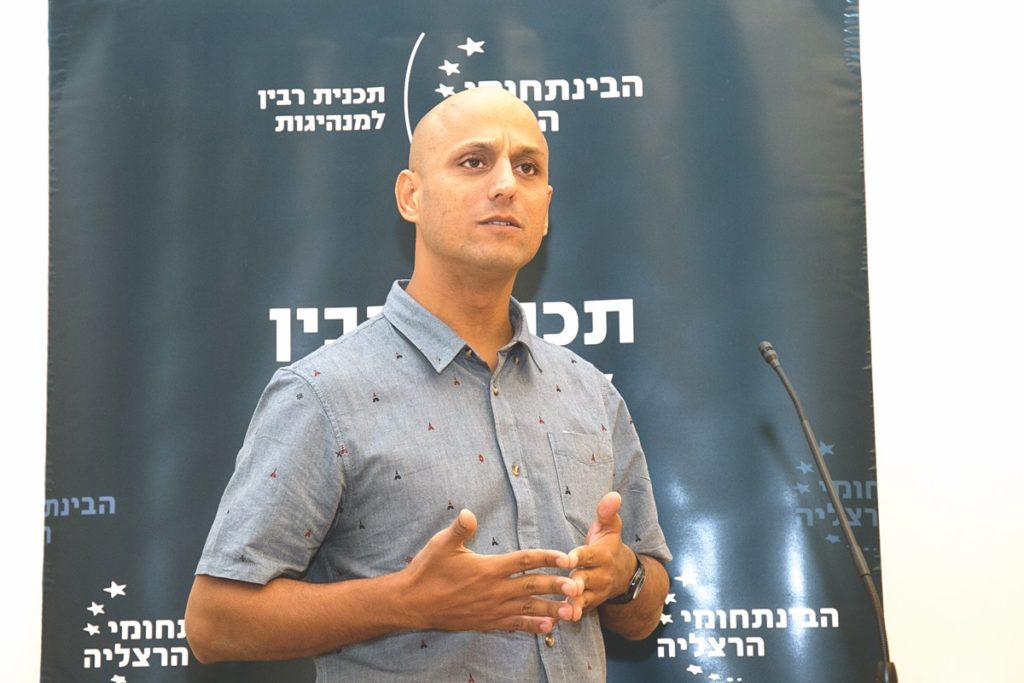
Shai Gul walked into the oversized shed masquerading as a wedding hall and was shocked at the level of abject poverty he encountered.

This was Jisr az-Zarqa, Israel’s poorest town and the last remaining Arab coastal enclave, but Shai still was astounded to discover that there was barely enough food to feed the wedding guests, most of whom were wearing clothes riddled with holes.

Shai was treated as the guest of honor — Hanan, the bride, felt she owed him a deep debt of gratitude. A cleaner, Hanan was one of many “invisibles,” as Shai refers to them, at Bar-Ilan University in Ramat Gan, where he served as a lecturer in the department of mathematics. Over the years, Shai began taking notice of these people.

“I asked myself, How did they get there? Why don’t I pay them the same attention I give to others? What’s the difference between my life and theirs?” he said.

His curiosity compelled him to begin striking up conversations with them, and ever so slowly these disenfranchised women — and a sprinkling of men — began opening up to him. The majority, he learned, lived below the poverty line and had been forced to drop out of school at a very young age to contribute to the family income.

To help, Shai convinced them to spend their lunch breaks attending classes that he would give on basic arithmetic. “I began by teaching percentages. I’d see them nodding their heads as if they understood. But by the third lesson, I realized something was missing,” Shai said.

Shai convinced them to spend their lunch breaks attending classes that he would have given on basic arithmetic.

He called on one of his students to give him the answer to one plus one. She was silent. He then asked her what her dream in life was. This time, she answered without hesitation: She wanted to become a cashier. He asked the rest of the women in the class. They all said the same thing. They wanted to become cashiers in a supermarket.

“I’m a mathematician. My nature is problem-solving. This was a problem. How do people who don’t know one plus one become cashiers?” he said.

The same day, Shai called up the branch of Israel’s largest supermarket chain that was closest to the Arab village that many of the cleaners came from. It took him months of hard work — a delicate cocktail of chutzpah and cajoling — until he received a commitment from the district manager to hire these women as cashiers once they had graduated from Shai’s evolving course.

But Shai’s ecstasy crumbled when his protégés told him they had no interest in working at the store. Many of them preferred the 4 a.m. wake-up and commute to Bar-Ilan — as long as it meant they could just be far from home.

It was to be the first of many Icarus moments that Shai would experience as Eretz, the nonprofit he founded, took wing. Yet now, two years after its founding, more than 30 volunteers have taught arithmetic, basic literacy and even computer skills to 120 janitorial staff members — mostly Arabs, Russians and Ethiopians — in seven hospitals and academic institutions around Israel.

Eretz, the name Shai chose for his nonprofit, means “land” and also doubles as the Hebrew acronym for “academics serving the public sector.” It dovetails with a far more poetic sentiment.

“From a young age, we Israelis are raised to think about our contribution to this country. But we’re also raised to believe that the real salt of the earth is the blond, blue-eyed Israeli from Sayeret Matkal,” Shai said, referring to the elite unit of the Israel Defense Forces. His brown eyes — courtesy of a Bukharian father and Yemenite mother — seemed far away as he continued. “But that model is skewed. I see it every day with my students — people who have struggled so hard just to be here. They want to be given the chance to be a part of this country’s society as much as anyone else.”

As for Hanan, the Arab bride from Shai’s debut class who harbored dreams of becoming a cashier, she ended up chasing dreams she never knew she had. Despite having never made it to high school, Hanan was accepted into a fully accredited college to study early childhood pedagogy.

Teaching Math to Israel’s ‘Invisibles’ Read More »

What Should Our Community Do After Weinstein?

For a crime as pervasive as sexual assault, the general response to Harvey Weinstein’s alleged misdeeds was appropriately uniform: Nobody was surprised. Or at least, in hindsight, they realized they shouldn’t have been. Men abusing their power is perhaps the world’s oldest professional hazard, and it goes without saying that no culture is immune — certainly not our own.

If the Jewish community hopes to adhere to our golden rule of tikkun olam, or repairing the world, we must articulate a strategy to address the sexual assault and gender inequity in our midst. Among Jewish female leaders, there appears to be a resounding consensus on the form this remedy should take: In the wake of the Harvey Weinstein scandal, the burden falls on Jewish men to rectify the injustices of sexual assault.

“I think what this whole Weinstein thing uncovered is the need for male colleagues to speak up about these things, as well,” said Rabbi Laura Geller, rabbi emerita of Temple Emanuel of Beverly Hills and the first woman ordained on the West Coast. “What the Jewish community could be doing, which it’s not doing, is really encouraging male colleagues to call out behaviors that they know are wrong.”

Rabbi Sarah Bassin, associate rabbi at Temple Emanuel, attended a rabbinic fellowship conference the week after the Weinstein allegations became public. There, she spoke to colleagues about preventing sexual harassment and assault. She said she focused on the way our desire to be part of the in-group recalibrates our moral compasses, and she implored men in particular to push past the fear of upsetting a friend and rebuke those who make off-color jokes about women.

Bassin, who delivered a sermon about her own sexual harassment in 2014, said she was gratified when a male colleague asked for her advice on how to write a responsible sermon about sexual assault that doesn’t exacerbate the problem.

“The greatest challenge [to addressing sexual harassment and assault] I’ve witnessed over the last week is a proclivity for men to turn toward a defensive posture, to say, ‘Well, I haven’t done it,’ ” Bassin said.

“The greatest challenge [to addressing sexual assault] I’ve witnessed over the last week is a proclivity for men to turn toward a defensive posture, to say, ‘Well, I haven’t done it.’” – Rabbi Sarah Basin

Rabbi Jonathan Sarna, professor of American Jewish history at Brandeis University, said the Jewish community has made immense progress in eliminating the gentlemen’s agreement-like silence surrounding sexual assault among our own. When he began his career as a rabbinical school professor in the early 1980s, he said, it was common to hear about certain rabbis who had a “zipper problem” and were simply moved to another congregation after a slap on the wrist.

In 2000, journalist Gary Rosenblatt wrote a cover story for The New York Jewish Week that revealed three decades of alleged teen sexual abuse by prominent New Jersey Rabbi Baruch Lanner, who later was sentenced to seven years in prison, and accused the Orthodox Union of turning a blind eye.

“At least for the Jewish press, that was a major turning point,” Sarna said. “Earlier, reporters wouldn’t touch a story like that.”

More recently, in October 2016, Danielle Berrin wrote a story in this paper detailing her sexual assault by a renowned Israeli journalist. Ari Shavit, who subsequently named himself as the perpetrator, was forced by media scrutiny to resign from his post at Israeli newspaper Haaretz.

“It’s nothing new that there are predatory men, but what’s changed is the response,” Sarna said. “Punishment has generally been swift and unforgiving.”

Geller agreed that there’s been a profound cultural shift in how we hold men accountable in the Jewish community, and attributes much of the change to institutionalized sexual harassment policies and formalized complaint processes. For example, in 1991, the Central Conference of American Rabbis established an ethics code addressing sexual harassment by its members.

Beyond sexual assault policies, however, is the imperative that employees and staff at Jewish institutions are thoroughly trained, both in the expectations of workplace conduct and their options for reporting violations.

Eli Veitzer, incoming president and CEO of Jewish Family Service of Los Angeles, said his organization has a zero-tolerance policy for harassment and holds annual mandatory trainings for supervisors and staff, where they review complaint procedures and whistleblower policies.

“The challenge is to make sure the issue [of sexual harassment] remains in the forefront,” Veitzer said. “In order to address that, we don’t just train a new hire once and then forget about it. The way to do that is frequency of training.”

Maya Paley, director of advocacy and community engagement at the National Council for Jewish Women L.A. (NCJW/LA), said sexual harassment education is important in the workplace but also needs to start at a much earlier age.

Paley directs NCJW/LA’s program “The Talk Project,” which enables teenagers to conduct workshops at local schools about sexual assault and rape culture. Through her work, Paley said she’s heard many stories about sexual assault among teenagers at Jewish high schools and summer camps.

Paley said she thinks the Jewish community too often is shocked when a sexual predator happens to be a Jew, as is the case with Weinstein and Leon Wieseltier, the former editor of The New Republic, who apologized Oct. 24 after several women accused him of sexual harassment.

Leon Wieseltier.


“The worst thing that the Jewish community could do after a story like Harvey Weinstein’s is to say that this is an isolated case and it doesn’t reflect our community,” Paley said. “[Our community] needs to take a hard look in the mirror.”

Rabbi Mark Dratch, executive vice president of the Rabbinical Council of America and creator of the anti-domestic violence website JSafe, said one challenge the Jewish community faces in addressing sexual violence is its minority status, which engenders a fear of tarnishing its reputation in the public eye. Further, the tight-knit nature of the Jewish community creates a reluctance to ruin the names or risk losing the financial support of prominent families.

Moreover, it’s important to note that the vast majority of institutional stakeholders with the power to hold predators accountable ultimately are men.

“We’re still living in a male-dominated Jewish community,” said Jay Sanderson, president and CEO of The Jewish Federation of Greater Los Angeles. “We can talk around it and make excuses for it, but that is what it is. The way that Judaism is constructed and the way institutions have been led are built around that.”

Sanderson said Federation prioritizes empowering women and creating a clear path for women, LGBTQ individuals and other marginalized groups to achieve leadership positions at Jewish organizations.

By and large, though, it is Jewish women who hold up the mantle of supporting fellow Jewish women who face sexual harassment.

“When it comes to sexual assault, there’s been so much burden on women forever,” Paley said. “Let’s take the burden off of women. We are tired. We are exhausted.”

An earlier version of this post incorrectly indicated Rabbi Sarah Bassin spoke about being  a victim of sexual assault.

What Should Our Community Do After Weinstein? Read More »