fbpx

October 19, 2017

Viva Banitsa: Why You Are What Your Neighbors Eat

The more I travel, the more I realize that food influences move across borders with astounding efficiency. Take, for example, the Moroccan b’stilla, a chicken pie of sorts consisting of thin layers of dough surrounding a saffron-scented filling of eggs, chicken and crushed almonds dusted with powdered sugar. It’s not so different from a Turkish borek, an English pasty, an Argentine empanada or even a French quiche.

Most Mediterranean cultures have some version of a savory pie that includes eggs, cheese, meat or vegetables. Greece and Bulgaria are neighbors, so you would expect the food to be similar, but even in a place far removed from the Mediterranean you find food influences that have traveled very far, stuck and been reinvented as another dish. Take the ubiquitous samosa of East Africa, for example. Like the b’stilla and borek, this much-loved Indian snack made of flaky pastry surrounding a savory filling is yet another version of a pie, but flavored with curry and coriander rather than cheese and eggs.

We are all made of the same stuff, just spiced a little bit differently.

Nowhere is this phenomenon more evident than in Israel, where the influences of the Middle East meet the influences of Asia and Europe. Because Israel is a small country, culinary influence tends to spread even faster. It is not unusual, for example, to find Libyan, Yemenite and French restaurants on the same block in Tel Aviv. The fact that Jews came from all over the world to settle in Israel created an exciting food culture where anything goes. The foods of Bulgaria, Thailand, Germany, Ethiopia and Morocco offer flavors Israelis understand and appreciate.

My childhood kitchen was no exception to this culinary mish-mash. Romanian, Bulgarian and Israeli influences created an abundance of special flavors that I crave to this day. My favorite, a Bulgarian staple called a banitsa, is a pie I grew up eating at family gatherings. Traditionally, Bulgarians stuff a banitsa with eggs, yogurt and Bulgarian feta called sirene. 

Because most of my customers are Americans, I usually opt for a spinach and feta banitsa in my restaurant kitchen because it’s very similar to the better-known and loved Greek spanikopita. I like to form the banitsa into the traditional Bulgarian shape of a snail and make many individual servings so each person can have their own banitsa — or two.

Here is my spinach and feta filling recipe, but I encourage you to come up with new flavor combinations. Potato and cheese, mushrooms and herbs, pumpkin and goat cheese — your imagination is the only limit. My mother makes a banitsa with ground beef and potato that is beloved by all who try it. Just make sure your filling tastes delicious to begin with and is seasoned well enough with salt and pepper.

If you can, make the filling the night before you want to use it. Sometimes, I make three or four times the filling I need and freeze it in containers. That way, if the mood strikes for a banitsa or if I have last-minute company, I just need to defrost the phyllo and the filling in the refrigerator overnight and — presto! — the whole operation, including baking time, can be done in less than an hour.   

In my restaurant kitchen, I always make extra already-filled pastries and store them in the freezer. If kept in a well-wrapped container,  the frozen filled pastries can be taken directly from the freezer to the oven without defrosting and will come out just as perfect as freshly filled ones. Nothing beats a hot, crisp banitsa right out of the oven. Nothing!

If, like me, you love to re-create dishes you eat in your travels, it doesn’t take long to realize that we all are made of the same stuff, just spiced a bit differently.

SPINACH BANITSA 
Spinach and Feta Filling (recipe follows)
1 package (16 ounces) frozen phyllo pastry,
thawed in the refrigerator overnight
1/4 cup olive oil
1/4 cup melted clarified butter (optional: use 1/2 cup of olive oil if you prefer)
1 tablespoon sesame seeds (optional garnish)

Make Spinach and Feta Filling; set aside to cool.

Preheat oven to 400 F.

Take phyllo out of the refrigerator and gently remove from packaging. Working quickly, peel one sheet of dough away from the pack and place on a clean work surface. Keep a damp towel nearby for covering the dough you are not using because phyllo tends to dry out and crumble when exposed to air.

Take a small amount of your oil/butter mixture and either use a pastry brush or your hands to oil the pastry sheet. I find that my hands are the best tool for this job because I can control the amount of oil that goes on the pastry without overdoing it. You want a thin smear of oil, not a puddle. Don’t worry if the pastry tears; there is plenty more pastry when you roll it to patch up your mistakes.

Working with the longer side of the pastry sheet in front of you, place five tablespoons of the cooled Spinach and Feta Filling evenly along the length of the sheet, leaving a 1-inch border on both sides. Fold the sheet of pastry over the filling and then fold the right and left sides in, creating a cylindrical pouch.

Continue to roll firmly but not too tightly until you reach the end of the pastry sheet. The moisture in your filling will seal the pastry cylinder. Finally, starting from the right side of the cylinder, gently roll it into a snail shape. 

Place your pastry snails touching one another on an ungreased baking tray.  Continue rolling the remaining pastry sheets until the filling runs out. If desired, take a pastry brush with a small amount of oil/butter, brush the tops of the snails and sprinkle with sesame seeds.

Bake in preheated oven for about 25 minutes or until the pastries are golden brown with a few darker spots here and there. In my family, we eat these with a dollop of tart yogurt on top and a simply dressed, crisp green salad on the side. If you don’t care to bake the banitsas on the spot, you can wrap them well, unbaked, and store them in the freezer for a rainy day. 

Makes about 15 servings.


SPINACH AND FETA FILLING 
18 ounces fresh or frozen spinach leaves
6 scallions (green and white parts),
finely chopped
1 tablespoon olive oil
3 whole eggs
8 ounces crumbled feta cheese
(preferably Bulgarian)
2 ounces small curd full-fat cottage cheese
1 ounce grated Parmigiano-Reggiano cheese
1 tablespoon dry oregano
2 tablespoons fresh flat-leaf parsley
2 tablespoons fresh dill (optional)
1/2 teaspoon black pepper
1 teaspoon sea salt (adjust depending on
the saltiness of the feta)
Pinch of nutmeg (optional)

Sauté spinach with scallions in olive oil until thoroughly wilted and soft. Put in a strainer and squeeze dry with both hands until the mixture is completely devoid of moisture. This is the most important step in the process because if you don’t get all the water out of the spinach mixture, you could end up with a soggy banitsa. 

Chop dry spinach mixture finely and add the remaining ingredients, except for salt. The amount of additional salt you add depends on how salty the feta is. Set aside to cool in the refrigerator until ready to use — don’t use hot filling because it will melt the phyllo dough leaves together. 

Makes about 5 cups.

Viva Banitsa: Why You Are What Your Neighbors Eat Read More »
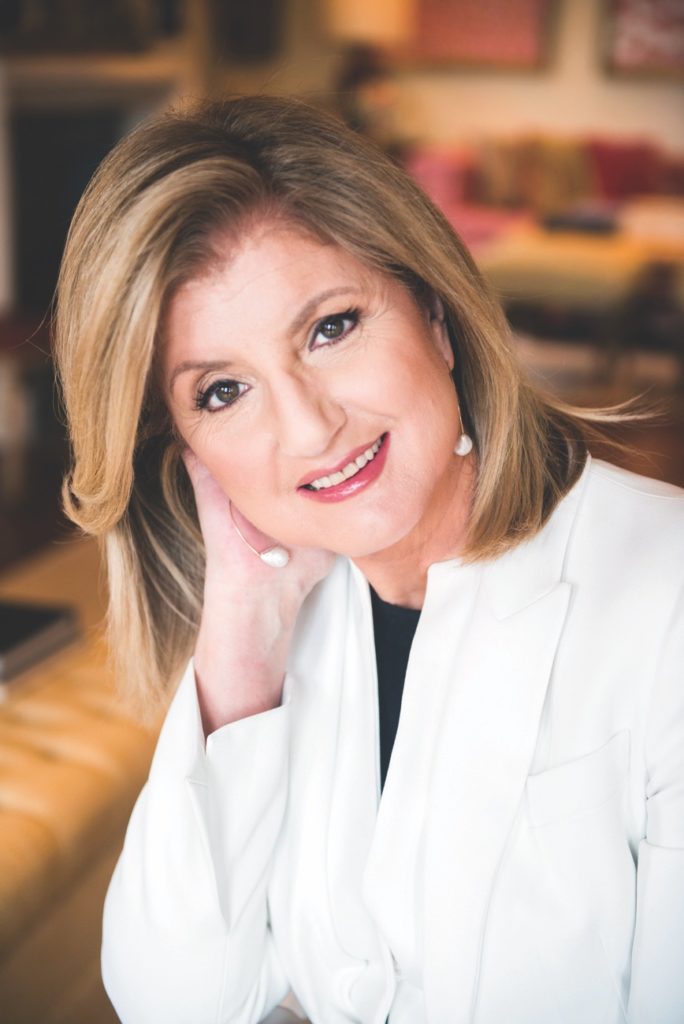
Q&A with Arianna Huffington on Sleep, Melatonin and Shabbat

The original force behind the news and opinion website Huffington Post (HuffPost) and the wellness startup Thrive Global, Arianna Huffington also is the author of “The Sleep Revolution,” which was released earlier this year. She took time to speak with the Journal on topics ranging from the benefits of Shabbat rest to her political aspirations.

Jewish Journal: You once ran for governor of California. Now you’re known as a leading advocate for getting enough sleep. How did you get from Point A to Point B?

Arianna Huffington: It’s been a long road, but there are some throughlines. One principle that has been constant in my life has been my love of helping people engage and connect. I’m Greek, that’s what we do. We lure you to the table to eat and talk. My brief flirtation with public office was part of that, and HuffPost was certainly a version of that. And so is Thrive Global, which is about helping people connect and engage — with their jobs, with their friends and family, and especially with themselves.

JJ: You say getting enough sleep is beneficial for decision- making, for reducing stress and for creativity. Is there a spiritual benefit, as well?

AH: Absolutely. It’s all connected. Seeking out and being open to something larger than ourselves is an essential element of our well-being. And it’s also a lot harder, if not impossible, when we’re stressed, harried, burned out and in perpetual flight-or-fight mode.   

JJ: In Jewish tradition, we have a word for what you’re talking about: Shabbat. There’s an expression: “More than the Jews have kept Shabbat, Shabbat has kept the Jews.” Isn’t that another way of saying exactly what you’re trying to teach now?

AH: I love that. And it’s so true. Keeping to a contemplative tradition like Shabbat that involves disconnecting and connecting with what’s important to us keeps us connected to the essence of who we are. And that can work on both an individual and collective level.

JJ: I’m always trying to find ways to relax on Shabbat. What are your top three tips for getting enough rest?

AH: First, charge your phone outside your bedroom at night. Our phones are repositories of everything we need to put away to allow us to sleep — our to-do lists, our inboxes, our anxieties. Plus, the blue light they emit suppresses melatonin, the hormone connected to sleep regulation. So putting your phone to bed as a regular part of your bedtime ritual makes you more likely to wake up as fully charged as your phone. Second, try meditating before bed. It’s been proven to help people fall asleep faster. Last, if you’re having trouble falling sleep, read a book — but make it a real book or an e-reader that doesn’t emit blue light. And make sure it is not work-related: novels, poetry, philosophy — anything but work.

JJ: You seem like an incredibly driven person, and someone who’s always busy. Do you really meditate every day? Does it work for you?

AH: I try to. It’s the first thing I do when I wake up — it’s a much better way to start the day than reaching for your phone. And, yes, it really works. It makes me calmer and less reactive throughout the day. 

JJ: Turning to politics, one explanation for the current divisiveness in our country is that people read only the version of the news they agree with. Didn’t your own creation, HuffPost, help get us into this mess?

AH: No, not at all. HuffPost was always about connecting people to their world and to each other, showing them how to be part of creating solutions. Certainly, HuffPost had an editorial voice — we never believed that the truth is somehow always magically in the middle. But that didn’t mean we didn’t welcome all voices from across the political spectrum. 

JJ: How can we get back on track and start talking to each other again?  

AH: A lot of it is about empathy and recognizing the humanity in each other. And that’s a lot easier to do when we put down our devices and engage with each other and ourselves. That won’t solve all the world’s problems, but it will allow us to access the qualities we need to meet those challenges: our wisdom, empathy and creativity.  

Q&A with Arianna Huffington on Sleep, Melatonin and Shabbat Read More »

How Judaism Helps Us Regain Our Balance

Each period of history has a title bestowed by historians, one meant to reveal some key characteristic of that age. Thus, the medieval period is the Age of Faith; the Enlightenment is the Age of Reason; and the 19th century is the Age of Progress. The name for our age, I would venture to guess, is the Age of Busyness.

Everybody is busy. Americans routinely complain that they work too many hours — and they do. They complain that they have too little time to spend with their children — and they’re right. They complain that they have little time left for quiet reflection, for learning and for celebrating.

Well, actually, they don’t complain about that — because they don’t have enough time to notice its absence, or because they’re so busy that they no longer miss it.

But part of being human, part of living our lives fully, is the inner need to grow and to explore and to play. Contemporary psychology tells us that people continue to grow throughout every phase of their lives, and that the playfulness of children continues into adulthood, as well. To be human is to play, to change and to grow.

Where, in our serious culture of business, work and productivity — or in its flip side of infantile recreation and foolish escapism — do we make room for adult play, adult study and adult growth? America’s Achilles’ heel is its excessive busyness, which spawns equally excessive foolishness to blow off steam.

We’ve lost our balance.

The place to recapture what we have lost is to be found in Judaism’s unparalleled ability to sanctify time. Through the observance of Shabbat, of holy days and festivals, our tradition provides a timeout for adults — not to lose ourselves in fantasies or escape, but to rediscover ourselves and the depths of our own creativity and love. We immerse ourselves in sacred time in order to live better and more fully during the rest of our days.

Now that the holy days of Rosh Hashanah and Yom Kippur are behind us and we emerge out of our sukkah booths back into our busy, contemporary lives, our immersion in rest, renewal and community is our passport back into a better way of living our lives. Instead of “spending time,” Judaism gives us the gift of learning to savor it.

The Talmud teaches that “rejoicing on a festival is a religious duty.” What a remarkable idea! A day devoted to a special kind of joy. The rejoicing of the festival has little in common with sitting in a dark room staring passively at an on-screen fantasy, or risking life and limb to thrill ourselves into forgetting what drones we’ve become. The rejoicing of the festival is not one of escaping, but one of returning to our own centers — our own families, friends, community and God.

As it says in the Talmud: “Rabbi Eliezer said, ‘One has nothing else to do on a festival except to eat, drink, sit and study.’ Rabbi Joshua said, ‘Divide it — devote half the day to eating and drinking, and half of it to the house of prayer and study.’”

Our sense of self emerges in cultivating our character, our curiosity and our relationships.

What a fascinating way to rejoice. Recall that the word “recreation” involves creating something anew — in this case, our own souls. By spending part of the day together in prayer, song and Torah study, we rebuild our identities as messengers of God and as bearers of God’s covenant. We restore our sense of belonging in a specific synagogue community and in the Jewish people worldwide. Having restored that essential base, the rabbis of the Talmud then tell us to take the rest of the day for feasting and spending time with those we love.

What a marvelous blend of devotion and relaxation, of heightened identity and then simply being.

What this regimen of holy days and festivals makes clear is that mastery of our work — rather than allowing our work to master us — requires setting clear boundaries and limits to our chores and our work. Our sense of self emerges in cultivating our character, our curiosity and our relationships. By rejoicing with one another on these holy days, festivals and on Shabbat, we declare ourselves to be free in the service of holiness and goodness, of Torah and togetherness.

After the end of the fall holy days, take the lessons of the shofar, the fast and the sukkah with you into our busy world. Remember that we each are children of royalty, and we thrive best when we thrive together. 


Rabbi Bradley Shavit Artson holds the Abner and Roslyn Goldstine Dean’s Chair at the Ziegler School of Rabbinic Studies at American Jewish University.

How Judaism Helps Us Regain Our Balance Read More »

An Ocean of Tears

There are moments when everything changes. In my lifetime, one of these was seeing the picture of our planet Earth from space. With that photo of our home, ​I, along with everyone else ​was able to see for the first time that we were one whole, living, breathing, connected planet. This is the image I hold in my head saying the Shema because, for me, this represents that God is One.

After seeing that photo, our consciousness shifted.

​As human beings, we could no longer justify our separateness. Being confronted with the reality that we were connected, we knew that we needed to act differently. We couldn’t “un-see” the Earth as a shining marble, fragile and precious, because it is right in front of us as truth.

Right now, we are experiencing another paradigm-shifting moment.

The Harvey Weinstein sex abuse scandal has unleashed a spontaneous response of #MeToo posts on social media. Thousands upon thousands of women and some men ​are speaking out on Facebook and Twitter, sharing their personal experiences of sexual harassment and assault from childhood up to now. It’s raw. It’s true. It’s painful.

My entire social media timeline on Facebook and Twitter is overflowing with #MeToo reports. A river of stories and a flood of tears in the Jewish community. Real stories from women I know:

We can’t unsee these stories. And we can’t pretend these wounds don’t damage souls.

“The boys on the playground snapping our bras and shaming us for being flat chested or too developed.”

“The time when I was a student rabbi and the temple president insisted on walking me to my hotel room despite my saying no thanks. I felt so threatened that I put a chair against the door after he left.”

“My 7th grade religious school teacher sexually molested me and my rabbi didn’t believe me.”

“The nice Jewish guy who raped me on my first date while I was sleeping and then said — oh I thought you were fake sleeping and wanted it (I didn’t).”

“The unwanted hand on my knee and up my skirt. The catcalls and the feels on the subway.”

“My husband’s friend slipped a Playboy magazine under the table on my son’s 21st birthday, while winking at me. That man told dirty [stories] throughout dinner.”​

Over the past few days, as I read these stories, I could hardly move. Post after post brought up my childhood of constant comments by boys about my body and the accompanying shame that I wasn’t good enough, pretty enough or filled out enough. Other stories reminded me of incidents I had brushed aside as “no big deal” — but upon reflection, were formative and painful.

We can’t “un-see” these stories. And we can’t pretend these wounds don’t damage souls.

This ocean of tears needs to evoke a sea change. Each precious human is a world we need to learn to protect and help flourish, just like planet Earth.

We have texts in our holy books about treating others with dignity. They are simple, but not easy. We are holy because are made in the image of the Divine, b’tzelem Elohim, as we just read in the beginning verses of the Torah.

We also need new texts: stories that include the voices of the vulnerable and those hurt by sexual abuse and a culture of degradation.

We need these new texts to make sure that this moment in time becomes a moment in eternity; that a new consciousness honoring human dignity becomes the default position of humanity.

In embracing the reality that we are all connected, we must pray for the strength and wisdom to live up to our Divine image.


Rabbi Jill Berkson Zimmerman is the founder of The Jewish Mindfulness Network.

An Ocean of Tears Read More »

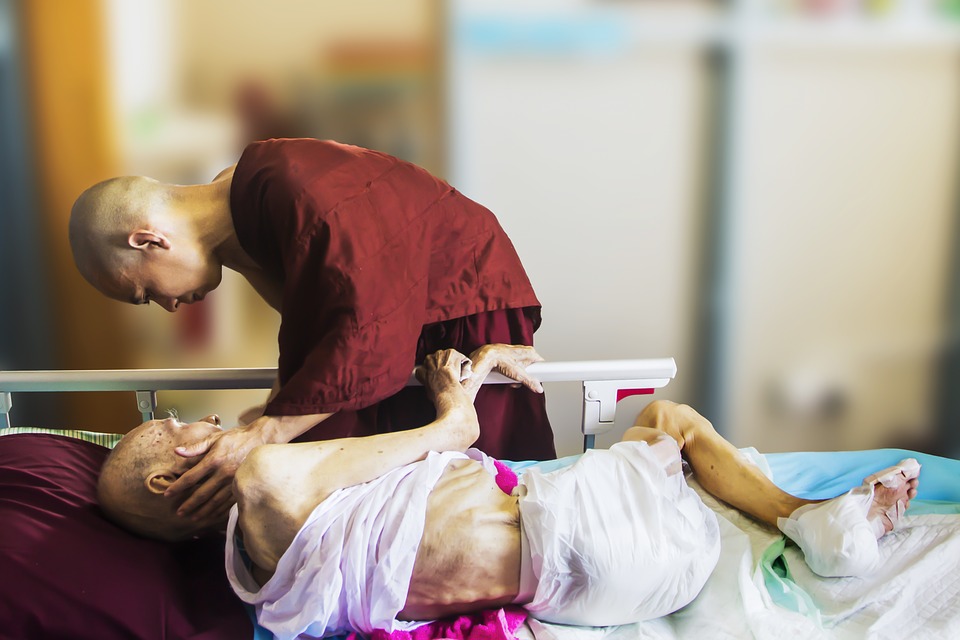
The Mitzvah to Honor the Elderly: How Is America Doing?

In America today, it often seems like the broader society prioritizes respect for those with the most wealth or with the best looks. We see it constantly in the barrage of media that attacks our nervous systems, whether it is the latest television program, film, or advertising campaigns for the trendiest new tech. Relatedly, much attention in our social spheres is placed on young people; thus, the young are often prioritized over the old. But in Jewish thought and expressed through the timeless Jewish values, the priority is the opposite: wisdom and age, especially for those who have made it into their sunset years, is the preeminent value to cherish and honor.

Yet, the most immediate question is: Why should we give priority to the old over the moldable potential of youth? Why does Jewish thought point in the opposite direction? Rabbi Joseph Telushkin explains this concept well. He writes:

In contemporary society, which places such emphasis on one’s physical appearance, our value can only decrease with time… the Jewish emphasis on wisdom and experience suggests that our value can continue to increase throughout life (The Book of Jewish Values, 288).

One of the cornerstones of Judaism’s veneration of seniors is the acquired access to knowledge through a lifetime of experience. While being young provides opportunities to experience the world, the process of aging doesn’t only change the body in physical ways, but allows for the ability to internalize the vastness of world. Thus, the benefits of age are not only pecuniary and material, but spiritual and knowledge-based. Besides, the rabbis teach that people—if they invest in their learning correctly—become wiser with age, acquiring a wealth that goes beyond tangible earnings:

As regards scholars, the older they become the more wisdom they acquire… But as regards the ignorant, the older they become, the more foolish they become (BT Shabbat 152a).

In this conception of aging and growing in one’s wisdom, the ability to gain knowledge can be easily offset by the ability to ignore. Through this lens, we understand that people also have the capability to become more ignorant and closed-minded with age. Thus, it is incumbent on us to encourage opportunities for learning and continued growth for our senior friends and neighbors. It is vital we help cater to this population’s hunger for pursuits that nourish the soul and the mind.  We cannot neglect their intellectual needs and spiritual growth as much as their physical well-being. And when some have erred or stumbled in their understanding, it should not affect the honor we show to seniors, as the rabbis explain:

Show respect to an old man who has forgotten his learning through no fault of his own, for we have learned that the fragments of the old tablets [of the Ten Commandments which Moses shattered] were kept alongside the new tablets in the Ark of the Covenant (BT Berakhot 8b).

Rabbi Abraham Joshua Heschel, himself a powerful role model of how wisdom and age can shape society, teaches that the way we treat our elderly citizens signals much about the virtues found in our society:

A test of a people is how it behaves toward the old. It is easy to love children. Even tyrants and dictators make a point of being fond of children. But the affection and care for the old, the incurable, the helpless are the true gold mines of a culture (The Insecurity of Freedom, 72).

Respect is not merely about religious wisdom, but about life experience, which is why the rabbis included the gentile elderly:

You shall rise before the aged” means any aged… Rabbi Yochanan used to rise in the presence of aged non-Jews, saying, “How many experiences have happened to these people! (BT Kiddushin 33a).

American society has a mixed record in providing for the well-being of seniors. The passage of Social Security in 1935 dramatically lowered the elderly poverty rate for nearly half a century, and Medicare (1965) has provided low-cost medical care for the elderly. However, in the past generation, the impact of income inequality and stagnant benefit levels has placed tens of millions of elderly Americans in economic insecurity.

According to the Social Security Administration (SSA), the average monthly benefit as of January 2017 was $1,360, with a raise of only $5/month from 2016. The SSA estimates that about 43 percent of single recipients depend on this check for 90 percent of their income. In addition, 2.1 million elderly Americans only receive Supplemental Security Income, which averages $435/month. Even if one receives a relatively high monthly Social Security payment, it is nearly impossible to survive. The average monthly rent for a one-bedroom apartment in California is about $1,350, and in a 2016 survey of 50 American cities, the median monthly rent was more than $1,230 plus utilities. Maintaining a house is even more difficult. Consider the following:

  • Among elderly heads of household, a third have either no money or are in debt at the end of each month.
  • More than 60 percent of households headed by someone 60 or older carry debt, and the median debt is estimated to be nearly $41,000.
  • As of 2012, 3.5-million elderly homeowners had no home equity and were hopelessly behind on their loans.

To make matters worse, Medicare does not cover activities of daily living (which include help with dressing and bathing) or long-term care. As a result, many elderly people are forced to consider nursing home care, but cannot afford the cost of more than $80,000 per year. The alternative is to deplete one’s resources and then fall back on Medicaid to pay for nursing home care. In a study funded by the Centers for Medicare & Medicare Services (CMS), researchers from Truven Health Analytics noted that, for long-term services and supports (LTSS), Medicaid accounted for more than 60 percent of total funding in 2010. In all, 45 percent of Medicare beneficiaries were elderly patients. More than 1.4 million received institutional care (updated estimates cite 2.2 million), mostly nursing care (87 percent), with psychiatric and mental health facilities also included (for example, 135,508 of 146,794 LTSS recipients using Medicaid in California were for nursing facilities).

Current saving patterns portend a poor future for American retirees. According to a recent banking survey of retirement savings, among those age 55 and older, 28 percent have nothing saved and another 17 percent have less than $10,000. At the same time, the current Republican House budget proposal would cut Medicare and Social Security by billions of dollars, and the recent Republican healthcare proposals would have ended Medicaid expansion.

If we wish to fulfill the mitzvah of honoring seniors, we must ensure that we understand their plight and take active measures to ensure that they have a dignified existence into their golden years. When we write-off the accomplishments and wisdom of our elders, not only do we place ourselves at a disadvantage, we lose valuable knowledge that can positively shape the future; all that is old is new again. We can’t allow the temptations of the “new” to dissuade from our obligations of care for seniors.  Disregarding the full respect that the senior population needs (and deserves) is an abdication and aberration of the moral mandate to take care of those who have come before us. May we fulfill the obligation to treat the elderly among us with pure hearts and open minds by giving them the respect they merit by virtue of their very existence.


Rabbi Dr. Shmuly Yanklowitz is the President & Dean of the Valley Beit Midrash, the Founder & President of Uri L’Tzedek, the Founder and CEO of The Shamayim V’Aretz Institute and the author of eleven books on Jewish ethics. Newsweek named Rav Shmuly one of the top 50 rabbis in America and the Forward named him one of the 50 most influential Jews.

The Mitzvah to Honor the Elderly: How Is America Doing? Read More »

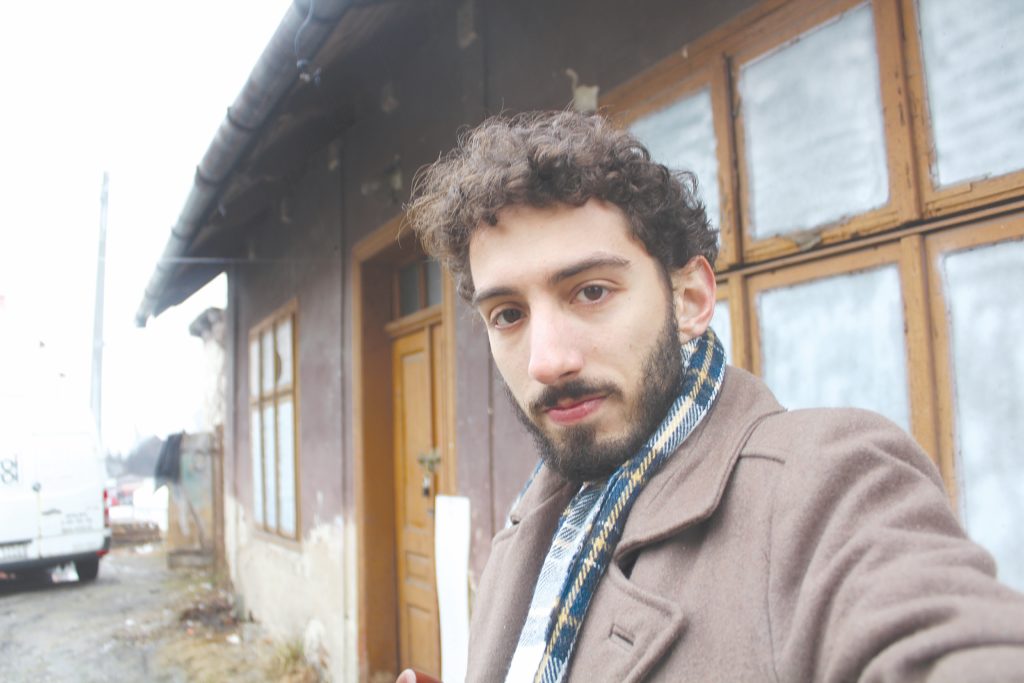
Polish Citizenship for This Jewish Boy? Not So Fast

My passport is not much to look at. It’s dog-eared, many of the stamps are fading, and the back has been covered in a sticky film since I pasted a baggage claim tag there about a decade ago.

Yet as soon as I step outside American borders, it becomes my most valuable possession — my ticket back to everything I know and love. And it’s more than that, because that sad-looking little pamphlet is the most tangible link between me and my nationality. Functionally, it’s my stockholder’s certificate in this great big company called America.

These days, many Americans are looking to diversify their portfolio: The evening of President Donald Trump’s election in November, Canada’s immigration website reportedly crashed as a result of increased traffic from Americans — Americans looking for an escape hatch. For many American Jews, the most convenient escape hatch — other than Israel — is to turn to the same countries that spurned their ancestors during the Holocaust.

I was afraid I would somehow acquit Poland of the crimes against my family.

For me, that means Poland. I decided to make a guinea pig of myself and see what the citizenship process entails. That’s where Neil Kaplan came in.

Kaplan is a genial businessman in his middle age who’s held a number of leadership posts in media and internet companies, including president of the Jewish Journal’s board. But his most recent gig is closer to home.

After securing Polish citizenship for himself and his family, he decided to open up shop helping others do the same through his website, PolandPassport.com. It turns out, Poland is willing to accept Jews (and others) of Polish ancestry, but only after making them jump through some bureaucratic hoops that are impossible to navigate without a fluency in Polish legalese. Since launching his business in late 2016, he’s evaluated more than 400 cases, roughly 60 percent of them Jews, by his estimate.

Successful applicants get all the benefits of citizenship in a European Union country, including potential tax and tuition advantages and ease of travel and immigration. What’s more, Kaplan and his team don’t get paid until you get your passport.

What did I have to lose?

The first step was filling out a “qualification quiz” on Kaplan’s website: names, birthdates, places — all easy enough for me given my borderline-unhealthy obsession with family history. As I typed, I fit entire generations into the neat little text boxes on the website, distilling sons and fathers and daughters and mothers into a form digestible by the Polish bureaucracy.

I hit “enter” and a few days later, Kaplan called to tell me I had a good shot at obtaining Polish citizenship. The question now became: Did I really want it?

I dodged the question. Kaplan offered me a friends-and-family discount — he’s a longtime friend of the Journal — but still, I couldn’t bring myself to say “yes.” After all, what would my “yes” mean? Would I be forgiving Poland for what happened to my tribe?

For his part, Kaplan doesn’t kid himself, that Polish citizenship makes up for the Holocaust. But if it offers the “tiniest bit of restitution,” he said, then it’s worth taking.

I still wasn’t so sure, so I called somebody who has thought about it a lot more than I have.

Grant Gochin is a South African-born wealth manager in Woodland Hills and the grandson of Jewish Lithuanian refugees. He sued the government of Lithuania five times before it was forced to grant him citizenship. After citizenship was granted to him, he had no second thoughts about taking it.

I explained my hesitation to him — my discomfort with taking anything from Poland. I was afraid I would somehow acquit Poland of the crimes against my family, delivering absolution I have no right to offer.

Gochin told me I was looking at it all wrong. Poland wasn’t giving me anything. Instead, I was claiming something that is mine by birthright.

But furthermore, I would be creating a birthright for my own future children.

“If you can give your kids a Polish document with their name on it, it personalizes their history,” he said. “It’ll show them what they come from so they can personalize it.”

I can sympathize with Gochin’s “future generations” argument. It’s past generations I’m worried about. Consigned to the silence of the grave, they speak through my words, my actions.

Nationhood is an entanglement with the past and the future. It ties you to national inequities and travesties, historical and ongoing, that you might not care to associate with. By accepting Polish citizenship, it seems to me, I would align myself with the nation of my ancestors’ discontent.

Take this story, for instance: In my grandfather’s hometown, after the war, nine Jews returned and settled in a home together. A short while later, a Polish neighbor tossed a grenade into the home, killing all nine. Mind you, this was after Germany had been beaten back.

Now, I don’t blame today’s Poland for that atrocity. But nor can I so easily move on.

I don’t delude myself that America has no blood on its hands. After all, the genocide of the Native Americans and the enslavement of Africans is not so far in the historical rearview mirror.

But unlike Poland, America is the country of my birth, and the stains of its history are my birthright — mine to tussle with and fight to overcome.

Maybe my family members’ opinions toward Polish nationality are more pragmatic. They are welcome to apply on their own, and I’m sure Neil Kaplan would be happy to help them.

But I can’t see myself running headlong toward the nation where my family members were sold up the river, even if it means I can travel more easily or set up shop in Paris.

Almost 80 years have passed since Poland turned into my ancestors’ personal hell. But sometimes that history still feels close — and raw. Maybe 80 years is still too soon.

Polish Citizenship for This Jewish Boy? Not So Fast Read More »

God’s Promise and the Rainbow – A Midrash

God looked out upon creation and saw that violence, chaos and mean-spirited self-centeredness engulfed the human heart. There was neither kindness nor justice in the world. Empathy had ceased. Fear and hatred supplanted peace and love. In Divine  disappointment and righteous rage God determined to destroy creation and return everything to primordial darkness.

The Eternal mourned and recalled how great was the effort to create the heavens and earth, give life to growing things, design and fashion the birds, sea creatures and animals in all their variety, shape, color, function, and form. That thought grew within the Divine mind, and so the Creator hesitated and stepped back from the brink thinking how great a tragedy it would be to destroy that which had once been thought “good.”

God wondered: ‘Is there one human on earth, different from the rest, who can still fathom Me, who hasn’t been consumed by the sitra achra, the evil that brought such darkness to My creation.’

God peered into every human soul seeking that one, better than the rest, who though not yet a complete tzadik might be good enough to hear the Divine voice and save what could still be saved.

To God’s relief, there was one human named Noah, so God spoke to Noah  and told him to build an ark and save his family and two of every creature that all might not be lost and that the world might begin anew.

As the Eternal wept in contemplating the devastation and Divine tears fell heavily to earth and continued forty days and nights.

When finally God’s tear ducts were dry the waters receded, dry land appeared, and the ark docked. The Eternal God spoke to Noah:

“I am God, Noah, Who created you and brought you into this new land. Look around you and see the cleansed earth. The world is once again new. There is no longer rage or hatred, violence or hubris in the human heart. I will make with you a covenant marked by a sign that will remind us both how I created the world in peace, but then destroyed it, and then allowed it to begin anew that it should remain a place of peace for all time.

And the sign of this covenant will be a radiant smile that stretches across the heavens and fills the sky, an arc of light shining through the flood waters, a vision of loveliness that will inspire awe and love for Me. 

This promise, Noah, shall be called the ‘rainbow,’ and this bow in the sky will remind you, Me and your progeny that I will never again bring such devastation to the earth. 

Your duty and that of your children and children’s children must be to protect My creation, to preserve and nurture it, for there will come no one after you to set it right if you destroy it.”

Then God bent towards the earth and stretched the Divine arm mightily across the sky and made an arc.  And just where God’s hand had been, there appeared a sheltering bow of every color spread out across the blue canvas of sky.

And God spoke of the colors and the sign of the rainbow:

“First comes red to stand for the blood pulsing through human veins that carries My Godly soul and makes all things live; orange is for the comforting warmth of fire and its potential to create, build and improve upon what I created; yellow is for the glory of the sun that lights the earth and gives vision to earthly souls that they might see Me in all things and live; green is for the grass and the leaves of trees and their fruit, that all creatures might be sustained in life; blue is for the sky, sea and rivers that joins air and ground and makes clear that all is One, divinely linked and a reflection of Me; indigo appears each day at dusk and dawn to signal evening and morning, the passage of time and the seasons, the ever renewing life force that is intrinsic to all things; violet is for the coming of night when the world rests and is renewed, and it carries the hope that all might awake in the morning and utter words of thanksgiving and praise.”

God explained that the rainbow appears to the human eye as a half circle, and said to Noah:

“Do not be fooled, my most righteous one! There is more to life than what the eye can see. There is both the revealed and the hidden, and the hidden half of the bow reaches deep into earth that you and those who yearn after Me might come and discover Truth, and reveal and make whole both the revealed and the hidden in My world.”  

God told Noah:

“Remember this blessing, My child, and you will remember My promise – Baruch Atah Adonai Eloheinu Melech ha-olam, zocheir habrit v’ne-eman biv’rito v’kayam b’ma-amaro – Praised are You, Eternal our God, Sovereign of the revealed and the hidden, Who remembers, is faithful to, and fulfills the Divine covenant and promise.”

Compiled and written by Rabbi John Rosove. I inspired by classic Midrashim – First published in October, 2010

God’s Promise and the Rainbow – A Midrash Read More »

Israeli politics updates: Centrism and Leftism

A

In the first half of this week, Israel was abuzz over statements made by the relatively new leader of the Labor party, Avi Gabbay. Speculating about his imaginary coalition, following an imaginary election, followed by his imaginary victory, Gabbay said that he will not be partnering with the Arab party to support his coalition. Speculating about an imaginary peace process, and the imaginary agreement with an imaginary partner, Gabbay also said that he would like the settlers not to be evacuated — but rather stay where they are.

Nothing of this has any immediate consequence on any reality we are all familiar with — and the fact is that what politicians say today they can easily change tomorrow (see Ariel Sharon’s evacuation of Gaza). Still, Gabbay is clearly trying a political maneuver. He is trying to get rid of the Labor’s leftist image. He is trying to move to the center and steal votes from Lapid’s Yesh Atid (and possibly also from the softer right-wing parties).

Will he succeed? It is too early to tell. Will he be able to convince his party to go along with such a strategy? The answer is yes — if it shows signs of working. If not, his party rivals will gladly use these statements to behead him (politically speaking). One thing seems clear: Gabbay, like every opposition leader of every opposition party in the world (Democrats, you too), faces a choice — does he try to build on the anger of the left, on its hatred of Bibi, and create a stark difference between his ideology and the one of the ruling coalition; or does he move to the center in the hope of attracting centrists and even some disillusioned rightists, with the assumption that the left will have no choice anyway but to support him?

Gabbay chose the center. Maybe because he is more comfortable there (he joined the political arena as a soft right-winger), maybe because he believes that is the better strategy. His voters now must decide whether they accept his choice. For some of them, it is clearly difficult.

B

The second half of the week was dedicated to Meretz, the party to the left of Labor. In Meretz, there is an internal battle that’s been going on for a while. A lot of it is about control of the party and personal animosities, but there is also an interesting question that the party must decide: Should it open itself to primaries, or remain a party controlled by a much smaller group of party activists?

Party leader Zehava Galon made a surprise move yesterday by resigning from the Knesset. She is the one fighting for having an open primary, as she made clear when explaining her resignation:

“I believe that I must invest all my energy in the struggle to increase our power as a party and political bloc, by opening the ranks to new audiences,” she wrote in a long Facebook post. “Meretz cannot exist as a closed club that ignores you — its voters and supporters — and blocks additional forces from taking part in our struggle to inject new blood on the left.”

Is she right to make such a demand? There are two aspects to this question: the value-based and the political. Those who believe that having open primaries is the more moral system (more democratic, less back-room deals) will support Galon. Those who think that primaries are the system with less value (lesser Knesset Members, more populist party) will not. Then there is the political question: could open primaries attract more members and voters to the party? And what if the result of open primaries is a less attractive list of candidates?

Her resignation from the Knesset was surprising, and it seems to reveal a level of desperation on Galon’s part — she might understand that this is a battle for her political future. But by doing something as dramatic as this, Galon forces the question of primary or no primary on her party in a way that is going to change the party no matter what. Either Galon wins, and the party goes to primaries, or she loses and the party replaces its leader, which would also send a clear message to the voters: Meretz is not going to become more democratic internally.


Israeli politics updates: Centrism and Leftism Read More »