Hamas is rejecting the notion that they need to recognize Israel’s right to exist and disarm their military as they’re in the process of potentially forming a Palestinian unity government.
Israel and the United States have demanded that Hamas renounce violence and respect Israel’s existence if they do form a unity government with the Palestinian Authority. Hamas leader Yehia Sinwar has rejected such demands, declaring in Gaza: “The time in which Hamas discusses the issue of recognizing Israel is over. The discussion now is about ‘when to wipe out Israel.”
Sinwar also scoffed at the request for Hamas to disarm its 25,000-member military.
“Nobody in the world can take away our weapons,” said Sinwar. “Not one minute in the day or night passes without our forces accumulating them. We are freedom fighters and revolutionaries for the sake of our people’s freedom.”
Sinwar was responding to Jason Greenblatt, the White House Middle East peace envoy, who announced in a statement on Thursday, “Any Palestinian government must unambiguously and explicitly commit to nonviolence, recognize the State of Israel, accept previous agreements and obligations between the parties – including to disarm terrorists – and commit to peaceful negotiations. If Hamas is to play any role in a Palestinian government, it must accept these basic requirements.”
Israel has issued a list of preconditions that Hamas would have to agree to in order for the Jewish state to negotiate with a Palestinian unity government, including ending their ties with Iran and returning dead Israelis to Israel.
Hamas and Fatah, two rival Palestinian factions, recently reached a reconciliation agreement in Cairo and will begin negotiations to form a unity government in November. The Palestinian Authority responded to Israel’s set of demands by stating that they will continue “to move forward with the reconciliation efforts.”
Hamas’ charter explicitly calls for the destruction of Israel and the killing of Jews. They have attacked Israel repeatedly and were accused by Amnesty International of abducting, torturing and executing Palestinians during the 2014 Hamas-Israel conflict.
In November, 1953, less than a year into his first term in office, during the height of the McCarthy era, President Eisenhower received an award from and delivered the keynote address at the Anti-Defamation League’s annual board meeting in Washington, D.C. As the story was recounted to me by someone who was there (I worked for the ADL for 27 years), those in attendance thought it would be a routine address by the new president making nice to one of the country’s leading civil rights/Jewish organizations, kind of a pro forma “you are nice and do good work”.
Shortly before the speech, ADL leaders learned that the national press and the then novel TV cameras would be observing and what was going to be routine was now a “major policy address.”
It turned out that the speech was among the, if not the, first times that Ike spoke out and distanced himself from Sen. Joe McCarthy. But it was by indirection, he never mentioned McCarthy’s name (to that point Ike was still trying to ignore McCarthy, as if the senator didn’t matter).
To those in attendance, it wasn’t clear what the news was, but by the next morning the message had gone out. Eisenhower had spoken about the right of every American to meet “your accuser face to face”, the “right to speak your mind and be protected in it.” He extolled the values of the “soul and the spirit” that make us proud to be Americans; who the threat to those values was became apparent:
Why are we proud? We are proud, first of all, because from the beginning of this Nation, a man can walk upright, no matter who he is, or who she is. He can walk upright and meet his friend–or his enemy; and he does not fear that because that enemy may be in a position of great power that he can be suddenly thrown in jail to rot there without charges and with no recourse to justice. We have the habeas corpus act, and we respect it.
And today, although none of you has the great fortune, I think, of being from Abilene, Kansas, you live after all by that same code in your ideals and in the respect you give to certain qualities. In this country, if someone dislikes you, or accuses you, he must come up in front. He cannot hide behind the shadow. He cannot assassinate you or your character from behind, without suffering the penalties an outraged citizenry will impose.
****
….I would not want to sit down this evening without urging one thing: if we are going to continue to be proud that we are Americans, there must be no weakening of the code by which we have lived; by the right to meet your accuser face to face, if you have one; by your right to go to the church or the synagogue or even the mosque of your own choosing; by your right to speak your mind and be protected in it.
Ladies and gentlemen, the things that make us proud to be Americans are of the soul and of the spirit. They are not the jewels we wear, or the furs we buy, the houses we live in, the standard of living, even, that we have. All these things are wonderful to the esthetic and to the physical senses. [Emphasis added]
I was reminded of this historic statement by two speeches this week from leading Republicans, who, like Eisenhower, bravely took on one of their own and made clear what others fear, or lack the courage, to say. They laid down markers as to what is acceptable conduct in American politics and, without being explicit, who was engaging in conduct that was beyond the pale.
On Monday night, Sen. John McCain spoke at the National Constitution Center as he received its Liberty Medal. It’s a passionate statement about what’s important and unique about America.
During the course of the speech he offered the following:
To fear the world we have organized and led for three-quarters of a century, to abandon the ideals we have advanced around the globe, to refuse the obligations of international leadership and our duty to remain ‘the last best hope of earth’ for the sake of some half-baked, spurious nationalism cooked up by people who would rather find scapegoats than solve problems is as unpatriotic as an attachment to any other tired dogma of the past that Americans consigned to the ash heap of history.
We live in a land made of ideals, not blood and soil. We are the custodians of those ideals at home, and their champion abroad. We have done great good in the world. That leadership has had its costs, but we have become incomparably powerful and wealthy as we did. We have a moral obligation to continue in our just cause, and we would bring more than shame on ourselves if we don’t. We will not thrive in a world where our leadership and ideals are absent. We wouldn’t deserve to. [Emphasis Added]
Like Eisenhower, without mentioning the name of his antagonist, the senior senator from Arizona got his message across loudly and clearly.
Then on Thursday, former President George W. Bush delivered a speech in which he never mentioned Trump, but the sinner he was referring to was transparently clear:
Our politics seems more vulnerable to conspiracy theories and outright fabrication…. We have seen our discourse degraded by casual cruelty. At times, it can seem like the forces pulling us apart are stronger than the forces binding us together. Argument turns too easily into animosity. Disagreement escalates into dehumanization.Too often, we judge other groups by their worst examples while judging ourselves by our best intentions – forgetting the image of God we should see in each other.
We’ve seen nationalism distorted into nativism – forgotten the dynamism that immigration has always brought to America. We see a fading confidence in the value of free markets and international trade – forgetting that conflict, instability, and poverty follow in the wake of protectionism.
We have seen the return of isolationist sentiments – forgetting that American security is directly threatened by the chaos and despair of distant places, where threats such as terrorism, infectious disease, criminal gangs and drug trafficking tend to emerge.
***
This means that people of every race, religion, and ethnicity can be fully and equally American. It means that bigotry or white supremacy in any form is blasphemy against the American creed. And it means that the very identity of our nation depends on the passing of civic ideals to the next generation.
We need a renewed emphasis on civic learning in schools. And our young people need positive role models. Bullying and prejudice in our public life sets a national tone,provides permission for cruelty and bigotry, and compromises the moral education of children. The only way to pass along civic values is to first live up to them.
In short,it is time for American institutions to step up and provide cultural and moral leadership for this nation. [Emphasis Added]
The McCain and Bush speeches are historic moments; perhaps the beginning of a wave of revulsion at the lies, distortions, hate and awful policies that emerge from the Trump White House. When two pillars of a party, much like Eisenhower in 1953, say enough is enough and that it is time to “step up”—perhaps people will listen.
Harvey Weinstein is being investigated by the Los Angeles Police Department (LAPD) after an unnamed actress is claiming that Weinstein raped her in 2013.
The 38-year-old Italian actress told the Los Angeles Times that she once met Weinstein in Rome, where she rebuffed his invitation to his hotel room. She ran into him again in February 2013 at the Los Angeles, Italia Film, Fashion and Art Fest, where at first it seemed like he didn’t remember her.
Later that evening, Weinstein asked the actress if he could meet her in her hotel room. The actress declined and suggested meeting downstairs instead, but Weinstein “bullied his way into my hotel room,” according to the actress.
“Once inside, he asked me questions about myself, but soon became very aggressive and demanding and kept asking to see me naked,” the actress told the Times. “He grabbed me by the hair and forced me to do something I did not want to do. He then dragged me to the bathroom and forcibly raped me.”
The actress added that Weinstein “acted like nothing happened” when he left.
“It was the most demeaning thing ever done to me by far,” said the actress. “It sickens me still. … He made me feel like an object, like nothing with all his power.”
She confided to a few people after the alleged rape occurred, but didn’t initially report it to the police out of fear of Weinstein’s power. The actress is now reporting it after her children told her she needed “to be strong.”
The LAPD announced on Twitter that they were in fact investigating Weinstein:
#LAPD Robbery Homicide Div has interviewed a potential sexual assault victim involving Harvey Weinstein in 2013. Investigation ongoing
The Times notes that Weinstein could face legal trouble over this rape allegation since it wouldn’t have expired under the statute of limitations.
There has been a torrent of sexual harassment and rape allegations against Weinstein, who is also facing being investigated for sex crimes in New York and London. The full list of his accusers can be seen here. Weinstein has recently been fired from his company and was expelled from the Academy of Motion Picture Arts and Sciences as well as the Producer’s Guild of America.
Weinstein has denied ever engaging in sexual intercourse that wasn’t consensual.
It was the summer of 2008 when Maor Cohen,a young Israeli immigrant, was checking out yachts in Marina del Rey, where he was planning to get married. On the way back to his car, he noticed a film crew shooting a movie — then one of them noticed him.
Decked out in unique, avant-garde jewelry, bracelets, necklaces and rings, it was obvious that Cohen doesn’t believe less is more, but in the more the merrier. “He asked me where did I get all this jewelry and I told him I’m the designer,” Cohen recalled.
The two arranged to meet the next day and the man ended up purchasing most of Cohen’s line. “I didn’t know who he was getting all this jewelry for, but shortly after, I saw those pieces on Johnny Depp and Fergie,” he said.
The story began in early 2006 in Los Angeles, where Cohen, then 23, arrived with $20 in his pocket.
It didn’t take long for other celebrities to discover the jewelry designer whose line appeals mainly to men. Today, his clients include actors Jared Leto, Gerard Butler, Matt Damon, Robert Downey Jr., Chris Hemsworth and Orlando Bloom. His pieces have appeared in magazines like People, GQ, Esquire, Elle, Vanity Fair and others.
“I found out that this field, men’s jewelry, is pretty neglected,” Cohen said. “So I started designing pieces I would like to wear. It’s easy and fun for me to identify each person’s style and create something that they can add to their individual look.”
So, how does a man who barely spoke English when he arrived in the United States end up making jewelry for A-list celebrities and stores that sell his jewelry worldwide?
The story began in early 2006 in Los Angeles, where Cohen, then 23, arrived with $20 in his pocket. Speaking from his studio on Third Street near The Grove, Cohen recalled what brought him here, and it wasn’t the dream of making it big in the U.S.; it was simply a stopover before his return to Israel after spending 14 months in South America.
“I traveled to Panama and Costa Rica after I finished my army service,” he said. “I visited all the best surfing places there and then decided to surf in Los Angeles a bit before returning to Israel. I came here and fell in love with the ocean, the waves and the energy of the city and decided to stay.”
To make ends meet, Cohen did odd jobs. “I worked in a moving company, clothing store — anything I could find,” he said. “I shared an apartment with six other guys, and I felt miserable. I didn’t come here to do this.”
The “aha moment” came a few months after he arrived in town. He found a box of beads in his backpack from his South American trip. “The box actually fell on the floor and all the beads scattered all around,” he said. “I always loved beads and making jewelry, and I gave beads as a gift to people I met along the way during my travels. Later that evening, when I came back from work, I collected all the beads and started designing different jewelry pieces.”
For Cohen, it was returning to his childhood hobby, something he was passionate about during his high school years.
“I didn’t have books and pens in my backpack, but beads — a lot of them,” he said. “While the other students at school were in the classrooms, I used to sit outside and design jewelry. During recess, the kids came over and purchased the jewelry from me. I returned home from school with 1,000 to 1,200 new shekels in my pocket. I made more than the principal and the teachers were making.”
The teachers, of course, weren’t happy about what was happening, so his parents were summoned to the principal’s office. “The school adviser told my parents that I’m such a smart kid with great potential and it’s too bad I don’t apply myself,” he said.
With his newfound love of jewelry design, Cohen created around 20 pieces, then went searching for a store that would sell them. With a degree of chutzpah, he entered a clothing store he thought would be the right fit to sell his jewelry.
“I introduced myself as Maor, a jewelry designer, and I would like to meet the owner,” he remembered. “The store’s owner loved what he saw and, on the spot, ordered everything I had with me.”
Later, Cohen enrolled in a fashion and jewelry show in New York and Las Vegas and shared a booth with a pants designer. “Everybody loved my jewelry,” he said. “It was a great success, but I was also worried because I came back home with a large order and I didn’t even have a factory or any workers. At that time, I used to work from my living room.”
Cohen raised enough money to buy material, hire workers and open his own studio.
Today, he has 23 people working for him, and his jewelry is available in 15 stores in Los Angeles, including Barneys New York and Fred Segal. He also sells in Europe and Japan.
Divorced and a father of a 6-year-old son, Cohen remarried on July 29 at the annual Burning Man event in Nevada.
“After my divorce, about four years ago, I went through a difficult time and went to Playa to clear my head,” he said, referring to an area within the Burning Man gathering. “I decided that if the light will come to my life, I will let it enter my life. I sent my message to the universe and the following Tuesday, I met Karien. The day we met, I asked her to marry me.”
Next year, they plan a Jewish ceremony. Needless to say, he will design the rings.
Israel has a well-deserved reputation as a leader in developing deep technologies: cybersecurity, laser-operated sensors for self-driving cars, silicon chips and personal drones. More surprising to some, the “startup nation” also is the location for the world’s largest do-it-yourself (DIY) website.
With more than 13 million members, Hometalk has quietly become the Pinterest of the DIY home improvement space — a site where you can scroll through ideas, tutorials and content from other users.
You can learn how to reupholster a chair, fix an outdoor walkway with sinking stones, or plant a rooftop container garden. There are projects for members of all skill levels, from serious DIYers to those just dabbling in arts-and-crafts projects.
Hometalk members ask questions of others on the site or search for tutorials — written and video — all for free. There are more than 100,000 DIY projects made by Hometalk users on the site and another 1,000 videos, adding up to 1.2 billion video views in the past year, said Hometalk’s director of business development, Moe Mernick.
“Our user community includes some phenomenal talent,” Mernick said. “We’re just a platform for them to disseminate that content.”
Its numbers should only increase in the coming months as Hometalk brings its DIY videos to the brand-new Facebook Watch, the social media giant’s foray into original programming a la Netflix, Hulu and Amazon.
Hometalk happened almost by accident. Founder and CEO Yaron Ben-Shaul owned Networx, a successful lead-generation business for home contractors. He started Hometalk in 2011 as a way for contractors to generate more engagement — and new customers — by posting pictures and videos of their work.
But the contractors weren’t interested. Instead, it was the homeowners who jumped in. Hometalk now receives 23 million unique visitors a month, with 80 percent of its members English-speaking.
Hometalk has been solely supported by advertising, and now serves about 1 billion ad impressions a month, Mernick said.
But that’s about to change. Hometalk is angling to become an A-to-Z e-commerce conduit, enabling members to buy all the supplies and tools they need to undertake a particular project via links provided next to the tutorials. Hometalk will get a cut of each sale.
Another option for monetizing the business is monthly subscription kits.
There are more than 100,000 DIY projects made by Hometalk users on the site.
“This is a very hot trend,” Mernick said. “It’s where you pay $10 a month or $19 a month and receive a box at your doorstep with everything you need to produce a DIY product.”
Hometalk’s monthly boxes won’t be random. Users can sign up for specific categories.
Hometalk has a staff of 70 with offices in Jerusalem and New York — all without outside investment. “We first want to validate the business we’re in and prove that it works,” Mernick explained. “We’re not against raising money. We just don’t want to raise money prematurely.”
The Hometalk team comprises a diverse only-in-Israel kind of staff. “We have team members from nine countries, many new immigrants, secular, ultra-Orthodox, more women than men,” Mernick said.
The company sometimes is compared with Houzz, another home-centric Internet business with Israeli roots, but Mernick said the two companies are very different.
“We’re huge fans of theirs, but Houzz is an upper-end marketplace for furniture,” he said. They show you what you can buy. Hometalk shows you what you can make.”
And at the end of the day, that’s where Hometalk’s passion lies: helping people improve their lives via the power of DIY.
“Since I started using Waze, I have totally lost my sense of direction,” Hometalk CEO Ben-Shaul said. “People are quickly losing the capabilities to work with their hands. We are passionate about empowering people to embrace DIY because we’ve seen them regain confidence and know-how, not to mention how it impacts their financial stability. These benefits extend far beyond DIY.”
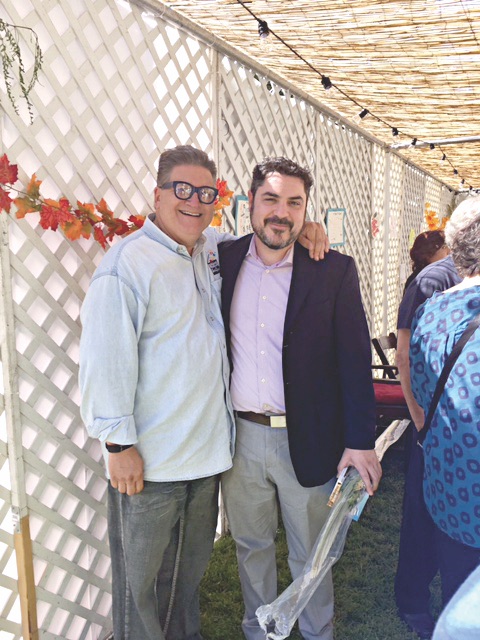
California State Sen.Robert (Bob) Hertzberg’s Oct. 8 Sukkot brunch and legislative update drew about 30 Jewish social justice leaders.
Guests gathered inside a sukkah at his Van Nuys home as Hertzberg, a member of the California Legislative Jewish Caucus, discussed a package of housing bills written to address the state’s homeless crisis and his commitment to reforming the cash bail system, which he said undermines the American idea of the presumption of innocence.
Valley Beth Shalom Rabbi Noah Farkas also attended and was a guest speaker. He drew connections between the fragility symbolized by the sukkah and the situation facing the homeless. He also discussed the symbolism behind the lulav and the etrog, two of the four species used during the holiday of Sukkot, which was Oct. 4-11.
Barri Worth Girvan, Hertzberg’s district director, welcomed guests and asked everyone to introduce themselves as one big family.
Artwork from San Fernando Valley synagogues Temple Beth Hillel and Adat Ari El, which are located in Hertzberg’s legislative district, decorated the sukkah.
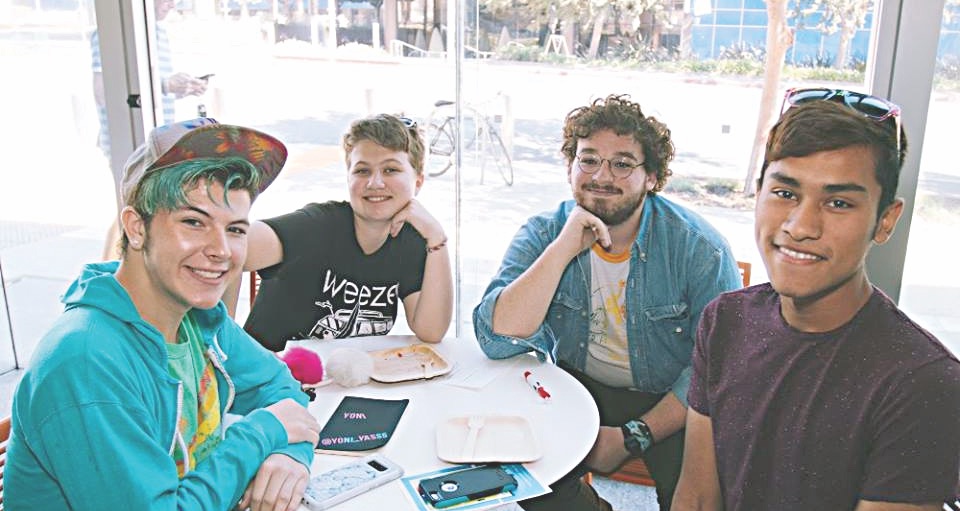
From left: Teenagers Yoni Kollin, Sunshine Schneider, Maccabee Raileanu and Anthony Palomera participated in a JQ International Forum, “Today’s Teens: Voices of Queer and Ally Youth.” Photo by Anna Michele Falzetta.
The Teen JQSA (Jewish Queer Straight Alliance), the first communitywide youth group in Los Angeles and the San Fernando Valley for lesbian, gay, bisexual, transgender, queer, questioning (LGBTQ) and ally Jewish teens ages 13-18, held an Oct. 8 panel titled “Today’s Teens: Voices of Queer and Ally Youth” at the West Hollywood City Council chambers.
JQ International, Builders of Jewish Education and the city of West Hollywood organized the event. Teen JQSA is a JQ International program.
Panelists Maccabee Raileanu, Yoni Kollin, Sunshine Schneider, Anthony Palomera and Emma Aronoff-Aspaturian discussed challenges facing LGBTQ youth.
“I just want my administrators and directors and adults in my corner of the Jewish community to realize what they’re really asking when they ask for queer teens to be their own advocates,” said Raileanu, a longtime JQSA participant and El Camino Real Charter High School senior. “I want them to step into the shoes of the people they’re talking to, because then I think a lot of changes will happen. They will realize how scary and how weird and uncomfortable that experience can be, and they’ll step up as the adults in the situation and realize what they’re working with.”
Social media personality Stephanie Frosch, known on YouTube and Instagram as ElloSteph, moderated.
The gathering drew about 50 attendees, including JQ staff members Asher Gellis, Arya Marvazy, Anna Goodman and David Kazdan, and Temple Judea Rabbi Samuel Spector.
Organizations that partnered with JQ to make the event possible included Congregation Kol Ami, Hebrew Helpers, the Malibu Jewish Center and Synagogue, Kol Tikvah, IKAR, Adat Ari El and Camp Lightbulb, an overnight summer camp for LGBTQ young people.
JQ has been engaging in teen health and wellness work thanks in part to a grant from The Jewish Federation of Greater Los Angeles and its L.A. Jewish Teen Initiative.
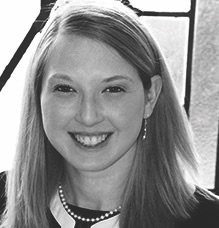
Alyse Golden Berkley, the new board president of the Jewish National Fund Greater Los Angeles. Photo courtesy of Jewish National Fund.
The Jewish National Fund (JNF) GreaterLos Angeles has named Alyse Golden Berkley as its board president.
Berkley succeeds Matt Fragner, who has served as JNF regional president for the past two years.
A JNF Oct. 16 press release announcing Berkley’s appointment said she is a “proud Zionist and active within the Jewish community.”
In a 2016 video, Berkley said her life changed after participating in a five-day JNF mission to Eilat.
“I actually could see the difference that I could make in my lifetime for Israel,” she said. “I could make a difference and I could improve the life of Israelis. Now, I devote pretty much close to full time volunteering for the Jewish National Fund, which is my pleasure, my honor.”
In a statement, JNF Greater Los Angeles Executive Director Lou Rosenberg welcomed the new regional president.
“We are very excited to have Alyse assume the leadership of Greater Los Angeles,” he said.
According to its website, JNF is the “single largest provider of Zionist programs in the U.S. Its work is divided into seven program areas: Forestry and green innovations, water solutions, community building, Zionist education and advocacy, research and development, heritage sites, and disabilities and special needs.”
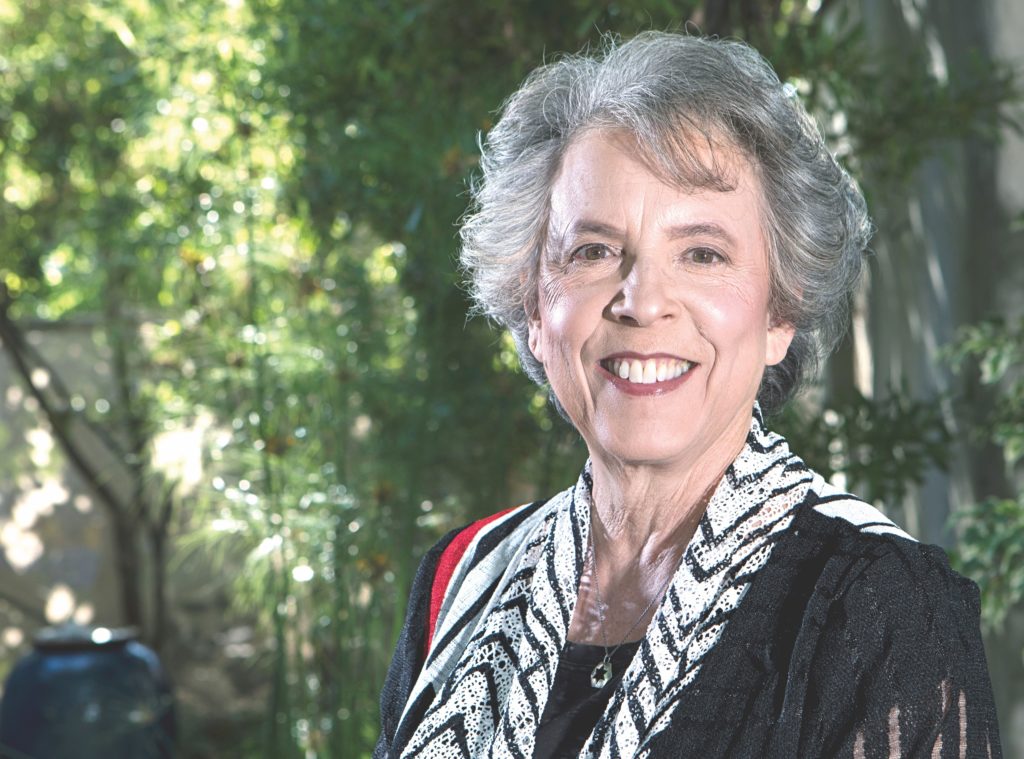
Temple Emanuel of Beverly Hills Rabbi Emerita Laura Geller was named a Next Avenue Top 50 Influencer in Aging for 2017.
Next Avenue, a journalism website focused on America’s booming older population, has named Temple Emanuel of Beverly Hills Rabbi Emerita Laura Geller as one of its Top 50 Influencers in Aging for 2017.
Next Avenue recognized Geller for her efforts in creating Next Stage: Boomers & Beyond, an initiative designed to address the needs of community members who are 50 and older, and her more recent venture founding ChaiVillageLA, a partnership between Temple Emanuel and Temple Isaiah that enables people to age in place as they grow older.
Working in partnership with public television organizations, including PBS, Next Avenue divides its coverage into five areas: health and well-being; caregiving; money and security; work and purpose; and living and learning.
Geller, the third woman to become a rabbi in the Reform movement upon her ordination in 1976, was the only Jewish clergy member named to this year’s list. She made baby boomers a focus of her pulpit before her retirement in 2016, even speaking about it from the bimah during the High Holy Days.
Geller served at Temple Emanuel for 22 years. She currently is working with her husband, Richard Siegel, on a book titled “Getting Good at Getting Older: A Jewish Catalog for a New Age.”
Based on a statement she provided to Next Avenue regarding one thing she would change about aging in America, Geller said, “I would encourage the creation of religious and secular rituals to mark transitions in the journey of growing older, whether closing a family home, becoming a grandparent, reaffirming marital vows, sharing ethical wills or beginning new adventures. Marking transformations provide spiritual and practical guides for growth, connection and wise aging.”
Entertainment executive David Geffen has pledged $150 million to the building LACMA campaign. Photo by Bruce Weber
The Los Angeles County Museum ofArt (LACMA) has received a $150 million pledge from Jewish philanthropist and entertainment executive David Geffen toward the museum’s new galleries, raising the fundraising total for the Building LACMA campaign to $450 million. The campaign goal is $650 million.
In a press release, LACMA described the donation as “the largest single cash gift from an individual in the museum’s history. … [T]he new Peter Zumthor-designed building will be called the David Geffen Galleries in honor of his extraordinary gift.”
The David Geffen Galleries will replace four of the museum’s current seven buildings.
“At a time when federal funding for the arts is threatened, it’s important that we foster public-private partnerships, like this one, to support arts and cultural institutions,” Geffen said in a statement. “We must ensure that the public, everyone, has access to these venerable institutions. I am proud to partner with the County and other members of the community in helping LACMA move this remarkable project from vision to reality. Together, we can and must make sure every person has access to the arts.”
LACMA CEO and Director Michael Govan said Geffen’s gift is an unprecedented gesture of dedication to the exhibition of the arts in Los Angeles.
“David’s commitment demonstrates his belief in the power of art museums to reach a broad and diverse public and create significant civic benefit,” Govan said.
LACMA board of trustees co-chairs Elaine Wynn, a Jewish businesswoman who co-founded Mirage Resorts and Wynn Resorts, and Jewish-American businessman Tony Ressler also expressed gratitude for Geffen’s contribution.
Geffen, 74, is a movie and music mogul who founded Asylum and Geffen records and co-founded DreamWorks SKG with Steven Spielberg and Jeffrey Katzenberg. The son of parents who met in what was then Palestine, his estimated net worth is $7.8 billion.
From left: Friends of Sheba Medical Center Executive Director Nina Lieberman, honoree Shannon Massachi and gala emcee John Lithgow. Photo courtesy of Friends of Sheba Medical Center, Tel Hashomer.
Actor John Lithgow hosted the Friends of Sheba Medical Center’s 47th anniversary gala, “Embracing Our Future,” on Oct. 15 at the Beverly Wilshire Hotel.
Philanthropists Robert and Beverly Cohen co-chaired the event, which drew 725 guests and raised more than $2.5 million for the medical center in Tel Hashomer, Israel. The funds will be used to support Sheba Medical Center’s new neonatology center. Sheba’s Department of Neonatology and Neonatal Intensive Care is one of the largest in Israel and births approximately 170,000 babies annually, including those born prematurely or requiring intensive care treatment.
Keynote speaker Dr. Tzipi Strauss, chief of neonatology at Sheba Medical Center, discussed Sheba’s work in advancing neonatal care.
Meanwhile, Lithgow presented Shannon Massachi, an e-commerce entrepreneur who has helped promote and advance Sheba’s medical research and pediatric neuro-oncology work, with the Laurel of Leadership award. After dinner, the Ruth Flinkman-Marandy and Ben Marandy family received the Professor Mordechai Shani Lifetime Achievement Award in recognition of their support for education, art, research, health, Israel and Sheba Medical Center.
Attendees included Marilyn Ziering, who announced a $1 million donation; Max Webb; Soraya and Younes Nazarian; Stanley Black; Jean and Jerry Friedman; and Dina Leeds.
Lithgow’s appearance included the reading of an original fairy tale about the life-saving work of the medical center, written by Hollywood writer and producer Jeff Astrof. The fairy tale featured a tiger and a goat — natural enemies — meeting and becoming friends through their life-saving treatment at Sheba Medical Center.
“And Noah built an altar to the Lord, and he took of all the clean animals and of all the clean fowl and brought up burnt offerings on the altar. And the Lord smelled the pleasant aroma, and the Lord said to Himself, “I will no longer curse the earth because of man, for the imagination of man’s heart is evil from his youth, and I will no longer smite all living things as I have done. So long as the earth exists, seedtime and harvest, cold and heat, summer and winter, and day and night shall not cease.”
Rabbi Nicole Guzick, Sinai Temple
I can only begin to imagine the destruction Noah witnesses while living inthe ark. The world weeps. Outside, humanity drowns in chaos, and inside the ark, Noah and his family have one choice to make: succumb to the fear of a now unknown world or re-enter the world and rebuild anew. And with the building of an altar, Noah’s choice is clear. Time and time again, in the face of desolation and despair, it is within the human spirit to rebuild and repair. As difficult as it sounds, even as death knocks on the door of the ark, Noah chooses to thank God for the gift of today.
It is God’s reaction that is most astounding. It seems in response to Noah’s courage and resilience, God whispers, “If you’re not running away, I guess I won’t, either.”
Life continuously presents challenges and frustrations. Noah’s choice is the one we make daily: drown or rebuild. Look out at the world and determine that we are no match for the uncertainty and unpredictability of our life’s course, or wholeheartedly remember that our souls have the capacity for constant growth and resurgence. We are meant to get out of the ark and live.
Perhaps the most comforting message is that in life’s tumultuous journey, we are not alone. God is reassured by our willingness to survive. It is a partnership of faith — humanity’s faith that God will guide us through the murky waters and God’s faith that humanity will continue to swim.
We are taught that God is all-knowing and constant. Yet, in our verse, we experience a God that changes. The reason God gives for sending the devastating flood in the first place, wiping out humans, is because humans “act in corrupt ways and incline toward evil.” Yet, after the flood, God’s response is different. God recognizes that humans still have evil tendencies but proclaims acceptance and vows to never wipe out humans again! The people are the same. God changes. God’s severe judgment gives way to compassion and commitment. Perhaps God accepts the reality of human nature and decides to love the people, anyway. To cement this new relationship, God confirms the stability of the seasons, and the sure cycle of day and night. Humans participate in this order by planting and harvesting. In these three verses, we can learn two profound lessons. First, if God’s heart can change from harsh damnation and give way to compassion, perhaps so can ours. Second, we can be conscious and grateful each day for the constancy of the natural order that we so often take for granted. In the midst of darkness, it is of great comfort that the sun comes up in the morning. In times of evil, the seasons continue to turn. Where (or against whom) in your life do you harbor judgment that your heart might turn toward compassion? Today, how might you appreciate being held by the rhythm of life itself?
David Brandes, film producer and screenwriter
On the sixth day of creation, God creates man and is pleased. But in the next few chapters of Genesis, it’s all downhill for man. Adam and Eve disobey God and are expelled from the “Garden.” Cain slays Abel.The rebellious generation of the Tower of Babel descends into perversity and evil. God’s cataclysmic response: the flood, in which man, animals and nature are decimated. As the story progresses, Noah leaves the ark and offers sacrifices to God. God accepts the sacrifices but reveals a damning observation: “Man is possessed of an evil nature from youth.”
This bleak story raises troubling questions. If God knew that man was flawed, why save him? Why not destroy everyone and start again? And for us mortals: If we are evil by nature, doesn’t that leave us in a state of hopelessness and despair?
If we look at the Bible as drama, and man as the ultimate flawed hero, a resolve emerges. The first part of the story, man’s ugly history, is the setup presented to explain and justify the Torah given by God to Moses later in the narrative. At its core, the law is about dealing with our fellow man, to make life pleasant for all, to overcome the evil inclination within.For it is in the laws of the Torah that the redemption of man rests. Elegantly put by Hillel, “What is hateful unto you, do not do to your friend. …This is the whole Torah.”
Redemption is hope.
Rabbi Daniel Bouskila, Director of the Sephardic Educational Center
Dear God,
In the beginning, you created heaven, earth and everything else, and you “saw that it was good.” You created me, and you “saw that it was very good.” But just a few chapters later, I went from being “very good” to becoming the source of your deepest regret. I was continuously thinking evil thoughts, so you decided to blot out my existence. Save for one “righteous” person, I wouldn’t be here.
After your destructive deluge, the sole survivor expressed his gratitude by offering a sacrifice. Your reaction was perplexing: You’ll never bring on another destructive flood, because “man’s imagination is evil from his youth.” But is it not you, dear God, who created me this way? Why the sudden epiphany? It took creating and nearly wiping me out to realize that I’m doomed to live with this built-in factory defect?
No wonder the “human condition” is so harsh. It’s not surprising that in the great 2 1/2- year talmudic debate on human existence, Shamai’s pessimistic conclusion — “It would have been better for man not to have been created” — ultimately won the day.
Be that as it may, I’m alive and here, leaving me no choice but to follow Hillel’s optimistic position: “Examine my deeds carefully.” In other words, I’ll try to make morals, ethics and love, as per your commandments, my sole mission on this earth. Despite the defect, dear God, I’ll try to be the best I could be.
Respectfully,
Humankind
Rabbi Tzvi Freeman, senior editor at Chabad.org
This is amazing. Everyone expects a miracle to be unexpected. It’s gotta break the patterns of nature. The stuff cinematic eye candy is made of.
But here is a divine promise for the greatest of miracles: The innumerable atoms, cells, organisms and celestial bodies that make up this world will harmonize into cyclical seasons so that we can plant and harvest, plan and build, raise our children and tell them to take care of this place.
That is wondrous. The more we understand, the more wondrous it becomes. Why should anything be constant in a world defined by change?
When the sun rises just a little south of where it rose yesterday, when the trees shed their suntime wear and squirrels obsess over hoarding seeds, nobody sees a miracle. Winter comes and goes, life erupts again in green, yellow, purple and red — still, nobody is surprised.
But a Jew makes a blessing in the morning to “He who spreads the earth over the waters.”
Get that? You went to sleep, there was a floor beneath your feet. You wake up, it’s still there. So you say, “Gevalt! What a miracle! God, I love how You do this!”
A Jew grabs a sandwich and makes a blessing for the miracle of “bringing bread out of the earth.” Amazing. Earth to bread! You’re eating a miracle!
So why aren’t we living in constant wonder?
That is the days of Moshiach — when we will be amazed each morning by the rising of the sun.
During a 2004 Torah class in B’nai David-Judea Congregation’s sukkah, a rabbinic intern explained that when God told the Israelites to “do my work,” it was a commandment to feed the hungry, clothe the naked and visit the sick.
Nimmer took the message to heart. “We should do this,” he recalled saying. “We should invite some poor and hungry people into the sukkah.”
The congregation made an effort, extending lunch invitations to a number of homeless people in its Pico-Robertson neighborhood.
Only one person showed up.
“It was not the most auspicious beginning,” said Nimmer, a former B’nai David-Judea president. “But it was a beginning.”
On Oct. 10, some 70 people gathered for what has become an annual sukkah breakfast, part of a B’nai David-Judea program that serves monthly meals to about 60 homeless people. The program is celebrating its bar mitzvah year.
Inside the sukkah, B’nai David-Judea members and students from nearby Pressman Academy sat alongside homeless people, chatting with them and bringing bagels, cereal, coffee and juice to those too frail or too tired to stand in line themselves.
The monthly meals are usually served by students from Yeshivat Yavneh or Yeshiva University of Los Angeles, but Pressman students serve on Sukkot.
As the morning continued, attendees learned about traditional Sukkot customs, heard some Torah from B’nai David-Judea’s Rabbi Yosef Kanefsky, and sang, danced and shook the lulav.
Noah Weissberg, 13, was busy pouring cereal and milk into bowls for people waiting in line. “It’s really nice to see the people and talk with them,” he said. “It’s just a good thing to do. They seem really happy and we make them feel good.”
As the program grew over the years, it began to draw many from the Russian-Jewish immigrant community. To accommodate those Russians who speak no English, the synagogue now serves two monthly meals, including one specifically for the Russian community.
This year’s Sukkot meal, though, was a combined event with plenty of Russian being spoken. One attendee, Eugene, apologized for his broken English but said he loved the monthly meals, “because I did not grow [up] with Judaism in the Soviet Union.”
He waved off a reporter’s attention, saying, “I am nobody.” But on this day, every homeless person was treated as special, and Eugene said he enjoyed all the “Jewish things.”
Those things included Pressman students showing attendees how to shake a lulav if they wanted to try. Three girls assisted an elderly Spanish-speaking woman in saying the blessings over the lulav, explaining everything in Spanish.
Take a look around at everyone here and see how miraculous it is.” – Rabbi Yosef Kanefsky
It was a festive, raucous morning, with people stomping their feet, clapping, singing, and even forming a conga line with Kanefsky at the lead.
Among those enjoying the festivities was Jesse, who said he had worked for 22 years cleaning the stands at Dodger Stadium, “But I’m retired now.” Jesse said he had attended the monthly lunch previously, but not the Sukkot meal. “This is all so new,” he said, “but I love it.”
He made an effort to shake the lulav and recite the blessings. “It’s so wonderful how the kids come and talk to you,” he said. “It’s really a beautiful thing.”
Jesse said that when he has attended the monthly meals he has also picked up one of the Ralphs grocery store gift cards Kanefsky has distributed to homeless people for years.
The number of gift-card recipients has grown so much that the synagogue eventually created a registration system to control costs, Kanefsky said, “but we also have smaller denomination cards for unregistered people who show up so that no one ever walks away empty-handed.”
With the meal program in its 13th year, Kanefsky said the challenge is constantly assessing “How are we meeting the needs of this [homeless] population and how are their needs changing?”
Standing in the sukkah, Kanefsky noted during his drash the impermanent and precious nature of life. “If we can enjoy the things while they are here, then our lives will be rich with fulfillment and joy and memories that will last us a lifetime,” he said. “Take a look around at everyone here and see how miraculous it is.”
B’nai David-Judea will commemorate the program’s anniversary with a Nov. 5 community brunch. Evangelical author and speaker Philip Yancey will discuss how to care for society’s less fortunate. The event will also feature Torah learning on feeding the hungry.
A Hebrew-language charter school in Van Nuys plans to appeal to the Los Angeles County Board of Education the denial of its charter renewal by the Los Angeles Unified School District (LAUSD).
On Oct. 3, the LAUSD Board of Education voted, 6-0 with one abstention, to deny the renewal of Lashon Academy Charter School’s charter.
Of the school’s 350 students, about 40 percent are Hispanic, 50 percent are white and 10 percent come from other backgrounds.
In 2013, the LAUSD board approved Lashon Academy’s charter status, and the school opened the following year. The school submitted a renewal petition this year because, like all charter schools, it was required to have its charter status reviewed and approved every five years.
The curriculum of the publicly funded, tuition-free school includes Hebrew and Israeli history and culture. Lashon (Hebrew for “language”) has been the only LAUSD-authorized, Hebrew-language charter school.
In an Oct. 3 report, LAUSD administrators recommended the denial of the school’s charter because, among other reasons, the school’s demographics did not reflect the makeup of its immediate surrounding area.
Of the school’s 350 students, about 40 percent are Hispanic, 50 percent are white and 10 percent come from other backgrounds.
Lashon Academy’s Executive Director Josh Stock said the school is more diverse than the data indicated because the school’s white students include immigrants from Russia, Iran, Israel and elsewhere who are learning English as their second language.
Because a school featuring Hebrew-language instruction draws a significant population of white students, he said, it’s unrealistic to expect the school’s population to mimic its surrounding area.
“We’re not getting students from a mile, two-mile radius. Our average kid is driving 10 miles to get to our school,” he said. “To compare us to the school next door is unfair.”
The LAUSD report also said the school had demonstrated an intent to avoid providing special education services in accordance with LAUSD policies and procedures.
Stock said the school wanted more flexibility in purchasing special education services because it was not satisfied with the services LAUSD providded.
Since opening in 2014, Lashon Academy has added a grade every year and now has students in kindergartern through 5th grade. It plans to continue adding a grade each year until it has grades K-8.
At the LAUSD board meeting, District 6 Board Member Kelly Gonez, whose district includes Lashon Academy, said she considered it a high-performing school.
Nick Melvoin, the board’s only Jewish member, said in an interview that he voted against renewing the charter because the school had not been able to resolve its differences with the school district.
Stock said he is confident the school will continue to operate. “I don’t think we’re going to close. I think we’re going to appeal to the county and be successful.”If the appeal to the county fails, he said the school would appeal to the State Board of Education.
“There is no reason why [students who] have a passion for the Hebrew language or Israeli history should not have an option to get a public education that represents that,” Stock said.
Tarzana resident Sara Dagan said she enrolled her three children in Lashon because she wanted them to feel connected to their Israeli heritage in a public school environment.
“It’s not like I have an alternative,” she said. “I won’t be able to afford taking them to private school, to day school, so anything other than Lashon would be a compromise for me.”
There are no holidays in the month of Cheshvan. No day in Cheshvan to prepare for and say this is the particular face we focus on to guide us towards what is holy now. No guide for my eyes and heart to land on to celebrate You.
It’s the mysticism of ordinariness. The mysticism, perhaps, of boringness, of this is what you get when the magic stops.
This moment.
Of pancakes and the pancreas,
Of over-reacting, of relaxing, of this un-particular face of holiness


 Shortly before the speech, ADL leaders learned that the national press and the then novel TV cameras would be observing and what was going to be routine was now a “major policy address.”
 On Monday night, Sen. John McCain spoke at the National Constitution Center as he received its Liberty Medal. It’s a passionate statement about what’s important and unique about America.
 fabrication…. We have seen our discourse degraded by casual cruelty. At times, it can seem like the forces pulling us apart are stronger than the forces binding us together. Argument turns too easily into animosity. Disagreement escalates into dehumanization. Too often, we judge other groups by their worst examples while judging ourselves by our best intentions – forgetting the image of God we should see in each other.