fbpx

July 31, 2017

Why I celebrate on a day of mourning

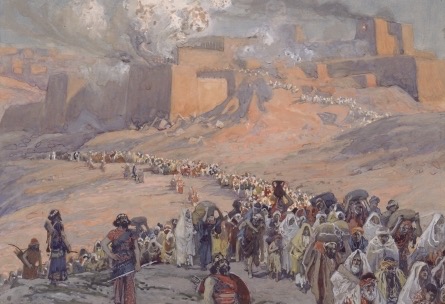
Just over 2600 years ago, Babylonian armies destroyed the holy temple in Jerusalem, ransacked the ancient Kingdom of Judah, murdered scores of people throughout the kingdom (known as “Jews” – ie, the people of Judah), and hauled off scores more as captives, to the land of Babylon.

Fifteen years ago, around this very day, I stood on the edge of the land that once was a small city in that ancient Kingdom of Judah – on the exact spot where the city guard looked from his tower into the distance and saw flames of light extinguishing in surrounding towns. The ensuing darkness signaled that the Babylonians were approaching and the end was near.

A chill went through my spine.

While the rest of the people on the tour continued walking around the ancient city ruins, I stayed glued to that spot, feeling the warm breeze on my face, looking out into the expansive distance, imagining the terror that must have shot through the city people as they awaited their fates.

Their end was my beginning: the beginning of an exiled people in Babylon, who over the millennia transformed into a thriving, vibrant community — writing the authoritative Babylonian Talmud, launching the first ever Jewish learning institutions (yeshiboth, commonly known as yeshivas), and otherwise developing a rich and unique culture full of stories, music, language, spiritual teachings, architecture, prayers, dance, scholarly works, art, and religious rituals.

After nearly three millennia, my ancestors were sent packing once again: In 1950, my family was among the 100,000 Jewish refugees from Baghdad alone – forced to flee after a surge of anti-Jewish violence throughout the Middle East and North Africa. Most of these refugees, including my family, were absorbed by the modern state of Israel. As in hokey-pokey style: One foot in, one foot out.

While my grandparents, six aunts and one surviving uncle remained in Israel, my father continued his migration to Massachusetts, where he chose to go to graduate school.  There he met my mother, who had been on her way to New York from Colorado. When she’d gotten to the Massachusetts/New York fork in the interstate, however, she spontaneously decided to go north instead.

Together, they raised my sister and me as headstrong Iraqi Jews in Canada and California — teaching us the songs, prayers, religious rituals, food, personal and communal stories, Hebrew pronunciation, and a little of the language of Iraqi Jews.  (I can say the most important things in Judeo- Arabic: “watermelon,” “barefoot,” “hammer,” and “my stomach hurts.”)

I went on to disseminate this knowledge across the world, over the course of two decades, as part of my ground-breaking Jewish multicultural work. Still, as tirelessly as I worked, I could not re-create Jewish life in Baghdad. I was unable to undo the violence and destruction that Iraqi Jews had faced. I was unable to bring back everything that was lost in the upheaval and uprooting. I was unable, in short, to resurrect the Iraqi Jewish community — to bring it back to life as it once was, in bold Technicolor.

What’s worse, over the past few decades, those who grew up in Iraq have been growing old and dying. Meanwhile I have been isolated from so many of these people, for a number of complex reasons. I am an exile within a family and community of exiles. So where does that leave me?  Who am I?  And who will I be when the older generation passes?

Throughout the Jewish community around the world, thsa b’ab is a memorial day — a day of fasting, prayer, and commemoration.  It is a dark day, when people read paradoxically depressing yet triumphant stories about Jews who chose death over forced conversion, even when they had to watch their own children be killed before them. Today is also considered a day of terrible luck, replete with trembling fear, because the temple was destroyed not once, but twice on this day (the second time by the Romans, 656 years later).

I always have struggled with what exactly to do on this day. We are guided to actively induce a sense of grief and despair, so as to honor those before us and to remember being cast from freedom in our own land to captivity in someone else’s. But how, I wondered as a 14 year old in San Francisco, was I to do that, and what use was it anyhow? Actively feeling miserable and scared of moving all day long, because lordy knows what might go wrong next?

About a decade ago, I read an article by someone who suggested that this day actually should be one of celebration and honor: Yes, the temple was destroyed. Yes the kingdom was ransacked. Yes the people were hauled off as exiles. But look what’s come of it: vibrant Jewish life around the world, with the Babylonian exile reaching the far corners of the Middle East, North Africa, and Central, East, and South Asia, and the Roman exile stretching across all of Europe and the Americas.

As a Jewish multicultural educator, that spin resonated with me. Plus it was just so positive, so full of life and the pulsing rhythm of eternal change and transformation. It celebrated Jewish resilience and creativity and adaptation as a people, always surviving, always thriving, always pushing forward into new horizons.

And so, I realized, it is with me personally: Iraqi Jewish life is now gone, as Judean Jewish life once was gone as well. What stands in its place, in my shoes, is a vibrant, creative, pulsating mix of East and West, old school and cutting-edge, religious and secular, traditional and feminist. I express this mashup of perspectives by writing original songs for my band, Iraqis in Pajamas, which fuses punk rock with Iraqi Jewish prayers – making me a living, breathing, invigorating 21st century incarnation of all who came before me. Just like my Jewish ancestors on the rivers of Babylon, I am the beginning of something new.

And that is cause for celebration.

For two decades, Loolwa Khazzoom served as a pioneering Jewish multicultural educator, offering programs worldwide and publishing books and articles teaching about global Jewish heritage. She now channels her Jewish multicultural passion into her all-originals band, Iraqis in Pajamas, for which she is the singer, songwriter, and bass player.

Why I celebrate on a day of mourning Read More »

Trump to meet with US ambassador to Israel over Temple Mount crisis

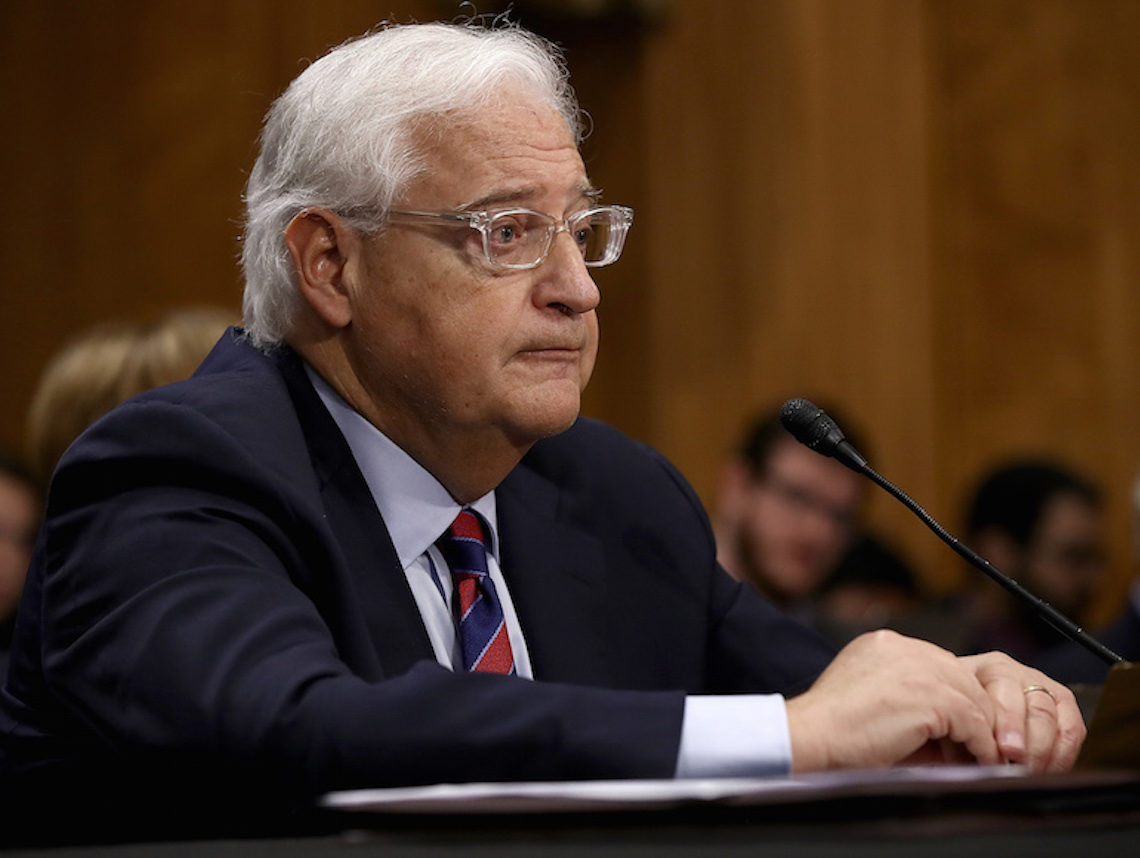
President Donald Trump will meet with the U.S. ambassador to Israel, David Friedman, in Washington, D.C., to discuss the Temple Mount crisis.

The meeting is scheduled for late Monday morning, Haaretz reported. An unnamed White House official told the Israeli newspaper that Friedman was coming to Washington this week “as part of a long-planned trip.”

“In addition to a variety of meetings, he will be meeting with the president, Jared Kushner and Jason Greenblatt tomorrow to discuss the events that transpired in the region over the past two weeks where tensions have recently lowered,” the official told Haaretz.

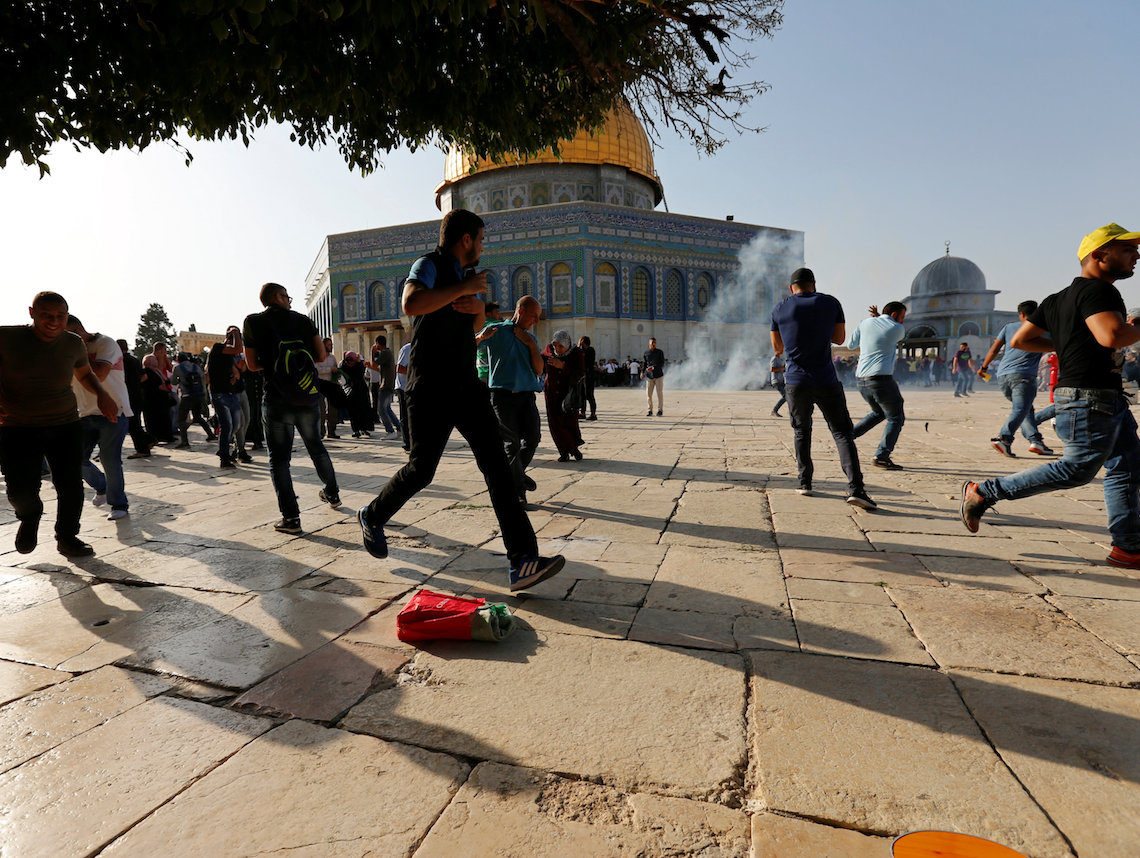
Friedman reportedly was involved in working to reduce tensions over the increased security measures at the Temple Mount, which ultimately were removed. The metal detectors and other measures were installed after a July 14 attack by three Arab-Israeli men that left two Druze-Israeli police officers dead.

Greenblatt, Trump’s special envoy for international relations, also visited Israel last week, also in a bid to help lower the tensions at the Temple Mount.

Both men last week visited the shiva for three members of the Salomon family who were killed by a Palestinian assailant as they sat at their Shabbat table in the West Bank settlement of Halamish celebrating the birth of a baby boy in the family. Friedman also visited the families of the Israel Police officers killed on the Temple Mount.

Trump to meet with US ambassador to Israel over Temple Mount crisis Read More »

Lessons learned from Temple Mount crisis on ‘ultimate deal’

As President Donald Trump continues his quest to reach the “ultimate deal” between Israelis and Palestinians, Washington-based foreign policy experts say the administration should see the recent Temple Mount crisis as a cautionary tale before forging ahead.

[This article originally appeared on jewishinsider.com]

“The administration invited [Palestinian Authority President Mahmoud] Abbas to the White House to meet the president in exchange for nothing. His [Abbas’] conduct since then suggested that they made a bad bet,” said Elliott Abrams, a former top official in the George W. Bush administration. “He incited violence in the crisis over the Temple Mount. He did not try to cool things down and not say there are metal detectors in Mecca, so there can be metal detectors here, too.”

Abrams, who currently works as a senior fellow at the Council on Foreign Relations, added, “I would hope that the administration would let [Abbas] know that all of this has been seen and understood, and that it has gone a long way to destroy confidence as a reliable interlocutor, and that the next time an administration representative meets with him, they let him know there will be no meetings at the top levels like the president or secretary of state.”

For Dan Arbell, a former senior Israeli diplomat, the lesson is for more U.S. active involvement. The Trump administration should adopt a “much more hands-on approach — starting to make the phone calls to the leadership and relevant players early on and not wait until things get out of hand before intervening,” he said.

While senior administration officials Jason Greenblatt and Jared Kushner were involved, Trump and Secretary of State Rex Tillerson did not place any calls to Israeli or Palestinian leaders during the two-week crisis, according to media reports.

“We are now 6 1/2 months into the administration and they are still in this fact-finding learning curve and trying to put together some sort of formula,” Arbell said. “We are reaching a certain point where the Palestinians are losing their patience and are beginning to wonder whether this administration is going to back up these words with actions. The idea is to keep the ball moving forward, because if you don’t, then you end up in crisis situations that only bring setbacks. People are waiting to see whether this talk of an ultimate deal is actually something real or just a campaign promise that is not being delivered.”

With the annual United Nations General Assembly meeting scheduled for September, Arbell called for intensifying U.S. diplomatic efforts to avoid alienating the Palestinians, which could lead to Ramallah restarting its drive to internationalize the conflict and join U.N. agencies, and prompting a backlash from the Israeli government.

While Trump has repeatedly touted his negotiating skills, Frank Lowenstein, the top Middle East envoy during the end of the Barack Obama administration, emphasized the similarities in the issues facing current U.S. officials with those dealt with in previous years.

“If there is anything that the Trump administration may have seen in the months that they have been working on it, it is they have been running into the roadblocks that we ran into from both sides,” Lowenstein said.

This difficulty in bringing about tangible results should cause the White House to reassess its policy, Lowenstein said. “They are going to have to make a decision [about] how they want to proceed,” he  said. “Is it really worth investing time, energy and political capital on something that the parties themselves don’t appear to be genuinely committed to moving forward?”

Lessons learned from Temple Mount crisis on ‘ultimate deal’ Read More »

Sarah Halimi, Sisyphus and the denial of anti-Semitic violence

It took too long for the French people to recognize the Jewish victim of a brutal April 4 murder by name. After weeks of indifference by media outlets and politicians, French President Emmanuel Macron demanded publicly that the judiciary shed light on the nature of the crime. 

Significantly, Macron spoke of Sarah Halimi during the ceremony marking the 75th anniversary of the Vel d’Hiv, the roundup of more than 13,000 French Jews during the Holocaust in 1942.

“Despite the denials of the murderer, our judiciary must bring total clarity around the death of Sarah Halimi,” Macron said, adding that “we were silent, because we did not want to see.”

Halimi’s face and body were fractured in multiple places. The 65-year-old had been afraid of her suspected attacker and his sister’s anti-Semitic insults for some time. Her suspected assassin is reported to have called Halimi a “dirty whore” and “Sheitane” (Arabic for Satan), and recited verses from the Quran as he beat her severely, shouting “Allahu Akbar” (God is great) before defenestrating her.

All of France should have been shocked by this horror, and should have risen up asking for truth and justice in support of this woman assassinated in her home simply because she was Jewish. Instead, everyone buried their heads in the sand. The prosecutor still has not designated Halimi’s murder as a premeditated anti-Semitic act.

Once more, all those fighting for French society to stand up against anti-Semitic violence find themselves in the same position as the mythological hero Sisyphus, condemned for all eternity to perform the impossible task of pushing an immense boulder up a steep hill each day, only for it to roll back down as the sun sets.

How many years have we implored French authorities and society to react to the rising number of anti-Semitic incidents? How many times have we heard attempts by the authorities to “relativize” the situation, to explain that there is no new anti-Semitism, that the rise in anti-Semitic acts is only hooliganism?

How many years have we implored French authorities and society to react to the rising number of anti-Semitic incidents?

In 2006, very few protested the kidnapping, 24-day torture and assassination of Ilan Halimi (no relation to Sarah) by a gang led by a man born to immigrants from Ivory Coast. But notably, Nicolas Sarkozy, then France’s interior minister, declared that the murder was an anti-Semitic crime. This affirmation set the stage for yet another battle over acknowledging the source of the new anti-Semitism. This meant accepting the fact that victims of racism could themselves be racists.

It also meant understanding that anti-Semitism does not only concern Jews, but rather all of French society — that it is a virulent cancer. If left untreated, it can metastasize and destroy an entire society. Historically, in our liberal democracies, the safety of Jewish communities is an indicator of the level of health of the society as a whole.

Other courageous voices joined. The Foundation for Political Innovation carried out a study together with the American Jewish Committee, pointing out that vehement anti-Semitism comes from three sectors of the population: a substantial portion of French Muslims, the extreme left and the extreme right. Former Prime Minister Manuel Valls famously stated that “France without Jews would no longer be France,” and emphasized this inconvenient truth: “Yes, anti-Zionism has become in many parts of French society a screen that hides a visceral anti-Semitism.” DILCRAH — a ministerial delegation opposing racism, anti-Semitism and anti-LGBT hate — proposed a plan to fight this scourge, and the plan was adopted by France’s government.

Then how is it possible that after the murder of Ilan Halimi in 2006, the murder of three Jewish schoolchildren and a rabbi in Toulouse in 2012, and the terrorist attack on the Hyper Cacher kosher supermarket in 2015, France has relapsed into denial by refusing to acknowledge the reality of anti-Semitic violence when it comes to the murder of Sarah Halimi?

Maybe it was our fault, as we Jews did not want to be seen as constantly complaining. Maybe the Jewish community was unwilling to believe that in 2017, it is still possible that an elderly woman would be beaten and defenestrated just because she is Jewish.

By recalling her name at the ceremony commemorating the Holocaust-era roundup of French Jews, and by demanding justice for Sarah Halimi, Macron has broken down the wall of indifference that surrounded this drama, and has stood up for all of us, for all of France.

With these words he has, in his own way, advanced the boulder of Sisyphus.

Let us keep the boulder from rolling back down, by refusing to accept the continued impunity of those who spew the poison of anti-Semitism in France.


Simone Rodan-Benzaquen is director of the American Jewish Committee’s Paris-based Europe branch.

Sarah Halimi, Sisyphus and the denial of anti-Semitic violence Read More »

Erekat slams Trump admin’s handling of recent crisis

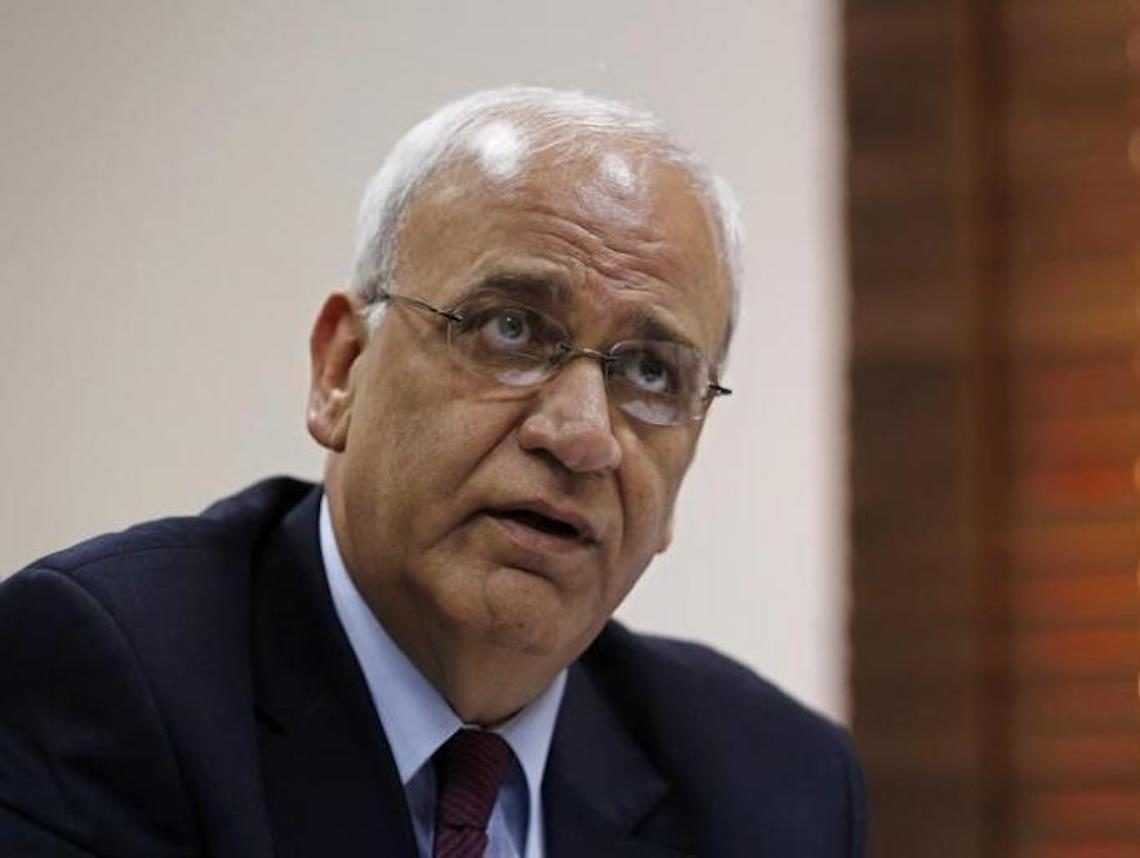
Chief Palestinian negotiator Saeb Erekat criticized the Trump administration’s mediation efforts in the ongoing Israeli-Palestinian conflict. During an exclusive interview with Jewish Insider on Sunday, Erekat complained specifically about the U.S. response to the recent Temple Mount crisis. “We don’t understand how no U.S. officials came out with any word of sympathy for the Palestinian people that have been attacked and killed by occupation forces, including settlers,” he declared.

[This story originally appeared on jewishinsider.com]

President Trump’s Middle East envoy Jason Greenblatt condemned the July 21 murder of three Israelis in their Halamish home by a Palestinian terrorist. Erekat’s complaint, however, focused on the White House’s silence over the death of several Palestinian protesters the past two weeks. On July 21, three Palestinians were killed in street clasheswith Israeli forces and although Palestinian media reported that a settler killed one Palestinian on July 21, that has not been confirmed by the Israeli government.

Last week, following the decision by Israel’s cabinet to remove the metal detectors outside the Temple Mount — after a week of deadly violence — White House Press Secretary Sarah Huckabee Sanders noted, “The United States applauds the efforts of Israel to maintain security while reducing tensions in the region.”

“There are things that we can’t understand, such as having an ambassador to the UN that is willing to block the appointment of any Palestinian at the organization,” Erekat said. “Israel announces thousands of new settlement units that make it almost impossible to achieve the two-state solution, and it’s merely met with silence from U.S. officials.”

Responding to Erekat’s criticism, a senior White House official told Jewish Insider, “As tensions in the region continue to lower, rhetoric like this is neither valid nor helpful towards everyone’s ultimate goal of achieving peace.”

Erekat’s remarks represent the highest level criticism from the Palestinian Authority of the Trump administration since February. In prior months, possibly to earn favor with the new administration, Palestinian Authority officials have repeatedly praised Trump, calling his presidency “a historic opportunity” to reach a peace deal.

While President Trump has met with both Israeli Prime Minister Benjamin Netanyahu and Palestinian President Mahmoud Abbas twice, along with numerous visits by Greenblatt to Jerusalem and Ramallah, Erekat insisted that “so far we cannot claim that any tangible progress has been achieved.”

“We would like to simply hear from the U.S. administration things we have heard before such as a reaffirmation that the endgame is to end the occupation that began in 1967, a support for the two-state solution on the 1967 borders, the Madrid Principles or that they endorse the Arab Peace Initiative,” Erekat added. At the same time, he asserted that Ramallah is still invested in the Trump administration-led talks. “We remain committed, but we do have differences that they know about.”

According to media reports, Erekat is in need of a lung transplant. Given his difficult medical condition, the veteran Palestinian official has offered far fewer media engagements in recent months and conducted this interview via email.

Regarding the Taylor Force Act — legislation that would sever U.S. economic aid to the PA unless they end payments to families of terrorists — Erekat said the PLO’s view is “obviously not a positive one, but several U.S. congressmen have to decide whether it serves its national interest or not. We have been open and willing to talk to every member of the U.S. Congress in order for them to listen to our positions.”

Lowering expectations of the Greenblatt-led process, Erekat noted, “I couldn’t claim that we’ve had any kind of negotiations yet. We’ve had several meetings, discussed several issues, but we couldn’t claim this is a negotiation process.” When asked about the Palestinian’s Plan B if the Trump led talks failed, the Palestinian chief negotiator said, “I can simply say that we will continue to exist and to struggle for our rights. We’re not going anywhere.”

Erekat slams Trump admin’s handling of recent crisis Read More »

This dog does a Nazi salute. The guy who trained him says it’s not a hate crime.

A Scottish man arrested for teaching his girlfriend’s dog to do the Nazi salute denied in court that he committed a hate crime.

Mark Meechan, 29, taught the pug, named Buddha, to respond with the Nazi salute when prompted by statements such as “Heil Hitler” and “gas the Jews.”

Meechan posted videos of the dog performing the trick on YouTube.

He appeared in court last week after being arrested in May and charged with committing a hate crime and posting a video that was grossly offensive.

The original video, posted last September on his YouTube channel, Count Dankula, has been viewed more than 2.8 million times. Meechan said on the video that he trained the dog to annoy his girlfriend.

“My girlfriend is always ranting and raving about how cute and adorable her wee dog is, so I thought I would turn him into the least cute thing I could think of, which is a Nazi,” he said.

https://www.youtube.com/watch?v=0E0Mak0cvAM


Meechan later posted a video in which he apologized for the original dog clips, saying it was a joke and that he has no such political leanings.

“I am so sorry to the Jewish community for any offense I have caused them. This was never my intention and I apologize,” he said in that video.

https://www.youtube.com/watch?v=oCgdWoIDoPU

This dog does a Nazi salute. The guy who trained him says it’s not a hate crime. Read More »

What the Temple Mount could learn from Dresden’s Holy Temple

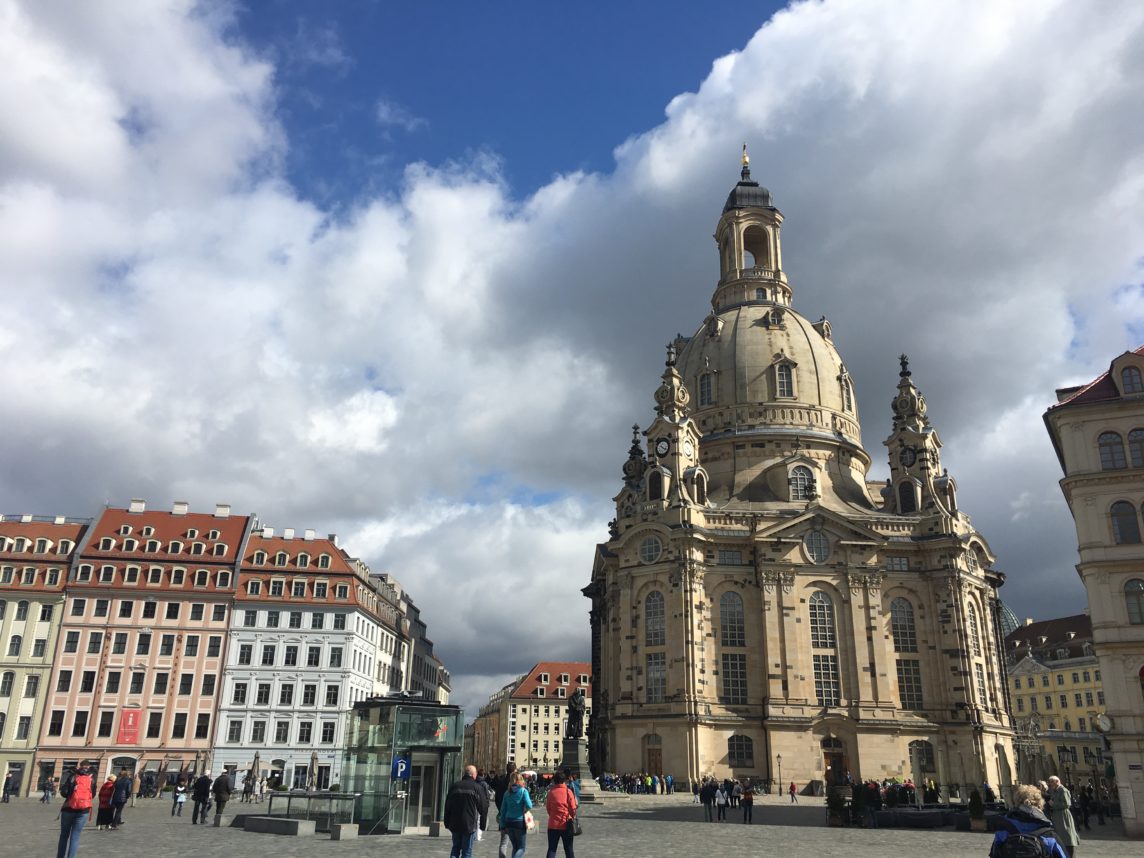
I recently prayed in the basement of the iconic Frauenkirche in Dresden, where original chambers, spared from the 1945 firebombing, serve as sanctuaries and prayer/meditation rooms. Aside from the three-dimensional cross in the center, the basement hall hardly advertises any creed.

Dresden Frauenkirche basement

Father in heaven forgive me, but I sat in the room dedicated to the Ten Commandments – the closest to my tradition – and prayed: for the peace of Israel, the world, and the blessings we all wish for ourselves and loved ones. Surprisingly, it was as spiritually fulfilling as some of my prayer sessions at the Kotel, the Western Wall.

The “Church of the Lady” was built as a glorious Protestant church in defiance of August the Strong, the Saxon ruler who controversially converted to Catholicism in his quest to secure the Polish crown. He died in 1733, a year before the Frauenkirche’s inauguration, but Bach broke in the state-of-the-art organ. Call its destruction measure for measure; during Kristallnacht of 1938, the beautiful Dresden synagogue built in 1840 burned to the ground.

Orit in front of the Frauenkirche

A day after the Royal Air Force firebombing on Tuesday night, February 13, 1945, survivors walked cautiously through the destroyed Old Town to see what was left of their homes, their city, and of course, their “Holy Temple,” the Frauenkirche. Only on Thursday morning did the beautiful Baroque dome buckle; the church’s sandstone had expanded during the fire but shrank upon cooling, causing the supports to loosen.

Only one facade remained; call it, the “Kotel” of Dresden. (Bear in mind, this is an artistic analogy, not a claim of moral equivalence between Jewish Jerusalem and Nazi Germany.) People would visit Dresden’s “Kotel” while the ruins, under communist East Germany, turned into a “Denkmal,” a memorial to war. Roses grew out of the rubble.

Finally, in 1994, reconstruction of Dresden’s “Holy Temple” began with private funding, much from England, the country that had bombed Dresden’s Old Town to bits. Original stones were placed in their original setting, thanks to special architecture software (apparently developed by an Israeli). The Church would be a symbol of peace and reconciliation. The cross was designed by the son of an RAF bomber pilot and donated by Her Majesty.

The “Kotel” of Dresden’s Frauenkirche

Today, the Frauenkirche is a pilgrimage site. As a Dresden tour guide, I take people of all races and creeds through the door of this miraculous house of worship representing love triumphing over hate. Today, Dresden, the “Florence of the Elbe” is a free city. Signs barring Jews from its plaza – long gone. I wish I could say the same for Jerusalem.

At the Frauenkirche, I don’t have to undergo the restrictions that the Israeli government and Islamic Waqf place upon Jews as they enter the grounds of the Temple Mount during “Jewish opening hours.” I don’t have to walk through metal detectors. I don’t have to show my ID. Once inside, no one shoves (or sells) me a scarf to cover bare arms. No clergy preaches how I should or shouldn’t behave. No Israeli or Muslim police shadows me to make sure I, as a Jew, am not praying.

This might sound like a sacrilege to some, but Dresden’s “Holy Temple” could serve as a model for the Temple Mount and whatever Third Temple, as a symbol of peace, will stand there.

True to the vision of the prophets, it would be a place where people of all creeds and races could find inspiration and say their prayers. As a historically Jewish site, Judaism should be given priority representation, but other religions (and atheists) should feel welcome.

Even today, the Temple Mount has its own “basement,” the Temple “Tunnels,” operated by Israeli authorities, but one could visit them only through booking a guide. For starters, the “Tunnels” should be turned into private prayer/meditation spaces for the general public.

Today, intolerant and violent Islam dominates the Temple Mount such that the Dome of the Rock and the Al Aqsa Mosque stand for Islamic supremacy and the type of mouth-frothing Jew-hatred that would make Hitler proud. For Israel to reach the level of peace that Dresden now enjoys, these domed symbols of hate may have to meet the same fate as the Frauenkirche in 1945, at the hands of those who love human freedom, human rights, and real justice and peace.

Orit at the Frauenkirche Tower overlooking the rebuilt city


What the Temple Mount could learn from Dresden’s Holy Temple Read More »

Jewish camp apologizes for flying Palestinian flag

A camp affiliated with the Conservative movement apologized after flying a Palestinian flag “as a sign of friendship and acceptance” to visiting Palestinian Muslim and Christian students.

Camp Solomon Schechter in Washington state last week hosted members of Kids 4 Peace, including Christian and Muslim Palestinian children.

In a letter sent to parents and supporters following the visit, the camp wrote: “For the sake of a teachable moment, we did raise the Palestinian flag as a sign of friendship and acceptance. It was met with uncertainty by some campers and staff, especially the Israeli’s [sic], but all understood that the message of hope for peace by flying the Israeli flag alongside helped develop empathy. Still we plan to take down all the flags for Shabbat since there is no peace and also to relieve the sadness and anger that some feel by the site [sic] of the flag.”

The letter also said the camp “remain(s) unabashedly pro-Israel and we are celebrating Israel alongside our new friends.”

In the letter of apology sent Sunday and posted on the camp’s Facebook page, the camp indicated that the Kids 4 Peace group requested the raising of a Palestinian flag alongside the U.S., Canadian and Israeli flags that are raised daily.

“We sincerely apologize that we upset some in our CSS and larger Jewish community by introducing the Palestinian flag into our educational program,” the apology said. “Camp Solomon Schechter reiterates our unwavering support for the State of Israel as the Jewish homeland.

“Camp Solomon Schechter is a proud Zionist and pro-Israel camp. We honor the Israeli Army and Israeli people on a daily basis at CSS. Our goal was to create a safe space for all, and begin dialogue among the next generation.”

The camp’s Facebook page was no longer available as of Monday morning.

Until the Facebook page was taken off line, comments were largely negative, with many saying the camp should not have raised a flag waved in support of terrorists carrying out attacks against Jews.

“This kumbaya crap is mind-blowing,” one commenter wrote on Facebook. “Yes, IF we had Arab partners in peace, we might try more efforts like this, but we don’t and you’re kidding yourselves if you believe otherwise.”

But some applauded the camp for trying to be a positive force toward peace.

“The ONLY reason one would see a Palestinian flag at CSS is to further peace, love, justice, friendship and to bring God’s love into this world,” the commenter wrote. “Honoring Palestinian children and their identity and loving Israel and being Zionists are not mutually exclusive.”

The camp’s executive director, Sam Perlin, and co-board president, Andy Kaplowitz, also issued a statement.

“Camp Solomon Schechter regrets raising the Palestinian flag alongside US, Canadian and Israeli flags on Thursday and Friday mornings and it is a long standing CSS custom to lower flags for Shabbat and raise them again Sunday morning,” the statement said. “We neglected to foresee in such actions the serious political implications and for that lapse in judgment, we are deeply sorry.”

Jewish camp apologizes for flying Palestinian flag Read More »

BRIGSBY BEAR *Director/Star Interviews and Movie Review*

Brigsby Bear is a comedic ode to nostalgia, friendship and acceptance.  When James (Kyle Mooney, Saturday Night Live) discovers he was raised by kidnappers and is returned to his biological family, he strives to take control of his life again.  Harnessing the only thing he knows, a Brigsby Bear television show which his kidnappers created just for him, he decides to write and shoot the final chapter in his beloved bear’s story.

Rather than turn James into a joke, everyone around him embraces the project and takes it on as their own.  In the process, each of them discover elements that had been missing from their own lives, like the police detective (Greg Kinnear) who always wanted to act.

Brigsby Bear also stars Mark Hamill, Claire Danes, Matt Walsh, Andy Samberg, and Michaela Watkins.  It was co-written by Kevin Costello and directed by Dave McCary, Mooney’s childhood friends.  

Brigsby Bear and the friends behind it had some bumps–or learning experiences–as they worked to complete their first feature film together.  For more about Brigsby Bear, including an interview with Mooney and McCary about the movie and their process, take a look below:

—>Keep in touch with the author on Twitter and Instagram @realZoeHewitt.  Looking for the direct link to the video?  Click here.

BRIGSBY BEAR *Director/Star Interviews and Movie Review* Read More »

Fliers in Westwood announcing launch of Hezbollah-like group has Iranian Jews on edge

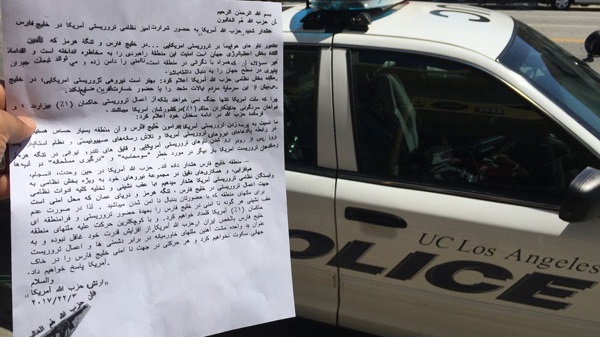
Members of the local Iranian-American community are concerned after the recent distribution of Farsi-language fliers in Westwood’s Persian Square district announcing the inception of a group calling itself the “Army of Hezbollah in America.”

The flier presents itself as “a forceful warning by ‘Hezbollah in America,’ regarding the evil military and terroristic presence of the United States in the Persian Gulf” and cautions that it will “respond to any acts in the Persian Gulf on American soil.”

News of the flier first was released by the Los Angeles-based, Farsi-language IranShahr newspaper, whose Iranian-Jewish owner, Bijan Khalili, said he discovered multiple fliers left outside the offices of his bookstore and publishing company, Ketab Corp., on July 26.

“This flier is very disturbing because we’ve never before seen such direct threats from the Iranian regime here in L.A.,” Khalili told the Journal. “This is very serious. In their letter, they are directly threatening all people living on American soil with retaliation if the U.S. continues its activities in the Persian Gulf.”

The newspaper reported that the fliers invoke language from the Quran closely associated with Hezbollah, the Iranian-backed terrorist group based in Lebanon, and Iran’s Islamic Revolutionary Guard Corps. They also refer to “the efforts of the Zionist media.”

“At the slightest action against the region’s countries, especially Iran, Hezbollah in America will not fail to increase its forces, and will act as a united steel arm of Middle Eastern countries,” the fliers state.

The fliers arrived 10 days after the paper received an anonymous phone call threatening to kidnap its non-Jewish editor-in-chief, Mehdi Aghazamani, according to Khalili.

Khalili said he and other Iranian Americans reported the flier to the Los Angeles Police Department (LAPD), which informed him it turned over information to the FBI for investigation. Khalili said he also turned over security camera footage to police showing the person who had left the fliers in the early morning.

Local Iranian-American leaders of various faiths said the incident is the first since their arrival in Los Angeles nearly 40 years ago that any group has actively voiced sympathy toward the current Iranian regime and called for retaliation against people living in the U.S.

Sam Yebri, co-founder of “30 Years After,” a local Iranian Jewish nonprofit group, said the result is a sense of unease.

“We have long feared that the violent Islamic fundamentalism that we fled in Iran would spread and follow us to America’s shores,” he said. “We urge our friends in the law enforcement and national security communities to investigate the source of these fliers with the utmost urgency and seriousness.”

The LAPD’s media relations office said it did not have information about the incident, and phone calls made to detectives at its West Los Angeles Division were not immediately returned. Laura Eimiller, a spokesperson at the FBI Los Angeles office, said the FBI is aware of the flier and assessing it, but she declined to provide further information.

Los Angeles City Councilmember Paul Koretz, whose Fifth Council District includes Westwood, said he has reached out to police, and his “chief deputy of public safety is in regular communication with the public safety counterparts tracking all leads on where this flier may have come from.”

Local Iranian-Jewish activists who have long criticized the Iranian regime said they are concerned the flier represents a new and direct threat to L.A.’s 40,000 strong Iranian-Jewish community.

“Decades of anti-Semitic incitement by the Iranian regime has produced a

generation of anti-Semites, which includes expatriates who were incited to the max during the [President Barack] Obama ‘Iran deal’ to hate the Jews for being scared of the Islamic regime after coming here and being treated like harmless guests,” said Frank Nikbakht, an Iranian-Jewish activist and head of the L.A.-based Committee for Minority Rights in Iran.

On the other hand, Roozbeh Farahanipour, a non-Jewish Iranian political activist and a Westwood restaurateur, said he is not surprised by the tenor of the fliers.

“For the past several years we have seen elements associated with the Iranian regime in many incidents openly harassing people here in Westwood for drinking alcohol, or harassing Iranian women for not covering their hair, or harassing women for wearing ‘sexy clothing’ in public,” he said.

Rabbi Abraham Cooper, associate dean of the L.A.-based Simon Wiesenthal Center, which confronts anti-Semitism, hate and terrorism, said he is troubled with the content of the flier. He urged the community to remain on alert but not overreact while local law enforcement investigates the matter.

“At this time, it’s hard to say if this threat came from a lone wolf just trying to get attention or if it was from an actual organized group,” he said. “I think we need to stay vigilant, keep our ears open but not panic, because whoever wrote this letter wants to create fear in the public, and we cannot allow that to happen.”

(Photo of flyer from a new group claiming to be the Army of Hezbollah in America, photo courtesy of IranShahr news agency)

Fliers in Westwood announcing launch of Hezbollah-like group has Iranian Jews on edge Read More »