fbpx

May 31, 2017

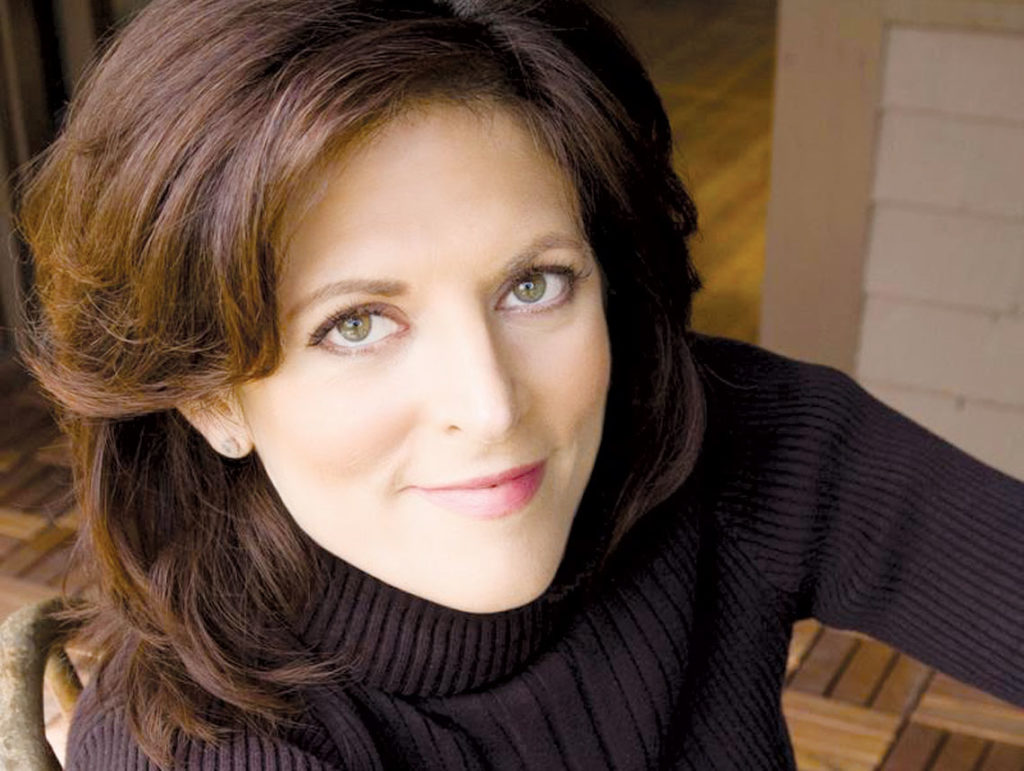
Dani-Klein-Modisett

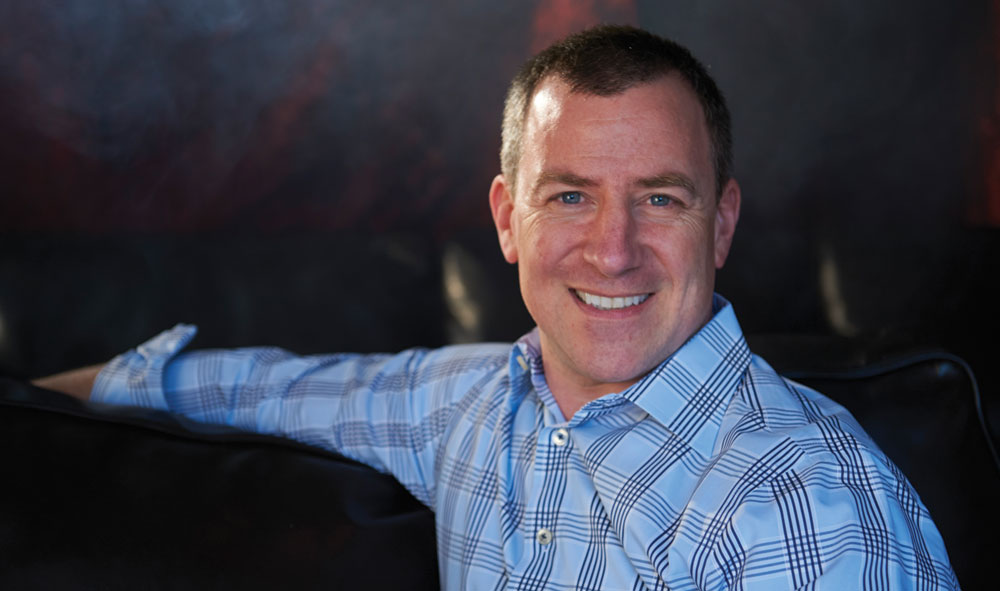
My son, my teacher

When I was 9, my father’s garment business went bankrupt and we left New York City for Connecticut.

“You don’t look Jewish,” the locals would say to my blond sister whenever we told them we had moved from New York. But with dark eyes, dark curls and a “New Yawk” accent, I was never mistaken for a non-Jew.

Soon after arriving, I was chased around the perimeter of my school by kids calling me “kike,” a word I had never heard before. At dinner, I asked my parents what it was, and then I had to tell them why I wanted to know. My mother nearly choked on her flank steak and threatened to go to the school and give them a piece of her mind.

Not the “piece” a fourth-grader would want her mother going to school to share. My father shut down this idea: He was starting a new business and the family didn’t need the attention. I quickly learned that being Jewish wasn’t anything anyone needed to know.

Putting the episode behind me, I nonetheless decided to go incognito as a Jew by avoiding every stereotype. I wore no jewelry and no makeup. I played third base on a softball team. I became an assimilating superhero. The Anti-JAP! I was 100 percent committed to obliterating any ideas the anti-Semites had about Jews, specifically Jewish girls.

When I met my husband, I was still undercover. I lived in a one-room apartment, slept on a futon and mostly ate popcorn from an air popper I kept between my sleeping slab and the TV. I didn’t cook much, but on the plus side, I also didn’t “make reservations,” as the joke about Jewish women and the culinary arts goes. It’s not just the kitchen I was unfamiliar with; I also knew little about what to do with the rest of the house. (Insert bedroom joke here.)

I continued with my Anti-JAP persona through the birth of our two children. When the other moms compared notes on couches, window dressings and thread count, I kept quiet, eating the toddlers’ snacks. I also had nothing to say about hair products, skin products or handbags.

The first time I saw a friend of my son’s carrying a Chloe bag, I remembered passing one like it at Neiman Marcus on the way to the restroom, almost tripping when I doubled back to reread the price tag.

This seemingly sane young woman bought a high-end lipstick, gum and wallet carrier that cost as much as my first car.

I casually mentioned it at the next play date.

“That bag cost $2,400!” I yelled after hello.

“Oh, um, hi,” she said, nervously running a hand through her highlighted hair. “I wear it every day, so if you amortize out the cost, it only comes to, like, $5 a day, and it’s totally worth it.”

“Right,” I said, impressed. I’d never used the word amortize in a sentence in my life, and we owned a house.

“Where are you going for spring break?” she asked, eager to change the subject.

I froze. But as the kids reached school age, I was starting to see that this was something we were going to have to do. Not only did we have to do it, I found that after hours and hours of diaper changing, cleaning and never having time to read a book, I wanted an exotic vacation. I wanted to lie on a beach, swim in a warm blue ocean and sip drinks with fruit in them like everyone else on Facebook.

“Is that so wrong?” I screamed — possibly whined — to my husband.

“Of course it’s not wrong,” he said calmly, as he always does. “It’s just so unlike you.”

As the boys continued to grow, there were other material items I lusted after. Like Herschel book bags for school, well-made Italian leather shoes for their growing feet and organic milk. What was happening to me?

Now my older son is a teenager. He’s grown up in Los Angeles, where, fortunately, he never has been teased for being Jewish. He feels absolutely no need to don an Anti-JAP cape. He makes no apology about loving expensive sneakers, soft cotton T-shirts and good food. If you called him a JAP, an expression that, thank God, mostly has been retired, he would stare at me quizzically.

He’s barefaced about his passions and doesn’t even make the connection to any of them being stereotypically Jewish. Last month, he and a friend started a clothing line. I hope somewhere my father is doing a little Tevye dance for his grandson, the burgeoning garmento.

All of this has brought to mind one of the more famous quotes from the Talmud: “When you teach your son, you teach your son’s son.” As parents, we are expected to teach our children, but in this case, it is my sons who are teaching me to take off my Anti-JAP cape, that it’s OK to relax, put my feet up — and maybe even get a pedicure.


Dani Klein Modisett is a comic and writer, most recently of the book “Take My Spouse, Please.”

My son, my teacher Read More »
Maryland

Sabbath-observant Maryland students receive diplomas in alternative ceremony

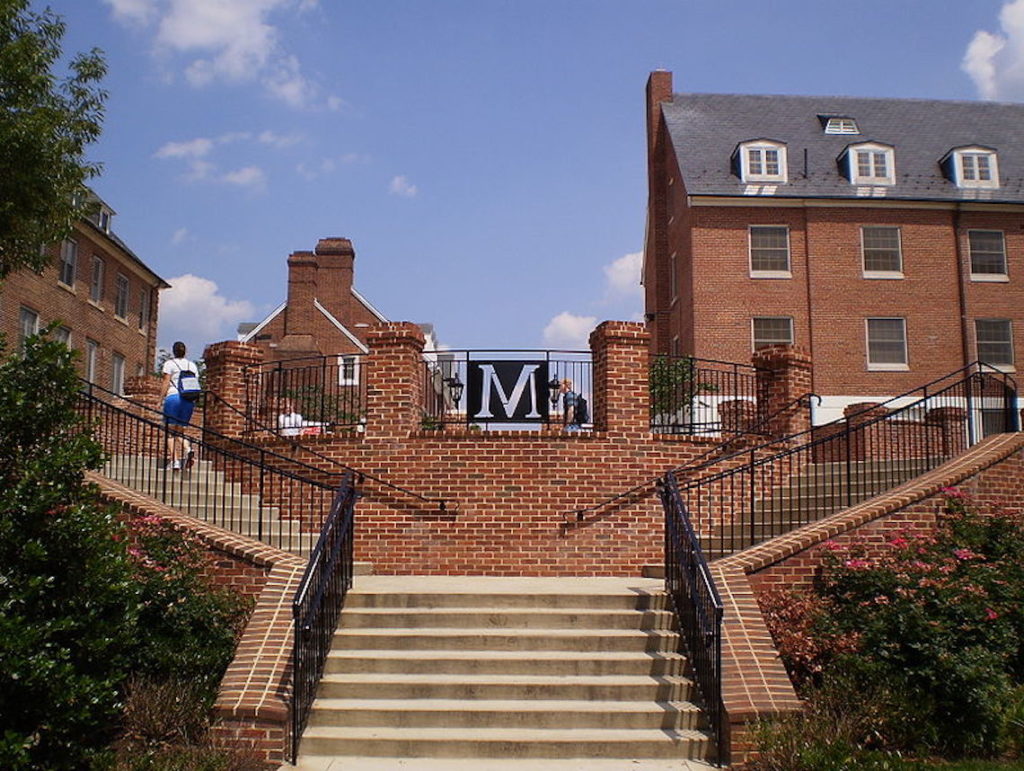
The University of Maryland hosted an alternative graduation to accommodate 22 observant Jewish students who could not receive their diplomas at the regular graduation, which took place on Shabbat.

The full university commencement was held on Sunday, May 21, but 19 of the university’s 34 individual colleges held their ceremonies the day before, according to Chabad.org.

The campus Chabad Jewish student center and campus Hillel requested that the administration hold an alternative ceremony on Sunday, to which the university agreed.

On Sunday afternoon in the atrium of the student union building, each student was called up by name and received his or her diploma from William Cohen, the associate provost and dean for undergraduate studies, who represented the university.

Paul Hamburger, a senior partner in the international law firm Proskauer Rose LLP and a member of the Chabad on Campus international advisory board, made the commencement speech.

“This graduation ceremony is separate from and still a part of the University of Maryland graduation exercises,” he said. “It is a testament to how you can find a balance between your Jewish identity and your integration into the world at large.”

Sabbath-observant Maryland students receive diplomas in alternative ceremony Read More »

Film

Filmmakers pull out of Tel Aviv LGBT film festival, citing Israel boycott

Several filmmakers scheduled to participate in the Tel Aviv International LGBT Film Festival have pulled out, citing pressure from the Boycott, Divestment and Sanctions movement against Israel.

The festival is scheduled to open Thursday and run through June 10.

Among those who have pulled out in support of the cultural boycott of Israel, Haaretz reported, are South African director John Trengrove, whose film “The Wound” is the opening-night production; Canadian-Pakistani screenwriter and actor Fawzia Mirza (“Signature Move”); and Nadia Ibrahim, a Palestinian living in Denmark who was to serve as a member of the festival jury and appear on a panel.

Trengrove reportedly decided to cancel his participation after he had already arrived in Israel — a trip that was paid for by the cash-strapped festival, according to Haaretz.

The effort reportedly is being led by Pinkwashing Israel, which says that the Tel Aviv film festival “promotes the cynical use of gay rights – known as pinkwashing – to distract from and normalize Israeli occupation, settler colonialism and apartheid,” The Jerusalem Post reported.

Part of the festival’s funding comes from the government through the Ministry of Culture and Sport.

The annual Tel Aviv Gay Pride Parade will be held near the end of the festival on June 9.


CORRECTION: This version of a brief sent Tuesday, May 30, deletes the name of Swiss actor Jasna Fritzi Bauer, who withdrew from the festival due to scheduling conflicts and does not support the BDS movement.

Filmmakers pull out of Tel Aviv LGBT film festival, citing Israel boycott Read More »

More synagogues are phasing out mandatory dues

“Voluntary dues” may sound like an oxymoron, but the idea soon may be coming to a synagogue near you.

According to a new study by the UJA-Federation of New York, the number of non-Orthodox synagogues nationwide that have eliminated fixed annual dues has more than doubled in the past two years. Instead of charging a set membership fee, these synagogues are telling congregants to pay what they want — and they’re succeeding.

The nearly 60 Conservative, Reform and Reconstructionist synagogues that have stopped charging mandatory dues are just a small percentage of the country’s 1,500 or so Conservative and Reform synagogues. But the number is more than twice the 26 synagogues that had voluntary dues as of 2015. On average, the synagogues reported increases in both membership and total revenue since they switched to the voluntary model. They join nearly 1,000 Chabad centers in North America that always have worked on the voluntary model.

According to the report, the synagogues adopted the new model due to a mix of financial and values-based reasons. Synagogue members appeared increasingly reluctant to pay mandatory dues after the 2008 financial crisis, and a pay-what-you-can system was more appealing to families with less spare cash.

In addition, the report said mandatory dues may have alienated families that want to feel unconditionally welcomed at synagogue or who may have felt uncomfortable explaining to a board why they couldn’t pay the full fee. Engaging members with voluntary dues has caused synagogues to build relationships with congregants so they feel invested in the synagogue, as opposed to feeling obligated to pay an annual bill. The model, according to the report, also drives synagogues to increase financial transparency, so members know what they’re paying for.

“The existing model is no longer really aligning with the values and culture of the synagogue,” said Adina Frydman, executive director of Synergy, a division of the New York federation that advises synagogues on strategy and produced the report. “The process of asking for a [dues] adjustment becomes all about the money, as opposed to ‘you are a member of this congregation and community.’ ”

Of the 57 synagogues included in the report, more than half are Reform, while about a third are Conservative. The remainder are either Reconstructionist or unaffiliated. None is Orthodox. Most have between 100 and 500 “member units” — families or individuals who belong.

While the synagogues don’t charge a fixed fee, many do indicate a “sustaining level” donation — the average amount the synagogue needs from each member unit to reach its goal. On average, the synagogues reported increases of 3.6 percent in total membership and 1.8 percent in dues. What that means is that more total money is coming in from more people but the average annual membership contribution has fallen.

At the Conservative Temple Israel of Sharon, Mass., in suburban Boston, which adopted the voluntary model in 2008 because of the recession, revenue and membership have remained steady. But only about 45 percent of members pay dues at or above the sustaining level — a bit above the average of 38 percent across the 57 synagogues.

“The original goals of switching to this system, creating a model that was financially welcoming and sustainable for both the synagogue and our membership, continue to be met,” Benjamin Maron, Temple Israel’s executive director, wrote in one of the report’s case studies. “In other ways, however, challenges have grown over the last few years. While our membership has grown, the overall income from our voluntary dues has not.”

The 57 synagogues are still less than 5 percent of the country’s Conservative and Reform synagogues, but Frydman believes the number will continue to grow. About 100 synagogues tuned in via livestream to a recent conference on the report.

Studies suggest that millennials are less inclined to become members of old institutions. Jack Wertheimer, a history professor at the Jewish Theological Seminary, said that free Jewish programs like Birthright — the 10-day trip to Israel for young adults — get young Jews used to the idea of no- and low-cost Jewish services.

“We’re living in a time when some Jews don’t want to pay anything to go to synagogue and benefit from synagogue,” Wertheimer said. “We’re living in a time today when institutions are held suspect and also seen as rather cold and distant. This whole idea of membership dues reinforces that point.”

Why aren’t Orthodox synagogues adopting the model?

Wertheimer and Frydman suggested that because Orthodox Jews view prayer as mandatory, the obligation carries over to synagogue membership. Even so, Frydman’s office is embarking on a study of young Orthodox Jewish professionals on Manhattan’s Upper West Side, who often bounce between a few synagogues rather than sticking to one and becoming a member of it.

One large Orthodox organization that doesn’t charge dues, however, is Chabad, whose centers worldwide rely entirely on voluntary donations. While that means the emissaries who run the Chasidic movement’s outreach efforts spend a significant amount of time fundraising, Chabad spokesman Rabbi Motti Seligson said it also removes a barrier to participation in Jewish life — and forces Chabad centers to run programs people want.

“This isn’t a technique or a model that’s devised through a focus group,” Seligson said. “This is about what’s at the [movement’s] core, which is love of Israel.”

Chabad emissary couples, he added, “are not living in an ivory tower. They’re beholden to the community that they’re serving. They need to actually be serving the community.”

While Frydman emphasized that UJA-Federation does not endorse any one dues model, she said the voluntary model is appealing to some synagogues because it ensures that the synagogue has an active relationship with its congregants.

“They’re cultivating the relationship so that people feel a connection, enough to want to be a part of something bigger,” she said. “It’s about that the synagogue should take the time to ensure that they know all the members, that they understand what people are looking for.”

More synagogues are phasing out mandatory dues Read More »

Roe Sie

Milling your own grain is a Biblical birthright

In Deuteronomy, we’re told that the one thing you can’t take as pledge for a debt is someone’s top millstone. This law seems archaic and meaningless, yet it speaks volumes about the pitiful state of American bread-eating habits — and gives a big clue about how we can repair it.

To our biblical forebears, millstones were so important that taking one as collateral left someone unable to make his daily bread. You don’t want your debtors to starve before paying you back. Bread was the staff of life, and there was no bread without milling the wheat into flour.

A mill is made by stacking two round, flat stones on top of each other. Grains are poured into a small hole drilled in the center of the top stone, and rotation crushes the grains between the stones.

Today, the vast majority of us get our daily bread from the supermarket, and the simple but critical process of milling grains has become invisible. The result is not good for the flavor of our bread — or our health.

Our daily grocery store bread generally begins as nonorganic grains, grown on government-subsidized farms, then transported many miles to huge factory mills where the grains are refined to become flour.

The refining process strips grains of their mineral- and fiber-rich bran and removes the vitamin-packed germ. This greatly lengthens shelf-life but has unintended health impacts. It turns out, we got so good at processing flour that we began to get sick as a result.

For instance, B vitamins found in wheat germ prevent pellagra, a disease that ravaged the United States in the early 1900s. These days, the government requires that white flour be enriched with vitamins; otherwise, it is imbalanced and without nutrition.

After learning all these facts, I decided to bake healthful bread for my family, using a natural yeast starter and the best organic whole-wheat flour I could buy. No more refined white flour for me! Only later did I learn I was leaving out a crucial step in the process: milling the flour myself, fresh from whole grains.

The same way an apple starts to turn brown the moment you cut it open, a whole-wheat berry starts to go bad as soon as it’s milled. Intact, a wheat berry will last decades, even centuries, and still sprout into a beautiful blade of grass. But the clock starts ticking when you break the outer seal.

The whole-wheat flour we’re used to tasting is a little bitter because the healthy oils quickly go rancid when exposed to air. I was going to great lengths to provide my family with a healthy staple food, yet I was using spoiled ingredients.

Mills have been around for thousands of years but are not found in regular stores. Digging on line, I found mills ranging from $200 to $500. So I ordered one and began my adventures in making bread with 100 percent freshly milled flour.

In those early days, I reinvented all the newbie-baker bread styles: the brick, the hockey puck and the concrete paving stone. How could I get my bread to fluff up like store-bought bread without adding white flour? There were all sorts of complicated techniques and a variety of modern additives I could buy. It was tempting to try them, but I thought again of our biblical ancestors. They couldn’t run to the store for instant yeast, dough conditioners or vital wheat gluten. There had to be a better way.

Leavening bread the old-fashioned way was not accomplished through instant dry yeast from a store shelf — instead, it occurred through the action of naturally occurring yeasts and lactic acid bacteria. The tradition of the unleavened matzo, one of the most well-known symbols of Passover, reminds us of the importance of leaven by living without it for a bit.

As a baker, I find the rules of Passover and the making of matzo fascinating because they give us clues to the differences between baking now and 3,500 years ago.

If you mix today’s refined flour and water, it can take a week of work to get a robust “leaven” from it. But mix water with freshly ground flour and you’ll discover that the yeast strains living symbiotically right on the seed begin to leaven the bread almost immediately. That could be why Jewish law still requires matzo to be baked within 18 minutes to avoid any leavening at all. Using modern, bleached, sterile flour, you have zero chance of getting any leavening action in 18 minutes — but use an organic, freshly milled flour and the process begins right away.

So I sat down with a 50-pound bag of hard, white wheat berries and my new grain mill. And drawing on what I had learned about bread baking up to that point, I set about relearning how to bake, using only wheat berries and salt water. That’s it.

After a few tries, I baked my first passable loaf of bread. Surprisingly, I didn’t even have to knead it much, if at all. It sliced easily and it tasted great. The kids even preferred it to store-bought bread.

After milling my own grain, I noticed that the bread we ate at restaurants was beginning to taste boring and flat. It’s like grinding your own coffee beans, then going to a restaurant that serves instant coffee.

Isn’t our daily bread at least as vital as our beloved morning coffee? It’s that sentiment that took me from being a user of millstones to being a merchant.  Millstones became my passion, then my business.  I opened The King’s Roost in Silver Lake, the first brick-and-mortar store in the United States to sell grain mills and locally grown grains in one place.

I tell my customers that using freshly milled grains will make their traditional flatbreads and crackers — even matzo — more flavorful than anything you can buy in any store or bakery. Not to mention the nutritional benefits.

Whole grains and seeds are readily available in many stores, and if you have a mill, you can make the kind of real flour that past generations enjoyed. Bypassing many of the steps in our modern industrial food system feels almost like an act of subversion — you now can buy whole grains that are grown a couple of hours from where you live, then turn them directly into food for your family. Not just breads, but cookies, cakes, pastries, tortillas and more. The possibilities are endless.

The ceasing of the sound of the millstone was a sign of desolation,” the prophet Jeremiah tells us.

Maybe it’s time for the sound return to our homes.

ROE SIE’S 100 PERCENT WHOLE WHEAT BREAD RECIPE

This is the simplest and least processed bread I’ve seen or tasted. While it can be done with a mixer, this recipe doesn’t need one. The only ingredients: freshly milled flour, kosher salt, filtered water, and wild yeast starter (ingredients being only live yeast, whole-meal flour, and water). None of “the good stuff” is taken out of this bread. It’s a 100 percent extraction bread … which is a fancy way of saying you don’t sift out any of the bran. Keep in mind this is a guide: it works well for my whole grains and you will need to adjust a bit for the type of grains/flours you end up using.

Mix 500 grams flour, 365 grams filtered water and 12 grams salt.

Rest between 20 minutes and 4 hours at room temperature (autolyse).

Mix in 100 grams of starter.

Bulk ferment anywhere from 5 to 24 hours (depending on the temperature). Hot day? You may only need 5 hours. In the fridge? At least overnight. Periodically stretching and feeling the consistency will help develop the gluten, avoid over- or under-fermenting the dough and allow you to adjust the hydration to get the consistency you prefer. When you notice a nice jump in dough size or activity level in your dough, you’re ready for the next step.

Shape the dough for the final proof, and move to the proofing basket for 20-40 minutes (poke test).

Gently move the dough to your loaf pan, your peel, cloche, cookie sheet, pizza stone, steam oven, etc.

Slash and bake at 400 F for 45 minutes.

Transfer to rack, wait a half hour (if that’s even possible) before cutting into it.  Enjoy!


Roe Sie sells do-it-yourself fermentation and bread-baking equipment (including mills) and teaches bread-baking classes at The King’s Roost in Los Angeles.

Milling your own grain is a Biblical birthright Read More »

Jackie

What to do in Los Angeles this week: June 2-8

SAT | JUNE 3

“JACKIE”

Experience the screening and the world-premiere live performance of the score from “Jackie.” Composer Mica Levi’s soundtrack for the 2016 film about Jacqueline Kennedy garnered the first Academy Award nomination for best original score by a female composer in 20 years. Told through the eyes of the iconic first lady, “Jackie” is an intimate portrait of a woman going through one of the most tragic moments in American history, the assassination of President John F. Kennedy. The music will be performed by the Wordless Music Orchestra, led by conductor Jayce Ogren. Presented by Nederlander Concerts and Wordless Music. 8 p.m. Tickets starting at $29. The Theatre at Ace Hotel, 929 S. Broadway, Los Angeles. (213) 623-3233. wordlessmusic.org/jackie.

SIX-DAY WAR ANNIVERSARY SERVICE

In observance of the Six-Day War’s 50th anniversary, attend a special Shabbat service and lecture honoring the war’s heroes and celebrating Israel’s victory. Presented by the Jewish Platform for Advocacy and Community Engagement. Service led by Rabbi Danny Cohen of Hebron and Cantor David Caytak of Jerusalem. Lecture by David Suissa, president of TRIBE Media and the Jewish Journal. 9:30 a.m. service; 11:30 a.m. lecture. Free. The Beverly Hills Hotel, 9641 Sunset Blvd., Beverly Hills. beverlyhillsjc.org.

“EINSTEIN!”

The one-man drama “Einstein!” returns to the Santa Monica Playhouse for six performances. The drama explores Albert Einstein’s years as a young father while he was trying to prove his theory of relativity during World War I. Directed by Tom Blomquist. Followed by Q-and-A with writer-performer Jack Fry. 3 p.m. $40. Santa Monica Playhouse, 1211 Fourth St., Santa Monica. (310) 394-9779. einsteintheplay.com.

“THE MERCHANT OF VENICE”

Alan Blumenfeld stars as Shylock in William Shakespeare’s tragicomedy about a merchant who must default on a large loan given by a Jewish moneylender. The 16th-century play continues to raise questions about racism, religion, mercy and justice. Directed by Ellen Geer. 7:30 p.m. Tickets starting at $25; discounts for seniors, students, veterans, teachers and children. Will Geer’s Theatricum Botanicum, 1419 N. Topanga Canyon Blvd., Topanga. (310) 455-3723. theatricum.com.

SHAVUOT WHITE PARTY

Adults ages 50 and older are invited to celebrate Shavuot with dairy appetizers, wine, dancing and live music at this event sponsored by the Israeli-American Council. Bring your favorite dessert to share. Performance by singer Hodaya. 8:30 p.m. $20 online at eventbrite.com; $25 at the door. IAC Shepher Community Center, 6530 Winnetka Ave., Woodland Hills. (818) 505-4920. israeliamerican.org.

SUN | JUNE 4

“FROM BROOKLYN AVENUE TO CESAR CHAVEZ”

Celebrate the summer installation of this exhibition that explores Jewish histories in multi-ethnic Boyle Heights and reveals the urban, social, economic and cultural changes inscribed in its layered past. Part of the UCLA Alan D. Leve Center for Jewish Studies’ digital project Mapping Jewish L.A. (mappingjewishla.org). There will be musical performances and refreshments from local vendors. 2 p.m. Breed Street Shul, 247 N. Breed St., Los Angeles. Free. RSVP to cjsrsvp@humnet.ucla.edu. (310) 267-5327. cjs.ucla.edu.

“HOW TO BEGIN YOUR GENEALOGY”

Whether you are new to genealogy or a seasoned genealogist, there is something for everyone to learn at this program presented by Jan Meisels Allen, president of the Jewish Genealogical Society of the Conejo Valley and Ventura County. Learn about family documents, timelines, census records, immigration and naturalization records, family photos, interviewing techniques, newspaper research and more. 1:30 p.m. Free. Temple Adat Elohim, 2420 E. Hillcrest Drive, Thousand Oaks. jgscv.org.

“BROKE AS A JOKE”

Comedian Danny Lobell performs his one-man show, “Broke as a Joke,” about the crazy things he’s done for money and the hilarity they have produced. 9:30 p.m. Additional shows June 8, 10 and 11. $10. Sacred Fools Theater Studio, 1078 Lillian Way, Los Angeles. hollywoodfringe.org.

MON | JUNE 5

FILMMAKER MARCEL OPHULS

Documentary filmmaker Marcel Ophuls — best known for his films dealing with the atrocities of World War II, including “The Memory of Justice” and “Hotel Terminus” — will be in conversation with Los Angeles Times film critic Kenneth Turan, scholars and students. Part of Shadows of the 20th Century: Ophuls Film Festival, with screenings and lectures through June 8 at various locations. 4 p.m. Free with required pre-registration. UCLA Meyer and Rene Luskin Conference Center, 425 Westwood Plaza, Los Angeles. (310) 267-5327. cjs.ucla.edu.

AUTHORS MICHAEL CHABON AND AYELET WALDMAN

On the anniversary of the Six-Day War, husband-and-wife authors Michael Chabon and Ayelet Waldman discuss their new book, “Kingdom of Olives and Ash: Writers Confront the Occupation,” with Yehuda Shaul of Breaking the Silence and Rabbi Sharon Brous of IKAR. The book features numerous authors who visited the West Bank and Gaza, reporting on what they saw. Sponsored by Breaking the Silence, HarperCollins, New Israel Fund and IKAR Culture Series. Free. Pico Union Project, 1153 Valencia St., Los Angeles. 7:30 p.m. doors open; 8 p.m. program. Reception to follow. (323) 643-1616. Tinyurl.com/LDZJOAM.

ISRAEL BONDS SOCIAL

Join Israel Bonds Los Angeles New Leadership, in conjunction with the Israeli-American Council Los Angeles and American Friends of Magen David Adom, for a summer social. Open bar for three hours. 8 p.m. $25; $36 at the door. Register at conta.cc/2rkc7uJ. At Now Boarding, 7746 Santa Monica Blvd., West Hollywood. israelbonds.com.

TUES | JUNE 6

TOP PRODUCERS PANEL

IAC Real Estate Network presents the “Nadlanist Top Producers Panel,” where multimillion-dollar real estate producers share success stories. Doron Zilbermintz, explaining new building ordinances and more, will kick off the event. Enjoy an evening of insight, connections, drinks and food. Panelists include Adi Livyatan, Sheri Bienstock, Lisa Cutman, Michelle Hirsch, Tsafrir (Jeff) Aviezer, Ron Feder and Richard Schulman. Co-sponsored by Arletta Insurance, L.A. Fixers and The Livyatan Group. 7 p.m. $50. IAC Shepher Community Center, 6530 Winnetka Ave., Woodland Hills. israeliamerican.org/megapanel.

THURS | JUNE 8

STEPHEN TOBOLOWSKY

Character actor and storyteller Stephen Tobolowsky shares stories from his latest book, “My Adventures With God.” This funny, introspective collection explores love, catastrophe and triumph. Book available for purchase. Book signing and Q-and-A to follow. 2 p.m. Free. Skirball Cultural Center, 2701 N. Sepulveda Blvd., Los Angeles. (310) 440-4500. skirball.org.

PETER WORTSMAN

Peter Wortsman with Marjorie Perloff will discuss Wortsman’s book of stories “Footprints in Wet Cement.” The author also will sign copies of the book. 7 p.m. Free. Book Soup, 8818 Sunset Blvd., West Hollywood. (310) 659-3110. booksoup.com.

What to do in Los Angeles this week: June 2-8 Read More »

Moving & Shaking: Valley Beth Shalom, American Friends of Hebrew University and more

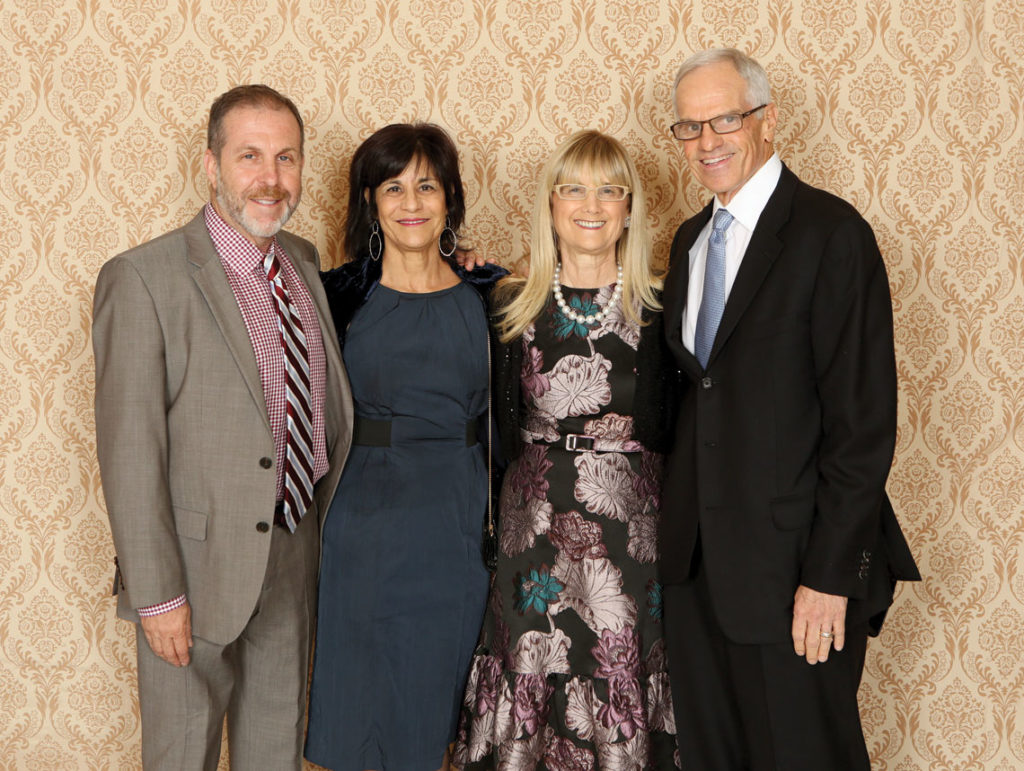
Valley Beth Shalom (VBS) honored Richard Sandler with the Harold M. Schulweis Humanitarian Award at the Encino synagogue’s annual gala on May 7 at VBS, which drew approximately 300 attendees.

Sandler, son of founding VBS members Helen and Ray Sandler, “has been instrumental in the growth of the community,” according to a VBS statement. He previously served on the VBS board of directors. His current leadership positions include serving as executive vice president and trustee of the Milken Family Foundation; as board chairman at Milken Community Schools; and as chair of the board of trustees at the Jewish Federations of North America, an umbrella organization for Jewish Federations. He is a partner at the law firm Maron and Sandler.

Attendees included Sandler’s wife, Ellen; Jewish Federation of Greater Los Angeles CEO and President Jay Sanderson and his wife, Laura; Malkah Schulweis, widow of Rabbi Harold Schulweis, who was one of the best-known pulpit rabbis in America before he died in 2014; and VBS Senior Rabbi Ed Feinstein.

The Harold M. Schulweis Humanitarian Award recognizes “an individual who transcends the ordinary and recognizes the highest level of social conscience,” a VBS statement said.

The event featured a Champagne welcome, the award reception and a dinner.


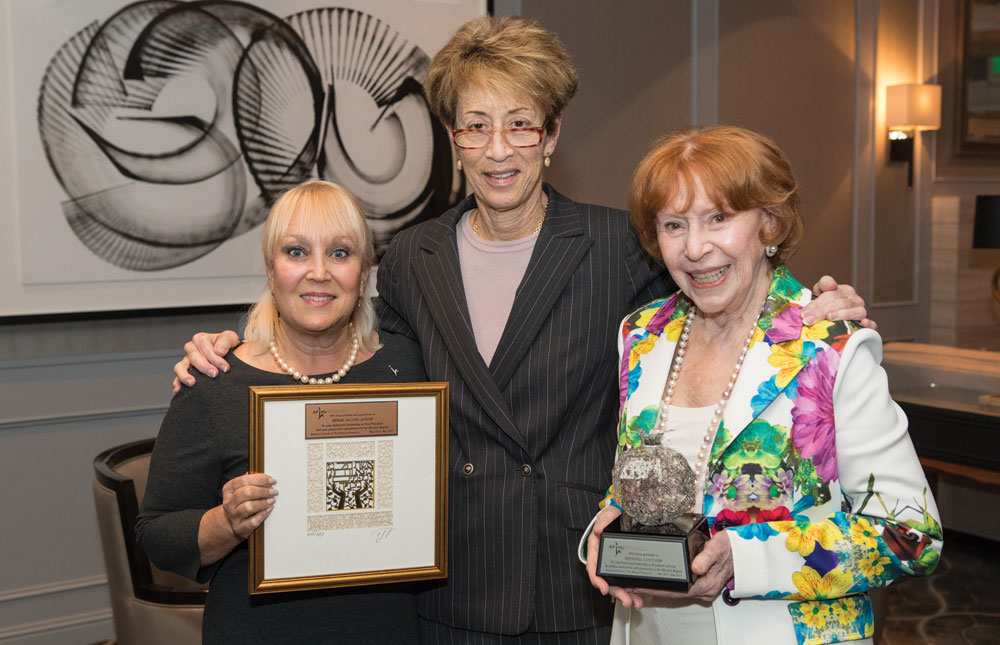
American Friends of Hebrew University (AFHU) Western Region Vice Chair Patricia Glaser (center) congratulates and thanks outgoing AFHU Vice President Renae Jacobs-Anson (left) and outgoing AFHU President Brindell Gottlieb for their dedication and leadership. Photo courtesy of American Friends of Hebrew University

The American Friends of Hebrew University (AFHU) Western Region held its Evening of Tribute at Brentwood Country Club on May 3 and honored outgoing regional President Brindell Gottlieb and outgoing regional Vice President Renae Jacobs-Anson.

Regional Vice Chair Mark Vidergau installed Mark Genender as the organization’s new regional president.

AFHU raises funds and awareness for The Hebrew University of Jerusalem. Established in 1918, it is Israel’s second-oldest university.

Consul General of Israel in Los Angeles Sam Grundwerg, among the the evening’s guest speakers, shared his perspective on “the important role of Hebrew University in Israel’s past, present and future,” according to an AFHU statement.

More than 130 people attended the event, including longtime donors and supporters Patricia Glaser, Bari and Steve Good, Shirley and Lou Gram, Hella and Chuck Hershon, Corie and Michael Koss, Ronda and Barry Lippman, and Janet and Marvin Jubas.


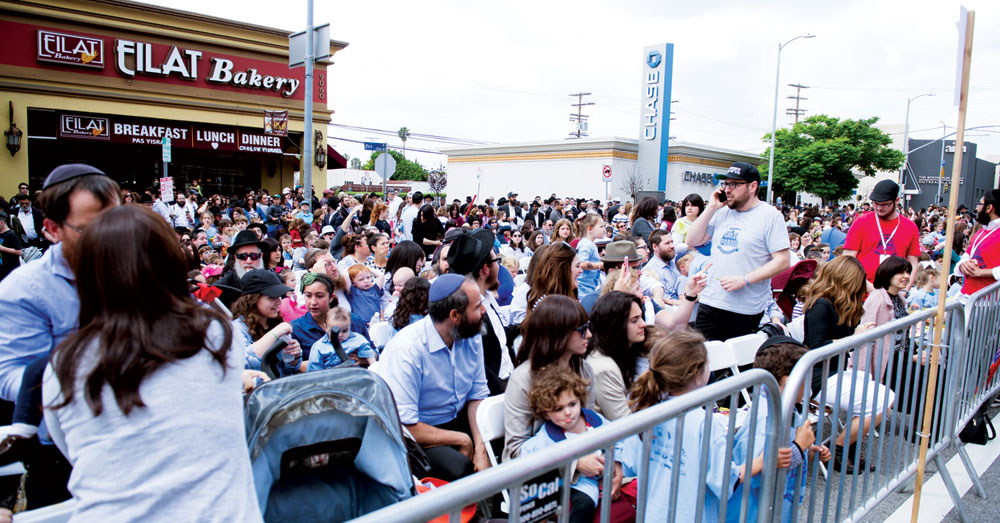
About 5,000 people turned out May 14 for the Great
Lag b’Omer Parade in the Pico-Robertson neighborhood of Los Angeles. Photo by Yossi Percia​

About 5,000 people turned out May 14 for the Great Lag b’Omer Parade in the Pico-Robertson neighborhood of Los Angeles.

“It showed unity from all walks of life,” said parade chairman Rabbi Mendel Duchman, spiritual leader of Kol Yakov Yehuda. “It was Mother’s Day. We had the local Orthodox community from Pico, the community from Hancock Park, and people who were still celebrating Israel.”

The street fair, rides, carnival games, live music, kosher food and more delighted those who turned out to Pico Boulevard, which was closed between Doheny Drive and Robertson Boulevard. Entertainers included children’s performer Uncle Moishy and Eli Marcus, a Crown Heights-based musician who fuses Chasidic soul melodies with influences from around the world.

Kol Yakov Yehuda and Chabad of California co-organized the event, which drew representatives from the Los Angeles Police Department and the Los Angeles Fire Department. Sponsors included Meshuga Sushi, Chabad Century City and the Jewish Journal.

Among many leaders and families in the Orthodox community, the attendees included Rabbi Boruch Shlomo Cunin, director of Chabad of California, and Chabad of Century City Director Rabbi Tzemach Cunin.

“The unity that stands before us today — thousands of souls united — brings true joy to our rebbe,” Rabbi Boruch Shlomo Cunin said. “As I look out to this crowd … we celebrate 50 years of spreading the mission of the rebbe on the West Coast.”


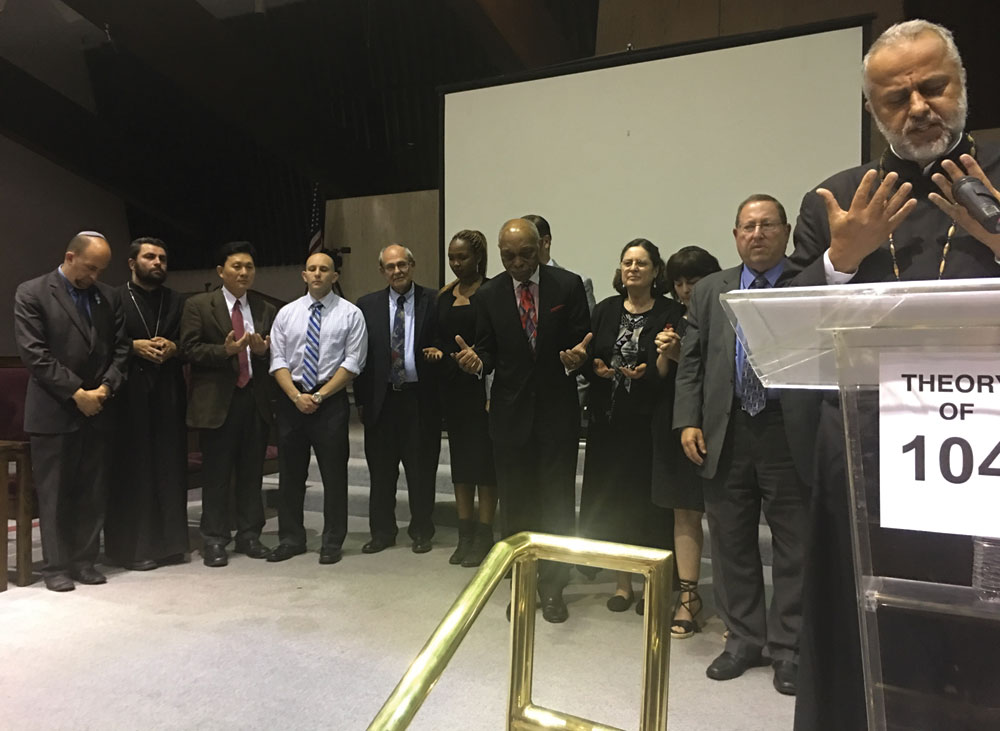
Father Cyril Gorgy (far right) leads a prayer ceremony at the conclusion of a symposium of the Genocide Coalition at Adat Ari El. Joining him are (from left), Steve Zimmer, Father Avedis Abovian, Kimthai Kuoch, Mike Brand, Rabbi Elliot Dorff, Dydine Umunyana, Rev. Cecil Murray, Rabbi Pamela Frydman, Amy Friedman Cecil and City Councilman Paul Koretz. Photo by Ryan Torok

At a symposium of the Genocide Coalition at Adat Ari El in Valley Village on May 24, several speakers addressed the current state of genocide in the world and what can be done to stop it.

“We can’t fight genocide alone — that’s the message of tonight,” Amy Friedman Cecil, director of community engagement for Jewish World Watch, said to the diverse audience of about 100 people, which included Muslims, Jews and others. Drawing from the words of Pirkei Avot, she added: “You are not obligated to complete the work, but neither are you free to desist from it.”

Genocides discussed during the event ranged from one that began in 2003 in Darfur to the current torture and imprisonment of gay men in Chechnya allegedly ordered by the country’s Kremlin-backed leader. Speakers also discussed the genocides of Cambodia, Rwanda, the Holocaust and others.

Mike Brand, director of advocacy and programs for Jewish World Watch, discussed the current South Sudan conflict, a crisis with a “100 percent man-made famine” that has put more than 1 million people at risk of starvation.

Friedman Cecil said 65.3 million people, roughly the population of France, are displaced throughout the world. “The only way to stop genocide is to take preventable action before [the perpetrators] start,” she said.

Brand added that, unfortunately, “one thing the international community is horrible at is stopping genocide.”

Rt. Rev. Alexei Smith, a member of the spirituality commission of the Archdiocese of Los Angeles, delivered the invocation. Other speakers included Paul Wilder, organizer of the event and the child of Holocaust survivors; Daniel Tamm, the Westside area representative for L.A. Mayor Eric Garcetti; L.A. City Councilman Paul Koretz; and Steve Zimmer, outgoing president of the L.A. Unified School District Board of Education.

Rev. Cecil Murray, a fellow at the USC Center for Religion and Civic Culture, delivered closing remarks. Additional participating clergy included Father Cyril Gorgy of Holy Resurrection American Coptic Orthodox Church.

A video presentation featured messages from U.S. Reps. Judy Chu, Adam Schiff and Brad Sherman.


Jonathan Baruch, an Israel21c board member and the driving force behind the nonprofit website’s new online video network, 21see. Photo courtesy of Jonathan Baruch

The nonprofit website Israel21c launched an online video network, 21see, which will seek to highlight arts and culture from the Jewish state, at a May 10 event in West Hollywood.

It celebrated the launch by screening videos from the new network at Soto House, an exclusive penthouse club known for its Hollywood crowd.

The lights went dark in the plush screening room of the Soto House and upbeat music blared over the speakers as a promotion for “21see with Kathy Cohen,” one of the network’s inaugural series, came on the screen.

Yogi Roth, a college football analyst who hosts “We All Speak Ball” for the new video network, attended the launch. Between videos, Roth conducted an onstage interview with Sam Grundwerg, Israel’s consul general in Los Angeles. Grundwerg shared that he had played in the Israel Football League — featured in “We All Speak Ball” — and even earned a spot in the league’s hall of fame.

He shared some advice he said he received from Ron Dermer, Israel’s ambassador to the United States and a fellow Israel Football League hall of famer: “The secret to being a successful Jewish athlete is to play with Jews.”

Television producer Jonathan Baruch, an Israel21c board member and the driving force behind the new video network, attended the launch, as did Israel21c President Amy Friedkin. The video website, Friedkin said, would hew to Israel21c’s goal of revealing a dimension of Israel not often seen in the mainstream media.

“This is what we do,” she said. “The culture and the exciting things in Israel — that’s our mission, to present it to the world.”

— Eitan Arom, Staff Writer


Moving & Shaking highlights events, honors and simchas. Got a tip? Email ryant@jewishjournal.com.

This article was edited June 1 to reflect the annual Valley Beth Shalom (VBS) gala was held at VBS, not the Skirball Cultural Center.

Moving & Shaking: Valley Beth Shalom, American Friends of Hebrew University and more Read More »

Torah portion: Lessons about responsibility

Parashat Naso (Numbers 4:21-7:89)

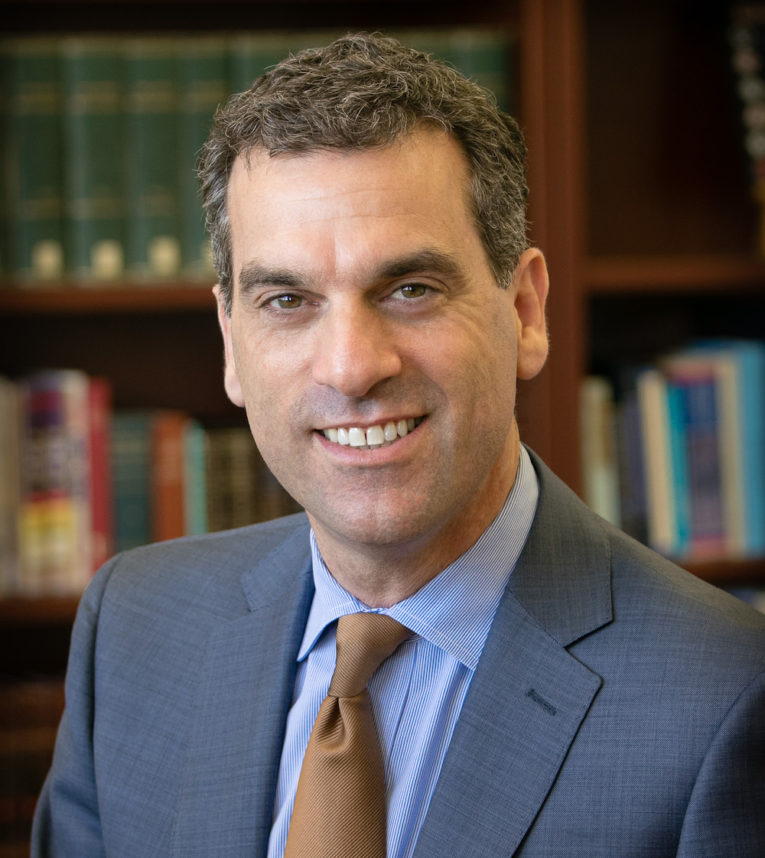
Joshua-Holo
Joshua Holo

It seems that if you scratch the surface of the latest political debate in the United States about federal funding for many governmental programs, you will find a bedrock philosophical disagreement about responsibility. Specifically, we fundamentally differ among ourselves about the balance between individual and collective responsibility as reflected in public policy.

Whatever you do, don’t look to Torah for guidance in this debate — unless you are willing to confront the maximalist, most demanding position, which puts both poles of American political philosophy to the test. Parashat Naso insists on at least five models of responsibility, falling relatively neatly across the collective-individual continuum.

First, we find the enumeration of the census process, which gave us the name for the Book of Numbers. In this procedure, the various tribes and clans march out in precise order, each to be counted according to God’s prescriptions. Additionally, each clan undertakes duties: Gershonites are porters, Kohathites attend to the Tent of Meeting, etc. Here, clans bear the burden of service for the benefit of the entire people, at collective cost, which we learn in Parashat Terumah.

Straddling the individual and the collective, personal cases of potentially contagious diseases are subject to removal from the camp by the general population. “Instruct the Israelites to remove from camp anyone with an eruption or a discharge and anyone defiled by a corpse” (Numbers 5:2). God authorizes all people to remove individuals, in light of the shared risk.

At the most individual, social level, Parashat Naso lays out basic tort law. When one wrongs another person, the offender “shall make restitution in the principal amount and add one-fifth to it, giving it to him whom he has wronged” (Numbers 5:7).

The gamut extends even deeper, into the most intimate relations between husband and wife. Here we find one of Torah’s most troubling passages, in which a woman suspected of adultery must undergo the crudest of ordeals. After preparing a “bitter” brew, the priest recites a formula — almost an incantation. “If no man has lain with you … be immune to harm from this water of bitterness that induces the spell. But if you have gone astray … may the LORD make you a curse and cause your thigh to sag and your belly to distend” (Numbers 5:19-21). Adding insult to injury, the woman must accept these terms and reply “Amen, amen” (Numbers 5:22).

Perhaps at the most individualized level of responsibility possible, the Nazirite owes fealty to none but his own vows and, of course, to God. In the course of fulfilling this now-defunct practice of temporary asceticism, the Nazirite must abstain from drink and not cut his hair. In avoiding dead bodies, additionally, he cannot even attend to his own parents, should they die (Numbers 6:7).

The possibilities go on throughout Parashat Naso. Like all of Torah, which is predicated on mitzvot, or commandments, the examples all assume a sense of obligation. From the purely pious perspective, poet Alfred, Lord Tennyson had the right sense of it: “Theirs not to reason why, Theirs but to do and die.” That is to say: Responsibility can sustain only so much questioning before it demands its answer. From a more pondered, less urgent life-and-death perspective, Torah simply urges us to remember that we cannot dodge the full spectrum of our obligations.

At heart, we believe that our philosophical preferences are correct, simply because we do. When we argue, however, we try to cite sources as if to prove those preferences. In doing so, we effectively choose where we fit more comfortably on the spectrum of responsibility.

However, if we Jews honestly query the text of our tradition, we will find that too many variations on the theme ultimately cancel each other out; Torah does not land on collective or individual responsibility. It demands all of the above, which leaves us back where we started in our debates about public policy: with our preferences.

Parashat Naso asks us to get past those preferences, and it leaves us with an imperative: We bear many shades of responsibility, and our job is to rise to them all.


Joshua Holo is dean of the Hebrew Union College-Jewish Institute of Religion, Jack H. Skirball Campus in Los Angeles.

Torah portion: Lessons about responsibility Read More »

Letters to the Editor: Trump at the Western Wall

The Effect of Trump’s Visit to the Wall

Rob Eshman is right to note that, by visiting the Western Wall, the first incumbent president to do so, President Donald Trump linked “the sovereignty of the Western Wall to the State of Israel, despite the demurrals and hedging of his advisers and representatives” (“In Israel, Trump Reinforces the Wall,” May 23).

It is also praiseworthy that the Trump administration has started referring to “Jerusalem, Israel” –– the opposite of the Obama administration, which actually scrubbed references to “Jerusalem, Israel” from government websites.

To be sure, it would be far better if President Trump would move the American embassy from Tel Aviv to Jerusalem immediately. The Zionist Organization of America, which I head, has urged President Trump to do so repeatedly and has been publicly critical of the fact that he has not.

That the Palestinians and Arabs seek this and the fact the United States defers to them is a tragic mistake and injustice which needs to be put right, and we urge President Trump to do so.

Morton A. Klein, National President Zionist Organization of America, New York


I enjoyed Rob Eshman’s column about President Trump’s visit to the Western Wall.

We might disagree about some things, but your columns continue to impress me as fair-minded and reasonable. That attitude is what we need most in America today.

Noah Palmer via email


There, There, Rob

Well, Rob, since this particular column was the first ever of yours I’ve read, I don’t know if I disagree with you on anything or not (“Not Yelling Back,” May 12). I did want to let you know, however, I thoroughly enjoyed it. You sound like you’ve got good, tough skin, so I doubt you took anything personally. Ha ha. Anyway, I thought you could use a compliment! Keep up the good work.

Carol Brockman Castro via email


Obama, Trump and Israel

I just read Rob Eshman’s column on our president (“Trump Blew It, Big Time,” May 19). I am not Jewish, but I absolutely recognize the value of Israel. 

The Barack Obama years displayed a disturbing disdain for Jews and Israel. President Obama did everything humanly possible to destroy Israel. His love of Iran, his nuclear deal and his disgraceful treatment of Israeli Prime Minister Benjamin Netanyahu all should be reason for Jews to hate Obama. Israeli citizens do.   

Netanyahu would read your column and cringe. Israelis who read your material would be ashamed. You’re uneducated and wrong. You owe your readers an apology. Trump did not compromise Israeli intel. Netanyahu agrees. Are you smarter than the prime minister of Israel?

Robert Rice via email


Reach Out for Help Regarding Substance Abuse

Regarding the May 19 story “Bringing Substance Abuse Awareness to Jewish Community,” it is important to note, that although the attendees at the event on May 8 were “mostly Orthodox,” the message is the same for all of us. Mental health and addiction issues do not discriminate based on the group one identifies with. It was an incredible honor to join with Aleph Institute to shine light on issues that affect us all.

Parents need to know that as we head into the summer and our kids will be out of school, feelings of isolation and struggles with drugs and alcohol can intensify as there are fewer adults “keeping an eye” on our kids. If you suspect your child is struggling, reach out for help. Professionals in our field work 12 months a year and can be a lifeline to you and your family. Destinations is running a summer program specifically working with teens that may be facing these challenges.

Summer can be a time of healing and healthful learning. Reach out, there is help.

 Ari Stark, VP of Operations, Destinations Premier Teen Treatment Programs for Sustainable Wellbeing

Letters to the Editor: Trump at the Western Wall Read More »