fbpx

May 31, 2017

Lauren Greenfield exhibition examines how wealth skews values
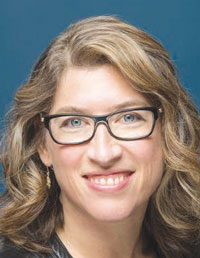
Lauren Greenfield

In a portrait by the esteemed photographer and filmmaker Lauren Greenfield, a plump 13-year-old named Adam romps with a go-go dancer at his bar mitzvah at West Hollywood’s Whisky a Go Go nightclub in the early 1990s.

“You see him with his face exactly in line with [her breasts],” Greenfield, widely regarded as a preeminent chronicler of the cultures of wealth and beauty, said during a recent telephone interview. “So you have this funny and ironic coming-of-age in what’s supposed to be this religious rite of passage. But it looks almost like a sexual coming of age.”

Adam’s portrait is one of more than 200 photographs, transcribed interviews and films on display in Greenfield’s newest exhibition, “Generation Wealth,” at the Annenberg Space for Photography through Aug. 13. The solo show is accompanied by a hefty monograph of the same name.

The book and the show trace Greenfield’s career over the past quarter-century, during which she created groundbreaking work exploring society’s evolving obsession with bling and its consequences. “It’s about the influence of affluence,” she said.

Organized into sections with titles such as “The Princess Brand” and “The Cult of Celebrity,” the work spotlights subjects such as Emily, 10, who appears basking in a Jacuzzi at The Peninsula hotel in Beverly Hills. She and her family had been living there with their servants for three months after their two mansions were seized by the federal government — the result of her father’s forfeiture on tax evasion charges.

In other photos, a 6-year-old beauty pageant winner poses with her tongue provocatively protruding from her mouth; a plastic surgeon with a celebrity clientele prepares to inject aging lips with Botox; and the wife of a Russian oligarch stands in the library of her Frank Lloyd Wright-inspired home — where the shelves are stocked solely with copies of her self-published photography book. These are balanced by pictures of people such as a teenager from South Central Los Angeles who prepares to attend his prom, which he could afford only after saving money for years.

“But this project is not about actual wealth,” Greenfield said during a recent lecture at the Annenberg. “It’s really about … our aspiration to wealth … the way we emulate it and package it and export our notions of it, [like] a contagious virus — the addictive culture of consumerism.”

Greenfield’s work describes the concept of wealth “very broadly,” she explained. “I’ve included the currency of fame, of branding, of the body, of youth.”

Materialism is a crucial part of the new American dream, she said, “but in the end, it’s an empty form.”

At the lecture, Greenfield projected slides that sometimes drew laughs or gasps from the audience: A woman who had paid for her Doberman pinscher’s facelift; a socialite showing off one of her four seasonal closets; and Adam, the bar mitzvah boy.

“Is this Vanity Fair or is this about social change?” one elderly social worker said during the Q&A session.

Greenfield told the lecture audience that her work is not about judging her subjects, but trying to see clearly what’s going on around this issue.

“It’s really hard material, and if you read the interviews, [you will see] a huge amount of pain and suffering, from the rich as well as the poor. It’s really about how we’re lost in this cycle of addiction that doesn’t bring satisfaction.”

Was Greenfield disturbed that patrons of her lecture tittered upon viewing photographs such as Adam’s? “I feel like laughter is the way in,” she told the Journal. “Then what happens is that people read his [words] and … they get brought into a very sad and emotional story.”

In his interview, Adam reflects that money ruins kids and that if your parents don’t spend at least $50,000 on your bar mitzvah, “You’re s— out of luck.” Greenfield said Adam found this kind of competition both empty and scary.

Born in 1966, Greenfield grew up with conflicting views about money. Her parents, who divorced when she was a teenager, didn’t care about the trappings of wealth and raised her, in part, in their separate communes in Venice in the 1970s.

They also valued social action: Her father, Sheldon Greenfield, now a UC Irvine professor of medicine, was a founder of the Venice Family Clinic, where low-income patients receive free medical care. Her mother, Patricia Greenfield, is a UCLA psychology professor.

Even so, Greenfield was not immune to the wealth (and girl) culture she observed at Temple Isaiah, where, she said, one of her friends owned 25 pairs of designer jeans. Greenfield chose to have a bat mitzvah, but she said it wasn’t lavish like Adam’s.

When she attended Santa Monica’s Crossroads School in 11th and 12th grades, her classmates drove expensive cars while an embarrassed Greenfield asked her father to park his jalopy — a used unmarked police car — a block away from school whenever he dropped her off. If she was traumatized by her family’s lack of fancy goods, “My stepmother says it’s OK because I made a career out of it,” she quipped.

After studying visual anthropology at Harvard, Greenfield’s first project, for National Geographic, was documenting a Mayan village — where her mother also happened to be doing research. Ultimately, though, she felt like she did not have “the intimate access or understanding to say something meaningful about what I was seeing,” she said during her lecture.

“I started thinking that … some of the things I had seen growing up were actually worthy of the same kind of serious study that anthropologists and photojournalists usually give to foreign cultures,” she said.

Greenfield returned home and began photographing teenagers at her old school, Crossroads, and elsewhere. That prompted her first book, “Fast Forward: Growing Up in the Shadow of Hollywood,” about how “kids were influenced by the values of materialism, the cult of celebrity and the importance of image,” she said.

One picture captures a Beverly Hills High student riding in a convertible with the popular kids at the beach. In her interview, she told Greenfield that while she did not come from a rich family, her good looks had gained her entry into the elite school clique.

“So one of the things that I looked at … was the commodification of girls and their bodies,” Greenfield said.

A photograph from a subsequent project, “Girl Culture,” shows a 5-year-old shopping for skimpy designer clothes at an upscale boutique.

“In this kind of innocent game of dress-up, you start to see a kind of precocious sexualization,” Greenfield said. “I thought … that if girls see their bodies as a source of value, or a kind of currency, that this can only accelerate [with age].”

Greenfield explored that pressure in her following work, including her documentary “Thin,” about women battling eating disorders. She also captured the struggle, mostly on the part of women, to stave off aging through plastic surgery. In 2012, she released her lauded documentary, “The Queen of Versailles,” about the efforts of David and Jackie Siegel, a Florida couple, to build the largest house in the world — even as their efforts were stalled during the financial crash of 2008.

Greenfield’s photographs depict further images of the effect of the crash, such as the emptied swimming pools of foreclosed houses in the Inland Empire. There also are pictures exploring how the wealth culture has been exported to countries such as Ireland, Dubai and China, where a socialite appears with a logo of her favorite commercial brand tattooed on her neck.

During the era of President Donald Trump, whose preference for gilded furnishings mirrors that of the Siegels, Greenfield’s project is meant as a cautionary tale.

“We’ve got to get back to what matters,” she told the Journal, referring to the values her parents taught her: “To make a difference, a contribution, doing meaningful work, and caring about community and family.”


Lauren Greenfield’s exhibition, “Generation Wealth,” runs at the Annenberg Space for Photography through Aug. 13. For more information about the exhibition, visit annenbergphotospace.org.

Lauren Greenfield exhibition examines how wealth skews values Read More »

gal-gadot

Gal Gadot and the Jewish essence of Wonder Woman

When Wonder Woman first appeared on the comic book scene in 1941, she entered as a kind of messianic figure.

She soared to life during World War II, when most of Europe was in shambles. The devastating human and economic losses of the war had taken a grave toll on the global order thanks to real-life villains Hitler, Stalin and Mussolini. And male superheroes, such as Batman and Superman, entered an existential crisis — their hypermasculinities seemed a little too simpatico with the villains of the war, even as their ignorance of the gas chambers made them irrelevant. A shattered world called out for a new superhero, someone who could elevate the genre and redeem humanity from the ashes of Auschwitz.

Enter Wonder Woman.

Sculpted from clay on the all-female island of Themyscira, Diana Prince (her civilian name) is nurtured by Aphrodite and trained as an Amazon warrior. When U.S. Army Air Corps intelligence officer Steve Trevor crashes on her island, he tells her of a world at war and she feels a duty to try to stop it.

Fast forward to 2013, when the casting of Israeli model and actress Gal Gadot in the Hollywood reboot of “Wonder Woman” — which opens in theaters on June 2 — was no less momentous than the moment of the character’s creation. Surely, this was good news for the Jews.

“So exciting!!! Can’t express how happy I am :)))),” Gadot tweeted to her followers after the announcement.

Her elation was widely shared. The editorial board of The Jerusalem Post saw fit to write about why this casting choice was so meaningful: “Israel — and the Jewish people — need heroines such as Gal Gadot,” the editors gushed. “They present a picture to the world of the beautiful, sexy Israeli, countering the all-too-pervasive negative and ugly imagery of Israel and Israelis in the international media.”

Nowadays, superheroes don’t just save the world; they apparently can save Israel’s image. Or so went The Jerusalem Post’s slightly delusional logic.

The newspaper was right to acknowledge the occasion’s significance, though for the wrong reason. The real power in casting Gadot as Wonder Woman is that it offers the moviegoing public both a real and fictive revenge fantasy. It isn’t just a triumph for women that the new savior of the world is female; it is a triumph for the Jews.

“Wonder Woman was created in and for World War II,” Glen Weldon, author of “Superman: The Unauthorized Biography” said during a 2013 interview on National Public Radio. “That was her whole shtick, fighting the Nazis.”

Indeed, Wonder Woman’s first adversaries in the comic books are the military of the Axis powers, whose defeat is her raison d’etre. Though the new Hollywood version inexplicably changes the war from World War II to World War I, fighting Hitler is in the character’s DNA — but so is tikkun olam (repairing the world).

“She was created to be something of a contradiction,” Weldon said. “She is a warrior for peace. That’s tough.”

Ha! Not if you’re Israeli.

Besides the fact that Batman and Superman were emblematic of male power at a time when male power had left half the world in ruins, they also were psychological disappointments. As popular projections of divine, supernal power, Batman and Superman fell short. Not only had their “super-ness” failed the populace of Europe, they were ill-equipped to help survivors heal. The heroic imagination required a radical champion — someone with worldly qualities, like strength, but also divine qualities, like love. Power alone was not enough to prevail; a wounded world needed heart and soul.

Psychologist, feminist and comic book writer William Moulton Marston decided to create an antidote and alternative to what he saw as the “blood-curdling masculinity” of the superhero landscape. “A male hero, at best, lacks the qualities of maternal love and tenderness which are as essential to a normal child as the breath of life,” Marston wrote in a 1944 article for The American Scholar. So along came Wonder Woman, “with all the strength of a Superman plus all the allure of a good and beautiful woman,” Marston wrote. She would be the new, epicene ideal of heroism: an amalgam of masculine might and feminine compassion.

How appropriate, then, to cast Jewish former Israel Defense Forces soldier Gal Gadot as the character originally conceived as a Nazi-crushing superheroine. Wonder Woman may not be the only superhero to take on the Nazis (see: Captain America), but it’s the first time an actor can arm such a character with real-world cultural vengeance. Gadot’s maternal grandfather was a Holocaust survivor, which binds her psychically to her avenging character. In 2009’s “Fast & Furious,” her fighting spirit was so obvious that director Justin Lin added to her character’s backstory by making her a Mossad agent. “He really liked that I was in the Israeli military and he wanted to use my knowledge of weapons,” she told the Forward in 2011.

Tender, smart and strong, Wonder Woman was designed as a feminist archetype, but her current iteration also has come to embody Israeliness. In the Jewish state, it’s a national requirement for women to kick ass. And it is specifically within the micro-society of the Israeli military that men and women are expected to contribute equally, both serving in combat roles. This norm suggests that strength, skill and weaponry are the domain of both sexes, and reinforces equality of the sexes among secular Israelis. Mixed-gender army service also contributes to a national myth in which each soldier is a potential “superhero” whose duty is to protect innocents and fight evil (i.e., terrorists) who seek the country’s destruction.

Notably, the Hollywood “Wonder Woman” is the first superhero movie in over a decade to feature a female in the title role. It is also the first time a female director (Patty Jenkins) has helmed a superhero franchise, an effort to dispel conventional wisdom that a female-centric film can’t be a blockbuster (see: “The Hunger Games”).

Although, early on, Gadot was criticized for not having the appropriate body type for Wonder Woman — she was considered too thin and too lanky to be strong, her breasts too small to exude sexuality — she put those criticisms to rest with her real-life combat resume. When still others charged that Gadot couldn’t reconcile playing a strong female character while clad in a skimpy outfit, she shot back: “I think as a feminist, you should be able to wear whatever you like!” Gadot told The New York Times.

As Gadot herself has put it, one of the defining aspects of her character is that she transcends gender. “Feminism is about equality and choice and freedom. … And the best way to show that is to show Diana as having no awareness of social roles. She has no gender boundaries. To her, everyone is equal.”

Wonder Woman doesn’t inhabit an us-versus-them universe the way her male counterparts do. Instead, she serves as that “warrior for peace” — neither provocateur, nor pacifist — but one who only uses her strength against an unambiguous enemy. At least in theory, this also is the animating force of the Israeli army. Though Wonder Woman was conceived specifically to combat Nazism, her matchless qualities have turned her into a redemptive figure for humankind. She fights only when she must, and she loves just as fiercely.

By turning her over to Gadot, Hollywood is answering historical tragedy with a touch of irony: Wonder Woman is an Israeli Jew.

“Wonder Woman” opens in theaters June 2. 

Gal Gadot and the Jewish essence of Wonder Woman Read More »

Michael-Oren

Episode 40 – Six days of war that shaped the Middle East with MK Dr. Michael Oren

This month we commemorate the 50th anniversary of the Six Day War – a war, it seems, that shook the Middle East and reshaped Israel forever. In Israel the war is spoken of almost as a legendary tale, whereas for the Palestinians it’s remembered as the event that brought upon the occupation. For that reason, and many others, it is still one of the most controversial events in Israel’s short history.

Deputy Minister Dr. Michael Oren has a rich biography. He was an historian teaching in Harvard, Yale and Princeton. He also taught in Israel in both Tel Aviv University and Hebrew University. He was the Israeli ambassador to the United States and today he serves as a deputy minister in the Prime Minister’s office. He is also the author of several books including “Six Days of War: June 1967 and the Making of the Modern Middle East.” 2NJB had the honor to sit down with MK Oren for a special talk commemorating the war and the great victory.

RSS Subscribe

Direct Download

Michael Oren’s Facebook and Twitter

Michael Oren’s books on Amazon

Episode 40 – Six days of war that shaped the Middle East with MK Dr. Michael Oren Read More »

Leftism’s influence on Western religion

Last week, the head of the Roman Catholic Church, Pope Francis, the religious leader of a billion people, gave the visiting president of the United States, the leader of the most powerful nation on earth, a parting gift.

It was a copy of something the pope had written. A papal encyclical, in fact.

Was it on the annihilation of Christians in the Middle East? Was it on the ongoing disappearance of Christianity in Western Europe? Was it on evil in the name of God being perpetrated by radical Muslims around the world, especially in Europe, the Middle East and the United States?

No.

It was on climate change.

It was not surprising.

Last year, five days after an 86-year-old French priest had his throat slit by two Muslims yelling “Allahu Akbar,” Pope Francis was interviewed on the papal airplane returning to Rome from Krakow, Poland. A Catholic journalist, Antoine Marie Izoard, with i.Media, a French Catholic news service, asked the pope about the French priest and Islam:

Izoard: “Catholics are a bit in shock, and not only in France, after the barbarous assassination of Father Jacques Hamel — as you know well — in his church while celebrating the Holy Mass. Four days ago, you here told us that all religions want peace. But this holy, 86-year-old priest was clearly killed in the name of Islam. So, Holy Father … Why do you, when you speak of these violent events, always speak of terrorists, but never of Islam, never use the word Islam? … Thank you, Holiness.”

As reported by the Catholic News Service, this is what Pope Francis responded:

“I don’t like to speak of Islamic violence, because every day, when I browse the newspapers, I see violence, here in Italy … this one who has murdered his girlfriend, another who has murdered the mother-in-law … and these are baptized Catholics! There are violent Catholics! If I speak of Islamic violence, I must speak of Catholic violence.”

In other words, the pope likens: 1) a person who happened to have been baptized a Catholic as a child — and who may have no Catholic identity as an adult — with an adult who affirms a religious identity; and 2) the murder of a girlfriend or a mother-in-law — most likely a crime of passion — with the ritual murder of a Catholic priest.

Pope Francis then added that “Terrorism grows when there are no other options, and when the center of the global economy is the god of money. … This is a basic terrorism against all of humanity!”

The idea that Islamic terrorism is a desperate act arising from poverty is widely held among people on the left. But it is completely untrue. Most Islamic terrorists come from the middle class or above, as did the 9/11 hijackers.

The only explanation for these statements is that Pope Francis has inherited his theology from Catholicism but, unlike his immediate predecessor, Pope Benedict XVI, he takes much of his moral outlook from leftism — in his case, the leftism that permeates Latin America, including Latin American Catholicism. This is not conjecture. In addition to the comments cited already, in an interview with the Italian newspaper La Repubblica last November, the pope equated Christianity with communism:

“It is the communists, in all cases, that think like Christians. … What we want is to fight against inequality, the greatest evil that exists in the world.”

The Western combination of Judeo-Christian morality and classical political liberalism — with their doctrines of moral accountability, moral absolutes, confronting evil, and political and social freedom — has produced the most moral societies in world history.

The pope of the Roman Catholic Church should be its greatest advocate.

But because of leftism, he isn’t.

Leftism has had an identical impact on mainstream Protestantism, non-Orthodox Judaism and, of course, secular Jews and non-Jews.

In the past 100 years, leftism has influenced Judaism and Christianity far more than Judaism or Christianity have influenced the world. If you want to understand the modern world, that may be the most important thing to understand.

And that explains why the pope gave the American president his writings on climate change and why he says almost nothing about Islamic violence generally or the decimation of Christianity in Muslim lands specifically. On the left, carbon emissions and economic inequality are the greatest problems confronting humanity. On the right, which includes traditional Jews and Christians, evil — the inhumane treatment of people by other people — is the greatest problem confronting humanity.

In the 1930s and 1940s, the great evil was Nazism; after that, it was communism. And in our time it is Islamism, the movement that seeks to impose Islam on humanity.

But the pope is more concerned with climate change than with slaughtered Christians; mainstream Protestant churches seek to economically strangle Israel; and most non-Orthodox Jews fear climate change more than they fear the Ayatollah Khamenei. Such is the state of mainstream Western religion in our time.


Dennis Prager’s nationally syndicated radio talk show is heard weekdays in Los Angeles on KRLA (AM 870) 9 a.m. to noon. His latest project is the internet-based Prager University (prageru.com).

Leftism’s influence on Western religion Read More »

Five top summer books and where to meet the authors

Perhaps the best evidence that the baby boomers remain a crucial element of the publishing industry is the fact that so many summer books invite us to take a look back at the 1960s. Here are three authors who have something to say about that uproarious era, as well as two younger authors with surprising books about the precocious coming out of two literary lions and auto-mobile activism in Saudi Arabia. And you can meet all of them in person at upcoming events in Southern California.

Long a gloried mover and shaker in the music industry, Danny Goldberg knows whereof he speaks in his iconoclastic history of American popular culture, “In Search of the Lost Chord: 1967 and the Hippie Idea” (Akashic Books).

Based on his own exhaustive research, including interviews with luminaries ranging from Allen Ginsberg to Baba Ram Dass (aka Richard Alpert), the book drills deeply into sex, drugs and rock ’n’ roll, and much else besides. Goldberg, for example, seeks an explanation for all of the disparate events and personalities of that seminal year — the year he (and I) graduated from high school — which included the debut albums of the Doors, the Grateful Dead, Jimi Hendrix and Janis Joplin, the Summer of Love in San Francisco, the murder of Che Guevara and the Six-Day War.

Goldberg will talk about his book at 7 p.m. June 14 at Book Soup, 8818 Sunset Blvd., West Hollywood.

Yet another way to approach the social, cultural and political turmoil of the ’60s is offered in Michael Leahy’s “The Last Innocents: The Collision of the Turbulent Sixties and the Los Angeles Dodgers” (Harper), a history of the Dodgers as seen through the experiences of seven key players: Sandy Koufax, Maury Wills, Wes Parker, Jeff Torborg, Tommy Davis, Dick Tracewski and Lou Johnson.

The book has been honored as a finalist for the 2017 PEN/ESPN Award for Literary Sports Writing and has been received enthusiastically by Dodgers fans, but the book really transcends the sports genre. To his credit, Leahy has found a way to use the team as a lens through which to see and understand the stresses that were shaping an entire era.

Leahy will discuss and sign copies of his book at 7 p.m. June 23 at Vroman’s, 695 E. Colorado Blvd., Pasadena.

Tracy Peacock Tynan, the child of theater critic Kenneth Tynan and novelist Elaine Dundy, grew up in the Swinging ’60s in the upper reaches of British cultural aristocracy, a scene that she evokes with wit and color in “Wear and Tear: The Threads of My Life” (Simon & Schuster).

She was named after the character her godmother, Katharine Hepburn, played in “The Philadelphia Story.” Her own sensibilities, no less than the attire of her famous parents and their cronies, moved her in the direction of fashion, and she grew up to be not only a costume designer but something of a female version of Beau Brummell.

Tynan will present and sign copies of her book on at 7 p.m. July 11 at Barnes & Noble on the Third Street Promenade in Santa Monica.

Gertrude Stein, a Jewish lesbian intellectual, was an unlikely prospect for enduring literary fame, a fact that inspired Jeff Solomon to ask why both Stein and Truman Capote chose to come out in an era when other gay public figures were closeted. He answers the question in “So Famous and So Gay: The Fabulous Potency of Truman Capote and Gertrude Stein” (University of Minnesota Press), a high-spirited work of scholarship that explores celebrity gossip as well as more conventional archival sources to paint a vivid portrait of two landmark personalities.

Solomon will discuss and sign copies of his book at 5 p.m. July 8 at Skylight Books, 1818 N. Vermont Ave., Los Angeles.

Nowadays, a woman behind the wheel of a car is a human rights issue in Saudi Arabia, as we learn in “Daring to Drive: A Saudi Woman’s Awakening” (Simon & Schuster), a remarkable new memoir by Manal al-Sharif. She was arrested and imprisoned for “driving while female,” an experience that changed her from a devout housewife and mother into a women’s rights activist in a place where the risks of protesting can be grave. 

Forcibly circumcised at the age of 8, she was forced to seek her father’s consent to study at King Abdulaziz University and to take a job at Aramco, where she found herself to be the only woman in the information technology department. When she dared to drive a car in the kingdom, she discovered that “if you want to race with men, you’d have to do it with your hands and legs cut off.”

Al-Sharif will be featured in conversation with NPR’s “All Things Considered” co-host Kelly McEvers at 7:15 p.m. June 21 in the Aloud program of the Library Foundation of Los Angeles at L.A.’s Central Library, 630 W. Fifth St. For tickets and information, call (213) 228-7500 or visit lfla.org.


JONATHAN KIRSCH is the book editor of the Jewish Journal.

Five top summer books and where to meet the authors Read More »

Stefan-Zweig

In exile, writer Stefan Zweig bids ‘Farewell to Europe’

In the early decades of the 20th century, Austrian-Jewish writer Stefan Zweig was one of the world’s most popular, prolific and translated authors.

In 1934, discerning the dark political clouds drifting across the border form Nazi Germany, Zweig left his beloved Vienna and went into permanent exile — first in England, then in the United States before finally settling in Brazil.

In the film “Stefan Zweig: Farewell to Europe,” German writer-director Maria Schrader follows the geographic and psychological route of Zweig’s exile, from initial celebrity status to his despairing end.

Although he traveled widely, Zweig chose to move to Brazil, a nation he visualized as the country of the future. The film opens with a lavish reception for Zweig at which members of Rio de Janeiro’s elite vie for a word with the world-famous author and even, for the lucky ones, his autograph.

In 1936, Zweig attended the PEN Congress in Buenos Aires, at which the literary and human rights organization for poets, essayists and novelists welcomed him as a literary star. However, one incident there, depicted in the film, made him the object of lifelong controversy and criticism.

After one conference speaker after another denounced the Hitler regime in Germany for its persecution of dissenting writers and forcing Jewish ones into exile, Zweig is asked at a press conference for his comment. The writer responds by declaring, “I would never speak out against any country. And I’ll make no exceptions. … I cannot write out of hatred. … And if my silence is a sign of weakness, I am afraid I must live with that stigma.”

Schrader analyzed Zweig’s pronounce-ment in a phone interview with the Journal. “Zweig was a radical pacifist and he refused to use language to condemn any country,” the director said. “He felt it was the duty of the intellectual to achieve an understanding of any opponent.”

Zweig considered himself mainly as a universal humanist but never renounced his Jewish heritage. He spent considerable effort and money to help Jewish writers reach the U.S. and a number of his short stories focused on Jewish themes and characters.

Schrader, who is not Jewish, has had a successful career as an actress, screenwriter and director, with strong artistic ties to Israel and Jewish life in Germany. Her debut film, “Love Life,” was based on the novel of Israeli author Zeruya Shalev and was shot in Israel. She directed an episode in the documentary “24h Jerusalem” as well as the film “Meshugge.” In “Rosenstrasse,” she played a German woman who stands up against the Nazis after they arrest her Jewish husband.

Dominating “Farewell to Europe” is veteran actor Josef Hader as Zweig, with Barbara Sukowa and Aenne Schwarz as his first and second wives, respectively.

The movie is not entirely without humor. In one scene, as Zweig and his spouse tour the Brazilian hinterland, they are met in one small town by a flustered mayor and welcoming musical ensemble, consisting of a trumpet and an off-key tuba, playing “On the Beautiful Blue Danube.”

Overall, this is a thought-provoking, somber film, culminating in the 1942 double suicide of Zweig and his second wife, Charlotte Altmann, in the Brazilian town of Petropolis. Zweig left a farewell note explaining that at the age of 60, he lacked the strength to build a new life “now that the world of my language has disappeared for me and that my spiritual land, Europe, is destroying itself.”

He concluded by writing, “I greet all my friends. May they still see the dawn after the long night. I am too impatient, I go before them.”

Schrader said she sees some parallels between Zweig’s era in the 1930s and ’40s and the present time.

“Hitler came to power by promising to drastically change Germany,” she said. “Today, many people in Europe and the United States seem to feel again that any change is better than staying with the status quo. In Europe, countries are turning to the right politically and the American president wants to build a wall between countries.”

At Zweig’s memorial service in Los Angeles, not depicted in the movie, fellow author and exile Franz Werfel eulogized Zweig by saying, “His heart, spoiled by humanist optimism, suddenly realized the entire, piercing, unsolvable tragedy of the human being on Earth.”

“Stefan Zweig: Farewell to Europe” opens June 16 at Laemmle’s Royal Theatre in West Los Angeles.

In exile, writer Stefan Zweig bids ‘Farewell to Europe’ Read More »