fbpx

April 6, 2017

Don Rickles, insult comedian and actor, dies at 90

Don Rickles, the bullet-headed comedian and actor whose pioneering brand of insult comedy earned him the nickname “Mr. Warmth,” has died at 90.

Rickles died Thursday morning at his home in Los Angeles from kidney failure, according to his publicist. He would have turned 91 on May 8.

Bald and squat, Rickles would pace the stages of nightclubs and late night talk shows seeking out “victims” in the audience, riffing on their weight, ethnicity and dress, calling them “hockey puck,” but usually pulling back from the edge of causing any real offense by offering a wide smile and an intentionally unctuous declaration of universal fraternity. His targets included fellow comedian Jerry Lewis (“You annoy me”), Frank Sinatra (“Make yourself comfortable, Frank — hit somebody”) and an Asian man sitting in the front row of one of his shows (“There are 40 million Jews here in Los Angeles; how did you get such a good seat?” ).

But Rickles also was a serious actor who trained at the famed American Academy of Dramatic Arts, and he had supporting roles in a number of memorable films including  “Kelly’s Heroes,” with Clint Eastwood; “Run Silent, Run Deep,” with Clark Gable and Burt Lancaster, and “Casino,” directed by Martin Scorsese and starring Robert DeNiro.

Younger audiences would recognize his voice as that of Mr. Potato Head in the Pixar film “Toy Story” and its sequels. He appeared in countless television shows.

An auxiliary member of the “Rat Pack,” a loose fraternity of entertainers led by Sinatra, Rickles kept on performing nearly to the end of his life and outlived most of the entertainers of his era.

Rickles was born and raised in Queens, New York. His father, Max, immigrated to the United States as a child from Kaunas, Lithuania. His mother, born in New York, also was the daughter of Jewish immigrants.

Rickles served in the U.S. Navy during World War II, and after his service honed his act at small and often seedy nightclubs.

“I had a tough time – I had no other jobs – so I reached out to comedy,” he said in an interview with the Jewish Standard of New Jersey in 2013. Sinatra spotted Rickles at a Miami club, and the famed singer helped make him a headliner in Las Vegas. Rickles first appeared on “The Tonight Show Starring Johnny Carson” in 1965, and would return as a guest at least 100 times.

In 2012, Jon Stewart presented Rickles with the “Johnny Carson Award For Comedic Excellence” at the Comedy Awards run by the Comedy Central cable network.

In his 2007 memoir, “Rickles’ Book,” he recalled a visit to his father’s grave on Long Island along with the cantor who would perform his wedding to Barbara Sklar.

“The cantor put on his white robe and prayer shawl,” Rickles recalled. “In the still of the morning, standing over my dear father’s grave, he sang the Hebrew prayer for the dead. He wailed; he sang with such tender feeling and heartfelt anguish that I felt the presence of God Almighty in every fiber of my being. Afterward, we recited the Kaddish, the Jewish mourners’ prayer, our words melting the morning fog to tears.

“Before we left, the cantor sang a prayer in Hebrew, inviting Dad to my wedding. Then he finished by saying, ‘May your soul be with us forever.’”

Barbara Rickles survives her husband, as does their daughter, Mindy. Their son, Larry, an Emmy Award-winning producer, died at 41 in 2011 of respiratory failure.

Rickles often tried to distinguish between the “character” he played on stage and his real-life persona.

“I don’t care if the average guy on the street really knows what I’m like, as long as he knows I’m not really a mean, vicious guy,” he said. “My friends and family know what I’m really like. That’s what’s important.”

Don Rickles, insult comedian and actor, dies at 90 Read More »

To help kosher families in need, Tomchei LA thinks inside the box

When it comes to 400 local kosher families in need of help to make their seders more affordable, Schneur Braunstein knows just the right recipe:

About 12,500 pounds of chicken and red meat; 2,500 pounds of matzo; 15,000 pounds of dairy and produce; 1,800 dozen eggs; 1,200 bottles of grape juice; and 2,500 cans of tuna.

It’s a tall order, but over the course of three days during the run-up to Passover — March 30, April 2 and April 6 — that’s what Tomchei LA, a poverty-alleviation organization with an office on La Brea Avenue, expected to deliver.

“What I’m trying to do here is make this a bridge between tough times and better times,” said Braunstein, the nonprofit’s executive director.

Formerly known as Tomchei Shabbos (Hebrew for “Supporters of the Sabbath”), the organization provides an opportunity for local community members to perform mitzvot by packing boxes of food for families who cannot afford to purchase their own on Passover and to deliver the food to the families’ homes.

“I think it’s nice to give back in the community in any way possible, and it’s nice to share this with my nieces,” Shira Nissim, 28, said as she packed boxes of canned mushrooms with her relatives Aliyah, 8, and Neshama, 10, on March 30.

Founded in 1978 by three Orthodox families out of a garage, Tomchei LA aims to alleviate challenges facing families living an observant life in Los Angeles, especially during holidays such as Passover, when the price of kosher food skyrockets, Braunstein said.

Rabbi Yona Landau has led the organization — whose official nonprofit name is Touch of Kindness — as president since the 1980s.

The recent Tomchei LA activity for Pesach unfolded over a trio of days, with food packing taking place at a Pico-Robertson storefront and at a North Hollywood warehouse. On March 30, volunteers packed and delivered dry foods after convening earlier in the evening — despite the threat of rush-hour traffic and lack of parking.

Many of those who turned out were students, including Gaby Gershfeld, 24, a second-year student at Southwestern Law School.

“I’m here to give tzedakah and help families who need help because it feels good, it feels right,” said Gershfeld, one of several members of the Jewish Graduate Student Initiative to volunteer. “I have the opportunity to give, so why not?”

Edwin Yaghoobian, 13, of Paul Revere Charter Middle School, echoed those thoughts.

“I’m here because it’s a mitzvah and also it’s great to help out others who don’t have the opportunity to have this food,” he said.

At 6:20 p.m., only 20 minutes after helpers began pouring into the entrance of the storefront at Pico and Wetherly, volunteers started loading the boxes of food into cars. Tomchei provides volunteer drivers with the addresses of recipients who are located along 20 routes in the Pico-Robertson area and 45 routes in the San Fernando Valley.

Protocol is to leave the food at the door of the recipient, who is expecting the delivery, as opposed to knocking on the door or ringing the bell and handing over the food face to face. The goal is to preserve the anonymity of recipients.

“Many families are ashamed to ask for help,” Braunstein said.

On April 2, volunteers showed up at 10 a.m. to pack frozen chicken, ground beef and roasts, as well as handmade and machine-made matzo, into cardboard boxes. The boxes of handmade matzo — stacked into towers in the center of the storefront — were in high demand.

“Oh, my God, they’re getting a lot of matzo, this family,” said Merav Cohen, director of administration at Gindi Maimonides Academy, who volunteered with her two children, Naomi, 7, and Mia, 5.

Braunstein oversaw all of the activity, making himself available for questions from volunteers and taking cues from a computer database that keeps track of which families receive what groceries.

“Our sophisticated database formulates each family’s need based on size and need and dietary restrictions,” he said.

The program’s partners include J. Hellman Produce, West Pico Distributors and Western Kosher.

“All the local kosher stores give us 10 percent off,” the executive director said.

Braunstein, the organization’s only paid staff member, said goals for the organization include moving into a larger space, as the current warehouse in Pico-Robertson is not large enough for all of the work the organization does, which includes providing clothing and furniture to people in need, running a jobs program and offering financial assistance. And at a monthly rent of $15,600, the current storefront is unaffordable, he said.

“The bottom line is, Tomchei needs a building,” he said.

Challenges aside, Braunstein said the beauty of the organization is that anybody can help and anybody can receive.

“Whether it’s the volunteers or families we help,” he said, “we have a diverse … base.”

To help kosher families in need, Tomchei LA thinks inside the box Read More »

Amanda Peet, when asked about eating Easter bunnies: ‘Guys, I’m Jewish’

ABC’s “Good Morning America” talk show isn’t always this awkward.

Actress Amanda Peet and actor Hank Azaria were guests on the show Wednesday and talked about their new IFC show “Brockmire,” which centers on a baseball announcer.

But before talking about the series, both were asked about how they like to eat their chocolate Easter bunnies. Host Michael Strahan supplied the chocolate treats as a segue into talking about a survey on how people eat food (do you eat the bunny ears first, or the feet?)

Things got a little uncomfortable — because both Peet and Azaria are Jewish.

“Guys I’m Jewish,” Peet said, prompting laughter from the hosts. “So this is really unfamiliar for me.”

“Would you like a chocolate menorah brought out?” Azaria said to lighten things up.

The group went on to talk about how people eat other things, like pizza and Oreos. When Azaria said he sometimes eats pizza with a knife and fork, some of the hosts called him out for being “not very New York.”

Azaria, who was raised in Queens, responded by saying “I can eat my pizza any freaking way I want” with a heavy New York accent (a la Jon Stewart).

A small debate broke out on Twitter over whether eating an Easter bunny is a quintessentially Christian activity.

https://twitter.com/Aelin24012198/status/849608016802365445?ref_src=twsrc%5Etfw&ref_url=http%3A%2F%2Fwww.jta.org%2F2017%2F04%2F05%2Farts-entertainment%2Famanda-peet-when-asked-about-eating-easter-bunnies-guys-im-jewish

https://twitter.com/jameskass/status/849603339797102592?ref_src=twsrc%5Etfw&ref_url=http%3A%2F%2Fwww.jta.org%2F2017%2F04%2F05%2Farts-entertainment%2Famanda-peet-when-asked-about-eating-easter-bunnies-guys-im-jewish

https://twitter.com/greatwetshart/status/849603593984294912?ref_src=twsrc%5Etfw&ref_url=http%3A%2F%2Fwww.jta.org%2F2017%2F04%2F05%2Farts-entertainment%2Famanda-peet-when-asked-about-eating-easter-bunnies-guys-im-jewish

Peet, the star of many movies and shows, such as “Jack and Jill” and “Togetherness,” was born to a Jewish mother and Quaker father — and she’s now married to Jewish “Game of Thrones” writer David Benioff. In 2015, she co-wrote a children’s book about Hanukkah titled “Dear Santa, Love, Rachel Rosenstein.”

Azaria, best known for being the voice of dozens of characters on “The Simpsons,” was born to Sephardic Greek parents.

Next time, Michael Strahan might want to bring out a box of chocolate matzah.

Amanda Peet, when asked about eating Easter bunnies: ‘Guys, I’m Jewish’ Read More »

ASCAP EXPO

The ASCAP EXPO is coming up!   Now in its 12 year, this unique and outstanding conference for established and emerging musicians, producers, and songwriters is being held on April 13th to April 15th in Hollywood.  It’s an excellent place to network, hone your craft, enjoy the company of your fellow artists, and generally bask in the glow of the incredible talent this industry offers.  Tickets and more information are available here:  ascap.com/expo.  See you there!

ASCAP EXPO Read More »

Hamas hangs 3 accused of collaborating with Israel in killing of commander

Hamas hanged three men in Gaza accused of “collaborating” with Israel.

The death sentence was carried out Thursday by the terror organization that controls the coastal strip.

The men were accused of being involved in giving information to Israeli military intelligence to aid in the assassination of a top Hamas commander, Mazen Fuqaha, late last month in Gaza, which Hamas blames on Israel. Israel has neither affirmed nor denied involvement in the killing.

The men, aged 32, 42 and 55, were charged with providing information on the location of Hamas operatives and military sites over the past three decades. Hamas said they were allowed to defend themselves as provided under Sharia law.

The Palestinian Authority condemned the executions and said they were illegal because Hamas did not get the permission to execute from P.A. President Mahmoud Abbas.

Human Rights Watch also condemned the hangings.

“The abhorrent executions by Hamas authorities of three men in Gaza deemed to be collaborators project weakness, not strength,” Sarah Leah Whitson, executive director of the organization’s Middle East division, said in a statement. “Hamas authorities will never achieve true security or stability through firing squads or by the gallows, but rather through respect for international norms and the rule of law.”

Hamas hangs 3 accused of collaborating with Israel in killing of commander Read More »

Israeli soldier, 20, killed in suspected West Bank car-ramming attack

An Israeli soldier was killed and a second injured in a suspected car-ramming attack in the central West Bank.

Sgt. Elhai Teharlev, 20, from the West Bank settlement of Talmon, was killed in the attack Wednesday morning at a bus stop near the West Bank settlement of Ofra, located northeast of Ramallah. He served in the elite Golani Brigade.

The Palestinian driver of the vehicle, a silver Audi, was apprehended by other soldiers on the scene and detained. He was identified by the Palestinian Maan news agency as Malek Ahmad Moussa Hamed, 23, from the village of Silwad near Ramallah.

Israeli President Reuven Rivlin mourned the soldier’s death.

“We have lost today a dear son, Elhai Teharlev, in the State of Israel’s ongoing struggle to ensure its security, and safeguard its citizens,” Rivlin said in a statement. “We will never allow terror to weaken us. Israeli society is strong, and we must stand firm in defense of our state and our land.”

Hamas praised the attack, calling it “a response to Israel’s crimes against the Palestinian people and a direct continuation of its heroism in the al-Quds Intifada,” the wave of violence, mostly stabbing and car-ramming attacks, that started in October 2015.

Israeli soldier, 20, killed in suspected West Bank car-ramming attack Read More »

The Sixth Cup?

Exodus 6:6-8 is the basis upon which the rabbis determined that 4 cups of wine are to be consumed during the Passover Seder. Each cup corresponds to one of the 4 verbs that describes how God freed the Israelite slaves from Egyptian bondage:

… I will free you (ho-tzei-ti et’chem) from the labors of the Egyptians and deliver you (v’hi-tzal’ti et’chem) from their bondage. I will redeem you (v’ga-al-ti et’chem) with an outstretched arm … And I will take you (v’la-kach’ti et’chem) to be My people, … I will bring you (v’hei-vei-ti et’chem) into the land…”

Wait! There are 5 verbs, not 4, and so we have to wonder why we don’t drink 5 cups of wine.

Some explain that Elijah’s cup is the 5th cup and is the most important of all because it symbolizes the future messianic era when justice, compassion, and peace will characterize all human affairs.

Others say that since the Haggadah is a Diaspora text (the first Seder was held in the middle of the night in Egypt), from the perspective of the Haggadah the 5th verb points to a state of being that has not yet occurred because the people have not as yet entered the land of Israel.

Since the establishment of the State of Israel, some Israelis identify the 5th cup of wine as the “Zionist cup” representing the fulfillment of the Zionist project in the establishment of the State of Israel in 1948.

Rabbi Josh Weinberg (President of the Association of Reform Zionists of America – ARZA) suggests that perhaps there ought to be an additional cup of wine, a 6th cup symbolizing the need of every Jew to understand, acknowledge and reconcile the differences that characterize Diaspora Jews and Israeli Jews, Orthodox and non-Orthodox Jews, political right-wing and political left-wing Jews, young Jews and old Jews.

A 6th cup of wine can be a reminder that the unity of the Jewish people must be a principle goal for us all. The concluding verses in the Prophetic Book of Malachi,  the Haftarah portion read on this Shabbat Tzav, present both the challenge  and the consequences of failure in stark terms:

“Lo, I will send the prophet Elijah to you before the coming of the awesome, fearful day of the Lord. He [Elijah] shall reconcile parents with children and children with their parents, so that, when I come, I do not strike the whole land with utter destruction.” (3:23-24)

May your Seders be filled with understanding and light, renewal and optimism, meaning and significance, good food and wine, loving family and friends, joy and hope.

Shabbat shalom and Chag Pesach sameach!


The Sixth Cup? Read More »

Syria reinforces a lesson: Israel mustn’t rely on the US

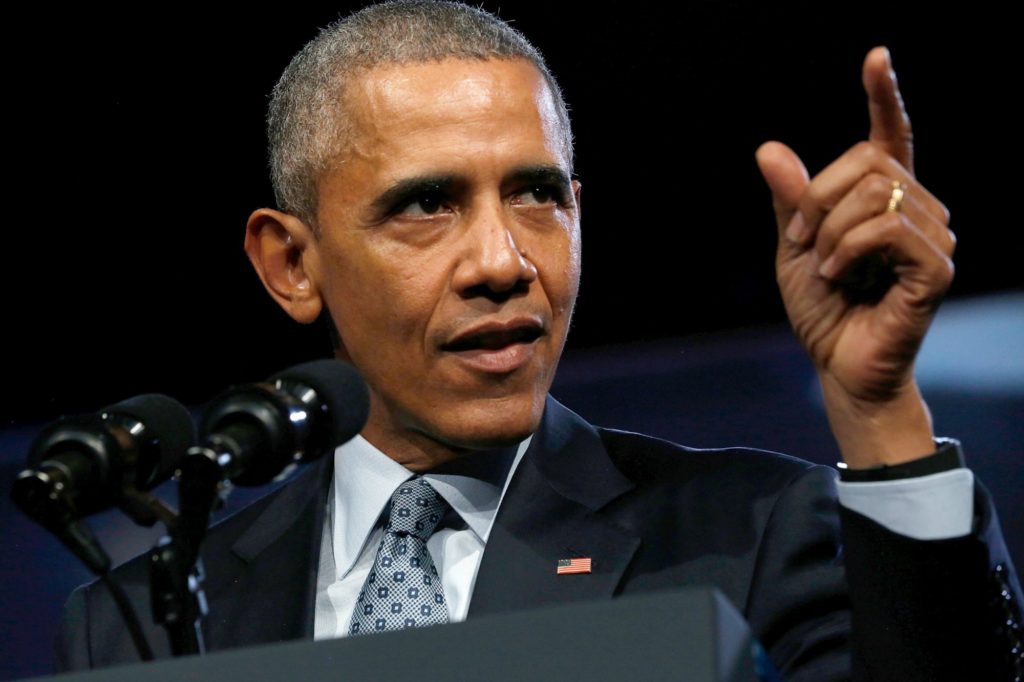
President Donald Trump was quick to blame his predecessor, President Obama, for the horrors taking place in Syria. In Israel, commentators and former officials voiced similar claims. President Obama, they said, enacted a policy that is partially responsible for the actions of President Bashar Assad. He drew a “red line” – his red line was the use of chemical weapons. Then, when tested by Assad, he reneged. Then, lured by the Russians, he decided to trust a diplomatic solution to the crisis. His actions were not without reason (I explained some of them in detail here), but the consequences were clear: the US lost its ability to deter Assad, and with it any shred of influence over events in Syria.

But why blame just Obama? What was it in his actions that is worth singling out? Maybe it is the hypocrisy: The President tended to use big words unbacked by actions. Maybe it is the naiveté: The President believed that he could use words to deal with those who only understand force. But when it comes to Syria, Obama deserves blame no more than many others. France could have intervened and did not do it, and the same goes for Britain, and Germany, and China, and Israel. Each of these countries – not to mention Russia – has enough power to make Assad regret his cold decision to use chemical weapons. Yet these countries decided to stay put. Neither Obama, nor Holland, nor Cameron, nor Merkel, nor Netanyahu intervened. All of them made the same calculated choice: Why do I need this as my responsibility? If you want to blame them for something, it is this: They prioritized the interests of their voters and constituents – of Britain, of China – over the interests, and the lives, of the poor Syrians.

Choosing to point at Obama alone stems from a wide gap between expectations and actions. All over the world, people expect more from America; and when America decides to act much like everyone else (that is, do nothing), there is disappointment. So it is very possible that the problem here is not Obama (or Donald Trump, assuming he also decides to do nothing – and this is still unclear). The problem here is the rest of us. The problem here is the expectations that people around the world have from a faraway nation, busy with itself, which has no special appetite to keep playing the role of world policeman. Obama did not solve Syria’s problems, and he did not solve the Israeli-Palestinian conflict, and he did not stop Iran’s quest to become a nuclear power. Obama ignored what he could ignore, and postponed what he couldn’t just ignore. Syria was not a priority for him. Deterring Assad was never a priority for him. Up until yesterday, it was not a priority for Trump either.

For us, residents of non-American countries, there are lessons to be learned from this. The first of these lessons: we need to be strong militarily. Those who want to base their security on soft power, or cunning diplomacy, or great friendship with other countries, or empathy, or local agreements, or global regimes, or international law – all these should recalculate their strategy. In tough areas such as the Middle East, those who have military power will survive, and those who don’t will not. Israel must face this reality soberly, if not gladly, every time it ponders its budgetary priorities, every time it considers its other concerns, every time it debates a peace treaty, or a draft of a peace treaty, or whatever.

But this is not the only lesson to be learned from recent events in Syria. Israel ought to also learn something about its relations with America. The Americans will not save Israel. And even if they promise to do so, they will still not save it. And if they give guarantees, Israel will not always be able to trust them. Thus, it is better not to make them the cornerstone of Israel’s strategy. And what this means is that Israel is not just allowed to reject American proposals, to dodge American pressure, and to avoid American initiatives if they are based on the assumption that America can be the guarantor of Israel’s security – Israel must do all these things: reject, dodge, avoid. And, of course, Israel would be more than justified in laughing off American, and other countries’, moral lecturing.

And of course, all this must be done politely and considerately, because the US is still Israel’s strong and reliable ally. The US is still much better on most things than most other countries. And yet, it is crucial to remember that there is politeness and there is essence, and the two aren’t one and the same. Israel does not wish to have disagreements with the Trump administration – but it has an interest to defend its diplomatic and security needs. Israel wishes to have an open, honest, and friendly dialogue with the US, but it must keep its ability to defend itself by itself.

And truly, as Israel engages in talks with the Americans – whether it is about the Palestinians, or Iran, or other issues – the prospect of disagreement that leads to open strife is unsettling. Relations between the Israeli government and the Obama administration were unsettling. The idea of having similar disagreements with the Trump administration is unappealing.

But one look to the north-east clarifies matters: Relying on anyone to save us in a time of need is even less appealing.


Syria reinforces a lesson: Israel mustn’t rely on the US Read More »