When a bomb threat was called into the Westside Jewish Community Center (WJCC) on Feb. 27, forcing hundreds of people to evacuate the building, the specter of violent anti-Semitism that looms over focal points of Jewish life reasserted itself. Although the distorted voice on the phone issued what turned out to be a hoax — as with the other 160-plus threatening phone calls and emails received by Jewish organizations nationwide this year — and the WJCC had recently beefed up security measures, the community was put on edge.
So, at a March 8 meeting organized by the WJCC and the Anti-Defamation League (ADL) to address the lingering concerns — one day before a second bomb threat was emailed to the WJCC — it appeared the scope of the threat had expanded into the psyches of WJCC members, and heightened levels of stress and suspicion had set in.
The meeting began with WJCC Executive Director Brian Greene summarizing the swift, effective reaction to the bomb threat that led to the building being vacated within seven minutes and a rapid law enforcement response that brought 20 officers from the Los Angeles Police Department. It continued with discussion about how to broach the topic of anti-Semitic terrorism with children, led by the ADL’s David Reynolds. And it concluded with a Q-and-A session with Greene.
The dialogue provided a view into how the Jewish community is reacting to and coping with the wave of anti-Semitism. Fears and frustrations have been adding up. People have pondered worst-case scenarios and considered the sacrifices they would have to make in the name of security, some of them for the first time.
“I think [the bomb threat] was a wake-up call for a lot of parents,” said Jenny Kurpil, who had two children attending the WJCC preschool when the building was evacuated. After receiving a phone call notifying her that her kids had been taken to a secure location, Kurpil said, she broke down in tears. Even though she was confident in the security protocols that were in place, “the actual knowledge that a threat call had been placed [made me] very emotional.”
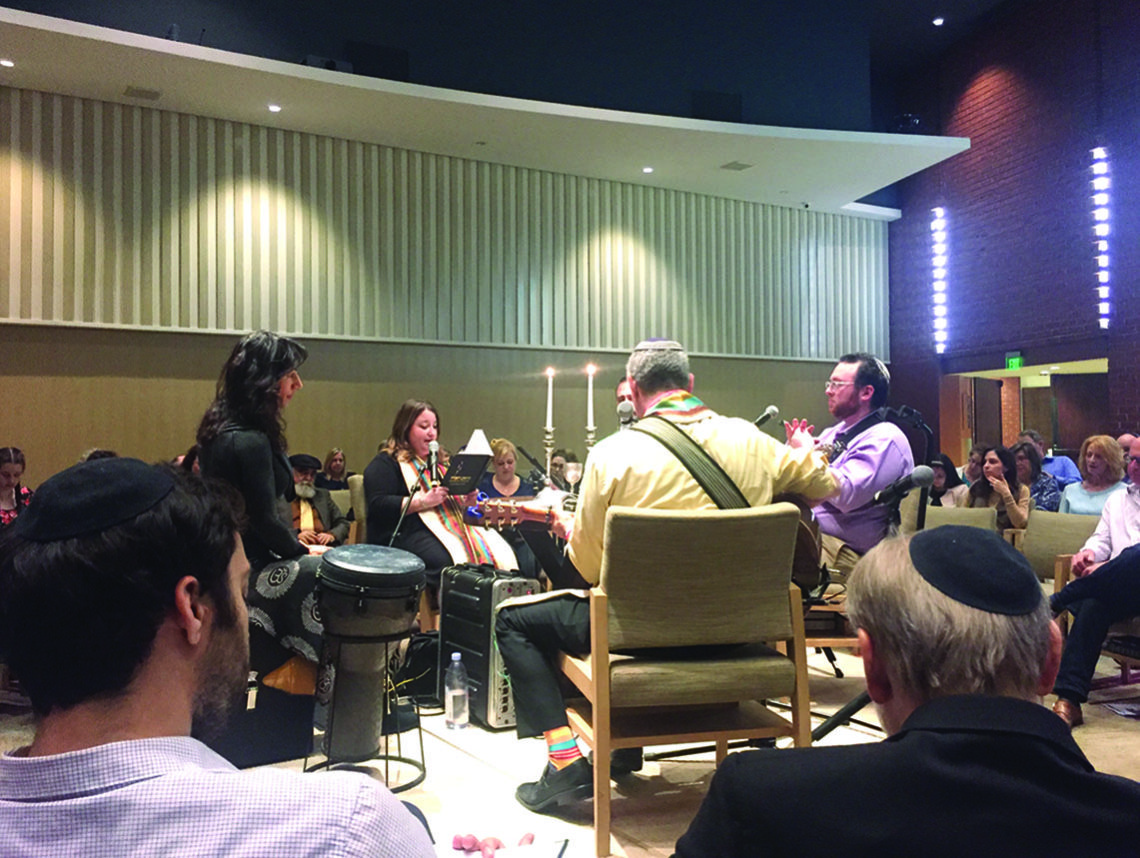
She wasn’t alone. The meeting was the third that the WJCC organized after the evacuation. Aninformal bagels-and-coffee huddle was held the morning after the threat, and a WJCC/ADL-organized gathering for preschool parents the following weekwas so positively received and well-attended that another was scheduled for the entire community.
About 20 people came to the March 8 meeting (half the number of the previous event’s). When invited to describe their feelings about the recent incidents in one word, attendees volunteered “edgy,” “unsettled” and “sad.” When reviewing security protocols, they talked in dark — but in their view, not inconceivable — hypotheticals.
People confronted by such hostile acts often face a psychological challenge, Greene said, as they struggle to reconcile those emotions with the actual risks, considering that none of the bomb threats has resulted in material damages or human casualties.
“The anxiety, the apprehension, the fear that this brings up, it reminds you of all the other [scenarios],” Greene said. “It opens up the door. … It just brings up these emotions in you. Before you know it, your mind’s going to places that are fearful.”
For Amanda Perez, whose children attend the preschool but were not present during the recent scare, going to the meeting wasn’t necessary for her peace of mind.
“I’m an extremely rational person,” Perez said. “My husband is the more emotional person. Even though my kids weren’t here, my husband went bananas. You just have to trust that all the policies are in place — otherwise you’ll make yourself crazy.”
The elevated caution prompted some parents to reconsider friendly habits — such as holding open an otherwise secure door for a stranger — that feel like embodiments of Jewish values but could potentially invite harm. Others admitted that even an official change of protocol on those matters would be difficult to enforce.
But everyone agreed that compromising their usual, relaxed way of life had become a necessary measure.
“My attitude has changed,” one parent said. “I’m more guarded.”
Though people seemed assuaged by the security at the WJCC, they left with a sense that their fear of potential danger — whether rational or exaggerated — was not going away.
“I wish I knew [it would],” said Kurpil, the mother of two WJCC preschoolers. “Unfortunately, I don’t think it will in the current climate we live in.”
When Max Rosenblum returns home to Los Angeles on March 22, it won’t be to simply visit his parents or check out his favorite haunts. He’s coming to make people laugh.
Rosenblum, 27, of Northridge, is debuting his first stand-up comedy tour, called “Condescending Hebrew,” at Plaza nightclub on North La Brea Avenue. In his show, he’ll get personal, touching upon his Judaism and his less-than-stellar teenage years.
“I do a lot of self-deprecating material,” he said. “I talk about how in high school I was not the most popular kid. I have a joke where I say [that] at the exact same time in high school I had a back brace, braces on my teeth and glasses on my face, and that girls didn’t want to date Harry Potter/RoboCop.”
Rosenblum was a senior in college when he stepped onto a stage to try comedy for the first time, in March 2011. Six years later, he’s performed at venues all over Washington, D.C., where he lives, as well as at Caroline’s in New York City and the Laugh Factory in Los Angeles. He cohosts a bimonthly show called “Vent!” at Drafthouse Comedy in Washington, where local comedians get on stage and complain, and he’s opened for national touring comedians Brooks Wheelan, Gary Gulman and Russell Howard.
Rosenblum, who holds a full-time day job as press relations and community manager for the Religious Action Center of Reform Judaism, has always been involved in Jewish life. After the Northridge earthquake in 1994, he and his family moved to Wisconsin, where his father worked for The Jewish Federation of Milwaukee. They came back to Los Angeles in 1999, when his father got a job at The Jewish Federation of Greater Los Angeles.
When Rosenblum went to college at UC Davis, he served on the board of Hillel and went on Birthright. Although he said his observance waxes and wanes, he doesn’t shy away from Jewish material on stage.
“A pretty heavy theme is being Jewish,” he said. “I talk about a few stories of working at my organization now, and how I grew up Jewish and fluctuate back and forth between practicing and not. I have a few silly jokes about Moses. When there are funny or comical things happening in my life, I try to write a joke about it.”
As for the name of the tour, Rosenblum said it’s based on the current political climate and rising anti-Semitism. “Someone close to me was called a ‘condescending Hebrew.’ I will tell the story in the act.”
Rosenblum was first inspired to do comedy when he was a kid and watched “Seinfeld” with his dad. “I watched every episode with him and really liked the portions of the show where Jerry was doing stand-up,” he said.
From there, Rosenblum started studying other stand-up comedians, becoming an avid fan of Woody Allen.
“Comedy was always something I wanted to do,” he said. “For many years, I scribbled in a notebook and never went on stage until I performed at a poetry, music and comedy open mic for the first time in college.”
Rosenblum tries to perform at least seven times every week.
“I am grateful for my work at the Religious Action Center because it has allowed me to work in the field I studied in,” he said. “I’m working for an organization that pursues values that align with me. They are progressive values and pursuing justice. I have a full-time job that is very meaningful to me and also to the world. And at night and on the weekends I get to pursue comedy, which I really enjoy. I’m very lucky for that.”
Eventually, Rosenblum wants to make comedy his full-time career. He also wants to write and act for television and movies. He already has been in Washington for six years, and he wants to make a move to an entertainment metropolis.
“I’d like to set my sights on a Los Angeles or New York move to make my dreams a reality,” he said.
On his five-day California tour, he also will perform in San Diego, San Francisco, Clovis and Sacramento. When he is in Los Angeles, Rosenblum will be inviting his family and friends to see him.
“I have a lot of people who come watch, and I feel like, after five years of doing standup on a regular basis, that I’m ready to take it on tour,” he said. “I have put in the work to hone my stand-up act, and it’s ready for people to come and watch so I can, hopefully, show them what I’ve got.”
In her Shabbat sermon at Temple Emanuel of Beverly Hills on March 10, Rabbi Sarah Bassin spoke about “showing up.”
“We have all had the experience of someone showing up for us in a real way,” she said. “And, I would venture to guess, that we have all had the experience of someone failing to show up. We remember what people do in our time of need.”
She directed her remarks to all her congregants, but especially to her Muslim friend Marium Mohiuddin, who sat with a small group of other Muslims as part of Mohiuddin’s eight-week initiative with help from the Islamic Center of Southern California (ICSC) to bring Muslims to Friday night services at various synagogues.
Launched on March 3 at IKAR with 15 Muslims participating, the program continued a week later at Temple Emanuel, with four Muslim guests. In the coming weeks, Muslims have been invited to Friday night services at Wilshire Boulevard Temple, Temple Beth Shir Shalom, Temple Beth Am, Beth Chayim Chadashim and Leo Baeck Temple, and, after Passover has concluded, on April 21 at B’nai David-Judea.
“I’ve been at marches my whole life since the 1990s,” Mohiuddin said, but until the recent protest at Los Angeles International Airport against the Trump administration’s travel ban, “I hadn’t experienced people showing up for me. This was so incredible, it moved me and reminded me how important this is.”
The travel ban signed by President Donald Trump is aimed at people from select Muslim-majority countries. Meanwhile, anti-Semitic activity has been rising in the United States, inspiring Muslims and Jews to show up to support one another. In one prominent example, a Muslim activist started a crowd-funding campaign that has raised more than $160,000 from Muslims and Jews for desecrated Jewish cemeteries. Also, some Muslim military veterans have offered to stand guard at Jewish holy places and places of worship. Online, people of all faiths have promised that if there were to be a registry of U.S. Muslims, they would sign up in solidarity.
And L.A.-area Jews are reciprocating. In the face of threats or attacks against the Muslim community, Jews have gone to the ICSC to support them during prayers.
The presence of Muslims attending Shabbat services in Los Angeles is an expression of support that echoes efforts in other cities to promote community unity after anti-Semitic activities that include bomb threats to Jewish community centers and defacings of synagogues.
“I really want the Jewish community across the country to know about this, especially where people don’t have these dialogues, [to] show them that this is what L.A. is doing,” said Mohiuddin, a consultant who formerly was the communications coordinator at the Muslim Public Affairs Council.
As an alumna of a fellowship at NewGround: A Muslim-Jewish Partnership for Change, Mohiuddin has many Jewish friends and participates at Jewish events so regularly that it’s not unusual for people to ask her if she is considering converting to Judaism. (She isn’t.)
Through the fellowship, she met many rabbis who became her friends, and she reached out to them to join her solidarity initiative. Bassin was the first rabbi on her list, but the idea grew from there: Eight rabbis signed on to host Muslims at services. The Islamic Center, NewGround and the Pacifica Institute helped promote the program to the Muslim community.
For Mohiuddin, a Friday night service at Temple Emanuel was a perfect opportunity to show solidarity, she said, because it’s an important part of what it means to be Jewish.
“If you get to be 40 and you don’t know what Shabbat is, you’re missing a lot of fundamental information about Jews,” she said. “You’re missing this weekly tradition, and that’s not acceptable. Shabbat is such a beautiful service, and why can’t we reap the benefit of that time of reflection?”
Mohiuddin also expressed envy for the experience of Shabbat in a small community.
“I’ve always loved the idea that at the end of the week, you put everything to rest, that for 24 hours some people even put technology aside,” she said. “There’s so much beauty in it. I love seeing people walking in Pico-Robertson. … What if all my friends lived in the same neighborhood and we all went to the same shul?”
Participants receive an email explaining where to be and when. In some cases, a rabbi will meet the group a few minutes early to describe the upcoming service, what it means and how it is observed. Muslims who commit to all eight — or even four — of the Shabbat services emerge with a better idea of the styles of Jewish worship in Los Angeles and how they may differ from one synagogue to another.
“We see that the songs are the same but sung differently,” she said. “I didn’t realize you could put your own melody to the songs — that’s so creative. [Before the Temple Emanuel service] I hadn’t met a female cantor. I’m also understanding the power of women rabbis,” she said.
Mohiuddin said the program is not a typical interfaith dialogue. “It’s about being there in a space with people. It’s about interfaith relations, but it’s also about showing up for people.”
“For marginalized groups and groups that are targets of our current administration, there are few things that feel more important right now than recognizing our shared humanity and showing up for one another,” said Rabbi Nate DeGroot, rabbinic fellow at IKAR.
“Having our Muslim brothers and sisters show up at Shabbat services felt incredibly meaningful,” said IKAR member Neil Spears. “The room felt so much more full, so much more safe and alive. This is such a scary time for Muslims, Jews, immigrants and so many others. Literally showing up for each other is a powerful way to resist, to say that we are in this fight together. If there is anything positive that’s coming out of these divisive times, it’s a new sense of partnership between Jews and Muslims.”
Not only is it a scary time for Jews, it’s a scary time for Muslims, too, Bassin said in her sermon, adding that this was a moment “when two peoples know what it is to feel uncertain and vulnerable, this moment when two peoples under threat feel a little bit stronger — knowing that someone else is there to show up.”
“My Jewish friends have shown up for me so many times,” Mohiuddin said. “But we need to show up, too. We all do.”
Like many grandparents, Yefim and Frida Yufa enjoy talking about their grandchildren, bragging about the kids’ academic achievements and showing off their grades. But those stories take on a new meaning when told in a group of Holocaust survivors, many of whom once hardly expected to reach old age.
“Coming here makes you want to dress up and meet people,” Yefim, 84, said. “I know everyone by name as well as their children and grandchildren. We are like a family here.”
The group is a part of the Association of Holocaust Survivors from the Former Soviet Union, run by Russian-speaking volunteers in West Hollywood.
The association that once was created to help newly arrived immigrants find housing and jobs is becoming a place where aging members share their joy of socializing, giving people like the Yufas a chance to tell their stories.
Yefim Yufa was 9 years old when the Nazis invaded his native town of Zhmerynka, Ukraine, in 1941. Soon, soldiers herded him, his parents and brother into a ghetto encircled by barbed wire.
Yufa was forced to work with other boys his age at a stable operated by Romanian soldiers. Often, the guards gave boys a piece of bread, the most precious gift for malnourished children.
Food was scarce. Inmates died from typhus and other diseases almost every day. Out of 36 relatives, only Yufa, his brother and their parents survived.
When the war ended, Yufa attended a textile institute in Ukraine. In 1991, he immigrated to Los Angeles with his wife, Frida, and their two daughters. A year later, the couple joined the association.
“For some of us,” he said, “being here is the only opportunity to meet others and spend time with their friends.”
Frida Yufa, 74, who was born in a concentration camp, is the youngest member of the group.
Her family lived in Bessarabia, modern-day Moldova, when the Nazis seized its hometown and forced the family into a concentration camp in Ukraine. When Frida was born, in 1943, her parents scrambled to find a piece of fabric in which they could wrap their baby. A Jewish woman, named Frida, offered a set of old bed sheets in exchange for naming the baby after her.
Frida was still a child when the war ended, but she already had lost most of her relatives.
“I grew up without aunties, grandmothers and grandfathers because they all were killed in the Nazi camps,” she said. “I don’t even have their photos, as if they never existed.”
The Yufas joined the association when it began, in 1992; Frida became a secretary a few years ago.
The association was founded by the late Si Frumkin, a vocal activist who advocated for bringing Russian Jews to the United States as part of the Southern California Council for Soviet Jews.
By the mid-1970s, more than 72,000 Jews had migrated from the Soviet Union, many of them settling in Los Angeles. Frumkin and his organization helped the members navigate government agencies, find housing and locate jobs.
As Holocaust survivors age into their 80s and 90s, the group has shifted its focus to support the members’ needs. Now, the group is more like a social club, providing a supportive environment for survivors. Together, they celebrate birthdays, the New Year and Jewish holidays.
“Many people are getting older, and communication becomes a very important aspect of our lives,” said Simon Shpitalnik, 85, the association’s president. “We love spending time together.”
For birthdays, the group sends its members $25 gift cards and visits those who moved to nursing homes.
Every month, the association collects a $2 fee from its members. Other funds come from sponsors, including Jewish Family Service of Los Angeles. The city of West Hollywood provides meeting space in the Plummer Park auditorium.
Over the past few years, the group published two books in English and Russian, “Victims of the Holocaust Are Telling Their Stories” and “The Holocaust Did Happen.”
Every Monday, a group of about 10 volunteers, also known as a committee of team leaders, gathers in the auditorium to plan upcoming events, write obituaries of deceased members and organize monthly trips to Desert Hot Springs.
“Being here is our reward for our stolen childhoods,” said Yevgeniya Netes, 80, a native of Ukraine and an association member for 18 years. “We are very close.”
Like many survivors from the former Soviet Union, Netes reads Russian newspapers and watches Russian TV. The group provides a setting where she can speak Russian and feel at home.
“I want to spend time with people who have the same background,” said Netes, whose family was forced into a ghetto after the Nazis occupied her hometown. “We support each other a lot.”
For Yefim Yufa, his volunteer work helps him stay connected with fellow seniors.
Since 2005, the number of members has declined to 200 from 351 as more survivors have become bedridden or moved into nursing homes.
Some groups lost their team leaders, and the association has been struggling to replace them with new volunteers.
“People are getting older, and it’s not easy to convince them to volunteer at our age,” Frida Yufa said.
Mikhail Rozenfeld, 86, another former concentration camp inmate, said having the group available makes it easier to deal with living without relatives.
When World War II broke out, Rozenfeld lived with his parents, brother and sister in the western part of Ukraine. Shortly thereafter, Rozenfeld’s mother was taken from her home and sent to a concentration camp, where she died.
When young Rozenfeld tried to flee his hometown with his father and brother, the Nazis captured him. He spent the next several years in various concentration camps, including Auschwitz. He never saw his parents and brother again.
After the war, Rozenfeld moved to Donetsk, Ukraine, where he met his future wife, Frida. When the couple immigrated to Los Angeles in 1995, they were warmly welcomed by the association’s members.
“When we moved here, we didn’t have any friends, and the people from the association accepted us as if we were their relatives,” he said. “If I need anything, I always call them.”
A recent meeting quickly turned into an impromptu birthday celebration for Frida.
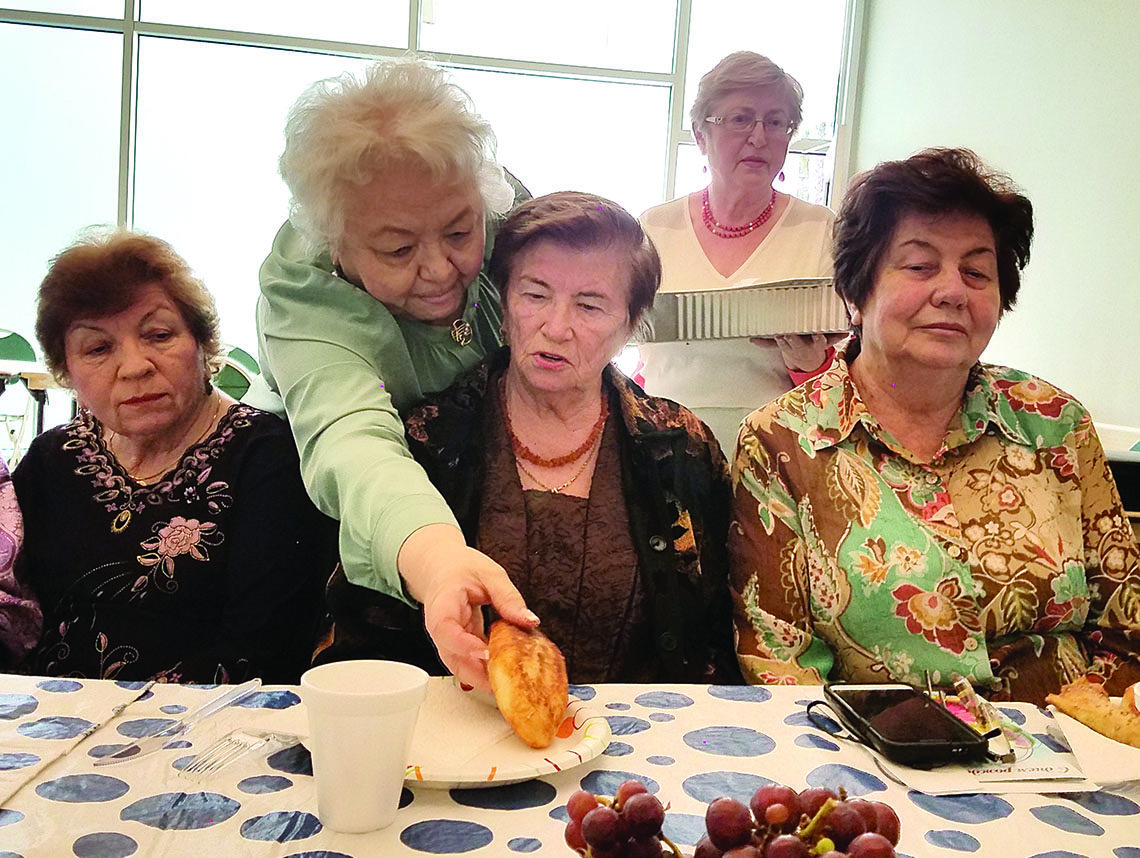
More than a dozen committee members sat at a square table covered with a blue polka-dot tablecloth. A few bottles of pear juice sat next to plastic boxes filled with tomatoes and grapes. Two women distributed pirojki, fried patties of potatoes and meat. The U.S., California and West Hollywood flags leaned against the wall. Several posters displayed photos from the group’s 25th anniversary celebration in January.
Yufa sat quietly next to Frida as members read their birthday wishes.
One member said, “Frida, the CIA is still trying to find out how you preserved your beauty.”
“You are just as beautiful as Melania Trump,” another said.
Netes said even though the group’s size has been shrinking, the association’s work is in full swing, and members are always happy to spend time with one another.
“It’s painful to see people passing away,” she said. “But what can you do? We have to keep going.”
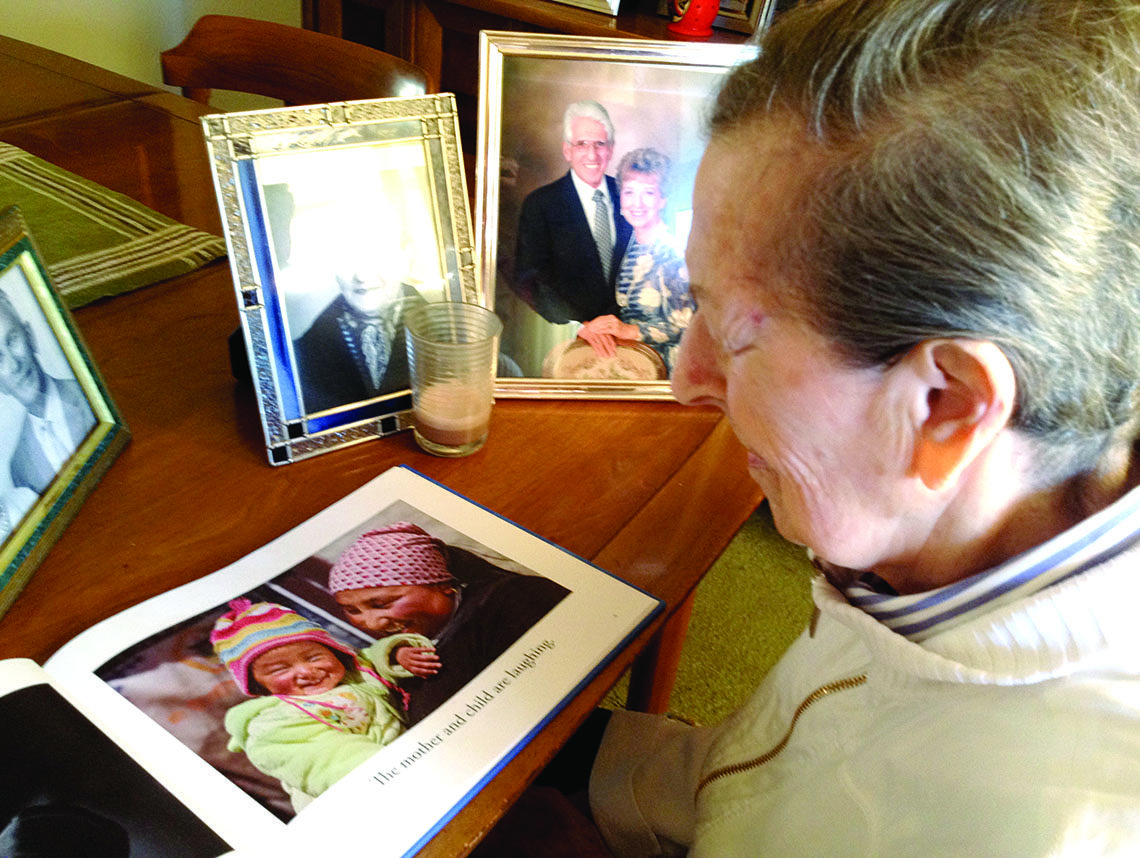
The book is large and fits comfortably on a lap. The color photographs nearly fill each page. Each image depicts real people doing everyday Jewish things — a young girl eating matzo ball soup; a bubbe and her grandchildren lying in the grass; a man wearing tefillin, praying. The sentences are in large print; they are simple (“Mother says the blessing over the candles”) and easy to read.
But the book is not for young children learning how to read, nor is it for parents to introduce Judaism to their preschoolers.
Rather, it is designed for those who have dementia and Alzheimer’s disease, a progressive type of dementia that causes a slow decline in thinking, memory and reasoning. The book — a series of independent pictures and captions — requires no memory to read and follow along, allowing those with memory-loss issues to enjoy and engage with each image on its own terms.
“There’s such a richness to Jewish content and imagery and history and culture,” Sobel, 64, said. “There are so many Jewish people in Jewish nursing homes, and Jewish families with loved ones who have dementia.”
Sobel’s family is among them. The author took inspiration from his mother, Manya, 93, a refugee who fled Nazi Germany and has had Alzheimer’s for 17 years. As her memory deteriorated, her language slowly disappeared with it, Sobel said. Eventually, a few years ago, it seemed to be gone for good.
However, “One day, I walk into the living room, and she was thumbing through a magazine, reading the big-print headlines aloud, correctly,” he recalled. “I said, ‘Oh, my God! Mom can still read!’ ”
Sobel, who lives in Red Bank, N.J., said he headed to the local Barnes & Noble to get her a picture book for dementia patients.
“It seemed like the most obvious thing in the world,” he said.
Instead, he learned that such a thing didn’t really exist. After unsuccessful trips to bookstores and searches online, Sobel called the National Alzheimer’s Association. He said the librarian he spoke with on the phone was stumped at first — she said that while there were more than 20,000 books for caregivers, she didn’t know of anything for the patients themselves.
Eventually, the librarian turned up a few books for Alzheimer’s patients: Lydia Burdick has a series of three books for adults with the disease, including “The Sunshine on My Face.” In subsequent years, a few more have appeared, such as those by Emma Rose Sparrow. Still, the market for such products is very small, even though some 5.8 million Americans have Alzheimer’s, according to the Alzheimer’s Association.
Inspired, Sobel — a writer whose previous books include the novel “Minyan: Ten Jewish Men in a World That Is Heartbroken” and a leader of meditation and creativity retreats — published his first book for adults with dementia, “Blue Sky, White Clouds: A Book for Memory-Challenged Adults” in 2012. Like “L’Chaim,” the book is a series of large color photographs of things such as birds, trees and babies with captions such as “The baby is fast asleep” and “Snow covers the trees.”
“If patients see the pictures, say the names of the pictures, make some comments or are in any way affected by the books, that’s a good thing, period,” said David Teplow, a professor of neurology at UCLA. (Teplow provided a blurb for “Blue Sky”: “It certainly appears to be necessary to fill a void in this area of publishing, namely the realistic representation of images and ideas for people with memory and cognitive impairment.”)
Plus, Teplow added, “There are lot of Jewish people who have Alzheimer’s disease and other dementias. Certainly, it’s an important project for the Jewish community.”
For Sobel, having a Jewish-themed follow-up to “Blue Sky” was a bit of a no-brainer.
“It seemed natural to me,” he said. “It’s who I am; who we are. Especially my mother, the history of her Holocaust experience — it was a big part of my growing up, how she and her family got out, what they experienced.”
Sobel’s mother arrived in the U.S. at age 14, shortly after Kristallnacht in 1938. Though she escaped Germany with her immediate family — her grandmother was left behind and died in a labor camp — she remained scarred by her experiences and raised her kids to be wary of outsiders.
“Fair Lawn, N.J., was kind of like ‘Leave It to Beaver’ — perfectly safe and lots of Jewish families,” Sobel said of his hometown in the New York City suburbs. “But my mom kept an ax under the bed when my dad wasn’t home.”
The family kept kosher; they had Friday night Shabbat dinners and Sobel attended synagogue on Saturdays with his father.
“My mother’s idea of keeping Shabbat was she didn’t clean the house; she’d do something she enjoyed,” he recalled. “We’d drive — but not past the rabbi’s house.”
Sobel said that while he and his mother “were at loggerheads for a lot of my adult life,” when her Alzheimer’s set in, she was released from her terrible memories.
“It was almost a blessing to be around her — someone who radiated love and welcoming to everyone,” he said. “I was freed up to feel and express my love for her, which had been bottled up since my teenage years.”
The books, he said, seemed to provide her some comfort and, just as important, entertainment. Sobel’s father, Max, took care of his mother until he fell and suffered a traumatic brain injury three years ago, on their 67th wedding anniversary. (He died in November.)
“I watched my father, tearing his hair out, looking for things to do with her,” Sobel said. “There are so few resources for that.
“If she enjoyed being with the book in the moment, we could do it again the next day, or the next hour. We could read it 100 times — it never got old.”
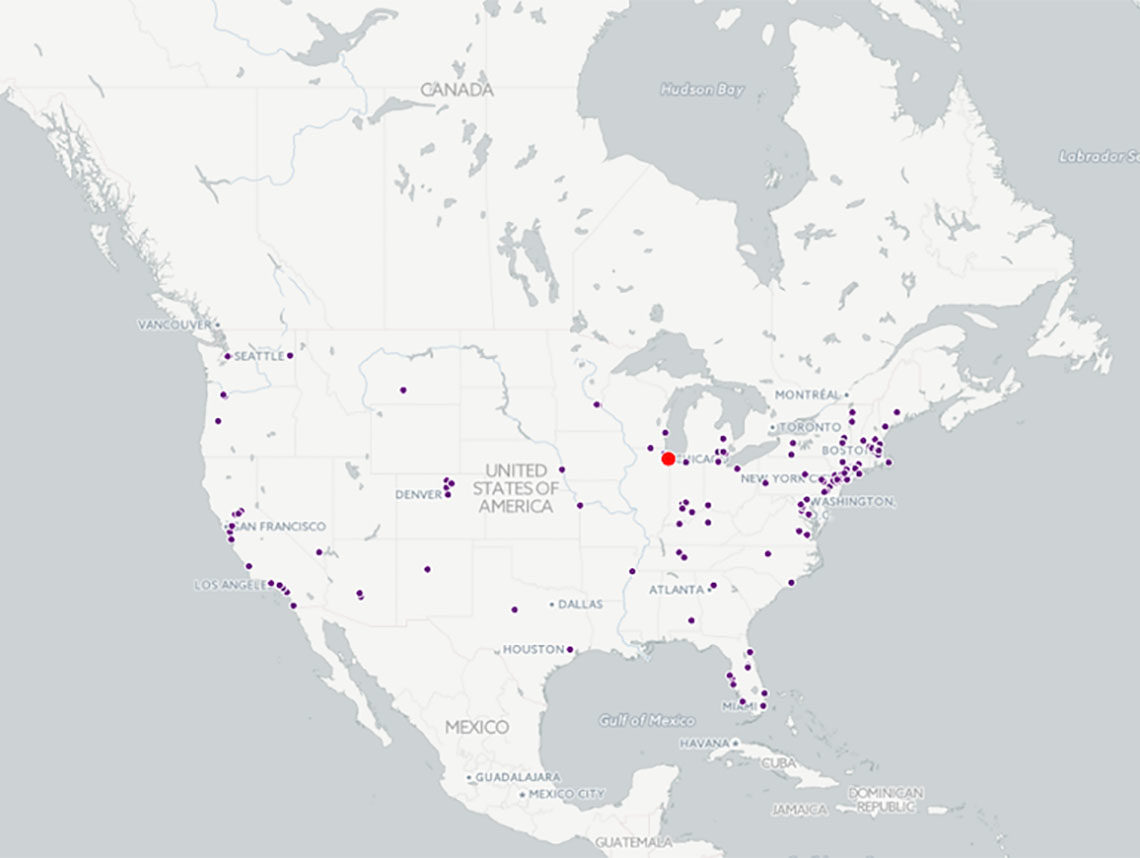
The investigative journalism nonprofit ProPublica has produced an interactive map that chronicles over 300 anti-Semitic crimes across the United States from the past few months.
The graphic, which was published Wednesday, is a companion to an article ProPublica ran last week, “In an Angry and Fearful Nation, an Outbreak of Anti-Semitism,” which found evidence of over 330 incidents of anti-Semitism between last November and early February.
Both are part of ProPublica’s “Documenting Hate” series, which the company launched last year to “gather evidence of hate crimes and episodes of bigotry from a divided America.”
The interactive map links each pin to local news reports from across the country, allowing users to access the original news stories for each instance of anti-Semitism. About 160 of the incidents involve vandalism, such as spray-painted swastikas and other defacement of public spaces.
Other organizations have documented spikes in anti-Semitic incidents since the election of Donald Trump as president in November. The Southern Poverty Law Center recorded 100 incidents in the first 10 days after Trump’s election. The New York Police Department recorded 43 anti-Semitic incidents in New York City in the month after the election.
JTA has reported in recent months that dozens of Jewish community centers across the country have been threatened with over 150 phoned-in or emailed bomb threats.
The head of the Anti-Defamation League, Jonathan Greenblatt, said at a conference in November that public discourse in the United States on anti-Semitism was at its worst point since the 1930s.
Trump was dogged by assertions during the campaign that he failed to condemn the anti-Semitism displayed by some of his supporters, such as former Ku Klux Klan leader David Duke. After avoiding the topic while being asked about it multiple times at news conferences and interviews, Trump condemned the attacks on JCCs late last month.
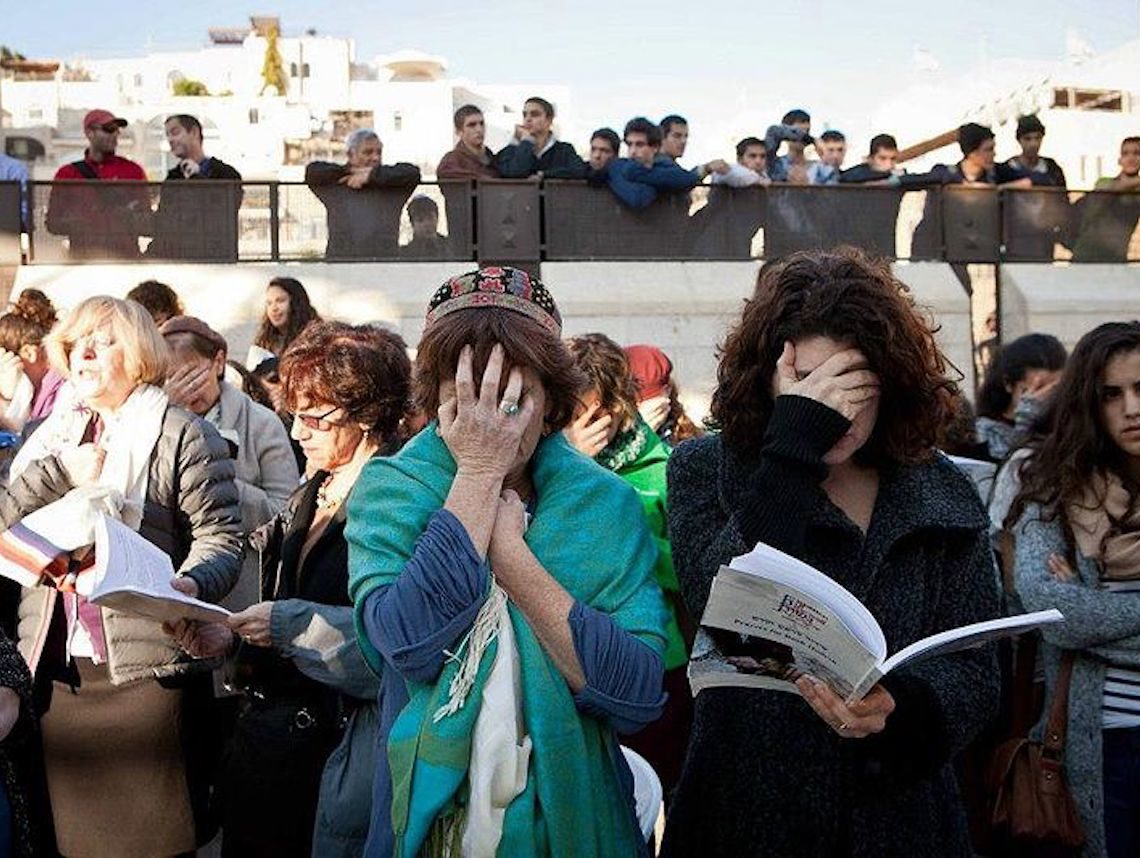
The Women of the Wall filed a petition with Israel’s Supreme Court demanding the right to pray undisturbed at the Western Wall in Jerusalem.
The petition, filed Tuesday against the Israel Police, the Western Wall Heritage Foundation and the Western Wall’s rabbi, Shmuel Rabinovitz, also asked the court to order the police to ensure that the women are safe from physical and verbal violence while praying at the holy site.
It requested a temporary injunction requiring the respondents to explain their failure to ensure the legal rights of the Women of the Wall to pray in the women’s section of the site without disturbance, according to a statement from the organization. The petition also demanded an explanation for the respondents’ failure to implement the necessary measures to halt those who regularly attempt to disrupt their prayer services with physical and verbal violence.
Women of the Wall said in a statement that during monthly prayer services, its members are exposed to “curses, incitement, spitting, ear-piercing whistling, intense and continuous shouting and bottles thrown at them. Despite this egregious conduct, including criminal offenses, their repeated pleas for protection are met with indifference by Israel Police and by the Western Wall Heritage Foundation’s ushers and guards.”
In January, the Supreme Court ruled in favor of women being allowed to read from the Torah in the women’s section at the Western Wall and declared that an egalitarian prayer area set aside at nearby Robinson’s Arch does not constitute access to the holy site.
The January ruling was in response to a petition by the Original Women of the Wall, a breakoff of the Women of the Wall group, who want to pray in the women’s section and reject a compromise, still to be implemented, that would expand an alternative prayer space at Robinson’s Arch.
Team Israel saw its Cinderella run at the World Baseball Classic end with a loss to Japan in Tokyo.
Japan snapped a scoreless tie with five runs in the sixth inning on the way to an 8-3 victory on Wednesday before more than 40,000 fans packed into the Tokyo Dome.
Israel, the lowest-ranked team to qualify for the showcase tournament, dropped its last two games in the second round and will not advance to the semifinals next week in Los Angeles. Japan, with a tournament record of 6-0, and the Netherlands will advance from Pool E. They will join the top two teams from the Pool F games currently being played in San Diego.
Israel had startled the baseball world by opening the tournament with four straight victories, including a 4-1 win over powerhouse Cuba in the first game of the second round. But Israel lost 12-2 to the Netherlands on Monday and needed to beat Japan to move on.
Last week, in the first round, the Israelis squeaked past third-ranked South Korea, 2-1, in extra innings, outscored fourth-ranked Taiwan, 15-7, and defeated ninth-ranked the Netherlands, 4-2, to finish first in Pool A with a 3-0 record.
This is the first year that Israel has qualified for the tournament. In 2012, its inaugural WBC squad narrowly missed advancing past the qualifiers.
Most of the players are American Jews, among them several former major leaguers. WBC rules state that players who are eligible for citizenship of a country may play on its team. Jews and their grandchildren, and the grandchildren’s spouses, have the right to become Israeli citizens.
The team appeared on the field at each game for the national anthem of Israel, “Hatikvah,” with matching blue kippahs. The club’s mascot was known as Mensch on a Bench.
As we all are aware, recently there has been a significant increase in hate crimes and bomb threats across the United States. Minorities, including people with disabilities, are especially at risk, not only for attacks and threats but also for the stress and anxiety that can result from seeing what is happening around us. People with multiple minority status (i.e. people of color + disability, LBGTQ + disability, Jewish or Muslim + disability, immigrant + disability) are particularly vulnerable.
Following more than 90 recent bomb threats and 140 separate recent incidents of anti-Semitism, the Anti-Defamation League (ADL) has issued a security advisory. It is asking people to review the Bomb Threat Guidance provided by the FBI and U.S. Department of Homeland Security; refer to the chapter on Explosive Threat Response Planning in ADL’s Security Manual Protecting Your Jewish Institution, which assists institutions in creating welcoming environments while keeping them safe; and to refer to ADL’s list of 18 Best Practices for Jewish Institutional Security. However, while the ADL’s excellent guidance can be helpful to people of all faiths, it does not cover issues that are vital for the 56 million Americans who have a disability.
When Jewish institutions do not have inclusion committees or policies, issues of life and death that impact people with disabilities can be seriously neglected. Fully 1 in 5 Americans have a disability, and the Jewish community, due to genetic disorders and advanced paternal ages, is disproportionately impacted by disabilities.
Can you imagine if an alarm goes off at a Jewish community center or day school and someone cannot hear it and there is not a plan in place? Or if someone who is blind or has low vision isn’t properly helped when the alarms are simply flashing lights? Or if people who need to take medications at regular intervals are evacuated but their medicines are left behind? Or what happens to a child with autism or adult with mental health issues if the staff is not properly trained and no system is in place?
Every Jewish institution needs to take disability inclusion seriously. Our nonprofit organization, RespectAbility, has compiled the free tools and resources listed below to help.
The 1 in 5 people in America who have a disability need proactive and systematic planning in order to ensure they have the same safety and security as everyone else. Key issues and steps include:
Anxiety, Addiction and Emotional Health: Even for people who do not have ongoing mental health issues and who are located nowhere near bomb threats or hate crimes, the content of social and other media can be extremely frightening. Emotional reactions can include feeling physically and mentally drained, having difficulty making decisions or staying focused on topics, becoming easily frustrated on a more frequent basis, arguing more with family and friends, feeling tired, sad, numb, lonely or worried, and experiencing changes in appetite or sleep patterns. Most of these reactions are temporary and will go away over time. It is important to try to accept whatever reactions you may have and to look for ways to take one step at a time and focus on taking care of your needs and those of your family. Keep a particularly close eye on children and people with addiction issues (including internet addiction) who may need extra means of support.
Some of the things that can significantly help your mental health include limiting your exposure to the sights and sounds of stress, especially on television and radio, in newspapers and on social media, as well as to eat a healthy diet, get ample sleep and stay personally connected to family and friends. Stay positive. Remind yourself of how you’ve successfully gotten through difficult times in the past. Reach out when you need support and help others when they need it.
Most major cities have a Jewish social services agency, which will help people of all faiths. Additionally, the Red Cross Disaster Distress Helpline is free and available around the clock for counseling or support. You can call 1-800-985-5990, text “TalkWithUs’ to 66746 or utilize www.redcross.org/news/article/Red-Cross-Mental-Health-Teams-Help.
Another resource is the American Counseling Association. It has fact sheets you can download on mental health services, including post-traumatic stress disorder and crisis counseling. Moreover, if you are feeling suicidal, you should go immediately to the website www.suicide.org.
Create Your Evacuation Plan and Support System: Have you been in touch with your local police station and fire department? If not, do it now. A part of the services they provide is to keep track of the needs of residents with disabilities in times of threat or disaster. For example, if you use a wheelchair and live or work in a high-rise building, the fire department will come out for free to meet with you and create an individual plan for you in the case of a fire or other emergency.
If you have sensory, cognitive or other issues, it is vital for the police and fire department to know how to support you in a time of crisis. Hundreds of Americans with disabilities are killed by police each year because the police have not been trained to recognize and address mental health or other disability issues. The time to have those conversations and training is before a disaster strikes. Because this issue is so important, RespectAbility has conducted a free webinar, which you can find on our website: Special Conversation with Special Olympics about Violence, Police Training and People with Disabilities.
Have a “To Go” Kit Ready: If your building is evacuated, you will want to have several things handy. For example, you will want to have any medications you may need to take as well as your phone and charger, glasses, hearing aids and extra batteries if you use them, supplies for a service animal you may have and more. You also will want to let your loved ones, who might worry if they see a threat on the news, know you are OK. You can do that through phone, email or social media. There are terrific resources available through FEMA at https://www.fema.gov/media-library-data/1440775166124-c0fadbb53eb55116746e811f258efb10/FEMA-ReadySpNeeds_web_v3.pdf.
If you use a communication device, mobility aid or service animal, what will you do if these are not available? If you require life-sustaining equipment or treatment such as a dialysis machine, map out the location and availability of more than one facility. For every aspect of your daily routine, plan an alternative procedure. Make a plan, write it down and print it out. Keep a copy of your plan in your emergency supply kit and put a list of important information and contacts in your wallet.
Create a Personal Support Network: If you anticipate needing assistance, make a list of family, friends and others who will be part of your plan. Talk to these people now and ask them to be part of your support network. Share each aspect of your crisis/emergency plan with everyone in your group, including a friend or relative in another area who would not be impacted by the same emergency who can help if necessary.
If you have a cognitive or intellectual disability, or are deaf of blind, be sure to work with your employer and other key contacts to determine how to best notify you of an emergency and what instruction methods are easiest for you to follow. Always participate in exercises, training sessions and emergency drills offered by your employer or landlord.
Our nation is at its best when we are welcoming, respectful and inclusive of all. As many people are, or feel, at risk, we must show exceptional love and friendship to those around us.
Jennifer Laszlo Mizrahi, who has a disability and is the mother of a child with disabilities, is the president of RespectAbilityUSA.org, a nonprofit fighting stigmas and advancing opportunities for people with disabilities. She can be reached at JenniferM@RespectAbilityUSA.org.
Special thanks to Elliot Harkavy for ideas and contacts that were used in this piece.
[Ed. Note: Again this week, I am presenting a previously published blog entry. We are working on improving the presentation of the blog articles for readability, style, and appearance. I would appreciate hearing from you about this blog, particularly if you are having any difficulties, problems, or issues accessing or reading it. If you have any comments – or a blog submission, please contact me at j.blair@jewish-funerals.org. — JB]
A Kosher Casket?
A Kosher Casket?
Kosher means fit or proper for ritual use, but unlike the biblical delineation of which foods are kosher, there are no biblical rules to give guidance regarding manufacture of kosher caskets. The Talmud contains dozens of occurrences of Hebrew words that are translated to English as “casket”, “coffin”, “bier”, “chest” and more. But nowhere in Jewish writings is there a discussion of what makes a casket kosher.
Tachrichim (shroud or burial garment) manufacturers have suggested that there are “kosher” tachrichim dependent on the observance level of the workers and certifying that the product was not made on Shabbat. The rationale for this seems slim for tachrichim, and even slimmer for caskets. Basing Kashrut on worker’s level of observance is a novel approach not practiced in kosher food manufacturing. More interesting and fruitful pursuits to define a kosher casket might include looking at working conditions, wages and health benefits of the employees, as well as the environmental impact of the manufacturing ingredients and process.
Simple & Inexpensive
The Talmud directs that all aspects of funeral and burial should be kept simple and inexpensive, and by extension fit and proper. BT (Babylonian Talmud) Moed Katan 27a-27b contains an extended discussion of funeral practices and a story about Rabban Gamliel. This discussion can open a window to the meaning of ‘Kosher’ in relation to a casket.
Formerly, they were wont to bring out the rich [for burial] on a dargesh [a tall state bed, ornamented and covered with rich coverlets] and the poor on a plain bier, and the poor felt shamed: they instituted therefore that all should be brought out on a plain bier, out of deference for the poor.
Without knowing the difference between a dargesh and a bier in Rabban Gamliel’s time, the implication is clear – the dargesh is fancy and affordable to the rich; the bier is simple and used by those who are poor. The dargesh made it easy to carry the body and to show off wealth. The bier (Hebrew – mitah) is a simple stand or platform that holds and/or carries the body.
Jewish Law (Halachah)
The Shulchan Aruch allows for burial with or without a casket, but gives no indication of how to determine if a casket is Kosher. Rabbi Mosha Epstein in his Taharah Manual of Practices quotes Rav Moshe Feinstein. Rav Feinstein could find no source for an all wood casket. He cites Rambam, yet Rambam in his Book of Judges – Laws of Mourning – 4:4 says: “It is permissible to bury the dead in a wooden casket.”
In the 1960’s, the Orthodox Union and the Rabbinical Council of America negotiated funeral standards with the Jewish Funeral Directors of America. The Orthodox Rabbis were successful in incorporating taharah, tachrichim, Shmirah, and ground burial into the standards. They failed in their attempt to include simple plain caskets.
Plain Pine Box
It was only 60 years ago that an expensive all wood casket became acceptable in the Jewish community. Our Moed Katan example goes back over 1,700 years. We should pick up Rabban Gamliel’s cause and champion a simple casket (or none at all) as a return to less expensive funerals and burials.
David Zinner is the Executive Director of Kavod V’Nichum (honor and comfort), and of the Gamliel Institute, and serves as instructor for the non-denominational Gamliel Institute, a nonprofit center for Chevrah Kadisha organizing, education, and training. In his role as executive director Zinner co-teaches courses on Chevrah Kadisha history, organizing, taharah and shmira (sitting with the deceased until burial), and building capacities in Jewish communities that enable all participants to meaningfully navigate these final life cycle events.
David Zinner, Executive Director of Kavod veNichum
____________
GAMLIEL INSTITUTE COURSES
LOOKING FORWARD: UPCOMING COURSE
Gamliel Institute will be offering course 4, Nechama [Comfort], online, evenings, in the Spring semester starting March 28, 2017.
CLASSES
The course will meet on Tuesdays (and three Thursdays in those weeks with Jewish holidays during this course). The date of classes will be from March 28 to June 13 2017. Please note: due to holidays, classes will meet on Thursdays on April 13th, April 20th, and June 1st. There will be an orientation session on Monday, March 27th, 2017.
REGISTRATION
You can register for any Gamliel Institute courses online at jewish-funerals.org/gamreg. A full description of all of the courses is found there.
In 2017, Kavod v’Nichum and the Gamliel Institute are again sponsoring a six part “Taste of Gamliel” webinar. This year’s topic is From Here to Eternity: Jewish Views on Sickness and Dying.
Each 90 minute session is presented by a different scholar. Taste of Gamliel gives participants a “Taste” of the Gamliel Institute’s web-based series of courses.
Taste of Gamliel Webinars for this year are scheduled on January 22, February 19, March 19, April 23, May 21, and June 25. The instructors this year are: Dr. Dan Fendel, Rabbi Dayle Friedman, Rabbi Sara Paasche-Orlow, Rabbi Richard Address, Rabbi Elliot Dorff, and Dr. Laurie Zoloth.
Learn from the comfort of your own home or office.
The Taste sessions are done in a webinar format, where the teacher and students can see each other’s live video feeds. The sessions are moderated, participants raise their virtual hands to ask questions, and the moderator calls on and unmutes participants when appropriate. We’ve been teaching using this model for seven years (more than 250 session). We use Zoom, a particularly friendly and easy to use platform.
This series of Webinar sessions is free, with a suggested minimum donation of $36 for all six sessions. Online sessions begin at 5 PM PST; 8 PM EST.
Those registered will be sent the information on how to connect to the sessions, and will also receive information on how to access the recordings of all six sessions.
On registration, you will receive an automated acknowledgement. Information and technology assistance is available after you register. Those who are registered are sent an email ahead of each webinar with log on instructions and information for the upcoming session.
You can view a recording of the sessions, uploaded after each session, so even if you need to miss one (or more), you can still hear the presentation.
More info – Call us at 410-733-3700
Attend as many of these presentations as are of interest to you. Each session is about 90 minutes in duration. As always, we plan to hold time for questions and discussions at the end of each program.
Again, the entire series is free, but we ask that you make a donation to help us defray the costs of providing this series. The suggested $36 amount works out to $6 for each session – truly a bargain for the valuable information and extraordinary teachers that present it.
Click the link to register and for more information. We’ll send you the directions to join the webinar no less than 12 hours before the session.
Suggestions for future topics are welcome.
The Gamliel Institute is the leadership training arm of Kavod v’Nichum. The Gamliel Institute offers five on-line core courses, each 12 weeks in length, that deal with the various aspects of Jewish ritual and actions around sickness, death, funerals, burial and mourning. Participants come from all over the United States, Canada, Central and South America, with Israelis and British students joining us on occasion.
________________________
KAVOD v’NICHUM CONFERENCE
Looking ahead, hold June 18-20, 2017 for the 15th annual Kavod v’Nchum Chevrah Kadisha and Jewish Cemetery Conference. Register, and make your hotel reservations and travel plans now!
15th Annual North American Chevrah Kadisha and Jewish Cemetery Conference
At Congregation Rodef Sholom in San Rafael, California June 18-20, 2017
Registration is now open. Group discounts are available.
The conference program will include plenaries and workshops focused on Taharah, Shmirah, Chevrah Kadisha organizing, community education, gender issues, cemeteries, text study and more.
The conference is on Sunday from noon until 10pm, on Monday from 7am to 10pm, and on Tuesday from 7am to 1pm. In addition to Sunday brunch, we provide six Kosher meals as part of your full conference registration. There are many direct flights to San Francisco and Oakland, with numerous options for ground transportation to the conference site.
We have negotiated a great hotel rate with Embassy Suites by Hilton. Please don’t wait to make your reservations. We also have home hospitality options. Contact us for information or to request home hospitality. 410-733-3700, info@jewish-funerals.org
____________________
DONATIONS:
Donations are always needed and most welcome. Donations support the work of Kavod v’Nichum and the Gamliel Institute, helping us to bring you the conference, offer community trainings, provide scholarships to students, refurbish and update course materials, expand our teaching, support programs such as Taste of Gamliel, provide and add to online resources, encourage and support communities in establishing, training, and improving their Chevrah Kadisha, and assist with many other programs and activities.
You can donate online at http://jewish-funerals.org/gamliel-institute-financial-support or by snail mail to: either Kavod v’Nichum, or to The Gamliel Institute, c/o David Zinner, Executive Director, Kavod v’Nichum, 8112 Sea Water Path, Columbia, MD 21045. Kavod v’Nichum [and the Gamliel Institute] is a recognized and registered 501(c)(3) organizations, and donations may be tax-deductible to the full extent provided by law. Call 410-733-3700 if you have any questions or want to know more about supporting Kavod v’Nichum or the Gamliel Institute.
If you would like to receive the periodic Kavod v’Nichum Newsletter by email, or be added to the Kavod v’Nichum Chevrah Kadisha & Jewish Cemetery email discussion list, please be in touch and let us know at info@jewish-funerals.org.
You can also be sent an email link to the Expired And Inspired blog each week by sending a message requesting to be added to the distribution list to j.blair@jewish-funerals.org.
Be sure to check out the Kavod V’Nichum website at www.jewish-funerals.org, and for information on the Gamliel Institute and student work in this field also visit the Gamliel.Institute website.
To find a list of other blogs and resources we think you, our reader, may find of interest, click on “About” on the right side of the page.There is a link at the end of that section to read more about us.
Past blog entries can be searched online at the L.A. Jewish Journal. Point your browser to http://www.jewishjournal.com/expiredandinspired/, and scroll down. Along the left of the page you will see a list of ‘Recent Posts” with a “More Posts” link. You can also see the list by month of Expired and Inspired Archives below that, going back to 2014 when the blog started.
____________________
SUBMISSIONS ALWAYS WELCOME
If you have an idea for an entry you would like to submit to this blog, please be in touch. Email J.blair@jewish-funerals.org. We are always interested in original materials that would be of interest to our readers, relating to the broad topics surrounding the continuum of Jewish preparation, planning, rituals, rites, customs, practices, activities, and celebrations approaching the end of life, at the time of death, during the funeral, in the grief and mourning process, and in comforting those dying and those mourning, as well as the actions and work of those who address those needs, including those serving in Bikkur Cholim, Caring Committees, the Chevrah Kadisha, Shomrim, funeral providers, funeral homes and mortuaries, and operators and maintainers of cemeteries.