fbpx

March 9, 2017

Letters to the Editor: Immigration ban responses, kudos to the Journal, reactions to anti-semitism

An Addition to Online Parenting Resources

I just read with interest your article “Two Online Parenting Resources Provide Community and More” (Feb. 24) and was pleased to see Peachhead and Jen’s List receiving well-deserved recognition.

Your readers should know that the Jewish community in Los Angeles also has a wonderful resource for parents: JKidLA.com. This JKidLA is a website created in 2009 by Builders of Jewish Education (BJE). It is designed to provide families with everything they are looking for in the Jewish community with programs for children ages newborn to 18 years old.

Rachel Kaplan, BJE JKidLA Concierge

Trump’s Immigration Policy

I was encouraged to write after reading so many letters that expressed disagreement with President Donald Trump’s new immigration policy, especially David N. Myers’ article reminding us what could happen, even in America, to law-abiding citizens like the Japanese Americans during World War II (“Remembering Korematsu Today: A Jewish Obligation,” Feb. 24).

I, as a young child arriving with my family, was a refugee, with thousands of others in Europe during the rise of fascism. My father, a rabbi, was fortunate to see the writing on the wall in Europe and got support from the HIAS to get to America. I always remember landing in New York, seeing the Statue of Liberty welcoming us: “Give me your tired, your poor, your huddled masses yearning to breathe free.” These words reflect the great American values and approach toward immigrants we should reclaim and live by again. .

Leila Bronner, Los Angeles

An Admirer of Bernard-Henri Levy

It was fascinating to read about French philosopher Bernard-Henri Levy (“Bernard-Henri Levy Bares His Jewish Soul,” Jan. 13). I admire and praise his strong moral defense of Israel and his defense of the ultra-Orthodox while condemning the occasional wrongdoings of some individuals. I admire his view that Jews must be committed to a moral concern for others and for the outside world in general. To those who condemn all the ultra-devout, we can ask: Do you condemn all the secular when one commits murder? As a fellow philosopher, I see his longtime admiration of and fascination with the ultra-Orthodox faithful as his balance to the ever-questioning, primarily secular, uncertainties of philosophy.

Bob Kirk, Santa Barbara 

Kudos to the Journal, From Israel

I can’t say I’m a Jewish Journal junkie, but I try to pick it up when I’m within arm’s reach of a copy, or occasionally online. As a former Orange County kid, and a UCLA student, it still feels a bit like my hometown outlet.

What good fortune I had this week, when I was in Los Angeles and Orange County, and my mom gave me your 30th anniversary edition and the one after (Jan. 27 and Feb. 3) — what a treat. 

I wish I had the funds to take out one of those congratulatory ads but hope this email can suffice. 

I’m back in Israel now and will pass around the copies at a big Shabbat dinner we’re hosting tonight. 

The refugee/immigrant spread, with photos and long captions, is particularly powerful. I also very much enjoyed the Leon Wieseltier interview, taking some amusement at his comments about foundations and donors while noticing there were a few with ads on the opposite page and around his interview!

It’s not just an important corner of the Jewish media that you occupy, but you are clearly at the leading edge.

May you, your staff and the Journal go from strength to strength.

Scott Lasensky via email

The Rise of Anti-Semitism

Rob Eshman sounds just like the complaining Jews who angered God and Moshe (“5 Ways to Fight Back,” March 3). Candles before burning out shine much higher and then they die. So the rise of anti-Semites is definitely not because of Donald Trump; it’s a reaction to the soon-to-come termination of their existence. 

Soraya Ghalchi via email

As a conservative and a Jew, I am virtually always disappointed by Rob Eshman’s columns. However, given the importance of the issue of anti-Semitism, I feel compelled to comment on “5 Ways to Fight Back.” Eshman simply could not refrain from his gratuitous attacks on President Trump and other conservatives. Eshman’s unremitting, left-wing ideology prevents him from seeing anti-Semitism for the danger that it is — a danger that affects all Jews — right, left and center.  

When the anti-Semites attack, they do not bother to inquire if the Jewish people they attack are Democrats or Republicans, or if they are liberals or conservatives. They do not care if the cemeteries that they desecrate are filled with Democrats or Republicans. Something, perhaps, for Eshman to ponder.

Michael H. Pinchak, Tarzana

Letters to the Editor: Immigration ban responses, kudos to the Journal, reactions to anti-semitism Read More »

The cruelest cuts of all

Many Americans were no doubt pleased to hear that the Donald Trump administration’s first budget proposal spared Social Security and Medicare, but the health and well-being of 74 million vulnerable, lower-income Americans who receive Medicaid are still very much in jeopardy. In fact, the means-tested Medicaid program now is directly in the bull’s-eye of cuts and drastic changes the Trump administration and Republican leaders are considering as part of their vow to replace the Affordable Care Act (ACA), also known as Obamacare.

Created in 1965 as part of President Lyndon Johnson’s “War on Poverty,” Medicaid is our country’s largest health care insurance program, with 74 million enrollees, or about 1 in 4 Americans, surpassing the better-known health insurance Medicare program with its 55 million-plus enrollees. Medicaid provides health care services for low-income individuals, including families with children, seniors, people with disabilities, those in foster care, pregnant women and low-income people with specific diseases, such as tuberculosis or HIV/AIDS. Chances are, you probably know many people on Medicaid, such as a 54-year-old woman who is without private insurance, too young for Medicare, who then developed breast cancer; or a young adult who developed a traumatic brain injury after an automobile accident.

Some 60 percent of Medicaid’s spending is for the elderly and the disabled. For many people with disabilities, Medicaid services are the only way they are able to live and work in the community with friends and families. Medicaid helps children and adults with a significant disability — such as autism, cerebral palsy or intellectual disabilities — to remain at home and avoid placement in costlier and harmful segregated nursing homes or institutions. Medicaid also provides services, such as personal care aides who help people in their own homes with everyday needs like bathing, dressing, eating and managing medications. And because adults with disabilities have such a low employment rate (30 percent), they don’t have any other health insurance options for their ongoing and acute medical needs except Medicaid. Under the ACA, there has been a large expansion of Medicaid, although some Republican governors declined that Medicaid expansion.

In California, the program is called Medi-Cal, and as is the case in every state, the feds pay close to 60 percent of the program’s overall expenses. Under the current structure, the federal government has a commitment to help states cover costs, and in turn, states must provide specific benefits to certain groups of people, including people with disabilities. Although Medi-Cal has issues, including a very low reimbursement rate, which prompts many specialists and other providers to limit or simply stop taking on Medi-Cal patients, it is nevertheless a crucial and lifesaving program.

Currently, Medicaid is an open-ended entitlement for states — if residents meet strict income and asset criteria and other health/disability-related criteria, then they can enroll. During economic recessions, more people enroll; other factors, such as expensive new lifesaving prescriptions drugs, also can increase the costs of administering the program. The “block grants” being touted by the Trump administration as a way of giving states more control over their state Medicaid program will translate into a whole new definition of pain, as each state would receive a fixed amount of money based on a predetermined formula, most likely at a per-capita rate. A recent editorial by The ARC (formerly known as the Association for Retarded Citizens, started by parents who had children with disabilities in the 1950s) analyzed the problem: “Unlike the current funding system, the amount provided under a per capita cap will not automatically increase when the cost of providing covered services to eligible individuals goes up. The intent of the per capita cap is to reduce federal spending by restructuring the program and significantly cutting the cost to the federal government. Using this technique, the federal government limits spending, regardless of the needs of the people receiving Medicaid services.”

State governments will be forced to make decisions from an array of bad choices, such as increasing state taxes, limiting services to existing Medicaid patients, reducing eligibility or cutting already low reimbursement rates even further. Health outcome disparities between states will grow as wealthier states can help backfill some of these cuts but poorer states will not be able to do the same. Without early intervention, many infants and toddlers with disabilities will be denied therapies that can change their lives’ trajectories. Without community services and support, too many adults with disabilities will be stuck at home, dependent on aging parents and even forced into unnecessary institutionalization, a huge step backward in the civil rights of people with disabilities. Many Medicaid patients will suffer from delayed or denied medical treatment, and some people may even die.

Kellyanne Conway, counselor to President Trump, has said publicly that moving to Medicaid block grants will ensure “that those who are closest to the people in need will be administering the program,” but what kind of freedom is choosing between bad, worse and terrible? 

Michelle K. Wolf is a special needs parent activist and nonprofit professional. She is the founding executive director of the Jewish Los Angeles Special Needs Trust. Visit her Jews and Special Needs blog at jewishjournal.com/jews_and_special_needs.

The cruelest cuts of all Read More »

Anti-Semitism’s newest apologist? David Bernstein.

Not even the title of David Bernstein’s recent Washington Post column, “The Great Anti-Semitism Panic of 2017,” makes sense. Most everything that follows makes even less.  I mean, if you start with such a dramatic assertion — Jews! Panic!–  then you better have some facts to back it up.  Guess what?  He doesn’t.

Granted, most Jews I know — and I mostly know Jews — panic over something somewhere sometime during the day.  It’s not a bug, it’s a feature.  Then we make jokes about our panic, and then we sell a sitcom.

But Bernstein is implying the most Jews are panicked specifically over the increase in anti-Semitic threats, desecrations and social media memes. He writes:

I’ve been rather taken aback by the panic in the Jewish community over American anti-Semitism since Donald Trump won the election. The recent spate of hoax bombing threats to Jewish community centers and other Jewish institutions around the country has been a precipitating factor, but the fear is drastically out of proportion to the threat; .

His evidence for this?  Zilch. Because while Jewish communities have increased security and called on authorities– including President Donald Trump– to acknowledge and investigate the recent wave of anti-semitic acts, they haven’t done anything that could be seen as a sign of over-reaction or panic. They haven’t closed down schools, synagogues and community centers.  They haven’t turned their institutions into barbed wired enclaves. They haven’t put their stocks into gold, or packed a single bag. They haven’t stopped wearing Jewish stars around their necks or kipas on their heads. These would be actual signs of panic.

True, some Jewish leaders asserted that anti-Semitic acts are at a level not seen in America since the 1930’s, which is highly debatable.  But considering the lack of clarity on the actual numbers behind the statistical burst, those kinds of initial claims are understandable.

To strengthen his assertion, Bernstein misleads his readers.

By contrast, in the past decade or so there have been actual murders at a JCC and a Jewish federation office without precipitating such panic.

Our paper covered the JCC shooting, which took place in Los Angeles.  If you want to see “panic” look at the photos from that awful day.  Read about the chaos surrounding the pursuit and capture of the perpetrator, and the investigation into possible accomplices. Institutions all over the city–across the country– were locked down. Parents kept their kids home.  Teams of psychologists worked for weeks to calm parents, children and administrators.  A massive march was organized in response. It was the kind of understandable reaction any community would exhibit after such an event.  What’s happening now rightly pales in comparison.

Bernstein’s agenda, it seems, is not to assess the true nature of the Jewish response, but to slam Jews for panic, then pin that on their opposition to the president.  He attacks  a fake Jewish response in order to defend the real Donald Trump.

“It seems that much of the panic is in fact due to Trump,” Bernstein writes, “with the JCC threats seen as a potential first sign of the deteriorating status of American Jews.”

So Bernstein moves quickly from not-establishing panic to defending Trump and his supporters.

I’ve lost track of how many times Jewish friends and acquaintances in my Facebook feed have asserted, as a matter of settled fact, that Bannon’s website Breitbart News is a white-supremacist, anti-Semitic site. I took the liberty of searching for every article published at Breitbart that has the words Jew, Jewish, Israel or anti-Semitism in it, and can vouch for the fact that the website is not only not anti-Semitic, but often criticizes anti-Semitism (though it is quite ideologically selective in which types of anti-Semitism it chooses to focus on). I’ve invited Bannon’s Facebook critics to actually look at Breitbart and do a similar search on the site, and each has declined, generally suggesting that it would be beneath them to look at such a site, when they already know it’s anti-Semitic.

I’m one of those people who have raised concerns about Breitbart.com, and it had nothing to do with individual articles.  Indeed, some of Breitbart.com’s best friends and editors are Jewish.  But the site, as Steve Bannon has said, is a platform for the alt-right, and it has fomented and reaffirmed through its coverage and comments a deep antagonism toward Jews. Here’s what I found:

You would think, for instance, that the comments following one story about how Islamic extremism is driving Jews from France would evoke standard Breitbart-issue Islamaphobia. Instead, the comments quickly turn to how the Jews brought on their own destruction in Nazi Europe by fomenting the pre-World War I revolutions.

“The atheist Jews hate themselves and hate Christianity even more,” wrote commenter gotham1883.

“1933-1939? You are autistic?,” wrote ExDeo. “1933 was the year Europe freed itself from Jewish control and finally RESTORED BORDERS and ENDED DEGENERACY. If anything the modern era is reminiscent of the DECADENCE of PRE WAR GERMANY, where ALL VICES (prostitution, drug use) financed by JEWS prospered and where MEDIA/FINANCE/POLITICS were controlled to oppress Europeans.”

Here’s another comment, following Trump election news: “It seems apparent that we need to get back to what the founders intended America to be: a new homeland for White European only immigrants. Jews can go to Israel, blacks can go to Africa, etc. We don’t need the ‘melting pot’ subversive lie of Jew Israel Zangwill! Jews don’t want goyim in Israel, blacks don’t want whites in Africa, and the world is ok with that. We don’t want/need ANY of you here so GTFO as multiculturalism is a failed concept re-branded and promoted by Jews to serve their interests in every country but Israel! FACT! Game over! Go be with your people and leave us ALONE!”

Someone hiding behind the name Cannon Fodder added:  “… all I need is the glorious yuks of the left and jews destroying themselves.”

I collected those after spending five minutes on the site. As the techies say, these comments aren’t a bug of Breitbart, they’re a feature.

Ben Shapiro, former editor-at-large of Breitbart.com and a longtime associate of Bannon, said whether Bannon believes this garbage is irrelevant. The neo-Nazis use Breitbart.com and the high profile of its creator to strengthen their voice and advance their agenda.

“The alt-right would say, ‘Bannon isn’t one of us. Breitbart isn’t us. Trump isn’t one of us. But they’re the most useful tool we’ve ever found,’ ” Shapiro wrote.

Ben Shapiro, no liberal sap, believes Breitbart.com is “the most useful tool” for the alt-right.  But Bernstein thinks his liberal Facebook friends who think the same are just full of “panic.”

On shaky ground defending Trump’s various and well-documented overtures to the alt-right, Bernstein accuses liberal Jews of claiming that Trump supporters are “more anti-Semitic than the public at large.”

I have many times asked for empirical evidence that supports this proposition, and have so far come up empty. I don’t rule out the possibility that it’s true, but there doesn’t seem to be any survey or other evidence supporting it.

Data would be great, we all love data.  In the meantime, the lack of numbers doesn’t negate well-documented racist and anti-semitic acts perpetrated as Donald Trump ascended to nominee and then president.

“The first day of his campaign, he bashed immigrants and said Mexicans are rapists,” Heidi Beirich, director of the Intelligence Project at the Southern Poverty Law Center told Salon.  “The entire campaign included xenophobic remarks, anti-immigrant remarks, anti-Muslim remarks, racist remarks, trading in anti-Semitic imagery and anti-women comments. Let’s not forget that during the campaign there were hate crimes committed — very severe ones in Trump’s name. For example, there was an immigrant in Boston who was beaten by two Trump supporters.

There was a failed attack on a mosque by a Trump supporter in Los Angeles. Then the pattern accelerated, within hours right after the electoral vote was counted. The pattern of the attacks followed the language he used. “Immigrant” is No. 1; “Muslims,” No. 2. You can go right down the list and see that based on who he attacked in the campaign, they then became victims after the election.

Is all this anti-semitism?  Not always, but Jews become understandably concerned when anti-minority groups are off leash.  And it turns out, with good reason.

“I’ve experienced more pure, unadulterated anti-Semitism since coming out against Trump’s candidacy than at any other time in my political career,” Shapiro wrote in the National Review. “Trump supporters have threatened me and other Jews who hold my viewpoint. They’ve blown up my e-mail inbox with anti-Semitic conspiracy theories. They greeted the birth of my second child by calling for me, my wife, and two children to be thrown into a gas chambers.”

It takes an almost goofy, willful denial to avoid the fact that Trump’s candidacy has bred an anti-semitism on the right.

William Johnson, an LA Lawyer named by the ADL as one of the 10 most prominent white supremacists in America, told the Jewish Journal: “Virtually all of the white nationalist movement is behind Donald Trump.”

This doesn’t negate left-wing anti-semitism and anti-Zionism. But you could make the argument that the organized Jewish community has so far responded to Trump-inspired anti-semitism with far less panic and far less resources than it has to BDS and campus anti-Zionism.  The Jewish world is awash in groups dedicated to fighting BDS and steeling our college kids against the anti-Israel crowd.  But many of our leaders have been outright timid in saying a cross word against Trump when it comes to the revival of good old right-wing Jew-hating — or Muslim- or Mexican- or women-hating.

Yet in Bernstein’s effort to soldier on for Trump, it is the Jews who express concern about anti-semitism who are the ones to blame.

Jewish “defense” groups, most prominently the Anti-Defamation League, have stoked the panic with wildly exaggerated rhetoric. Jonathan Greenblatt, a former Democratic politico who now runs the ADL, stated in November that the “American Jewish community … has not seen this level of anti-Semitism in mainstream political and public discourse since the 1930s.”

I’m not sure why Bernstein puts quotes around the “defense” in Jewish “defense” groups, likely because he has no idea what they actually do.  Nor does he bother to share with readers ADL CEO Jonathan Greenblatt’s measured statements on Trump, like this one: “Those who say [Trump] doesn’t understand [Jews] and has no connection to us are wrong.”

Greenblatt has challenged Trump where he has fallen short– as in still adhering to a favored white supremacist trope that the Holocaust was not a specifically Jewish genocide. But I challenge Bernstein to find examples where Greenblatt — who was an outspoken critic of his former boss’s Iran deal– has been unduly partisan.

I’m going to skip over more dumb stuff, like the idea that only the far left uses neo-cons as a code for Jews, or that the ADL is going after Trump because it has discovered  a mother lode of donations in the Black Lives Matter/LGBT community (okay, that latter claim is so preposterous I can’t resist, having heard personally from Republican ADL supporters who stand by Greenblatt’s statements and have increased their support).

Then Bernstein concludes with a falsehood.  He writes that Jews care less about the uptick in anti-semitism and more about Arab immigration to the United States.  He provides zero evidence because, well, there is none.

The irony of all this is that if you talk privately to those who work in the Jewish organization world, many will confide that the greatest threat to the security of the American Jewish community is “changing demographics,” which is a euphemism for a growing population of Arab migrants to the United States.

I speak with “those who work in the Jewish organizational world” for a living– on the record, off the record, over coffee, at bar mitzvahs.  Not one, much less “many,” has expressed fear over the relatively minute amounts of “Arab” immigrants coming to America. (Bernstein uses Arab to mean Muslim, though of course not all Arabs are Muslims).

Instead, this is what “many in the Jewish organizational world” are doing:

• The American Jewish Committee has joined with the Islamic Society of North America to launch the Muslim-Jewish Advisory Council, a group of religious and business leaders from both communities who will help draft domestic policy legislation and advocate on issues of shared concern.

• The Shalom Hartman Institute created the Muslim Leadership Initiative, which educates young Muslim leaders about Judaism and Israel.

• Rabbi Marc Schneier, co-founder of the Foundation for Ethnic Understanding, launched an initiative called Muslims are Speaking Out that highlights Muslim condemnations of extremism and aims to dispel misconceptions Americans have about the Muslim community.

• NewGround, a Muslim-Jewish group in Los Angeles, launched a “Circle of Courage” campaign in which young Muslims and Jews share their stories in public areas, like the Third Street Promenade in Santa Monica, CA.

All this takes place with mainstream private and foundation funding. And it  is a small sample of the lack of fear and panic overtaking the Jewish community, and the lack of concern about the “threat” American Muslims pose to the Jews who live and thrive here.

So Bernstein is wrong on all counts: American Jews aren’t in a panic over the increase in anti-semitic acts, they aren’t panicked about Muslims or Muslim refugees, and they are clear, unlike David Bernstein, as to who is most responsible for the rebirth of alt-right Jew hatred today.


Rob Eshman is Publisher and Editor-in-Chief of TRIBE Media. He is on Twitter and Instagram @foodaism and @robeshman. His email is here.

Update: David Bernstein responded to this column here.  And my response to his response? Here.

Anti-Semitism’s newest apologist? David Bernstein. Read More »

Milken basketball falls in state tournament

After suffering a loss in the first round of a statewide playoff tournament on Wednesday night, Milken Community High School’s basketball coach Mike Whiting said his biggest disappointment was not the defeat but that the game would mark his last with the current squad.

“I’m just sad I won’t have the pleasure of coaching those young men again,” he said after the Wildcats were defeated by the West High School Warriors, 70-57, in the CIF State Boys Basketball Championships – Division 4 tournament. “It’s a very special group of people, and they accomplished something nobody ever has at Milken.”

The game at West High School in Torrance ended Milken’s unprecedented season, which included winning a sectional championship on March 1 against Shalhevet High School and going further than any Milken sports team had gone before.

On Wednesday, it looked as if Milken’s journey would continue as the team played a strong first half, led by the captain, Aaron Harouni, knocking down three three-pointers.

In the second quarter, Milken enjoyed its largest lead of the night, 26-23, behind Amitai Afenjar, the team’s 6-foot-4 junior forward, whose 18 points led the Wildcats last week against Shalhevet. He had six points in the second quarter against West.

But West closed the quarter with three unanswered buckets and led 29-26 at halftime.

Still, hopes were high.

“All I heard is how good these guys are,” Rabbi Menachem Weiss, director of the Israel Center, told the Journal, at halftime. “Meanwhile we’re only one shot away.”

Afenjar and Kian Zar scored consecutive baskets to open the third quarter, but that was the team’s highpoint. West went on a run, outscored Milken by six in the quarter and ran a full-court, defensive press that forced turnovers and gave the Wildcats trouble getting the ball inside to Afenjar, their best player.

Trailing in the fourth quarter, Milken fought on as guard Idan Yohanan sunk a three-pointer that brought Milken within nine, at 59-50. But West maintained its edge the rest of the way, challenging Milken with a steady stream of field goals and forcing Milken to intentionally foul to save time on the clock. West players converted most of their free throws.

Milken students, alumni, parents and faculty endured heavy rush-hour traffic to Torrance to cheer the team on.

“Brian, he’s probably my best friend,” Milken senior Josh Berenbaum said of center Brian Pearlman.

Many Milken fans, including Sam Schiff, a junior who wore a Kanye West T-shirt, arrived, still in high spirits from Milken’s two-point victory over Shalhevet last week. Watching Milken junior Doron Matian, Schiff described him as “the legend, the half court hitter,” a reference to Matian’s Hail-Mary three point shot to close the second half against Shalhevet.

Barbara Iverson, upper school athletic director at Milken, said the bond among the team’s 13 players elevated them above the competition this year.

“In all my years at Milken, I’ve never seen a group of boys so tight,” she said before the game. “The chemistry the team has is unbelievable, like no other team I’ve ever seen.”

Polly Kim, a science research teacher at Milken and former teacher at Stephen Wise Temple, a feeder school for Milken, said watching the boys play this season was nostalgic.

“It’s great to see them all grown up, and play basketball,” she said.

Yohanan hit a three-pointer in the fourth quarter that became his last basket as a member of a team that, according to his mother, Einat, ought to be proud of its success.

“His dream was to bring a championship to Milken,” she said, watching from the stands.

Like Coach Whiting, Harouni, a junior, is sorry he won’t be playing next year with Yohanan, one of the team’s eight graduating seniors.

“Aaron was saying he is sorry it’s over,” Dr. Eddie Harouni, his father, said in a phone interview on Thursday. “He’s not sorry they lost, but he’s sorry it’s over as far as playing with the seniors, the team.”

Milken basketball falls in state tournament Read More »

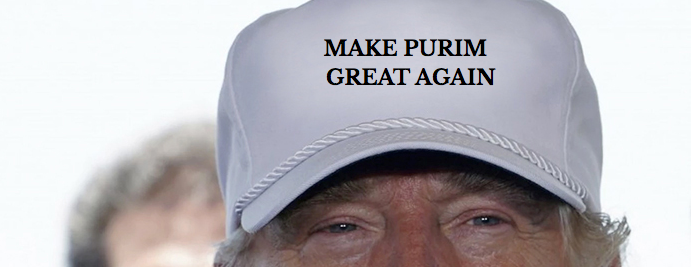
make purim great again

4 Steps to Make Purim Great Again and Help the World

Are you stuck in the Purim Party rut?

Do you go to few Purim parties and then pay for it the next day with a horrific hangover? If this is the case your Purim needs an extreme makeover, because there is more to Purim that meets the bottle. If you are suffering from over-doing-it from too much Purim Partying, you actually miss out on the seriously great parts of Purim.
You see, Purim’s combination of customs and mitzvot make it totally unique in the Jewish year. No holiday has Purim’s power to unite Jews from all backgrounds and generate spiritual growth. If you want to make your Purim Great Again, if you want your Purim to be “off-the-charts”— then use these four steps to make your Purim truly memorable, enjoyable and rewarding.

There are four mitzvot for Purim – and each one is a step up a ladder of spiritual/material interaction and revelation of the Divine.

Step One: Listen To The Megillah aka Kriyat Megillah To relive the miraculous events of Purim we listen to the reading of the Megillah, the Scroll of Esther, on Purim evening, and again during the day. Try to hear every single word of the Megillah – so make sure to turn off your cell phone! 🙂 When Haman’s name is mentioned make lots of noise and stamp your feet to “eradicate” Haman’s evil name. According to Kabbalah this noise has profound impact. It’s not just kid’s shtick. Click here for Pico Shul’s Purim Schedule.

Step Two: Give money to the Needy aka Matanot La’evyonim Concern for the needy is a year-round responsibility. However, on Purim it is a special mitzvah to remember the poor. Give charity to at least two, but preferably more, needy individuals on Purim day. The mitzvah is best fulfilled by giving directly to the needy. If you cannot find poor people, you can donate online and I will hand out tzedakah to poor Jews for you on Purim Day. All of it goes to Tzedakah – we do not take any cut. How much? A lot. Seriously consider giving 10% of your monthly profits to help poor members of our community. You will feel very good and do a lot of good in the world. As with the other mitzvot of Purim, even small children should fulfill this mitzvah.

Step Three: Send Food Gift-Baskets to Friends aka Mishloach Manot On Purim we emphasize the importance of Jewish unity and friendship by sending food gifts to friends and family. On Purim day, deliver at least two gift-baskets of ready-to-eat foods (e.g., pastry, fruit, beverage), to at least one friend on Purim day. The more you deliver – the better! Don’t have time to pack your own? There are many stores that sell read-made baskets and only need to add your card! Children, in addition to sending their own gifts of food to their friends, make enthusiastic messengers. We travel around by minivan and the kids run up to houses and deliver the baskets.

Step Four:  Eat, Drink and be Merry aka Purim Seudah Purim is celebrated with a special festive meal on Purim Day, where family and friends gather together to rejoice in the Purim spirit. This feast should be over-the-top with courses, variety and duration. Join us at Pico Shul for our Purim Feast! It is a mitzvah to drink wine or other inebriating drinks at this meal – and that is where the tradition to drink on Purim originates.

Now that you have your blueprint, you can start filling in the details:

  1. Organize where you will be to hear the Megillah
  2. Get cash ready for poor and/or make online donations to worthwhile organizations helping the poor on Purim Day
  3. Shop for gifts for your friends and family.
  4. Reserve a spot for Purim meal, or make your own.

If you follow this four step Purim regimen, you will elevate your life, and the lives of many people around and the world. Have a safe, inspiring and delicious Purim!

4 Steps to Make Purim Great Again and Help the World Read More »

Advice from a Jewish Refugee in Canada

Like all Canadians, I am fascinated and horrified by the news of desperate refugees seeking asylum in Canada.

These stories are too close to my heart. Over thirty years ago I came to Canada as a young refugee, but to get here I had to first walk over sand, not snow. I left my native Iran in the middle of the night, crossed the most dangerous desert in the world and made my way to Pakistan where I lived an uneasy life for nearly a year, a reluctant guest of the United Nations Political Refugee program. I eventually made my way to Canada on an Alitalia jet. At the airport in Montreal, I made my declaration of intent known to the RCMP immigration officers, who promptly detained me.

Not much separates me from those frightened refugees who trudge through waist- deep snow to get to Canada. Not much separates them from the refugees who tried to escape Hitler’s Europe and find haven here. When asked how many Jews could be accepted during the terrible years of Hitler’s reign, representatives of the Canadian government famously replied, “None is too many.” It was believed that Jews could not or would not be assimilated, nor would they change their ways to adapt to their new country.

When I reflect on this chapter in the Canadian story, I always feel stunned. I see the Jewish community as diverse, respectful, traditional and modern. We defy one- word descriptions. We are complex. Why are the new refugees any less?

In the 1940s, Canada was a predominantly Christian society lead by white European men. When I arrived forty years later, it was still predominantly white and Christian, but the word “Jew” had earned some respect in the increasingly diverse Canadian landscape. I came here, secure in the knowledge that as a member of a minority I was entitled to live life as I chose, to adapt and modify my ways to the Canadian ethic and to create a healthy life for myself, always respecting the values of others.

I delighted in Canadian freedoms. I was glad to leave behind the “one size fits all” of Iranian life, where everything, from music to literature to style of dress was controlled by the religious government.

I came here prepared to work hard. Having just turned eighteen, I spoke only Farsi. I had neither family nor friends in Canada and neither money nor contacts. Canadian and Jewish agencies guided and supported me as I went to school, worked several jobs and learned Canadian ways.

I faced challenges. Life was at times hard and austere, confusing and lonely. But it was always good because I was living life as a free person and learning how to be Canadian.

All refugees are running from something, and today those crossing the invisible border are running to us, the Canadians of 2017. Where once Canadian officials slammed the door, we now welcome the lost and oppressed.

Are we afraid of these new immigrants? Apparently some of us are. When we welcome refugees we need to integrate people of different faith and culture, some of whom have different attitudes towards women, health care and child-rearing. They may hold different political views and they come with their own prejudices. We certainly do.

But if history shows us anything, it shows us that human beings adapt. The current American president comes from German stock. The one before him had a Kenyan father. Our own prime minister has French Canadian, English, Scottish and Dutch forbears. He is quintessentially Canadian in his expression of the importance of human rights and freedoms.

When I read stories of these terrified refugees, I wonder what other Canadians think. I am sure some are compassionate, while others fear potential terrorists and welfare loafers. Some focus on a possible economic burden, saying that charity begins at home. Others see eventual economic growth from the influx of new immigrants.

I came here, determined to make a place for myself. I knew I was not going to be a burden. I came here to learn what it means to be Canadian, to embrace two new languages, to learn new ways. It was my intention to work hard and repay Canada and Canadians for every kindness, good deed and act of support.

And I have.

Forty years ago Vietnamese and Romanians came to our borders. In later years, we received waves of asylum seekers from El Salvador and other South American points. Thirty years ago, I arrived. Canada has always kept its doors open to newcomers who want to join the Canadian way of life.

It’s hard to change worlds. I struggled with my new reality. I remembered the sweetness of my home country, but I had no desire to replicate Iran’s terror, intolerance and oppression. I fled Iran for the opportunities here, and I was free to choose for myself how much of my Iranian past I took with me. I chose to embrace Canadian freedom because I wanted to be the captain of my own life. I did not want the government to control who I befriended, what I studied, what music I listened to and how I presented myself to the world. If there were things I did not like about Canada, I accepted them. I did not expect people to adapt to my needs, upbringing and desires and nor should any immigrant or refugee. I left because I needed change and change I found here in Canada. All those who enter Canada must learn what it means to be Canadian and the values that entails. We are all free to practice as we please in our personal life, but for the respect of all Canadians the charter of rights prevails.

Thirty years later, I am Canadian to the bone: my background is diverse but my focus is laser- sharp; nobody can touch my freedom. I live in a world of diversity and I respect that we are bound by our shared desire to live with dignity and to express our individuality. We have no right to impose our values on other Canadians, but we do share the common ethic of respect and tolerance. We live and let live, within the framework of the Canadian Charter of Rights and Freedoms, which clearly accepts that the human being is entitled to self-expression, self-control and acceptance.

Integration is not a new concept to Canadians, we have always embraced it and we shall continue to allow it to thrive within our diverse society. Remember, for all of us to feel at home, we must not change the rules of the house.

Dr. Sima Goel is the author of Fleeing the Hijab: A Jewish Woman’s Escape from IranAuthor, inspirational speaker, freelance writer and chiropractor, Iranian-born Dr. Sima Goel has dedicated her life to promoting the importance and fragility of freedom. 


Advice from a Jewish Refugee in Canada Read More »

Young Judaea Sees Resurgence in L.A.

Young Judaea, a peer-led Zionist youth movement that saw the closure of its West Coast summer camp in 2009, is starting to see a resurgence in Los Angeles.

A case in point was the election of El Camino Real Charter High School junior Maccabee Raileanu to Young Judaea’s national teen board on Feb. 18, during the organization’s national midwinter convention in Atlanta. Raileanu’s peers elected him mazkir (president) of the Young Judaea teen board. He will serve for one year.

“I was interested in the role because, ever since getting seriously involved in the movement about three years ago, I have wanted to be the most involved that I possibly could,” Raileanu, 17, said in an email.

Raileanu attended the organization’s national Camp Tel Yehudah in upstate New York from 2014 to 2016 after being awarded a fellowship that subsidized his attendance at the camp and provided training in how to return to his community to build local programming for his peers.

“I have so much love, passion and ideas for Young Judaea,” he said, “and I felt my experience of being the L.A. mazkir has trained me well to move up to the next level and lead the entire movement.”

Founded in 1909, Young Judaea operates year-round programs, an Israel-based gap-year experience for incoming college freshmen, Camp Tel Yehudah, regional camps and other activities.

Los Angeles events are regularly drawing 15 to 20 people, compared with just three people as recently as 2015, Sharon Schoenfeld, Young Judaea’s director of U.S. programs, said in a phone interview.

The organization is spreading the word about renewed local presence by increasing its relationship with The Jewish Federation of Greater Los Angeles.

“I keep in touch with the L.A. Federation and if they’re doing something with teens, I ask them to let us know, so we can be part of it,” Schoenfeld said. “If something’s happening in the community, it’s important our kids know what that is and be involved. … We are trying to be very thoughtful about how we’re building it and what we’re doing. It’s still in its infancy right now.”

Schoenfeld said she hopes people understand that, whatever their views about Israel, the camp is pluralistic and nonpartisan.

“It’s a hard world nowadays, but as a pluralistic Zionist youth movement, we don’t necessarily tell people what it means to be a Zionist, we don’t tell kids how to be a Zionist,” she said. “We try to open minds to all sorts of ways to celebrating Israel, learning it and being part of it … going there and being active for it. We don’t tell them this is the way you have to be.”

Young Judaea is currently accepting applications for the latest cohort of its fellowship. The deadline is March 15. For additional information about how to apply, email yjevents@youngjudaea.org.

Young Judaea Sees Resurgence in L.A. Read More »

Senate panel approves Trump’s Israel envoy in near party-line vote

In a narrow vote, the U.S. Senate Foreign Relations Committee confirmed President Donald Trump’s pick for ambassador to Israel.

The committee voted Thursday 12-9 to confirm David Friedman, mostly along party lines. Sen. Robert Menendez, D-N.J. , was the only Democrat to vote in favor. The vote now goes to the full Senate.

Aside from Committee Chairman Sen. Bob Corker, R-Tenn., the only speakers at the meeting were Democrats who opposed Friedman’s nomination. They cited many of the concerns raised by liberal Jewish groups opposed to Friedman, including his past skepticism of the two-state solution and his deep philanthropic investment in the settlement movement.

Most prominently mentioned was Friedman’s past insults of Jews with whom he doesn’t agree. Friedman had called J Street, the liberal Jewish Middle East policy group, “worse than kapos,” the Jewish Nazi collaborators. J Street, during its annual conference last month, delivered the committee 40,000 signatures on a petition opposing Friedman.

“The last thing we need in this position is somebody who has a penchant for over the top hyperbolic and even false statements,” said Sen. Tim Kaine, D-Va.

Sen. Ben Cardin, D-Md., the lead Democrat on the committee, who is Jewish and is among the closest Democrats to the pro-Israel lobby, said Friedman’s appointment would undercut efforts to maintain a unified, bipartisan pro-Israel posture in Congress.

“There are those who are trying to divide us and make Israel a partisan political issue,” Cardin said. “I don’t believe that Mr. Friedman can be that unifying person.”

Corker, perhaps the most skeptical Republican during Friedman’s confirmation hearing earlier this year, said Friedman’s closeness to Trump – he has been his lawyer for over a decade – helped qualify him for the position.

“Mr. Friedman is an impassioned advocate for America and for strengthening the mutually beneficial bond between the United States and Israel,” Corker said. “The president needs an ambassador who shares his vision and confidence.”

There was a brief disruption of the voting session by the left-wing group Code Pink.

Groups opposing Friedman included the Reform movement, J Street, Americans for Peace Now and other left-wing groups. Groups backing him included the Republican Jewish Coalition and the Zionist Organization of America.

Senate panel approves Trump’s Israel envoy in near party-line vote Read More »

Israel advances in World Baseball Classic with third straight win

Israel advanced in the World Baseball Classic with a victory over the Netherlands.

Israel beat the Netherlands on Thursday by a score of 4-2 to finish first in its pool in the first round of the quadrennial baseball tournament, in which 16 countries are represented.

The Netherlands also will advance after finishing the first round with a 2-1 record. The other teams in the pool, South Korea and Chinese Taipei, were eliminated.

Two teams in each of the four pools advance to the next round of the tournament. The second round will be played in Tokyo beginning on Saturday.

Israel defeated South Korea in its first game ever in the World Baseball Classic in 10 innings by a score of 2-1. It went on to defeat Chinese Taipei by a score of 15-7.  The team appeared on the field for the national anthem with matching blue kippot.

This is the first year that the Israeli team has qualified for tournament. In 2012, Israel’s inaugural WBC team narrowly missed making the tournament.

The game marks the first time that American Jewish baseball players, including several current and former Major League Baseball players, are representing Israel in a world championship. World Baseball Classic rules state that players who are eligible for citizenship of a country may play on that country’s team.

Israel advances in World Baseball Classic with third straight win Read More »

A Moment in Time: Judaism is about Principles, Not Politics

Dear all,

Last weekend, our tenth grade Confirmation Class traveled to Washington D.C. to lobby on behalf of Reform Judaism. They chose issues of Gun Violence and Reproductive Rights, wrote speeches, and delivered them in the offices of US Senators Dianne Feinstein and Kamila Harris, and US Congressmembers Maxine Waters, Adam Schiff, and Karen Bass.

I was so inspired by the integrity of our teens. They taught me that Jewish values teach principles, not politics. And they helped me think about what it going on in our country today.

It is with that in mind that I recall the 36 times Torah reminds us not to treat others like strangers.

The Torah reminds us that the foreigner and the native shall share one common law.

The Torah teaches to love our neighbor as ourselves.

The Torah inspires us take care of the widow, the orphan, and the poor.

Some view these as political leanings.

But these are the words of our tradition. And these are the words that inspire us to look forward.

We live in a time when many are losing sight of those values. More than ever, we need to stand up for the strangers in our land, reach out to the homeless in our land, and embrace the voiceless in our land.

This is our moment in time to make a difference.
With love and Shalom,

Rabbi Zach Shapiro


A Moment in Time: Judaism is about Principles, Not Politics Read More »