fbpx

February 1, 2017

Refugee order demystified: Q-and-A with Melanie Nezer of HIAS

Once the Jewish refugee population slowed to a trickle in the late 20th century, HIAS, formerly the Hebrew Immigrant Aid Society, turned its attention to refugees of any faith and background. Since then, it’s been at the center of the American Jewish community’s response to global crises such as those in Syria and Sudan.

And somewhere near the center of HIAS’ operation is Melanie Nezer, its vice president of policy and advocacy. In the middle of an extremely busy week on Jan. 30, Nezer spoke to the Jewish Journal to clarify some of the finer points of the executive order signed days before by President Donald Trump, sharply restricting the inflow of refugees to the U.S.

The following interview has been edited for length and clarity.

Jewish Journal: Who does this order apply to? 

Melanie Nezer: The provisions that we’re really concerned about and are looking at is the 90-day ban on admissions or entry from the seven designated countries [Syria, Iraq, Iran, Yemen, Sudan, Somalia and Libya], which bars anyone, regardless of their immigration status, from coming back to this country from those countries. And the impact of that has been even people with green cards who live here, and students who live here, and businesspeople who live here, have not been able to come home, and won’t be able to come home for 90 days. There’s some indication that maybe people with green cards will be able to come back, but the application of this order has been so chaotic and inconsistent that we don’t know that that will happen.

The second provision is the 120-day ban on refugee admissions, and that applies to refugees from anywhere in the world. So it’s these seven countries plus any other countries that refugees are coming from — 120-day ban. … [These are] people who have waited for many, many years, gone through all of the security checks that we require — interviews, filling out forms, clearing security checks, clearing medical checks, getting fingerprinted, in the case of some people, getting iris scans. We have the most intense refugee security vetting in the world, and refugees are the most intensely vetted people who come to the United States. So these are people who waited for years, maybe. After being in a refugee camp for many years or maybe living in a city, in precarious situations, they were selected to come to the United States because we decided they can’t remain safely where they are. We’ve put them through all of these requirements. Some of them have family members here. This has taken many years. They’re finally told, “You’ve cleared everything, you can travel, here’s the date.” If they live in a refugee camp, they’ve sold or given everything away. There’s no place for them to go back to, because the moment they vacate where they live, somebody else takes it. They’ve made their way to the city to get on a plane, or maybe they’re living in Amman, Jordan, or they’re living in a small town in Turkey. They’ve gotten rid of their apartment. They’ve gotten rid of everything they own. They go to the airport, and basically that golden ticket that they’ve gotten has just been ripped up. And they haven’t done anything wrong. The only difference is that the president signed this order. That’s the only thing that changed. President Trump is the only thing that changed, and the rug has been pulled out from under them, for no reason. And these are people who’ve suffered enough.

And then the third piece of it is the reduction of the refugee admissions number from 110,000 [in fiscal year 2017], which is what the State Department and some other agencies like HIAS were planning for, to 50,000. And of course, that’s 60,000 lives that are impacted there — people who won’t find safety.

JJ: So people who are in the process of seeking refugee status in the United States, are just completely stranded by this. Is that correct?

MN: We had a court order issued on Friday night (Jan. 27) by a New York federal district court that applied to all of the airports, a nationwide order [mandating that refugees in U.S. airports not be sent back]. And since then there have been many other federal courts where other airports are located that issued orders. It’s our understanding that Customs and Border Protection (CBP) agents are ignoring those orders. … In a normal administration, when an executive order is issued, you have a legal team and a policy team from all of the relevant agencies — so in this case it would be Department of Homeland Security, Department of State, maybe Department of Justice — doing the legal and policy analysis before its implemented. In this case, you had this president put his name on a policy that nobody knows really where it came from or how it was created or who had input into it. It certainly couldn’t have been the secretaries because most of them haven’t even been confirmed yet. And then, a minute later, you have the front line staff at the airports deciding on their own, individually how to implement it. And you have people, from what we hear, asking hours’ worth of questions to people who are legally entitled to come into this country about their religious beliefs.

JJ: It sounds like the order created a tremendous degree of confusion at the nation’s airports. Is there a sense of how many people are caught up in airports right now in the U.S.?

MN: We have no idea. We think people are still being held today, but at no airport has CBP [Customs and Border Protection] allowed attorneys to talk to anyone in secondary inspection. As far as we know, attorneys have had no access, and they are showing up to request it. Hundreds of attorneys have showed up at airports to try and speak with people and help them. But they’ve actually been blocked. … At Dulles Airport, in Virginia … Customs and Border Protection was ordered to allow access to counsel, and it seems CBP is violating that. There have been a number of orders, injunctions, and they’re all written a little differently, but one in Virginia specifically ordered access to counsel, and that is being violated.

JJ: What is HIAS doing at this moment in terms of responding to the situation?

MN: Before the order was signed, we were trying to reach the administration in any way we could, but were unable to get through. We were trying to influence the policy, as were many others. But it doesn’t look like we had any success in doing that. Of course, we are a refugee resettlement agency, so we are carefully tracking all of our cases, figuring out which ones had their flight canceled, which ones may be able to proceed this week because they’re in transit and there may be an exception for them. And then, if there is an exception and they’re allowed to get on the plane, [we’re] making sure that CBP doesn’t detain them and lets them in. So we’re keeping track of that. There’s, like, a million things we’re trying to do to respond to this kind of moment in our national history, to speak up, but also on a practical level, to help the refugees that we serve, their families who are here, and our partners in communities that receive refugees to deal with this situation.

JJ: There’s this tremendous national infrastructure that HIAS maintains. What happens to that when there are no more refugees for 120 days? Are people going to get laid off?

MN: The day after the election, we started thinking about that, because these were campaign promises that President Trump made. We didn’t quite envision the chaos that would be in the wake of this approach, that this would be unleashed … didn’t, obviously, have any idea what the scope of this would be. So we have been thinking about that, trying to plan for it, anticipating that yes, there certainly could be a possibility that we would have to shrink the network and our staff. That was somewhat theoretical, but obviously something we were thinking about. But since Friday, we haven’t been thinking about that, because we’ve only been thinking about how to help our clients, the refugees — and also, to share this news with the hundreds of synagogues and individuals across the country that have volunteered to furnish apartments, put up the beds, put up the cribs, put the dishes in the kitchen, fill the refrigerators. I mean, we have people across the country that were and are ready and willing to welcome refugees, and they are crushingly disappointed. Certainly you can’t equate it to what the refugees themselves are going through and their family members, but refugee resettlement is for many — and many of the resettlement agencies are faith-based — it’s an expression of faith. It’s a way you can put your faith into action and this order deprives us of the ability to do that.

JJ: What do we know about the exemption for religious minorities that’s mentioned in the order?

MN: From what we understand, there’s no procedures for implementing those exemptions. Certainly, CBP is not implementing them, as far as we know. We’ll see if some of the refugees that were in transit will be able to come [under the exemption]. We know that refugees from the seven blocked countries can’t come, but perhaps others will be able to travel. But in terms of the religious exemption, there are no procedures, and we will have to wait and see if there’s any guidance on how that gets implemented.

JJ: What are you saying to people who argue that these refugees coming in are not like us — which is to say, that they’re not like Jewish refugees of the 1930s, a frequent analogy — and that they can’t be vetted?

MN: I would argue that they’re exactly like us. During World War II, there was no Jewish ban. There was nothing called a Jewish ban in law, but in fact there was a Jewish ban. Many thousands of visas that were available to Germans were not issued when they could have been issued to German Jews. Why? And if you do any Googling of the newspapers back then, it was because of suspicion, fear, a sense that people could exploit the refugee program by sneaking in even though they had nefarious intent in our country. So the exact same things that were said then are being said now. And granted, it’s legitimate to fear terrorism.

There’s no question, and we have to fight terrorism. But these are people who are fleeing terrorism. And they are vetted for many, many months. We have way more information on these refugees than anyone had on refugees in the last century. Refugees don’t just flee from their country and the next day get on a plane. They are in camps, and they are registered with the [United Nations High Commissioner for Refugees] and they are in cities, and they receive support, and U.N. and U.S. officials are very familiar with who they are over this period of time. And then, to the extent of the security screenings, if there’s any question about a person, they get screened out. There are 65 million displaced people in the world. We’re not going to have a problem filling our slots. … The victims of Islamic terrorism and violence around the world — no one suffers more than the people in those countries. And the fact that we would be willing to close our doors, particularly to children who have not been in school for many years, and when they get here, they’re so happy to be here and so ready to go to school and absorb everything, and absorb all the freedoms and the life and the safety that they have here — I don’t know how we could, as Jews, not want to respond to that.

JJ: Is this order affecting Jews right now personally, and moving forward, do you anticipate that there will be Jewish communities impacted by this executive order?

MN: There’s still Jews coming from Iran and Ukraine that will be affected by this. So we don’t know how that’s going to play out, but they’re certainly not getting on planes any time soon.

JJ: I know that HIAS is an official partner of the State Department, part of the State Department’s refugee apparatus, but is there any communication between HIAS and the White House? It sounds like they blew you off.

MN: Well, I don’t want to make it sound like it’s personal. I don’t think that they just blew HIAS off. There are nine national resettlement agencies, including the Catholic Church and Lutheran Immigration and Refugee Service and World Relief, which is evangelical. I don’t think any of our voices were heard. There’s no particular singling out of HIAS, but it just seems that there’s a complete disregard for our input and expertise, despite the fact that religious communities have been resettling refugees for decades.

JJ: Is this ban going to affect people that either have or are seeking special immigrant visas (SIV) for having worked with American forces in Iraq or Afghanistan?

MN: Yes, it already has. Two SIV Iraqis were detained at [John F. Kennedy Airport]. They were actually the subject of the lawsuit that was filed on Friday night in New York. They were finally released because Congressman [Jerrold] Nadler, Congresswoman [Nydia] Velazquez and a team of lawyers showed up and demanded their release. But these are people who got their visas because their commanding officers recommended them because they helped our troops. … I mean, the ones that arrived just at that moment were allowed in, but Iraqi SIVs will not be allowed in. Afghan SIVs is another question, because Afghanistan is not on the list of seven countries. But right now we’re not seeing any of those SIVs entering. … The bottom line is: If you’re from Iraq and you have an SIV, you’re not coming, even though the reason you got that visa is because you fought with us.

JJ: The people who are showing up at airports and protesting, and the lawyers who are showing up in many cases just to stand around in the hopes that somebody approaches them out of the terminal, do you think they’re doing anything? Should they continue?

MN: I think all of that is critical. I’ll start from the micro. So, I know somebody who just happened to be around with the lawyers when Hameed [Khalid Darweesh] was released, one of the Iraqi SIV cases at JFK. And so she walked out, left the airport with him to get him a ride to where he was going, and he was just overwhelmed by the level of support. So just to show that one person, who did, mind you, get that visa because of his service to the United States, that there was that kind of support for him, made that night, to me, worth it. But on a broader scale, we have to resist this. This is a national crisis. This could be a constitutional crisis. We have to show that this is not OK, and the only tools we have right now are protesting, calling our members of Congress, showing up at events where our congresspeople are speaking to make sure that they stop this, and having our lawyers ready and pushing to represent people and to litigate these legal issues.

Will it change President Trump’s mind? That’s a question I can’t answer. But it’s an expression of our values as a country, and for that reason, we can’t stop doing this.

JJ: There are many Jews who are permanent residents, but not citizens, from Iran. So do you recommend those people don’t travel outside the United States for the time being?

MN: Look, I can’t give legal advice without knowing the facts of every case. But if I were in that situation, I would talk to a lawyer before I got on a plane. And, if I had immediate travel plans, I would delay them.

Refugee order demystified: Q-and-A with Melanie Nezer of HIAS Read More »

Jewish leaders discuss Trump’s Holocaust Remembrance Day omission

Condemnation of President Donald Trump excluding Jews in his Jan. 27 statement for International Holocaust Remembrance Day was across-the-board, with organizations including the Anti-Defamation League, which has been critical of Trump from the time of his candidacy, to the Republican Jewish Coalition, which has been supportive of him, criticizing the omission.

“It is with a heavy heart and somber mind that we remember and honor the victims, survivors, heroes of the Holocaust,” the U.S. President’s Jan. 27 statement says, excluding “Jews.” “It is impossible to fully fathom the depravity and horror inflicted on innocent people by Nazi terror.”

In the wake of the statement’s release as well as confirmation from the Trump administration’s spokesperson, Hope Hicks, that the exclusion was intentional, the Simon Wiesenthal Center (SWC)—whose founder and dean, Rabbi Marvin Hier, delivered the invocation at Trump’s inauguration—issued a statement calling on the White House to update the statement.

“The Simon Wiesenthal Center reiterates its call for Friday’s Presidential statement on International Holocaust Remembrance Day to be updated to specifically mention the 6 million Jewish victims of the Nazis,” the Jan. 29 statement says.

That update never came, much to the chagrin of Jewish leaders. In a Tuesday phone interview, SWC Associate Dean Rabbi Abraham Cooper said because the Holocaust was focused on the systematic murder of Jews, any International Holocaust Remembrance Day statement neglecting Jews is not just wrongheaded, but dangerous.

“It has real implications in places like Europe, where, as we speak, in the last 10 days there were Muslims in a German [high school] who didn’t want to participate in a Holocaust memorial and one of their professors said we have to listen to their side and be sensitive to it,” Cooper said.

It is fine to remember non-Jewish victims, according to Cooper. In fact, Wiesenthal, himself, was committed to memorializing non-Jewish victims of the Shoah. The famed Nazi hunter and survivor’s insistence on doing so, however, did not detract from his devotion to remembering the primary victims, Jews.

“A generation ago, Simon Wiesenthal was basically the only major Jewish figure to also talk about non-Jewish victims of the Nazis. In fact, when the Roma [gypsies] were initially left off the [then-] new U.S. Holocaust Memorial Council [the governing body of the U.S. Holocaust Memorial Museum] it was Wiesenthal who enforced the issue, saying they were also victims of the Nazis and they have to be on there,” Cooper said. “He spoke about it with great passion in those years … In the same breath he would also say it’s also important to remember the Final Solution…the only target of that genocidal policy were the Jews,” Cooper said.

In an interview, Former Los Angeles County Supervisor Zev Yaroslavsky, who was active in the free Soviet Jewry movement in the 1960s and 1970s, which, experts say, was a cause American-Jews took on, in part, out of guilt of not doing enough to rescue European Jews during the Shoah, says Jews are “sensitive” when it comes to Holocaust remembrance.

“We’re sensitive. The Jewish community is sensitive to this. It’s not our egos that’s driving this. It’s the motive behind white-washing the name, white-washing the Jews out of the Holocaust experience,” he said.

“Meet the Press” moderator Chuck Todd used the term “White-wash” when, this past Sunday on his show, he asked White House Chief of Staff Reince Priebus if the Trump administration regretted not including “Jews” in his Jan. 27 statement.

“I don’t regret the words, Chuck,” Priebus said, as quoted by a transcript of the broadcast, available at nbcnews.com.

Priebus was not the only Trump administration official to defend the exclusion. On Monday, during a news conference, White House Press Secretary Sean Spicer told reporters that the “nitpicking” that has been done to the statement is “pathetic.” Additionally, Spicer said a Jewish individual with relatives who were in the Holocaust helped craft the statement. He declined to name the person when a reporter asked if it was Jared Kushner, Trump’s Orthodox son-in-law, who drafted the statement.

On Monday evening, Politico identified Boris Epshteyn, a special assistant to the president of Russian-Jewish descent, as the person behind the statement.

Cooper, for his part, said the Jewish “nitpicking,” to borrow Spicer’s words, is not demonstrative of Jews being overly-sensitive. The anger over the exclusion, he said, is about getting the facts straight.

“It’s not about being oversensitive; the Shoah is the Shoah. We would prefer if we weren’t the target but we were and if you’re going to make a statement and going to memorialize it,” he said, “you need to get it right.”


Jewish leaders discuss Trump’s Holocaust Remembrance Day omission Read More »

Trump order flouts American principles

Like most Jews whose family history features flights from persecution, I have a soft spot for refugees, the “huddled masses yearning to breathe free” welcomed to our shores by Emma Lazarus’ famous poem engraved on the pedestal of the Statue of Liberty. But there have always been those who felt differently.

President Donald Trump’s recent executive order suspending the State Department’s Refugee Assistance Program and restricting visa entry from seven Muslim-majority countries is one in a long line of racist, anti-immigrant measures, from the Naturalization Act of 1790 (limiting naturalization to whites) and Chinese Exclusion Act of 1882 (prohibiting Chinese laborers) to the Immigration Act of 1924 (enacting national origin quotas to reduce the number of Jews and Italians, and exclude Arabs and Asians), which have influenced our immigration policies up to the present day. As President Harry S. Truman said in vetoing the similarly problematic Immigration and Nationality Act of 1952, “In no other realm of our national life are we so hampered and stultified by the dead hand of the past, as we are in this field of immigration.” Congress overrode his veto. President John F. Kennedy was so disturbed by the racist and discriminatory nature of our immigration laws that he even wrote a book about it, “A Nation of Immigrants,” in which he warned that “emotions of xenophobia — hatred of foreigners — and of nativism — the policy of keeping America ‘pure’ … continue to thrive.”

Trump campaigned largely on xenophobic rhetoric aimed at Latinos, Asians and Muslims, here and abroad. For example, on Nov. 6, just days before the election, he called the community of 25,000 Somali refugees in Minnesota a “disaster,” and promised not to admit more refugees without the approval of the community. It is therefore hardly surprising that the new president used his broad executive authority to stop admitting refugees and restrict entry to the United States by individuals from countries like Somalia, which he believes may be sources of radical Islamic terrorism. I expect there will be many more of these types of orders in the days to come, and, in my view, the president likely will succeed in implementing these policies.

To be sure, Trump’s first executive order on immigration has caused a great outcry, even among those who generally support strong anti-terrorism efforts, mainly because it was so poorly conceived and executed. In just the first days, hundreds of travelers were caught in limbo, and attorneys working over the weekend obtained a temporary stay of certain elements of the order, some of which, like the refusal of entry to valid green card holders, may have already been retracted by the administration. There seem to be no exceptions made for properly vetted visitors, including students or scientists attending conferences on tourist visas, or even people who have assisted our armed forces. No doubt there will be protracted litigation over some of the more objectionable parts of the order, such as the instruction to prioritize refugee claims made by members of “a minority religion” (i.e., Christians). Singling out seven countries might also run afoul of the Immigration and Nationality Act of 1965, which barred discrimination against immigrants (but not visitors) on the basis of national origin (unless permitted by Congress). But the upshot is that Trump is pulling up the welcome mat. The huddled masses are no longer going to be welcome. That is the message he is sending to his constituents, and to those living abroad.

Rather than focus on the legality of Trump’s executive order, which has already disrupted the lives of thousands of people, we should be focusing on the underlying policy issue. Is this the country that we want to be? Do we really want to admit no students, no scientists, no tourists, no visiting family members, no artists, no musicians, and no skilled employees from these seven countries? What exactly was wrong with the existing vetting procedures? Why were these seven countries chosen, and not others, such as Saudi Arabia, with a history of exporting terrorists to our shores? A strict reading of the executive order would bar any non-American citizen “from” Iran from obtaining a tourist visa, meaning that many of the relatives of our Persian Jewish community living abroad in Israel or Europe can no longer come to visit. Does that make anyone safer?

With regard to refugees, there is an even more fundamental question. Should we close off our country to even the most persecuted refugees? There are thousands of refugees, families with children, who have been waiting for years while their applications were vetted and who now are blocked. Some argue that we need to set up high barriers to entry to prevent terrorists from entering the country. Almost 80 years ago, when the United States faced a far greater threat than we do today, and Jews were the ones clamoring to get in, Americans made the same argument. “How do we know there won’t be Nazi spies among the refugees?” they asked. Assistant Secretary of State Breckinridge Long ordered all consular officials “to put every obstacle in the way” to delay and stop granting visas to Jewish refugees. As a result, 90 percent of the quota spots were left unfilled, and the Jews trapped in Europe, our relatives, were murdered.

I see little or no difference between the “America First” policy of President Trump, and the similarly named nativist policy that informed Breckinridge Long. We can do better, I think, than defying our own principles in the name of security.


RANDY SCHOENBERG is an attorney and a law lecturer at USC.

Trump order flouts American principles Read More »

Pain-free painting

A fresh coat of paint can completely transform a room, but painting walls is a job few home decorators relish.

I don’t mind it too much. Instead of hiring painting contractors, I’ve painted the walls in my house myself. Sure, it may not be as much fun as going to Disneyland, but with a little prep work and a few tricks, you can get through the job — with flying colors.

CHOOSING THE PAINT

The color

Usually, the most difficult part of getting started is deciding on a color. There is more to life than Swiss Coffee, after all. Unfortunately, the little paint swatches from the store won’t give you an accurate idea of how the color will look when it’s applied to an entire room. If possible, purchase samples of the colors you are considering and paint 12-by-12-inch patches on your walls. Then see how the paint looks in the room at different times of day. If you don’t want to test the paint on the wall, paint a piece of foam core or cardboard.

The finish

For adult bedrooms and living rooms, a flat finish creates an even, non-reflective surface that hides surface imperfections. For higher-traffic, dirt-prone areas like hallways and kids’ bedrooms, select an eggshell or satin finish — the higher sheen makes it easier to clean. And for kitchens and bathrooms, a semigloss finish will withstand the frequent cleanings. Reserve high-gloss finishes for trims, doors and windows. Remember, these are suggestions, not rules. I prefer no sheen, so even my bathrooms have a flat finish.

The type of paint

Most paint contains volatile organic compounds (VOCs) that are harmful chemicals. Look for low-VOC or no-VOC paint. Because of public demand, they have become readily available at paint stores. The cost may be $10 or $20 more a gallon, but this eco-friendly choice is worth it. Also, consider paints that include a primer in the formulation. They require fewer coats.

THE SUPPLIES

Paint roller covers

Roller covers are available in various thicknesses, or  “naps.” Covers with naps of 1/4 inch or 3/8 inch are ideal for most walls that are smooth. If you’re painting over exposed brick or other rough surfaces, a thicker 1/2-inch nap will give you better coverage. Also, have a miniature (4 inches wide) paint roller handy to help you get into tighter spaces.

Extension pole

Invest in an extension pole that screws onto your paint roller. It will add to your reach and get the job done faster.

Brushes

To paint your trim, you’ll need a brush. Select a 2-inch brush with angled bristles, which will help you achieve a straight line.

Paint edgers

My secret weapon for paint jobs is the paint edger. It’s a plastic, rectangular painting tool with little wheels that glide against the ceiling or baseboards, allowing you to paint perfectly straight edges. There also are smaller edgers that work around window and door frames, and edgers that get into corners. I use all of them.

Canvas drop cloths

While it may be tempting to buy the cheap plastic drop cloths, it’s much easier to work with the canvas versions. They don’t slip as much, and can be wrapped around corners and furniture. Paint can seep through canvas, though, so invest in a heavier-weight canvas, and soak up larger spills with a paper towel.

PREPARATION

Surface prep

With a damp cloth, wash the walls, ceilings and baseboard trim to remove dirt, dust and cobwebs. For heavier stains, or if there is oil buildup, you also may need to use an appropriate cleaner. Patch holes and cracks with spackle and sand them smooth when dry. When the walls are clean and free of cracks, you can apply a topcoat of primer. (You can skip the primer if your paint has primer in it already.)

Furniture and curtains

Move furniture into the middle of the room and cover it with drop cloths. Plastic drop cloths are fine for this purpose. Remove curtains from their rods and place them under the drop cloths or in another room. (Now also would be a good time to vacuum those curtains. Just saying.)

Masking tape

Apply masking tape to baseboards, window frames and door frames. This is the most tedious step in the whole painting process, so try to make it fun. Play music, invite a friend over and reward yourself with chocolate. And instead of putting masking tape around switch plates, just remove them.

PAINTING

What first?

Although there is some debate about this matter, I prefer starting with the ceiling, then painting the walls and finishing with the baseboards and window trim. It just makes sense to start at the top and work your way down, especially since you’ll be dealing with paint drips.

The outside in

Start by applying paint with a paint edger at the ceiling and baseboard. Then use an edger on the corners and the window and door frames.  You’re basically “outlining” the walls with paint. Once the edges are painted, use a roller to “paint within the lines.”

Feathering

It’s impossible to paint an entire wall with one continuous stroke, so you are naturally going to be overlapping with your roller. To avoid overlap marks, try something called feathering. When your roller appears to be drying out, keep moving the roller, extending from the area where the paint is wet. The “feathered” portion is thin and does not have much coverage. After dipping the roller in wet paint again, you can paint over the feathered area. Move the roller perpendicular to the first layer to remove any overlap marks.

EASY CLEANUP

Refrigerating brushes

If you need to stop painting before the job is finished, wrap your brushes and rollers in plastic wrap and place them in the refrigerator. This way, you don’t have to wash your tools in the middle of a job.

Line your tray with foil

You can purchase plastic tray liners for your paint tray, but they move around a bit while they are being used, and they’re wasteful. An easier alternative is to line your tray with foil. When you’re done with the painting job, just remove the foil, throw it away and pat yourself on the back. But wash your hands first.


Jonathan Fong is the author of “Walls That Wow,” “Flowers That Wow” and “Parties That Wow,” and host of “Style With a Smile” on YouTube. You can see more of his do-it-yourself  projects at jonathanfongstyle.com.

Pain-free painting Read More »

Jewish stars burn bright on TV this winter

‘Superior Donuts’

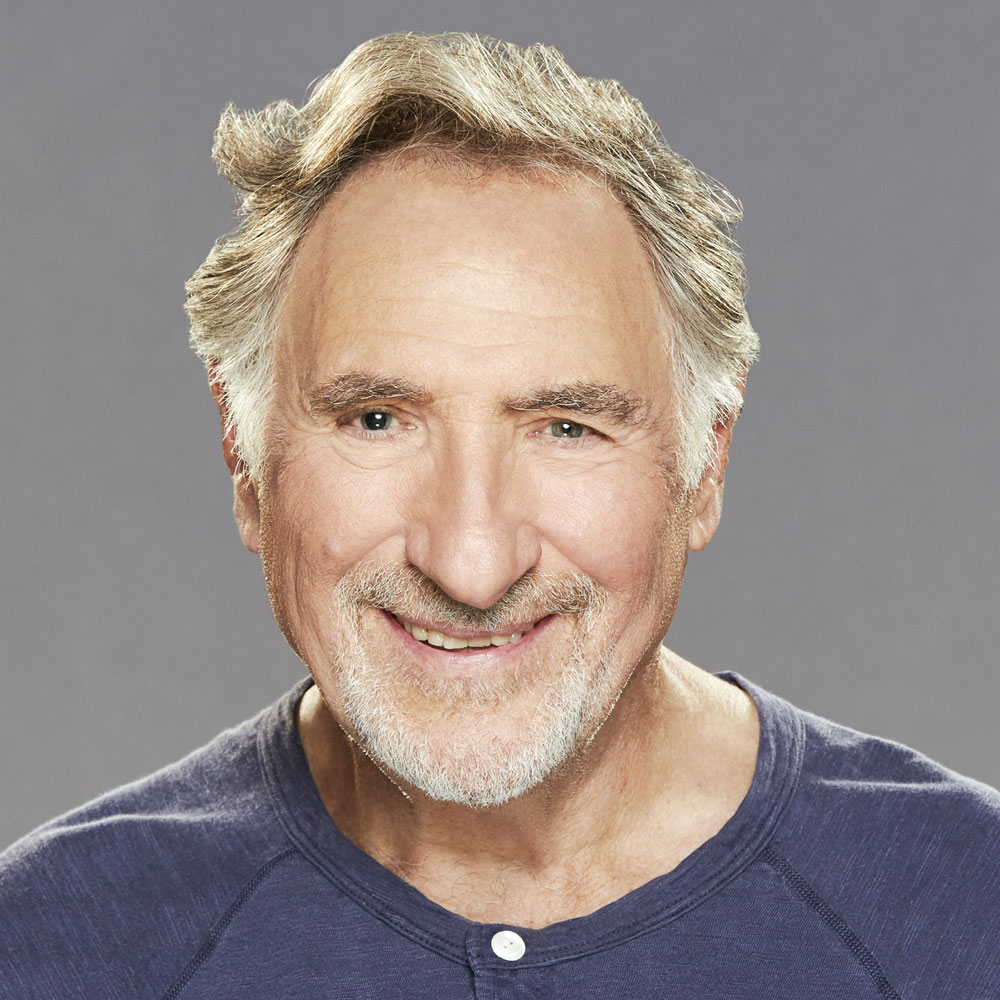
judd-hirsch-2Actor Judd Hirsch — no stranger to workplace comedies, having memorably starred as cabbie Alex Reiger in the 1970s sitcom “Taxi” — returns to form in “Superior Donuts” as Polish Jew Arthur Przybyszewski, owner of an old-fashioned doughnut shop struggling to make it in a gentrifying Chicago neighborhood.
Stubborn and resistant to change, Hirsch’s curmudgeonly character declares, “My parents didn’t send me out of Poland in the hull of a ship so we could sell Cronuts.” Based on Tracy Letts’ 2008 play, “Superior Donuts” doesn’t shy away from themes of religion, race, politics and generational divide. For Hirsch, the show provided an opportunity to return to the taped-before-an-audience format he has always favored.

“I love [multicamera] situation comedy because it always takes me back to the stage, being tested by an audience,” he said. “And you can hear their reaction. It’s always new.”

The son of Dutch, German and Russian Jewish immigrants, Hirsch has a bachelor’s degree in physics and didn’t become a professional actor until he was 36. Now 82, he considers himself fortunate. “I look at a lot of actors my age and they can’t remember a word” of a script, he said. He chalks up his vitality to a youthful outlook and staying active and busy.

“I’m in the gym almost every day,” he said, which counters the effects of having a constant supply of fresh doughnuts on the set. His favorites? “A cruller,” Hirsch said. “And I love jelly doughnuts.”

“Superior Donuts” was scheduled to premiere at 8:30 p.m. Feb. 2 on CBS.

‘24: Legacy’

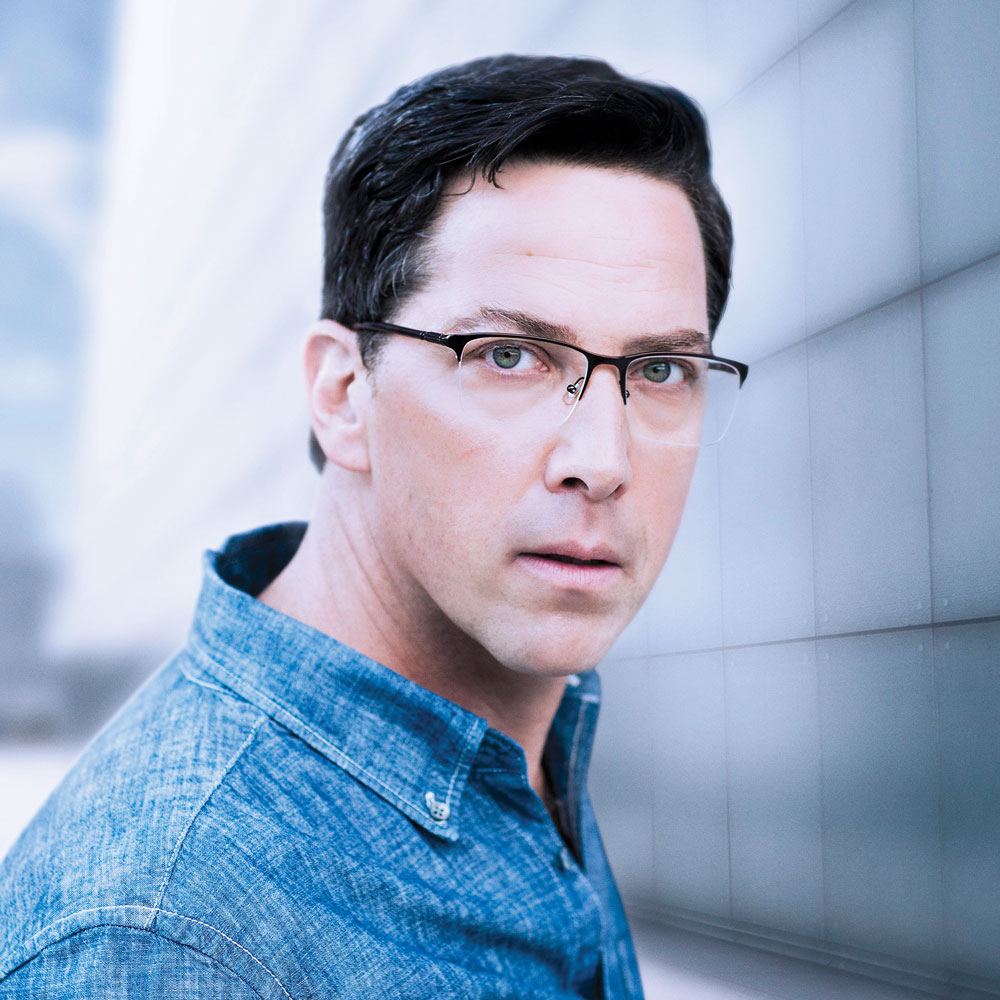
dan-bucatinskyAfter eight seasons and a 2014 reboot, the ticking “24” clock was silenced. But the nail-biting espionage series is back on Fox with a mostly new cast and a story about homegrown terrorism. Dan Bucatinsky — known for his work on “Grey’s Anatomy” and “Marry Me,” and his Emmy-winning role on “Scandal” — plays counterterrorism-unit computer analyst Andy Shalowitz, who is Jewish.
Eager to be part of “gasp-worthy television” that’s a hallmark of “24,” Bucatinsky said he was drawn to playing “a very human, comedic character within a serious show, with a snarky sensibility that I find appealing. Andy just wants to avoid weapons and stay out of trouble. He takes anti-anxiety medication every morning. But he’s challenged in a way you don’t expect from the pilot,” he said. “There are revelations that will continue to unpeel throughout the season. Heroism exists in ordinary people too.”

The son of immigrants from Argentina who met at a Zionist youth organization and trace their roots to Poland and Russia, Bucatinsky describes his family as “culturally Jewish, not religious.” A New York native, he attended Hebrew school, went to Israel with his family in 1971 when he was 6, and became bar mitzvah seven years later. “I don’t know how much significance my bar mitzvah had for me at 13,” he confided. “I wish it would happen in your 20s when you have understanding of the subject matter.”

Married to “lapsed Catholic” writer-director Don Roos, with whom he has two adopted children, Bucatinsky keeps Jewish tradition and ritual alive via Passover seders and Rosh Hashanah services. He wrote about the latter in 2012 in his book “Does This Baby Make Me Look Straight?” a best-seller about his experiences in gay parenting.

“A bit of a ham” who appeared in his first Shakespeare play in first grade and continued to act through college at Vassar, Bucatinsky recalls making his professional debut in a terrible midnight show in Greenwich Village on Yom Kippur. His parents went to services, then drove into Manhattan to support their son.

From there, Bucatinsky wrote and performed sketch shows to score acting jobs, but he has found working before and behind the camera equally satisfying. “The desire deep in my soul to be an actor is still there, and getting to do these roles now is very satisfying,” he said. “After 20 years I’m having the acting career I dreamed of having in my 20s.”

Currently preparing a new season of “Who Do You Think You Are?” with Lisa Kudrow, with whom he collaborated on “Web Therapy” and “The Comeback,” Bucatinsky said he would like to direct more, make an independent film, revisit Argentina with his family and learn to play the piano. He said he has mastered the art of making gluten-free latkes, which he serves every year for Chanukah, and wants to write a cookbook featuring gourmet latke recipes.

But what makes him happiest, he said, is watching his children enjoy the beach at the family’s weekend getaway north of Los Angeles. “Those moments are rare and as close to bliss as I can get,” he said. “That and a really good plate of pad Thai.”

“24: Legacy” premieres at 7:30 p.m. Feb. 5 on Fox. 

‘Billions’

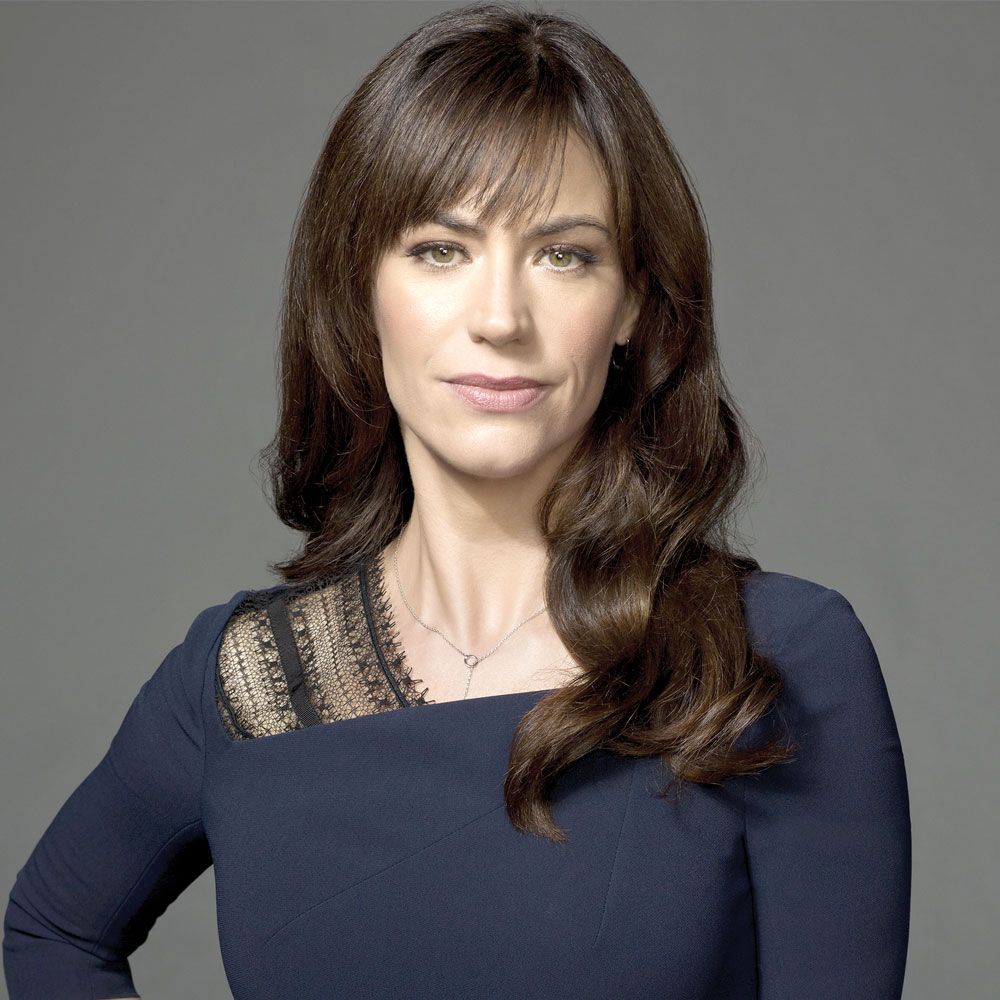
maggie-siffShowtime’s “Billions,” about the high-stakes battle between hedge-fund billionaire Bobby Axelrod (Damian Lewis) and U.S. Attorney Chuck Rhoades (Paul Giamatti), who is determined to take him down, is also about the woman deeply involved with both men. As Wendy, Rhoades’ estranged wife and Axelrod’s performance coach and ally, Maggie Siff walks a precarious line.
“She’s a complex character,” Siff said. “Right from the beginning, there were all kinds of contradictions in her, and that hasn’t really let up. She has these two forces of gravity in her life that pull her in very different directions. I love how intuitive and insightful she is, and unafraid to call people out on what they’re hiding.”

At the end of the first season, Wendy “walked out on these guys, kind of blew everything up,” Siff said. “Now she’s trying to get her life back on track. She’s trying to find a place in the world on her own.”

Wendy and Chuck are now in marital therapy, and she will decide whether to sever or repair the relationship.

It’s a juicy role and the latest in a string of Siff’s memorable TV characters, including Tara Knowles on “Sons of Anarchy” and Jewish department store heiress Rachel Menken on “Mad Men,” which launched her career to a higher level. “I’d done mostly theater up to that point,” Siff said. “What everyone thought was an art project turned out to be this iconic thing.”

Growing up in New York, Siff always wanted to act. “My father was a stage actor when I was growing up, so I’d been around the theater,” she said. “I knew I would be some kind of performer, an actor or singer.”

Russian-Jewish on her father’s side, Siff was not bat mitzvah but celebrated Passover with her paternal relatives and feels “culturally Jewish because of how and where I grew up,” she said. Married with a 2 1/2-year-old daughter, she splits her time between Los Angeles and New York, where “Billions” is shot.

Siff’s professional and personal goals include “exploring great three-dimensional characters” on stage and screen, working with female directors and writers on independent projects, playing Medea, as well as Maggie in “Cat on a Hot Tin Roof,” learning a new language, teaching the craft of acting, and visiting New Zealand, Spain, Ireland and Scotland. “We love to travel,” she said. “There are a lot of places on our list.”

“Billions” premieres at 10 p.m. Feb.19 on Showtime.

‘The Good Fight’

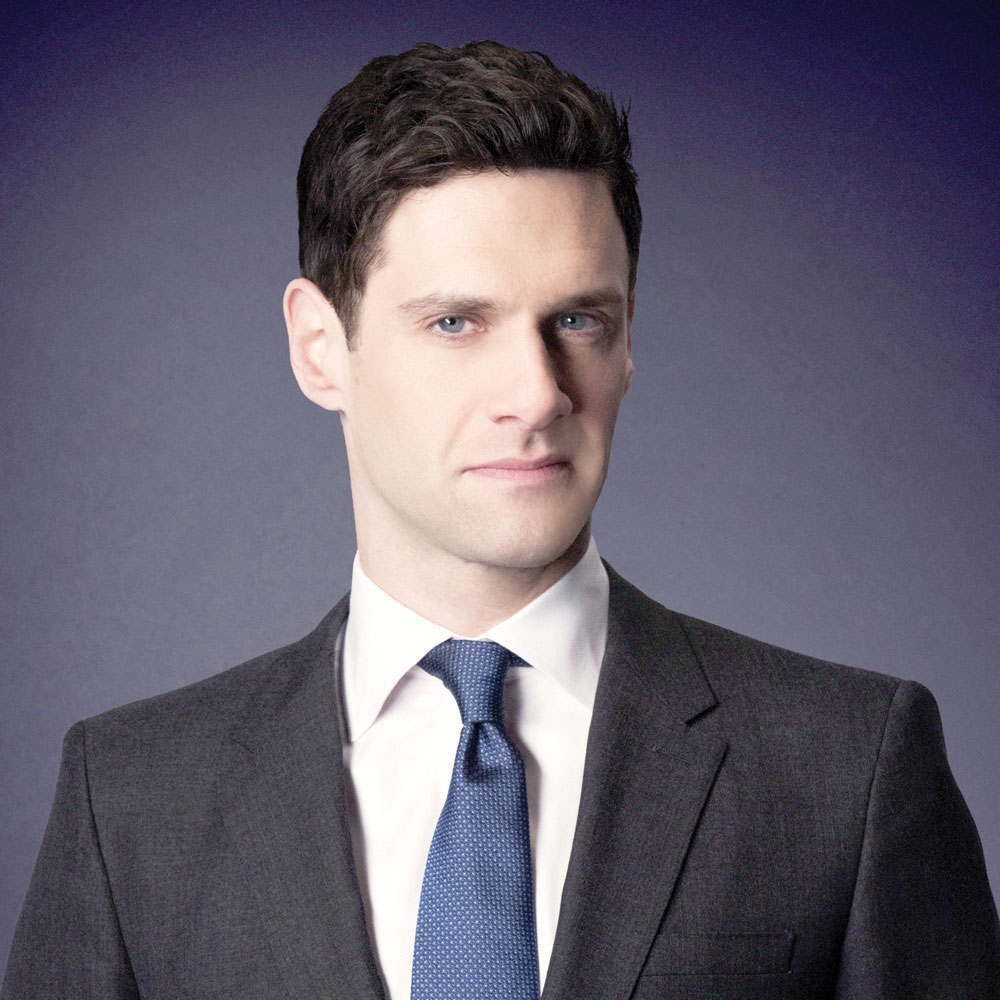
justin-bartha“The Good Wife” signed off in May after seven seasons on CBS, but its story continues in the CBS All Access spinoff series “The Good Fight.” The show focuses on Christine Baranski’s Diane Lockhart, whose finances have been wiped out by a Bernie Madoff-like scam, forcing her to take a new job with the all-Black law firm of Lucca Quinn (Cush Jumbo).
Starting with the third episode, Justin Bartha — of “The Hangover” and “National Treasure” movies — plays Assistant U.S. Attorney Colin Morello, a JFK Jr. golden-boy type who faces off against Quinn in the courtroom and romances her outside of it. “It’s not a traditional kind of relationship,” Bartha said. “We might continue to be rivals and there will be conflict. He has secrets. They all have secrets. It’s really topical and the smartest writing I’ve found in a long time.”

Bartha, who has roots in New York and traces his Jewish ancestry to Hungary and Poland, was born in Fort Lauderdale, Fla., and grew up in West Bloomfield, Mich., where his family moved for his father’s job. He grew up in a Reform home, went to Hebrew school, had a bar mitzvah, and four years ago visited Israel for the first time.

“I’m not a very religious person but I do identify and feel very strongly about the Jewish faith, and I love being Jewish,” he said. “I have a connection to Jewish history and feel an affinity toward being part of a minority group, especially now with anti-Semitism on the rise.”

Bartha first got into acting in high school, after he broke his wrist playing tennis. “I was looking for something to do, and there were a lot of cute girls in the drama department,” he said. “I had no idea how much I would love it.”

After studying writing, directing and production at film school and gaining hands-on experience doing various production-assistant jobs on movie sets, Bartha was cast in the reviled movie “Gigli” and worked with director Sidney Lumet on an unreleased HBO film before scoring with “The Hangover.”

Happy to be shooting “The Good Fight” in New York, where he lives with his wife and two daughters, Bartha said he hopes to return to the production side and “have more control over my career. I’m still trying to figure out what stories I want to tell,” he said. “But right now, I’m figuring out how to be the best parent I can possibly be. Everything else takes a back seat.”

“The Good Fight” premieres Feb. 19 at 8 p.m. on CBS All Access. 

‘Making History’

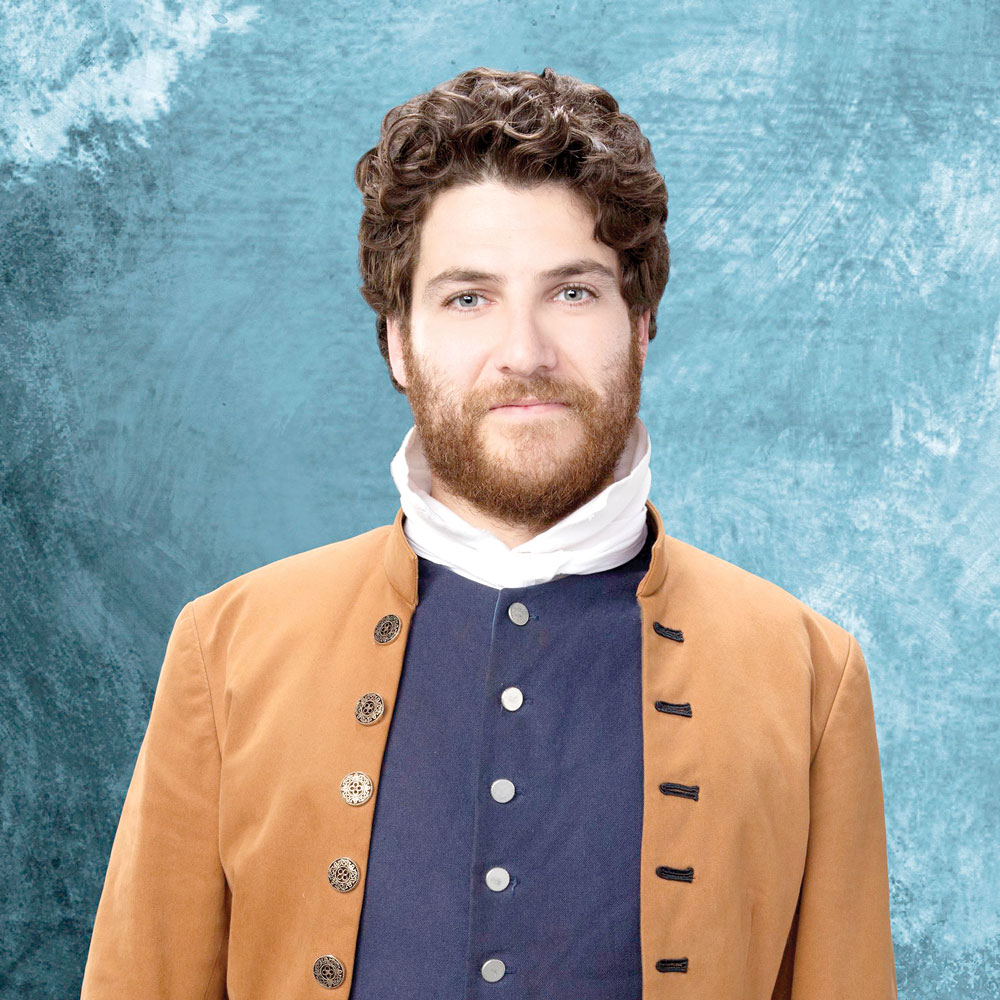
adam-pallyTime travel is a hot trend in TV series this season, but “Making History” plays transcending the fourth dimension for laughs, sending its hero, Dan, back to Colonial America in a magical duffel bag to relive history and find romance with Paul Revere’s daughter and the historical complications that brings. (He also explores more recent eras.)
“There’s a lot of me in him,” Adam Pally, best known as Max Blum on “Happy Endings” and Peter Prentice on “The Mindy Project,” said about his latest character. “He’s a simple guy who’s living in the shadow of his genius dad and looking for a way to live and find love.”

The son of actors, Pally said he was the class-clown type growing up in New York, New Jersey and Chicago, entertaining schoolmates at Solomon Schechter Hebrew Day School and watching “Saturday Night Live” to perfect his Mike Myers impersonation.

A graduate of The New School in New York and a member of L.A.’s Upright Citizens Brigade comedy troupe since 2003, Pally now seeks opportunities in front of and behind the camera. “I read every script open and honestly and see if it would be something challenging and fun, whether that means acting or directing or producing,” he said.

Two films in which Pally appeared were showcased at the Sundance Film Festival, the comedy “The Little Hours” and the drama “Band Aid,” and he is developing several projects with his production company.

Although the character Dan in “Making History” is not Jewish, most of Pally’s characters have been Jews, and he considers himself “very Jewish, culturally,” he said. “I was bar mitzvah, my wife is Jewish and we raise our kids Jewish. I have my Hebrew name, Asher, tattooed on my chest. You don’t get more Jewish than that.”

“Making History” premieres at 8:30 p.m. March 5 on Fox.

‘Imaginary Mary’

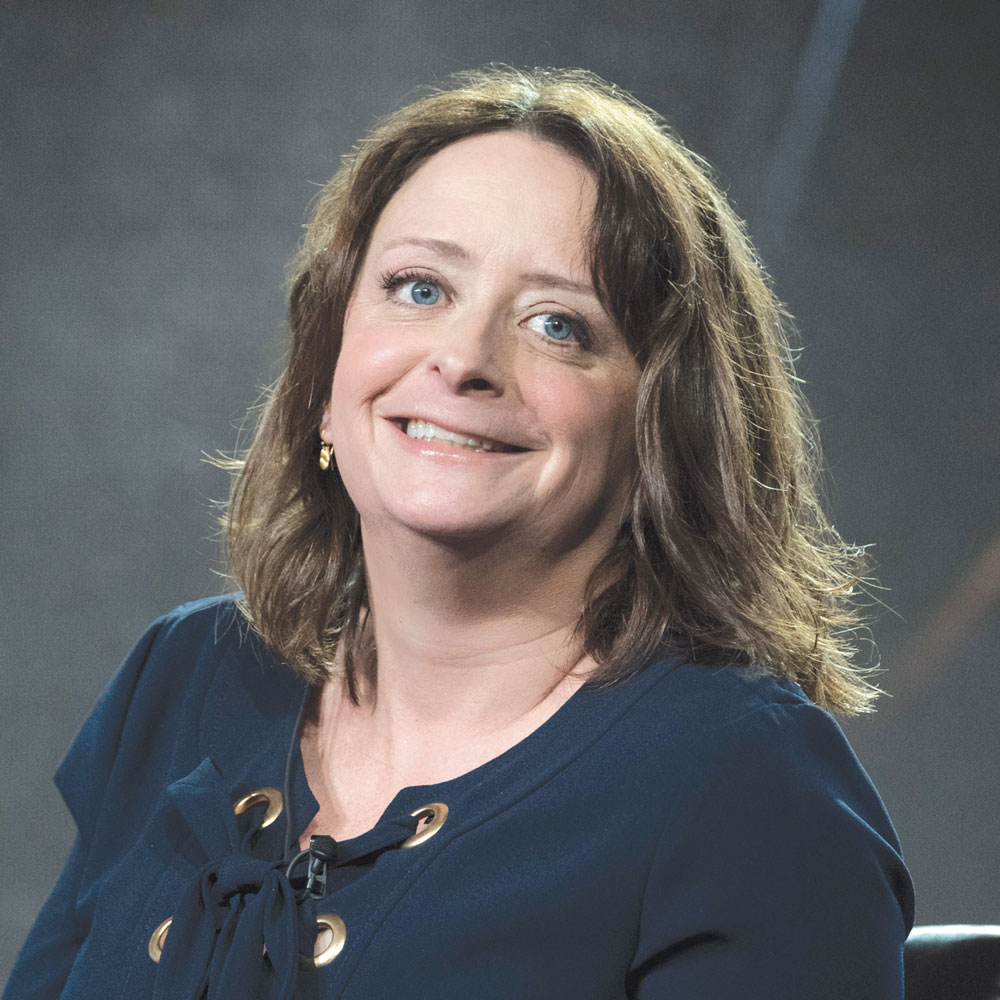
rachel-dratchSome children invent imaginary friends, and most grow out of them as adults. But for Alice (Jenna Elfman), the chatty companion she created as a kid is still in the picture, dispensing advice — for better or worse — on how Alice should live her life and navigate her relationships in the CGI/live-action comedy hybrid “Imaginary Mary.”

Neither animal nor human, but furry and cute, Mary is like a female version of the mouthy teddy bear in “Ted,” just a lot less raunchy.

“She’s a creature, something a 6-year-old might draw,” Rachel Dratch said of the hyperactive character whose voice she records once the live scenes are completed. “It’s an interesting challenge to create a real character with just your voice. But you have a lot of freedom to create something really wacky. Also, you don’t have to get hair or makeup or worry about how you look that day. There’s a freedom to it. You’re literally out of your body, so there’s something freeing about acting like that.”

Dratch, a Dartmouth College graduate from Lexington, Mass., honed her sketch comedy chops with Second City in Chicago before a seven-year stint on “Saturday Night Live,” where she created iconic characters such as Debbie Downer and The Lovers, with Will Ferrell. “It was a dream job,” she said. “I’m still really good friends with everyone.” These days, she keeps a hand in the sketch world with “Late Night Snack,” which airs on TruTV.

Growing up, Dratch was “a nerdy kid,” raised in a Reform Jewish home by parents of Ukrainian-Jewish ancestry. “I was bat mitzvah, went to Hebrew school, went to Israel once. Now I’m a High Holiday Jew,” she said, noting that she usually spends holidays with her parents and takes her 6-year-old son to children’s services. She has attempted to make potato latkes and her mom’s matzo ball soup, but confessed: “I didn’t really inherit her skills.”

Dratch said her wish list includes writing, doing more theater — especially a Broadway comedy — or “whatever comes along.” She’d like to take her son to Israel and she already sees signs of him inheriting the “performer gene.”

“He does have comedic traits,” Dratch said. “He has a very expressive face. I wouldn’t want him to be a kid actor; but when he’s older, if that’s what makes him happy, I would let him follow his dream, just like my parents did for me.”

“Imaginary Mary” premieres March 29 at 8:30 p.m. on ABC.

Also premiering

Justin Kirk (“Weeds”) is a billionaire who privatizes a Chicago police precinct to restore law and order and avenge the death of a friend in “APB” (Fox, Feb.6); Israeli actress Inbar Lavi is a con artist who faces the wrath of those she married and swindled in “Imposters” (Bravo, Feb. 7); Zosia Mamet returns for the sixth and final season of “Girls” (HBO, Feb. 12); Elliott Gould plays Isaiah Roth, who heads a firm of criminal defense attorneys in “Doubt” (CBS, Feb. 15);  Judd Apatow is the creator of “Crashing,” which follows comedian Pete Holmes’ adventures in standup comedy and couch surfing (HBO, Feb. 19)); and Josh Bowman plays a time-traveling Jack the Ripper in the TV adaptation of the 1979 movie “Time After Time” (ABC, March 5).

Jewish stars burn bright on TV this winter Read More »

Trump White House makes Holocaust ‘Judenrein’

In 1993, I visited the site of the German extermination camp of Belzec in Poland where my grandparents were murdered during the Holocaust. The inscription on the memorial, erected by the former Communist government of Poland, read: “In memory of the victims of Hitler’s terror.” Nothing about the Jews.

In fact, almost all of the half million who perished at Belzec in 1942 were Jews. But according to the ideology of the then-rulers of Poland and their Soviet overlords, it was politically unacceptable  to admit what in fact happened – that Jews were singled out and systematically murdered in a vast industrial effort to rid Europe of their presence.

Both the Soviets and the Poles wanted to highlight their own sufferings (and hide their own culpability) and had little empathy for the Jews either before or after World War II.

This incident came to mind last week when the Trump administration issued a statement on international Holocaust Day that contained no mention of the Jews. “It is with a heavy heart and somber mind that we remember and honor the victims, survivors, heroes of the Holocaust,” Trump’s statement began. “It is impossible to fully fathom the depravity and horror inflicted on innocent people by Nazi terror.”

When Jewish groups objected to being airbrushed from history, the Trump administration doubled down. The White House made it clear that the omission of Jews was no accident. Trump’s people wanted to make the point that other victims also suffered and died in the Holocaust.

The fact is, when we speak of the “Holocaust,” we are referring to the genocide perpetrated by the Nazis specifically against the Jews. That’s what the word means. The Oxford English Dictionary defines the word “Holcoaust”  in its modern, and accepted meaning, as “the mass murder of the Jews by the Nazis in the war of 1939-1945.”

Conservative commentator John Podhoretz slammed the White House’s defense of its actions in a column on Saturday, noting that Nazi ideology rested on the aim of exterminating Jewish people from the face of earth.

“The Nazis killed an astonishing number of people in monstrous ways and targeted certain groups — Gypsies, the mentally challenged, and open homosexuals, among others,” Podhoretz wrote. “But the Final Solution was aimed solely at the Jews. The Holocaust was about the Jews.

In this statement and other actions taken in the first days of the Trump administration, the influence of chief White House strategist Steve Bannon has been clearly felt. Before joining the Trump campaign, Bannon ran the alt-right Breitbart News, which was notorious for tolerating and spreading anti-Semitic lies and slanders. For example, during Bannon’s reign over Breitbart, the website ran articles referring to conservative commentator Bill Kristol as a “renegade Jew” and Washington Post columnist Anne Applebaum as “a Polish, Jewish, American elitist scorned.”

After Bannon joined Trump’s campaign, it too started flirting with anti-Semitic tropes, including tweeting an image of a star of David with Hillary Clinton’s face superimposed on a pile of money. His closing ad warned of a shadowy cabal of bankers and international elites.

In each case, Trump refused to back down or apologize, and his anti-Semitic fans took heart from the coded signals in their favor. Now that Trump is president, the same dynamic is playing out around his statement on the Holocaust.

How can we best describe Trump’s Holocaust Day statement? I call it Holocaust denial. It says in effect, that there was nothing special about the fate of the Jews under the Nazis. They were just unfortunate victims along with all the other unfortunate victims.

Trump’s statement seems deliberately designed to hurt and wound us. I know this is strong language but I feel almost as if Trump is in effect completing Hitler’s work. Hitler took away the lives of our people. Trump is taking away their memory. Shame on him!

After a campaign of several years, we managed to get rid of the memorial at Belzec and replace it with one that did justice to the Jews who died there. The horrible sign disappeared.

Now we have to do the same to this President and his administration – as soon as humanly possible.


Alan Elsner is Special Advisor to the President of J Street and the son of a Holocaust survivor.

Trump White House makes Holocaust ‘Judenrein’ Read More »

‘Mr. Gaga’: A moving life in dance

Batsheva Dance Company is one of Israel’s highest-regarded cultural institutions. The experimental dance ensemble, founded in 1964, has riveted audiences around the world. The company’s artistic director, Ohad Naharin, took charge in 1990 and revitalized the company with his unconventional choreography.

A new documentary, “Mr. Gaga” tells Naharin’s life story using never-before-seen archival footage, beautifully shot videos of Batsheva’s performances, interviews with dance critics and former Batsheva dancers, and behind-the-scenes glimpses into the company’s artistic process.

“Mr. Gaga” will screen Feb. 11 at Laemmle’s Monica Film Center in Santa Monica. The screening is sponsored by the Y&S Nazarian Center for Israel Studies at UCLA and will be followed by a Q-and-A with the director of the film, Tomer Heymann. (Three days earlier, on Feb. 8, Batsheva will perform “Decadance 2017,” a repertory program of the company’s celebrated works, at Segerstrom Center for the Arts in Costa Mesa.)

The film’s title comes from a movement language that Naharin developed to expand the possibilities of dance and promote physical healing. It’s what makes Batsheva’s choreography so radically different from other contemporary dance. Gaga dance classes are offered to the public around the world, including in Los Angeles.

The film was a labor of love for Heymann. He worked on it for eight years, collecting about a thousand hours of footage and spending roughly $1 million to make it. He fell in love with Batsheva after joining a relative — reluctantly — to see a performance in 1991.

“This guy basically opened me the door, opened the gate, to a beautiful world of dance,” Heymann said. Years later, he approached Naharin with the idea of making a film about him. Naharin refused. It took years of convincing to get his approval.

Naharin has said that if he had made the documentary, it would have come out much different. For one thing, he said in a phone interview, “I would never make a movie about my life. Maybe I would do a movie about my dance.”

Allowing Heymann to tell his life story without creative control over the project was a challenge, Naharin admitted, but handing over that control “came out of a very simple way of how I live, which is, I live as if I have nothing to hide. And that gave him and me the freedom to collaborate.

The theme of control comes up often in the film. In an opening scene, Naharin repeatedly instructs a dancer to fall to the ground. “Way too much control,” he tells her. “You need to find a way to let go.” The ability of the dancer to allow herself to fall without trying to catch herself requires, paradoxically, an enormous amount of control.

“I believe in control; I don’t believe in losing control,” Naharin said.

“I think one of the most important aspects of dance is that you are aware and in control of what you’re doing. And even the sense of freedom, and explosiveness, and even chaos, need to be done in a controlled environment so people don’t hurt themselves or other people.”

Traditional ballet dancers appear lighter than air, their bodies twirling and leaping with a seemingly effortless grace. Batsheva dancers are known for their intense physicality and flexibility, often holding difficult poses for long stretches of time.

“Mr. Gaga” takes us inside the practice space where the dancers participate in grueling rehearsals. Naharin refuses to allow mirrors in the dance studio, to keep the dancers from feeling self-conscious. Similarly, he was resistant to let Heymann film there.

“It took me a very long time to build the trust,” Heymann said. “And Ohad, I can understand his point. He told me, ‘Tomer, I’m afraid that once you’re coming with your cameraman, it will influence and change the whole atmosphere in the room. The dancers may not be attuned to the creation, because they might be busy [thinking about] what they look like, what they’re saying.’ And I told Ohad, ‘That’s my job… I will be a bird. I’ll be another dancer from Batsheva. You’re not going to know I’m there.’ ”

Naharin sometimes appears like a benevolent father figure to his family of dancers. At other times he seems like a merciless slave-driver, pushing them past the point of exhaustion.

“He can be soft and rude and beautiful and ugly, and he can be someone you appreciate and like, and in a minute you really hate him and think, ‘How can you talk to your dancers [so badly] when they give their life to you?’ ” Heymann said. “But this is the guy, and the movie is keeping it.”

Naharin insists he has the dancers’ best interests at heart.

“I’m not abusing my power. I’m using the power of convincing to make my dancers realize that what I ask them is safe, what I ask them is going to help them discover new possibilities,” he said. “We have a trust that whatever I ask them, they know that it’s for the benefit of the moment, of dance, of the process, of the piece, and it’s something that makes them grow. So even if I’m very demanding, it’s for a reason.”

In the film, Naharin’s greatest triumph comes during the preparation for Israel’s 50th anniversary celebration in 1998. Batsheva was set to perform “Kyr” (“Wall”), in which male and female dancers strip down from suits to undershirts and boxer shorts while shouting the lyrics to the Passover song “Echad Mi Yodea” (“Who Knows One”).

Ultra-Orthodox Jewish leaders took offense, and the office of Prime Minister Benjamin Netanyahu pressured Naharin to have the dancers appear in long underwear. Instead, Naharin resigned and his dancers dropped out of the program in solidarity. The incident led to massive parades in support of Naharin’s stand against religious censorship, and he returned to the company’s helm as a national hero.

“Mr. Gaga” presents a portrait of a brilliant, if somewhat flawed, artist. Along the way, it also shows us moments of sublime beauty that can only be achieved when passionate dancers push themselves to their physical limits.

Batsheva performs “Decadance 2017,” a repertory program of the company’s celebrated works, at Segerstrom Center for the Arts in Costa Mesa on Feb. 8. “Mr. Gaga” opens in theaters in Los Angeles on Feb. 10.

‘Mr. Gaga’: A moving life in dance Read More »

Iran confirms missile test, says it does not contradict nuclear deal

Iran’s defense minister confirmed that the Islamic Republic recently tested a missile, but asserted it did not contradict the nuclear deal the country signed with world powers.

“The recent test was in line with our programs and we don’t allow any foreign party to interfere in our defense affairs,” Brigadier Gen. Hossein Dehqan told reporters in Tehran on Wednesday, according to Fars, the semi-official news agency of the Iranian government.

The statement came after the U.N. Security Council held an emergency session Tuesday to discuss the intelligence that Iran had conducted a missile test. The United States had requested the session after detecting the test of what is believed to be a medium-range ballistic missile on Sunday. The missile reportedly went about 600 miles before exploding in what U.S. news outlets said was a failed test.

During the Security Council meeting, the newly confirmed U.S. ambassador to the United Nations, Nikki Haley, said the test was “absolutely unacceptable.”

“The United States is not naive,” she said. “We are not going to stand by. You will see us call them out.”

Following a meeting in Iran of its parliament’s National Security and Foreign Policy Commission, the commission rapporteur, Seyed Hossein Naqavi Hosseini, told Fars: “During the meeting, it was concluded that the country’s defense and missile industries are not negotiable with anyone and they should advance with all power and capacity and the parliament should support it too. It was also declared that no country is allowed to interfere in the country’s defense affairs.”

On Tuesday, Iranian Foreign Minister Mohammad Javad Zarif accused the United States of escalating tensions over Iran’s defense program, which he asserted is not covered under the 2015 nuclear deal with the world powers, including the U.S.

“As all parties present in the negotiations on the nuclear deal know, the missile issue is not a part of the Joint Comprehensive Plan of Action,” Zarif said during a news conference in Tehran with his French counterpart, Jean-Marc Ayrault.

Iran confirms missile test, says it does not contradict nuclear deal Read More »

A Moment in Time: Choosing the Right Words

Dear all,
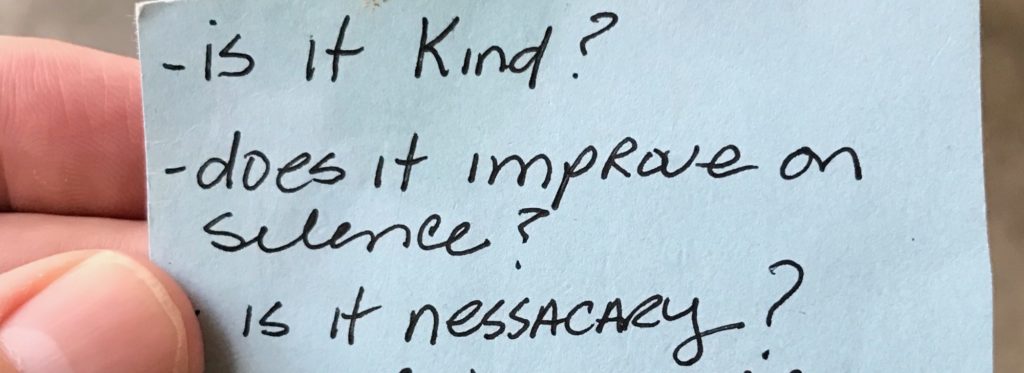
I was recently visiting a family whose matriarch died following an illness.  As they poured over photos, they came across a slip of paper with wisdom the woman had jotted down at some point during her life.
The three questions moved me incredibly, and I can’t stop thinking about them.
Relationships aren’t always easy (personal as well as political – especially in our world today).  But if we take a moment in time to choose the rights words before we speak, perhaps we can navigate to a better place:
1) Is it kind?
2) Does it improve on silence?
3) Is it necessary?
With love and shalom,
Rabbi Zach Shapiro

A Moment in Time: Choosing the Right Words Read More »

Jewish reactions to Trump’s nomination of Neil Gorsuch

From Jewish Insider’s Daily Kickoff.

“President Donald Trump on Tuesday tapped Judge Neil Gorsuch for the Supreme Court, elevating a 49-year-old judge who has served on a federal appeals court for more than a decade to replace the late Justice Antonin Scalia… Gorsuch’s past rulings give conservatives confidence that Gorsuch is a strong supporter of religious freedom rights. Last September, he joined a dissent arguing that requirements for contraception coverage in Obamacare ran roughshod over the rights of religious nonprofits.” [Politico]

What We’re Hearing Through The Grapevine — Judge Gorsuch is good friends with Ken Mehlman, Bush 43’s campaign manager in 2004 and former Chair of the RNC, who is also a prominent Republican LGBT activist. Gorsuch and Mehlman attended Harvard Law School together, along with future President Barack Obama. In fact, Mehlman tweeted“Congrats to my former HLS housemate and forever friend Neil Gorsuch on SCOTUS nomination. Neil is a fair minded gentleman and scholar.”

We’re also hearing that Judge Gorsuch visited Israel on an exchange trip this past fall and considers himself a friend of Israel. We’re still gathering additional details on that trip…

Gorsuch’s HLS classmate Norm Eisen emails us: “He is a fine person, and although I don’t agree with his judicial philosophy across the board, an exceptionally talented judge. He was confirmed unanimously for the circuit and he would have sailed through again, but for the fact that the GOP changed everything in wrongly rejecting Garland. That was a senatorial coup. Democratic leadership in the Senate, and all of us Democrats, need to decide what the consequences for that illegitimate action should now be. It is terrible that the Senate majority’s misconduct put a cloud over my classmate and an otherwise outstanding nominee.” 

INBOX — Rabbi Jonah Dov Pesner of the RAC: “We are concerned by the nomination of Judge Neil Gorsuch to the Supreme Court… We are greatly troubled by Judge Gorsuch’s record, which suggests that he may not have the attributes and values a nominee to the Supreme Court ought to have in order to mete out justice and interpret the laws that affect us all. We look forward to engaging in the confirmation process to further evaluate Judge Gorsuch’s views on issues of core importance to the Reform Movement, including civil rights, separation of church and state, religious freedom, women’s rights, LGBTQ equality, and many more.” 

Orthodox Union’s Nathan Diament: “While there is more of Judge Gorsuch’s record to be reviewed, we are very encouraged by his record in religious liberty cases – the area of Constitutional law of paramount concern to the Orthodox Jewish community. His opinions in cases such as Hobby Lobby and American Atheists v Davenport show a jurisprudential approach that venerates religious conscience and pluralism in American society.” 

David Frum: “Everyone’s going to enjoy the Gorsuch debate, because it’s the kind of debate you would have if things were normal” [Twitter]

Yair Rosenberg: “Here’s the thing: a principled small government states’ rights jurist is really the best liberals could hope for in era of Trump overreach” [Twitter]

Jewish reactions to Trump’s nomination of Neil Gorsuch Read More »