fbpx

July 15, 2016

Pokémon Go game leads to body’s discovery behind New Hampshire Holocaust museum

A person playing the Pokémon Go game on his smartphone discovered a dead human body behind a Holocaust Memorial in New Hampshire.


A young man found the body floating in Salmon Brook near Rotary Common Park in Nashua, New Hampshire, while hunting for cartoon monsters using the Pokémon Go app, WMUR reported Thursday.

Authorities were called and dive teams retrieved the body from the water, according to the local station. The victim has not been identified.

The area is located next to the New Hampshire Holocaust Memorial, according to the WMUR television station.

The location has attracted a lot of Pokémon Go players, witnesses say, suggesting it is one of the local landmarks highlighted in the game.

A high-tech scavenger hunt, Pokémon Go takes place out of doors, and sends users to PokéStops — real-life places marked as checkpoints by the game — to get in-game items. The game uses the smartphone’s camera, which records the players’ environment. The characters show up on smartphones, superimposed on the real-life landscape.

“It’s my understand that the person who found the victim was playing the Pokémon game,” Robert Giggi of the Nashua Police Department, told the station.

It’s the second time a body has been found by someone playing Pokémon Go since the wildly popular app’s release in the United States on July 6. Last Friday morning, a teenage girl in Wyoming stumbled across a dead body floating in a river while searching for a character.

On Wednesday, the Auschwitz-Birkenau State Museum in Poland said it is not allowing people to play the game on their smartphones during visits to the former Nazi German death camp because it is “disrespectful on many levels.” Several of the game’s users reported sighting the game’s characters at Auschwitz.

Pokémon Go game leads to body’s discovery behind New Hampshire Holocaust museum Read More »

The Broad Museum

I ventured down to The Broad Museum yesterday which opened last year.  It is spectacular.  Even if you are not a fan of modern art, the building and its setting are really worth the trip.  It gets crowded though, so study their extensive web site and plan accordingly: thebroad.org.   The Cindy Sherman exhibit is outstanding if you are a fan.  I will put more pictures up on my Flickr page, too.  They allow photography almost everywhere, and it is such fun to explore and shoot away, amazed. 

I had lunch beforehand at the upscale Otium Restaurant.  Very pricey, really above my pay scale, but quite nice, with impeccable service.  Don’t be surprised at the $5.00 charge for bread and mandatory 18% tip added to your bill.  You have been warned.  Very elegant place though.  You will want to dress nicely, dig out the good jeans!

The Broad Museum Read More »

Anti-anxiety Shabbat – coping during these difficult days

No one should be surprised that so many Americans feel anxious these days. Consider all that’s happened in the last 16 years, the cumulative effect of which has led to the state of our national psyche today:

The contested 2000 Presidential election – the rise of Al Qaeda, international terrorism and 9/11 – the Afghan War and the US invasion of Iraq – the mortgage and banking crisis, the 2008 economic melt-down and the loss of jobs – the changing US multi-cultural demography that helped bring about the election of the first African American President and the corresponding nativist resentment and racism – the rise of the Tea Party and its right-wing Congressional obstructionism – the Arab Spring and the Arab Winter along with intensifying Middle East violence – ISIS –  Syria’s civil war and the massive refugee crisis pouring into neighboring Arab countries and Europe – America’s daily gun violence and terrorism at Sandy Hook, San Bernardino, Baton Rouge, Milwaukee and Dallas – not to mention attacks in Istanbul, Paris, Brussels, and Nice – and today the military coup (?)  in Turkey – and the demoralizing 2016 Presidential campaign.

As these events occurred, social media and the 24-hour news cycle covered everything in great detail inundating us with its cacophony.

A great deal has changed in our world in recent years to be sure, for better and worse. Even good change is difficult for many of us to absorb, but when the changes are negative and destructive our lives feel more difficult.

Our fellow citizens are divided and polarized from each other at a depth that we haven’t experienced since the 1960s. We’re more distrusting, cynical and fearful of each other, and, according to a study reported on this week in the New York Times, there is a definitive link between racism with political party affiliation. Our politics have become the battleground of so much that ails us – between fear and reason, negativity and hope, nativism and internationalism, multi-culturalism and cosmopolitanism, red and blue, right and left.

Dr. Martin Luther King put it right when he said long ago; “People don’t get along because they fear each other. People fear each other because they don’t know each other. They don’t know each other because they haven’t properly communicated with each other.”

Can there be any doubt that we Americans need more contact with one another across racial, ethnic, religious, and political lines so we can come to know and understand one another better as human beings? That was the impetus of an essay by George Sanders that appeared in last week’s New Yorker magazine on who Donald Trump supporters are beyond the stereotype of an angry white uneducated mostly male voter. It isn't that simple.

This said, our anxieties cloud the mind and make it difficult for reasoned discussion and a meeting of minds and hearts. Most Americans across the political and ethnic landscape wonder how we can best assure our own safety, the safety of our children, our civil society, and our sanity as a nation.

Health care professions identify a number of coping strategies that can help calm the nerves and center us:

1. When we feel anxious, take a time-out and remember to breathe;

2. Eat well-balanced meals and drink plenty of water;

3. Limit consumption of alcohol and caffeine, both of which aggravate anxiety and trigger panic attacks;

4. Disconnect regularly from the news, the Internet and social media thereby diminishing the fragmentation that results when we encounter disturbing news;

5. Sleep 7 to 8 hours nightly;

6. Exercise daily;

7. Meditate, do Yoga, pray;

8. Read fine literature and poetry; listen to inspiring music; visit museums and art galleries; drink in the life-affirming creativity of others;

9. Get out into nature;

10. Be with family and friends;

11. Celebrate Shabbat;

12. Learn Torah;

13. Correct societal wrongs;

14. Change what we can and accept what we can’t change.

These strategies can help alleviate some of the anxiety we feel. But, it’s important to understand that not all anxiety is necessarily bad. There are, indeed, real threats out there, and the adrenaline rush that comes when we feel threatened can serve us well at times.

We need to be able, however, to distinguish real risks and dangers from imaginary ones, and to be able to stand in the shoes of the “other,” understand who they are as individuals, and why they may think and react as they do when their thinking and responses seem so foreign to us.

These past weeks have been particularly disheartening for Americans as a whole. President Obama reminded us in Dallas last week that, regardless of our differences, we share far more in common than what distinguishes us.

All Americans want to feel safe in their homes and on the streets, to raise their children, enjoy their families, friends and communities, earn a living wage, and make a positive difference in the world.

We Jews, I suggest, need Shabbat more now than ever as an anti-anxiety strategy, for Shabbat is our time to step away from the negative and destructive, to reconnect with community and faith, to emphasize the good and creative, to breathe in Shabbat peace and exhale anxiety, fear, fragmentation, and cynicism, and to celebrate the many blessings that are ours every day.

Shabbat shalom.

Anti-anxiety Shabbat – coping during these difficult days Read More »

Turkey’s Erodgan safe as group in military attempts coup, presidential source says

Turkish President Recep Tayyip Erdogan is safe, a presidential source said on Friday, adding that a statement made on behalf of the armed forces announcing a takeover of the government was not authorised by the military command.

The source also urged the world to “stand in solidarity” with the Turkish people.

Turkey's military said on Friday it had seized power, but the prime minister said the attempted coup would be put down.

Turkey’s Erodgan safe as group in military attempts coup, presidential source says Read More »

A Moment in Time: Three Reflections in reaction to Nice

Dear all,

Torah teaches that Adam and Eve had two sons, Cain and Abel.  We don't know too much about them.  But we do know that Cain rose up and murdered his brother.

Perhaps Cain was like many of the disenfranchised young men we find in the world today.  He felt marginalized and unwanted.  He didn't seem to fit it.  He was angry. 
And he was out of touch with reality.

After Cain committed this heinous crime, God asks, “Where is your brother?”

Cain responds, “Am I my brother's keeper?”

God then says, “The bloods of your brother are crying out to Me from the earth.”


This Shabbat, as our world cringes in the aftermath of Nice, we need to reflect on
these three excerpts.

We need to ask ourselves, “Where is my brother?”  In other words, we need to be mindful of all humanity on the face of the earth.  We need to be aware of what they
are doing, how they are thinking, and who is influencing them.  We are dealing with Islamic Fundamentalist Terrorism, a cancer that eradicates traditional boundaries. 
We can't have our heads buried in the sand.  We need to be able to answer God's question:  “Where is my brother?”

Am I my brother's keeper?”  Torah doesn't answer this in words.  But I will respond:  YES.  We are responsible for what our brothers do.  We must speak up.  We must speak out.  We all must step up to the plate.

The bloods of your brother are crying out to Me from the earth.”  My grammar teacher would have failed me if I wrote an original sentence like this.  But as the
original Hebrew includes this phrase, our rabbis seek meaning.  They teach that it
was not only Abel who died, but all of Abel's descendants.  It is therefore the bloods
of each future human being that would have come from Abel – each soul is crying out.  From this story, the Talmud teaches, “If you destroy a single life, it is as though you have destroyed the world.”  In Nice, it is not 80 (at last count) who were murdered…. 
It was the 80 – and all the possibilities they could have produced.


Please, please, reflect on these excerpts.  The epidemic of modern day “Cains” is overwhelming (in addition to the fundamentalist crisis, think of all the non-religious based shootings in this country). 

And so … we have a responsibility.  We can make a difference.  And we need to listen, really listen, to the voices that are calling out to us.

Wishing you all a Shabbat of peace,

Rabbi Zach Shapiro

A Moment in Time: Three Reflections in reaction to Nice Read More »

Turkish army says it seizes power; Erdogan says: ‘We will overcome this’

Turkey's military said on Friday it had seized power but President Recep Tayyip Erdogan vowed that the attempted coup would be put down.

If successful, the overthrow of Erdogan, who has ruled Turkey since 2003, would be one of the biggest shifts in the Middle East in years, transforming one of the most important U.S. allies while war rages on its border. Even if it fails, the coup attempt could destabilize a pivotal country in the region.

“We will overcome this,” Erdogan said, speaking on a video call to a mobile phone held up to the camera by an announcer on the Turkish sister station of CNN. He called on his followers to take to the streets to defend his government and said the coup plotters would pay a heavy price.

An official said Erdogan was speaking from Marmaris on the Turkish coast where he was on holiday. Erdogan said he would swiftly return to Ankara.

Prime Minister Binali Yildirim and other senior officials said the elected government remained in office. Yildirim called the coup attempt a terrorist act by gangs and illegal formations.

Television images showed scores of people, some waving Turkish flags, gathered in major squares in main city Istanbul and capital Ankara to show support for the elected government. Gunfire broke out in both cities.

Warplanes and helicopters roared over Ankara and explosions could be heard there. Reuters reporters saw a helicopter open fire. State-run news agency Anadolu said military helicopters had fired on the headquarters of the intelligence agency.

Reuters journalists saw tanks open fire near the parliament building in Ankara, which they had surrounded.

Airports were shut, access to Internet social media sites was cut off, and troops sealed off the two bridges over the Bosphorus in Istanbul, one of which was still lit up red, white and blue in solidarity with victims of the Bastille Day truck attack in France a day earlier.

Soldiers took control of TRT state television, which announced a countrywide curfew and martial law. An announcer read a statement on the orders of the military that accused the government of eroding the democratic and secular rule of law. The country would be run by a “peace council” that would ensure the safety of the population, the statement said.

TRT later went off the air.

Anadolu said the chief of Turkey's military staff was among people taken “hostage” in the capital Ankara. CNN Turk also reported that hostages were being held at the military headquarters.

NOT A TINPOT COUP

A senior EU source monitoring the situation said: “It looks like a relatively well orchestrated coup by a significant body of the military, not just a few colonels. They've got control of the airports and are expecting control over the TV station imminently. They control several strategic points in Istanbul.

“Given the scale of the operation, it is difficult to imagine they will stop short of prevailing. It's not just a few colonels,” the source repeated.

One European diplomat was dining with the Turkish ambassador to a European capital when guests were interrupted by the pinging of urgent news on their mobile phones.

“This is clearly not some tinpot little coup. The Turkish ambassador was clearly shocked and is taking it very seriously,” the diplomat told Reuters as the dinner party broke up. “However it looks in the morning, this will have massive implications for Turkey. This has not come out of nowhere.”

U.S. Secretary of State John Kerry and Russian Foreign Minister Sergei Lavrov, speaking jointly after talks in Moscow, both said they hoped bloodshed would be avoided. The U.S. State Department said Americans in Turkey should shelter indoors. Other countries issued similar advice.

Turkey, a NATO member with the second biggest military in the Western alliance, is one of the most important allies of the United States in the fight against Islamic State, which seized swathes of neighboring Iraq and Syria.

Turkey is one of the main backers of opponents of Syrian President Bashar al-Assad in that country's civil war, host to 2.7 million Syrian refugees and launchpad last year for the biggest influx of migrants to Europe since World War Two.

Celebratory gunfire erupted in Syria's capital Damascus as reports emerged that Erdogan had been toppled. People took the streets to celebrate there and in other government-held cities.

Turkey has been at war with Kurdish separatists, and has suffered numerous bombing and shooting attacks this year, including an attack two weeks ago by Islamists at Istanbul's main airport that killed more than 40 people.

In an earlier statement sent by email and reported on TV channels, the military said it had taken power to protect the democratic order and to maintain human rights. All of Turkey's existing foreign relations would be maintained and the rule of law would remain the priority, it said.

After serving as prime minister from 2003, Erdogan was elected president in 2014 with plans to alter the constitution to give the previously ceremonial presidency far greater executive powers.

Turkey has enjoyed an economic boom during his time in office and has dramatically expanded its influence across the region. But opponents say his rule has become increasingly authoritarian.

His AK Party, with roots in Islamism, has long had a strained relationship with the military and nationalists in a state that was founded on secularist principles after World War One. The military has a history of mounting coups to defend secularism, but has not seized power directly since 1980.

Prime Minister Yildirim said a group within Turkey's military had attempted to overthrow the government and security forces have been called in to “do what is necessary”.

“Some people illegally undertook an illegal action outside of the chain of command,” Yildirim said in comments broadcast by private channel NTV.

“The government elected by the people remains in charge. This government will only go when the people say so.”

Turkish army says it seizes power; Erdogan says: ‘We will overcome this’ Read More »

As terror unfolded in Nice, local rabbis jumped to action

Rabbi Reouven Ouanounou was still in his office at the Chabad Lubavitch of Nice Côte d’Azur at 11 p.m. on July 14 when he saw people running frantically in the streets.

The Chabad house is a five-minute walk from where hundreds had been celebrating Bastille Day with a fireworks display when a terrorist drove a truck into the crowd and began firing a gun, killing more than 80 people and injuring more than 200. When Ouanounou stepped outside to see what was going on, he was told to get back inside and lock the doors, he said. So he did.

Reached by phone shortly before setting out for Friday evening prayers on July 15, Ouanounou sounded tired as he discussed the tragedy that left at least three members of the Jewish community wounded and another two missing at the time of the interview.

Once it seemed safe to leave the house at around 1:30 a.m., Ouanounou made his way to a restaurant to pick up four counselors of Chabad’s Gan Israel day camp who had taken shelter there.

“They were really in trauma,” he said.

The four counselors had missed being hit by the oncoming truck by a few feet, running to escape it, according to a report from Rabbi Yossef Yitschok Pinson, the Chabad director under whom Ouanounou works.

The morning after the attack, Ouanounou made the rounds of area hospitals to seek information about the wounded and to bring food to their families for Shabbat.

He said he visited two wounded elderly Jewish women who attended the Bastille Day festivities. Neither was conscious when he showed up; both had been hooked up to artificial respirators. The sister of one of the women was still missing, he said.

Shortly after Ouanounou hung up to head to Shabbat services, a statement from the Nice Chabad on Chabad.org listed the Hebrew names of the victims: Raymonde bat Nouna, missing; Clara bat Nouna, hospitalized; Hafsia bat Miryam, hospitalized.

Meanwhile, Times of Israel reported that sisters Clara Bensimon, 80, and Raymonde Mamane, 77, had not contacted their families since the attack.

Ouanounou said he was reminded of the passage in the Leviticus where the priest Aaron learns his two sons have died suddenly.

“Vayidom Aaron,” the passage reads. “And Aaron fell silent.”

“There are no words,” Ouanounou said. “You can’t explain, just be there when they need, bring them food, drinks. You talk. That’s the only thing you have. It’s not a moment to find counsel… It’s not proper to encourage them to move forward. It’s not the moment. We don’t know what’s going to happen. So we’re hanging around with them and ‘if you need anything call me.’”

Ouanounou’s brother-in-law, Rabbi Yisrael Pinson, the co-director of Chabad of Greater Downtown Detroit, whose father is the Nice Chabad director, learned of the attack via a WhatsApp chat group with his family even before news had spread in the media.

“Before there was any news on any of the media, even in France, my sister was posting ‘I hear gunshots in the streets what’s going,’” he said in a July 15 interview.

Pinson’s parents were sent by the Lubavitcher Rebbe Menachem Mendel Shneerson to establish a Chabad presence in the French Riviera, where about 30,000 Jews live.

The Jewish community there is predominantly traditional Sephardic Jews who came to France in the 1960s from North Africa, he said. Chabad thus plays an important role in their lives.

Pinson said he followed the news of the July 14 attack closely through family members posting information of their whereabouts.

“It wasn’t clear that the terrorist had been eliminated, or there might be another threat,” he said. “The desire was there right away: How can we be there to help?”

Pinson said a number of his family members who hold various rabbinical positions in Nice rushed to the triage center as soon as it was legally allowable.

“The first reaction we have in the Jewish community is: ‘Were there any Jews that were harmed?’” he said.

But even after it was clear that no Jews were among the injured and grief-stricken at that time in the triage area, “they remained there for the whole night basically.”

“They couldn’t leave,” he said. “Because beyond our responsibility to the Jewish community, we’re responsible to all the people in the community, regardless of their religion and their background. So you had these rabbis spending the night with total strangers… literally staying with them, holding their hands, letting them talk, giving them the moral and spiritual support to go through this terrible time.”

Chabad has put up a webpage asking for donations to provide for the needs of families impacted by the terror attack.

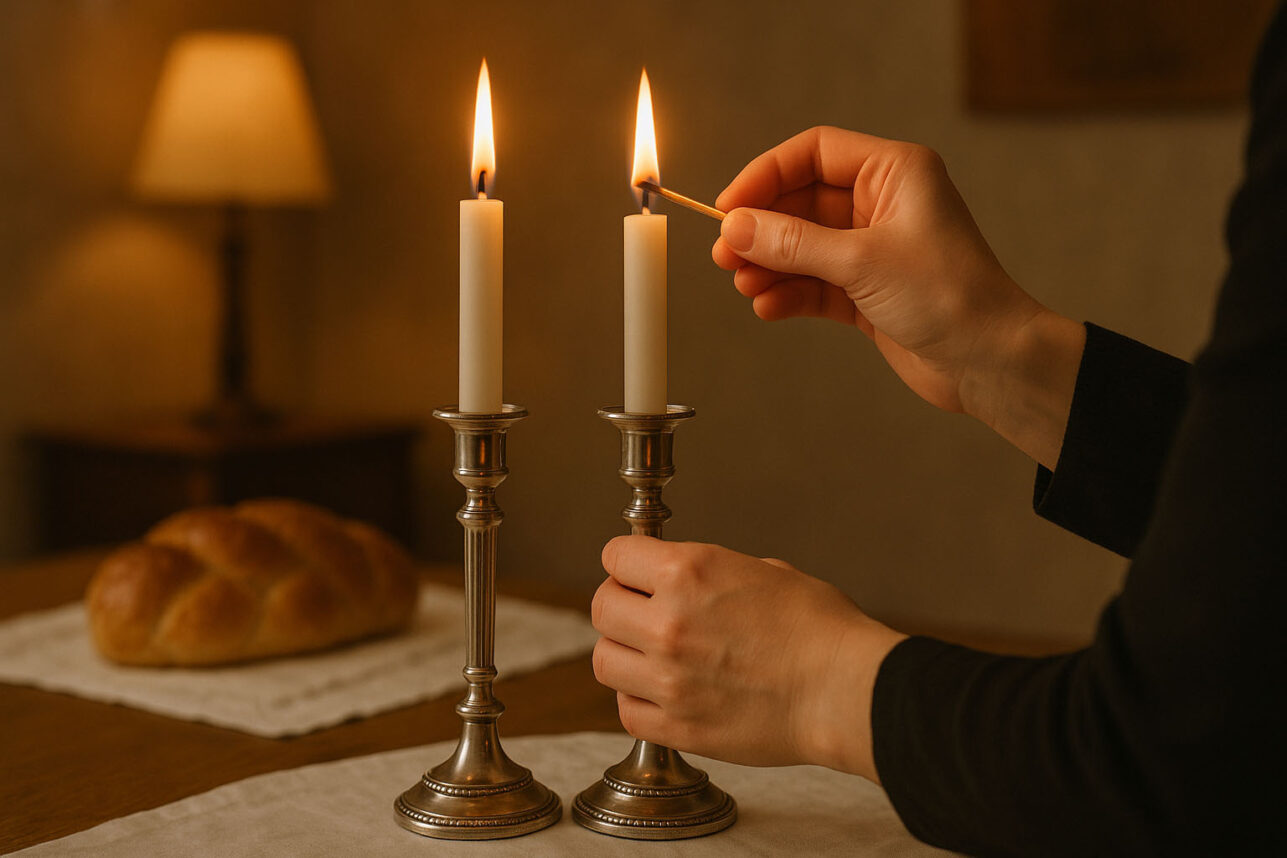
The statement from the Nice Chabad concluded: “Men should put on tefillin. Women and girls should light Shabbat candles. Everyone should add in giving tzedakah. … Shabbat Shalom to all.”

As terror unfolded in Nice, local rabbis jumped to action Read More »

The Visage is Mike Pence, But the Voice is Nutty Newt Gingrich

Indiana Governor Mike Pence is Despicable Donald’s VP choice, but former House Speaker Newt Gingrich was only a heart beat removed by a heart beat from the 70 year-old Trump choice as his Oval Office understudy/apprentice.

Here is what Newt has now said on Hannity’s show on Fox: “Let me be as blunt and direct as I can be. Western civilization is in a war. We should frankly test every person here who is of a Muslim background, and if they believe in Sharia, they should be deported. Sharia is incompatible with Western civilization. Modern Muslims who have given up Sharia, glad to have them as citizens. Perfectly happy to have them next door.”

Does Newt intend to apply this unconstitutional religious test for deportation only to non-citizens or citizens, too? A distinction without a difference: with Newt as President Trump’s Chief of Staff, he can use the powers of the presidency—and the FBI—to intimidate Muslims citizens who aren’t ideologically kosher into leaving.

As a historian, I learned about proposals during  and after WWI to deport “Jewish Bolsheviks” like Emma Goldman  to an American Devil’s Island, stripped of any and all citizenship. In comparison, what was actually done to Japanese Americans during WWII was humane.

I find Sharia Law retrograde, extremely distasteful, and—in unadulterated forms—wholly incompatible with American constitutional values. However, Muslims in America, citizens and legal residents, have a right to believe what they want provided that they don’t act out their beliefs violently.

We ought to be concerned that about a quarter of American Muslims ages 18 to 29 according to a new poll approve of suicide bombings—not whether they also are Sharia addicts. Sharia, by the way, denies separation of church and state and religious equality—but does not per se preach terrorist violence.

Historians in future—if the Orangefuhrer doesn’t stifle them—will probably look back on 2016 not as a presidential election year but as a national nervous breakdown. If Trump wins—not impossible—the worst, most dangerous of the inmates will have taken over the asylum.

The Visage is Mike Pence, But the Voice is Nutty Newt Gingrich Read More »

USC Chabad House burglarized

Shortly after midnight on July 13, a burglar broke into the Rohr Chabad Jewish Student Center at USC, stealing thousands of dollars worth of valuables, including computers, t’filllin and more. 

Rabbi Dov Wagner, who runs the USC Chabad Center with his wife, Runya, said he is grateful for the outpouring of community support in the wake of the incident, which was captured on security cameras installed outside the Chabad house.

“The events are very unfortunate and sad, but really our students have been incredible, our alumni, parents are coming out with support and taking it personally, as if their own place…their own home… were invaded,” Wagner said in a phone interview on the morning of July 15.    

The USC Chabad Center served approximately 1,500 students during the 2015-2016 academic school year, Wagner said.

The male burglar, who can be seen on the video, appears to have acted alone. He made off with goods worth between $8,000 and $10,000, according to Wagner. 

The Los Angeles Police Department could not be reached immediately for comment. 

The Chabad center is located near the university’s fraternity row, at 2713 Severance St. Currently undergoing construction, the house was empty at the time of the robbery, though it normally functions as a residence for about seven USC students, Wagner said.

Chabad has released information to the public about the incident in the hope that someone will come forward with information about the robbery that could lead to the burglar’s arrest. No arrest had been made as of press time. 

In a phone interview, Wagner said he does not think the Chabad was targeted specifically.

The Chabad offers weekly Shabbat dinners, organizes holiday events and more. In the wake of the incident, Chabad is working with the Los Angeles Police Department’s Southwest Community Police Station, according to an email from a Chabad spokesperson.

Meanwhile, USC alumni, as well as parents of current students, have shown support for the Chabad by donating funds to the center. More than $3,000 has been raised, and there is currently a GoFundMe campaign where people can donate additional, tax-deductible funds to the nonprofit center.

According to Wagner, the burglar arrived at the house around midnight, broke into the residence—presumably through an open window, Wagner said—and remained inside until about 1:30 a.m.

“The guy opened every door and closet in the place,” Wagner said.

The burglar left the house temporarily, then returned with a Dodge Caliber around 5 a.m. Security camera footage captures him loading items from the house into the trunk of the vehicle. Footage also shows the burglar driving away from the house at approximately 5:30 a.m.

A couple of hours after the burglar left, at around 7:30 that morning, construction workers discovered that their tools had been stolen. Chabad reported the incident to police at approximately 9 a.m., Wagner said.

USC Chabad House burglarized Read More »