fbpx

November 19, 2015

BBYO teens on front lines of the last survivor generation

Michele Rodri was 7 years old when a pair of Nazi storm troopers plucked her out of a game of hopscotch outside her Paris home. 
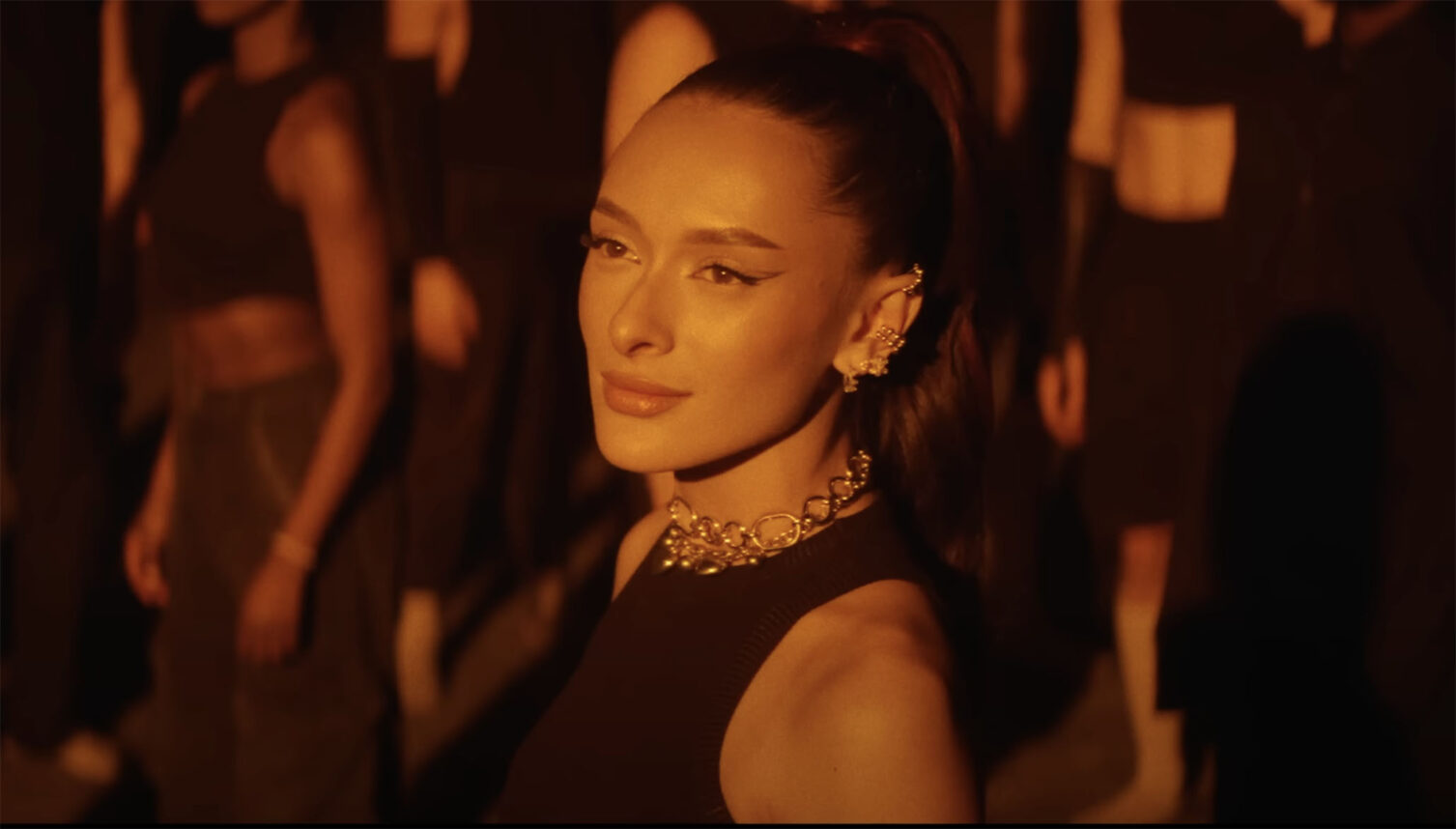
Telling her story to a group of Southern California teens at Shabbat dinner on the evening of Nov. 6, Rodri lifted her plastic plate to demonstrate the ease with which they hoisted her into the back of a truck.

“I can only tell you that I grew up very quickly at that point,” she said.

Rodri’s childhood could hardly be more different from that of the young adults sitting around her in the mess hall of Camp Alonim kicking off a retreat for the Jewish youth organization BBYO.

The 160-some teens, who spent the weekend on the Simi Valley campus, are boisterously Jewish. After dinner, they loudly recited prayers peppered with joke lyrics picked up over years of practice. The 16 Holocaust survivors who joined them that night were infants when the war broke out and had had no such luxury.

These survivors were mostly old hands on the Los Angeles lecture circuit, although Samara Hutman, executive director of the Los Angeles Museum of the Holocaust (LAMOTH), noted a few new faces.

The events, a partnership between BBYO and LAMOTH, dropped the classroom setting in favor of more informal interaction. Survivors joined the high-schoolers for a challah bake, followed by dinner and a group discussion. Millennials of varying denominations hung out with Jews several generations apart from them.

Rodri’s dark recounting — “The kids that were sick, they wouldn’t bother with them, they would just shoot them” — brought from her audience mostly shocked silence and exclamations of “Oh my God!” but the silences were hardly awkward ones.

After her story and a dinner of boiled carrots and chicken drenched in barbecue sauce — camp food — a slight girl in a hoodie came over from another table just to give Rodri a hug. They had met earlier while braiding challah.

“See how they react?” Rodri said after her new friend walked away. 

The event was a ritual closing of the circle between “the future of the Jewish people and the elders of the Jewish story,” Hutman said.

Dinner was followed by an induction service. Formalities were recited, during which teen leaders invoked the “power vested in us” to endow the survivors with honorary membership “to the BBYO family.”

Teens and nonagenarians threw their arms over each other’s shoulders for renditions of “Hinei Mah Tov” and “Shehecheyanu.”

Survivor Betty Cohen holds hands with a high-schooler during an after-dinner panel.

The evening was an exercise in Holocaust memory that sought to impress something more powerful, though more fleeting, than stories recorded in books and videos. Some of the survivors have recorded their stories with Steven Spielberg’s Shoah Foundation; they play continuously on a wall of monitors at LAMOTH’s Pan Pacific Park campus.

But the teens came for something more than just a historical account: a face-to-face connection with a rapidly receding past.

One teen, Gillian Shapiro, compared the evening’s events with her visit this past summer to the Anne Frank House in Amsterdam.

“Even that didn’t relate with seeing you guys here tonight,” she told a panel of survivors that convened after dinner.

Tenth-grader Liam Cohen had also traveled to Amsterdam, recalling that nobody was able to point him to the Holocaust museum, despite being directly in front of it.

“I think people should be taught and should know what that building is,” he told the audience, speaking into a microphone. 

The event proceeded with a frank acknowledgement that these were among the last teens who might have the opportunity to interact with living Holocaust survivors.

“We’re going to leave you in not too long — not too short, I hope,” one survivor, Dana Schwartz, told the audience. “Where are you going?” another interrupted before allowing her to finish.

“I’m having a heck of a time here,” Schwartz said.

Survivor Dana Schwartz (center) prepares challah with BBYO teens. 

The teens recognize the responsibility assigned to them.

“Being a part of the last generation that will ever hear Holocaust survivors speak, we have to be active in that,” said Justin Willamson, one of the two Southern California presidents of BBYO.

During a group photo-op, a volunteer photographer brandished her iPhone and called out, “This one’s for Snapchat!” 

The irony was palpable, at least for the teens who know how the app works. Picture messages sent out over the social media platform disappear almost as quickly as they are viewed — savored in the moment, and then gone.

But despite the shrieks and jeers of teenagers in their element, the ethos of the night was not lost on the seniors.

“We are thrilled to see your joy, your exuberance and your Jewishness,” Schwartz said. “We all thought we were the only ones to survive — and here you are.”

 “The Jewish people have to stay together, because we lost 6 million people,” Rodri told her half-dozen dinner companions, emphasizing the importance of interacting with and ultimately marrying other Jews. 

 “I’m not saying you have to make 6 million more Jews,” she said, letting the sentence trail off. 

As the night came to an end, Rodri gravitated back to Hutman, the museum director, with whom she’d gotten a ride earlier from Santa Monica through legendary Friday traffic on the 405 Freeway.

 “You see? You walk in, you don’t know anybody,” she told Hutman. “You walk out, you have a ton of friends.”

BBYO teens on front lines of the last survivor generation Read More »

An Oscar overview of all things Semitic

How foreign volunteers fought to get the fledgling Israeli Air Force off the ground and the antics of the Last of the Red Hot Mamas are two of the storylines explored by documentary filmmakers vying for a 2016 Oscar.

Of the 124 documentary features competing in a category that usually plays second fiddle to Hollywood blockbusters and glamorous stars, at least 10 percent deal with themes or personalities of special interest to Jewish (and pro-Semitic) viewers.

In “Above and Beyond,” archival footage and interviews re-create the tense days of 1948, when pilots, navigators, bombardiers and radio operators from English-speaking countries smuggled in and flew planes to form the nucleus of the Israeli Air Force.

The emphasis is on a different war and mood in “Censored Voices,” in which Israeli soldiers who fought in the Six-Day War talk about their experiences immediately after returning to their kibbutzim in 1967.

Far from boasting about their miraculous victory over the forces of five Arab nations, the returning veterans dwell mainly on the brutalizing effect of war on the victors.

The British documentary “Amy” probes the life and early death of singer-songwriter Amy Winehouse, described by her brother as “a little Jewish kid from North London with a big talent.”

Her meteoric career and tortured life was cut short at 27 through drug abuse and alcohol poisoning.

Among the greatest gifts Jewish immigrants brought to the New World is the old-time deli, and the film “Deli Man” proves it by touring some of the best establishments from Broadway to Hollywood to Montreal.

David “Ziggy” Gruber runs Kenny & Ziggy’s, in the documentary “Deli Man.” Photo courtesey of Cohen Media Group

“The Diplomat” honors the career of the late U.S. Ambassador Richard Holbrooke, who, despite his Anglo last name, was the son of Jewish refugees from Germany and Poland. In the greatest achievement of his distinguished service, Holbrooke brokered the 1995 peace treaty among warring factions in the Balkans.

Jan Karski was a Polish Catholic and resistance fighter who sneaked into the Warsaw Ghetto to witness for himself the fate of Jews under Nazi rule. “Karski and the Lords of Humanity” tracks his desperate mission to convince British and American leaders, including a face-to-face meeting with President Franklin D. Roosevelt, that unless they took action, the Jews of Europe would be exterminated.

“The Outrageous Sophie Tucker” chronicles the ups and downs of the title character, who transformed herself from immigrant girl Sonya Kalish into America’s top female entertainer in the 1930s. She got her start singing for the patrons of her parents’ kosher deli, before hitting the big time as the Last of the Red Hot Mamas.

As confidante of a who’s-who of Israeli prime ministers, Yehuda Avner has literally written the book on the country’s leadership and diplomacy. His writings yielded the earlier film “The Prime Ministers: The Pioneers,” which has now been followed up by the documentary “The Prime Ministers: Soldiers and Peacemakers,” focusing on the leadership of Yitzhak Rabin, Menachem Begin and Shimon Peres.

 “Rosenwald” honors the life and works of Julius Rosenwald, a son of German-Jewish immigrants and a high school dropout, who rose to become the head of Sears, Roebuck and Co. He spent a large part of his fortune on funding thousands of schools for Black students in the Jim Crow South of the early 1900s.

Henry Schoenker was born in the Polish town of Oswiecim, which the German occupiers renamed Auschwitz, and was the only member of his extended family to survive the Holocaust. Now deaf but unimpaired in voice and memory, he tells of fleeing from one hiding place to another in “The Touch of an Angel.” Amid a world indifference to the fate of Jews, Schoenker also encountered heroic strangers who risked their own lives to save those of hunted strangers.

Some Palestinian filmmakers apparently have realized that the absurd may cut even deeper than a knife. Based on an actual incident, “The Wanted 18” tells the story of an Arab village in Israel that decides to stop buying milk from Jews by purchasing 18 cows to make “intifada milk.” When some Israeli authorities declare the cows a national security threat, the villagers hide the animals.

The documentary is a Palestinian-Canadian co-production, created by Muslim, Christian and Jewish filmmakers.

Hans Frank and Otto von Wachter were Hitler’s two top deputies in Poland, responsible for the killing of millions of Jews and Poles. In the film “What Our Fathers Did: A Nazi Legacy,” human rights lawyer Philippe Sands, himself raised by survivors, takes the sons — Niklas Frank and Horst von Wachter — back to the scenes of their fathers’ crimes and witnesses their different reactions.

In addition to the longer feature documentaries listed, a separate Academy of Motion Picture Arts and Sciences category applies to short documentaries. The list of 74 entries already has been whittled down to 10 semifinalists, including “Claude Lanzmann: Spectres of the Shoah.”

In the short, French director Lanzmann dissects the making of his epic, 9 1/2-hour documentary, “Shoah,” which was 11 years in the making and was released in 1985.

The Journal will, in a follow-up article, survey some of the foreign-language films submitted by 81 countries competing for Oscar honors.

The 88th Academy Award nominations will be announced on Jan. 14. The Oscar winners will deliver their acceptance remarks on the evening of Feb. 28.

An Oscar overview of all things Semitic Read More »