fbpx

November 10, 2010

Calendar Picks and Clicks: Nov. 11-19, 2010

THU | NOV 11

(SYMPOSIUM)
The 34th annual Catholic-Jewish Women’s Conference, a day of dialogue, music and group discussions, addresses the topic “Who is My Neighbor? Do We Practice What We Preach?” Guest speakers include Rabbi Denise L. Eger, president of Southern California Board of Rabbis, and Cecilia Gonzalez-Andrieu, an assistant professor of theological studies at Loyola Marymount University. Thu. 8:30 a.m.-3:30 p.m. $25 (students), $40 (general). Costs include breakfast, box lunch and beverages. Wilshire Blvd Temple, 3664 Wilshire Blvd., Los Angeles. (818) 884-5532. sites.google.com/site/cjwcla/Home.

(POLITICS)
J Street President Jeremy Ben-Ami and other pro-Israel, pro-peace leaders gather tonight for the J Street Los Angeles Kickoff Celebration. Schmooze with J Street L.A. leaders and enjoy a cocktail hour. Thu. 7-9 p.m. Free. Taglyan Cultural Center, 1201 N. Vine St., Hollywood. jstreet.org/losangeles.

(DISCUSSION)
Writer-director Nora Ephron (“I Remember Nothing: And Other Reflections”) appears in conversation with screenwriter Robin Swicord (“The Curious Case of Benjamin Button”). Thu. 7:30 p.m. $20. Writers Guild Theater, 135 S. Doheny Drive, Beverly Hills. writersblocpresents.com.


SAT | NOV 13

(MUSIC)
Learn about Maestro, an Israeli nonprofit that works with world-class musicians to bring music and the arts to underprivileged children in Israel, during a Shabbat event at East Hollywood’s Temple Knesset Israel. Sat. 10:30 a.m.-1 p.m. Free. Temple Knesset Israel, 1260 N. Vermont Ave., Los Angeles. (818) 995-0693.

(MUSIC)
Chasidic pop star Matisyahu, best known for his hit “King Without a Crown,” blends reggae with Middle Eastern rhythms and American pop, conjuring up a fresh medley of unique and powerful beats. Sat. 8 p.m. $25-$45. The Luckman Fine Arts Complex, 5151 State University Drive, Los Angeles. (323) 343-6610. luckmanarts.org.

(MUSIC)
The Vox Femina Los Angeles choral ensemble launches a new season with a one-night-only performance, “Vox Judaica.” Singers explore a variety of Judaic genres — from sacred music to Sephardic and Ashkenazic folk — with highlights including a musical piece set to words from Anne Frank’s diary. Cantor Mark Saltzman of Congregation Kol Ami joins the ensemble as a special guest. Sat. 8 p.m. $25 (advance), $30 (door). Zipper Concert Hall, The Colburn School, 200 S. Grand Ave., Los Angeles. (310) 922-0025. voxfeminala.org.


SUN | NOV 14

(ISRAEL)
Israel in Focus, a community conference, features discussions with “Arab Lobby” author Mitchel Bard; Itamar Marcus, founder and director of Palestinian Media Watch; Israeli military expert Elliot Chodoff; Roberta Seid, StandWithUs research and education director; Neil Lazarus, a communications consultant; and a special guest. Sun. 9 a.m.-4 p.m. $65 (includes breakfast and lunch). Temple Beth Am, 1039 S. La Cienega Blvd., Los Angeles. (310) 836-6140. standwithus.com.

(FILM)
Don’t miss the last of The Long Beach Jewish Film Festival. Highlights today include “Inside Hana’s Suitcase,” a docudrama about how a suitcase, which belonged to a girl who died in Auschwitz, takes a Japanese educator and her students on a journey to discover what happened to Hana Brady, and “The Yankles,” the comedic tale of a former Major Leaguer who tries to help a yeshiva baseball squad. Sun. Various times. $10 per film. Alpert Jewish Community Center, 3801 E. Willow St., Long Beach. (562) 426-7601. alpertjcc.org.

(MUSIC)
The Consort Singers perform the music of Austrian composer Walter Arlen during Loyola Marymount University’s Kristallnacht commemoration, “Remembering the Holocaust: Music as Memorial.” The event, co-sponsored by The “1939” Club, also features special guest Claudia Stevens, a performing artist and playwright. Sun. 1 p.m. Free. Loyola Marymount University, University Hall, 1 LMU Drive, Los Angeles. (310) 338-7850. lmu.edu.


MON | NOV 15

(FILM)
Follow the lives of sibling songwriting team Robert and Richard Sherman, known for Disney classics like “A Spoonful of Sugar” and “It’s a Small World (After All),” in the documentary, “The Boys: The Sherman Brothers’ Story,” which screens today as part of the Los Angeles Jewish Film Festival. Their sons, Gregory Sherman and Jeffrey Sherman, directed the film and will take part in a Q&A with Richard Sherman following the screening. Rabbi Jerry Cutler of Creative Arts Temple moderates the discussion. Mon. 7:30 p.m. $12. Laemmle’s Music Hall, 9026 Wilshire Blvd., Los Angeles. (800) 838-3006. lajfilmfest.org.


TUE | NOV 16

(LECTURE)
The Soviet Jewish underground and American Jewish communities helped more than 1 million Soviet Jews escape in the decades that followed World War II. Journalist Gal Beckerman offers us a narrative history of the Soviet Jewry movement with his new book, “When they Come for Us, We’ll Be Gone: The Epic Struggle to Save Soviet Jewry.” Beckerman appears in conversation with L.A. County Supervisor Zev Yaroslavsky, who championed the Soviet Jewish cause in the late 1960s. A book signing follows. Tue. 7:30 p.m. $35 (includes a copy of the book). American Jewish University, 15600 Mulholland Drive, Los Angeles. (310) 440-1548. ajula.edu.


WED | NOV 17

(DISCUSSION)
Yossi Klein Halevi, a contributing editor and Israel correspondent for The New Republic, and Rabbi Edward Feinstein of Valley Beth Shalom, discuss “Shifting Stands: The Evolving Landscape of Israel and the Middle East.” Wed. 7 p.m. Free (advance registration required). Valley Beth Shalom, 15739 Ventura Blvd., Encino. (818) 788-6000. vbs.org.


THU | NOV 18

(EDUCATION)
Ruth Weisberg, former dean of the USC Roski School of Fine Arts and author of “The Open Door: A Passover Haggadah,” lectures on “Art and the Haggadah,” which kicks off The Board of Rabbis of Southern California’s yearlong community learning program, One People, One Book. This year’s program focuses on various themes in Geraldine Brooks’ “People of the Book,” a historical novel that explores the origins of the Sarajevo Haggadah, one of the world’s oldest haggadot. Thu. 7:30-9:30 p.m. $5 (kosher refreshments provided). University Synagogue, 11960 W. Sunset Blvd., Los Angeles. (323) 761-8600. boardofrabbis.com.


FRI | NOV 19

(ART)>
Burton Morris does art post-Pop style in a new exhibition of paintings. Join the artist for an opening reception from 5 to 8 p.m. Fri. Through Dec. 19. 10 a.m.-5 p.m. (regular hours). Free. Hamilton-Selway Fine Art, 8678 Melrose Ave., West Hollywood. (310) 657-1711. burtonmorris.com

Calendar Picks and Clicks: Nov. 11-19, 2010 Read More »

Lonely man of thought

The elderly man was hunched over, walking slowly with the help of a cane toward a small stage where a table, chair and microphone awaited him. The medium-size conference hall was utterly silent despite being packed with people, most of whom knew him well, some of them wondering, perhaps, whether he would make it up the steps to the stage. I was one of those people, sitting in the back. I had waited years for this moment — the chance to be in Jerusalem at the Shalom Hartman Institute and listen to the words of its founder, Rabbi David Hartman.

He owned the room for three hours, doing a verbal jazz session that blended philosophical rants and challenges to Orthodox dogmas, talmudic insights and silly recollections of his childhood in Montreal. I scribbled furiously, filling a whole notebook with the rabbi’s rebellious musings. There was one thing he said, however, that stood out and that I couldn’t get out of my mind:

“I’m not my son,” Rabbi Hartman said, “and my son is not me.”

Hartman was talking about his disagreements with men he felt very close to: his teacher and mentor Rabbi Joseph Soloveitchik, the founder and guiding light of the Modern Orthodox movement; and the great Maimonides, about whom Hartman has written extensively. He was telling us that you can love and admire someone but still disagree with that person — that being a follower doesn’t mean being a blind follower.

And that includes the relationship between father and son.

Two years later, that son, Rabbi Donniel Hartman, the man who has taken the institute to the next level and made it an intellectual force in the Jewish world, was sitting in my living room and sharing his own philosophical musings. He was on a U.S. visit to drum up support for the many initiatives of the institute, which is a combination think tank, nerve center and study retreat for all things deep and Jewish.

Donniel Hartman can’t stand anything easy and quick; he might have lasted 30 seconds in an ad agency. He thinks in long form. His latest mastermind, called the Israel Engagement Project, includes a DVD set that features some of the top Zionist thinkers in Israel engaging the complex subject of Israel and Jewish values. He hopes it will become the basis for a national conversation in the American Jewish community.

If you have a short attention span, watch out: The DVD set is 15 hours long.

Donniel Hartman embodies things that are usually perceived as mutually exclusive: a charismatic speaker who shies away from sound bites; an Orthodox rabbi who legitimizes other branches of Judaism; a fervent Zionist who is deeply liberal; a centrist with passion; a theorist who is pragmatic; a thinker who can act.

A friend of his once remarked that “he lives at the meeting point of conflict.”

He’s the only liberal I know who has actually called for an “end to Charedi bashing,” which he did in a recent op-ed on Ynet. He’s pragmatic enough to recognize that the Charedim have become “central players in Israel’s social and political environment,” while also high-minded enough to see that the Zionist majority must not cede the ideological high ground in the debate, lest you “undermine your own position and make it impossible to have any impact on those with whom you are arguing.”

This ability to embrace different polarities has been a key part of the Hartman Institute’s success. When I was there for a study program two summers ago, I saw lay and rabbinic leaders from all denominations mingling together. It’s true, they were all of the “open-minded” variety, but that’s precisely the point of the institute — to nurture and grow this so-called “segment of the open-minded.”

This is one the great ironies of the Hartman Institute. They promote the kind of thinking that encourages you to go off and think for yourself. They are rebels against dogma, enemies of the status quo. They may be as Torah observant as any Orthodox Jew, but within this Torah context, they are agitators.

Before he left my house, I had to ask Donniel if he ever “broke” with his famous father on any issue. He came up with two issues on which they’ve had some disagreements: the “validity of secular Judaism” and “Can there be a Judaism without God?” Donniel is more of a pure pluralist than his father, and he puts a greater value on what he calls a “Judaism of belonging to a people,” whether one believes in God or not.

The root of all these disagreements — this family tradition of “thinking for oneself” — originates at the Hartman dinner table. Growing up, they were all encouraged to challenge the status quo. In fact, Donniel’s sister, Tova, is one of the founders of the egalitarian Shira Hadasha minyan in Jerusalem.

Donniel recalls that his father’s favorite question was: “What do you think?”

He remembers one of the first times he heard the question. As soon as he started answering, “Rashi says …,” his father interrupted him.

“I didn’t ask you what Rashi said,” the father told him. “I asked you what you think.”

Lonely man of thought Read More »

The Circuit: ADL honors NBC Univeral Chair Jeff Gaspin

The Anti-Defamation League (ADL) honored NBC Universal Chair Jeff Gaspin with its Humanitarian Award during the Entertainment Industry Awards at the Beverly Wilshire Hotel on Oct. 7. “America’s Got Talent” judge Howie Mandel served as emcee, and “Chuck” star Zachary Levi presented the award to Gaspin. Entertainment luminaries among the nearly 400 guests included Universal Studios President and COO Ron Meyer, producer Mark Ordesky, Amy Poehler (“Parks and Recreation”), Jason Ritter (“The Event”), Mary McCormack (“In Plain Sight”) and Peter Gallagher (“Covert Affairs”). The event, which featured a performance by “America’s Got Talent” 2010 winner Michael Grimm, raised $600,000.

From left: ADL Entertainment Industry Committee Chair Mark Ordesky, Humanitarian Award honoree Jeff Gaspin, ADL Regional Director Amanda Susskind, emcee Howie Mandel and ADL Regional Board Chair Alan Weil. Photos by Michael Kovac/FilmMagic

From left: From TV’s “Real Housewives of Beverly Hills”: Kim Richards, Adrienne Maloof, Camille Grammer, Lisa Vanderpump and Taylor Armstrong.

From left: Jason Ritter, Jeff Gaspin and Zachary Levi.

Corbin Bernsen and Amanda Pays.

Emcee Howie Mandel

Please send high-resolution photos and a press release with caption information to {encode=”circuit@jewishjournal.com” title=”circuit@jewishjournal.com”}.

The Circuit: ADL honors NBC Univeral Chair Jeff Gaspin Read More »

A creative twist on Chanukah giving

When I walked into our local Kmart the night after Labor Day, Christmas music already beckoned shoppers to do what they do best during the great white winter holiday: consume. Traditional Christians probably decry the way in which the focus of their holy day has shifted away from their Messiah toward consumerism. Jewish folks decry this as well (and certainly this Jewish folk does) because it pressures us to celebrate our less significant winter holiday, Chanukah, in a similar way.

The irony couldn’t be more striking. Chanukah is the holiday that celebrates Jewish distinctiveness over assimilation. The Maccabees — zealots to some, freedom fighters to others — fought to preserve a sense of Jewish distinctiveness in the face of the Assyrian Greeks and other Jews who were attracted to their ways.

So in order to really celebrate Chanukah this year, let’s ask ourselves: What makes us Jews distinct? How can we celebrate our distinctiveness in ways that strengthen our own identities and the Jewish identity of our families? How can we bring the best of what Judaism has to offer to our communities and to the larger society?

The concept of tzedakah — charitable giving — is one of Judaism’s great contributions to the world. Ethical monotheism, the Ten Commandments and the concept of Shabbat rank way up there, too. Jewish tradition posits giving tzedakah as an obligation (according to Maimonides, 20 percent of your income is average, with 10 percent as the minimum) and holds that this obligation rests on everybody, not just the well-off (the Shulchan Arukh states that “even one who is supported by tzedakah is required to give from what he has been given”). This offers a paradigm for a just and supportive society that holds rampant consumerism in check.

So I propose that this Chanukah, instead of pouring our creative energies into giving material gifts, we use that creativity to dedicate each night and each candle to a different aspect of giving.

Candle 1: Have an intimate dinner with family and friends. Learn about the issues of most concern to them, then set aside the money you would spend on a material gift to make a contribution to that organization or cause in their honor.

Candle 2: Make a site visit. Follow up on the first night’s activity and, if the cause is a local one, arrange to go on a site visit together to learn more about the organization’s work and how you can get involved. This activity is especially good for parents with young children.

Candle 3: Be on the lookout for charity events in your area. Plan ahead and bring a buddy to attend the event, and dedicate yourself to expanding your horizons on issues in the world in need of addressing.

Candle 4: Think about someone in your life in immediate need. It might be someone who just had a baby and could use a home-cooked meal. It might be someone in the hospital who could use a visit. Bring them Chanukah-themed treats such as cookies in the shape of dreidels or homemade Chanukah cards.

Candle 5: Get your charitable giving in order. If eight nights of eating latkes and jelly doughnuts becomes too much for you, take the night off and plan ahead for the coming fiscal year. What are the issue areas to which you want to commit yourself this year? How much time or money do you want to give? Make a plan.

Candle 6: Give more than your money and time — give of your values. Think about a value that is important to you that you haven’t had time to develop (does the refrain “too busy” ring a bell?) and do an activity that reflects that value with a spouse, child or friend. If it is caring for the environment, find a lecture, watch a movie or canvass for an environmental organization for the day. If the value is eating nutritious food, take a trip to your local grocer to buy nutritious food and cook it together with a friend.

Candle 7: Think about someone else in your life who is too busy to think about holiday presents. Give them a break. For a busy parent, this could mean providing child care; for a busy professional, it could be giving your time as a coach.

Candle 8: Have a Chanukah party and ask each of your guests to bring a gift that you can pass on to a local charity — a nonperishable food, a children’s toy, books or clothing.

Dasee Berkowitz is a Jewish life-cycle consultant in New York.

A creative twist on Chanukah giving Read More »

Small change

It was nearly 5 o’clock when Susan realized she didn’t have the fresh basil and black olives she needed for the chicken dish she was preparing for dinner. Guests were arriving at 7 and she still needed to shower and change. Scribbling the few items down on a scrap of paper, she dashed out of the house — hair a mess, T-shirt stained with olive oil. 

She flew from the parking lot into the store and headed straight for the spice aisle.

What was it she needed again? 

Shuffling through old receipts and coupons in her purse, it hit her. She threw the list in the trash can outside the store along with a used tissue that was in her pocket. 

Back outside, Susan began to rummage through the garbage. At first, she gingerly set aside the greasy bags and magazines stained with food. But it didn’t take long to abandon her squeamishness and pride and engage in a full-out search-and-rescue mission for the list. 

Which was right about the time a good-looking, middle-aged man tapped her on the shoulder.

“Excuse me, miss, can I help you?” he asked solicitously.

Susan hoisted herself up, garbage clinging to her sleeve. Before she could answer, he continued.

“I’d like to give you something, to help you out.”

“Oh no, really, I’m fine,” she stammered. “Really, I’m doing great.”

“No, no, I insist. Here, take this,” he said somewhat gallantly and thrust some coins into her hand before walking away.

Susan closed her mouth and opened her palm. In it was 48 cents, mostly dimes and nickels.

Her humiliation turned to shame, but then another feeling swelled inside her. 

“Forty-eight cents? That’s the best you could do? You could have at least given me a dollar!” she fumed as she marched back into the store with the list clenched in her other hand.

When Susan told me this story, I laughed at first. But as she went on, I understood the scenario differently.

How we treat a beggar, bag lady or homeless person is an issue that goes to the heart of who we are as human beings. Do we offer a smile, a kind word, some spare change? Do we give her a sandwich or a coupon for McDonalds?  Do we dodge the situation altogether by avoiding eye contact or pretending to be talking on our cell phone?

There is a concept in Hebrew expressed by the words b’tzelem Elohim. It means that each of us is created “in the image of God.” What does it mean to be created in God’s image? The rabbis answered that question with words that help us understand the essence of what it means to be human. Simply stated, it is this: that each of us is unique, of infinite value and of equal worth.

These three ideas — that we are all unique, equal and of immeasurable value — can and should influence our actions and relationships. From encountering a bag lady to addressing our children, from dealing with our own prejudices to listening to people we don’t like or agree with — b’tzelem Elohim is meant to keep us on track so that we treat each person with the respect and dignity they deserve as human beings. Judaism teaches that when we honor others in this way, we also honor God.

So what made Susan so upset? The fact that by giving her less than 50 cents, her “benefactor” did something more damaging than helpful: He robbed her of her dignity. That gesture made her feel small and unworthy.

Since the fateful afternoon of the trash can, Susan keeps a roll of dollar bills in her purse. Now she gives — not $1, but $2 — to the woman in front of Walgreens or the newspaper man on the corner. Why?

“Because even though a dollar might be enough to show my respect, I know that two will make them feel much better. And really, it won’t make much of a difference to me in the long run, except in how I feel about myself.” 

There are many ways we can respond to others in need. Some would argue that it is best not to give to individuals who ask for help on the street but rather, to give to organizations like the local food banks or homeless shelters that support them. However we choose to give, we should recognize that it is an opportunity to do more than just hand over a few dollars. It is a chance to engage another human being and dignify his or her value and existence.

Small change Read More »

Jerry B. Epstein: Developer, philanthropist, irrepressible adviser

Jerry B. Epstein is probably best-known as the developer of two apartment complexes in Marina del Rey. He and his wife also have long been very generous supporters of Saint John’s Medical Center in Santa Monica. But as much money as Epstein has donated to his favored causes, which also include AIPAC and the Washington Institute for Near East Policy, some of his most notable contributions can’t be totaled up in dollars and cents.

That’s because Epstein, 87, has made something of a second, unpaid career out of offering advice on every topic under the sun, even when some of it is unwelcome.

First, a bit of background. Forty-five years ago, Epstein was one of the original developers of the “400 acres of water and 400 acres of land” — as he put it — that make up Marina del Rey. “It is the largest income-producing asset owned by the County of Los Angeles,” Epstein said of the unincorporated part of L.A. County that sits on the ocean’s edge, just south of Venice. “I’m the only one of the original developers who’s still above ground,” Epstein said.

That’s something of an understatement: Epstein comes into the office every day — after starting his day at 5:30 a.m. with a three-mile walk on the treadmill.

Born in Mount Vernon, N.Y., Epstein had never been west of the Allegheny Mountains before coming to California in May 1942, on his way to bombardier school. He flew in B-17 and B-29 bombers during World War II and remembers how his time in the service helped him mature. “It was amazing how much my parents had learned while I was away,” Epstein said, adding that he believes the United States should institute two years of mandatory service in the armed forces for all citizens. To “get your butt kicked a little bit,” Epstein said.

Epstein sneaks suggestions like this into every conversation. “The best way to be a sailor is to be invited aboard,” the accomplished seaman said at one point during lunch at the California Yacht Club. How had he and his wife, Pat, stayed happily married for over 60 years? “Two words: ‘Yes, dear,’ ” Epstein said. “And that goes for both the husband and the wife.” Even his reflective comments often feel like gentle nudges. If he were starting his career over again today, he said, he’d go to law school. “It prepares you for any profession. It teaches you to take nothing for granted, and to research everything.”

Epstein has held a number of powerful public advisory positions, and he doesn’t seem to care about flying below the radar or worry about ruffling feathers. Until earlier this year, he served as president of the Los Angeles State Building Authority, the three-person body charged with planning, financing and overseeing construction and management of state office buildings downtown. When, in the summer of 2009, Gov. Arnold Schwarzenegger and the California legislature announced — without consulting Epstein or his colleagues — that they planned to sell 11 state-owned office buildings across the state, including two in Los Angeles, Epstein requested a review of the decision.

He made the request in February 2010. In March, after nearly 30 years serving on the building authority, Epstein was fired.

“At 86 years old, I am not personally concerned about having been fired,” Epstein wrote in a blunt opinion piece published in the Los Angeles Times in early April. By selling off these buildings, he argued, the governor and legislature might balance the 2009-10 state budget, but at a significant cost — namely, the rent state agencies located downtown would have to pay to the buildings’ new owners.

“Short-term solutions and accounting gimmicks like the proposed sale of state buildings have long-term consequences,” Epstein wrote in the Times. Nevertheless, last month, downtown L.A.’s Ronald Reagan and Junipero Serra state buildings were sold, along with nine other office buildings across the state, for a combined $2.33 billion.

It wasn’t the first time Epstein saw his advice go unheeded. From 1985 to 1990, Epstein served on the Los Angeles Board of Airport Commissioners, where he learned much about the inadequacy of airport security at Los Angeles International Airport (LAX) and around the country. In January 1999, when The New York Times reported that Federal Aviation Administration (FAA) agents disguised as passengers had repeatedly been able to smuggle guns, hand grenades and bombs past security guards, Epstein, in an op-ed in the L.A. Times, urged the FAA to improve the baggage screening process at airports, hire better-trained and better-paid security personnel, install new perimeter security fencing around runways and to tack on a “modest user fee” to every airline ticket to pay for security improvements.

Jane F. Garvey, then the FAA administrator, responded by calling Epstein’s account “outdated.” “Security today is better than it was two years ago, but more can and will be done,” Garvey said.

The deadliest airport security failure in history — 9/11 — was only two years away.

After the terror attacks, Epstein testified before the House Subcommittee on Aviation, repeating some of the suggestions he had made two years earlier, including the idea that “a trained special force” had to be established to help secure the country’s airports. Their members, Epstein said, needed to be “identified, trained and managed by one accountable agency.” Today, such an agency exists — the Transportation Security Administration.

Epstein has brought his advice-giving habit to his philanthropy as well. When Saint John’s had to completely rebuild its health center, which was badly damaged during the 1994 Northridge earthquake, Epstein’s developer expertise was invaluable. “He has built so many things in his life and been through, as he calls it, the drill,” Saint John’s Foundation Vice President Robert O. Klein said of Epstein. “When things did arise, he’d been down this path before so he was great counsel to the hospital leadership.”

It’s as if he can’t help but offer suggestions. In his testimony before the Congressional subcommittee on airport security in 2001, Epstein, who served on both the California Transportation Commission and the California High-Speed Rail Authority, said what the country needed most was a good high-speed railway network.

“While it is not the subject of this hearing,” Epstein told the committee, “I want to take this opportunity to urge you to consider what the rest of the world already knows, and what we in America are only just beginning to grasp: That high-speed rail can be the most effective mode of transportation for trips of 400 miles or less.”

Epstein made a similar comment over lunch recently. He said he still misses the Yellow Car and Red Car trolleys that once plied the streets of Los Angeles, and he hopes that someone will find a way to build a high-speed rail connection between the Palmdale airport and LAX.

“What we need is a czar like Robert Moses,” Epstein said. 

This comment earned Epstein a look of warning from his longtime chief of staff, David Levine, who was sitting next to him. Moses transformed New York City in the early decades of the 20th century by building parkways, bridges and other public works. He was also known for his ruthless dismissal of neighborhood opposition to his projects.

But Epstein would not be deterred. “Two thousand years ago, there was a perfect person,” Epstein said. “Since then, there hasn’t been one. Everyone’s record is mixed. My record is mixed.”

And who might that czar be?

“It would be me if I was 30 years younger,” Epstein said. Then he remembered his age. “Forty years younger.”

Jerry B. Epstein: Developer, philanthropist, irrepressible adviser Read More »

In spirit of Tikkun Olam, law firms do good by getting involved

How many lawyers does it take to build a library?

If you’re expecting a punch line, think again, because despite attorneys’ sharklike reputations, many law firms are generous charitable givers and many attorneys are getting personally involved in the charities their firms support.

A few years ago, Mitchell Silberberg & Knupp funded a library at Richland Avenue Elementary, a school with many economically disadvantaged families and disabled students right next to MS&K’s West Los Angeles office. In addition to paying for the library, about a dozen of the firm’s lawyers continue to volunteer as reading tutors for kids in the school through KOREH L.A., a literacy program sponsored by The Jewish Federation of Greater Los Angeles.

“Years ago, we didn’t do stuff like this. We just wrote checks for dinners and things like that. It was a big deal for us to begin to identify things directly where we could make a specific impact,” said Allan Cutrow, a partner at MS&K, who is the chair of KOREH L.A. and a past chair of The Jewish Community Foundation of Los Angeles.

MS&K recently gave $25,000 to Jewish Family Service’s Family Violence Project, netting $75,000 through a matching grant challenge — enough to, among other things, help staff an additional support group for domestic violence victims.

According to the Pro Bono Institute, major law firms on the West Coast dedicated an average of 4.47 percent of their hours to free legal work for the disadvantaged or nonprofit institutions in 2009. Last year, firms also donated an average of $240,000 to legal services organizations, though no data was available on donations to other institutions.

Cutrow says MS&K’s charitable foundation — funded by an internal firm tax on the partners, in addition to voluntary gifts — gives about $200,000 a year.

In 2009, The Jewish Federation’s Legal Division raised more than $3.75 million, and attorneys often participate in related social-action projects, such as Bet Tzedek’s Holocaust reparation clinics.

Liner Grode Stein Yankelevitz Sunshine Regenstreif & Taylor, a 50-lawyer firm in Westwood, has adopted South Central Scholars, a program that provides college guidance and scholarships to high-performing students living in challenging circumstances in South Los Angeles. The students in the Liner Scholarship Program have already been awarded scholarships at top universities but often need more money to close a tuition gap or pay for other expenses.

In addition to providing up to $5,000 annually for 10 new students every year, each student is paired with an attorney who serves as a mentor.

“Though we were doing good work before, we were not able to touch, taste or feel the impact of the resources we were directing. We really wanted to have the ability to do more than just give money, but to try to have a real, personal relationship with the people we were helping,” said Stuart Liner, a founding and managing partner of the firm, which donates about $400,000 to $500,000 annually to various causes. “It made it a learning experience for us as well — it’s a good centering opportunity for us to see where these kids are coming from.”

Often, the culture of giving comes from the top partners, sometimes going back to a firm’s origins.

At Holland and Knight, founder Chesterfield Smith is legendary.

“He built this firm not only as a very strong firm businesswise and commercially, but also around a core value of providing service back to the community, and that is something that continues to be an important value for us,” said Jerry Levine, executive partner of the Los Angeles office for Holland and Knight.

Holland and Knight houses offices and provides lawyers for Kids in Need of Defense, an organization that helps immigrant children, and the firm donates both hours and money to several other legal services funds. The firm sponsors essay contests for Native Americans and African Americans and a Holocaust-themed essay, and has awarded more than $1 million in scholarship money for top essay winners since 1995.

David Lash, who runs the pro bono services at O’Melveny and Myers in Century City and used to direct the nonprofit legal services organization Bet Tzedek, says he sees a shift away from charitable giving being the personal missions of specific partners.

“We’re not dependent on individuals anymore. … Being involved in philanthropy is more a part of the fabric of doing business,” Lash said. “How we do charity has become part of how we do business.”

O’Melveny pays for scholarships for low-income students and funds programs at O’Melveny Elementary School in San Fernando. Firm lawyers also mentor high-achieving students and scholarship recipients.

Lash says firms often support educational endeavors — attorneys understand the benefits of higher education. Most often, he said, firms support legal services organizations for the poor, both with pro bono hours and monetary donations. When he was at Bet Tzedek, law firms were his primary supporters.

“Law firms understand exactly what legal services organizations do, and that it is one of the most effective anti-poverty vehicles in the charitable world,” Lash said. “Lawyers can make a very unique impact in the fight against poverty that nobody else can make, because of their ability to go into court on behalf of poor people.”

In spirit of Tikkun Olam, law firms do good by getting involved Read More »

Iranian Jewish group’s ‘Project Jacob’ to spur commercial research in Israel

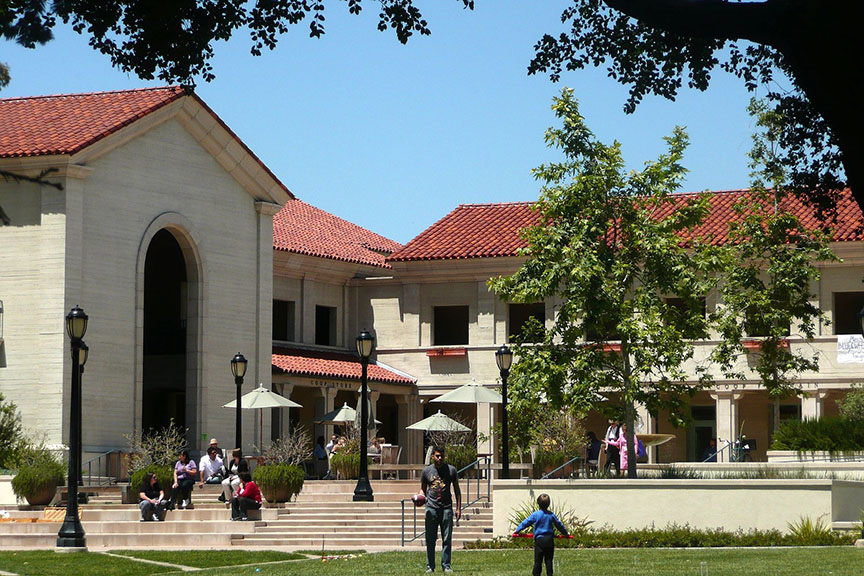
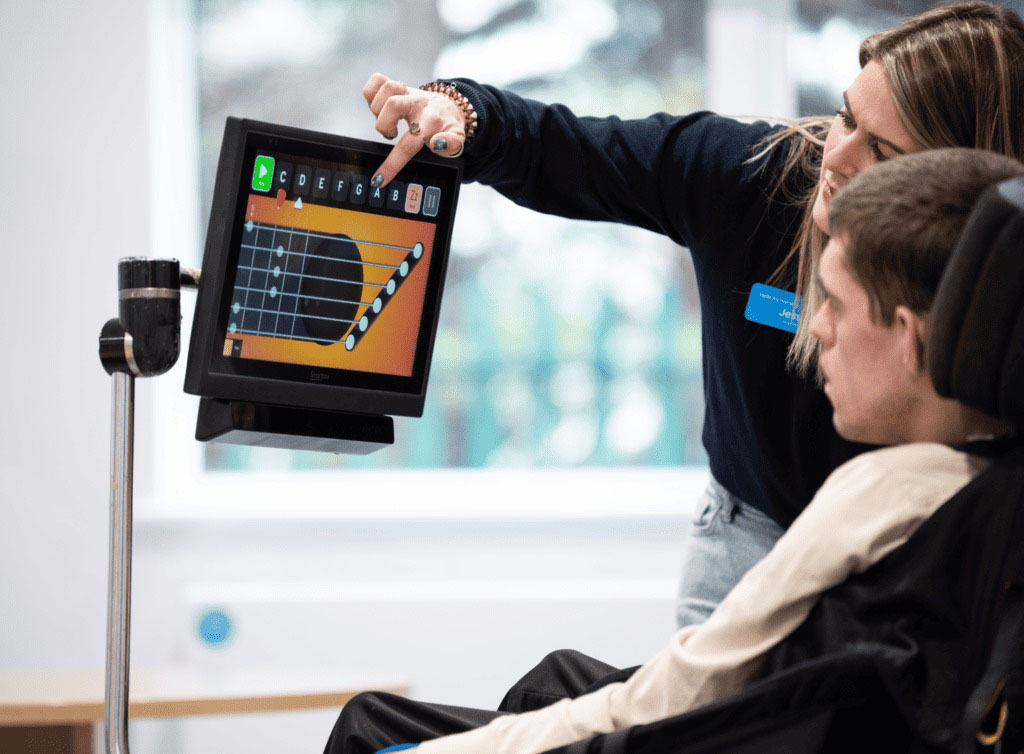
For a little more than three decades, the Los Angeles-based International Judea Foundation (known as SIAMAK), among the oldest and most active of the local Iranian Jewish nonprofits, was known for looking out for the needs of the Iranian Jewish community here and abroad. Now, as the local Iranian Jewish community has matured and prospered in Southern California, SIAMAK has turned some of its focus to Israel, creating a program to nurture and develop innovative medical, high-tech and alternative energy research at Israel’s Ben-Gurion University (BGU).

Dubbed “Project Jacob” after the biblical patriarch, the program is the brainchild of Dariush Fakheri, SIAMAK’s president, a businessman and entrepreneur who lives in Encino. With an initial investment of $200,000 last February, SIAMAK funded three projects at BGU.
“What we are trying to do with this program is have a substantial impact on Israel’s economy by investing in the country’s ‘oil wells’ — which [is what] Shimon Peres calls Israel’s human resources,” Fakheri said. “We are trying to fix the dilemma of too many incredible innovations and discoveries getting stuck in a lab due to limited resources.”

It is also an investment in Israel’s future. The decision to create Project Jacob came in response to the constant flow of Israelis coming to the United States seeking money for poverty-stricken Jews in Israel. Fakheri said SIAMAK’s goal with the new program is to “teach Israelis how to fish, rather than to give them fish,” to support innovation to create new industries and jobs in Israel, allowing Israelis to become more self-sustaining.

Fakheri said the program’s committee includes three members from BGU and four board members from SIAMAK. The eventual goal is that once the patent for a funded product is sold or sales revenue from a product reaches a certain level, then the innovators supported by Project Jacob are required to repay the money they received. The reimbursed funds will be used to sustain the program and to offer new opportunities for the next generation of Israeli innovators at BGU.

“No one from our organization makes a penny working for this organization, and any costs associated with it are paid by us,” Fakheri said. “If I have to visit someone to encourage them to get involved with this program, I will pay for it out of my own pocket —  and there are no other administrative costs.”

Asher Aramnia, a SIAMAK board member, said another benefit to Israel’s government will come from the “substantial tax revenues the Israeli government could be receiving from the sale of products or patents for products developed.” He added that success within Israel avoids the exodus “of great minds leaving Israel due to limited funding for new innovations.” In addition, more Jews might move to Israel for the new jobs being created, and with BGU located in the Negev, it could encourage new industry and development there. “And most importantly,” Aramnia said, it aids “humanity with products that can improve or save their lives.”

BGU officials are excited about Project Jacob’s investment in the university and in the Negev region of Israel.

Project Jacob “is a new avenue through which any donor can support the commercialization of the most promising research at BGU in a targeted way,” said Doron Krakow, executive vice president of American Associates for Ben-Gurion University.

The SIAMAK-BGU relationship for Project Jacob first came about after Jacob Dayan, consul general of Israel in Los Angeles, initially put Fakheri in touch with BGU’s president, Rivka Carmi. Dayan praised the new program and SIAMAK for its investment in Israel and the strong sense of Zionism that many Iranian Jews in Southern California possess.

“The Persian community is an extremely Zionist community to start with,” Dayan said. “The fact that they had to emigrate and escape oppression only 30 years ago makes their connection and understanding of Israel as a safe haven for the Jewish people stronger than people who grew up here without having to feel anti-Semitism and persecution.”

The creation of Project Jacob is revitalizing for SIAMAK, especially after the organization’s bitter separation from the Eretz Cultural Center in Tarzana two years ago. The two Iranian Jewish groups had merged in 2004 in hopes of advancing Judaism in their community, but differences on how to move forward ultimately led to the organizations splitting.

SIAMAK, under the leadership of Fakheri, who is often considered a maverick within the Iranian Jewish community, had for years created solutions for controversial topics faced by some local Iranian Jews. These included problems with domestic violence, drug abuse, taboos on divorce, premarital sex, acculturation in America, poverty and even how to reach out to Jews still living in Iran.

Most notably, in 2000, SIAMAK and the now-defunct Council of Iranian-American Jews were at the forefront of bringing to the world’s attention the plight of 13 Iranian Jews living in the Iranian city of Shiraz who were arrested by Iran’s fundamentalist Islamic regime on false charges of treason and were in danger of being executed. All 13 were sentenced to prison and eventually released by the regime for good behavior.

SIAMAK also has had an international presence, donating $20,000 in 2003 to the struggling Jewish community in Argentina, sending medical aid to earthquake victims in India and Iran, and providing humanitarian support to Muslim refugees in war-torn Bosnia during the Balkan wars, nearly 15 years ago.

“One of our long-term goals as a Jewish organization has been tikkun olam, where we have outreached to help many non-Jews around the world,” Fakheri said. “Project Jacob will, hopefully, allow us to do that on a larger scale, since the products developed could help all of humanity by saving lives anywhere in world.”

SIAMAK board members said that while they have not yet had an official launch or fundraising event for Project Jacob in Los Angeles this year, they welcome help with their efforts next year.

“This project was not named after anyone’s family name, because it will allow anyone interested to join the project,” Fakheri said. “We could sponsor an inventor or a brain — one invention by itself could support the whole project, and I know there are many generous people out there who would immediately give funds and their time for this project.”

For more information about Dariush Fakheri and SIAMAK, please visit Karmel Melamed’s blog at jewishjournal.com/iranianamericanjews.

Iranian Jewish group’s ‘Project Jacob’ to spur commercial research in Israel Read More »

An inspired donation offers a glamorous cruise for survivors

Walk into Café Europa at Westside Jewish Community Center on Tuesdays, or the Valley version in North Hollywood on Thursdays, and you’ll find dozens of elderly men and women, sometimes as many as 60 or 70 of them. Some are frail, some feisty, many are both. They chat, they snack, they listen to lectures or watch movies or play Bingo.

The name itself — Café Europa — sounds romantic, evocative of pre-World War II Europe, of Linzer tortes and intense political discussions and a world that’s disappeared. And, yes, almost all the group members were born in Europe and have European accents.

As you sit and listen to their life stories, you also realize that these men and women share something else: a past that includes ghettos and concentration camps, forced marches,  hiding in woods or cellars, starvation, torture, the murder of loved ones. And, after years of unimaginable horror: liberation, Displaced Person camps, coming to the United States, perhaps by way of Israel. The members of Café Europa are Holocaust survivors.

Run by the Jewish Family Service (JFS), Café Europa is a social club where food and entertainment are free. For many of these survivors the day’s program is enjoyable, but often it’s a pretext to catch up, once a week, with friends and acquaintances, people who share a similar background — a time to schmooze over coffee and mandelbread, to talk about what’s happening with the grandchildren and to be grateful for having survived.

Once each year, however, for the last four years, members of Café Europa have been treated to a very special day during which, as Shoah survivor Cipora Nutovich said, “They treat us like kings and queens.” The day features a three-hour cruise around Marina del Rey, an entertainment package that includes live music and a sumptuous lunch.

This year’s cruise took place Sept. 28, and before the Café Europa members arrived, the ship’s employees were prepped. Consisting mostly of Guatemalans, the crew was told that these guests had suffered more than anyone could imagine.

“We explain to the crew what the Holocaust was,” Eveline (Evi) Ginzburg said, “and who these people are, and the staff really take it to heart and make enormous efforts to show them respect and make sure they have a good time.”

Ginzburg shows them great respect as well. She greets each Holocaust survivor as he or she comes aboard, telling each of the more than 200 who went on this year’s cruise how much of a privilege and an honor it is for her, Ginzburg, to host this event.

Adela Manheimer, nearly 90, originally from Poland, said that once all the elderly guests are seated, Ginzburg goes to each table. “There’s this beautiful boat, elegant, and Evi is so humble and down-to-earth. It’s very special for us to have such a day.”

“We always do it during Sukkot,” Ginzburg said. “The first year was such a success, and everyone was so excited about it that it has become an annual event.”

FantaSea Cruises — founded 30 years ago by Ginzburg’s husband, Uri, a real estate developer — is a floating venue for celebrations and corporate events. They have three boats, and the business is now run by the Ginzburgs’ son Daniel and his wife, Stephanie.

For the members of Café Europa who go on the cruise, the day starts when buses pick them up and take them to Marina del Rey, where they board the ship.

Mina Colton, originally from Lodz, Poland, said she has been on all four cruises. “You come into an elegant lobby,” Colton said, “and there’s excellent food. When they start playing music, I like to dance. I really know how to enjoy it. But the thing that makes me cry is Evi Ginzburg. She seems so happy when we have a good time. The way they treat us, like it’s an honor for them. You see how much they want to please us.”

For Harris Frischer, as for other survivors, there’s an unspoken contrast between how they were treated during the Holocaust and how they’re treated during their day on the FantaSea cruise. “The cruise is excellent,” Frischer said. “Especially the wonderful food. We enjoy it so much, we don’t want it to end.” Frischer went on to say that when he was liberated from a concentration camp at the age of 17, he weighed 75 pounds.

“Each year, I notice that those in Café Europa, those who come on the FantaSea trip, are getting a little more frail,” Eveline Ginzburg said. “This year, there were more and more who needed walkers or special assistance, or who came with people who help them. I’m aware that they’re getting older. … They’re so appreciative of everything.”

Ginzburg recalled one woman she spoke with during the recent Café Europa cruise. “She told me that when she was 11, she was in hiding. She said she spent nearly a month by herself, on her own. I tried to think how my 11-year-old granddaughter would have survived that kind of situation. I’m not sure that an 11-year-old girl in Los Angeles, raised in today’s society, would have survived.

“These men and women are a wonderful, feisty, interesting group of people. They’ve all had horrendous lives and survived, and have come here and made lives for themselves. I feel that they deserve every honor that’s available to them.”

An inspired donation offers a glamorous cruise for survivors Read More »