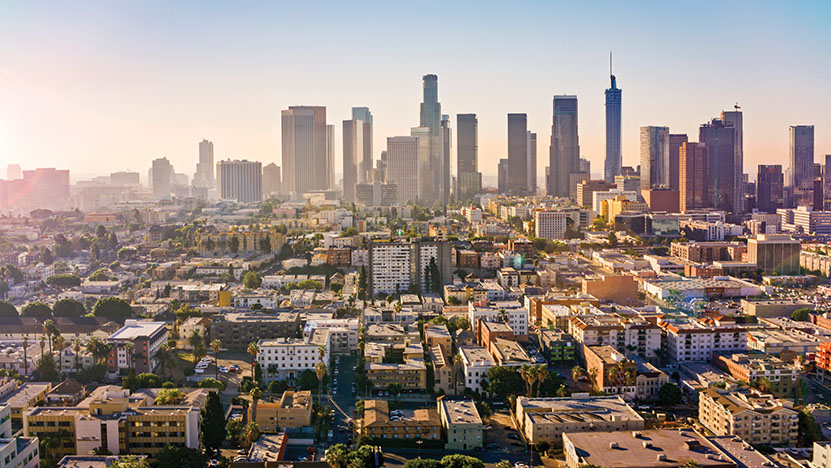
Hong Kong, like the favorite neighborhood Chinese restaurants that so often bring American-Jewish families together on non-Jewish holidays, is a welcoming expanse that offers delicacies for every taste. It’s a captivating blend of futuristic architecture and rough-hewn neighborhoods rich in tradition and history — including Jewish history.
The sea change that transformed this “fragrant harbor” (the English translation of Hong Kong) from a minor port into one of the world’s great global cities began with the 1842 Treaty of Nanjing, which added it to Britain’s colonial network. Jewish merchants of Sephardi and Iraqi origin were among the first foreign settlers in the area, and by the 1850s, permanent Jewish communities had taken root.
A small number of Ashkenazi Europeans played a major role in Hong Kong’s development as well. Sir Matthew Nathan governed the area from 1904 to 1907 and was considered by some the symbolic head of the Jewish community despite his secular lifestyle. His legacy lives on via Nathan Road, a major thoroughfare in the Kowloon section of Hong Kong dotted with an eclectic mix of the city’s finest hotels, exquisite historic temples, fine jewelry stores and bargain-hunting markets.
Today, the Hong Kong Jewish community numbers over 5,000 — out of the densely populated city total of some 7 million — and includes expats from the United States, Israel, Europe, South Africa, Australia and Canada, as well as descendents of families who settled in earlier times.
In Kowloon’s Tsim Sha Tsui district, you will find the Sephardic Kehilat Zion Synagogue (kehilat-zion.org), steps from many of Hong Kong’s five-star hotels, including the Peninsula, which is owned by the prominent Iraqi-Jewish Kadoorie family and boasts one of world’s poshest high-tea services. The synagogue — established in 1995 and now serving more than 900 members — houses Mul Hayam, whose eclectic, glatt kosher menu of Middle Eastern, European and Asian treats mirrors culinary trends in many of Hong Kong’s hottest chef-driven restaurants.
Ohel Leah Synagogue (ohelleah.org) stands out in Central Hong Kong because of its colonial architecture and two-toned whitewashed exterior. Its foundation stone was laid in 1901, and it was dedicated a year later by Sir Joseph Sassoon in honor of his mother, Leah. (The Sassoon family, along with the Kadoories, was and is one of Hong Kong’s pre-eminent Iraqi-Jewish commercial dynasties.) Starting in the mid-1990s, the building underwent extensive innovations inside and out, earning an Outstanding Project Award in the first UNESCO Asia-Pacific Awards in 2000.
In recent years, Ohel Leah has been the spiritual home to many Orthodox Jews in the Ashkenazi community that represent all corners of the Diaspora, and is an essential visiting site for its collection of historic chanukiyot and personal artifacts. Advance reservations for guided tours of the complex are recommended.
The Jewish Community Centre (jcc.org.hk) adjoining Ohel Leah houses the city’s Koshermart, along with the kosher/meat restaurant Sabra and dairy restaurant Waterside, and has the largest library in the Far East dedicated to Jewish topics, with more than 4,000 volumes, including a special collection of Sino-Judaic books and 300 audiovisual materials.
Chabad of Hong Kong (chabadhongkong.org), which oversees and establishes Chabad centers throughout China, has three operations in the area: Chabad of Hong Kong, Chabad of Kowloon and Chabad of Lantau. In addition to its many religious and cultural programs, it offers a free “Keeping Kosher in Hong Kong” food guide, which lists the 1,500 kosher products available in the area, kosher signage and rundown of local foods and products that do not require kashrut supervision.
There are many worthwhile sites beyond Hong Kong’s Jewish core that Jewish travelers will appreciate. The Kadoorie Farm and Botanical Garden was originally set up by this prominent Jewish family as a research center to help local farmers. It now features many exotic and domestic plants, wildlife rescue facilities, a weekend farmers market, and educational family programs on sustainable living and local botany.
The city also has one of the most efficient subway systems in the world, so getting to essential spots such as the eclectic shopping street Hollywood Road, Man Mo Temple and Lantau Island — home of the giant Tian Tan Buddha and excellent vegetarian food — is a breeze.
If you’re not in a hurry, you can indulge in a ride on the Star Ferry, one of the city’s best bargains. For about $1, enjoy a slow and scenic journey across Victoria Harbour to catch one of the world’s greatest light shows. Shortly after sunset, the skyline comes to life with elaborate patterns and colors that animate the many impressive skyscrapers. For a few more dollars ($11 for adults, $5 for seniors and children 11 and younger), you can scale Victoria Peak with its historic funicular to take in spectacular views of Hong Kong Island and Kowloon.