Prayers are a particularly usable form of literature. And because they are composed by human beings to answer our most intimate needs, the stock of prayers always grows and changes. One scholar, for example, claims to count only 85 prayers in the Hebrew Bible, but the accumulation of Jewish prayer is now far beyond numbering and continues to grow ever richer and more plentiful.
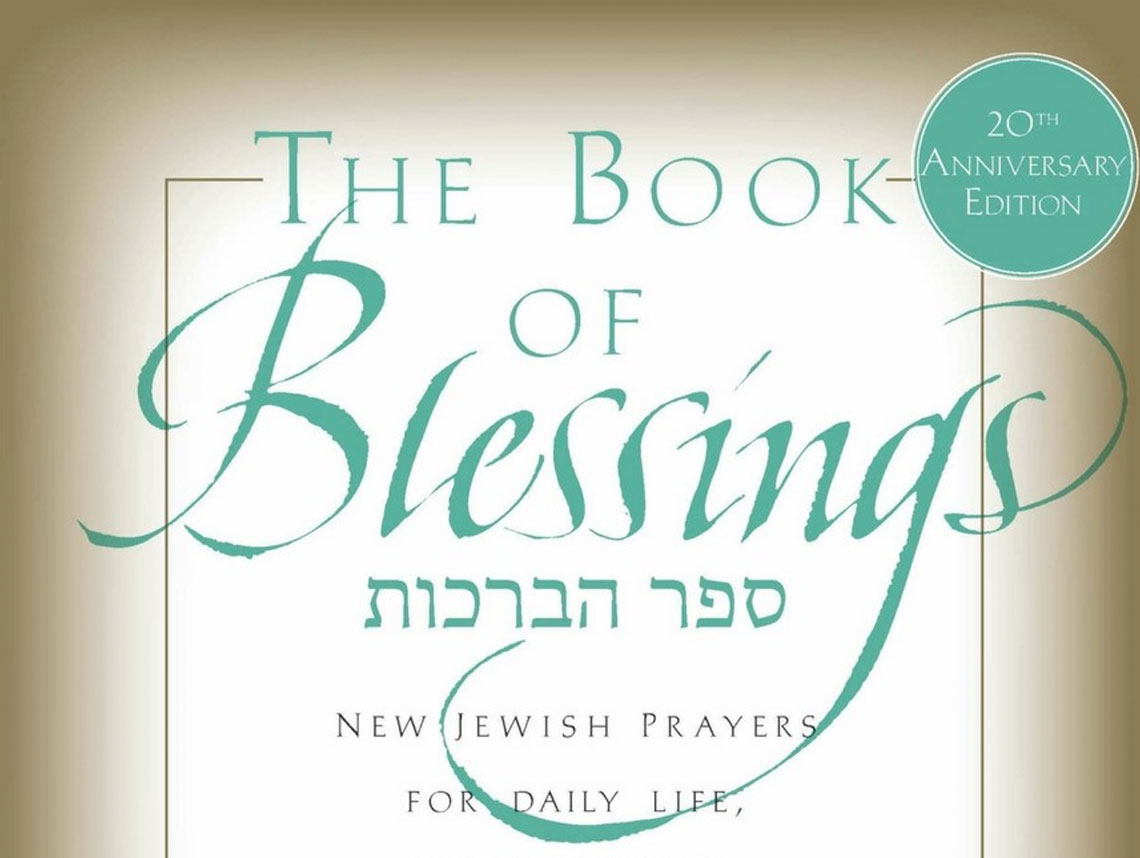
Marcia Falk, author of “The Book of Blessings: New Jewish Prayers for Daily Life, the Sabbath and the New Moon Festival” (Reform Jewish Publishing/CCAR Press), is among the most prolific and influential of our contemporary prayer-makers. I first encountered her work when I reviewed her provocative and illuminating translation of “The Song of Songs,” and I admired “The Book of Blessings” when it was first published two decades ago. Now her classic book of prayer has been issued in a 20th-anniversary edition, which provides us with the occasion to reconsider the vitality and longevity of what she has contributed to Judaism.
Falk is not a rabbi. Rather, she is a poet and a painter, a scholar of biblical and Hebrew literature and a translator of Hebrew and Yiddish texts, all of which serve to inform her work as a modern maker of prayers. She declares that she stands in the tradition of Hannah, mother of the prophet Samuel, whose heartfelt prayer was misapprehended by Eli the priest but not by God. “ ‘The Book of Blessings’ is a branch of a tree whose seeds were planted three millennia ago by a woman who prayed from her heart,” says Falk, whose poems occasionally appear in the Journal.
Yet she sees it as her obligation to find new ways of praying, precisely because traditional prayer is not accessible or meaningful to every Jew. “ ‘The Book of Blessings’ is for those immersed in Judaism, and for those standing at its gates, looking for a way in,” she writes. “It is, especially, for those of us who have, at some time in our lives, stood like Hannah outside the sanctuary’s walls, suffused with longing, or anger, or pain.”
It is significant that “The Book of Blessings” is published under the auspices of the Central Conference of American Rabbis, a branch of Judaism that shares the egalitarian values that are so deeply embodied in her prayers — “the forging of fully inclusive and embracing communities,” as she puts it.
 Falk derives many of her newly minted prayers from ancient biblical texts, and she honors the oldest traditions of Judaism by, for example, providing all of the prayers in Hebrew. At the same time, she seeks to make the prayer book fully accessible by including both the English translation and the transliteration of the Hebrew text. And she pointedly insists on replacing the patriarchal deity who is invoked in traditional Hebrew blessings — “Lord Our God, King of the Universe” — with a wholly gender-free phrase: “the source of life.”
To be sure, Falk’s prayer book will strike some readers as a step away from Jewish tradition. The fundamental prayer of Judaism, as it is rendered in “The Book of Blessings,” starts with a familiar phrase — “Sh’ma yisra’eyl” (Hear O Israel) — but continues with words and phrases that amount to something far more elusive than the original text: “The divine abounds everywhere and dwells in everything; the many are One.” And, strikingly, she omits the traditional mourner’s prayer, the Kaddish, and offers a meditation based on a contemporary poem, “Each of Us Has a Name.” For many Jews, I suspect, that’s a step too far.
If Falk’s exquisite and evocative prayers are the heart of “The Book of Blessings,” the brain is to be found in the commentary that she provides at the end of her book. Here we find a frank explanation of her approach to prayer, a sophisticated discourse on Jewish theology and an eloquent justification of the courageous changes she proposes to make in the trappings of Jewish observance. Significantly, she quotes Ira Eisenstein, a student of Mordecai Kaplan and a leading figure in the Reconstructionist movement, for the notion that Jewish values can and should become “the central theme of passionate reflection,” which is exactly how I would describe Falk’s enduring classic.
“Hebrew is my s’fat dam — the language of my blood,” Falk writes. Like her biblical exemplar, Hannah, Falk has poured out her heart to God, and we are privileged to not only witness but to participate in that “passionate reflection.”
JONATHAN KIRSCH, author and publishing attorney, is the book editor of the Jewish Journal.