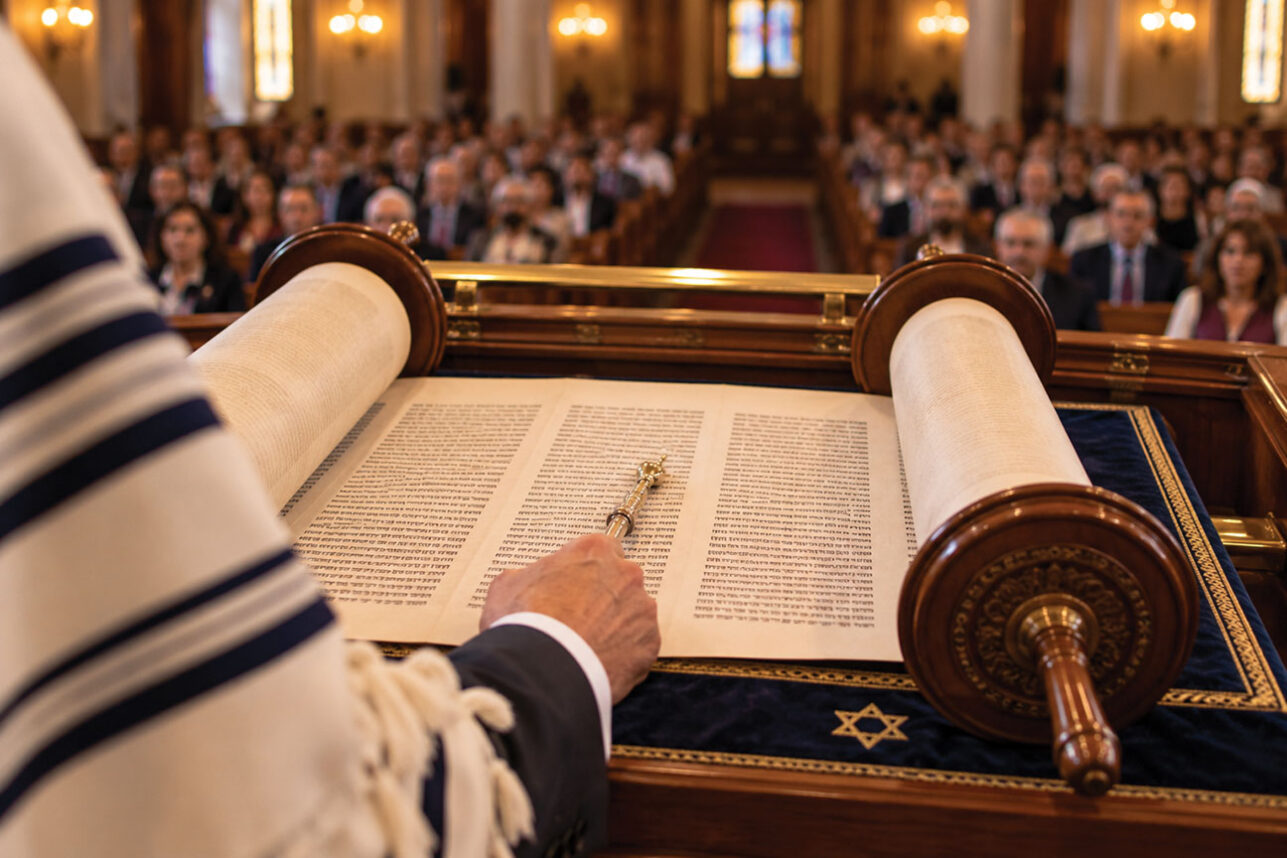
The Yad Vashem memorial in Jerusalem recognizes more than 26,000 non-Jews for their efforts to save Jewish people during the Holocaust. Thanks to books and films, some of these Righteous Among the Nations are well known, such as Oskar Schindler and Irena Sendler, but most of them are not.
That is about to change for two of the five Americans on the list, who are the subject of the documentary “Defying the Nazis: The Sharps’ War,” premiering Sept. 20 on PBS.
The film is produced and co-directed by Emmy-winning documentarian Ken Burns (“The Civil War,” “The Roosevelts”) and Artemis Joukowsky, for whom it is a deeply personal, nearly lifelong project. Joukowsky is the grandson of subjects Waitstill and Martha Sharp, a Unitarian minister and his wife who risked their lives to help hundreds of Jews escape the Nazis beginning in 1939.
The film chronicles the couple’s humanitarian mission and relationship using the Sharps’ letters and journal entry excerpts (read by Tom Hanks and Marina Goldman), archival footage and photographs from the United States Holocaust Memorial Museum, and interviews with historians, scholars and 30 Jewish adults who were rescued as children.
“It’s a magnificent, powerful story on many levels,” Burns said.
It’s set in motion when the Sharps, at the request of the American Unitarian Association, travel to Czechoslovakia to aid refugees in February 1939, leaving behind two young children in Massachusetts while using a variety of methods to save hundreds of others. What they couldn’t save was their marriage, which ultimately crumbled under the strain of what they were doing. The Sharps divorced in 1954, and both married again.
Joukowsky, 55, knew about none of this while growing up around the world with his mother, an archaeologist, and barely knew his grandparents. When a history class assignment required him to “interview someone of moral courage,” his mother suggested he speak to his grandmother Martha, telling him, “She did some cool things during
World War II.”
Joukowsky, who currently lives in Massachusetts, wondered why his family had not celebrated what his grandparents had done, and became determined to tell their story. Researching, interviewing and assembling materials for the better part of a decade, he realized he needed help, and three years ago, reached out to fellow Hampshire College alumnus Ken Burns for guidance. Burns agreed to look over the footage, and saw that it was “a diamond in the rough. You could see what it was going to become,” he said.
Burns’ role changed from adviser to producer and co-director as he shaped the footage in the editing room and adjusted the narrative structure and tone and balanced the cloak-and-dagger suspense of the Sharps’ mission with the story of their relationship.
“We didn’t want to just show their heroic work. We wanted to show them fully as human beings,” Joukowsky said.
That meant including the erosion of the Sharps’ marriage, the damage their absence inflicted on their children, and what became of the couple after the war. Both continued to fight for human rights, Martha more in the spotlight. She ran for Congress in 1946, and with her second husband, Jewish philanthropist David Cogan, she worked with Hadassah and other organizations to help resettle Jewish refugees in Palestine.
It was also important to the filmmakers to emphasize the accomplishments and legacies of the survivors who owe their lives to the Sharps. “But the film is dedicated to those who were not saved,” Burns said.
Currently working on films in various stages of production about the Vietnam War, country music, prisons and Ernest Hemingway, Burns isn’t finished exploring the topic of the Holocaust. He’s in the early planning stages of a film about the United States’ role in it, “to delve into deep and lasting anti‑Semitism within the State Department and exclusionary laws that didn’t allow immigrants and refugees in,” he said.
Burns and Joukowsky plan to continue to work with the Holocaust museum in Washington D.C., which serves as the archive for the more than 200,000 documents and testimonies they have found and are still uncovering.
“This film has changed my life, being involved in this process,” Joukowsky said. “We have made a dramatic film that revs you up and makes you excited to learn more.”
Toward that end, he has published a same-titled companion book to “Defying the Nazis: The Sharps’ War,” with “much more detail” and a foreword by Burns (Beacon Press). In addition, an interfaith curriculum has been provided to schools in conjunction with the documentary.
Burns believes the message of the Sharps’ story is clear.
“Courage matters. Action matters. Sacrifice matters. Other human beings matter,” he said. “We are all in this together.”