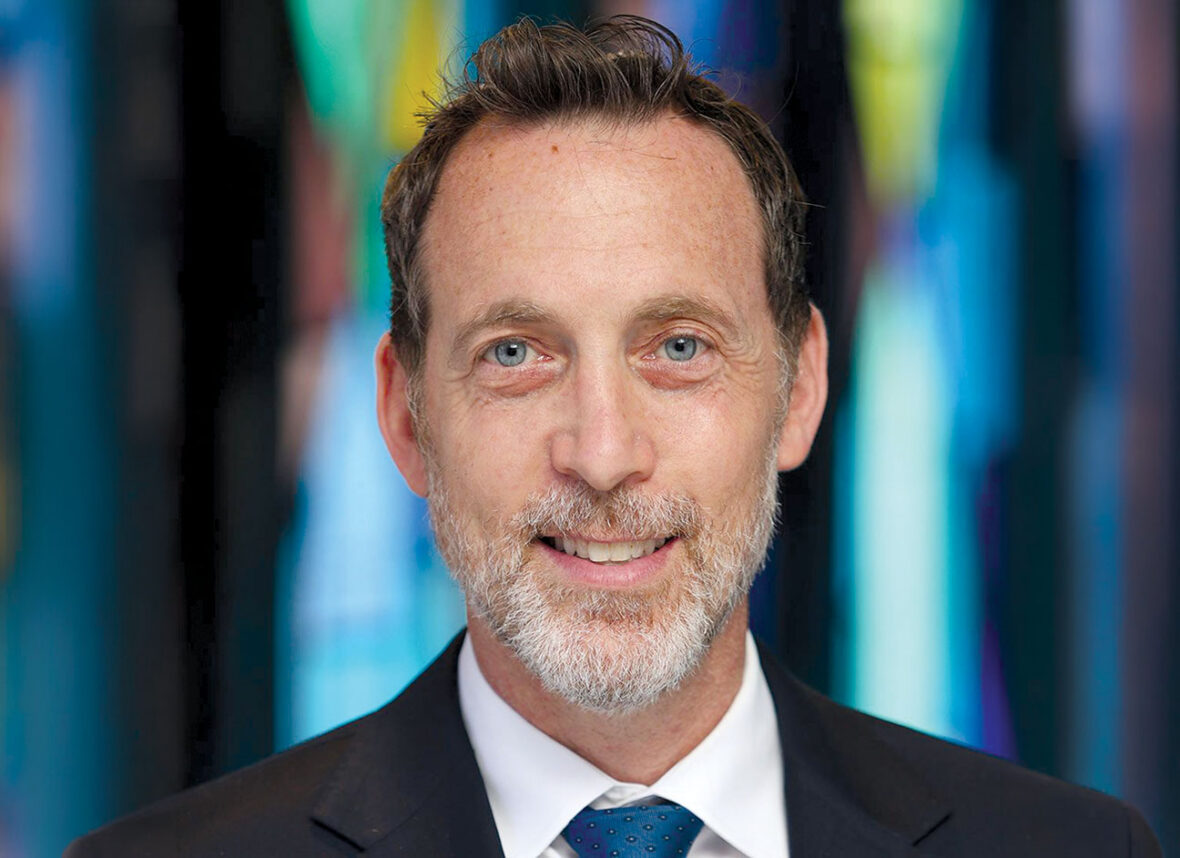
In another life, Oren Rudavsky might have been a psychoanalyst. “I often think of it as my alternate career, he said.
In this life, Rudavsky has forged a successful career as a New York City-based filmmaker known for award-winning documentaries about Jewish life, including the 2004 “Hiding and Seeking,” which explored faith and tolerance through the lens of an Orthodox Jewish family’s emotionally charged trip to Poland. In his latest film, “The Treatment,” he takes on a subject that has long been a source of fascination.
“I’ve often said that therapy and psychoanalysis are Jewish arts and not just because there happens to be a disproportionate number of Jewish therapists,” said Rudavksy, speaking by phone from New York. “Jews like to torture themselves, and in the way of the Talmudic tradition, they like to analyze. In some people’s worlds, rabbis have been replaced by psychoanalysts.”
Having been a patient of both psychoanalysis and psychotherapy, Rudavsky put his personal experiences to good cinematic use. Adapted by screenwriter Daniel Housman from Daniel Menaker’s 1998 novel, “The Treatment” tells the story of idealistic and neurotic high school teacher Jake Singer (Chris Eigeman), who has a tormented relationship with his Freudian analyst Dr. Ernesto Morales (Ian Holm) and an angst-ridden love affair with a beautiful and wealthy widow Allegra Marshall (Famke Janssen). Though a romantic comedy, the film can also be viewed as a meditation on the patient-therapist relationship.
“I’ve tried to portray how psychoanalysis really works,” Rudavsky said. “The way you sit in the waiting room, how you’re late or not late, greeted or not greeted. How the therapist sits down and waits for you to say something. All this is part of the essence of the film.”
So is the larger-than-life character of Dr. Morales.
“You don’t know if he’s an angel or a devil,” said screenwriter Housman. “He embodies our fascination and our sometimes mixed feelings about psychoanalysis and therapy in general.”
“The Treatment” also marks Rudavksy’s narrative film debut, and the director concedes that the experience was “harder” than making a documentary. “The details have to be right in a fiction film in ways that don’t matter in documentaries,” he said. “But I take tremendous satisfaction from making both kinds of films.”
The son of a rabbi, Rudavsky grew up in Newton, Mass. As a teenager, “when life got complicated,” he became entranced with foreign films by directors like Ingmar Bergman and Federico Fellini. “I loved those films that dealt with big issues, where people were baring their souls,” he said.
Rudavsky believes that all of his films are ultimately vehicles “to connect to something personal and intimate. I want to tell stories that matter to other people’s lives,” he adds. “And the kind of stories where you learn more about the world.”
“The Treatment” opens today in Los Angeles.