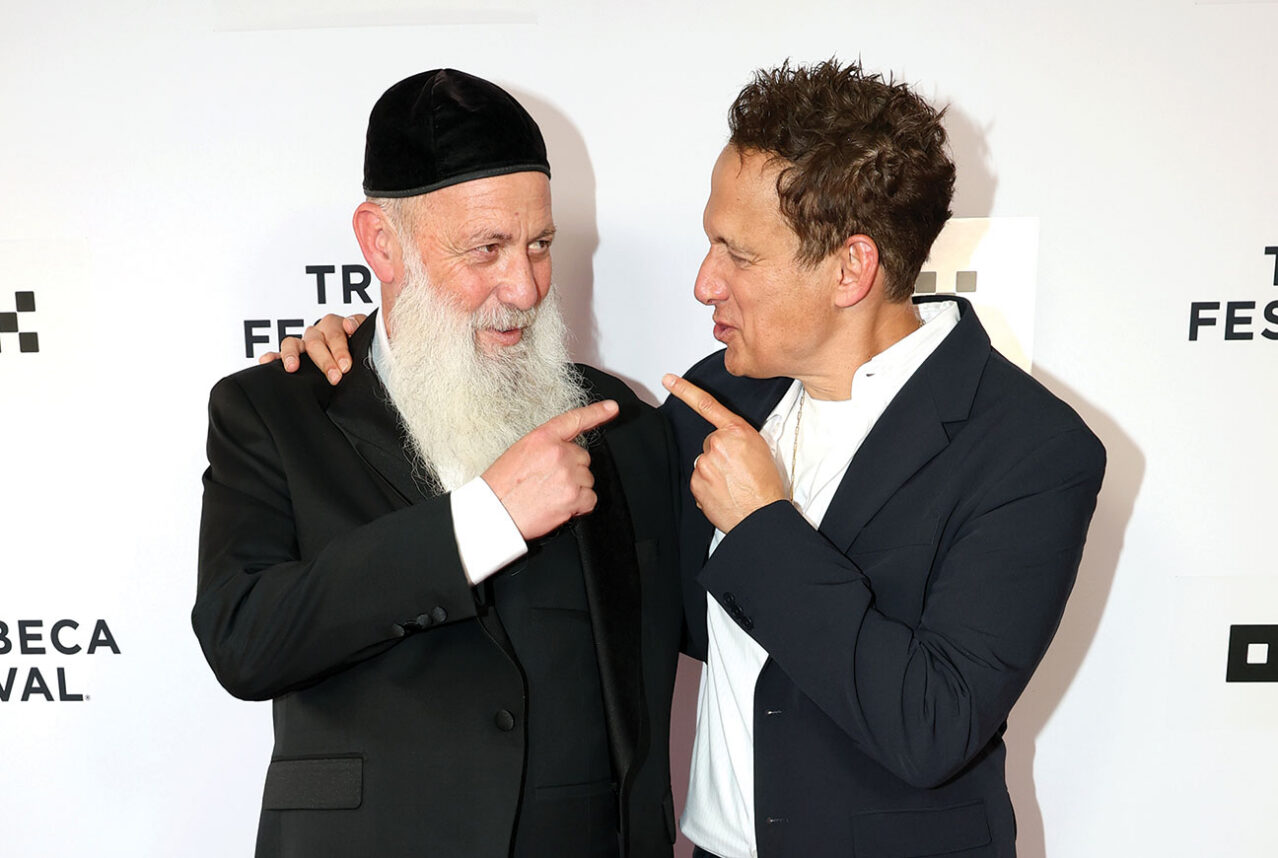
Los Angeles native Christopher Noxon just came out with his third book. His first was “Rejuvenile,” about the blurring of lines between childhood and adulthood. Next came “Plus One,” a novel loosely based on his longtime marriage to television writer and producer Jenji Kohan. (The two recently separated.) His latest book is “Good Trouble: Lessons From the Civil Rights Playbook.”
A convert to Judaism who belongs to both IKAR and Temple Israel of Hollywood, Noxon, 50, spoke with the Journal about his work, his passions and becoming a Member of the Tribe.
Jewish Journal: How did you come to write and illustrate a book on the civil rights movement?
Christopher Noxon: I was on a Jewish Book Council tour [for “Plus One”] and it was two days after the election of Donald Trump. I was in Memphis. I was talking about male house caretakers and female breadwinners and thinking that was very important, and then all of a sudden, this election happened and it seemed really not important. I ended up in a chance encounter with the [National] Civil Rights Museum, which is at the Lorraine Motel — which is where Martin Luther King was assassinated — and I sort of just had a breakdown, a reckoning. Just the very crushing and immediate sense of history going backward.
They had this big wall of mugshots at the museum of Freedom Riders and people who were at sit-ins and I started drawing [in my notebook]. There was something about those faces — in the moral clarity and in the resolve and in the defiance — that I just thought, “I need to connect with that spirit; that’s the spirit we all need right now.” I had actually written a book about conversion. At that point, I was supposed to go out to publishers with it. I talked to my agent about it. She’s the one who said, “You need to be doing this.”
JJ: I heard you are donating all the proceeds from “Good Trouble.”
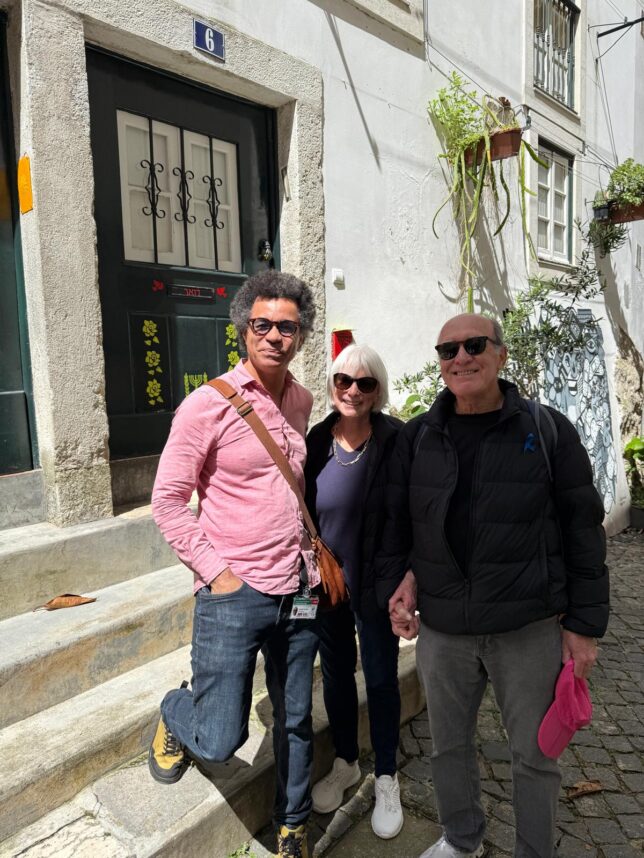
CN: All the money that I am getting from the book is going to the Center for Popular Democracy, which is an activist group that does racial justice and health care. I knew that as a white guy writing about civil rights, it was important that people know, first of all, anything you like that I say is because of people like Fannie Lou Hamer and Ella Baker and Martin Luther King and [Rabbi] Sharon Brous and [Pastor] Otis Moss III and all these people who have put their selves on the line for many, many years. One of the guys in the book is a guy named Reverend R.K. [Smith]. He’s a man I met in an airport on my way down to Atlanta.
JJ: Just coincidentally?
CN: Yeah. He is a former preacher at Dexter Avenue Church, where Dr. King started the Montgomery bus boycott, and we have become really close. He says, “You’re late to the plate, but you’re swinging.” I don’t want anyone to get the impression that I’m trying to profit or benefit from the work of black folks who have been in this world for a long time.
“I knew that as a white guy writing about civil rights, it was important that people know anything you like that I say is because of people like Fannie Lou Hamer and Ella Baker and Martin Luther King and [Rabbi] Sharon Brous and [Pastor] Otis Moss III.”
JJ: Who is the intended audience for “Good Trouble?”
CN: It grew out of this practice of sorting out my feelings and thoughts in pictures and words in a journal. I wanted the book to have that feeling, not to feel like a political treatise or a historical primer but a really personal reflection. A lot of people who see the book now think this is great for middle schoolers, for high school kids, because it’s graphic. I never thought of it as a book for young adults. But I totally see why that works.
JJ: Is there something Jewish about this project?
CN: For sure. Very basically, I talk about Abraham [Joshua] Heschel, who was close friends with Dr. King and who is quoted in the book as saying that when he marched in Selma, [Ala.], it was like praying with his feet. And he was a big presence in my conversion. I read a bunch of him when I was converting. To me, this idea of turning your faith into tangible action, about deeds and not creeds, is the essence of Judaism.
JJ: When and why did you convert?
CN: August 2015. I was bored with the constant explaining about acting Jewish but I’m not officially Jewish. I had that conversation so many times. I just needed to settle it.
JJ: That’s a big thing to go through to counter boredom.
CN: OK. That’s true. I felt settled. I felt resolved. And I felt like I had definitely found my people. There was no question in my mind. It had always been wrapped up in family but at a certain point, it was about the community. I wanted to be looking out from inside this camp and not standing on the outside of the crowd.
JJ: Do you think you’ll get back to the conversion book?
CN: I will. I just feel like right now is not the time. I basically use what’s called the hatafat dam brit, which is the ritualized bloodletting, as the hook, so to speak, to talk about larger issues of conversion and spirituality and Jewishness. But now is not the time to put my man hurt on display. There’s a lot more hurt that matters a lot more.
JJ: “Good Trouble” just came out so this may seem an unfair question, but what’s next for you?
CN: Actually I have a great answer. I signed a deal to illustrate a book about Israel. I’m doing it with this guy Daniel Sokatch. [Editor’s note: Sokatch runs the New Israel Fund.] He’s writing the words. I’m doing the pictures. The preliminary title is “Israel: WTF?” Basically we’re both like, we need “Israel for Dummies” for smart people.