
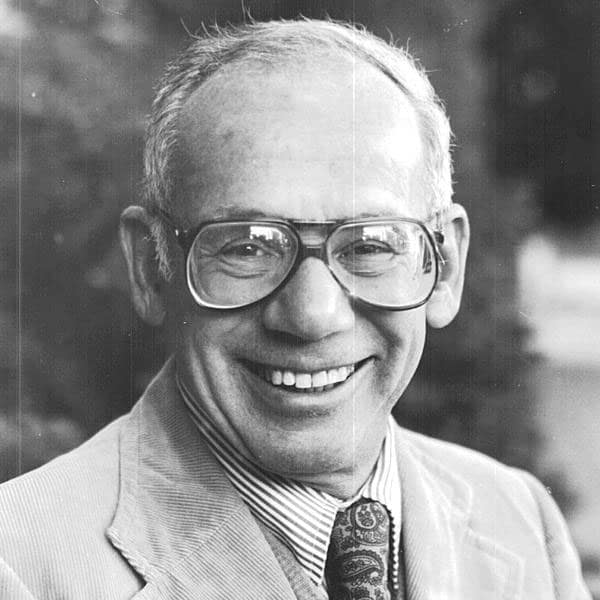
“Boyle Heights wasn’t just a geographical term, it was a mind-set.”
So says Abraham (Abe) Hoffman, and he should know.
Born and raised in Boyle Heights, a graduate of — and, later, a teacher in — its public schools, Hoffman is an academic and historian who at 72 serves as an adjunct professor at Los Angeles Valley College.
He is just off a 15-month project tracking down and compiling the reminiscences of 85 Jewish Boyle Heighters, now scattered across Los Angeles and points west, north and south.
The result of his labor of love is a special 326-page issue of the Western States Jewish Historical Quarterly, published by Gladys Sturman and David Epstein. The volume, also published in book form, is titled “Boyle Heights: Recollections and Reminiscences of the Boyle Heights Jewish Community in Los Angeles, 1920s-1960s” (Western States Jewish History Association, 2011).
For many years, Jews were the neighborhood’s majority ethnic group, but Boyle Heights — bounded by what is now the 10 Freeway on the north, Olympic Boulevard on the south, Indiana Street on the east, and Boyle Avenue on the west — was neither a ghetto nor a shtetl.
Depending on the year and the writer’s reliability, ethnic population estimates for Boyle Heights between world wars I and II fluctuated widely, but probably averaged around 40,000 to 50,000 Jews, 15,000 Mexicans and more than 5,000 Japanese, augmented by Armenians, Italians, Anglos, African Americans and Russian Molokans — a persecuted, kashrut-observant Christian sect that split from the Russian Orthodox Church. After 1945, a trickle of Holocaust survivors added to the mix.

Canter Bros. Delicatessen, 2323 Brooklyn Ave., Boyle Heights, circa 1938. Photo courtesy of Len Canter
The boys and girls of all these groups met, played and formed friendships in the public schools and on the athletic fields.
The Rough Rider newspaper of Roosevelt High School ran a headline on Nov. 7, 1940, that read “Bees Triumph Over Favored Fremont Squad” when, naming two players, “Kitioka completed a forward to end Reznikoff, who went over the end zone for the second tally of the day.”
On Nov. 6, 1941, the newspaper noted that 23 seniors were in the honor society, six of them Japanese and 12 Jewish, and that the Japanese Club held a joint meeting with Los Caballeros.
George Masuki was elected president of the graduating class on March 12, 1942, just before the U.S. government ordered the evacuation of all Japanese Americans from the West Coast. In a farewell note, Masuki wrote, “I am rather confused as to what will become of me when I leave school.”
As publisher Epstein observed, the young people of Boyle Heights absorbed diversity before diversity guidelines existed.
Delving into the book’s pages is like diving into a pool of vibrant humanity, none rich, most poor but without realizing it.
People worked hard to make a living. Larry Goldman remembers that his father, the manager of a shoe store, left home every morning at 8 a.m. and came home at 8 p.m., seven days a week.
Jake Farber celebrated his bar mitzvah at the Fairmount Street Shul, and “after the service, my mother made very small bags of raisins and nuts for the kids. For those who attended the service, we had herring, challah and a bottle of whiskey. That was it. No party afterwards.”
Growing up in Boyle Heights, Shimona Yaroslavsky and her brother (now L.A. County Supervisor) Zev Yaroslavsky, were strongly influenced by the ardent progressive Zionism of their Russian immigrant parents.
Both father and mother were Hebrew teachers at the nearby City Terrace Folk Schule, sponsored by the Labor Zionist Organization, where students received a secular Jewish education in both Hebrew and Yiddish, Shimona writes.
The school was the center for Zionist activities, including meetings of the Habonim and Hashomer Hatzair youth groups, and, in one notable innovation for the time, held a communal bat mitzvah for 12-year-old girls in 1950.
Copies of “Boyle Heights,” the book, can be ordered for $25 each. Make checks payable to Western States Jewish History and mail to 22711 Cass Ave., Woodland Hills, Calif., 91364. In addition, editor Abe Hoffman can be contacted for speaking engagements by calling (818) 883-7991.

































