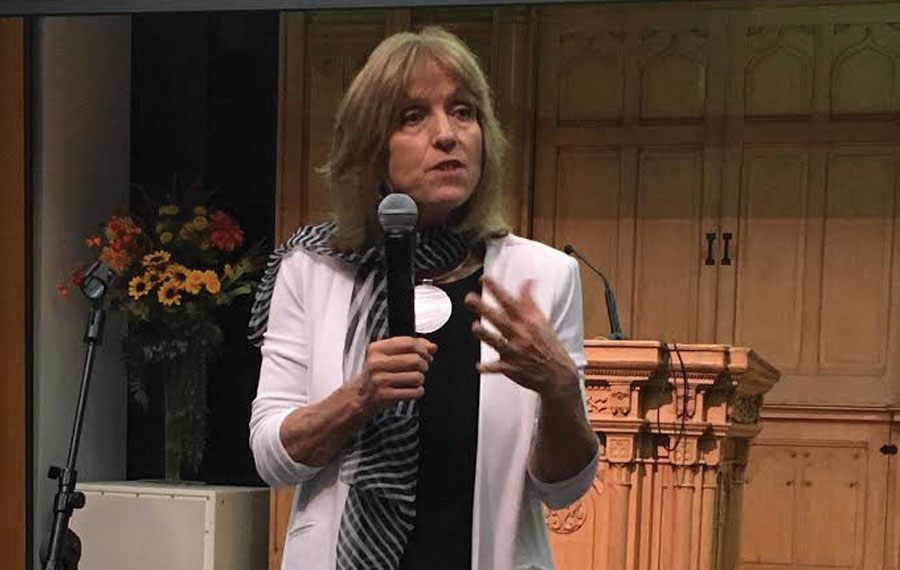
According to Lifespan Learning Institute Clinical Education Director Bonnie Goldstein, “Helplessness and hopelessness is on the rise among teenagers. There is a sense of alienation, stemming from that sense everyone else appears happy, content, surrounded by friends, and I feel so alone.”
Goldstein made her remarks at a recent workshop she facilitated at Wilshire Boulevard Temple’s west campus, titled “Helping Your Teen Live With More Ease in Today’s World.” Several dozen parents, therapists and educators attended the free event organized by the Los Angeles Jewish Teen Initiative.
Goldstein also noted that social media and the attendant FOMO (fear of missing out) foster this alienation in teens. Add that to anxiety about school shootings, climate change and political polarization alongside the usual teen pressures, and it’s no wonder, she said, that so many teens are just trying to get through the day.
“When kids go to school, especially in L.A.,” she explained, “they spend the day in survival mode.” However, she added, “parents are the ones who can best help our kids to build resilience and develop a sense of power from within.”
As founder of the Lifespan Psychological Center in West Los Angeles, Goldstein said she has a broader definition of what constitutes teenage years, perhaps more than most people think. “I define it starting as young as 9 or 10 and continuing through the 20s,” she said.
Many of Goldstein’s tips for helping teens involve the adults around them addressing their own anxieties. Parents, she said, should “use all the tools to turn down your internal stress so your kids are not picking that up.” This includes integrating mindfulness into their routine. In addition to many online resources, Goldstein mentioned two local studios that offer classes: InsightLA Meditation in Santa Monica and Unplug Meditation with multiple locations. But even simple techniques such as placing your hand on your belly or over your heart for a few seconds when you feel yourself getting anxious can be beneficial, Goldstein said.
Indeed, she had many audience members try both, experimenting with different hands to see what felt best. She also shared a favorite breathing tip. “If you breathe in and your exhale is longer than the inhale, it tricks your body,” she said. “It allows you to settle.”
“When kids go to school, especially in L.A., they spend the day in survival mode. Parents are the ones who can best help our kids to build resilience.”
— Bonnie Goldstein
But what if, despite your most earnest resolutions, you lose it with your teen? Goldstein assured attendees this happens to everyone. “When you blow it, own it,” she said. “Tell your teen, ‘This isn’t who I want to be and I am working on myself.’ So we’re modeling [better behavior] to them.”
Of course, parents shouldn’t feel as if it’s all on them. “The single best resource you have is getting to know your school counselor when things are going well,” Goldstein said. “Then when things get bumpy, the shame factor is less. School counselors are prepared to address many things we’re not even aware of.”
For parents who have a hard time even having a conversation with their teenagers, Goldstein had a few suggestions. Since teens may find direct eye contact triggering or threatening, parents should try looking at their teen’s nose instead or putting on a hat. Goldstein also is a fan of talking while walking. “There’s something about movement that regulates, that calms,” she said.
Goldstein also addressed the rising number of teen suicides. If a child talks about suicide or you have reason to believe a child may be thinking about it, Goldstein urged parents to “always take them seriously.” She recommends having these teens see a therapist or seek a clinical evaluation.
Ultimately, when it comes to parenting teens, Goldstein subscribes to a theory put forth by pediatrician and psychoanalyst Donald Winnicott in the 1950s. It’s all about “being a good enough parent,” she said. And there’s an upside to our missteps. “For all our failures,” she said, “we’re teaching our kids resilience.”