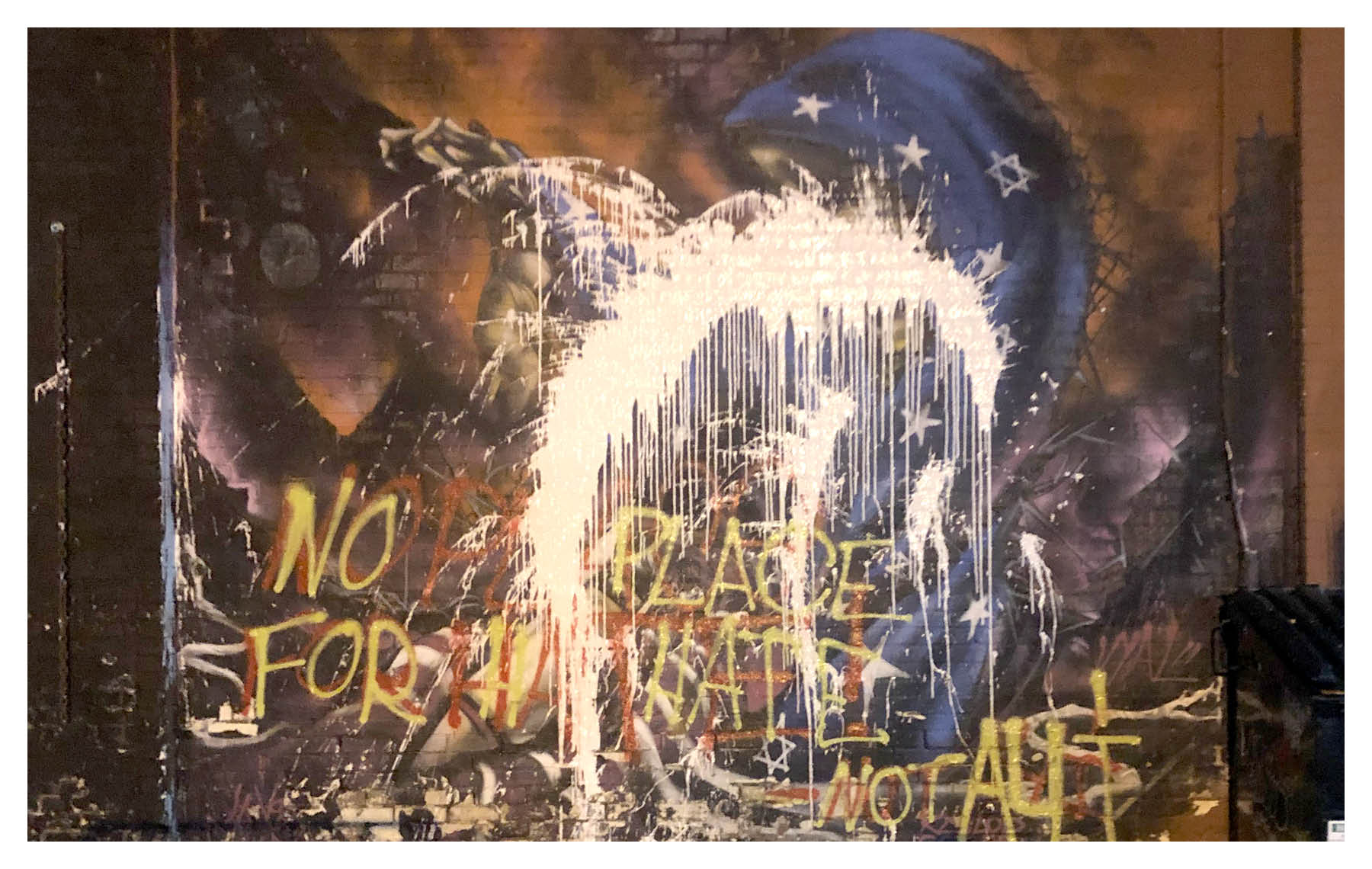
A mural in downtown Los Angeles depicting the Grim Reaper wrapped inside an American flag emblazoned with Jewish stars, gripping a baby, cradling a missile and surrounded by snakes, has been deemed anti-Semitic by several civic leaders and organizations, including Los Angeles Mayor Eric Garcetti’s office.
“This mural is a shameful act of anti-Semitism,” Alex Comisar, a spokesman for Garcetti, said in a statement. “Imagery like this should have no place in our city.”
The image, on the exterior wall of The Vortex, a performance and event space in an industrial downtown neighborhood, was first painted in 2011 by local artist Vyal Reyes as part of an art show titled, “LA vs. WAR.” In 2018, Reyes said on his Instagram page that the work was inspired by a trip he took “to Palestine some years back.”
However, the controversy didn’t erupt until Feb. 25, when Zhenya Rozinskiy of boutique consulting firm Mirigos shared a photograph of the mural on his Facebook page and it went viral.
Among those condemning the mural was Progressive Zionists of the California Democratic Party. The group posted a picture of the mural on its Facebook page and tagged the Vortex, stating: “Hey The Vortex, Is this a real thing on your building? If yes, why? It’s wildly anti-Semitic. If not, you should probably clear up the confusion. Signed, Some confused and concerned community members.”
“This mural is a shameful act of anti-Semitism. Imagery like this should have no place in our city.”
— Alex Comisar
But in an email to the Journal, Reyes said he isn’t anti-Semitic and that he intended the mural to be “critical of the U.S. and its increasing focus on war.
“That particular neighborhood that the mural was painted in was in worse shape at the time and homeless people lived all around there,” Reyes said. “It seemed to me at the time that the U.S. was more into funding war than helping its homeless. Even at that time, the U.S. was funding massive amounts of money to Israel, as they still are. That’s not anti-Semitic; that’s just a fact.”
Jeff Norman, a representative of the Vortex, also defended Reyes. “The Vortex stands for free expression,” Norman said in an email to the Journal. “The artist whose mural includes the Star of David (created for the LA vs. WAR show to acknowledge 9/11 about 5-6 years ago) did not intend to express an anti-Semitic message. We believe his intent deserves considerable weight. We invite those who feel otherwise to paint another mural next to it. We are also open to hosting a public discussion about this controversy at The Vortex.”
But on the night of Feb. 25 or the morning of Feb. 26, the words “No place for hate” were painted over the mural. While it’s unclear who was responsible for defacing the mural, the artists’ rights organization Artists 4 Israel sent a photograph of the defaced mural to their email list subscribers on Feb. 26.
When asked if his group was responsible for painting over the mural, Artists 4 Israel CEO Craig Dershowitz told the Journal that he did not have any comment, although he conceded that he was troubled by the mural’s imagery.
As of press time, The Vortex had not made any effort to repair the mural or to notify the police about the defacement, Norman said.
Meanwhile, the Anti-Defamation League has called for the mural’s removal.
“For a venue that purports to welcome the community, The Vortex should join us in condemning hateful imagery that invokes anti-Semitic canards conflating Jews with death, snakes, bombs and killing babies,” the organization said in a statement.