Only in Los Angeles can you have a convention of Orthodox Jews where the keynote address is given by a woman named Bacon, the special guest speaker is a famous
Hollywood film critic and the executive director begins his Shabbat sermon by talking about Christmas.
I’m referring to the Orthodox Union’s (OU) annual West Coast Convention, which ended last week. Here in the Pico-Robertson neighborhood, you couldn’t go too far without seeing their colorful blue banners promoting the event.
This year, I noticed a tinge of anxiety percolating just beneath the surface of the convention, a sense that there are big challenges ahead for the Orthodox movement.
Of course, the Orthodox are hardly alone in feeling anxious. These days, every movement in Judaism seems to be going through some sort of defining challenge. The Reform Jews are dealing with how to accommodate a growing interest in religious rituals among some of their members, while staying true to the movement’s liberal identity. Conservatives are in a state of perpetual crisis — whether dealing with specific issues like gay marriage, or larger philosophical ones like how much pluralism they can tolerate in their own movement and stay viable.
And the Orthodox, well, they might look confident on the outside — they are, after all, the champion protectors of God’s commandments — but dig beneath the surface, and you’ll see a healthy dose of anxiety.
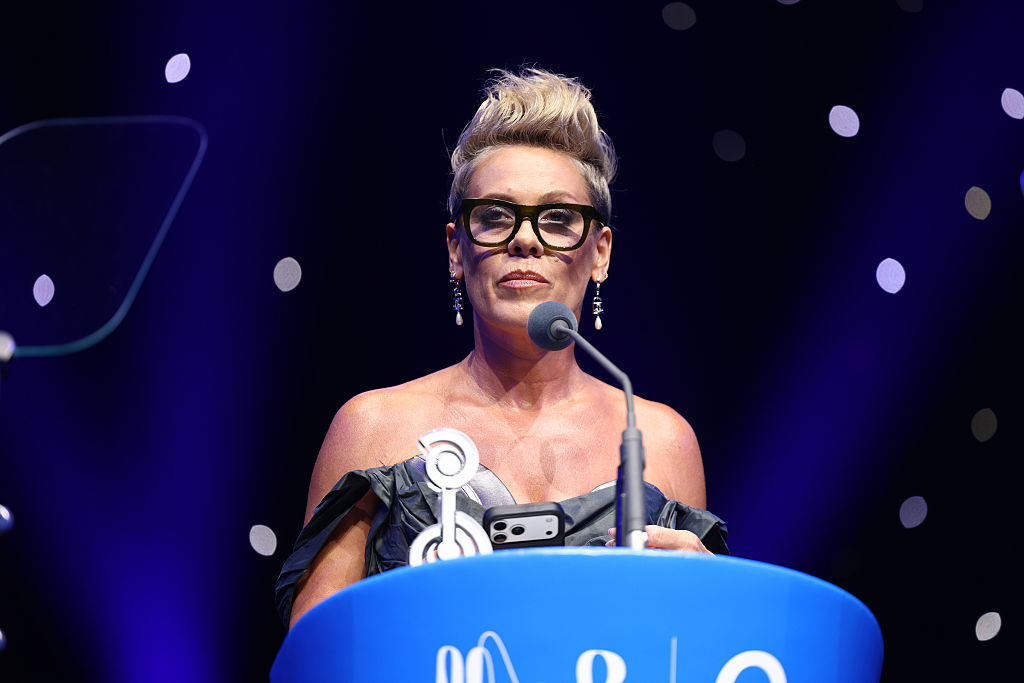
Just look, for example, at some of the subjects at this year’s OU convention: “Guaranteeing Continuity: Keeping our Children Jewish and Orthodox” (Karen Bacon); “The Jew in the Modern World, the Modern World in the Jew: Are we too Integrated?” (panel discussion); “Media Messages vs. Jewish Messages” (film critic and conservative talk show host Michael Medved); “Jewish Continuity and Destiny” (Rabbi Marvin Hier); and “The Tuition Crisis and Seven Ways to Address It: An Existential Challenge for the Jewish Community” (Rabbi Tzvi Hersh Weinreb).
Those are not the subjects of a cocky movement.
They feel more like the subjects of a marketing seminar, as if an OU committee got together and said: Our brand is being threatened by a secular world that does not share our values. How do we deal with this threat without isolating ourselves?
I sensed some of this anxiety when I went to B’nai David Judea Congregation on Shabbat morning to hear Rabbi Weinreb, the executive director of the OU, give the weekly sermon.
Right off the bat, the rabbi brought up that all-consuming annual threat to Jewish identity: Christmas. How should Orthodox Jews navigate in a Christian world, especially at this time of year, when the symbols of Christianity are so dominant?
Rabbi Weinreb quoted a scholar who is part of the Conservative movement (professor Elliot Dorff) to explain a key difference between Judaism and Christianity: In Judaism, beliefs flow from behavior, while in Christianity, behavior flows from beliefs. The Jewish tradition doesn’t ask us to believe in doing good, or even to feel good, before actually doing good. We’re supposed to do it anyway.
And what is this “good”? For the Torah observant, the rabbi went on, it revolves around the Shulchan Aruch, the code of halacha (Jewish law) compiled in the 16th century. Just like the Constitution of the United States is the timeless code of law that protects our free society, the halacha is the timeless code of law that protects Judaism’s and the Jewish people’s continued survival.
In this world of law, no subject is too small. Is the new coloring agent on M&M chocolates kosher according to the OU? No sweat, the rabbi assured us. The Shulchan Aruch provides the answers.
Then the rabbi complicated the picture: The halacha doesn’t have all the answers, he admitted. How could it? Who knew, for example, about stem cell research 500 years ago? What do we do when the halacha doesn’t spell things out?
The rabbi used the Torah portion of the week to introduce the metaphor of the bow and arrow. When the law is not clear, the rabbi explained, we must tremble before God and aim very, very carefully, as with a bow and arrow. It’s with this metaphorical bow and arrow that the OU decided to come out in favor of stem cell research a few years ago.
The Orthodox way, the rabbi concluded, is not that it refuses to re-examine Jewish law to reflect changing circumstances, but that it is extremely careful before doing so. He called it the “poetry in Halacha,” and quoted a well-known saying by Rav Avraham Yitzchak Kook: “Just like there are rules in poetry, there is poetry in rules.”
Apparently, though, that is too much poetry for some people.
When you talk to Orthodox machers behind the scenes, you hear about this silent anxiety today in the Orthodox world about some of its members “flipping” into the Yeshiva world and becoming ultra-Orthodox. This subject didn’t make it to the OU Convention, and it’s not likely to ever make it. It’s simply too awkward for an Orthodox movement to acknowledge that it is not Orthodox enough for some of its members.
Maybe that’s why we’re always hearing about the Orthodox movement moving more and more to the right. It’s one thing to feel threatened by the seductive come-ons of a secular society, but to feel threatened by a “more religious” movement, one that is even more obedient of Jewish law? That cuts too close to the bone.
This might also explain the safe public agenda of the OU convention, where the “enemy” is that easy target used by religious movements everywhere: The modern world and its empty values.
No wonder there’s anxiety in the Orthodox world. As if the white beard of Santa Claus wasn’t enough, now you have the black beards of the ultra-Orthodox, which seduce you with their own antidote to the modern world: the promise of absolute certainty.
David Suissa, an advertising executive, is founder of OLAM magazine and Meals4Israel.com. He can be reached at dsuissa@olam.org.