
The story I am about to tell is well known. It is hardly worth repeating. And that’s nice, since it involves my family.
I am speaking of the house at Walowa 19 in Radom, Poland. My father was raised there before the Nazis invaded. It was a large house. Only three of his 11 siblings survived the Holocaust — one only because he fortuitously moved to Israel in 1933. Scores of my father’s nieces and nephews were killed, too.
What? You’ve never heard of Walowa 19?
Of course you know nothing about it. Why would you? My father moved to Germany immediately after the Holocaust, then made his way to the United States. Several hundred thousand Jews from Poland who outlived their families − a rare breed and an improbable statistic, since 90% of Polish Jewry was annihilated as compared with 66% of European Jews − have similar stories.
My father spent little time in displaced persons camps. He never expected to be returned to Walowa 19. No special international agency was created to enable Jews to suspend their lives until their former worlds could be reclaimed — exactly, as Palestinians demand, olive tree for olive tree.
What happened to my father’s right of return?
He was never offered one. Jews were not welcome in Poland after the war. Those who returned discovered that their neighbors had seized Jewish homes assuming —more like hoping — that the Nazis had succeeded fully in its Final Solution. In fact, the cruelest of coda to the Holocaust was that after barely surviving the most singular of genocides, many Jews were greeted with a murderous homecoming.
I was born in New York City. At no point did my father wear the key to Walowa 19 around his neck, anticipating the day he would slit the throat of the Polish Catholic who occupied his family’s house. He was too busy renewing the family saga in America.
The reason to be reminded of Walowa 19 is because Israel just celebrated its 72nd birthday: May 14. The Palestinians mark that day as well, but not as a celebration. They have ritualized it as the “Nakba,” or “catastrophe.”
A harsh word, for sure. Native Americans who inhabited the United States long before mercenary Europeans ventured across an ocean in search of treasure, expansion and freedom, have no such word in any of their dialects to demonize the Declaration of American Independence.
Palestinians must free themselves from a self-sabotaging Nakba-consciousness that has been nothing but poison.
During Israel’s War of Independence in 1948, Arabs living in what became Israel fled on the advice of armies who vowed to end the Jewish state before it had time to enjoy a moment’s peace. Admittedly, after the grossly outnumbered and poorly armed new nation turned back its enemies, some Israelis kicked out some Palestinians.
Thus began the Palestinian preoccupation with rewriting history so as to lay the groundwork for their inevitable return. They were not absorbed into other countries, which, after one generation, is required under the United Nations’ agreements of every other refugee group.
It didn’t help that nonwestern countries peddled false reassurances that Israel would be eliminated from the family of nations, leaving behind one unpartitioned Palestine — the 23rd Arab state, and no Jewish one.
After rejecting five opportunities—1947 U.N. Partition Plan; Oslo Agreements of the 1990s; 2000 offer from Prime Minister Ehud Barak; 2008 offer from Prime Minister Ehud Olmert; and the 2020 “Peace to Prosperity” Plan—for independent statehood, Palestinians have made it plainly known they will not share any land with Jews.
After rejecting five opportunities for independent statehood, Palestinians have made it plainly known they will not share any land with Jews.
So finite is their determination and infinite their rage, Palestinian leaders never even returned with counterproposals. Instead, there have been decades of violence — hijackings, kidnappings, suicide bombings, stabbings, car rammings and, of course, thousands of rockets from an unoccupied Gaza.
Actually, Israel’s creation in 1947 through international consensus resulted in a twin birth. The Palestinians, however, insisted on one to be stillborn. The United Nations voted to partition British Mandate Palestine into two states for two peoples. Had it been accepted, that Palestinian state would have been vastly larger than any of the other statehood offers that would follow. Instead, the size of their stalled country continues to decrease with each rejection.
Israel accepted the boundaries of its new nation even though it represented less than 30% of what the Balfour Declaration first contemplated. The founders wished to seize the moment. Yes, a bigger state would be better. But they wanted to commence building a nation immediately: arid land to turn green; water to desalinate; Nobel Prizes to rack up — the start of a nation that would one day be called the Start-Up Nation.
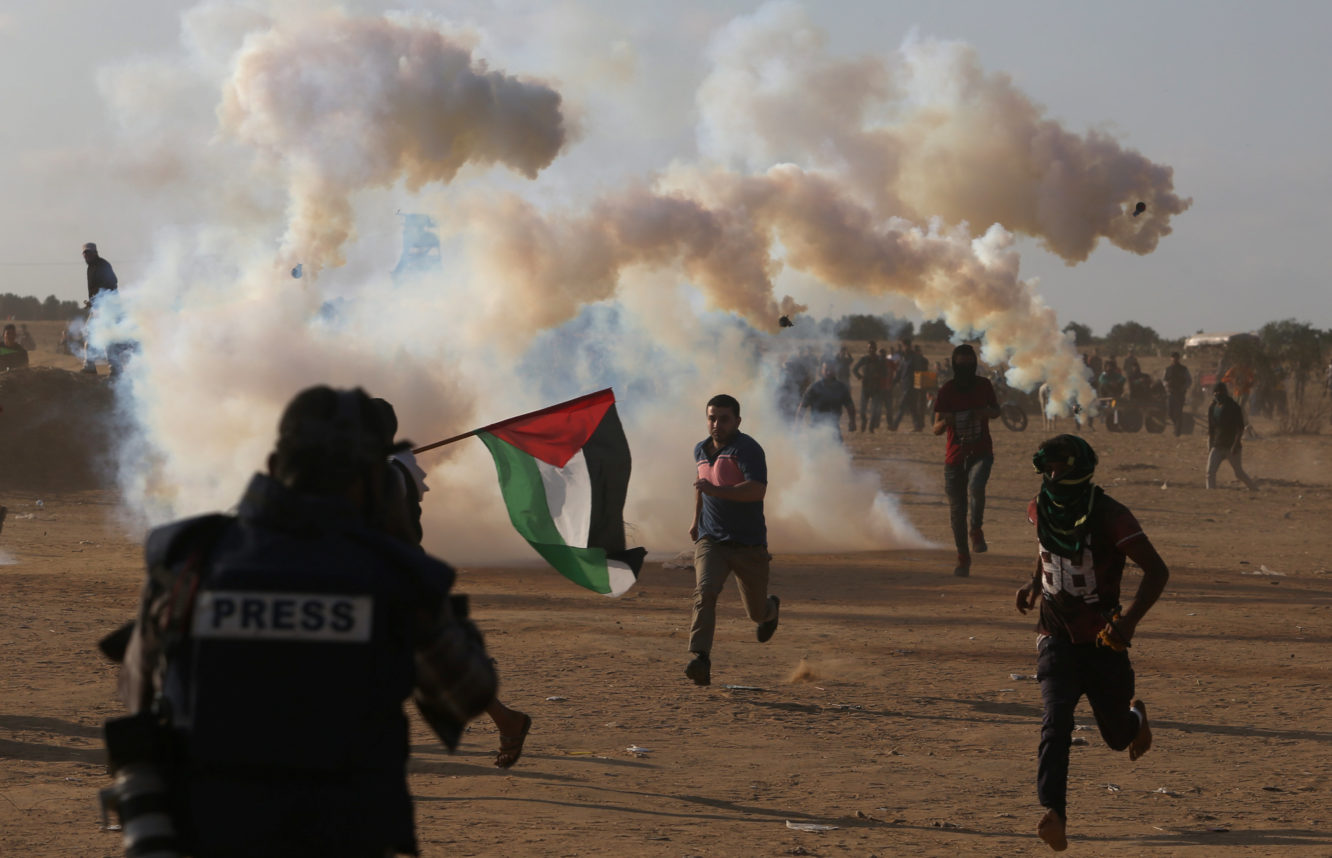
Meanwhile, Palestinians, with each passing year, unfailingly commemorate the Nakba with gnashed teeth, keys dangling from necks not as entitlements but as nooses derailing their national aspirations.
It is a cautionary tale of two once-stateless people. One achieved spectacular success while the other squandered every opportunity and flounders still, refusing to concede the verdict of history or to acknowledge the mistakes of their leadership. Most tragically, they have abdicated any responsibility for securing the future of their people.
There is yet another object lesson to the legacy of Walowa 19.
To mark the first anniversary of Gaza’s weekly March of Return, Hamas officials urged children to stay home from school and participate in the “Day of Rage” — mostly by hurling rocks, flying incendiary kites and rolling burning tires toward Israel’s security fence.
If I told my parents, who had forfeited all rights to their Polish homes, that I was going to stay home from school, board a jet and participate in the Cold War by throwing rocks at the Polish border patrol, they would have bashed my head in with a rock.
Sorry, but Palestinian children belong in school. And their parents must free themselves from a self-sabotaging Nakba consciousness that has been nothing but poison.
Jews regaining their homeland after 2,000 years of exile is not a “catastrophe.” The perversion of that word is not only ahistorical and counterfactual, it is a distortion of political reality and the primary reason why Palestinian statehood may never become more than a dream.
Thane Rosenbaum is a novelist, essayist, law professor and distinguished university professor at Touro College, where he directs the Forum on Life, Culture & Society. His work has appeared in major national and global publications. He is the legal analyst for CBS News Radio and appears frequently on cable TV news programs. His most recent book is “Saving Free Speech … From Itself.”