fbpx

Judea Pearl reflects: A father’s words

Eleven years ago, when tragedy blackened our skies, and millions of people resonated with our mission of rolling back the hatred that took our son’s life, we were quick to learn that the journalistic community is not only our strongest partner but also a special member of our extended family.
[additional-authors]
May 1, 2013

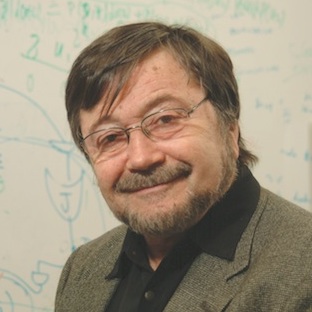
This is an excerpt of Judea Pearl’s speech made on April 17 at the inauguration of the Daniel Pearl International Journalism Institute, at the Interdisciplinary Center in Herzliya, Israel.

Eleven years ago, when tragedy blackened our skies, and millions of people resonated with our mission of rolling back the hatred that took our son’s life, we were quick to learn that the journalistic community is not only our strongest partner but also a special member of our extended family.

For journalists, Daniel’s journey has come to symbolize the nobleness of the profession, as well as the Promethean urge that compels every journalist to bring the fire of new knowledge to mankind despite obstacles, risks, authorities and conventional wisdom. This special partnership with the journalistic community has led the Daniel Pearl Foundation to initiate a fellowship program that brings Muslim journalists to U.S. newspapers for extensive training and exposure with the aim of transporting what they learn and see in a free-press environment to their readers in their countries of origin. More than 20 fellows-ambassadors have graduated from this program thus far, and they are now carrying Daniel’s torch of friendship and understanding throughout the Middle East and Southeast Asia. These young men and women embody the principle on which this new institute is founded: “An investment in one journalist is an investment in the hearts and minds of hundreds of thousands of readers.”

In one memorial service for Daniel, a Catholic priest by the name of David Neuhaus made a stunning remark: “As mediators of reality,” he said, “the modern journalist can be likened to the biblical prophets.” My first reaction was that the comparison is too far-fetched, if not heretical; yet on further reflection I came to understand his point. Who serves today as the moral compass of society, and, like Jeremiah, Isaiah and other ancient prophets, risks his life by exposing corruption, institutional injustice, terrorism and fanaticism? The journalist!

But the Bible also offers us a foolproof test for discerning false prophets from true ones. The test is not based on the nature of the reported facts, but on the method and principles invoked in the making of the report. Translated into secular modern vocabulary, the biblical test asserts that the true journalist will never compromise on universal principles of ethics and humanity and will never allow us to forget that all people, including our adversaries, need be portrayed with dignity and respect as children of one God. 

I once proposed this principle as the “Daniel Pearl litmus test of responsible journalism” — choose any newspaper or TV channel and ask yourself when was the last time it ran a picture of a child, a grandmother or any empathy-evoking scene from the other side of the conflict.

And this brings us to the mission and unique challenge of the Daniel Pearl International Journalism Institute, whose opening we are celebrating today. The challenge is beautifully summarized in a message we received last week from Christiane Amanpour, chief international correspondent for CNN and ABC News. “As a ‘founding mother’ of the DPF [Daniel Pearl Foundation],” she wrote, “I send best wishes for the launch of this prestigious Institute in the name of a valued and sorely missed colleague. I hope that among the many paths young journalists will forge in Danny’s name and in his memory, a most important mission is to learn to listen to, and understand, the story of the other. It is the founding principle of journalism … and of peace.”

The media coverage of the Middle East is one of the most puzzling, if not paradoxical phenomena in modern-day journalism. While the volume of news stories coming out of the region is one of the highest in the world, the content of those stories is far from passing the Daniel Pearl litmus test. The daily lives, historical narratives and future aspirations of the people living in the region have been kept obscured under the heaviest curtain of misinformation and superficiality.

Journalists from Israel’s neighbors, for example, are barred from visiting or reporting on Israel, partly by their governments, but primarily, and sadly, by their own peers. As a result, Israel is seen in Muslim countries as a military compound, void of children, humor or any sign of humanity. On the other side, Israelis see the Arab world as one big madrasa dedicated to teaching the inevitable destruction of Israel. Western media has failed to identify and amplify voices in the Arab world that are prepared to accept Israel as a permanent fixture in the region. Nor has the media been able to present a faithful picture of the views and aspirations of ordinary Israelis; news items are crafted from interviews with the extreme right and the extreme left, giving no voice to the vast majority of Israeli society — a key player in any peace-making process.

The Middle East is craving in-depth coverage of the core issues that will shape the destiny of the region, and the Daniel Pearl Institute for International Journalism aims to address this challenge by providing academically based knowledge and region-specific training for such coverage to emerge.

We cannot think of a greater tribute to our son Daniel than leveraging his legacy toward quality journalism in the Middle East and contribute, in this humble way, toward a lasting peace in this troubled region of the planet.


Judea Pearl is a professor at UCLA and president of the Daniel Pearl Foundation (

Did you enjoy this article?
You'll love our roundtable.

Editor's Picks

Latest Articles

The Beat Goes On

While so much of the world seems obsessed with and consumed by its hatred of Israel and Jews, Israelis continue to build, create, work, celebrate, argue, raise families, and plan for the future.
Viral AI Video Targets Jewish Comedian

“The biggest concern is that people now have a pathway to shut down Jewish voices through complete falsities that people will believe. … For the future of Jewish entertainment, it’s very scary.”
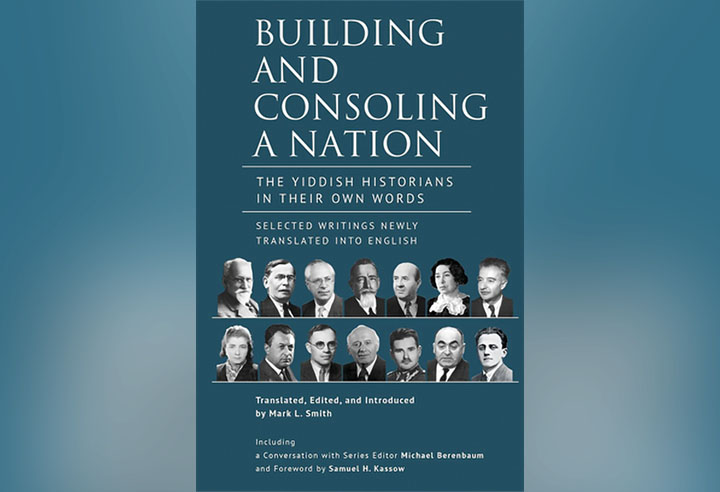
Yiddish Historians: Writing in Their Own Language for Their Own People

Mark Smith has compiled an important anthology of Jewish history using 49 works by Yiddish historians to recreate or at least open the door to a world of Jewish thought that was once almost mainstream, but which no longer exists, except in the minds of too few specialists.
The Everlasting Melody

Most Jews who have sung “Eitz Chaim” over the past half-century probably never knew Portnoy. They did not know when he wrote the melody or how young he was when he composed it. They simply knew the song.

Who’s Really the Victim?

Those who would revel in Israel’s demise are claiming victimhood on every front and denying attacks on us in the same breath.

Biblical Deterrence

After Oct. 7, the sentiment in Israel toward the Iranian leadership was unequivocal: You went medieval — so we will go biblical.
How Sukkot Makes Us Whole

This year, I bless us that we open our eyes to truly see the beauty and the holiness of the world, and of the person before us at each and every moment, and to see the godliness of their aspirations and their fears.
The New Ushpizot

Ushpizin invite us to “welcome in our ancestral constellation and dwell amongst them.” This year, it’s Ushpizot, for the women. It’s the year of the Feminist Visitation.

Macklemore, Or Less

In between his songs, he proclaimed, “Free Palestine,” which is fine, asserted that opposing Israeli military actions is not antisemitic, which is accurate, and accused Israel of apartheid and genocide, which is offensive, untrue and hateful.
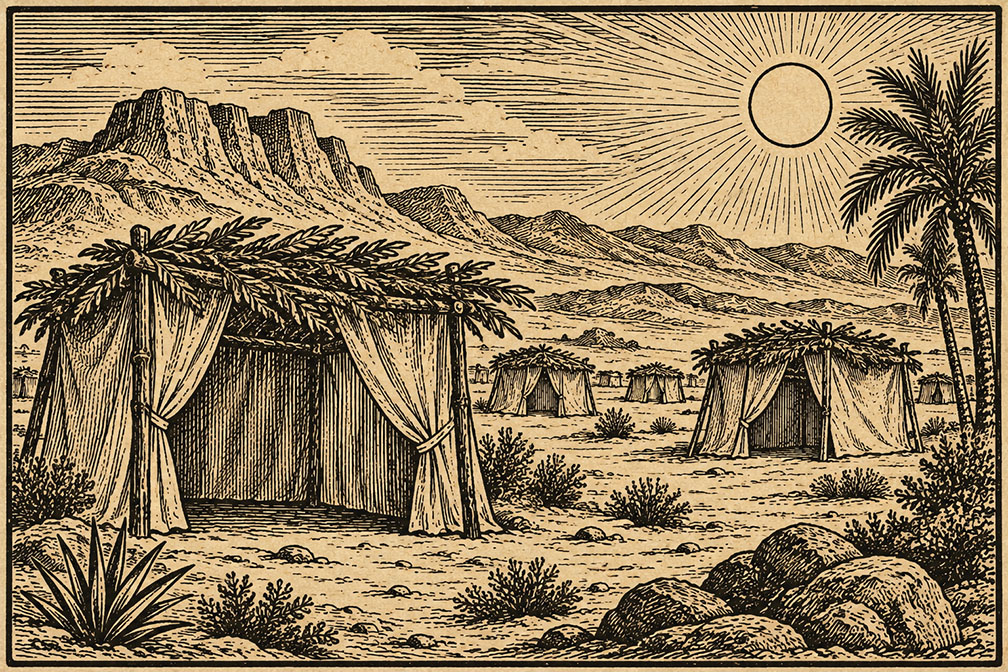
The Rokeach’s Remarkable Sukkah

To Rabbi Eleazar ben Judah of Worms (1176-1238), the medieval German pietist known as the Rokeach, the sukkah symbolized Jewish military might.

The Sukkah and the Power of Endurance

They can destroy our Temples, demonize us in social media, shower us with hate, but they can’t destroy a spirit that never stops building. That enduring spirit is the power of the sukkah.
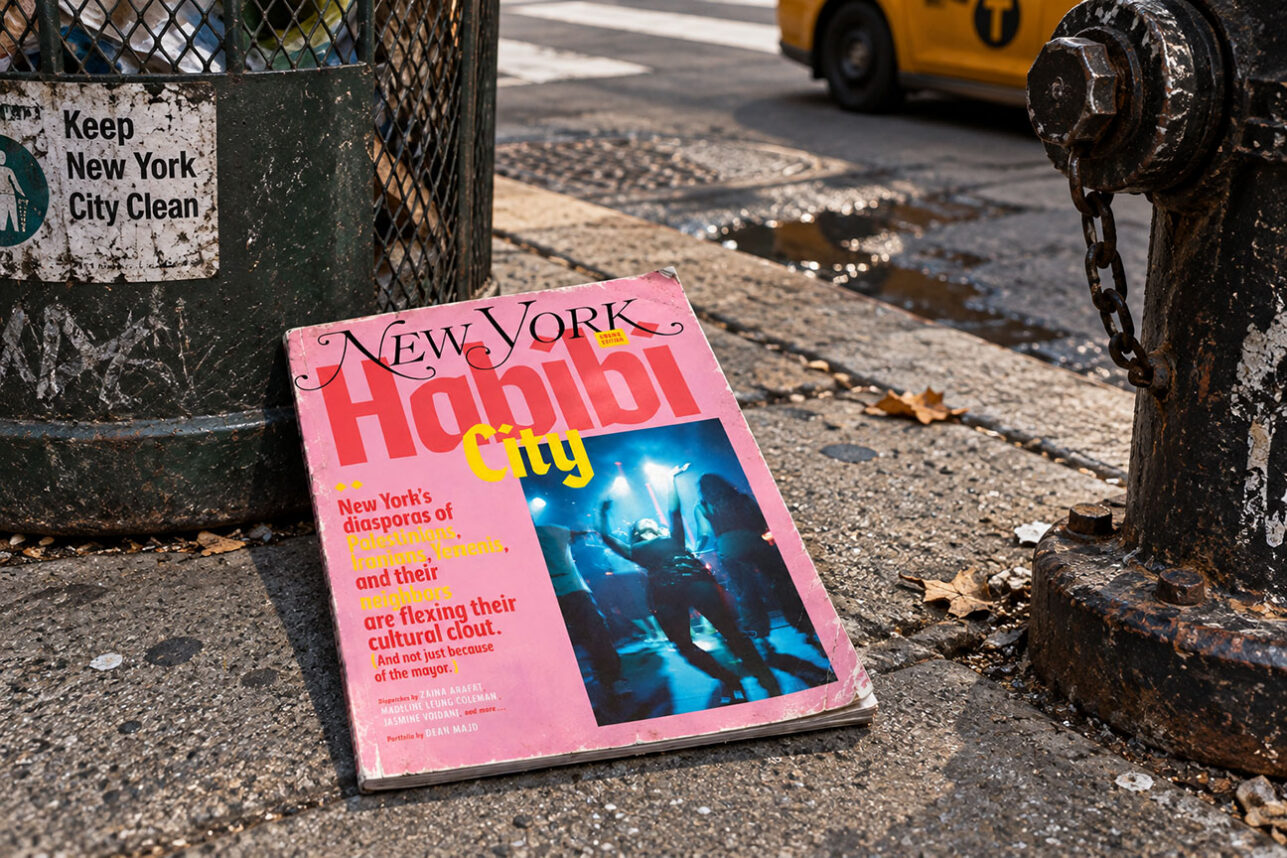
NY Mag’s Habibi City

A satirical response to Zaina Arafat’s erasure of Jews in her New York Magazine article “Habibi City,” written as Zaina Arafat.
The ‘Fauda’ Enigma

In many of the nations that believe Israel has no right to exist and routinely root for terrorists to slaughter Jews, a TV show that depicts Israeli covert operatives outsmarting and dispatching Arabs has an inexplicably loyal global audience.
More news and opinions than at a Shabbat dinner, right in your inbox.