
There’s a country, I know, out in the sapphire glass heart of the universe, where every sick and ailing child has a likeness: One is of the flesh; the other, of light. One embodies what is; the other, what should have been.
What should have been, what would be, but for the tiny sleight of hand (is it of nature? Or God? Or that thing we call destiny?) that determines who will live and how. Who will thrive and who will hurt. Who will be spared, and who struck.
Every parent of a sick child, I believe, knows about this other country and its beautiful young people. It’s evidence of all that the child has been robbed of — this mirror image untouched by physical or emotional blight. Faced with it, most parents will seek to heal or, if that’s not in the cards, to lessen the child’s suffering; to convince themselves that there’s a larger design that remains incomprehensible; to embrace the perfect wisdom, the “loving kindness” of a creator whose resolve, we have learned, cannot be bent. A few brave or desperate souls, prompted by personal tragedy, raise the banner of war and seek new treatments or even a cure. With one hand, they hold and care for their child; with the other, they wrestle with time and the lack of resources and the indifference of a world that will not rally, not even listen, except out of self-interest.
It’s a rare and precious person who dares challenge the tyranny of chance in this way. But it’s an even rarer and more valiant soul who rejects that tyranny entirely, dismisses the stories about God’s will and “a reason why things happen” and, out of pure compassion and the desire to save the bodies and souls of the innocent and unsuspecting, devotes his life and many talents to correcting nature’s mistakes.
That’s what I learned the first time I met David Rimoin, at a gathering of Iranian Jews in Los Angeles. He was there to speak about the genetic testing he had recently developed for four Iranian-Jewish diseases, how a few drops of saliva and a few hundred dollars could end 3,000 years of a certain kind of suffering, spare every new child and every new family from the ruinous effects of a single genetic mutation. He couldn’t save the already affected, he said with regret, but with a little help from the community, he could ensure that the diseases would be eradicated for future generations.
I refer to him here not by his many titles — doctor of medicine, doctorate in medical genetics, director of the Cedars-Sinai Medical Genetics Institute, a pioneer in research in skeletal disorders and abnormalities who played a pivotal role in developing mass screenings for Tay-Sachs disease and other heritable disorders — but by his name alone, because, strange as this may sound, given the enormity of his contributions to humanity, the man was much greater than his work.
The gathering I mentioned was called not by Iranian Jews, who stood to benefit from the testing, but by David Rimoin and his team at Cedars. He was concerned that too few Iranians were being tested and wanted to learn why. From his experience with Tay-Sachs, he realized the importance of education. He knew that fear — of learning one has the disease, or of social stigma — played a pivotal role in any decision about being screened. With Dr. Michael Taback, his partner in the Tay-Sachs project, he spoke of the way in which the Orthodox Jewish community has conquered those issues, and he asked his Iranian audience for ideas that might be similarly effective. And he did all this with the same gentle modesty and generosity of heart, the same absence of judgment or arrogance, the same subtle determination and quiet empathy for which his colleagues and patients, his friends and his staff, and those, like me, with whom he crossed paths all too briefly, had come to know him.
And there I was, watching and listening and wondering why. Why was an American doctor of Canadian origin, an Ashkenazi Jew who had already made his mark in a much larger community, interested in saving Iranian Jews? I realized he was also working on some 20-plus hereditary illnesses found mostly among the Ashkenazim. But why give so much of his life to 100 or 2,000 Iranians when there were millions of others — people of Mediterranean origin, Finns, Haitians, Indians and African-Americans — with genetic diseases particular to their populations? There’s no celebrity factor, no high-profile funding, no media interest, even, in Iranian-Jewish diseases. So if the mountain should be climbed just because it’s there, why not select a taller, more recognizable peak?
I asked Dr. Rimoin this question once, and asked again, at a similar gathering a year later. Each time, he smiled politely and changed the subject back to what needed to be done. He was still planning a major public outreach, exploring an arrangement through which the entire cost of testing would be subsidized, and I was still wondering why — why us? — when he passed away late last month. Only then did it dawn on me that the answer had been obvious all along; that it was so patent and honest, so truly unselfish, I had looked right through it:
“It’s not only because the mountain is there,” Dr. Rimoin might have told me, “it’s because I’m here.”
By then, I had already realized that I wasted too much time trying to understand a man who was unlike most. I had asked too many questions and offered too little gratitude. That if I had been able to speak with the voice of our entire community, on behalf not only of the living but of all the future generations of Iranian Jews everywhere in the world, I would have said only this to David Rimoin:
Thank you. For what you gave of yourself and what you took away from the otherwise awesome legacy of Jews everywhere. Thank you for that river of light that, because of your efforts, now glows where once there was only darkness and pain. For the legions of children who will walk alongside it through every dawn and every sunset from here after, their bodies intact and luminous, in this universe and in the other.
A memorial service will be held for Dr. Rimoin on June 11 at 4 p.m. at the Harvey Morse Auditorium at Cedars-Sinai Medical Center.
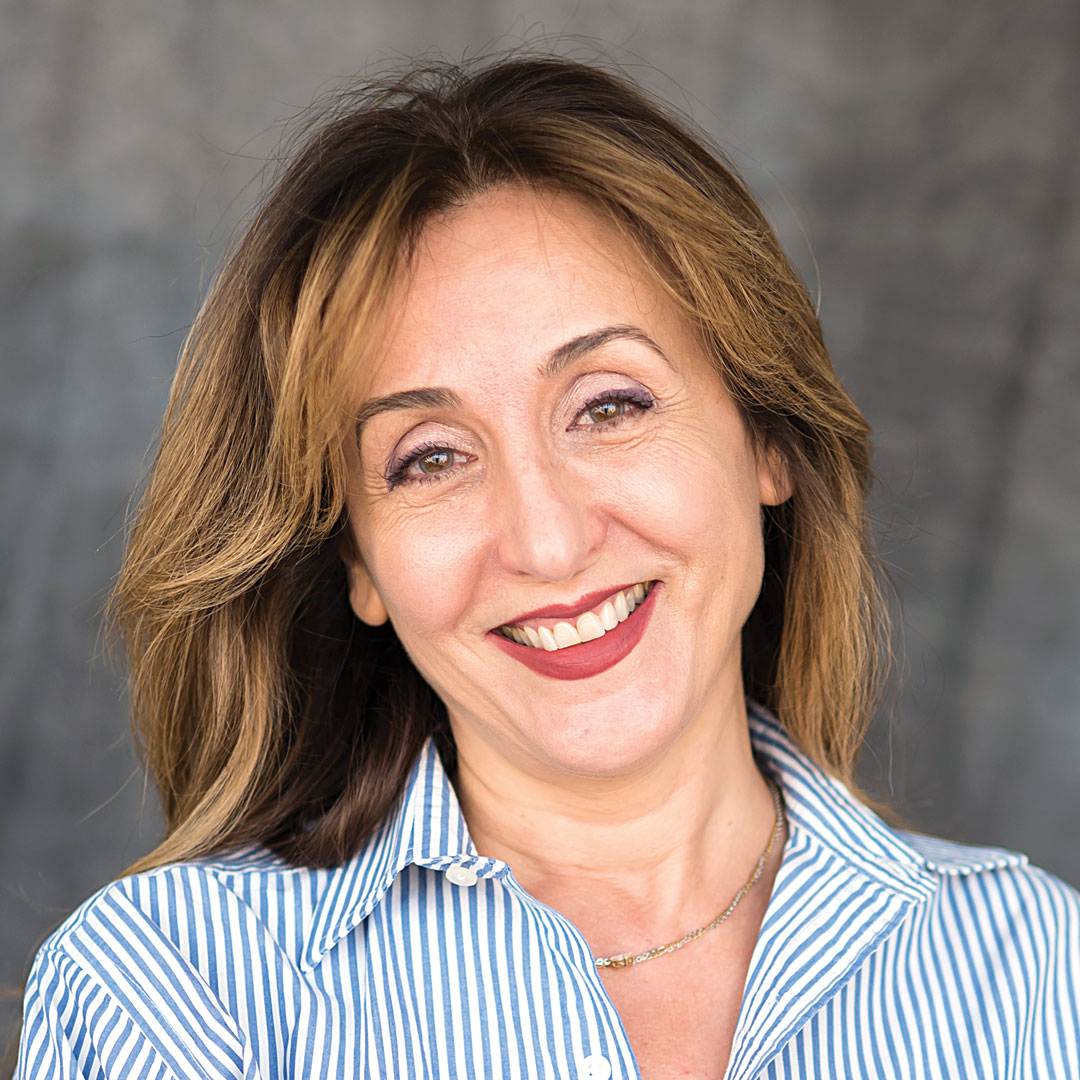
Gina Nahai is an author and a professor of creative writing at USC whose column appears monthly in The Journal. She can be reached at ginabnahai.com.

































