
I’ve never met a human being who likes to get beat up. I don’t care if you’re a radical Marxist or a sworn anarchist—all people want to feel physically safe. From prehistoric days, our brains have been hardwired to avoid anything that would harm us. “Safety first” is not just a cute slogan for children in summer camps; it’s humanity’s ultimate talking point.
So, when some genius decided two years ago to start a “Defund the Police” movement that would mean less safety and more danger, should we be shocked if a backlash developed? If violence increased alarmingly across the nation? If “anxieties over crime” drove yesterday’s elections?
“Voters in California showed up on Tuesday in support of tough-on-crime policies,” The Hill reported. No kidding. For the past couple of years, the number one subject at Shabbat tables across Los Angeles has been fear. The rise in crime. The need to protect ourselves. Beyond that, everything feels like commentary.
Fear is blindingly bipartisan. Criminals don’t care who you voted for. When you fear for your safety, partisanship becomes an unaffordable luxury.
Look at famously liberal San Francisco, where progressive residents became sick and tired of rising crime. Yesterday, they booted out District Attorney Chesa Boudin (D) by a 20-point margin. Boudin, arguably the poster adult of “defund the police,” used his post to advance a more lenient approach to crime, with policies like the elimination of cash bail.
Look at famously liberal San Francisco, where progressive residents became sick and tired of rising crime.
Somewhere along the way, he forgot to marry his big heart to the idea of outcomes, and ask himself: “What happens if my new policies lead to a rise in crime and voters can’t stand it?”
A similar story is unfolding in Los Angeles, where billionaire Rick Caruso finished as the top vote-getter in the city’s mayoral race. The Tuesday vote, The Hill reported, was seen as “a major show of support for a candidate who built a reputation in politics as a member of the Los Angeles Police Commission and vowed throughout his campaign to get tough on crime.”
A similar story is unfolding in Los Angeles, where billionaire Rick Caruso finished as the top vote-getter in the city’s mayoral race.
“Tough on crime,” if you haven’t noticed, is the very opposite of “defund the police.”
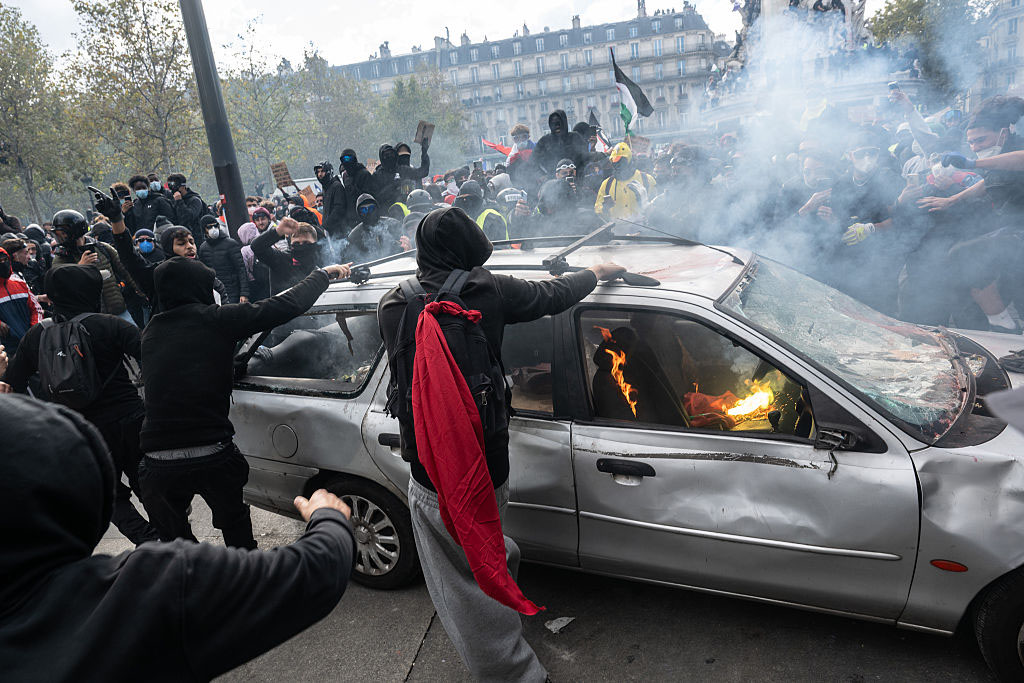
Two years ago, when a cop in Minneapolis put his cruel knee on George Floyd’s neck for long enough to kill him, the national outcry was so loud that subsequent calls to “defund the police” were tolerated as a show of solidarity. It was all part of a national reckoning on race, with Black Lives Matter protests leading the way.
Some activists were quick to qualify the calls to “defund” the police along the lines of “reforming” the police. The problem is that in many cities, defunding was taken and implemented literally. As law and order budgets were slashed, the ensuing rise in crime—including in many Black communities—was severe enough to dominate other voter concerns.
In a piece titled, “Worries over crime haunt Democrats ahead of the midterm elections,” The Washington Post reported today that “Democratic lawmakers up and down the ballot scramble to assure voters that they’re not soft on crime. It’s a sea change from two years ago when, amid the height of racial justice protests, some leaders on the left began to rethink their approach to criminal justice.”
“Tough on crime,” if you haven’t noticed, is the very opposite of “defund the police.”
This bipartisan reality check is a healthy development. It suggests that some issues are so primordial to voters that politicians of all stripes must come together to resolve them.
A government’s number one duty is to keep its people safe. Police reforms and jail reforms are noble and fine, as long as they don’t undermine people’s safety.
At a time when we’ve never been more divided, fear for our safety is reminding us that our humanity comes before politics.