fbpx

June 8, 2022

How a Misguided Slogan is Changing American Politics

I’ve never met a human being who likes to get beat up. I don’t care if you’re a radical Marxist or a sworn anarchist—all people want to feel physically safe. From prehistoric days, our brains have been hardwired to avoid anything that would harm us. “Safety first” is not just a cute slogan for children in summer camps; it’s humanity’s ultimate talking point.

So, when some genius decided two years ago to start a “Defund the Police” movement that would mean less safety and more danger, should we be shocked if a backlash developed? If violence increased alarmingly across the nation? If “anxieties over crime” drove yesterday’s elections?

“Voters in California showed up on Tuesday in support of tough-on-crime policies,” The Hill reported. No kidding. For the past couple of years, the number one subject at Shabbat tables across Los Angeles has been fear. The rise in crime. The need to protect ourselves. Beyond that, everything feels like commentary.

Fear is blindingly bipartisan. Criminals don’t care who you voted for. When you fear for your safety, partisanship becomes an unaffordable luxury.

Look at famously liberal San Francisco, where progressive residents became sick and tired of rising crime. Yesterday, they booted out District Attorney Chesa Boudin (D) by a 20-point margin. Boudin, arguably the poster adult of “defund the police,” used his post to advance a more lenient approach to crime, with policies like the elimination of cash bail.

Look at famously liberal San Francisco, where progressive residents became sick and tired of rising crime.

Somewhere along the way, he forgot to marry his big heart to the idea of outcomes, and ask himself: “What happens if my new policies lead to a rise in crime and voters can’t stand it?”

A similar story is unfolding in Los Angeles, where billionaire Rick Caruso finished as the top vote-getter in the city’s mayoral race. The Tuesday vote, The Hill reported, was seen as “a major show of support for a candidate who built a reputation in politics as a member of the Los Angeles Police Commission and vowed throughout his campaign to get tough on crime.”

A similar story is unfolding in Los Angeles, where billionaire Rick Caruso finished as the top vote-getter in the city’s mayoral race.

“Tough on crime,” if you haven’t noticed, is the very opposite of “defund the police.”

Two years ago, when a cop in Minneapolis put his cruel knee on George Floyd’s neck for long enough to kill him, the national outcry was so loud that subsequent calls to “defund the police” were tolerated as a show of solidarity. It was all part of a national reckoning on race, with Black Lives Matter protests leading the way.

Some activists were quick to qualify the calls to “defund” the police along the lines of “reforming” the police.  The problem is that in many cities, defunding was taken and implemented literally. As law and order budgets were slashed, the ensuing rise in crime—including in many Black communities—was severe enough to dominate other voter concerns.

In a piece titled, “Worries over crime haunt Democrats ahead of the midterm elections,” The Washington Post reported today that “Democratic lawmakers up and down the ballot scramble to assure voters that they’re not soft on crime. It’s a sea change from two years ago when, amid the height of racial justice protests, some leaders on the left began to rethink their approach to criminal justice.”

“Tough on crime,” if you haven’t noticed, is the very opposite of “defund the police.”

This bipartisan reality check is a healthy development. It suggests that some issues are so primordial to voters that politicians of all stripes must come together to resolve them.

A government’s number one duty is to keep its people safe. Police reforms and jail reforms are noble and fine, as long as they don’t undermine people’s safety.

At a time when we’ve never been more divided, fear for our safety is reminding us that our humanity comes before politics.

How a Misguided Slogan is Changing American Politics Read More »

100 Years Ago This Month: When Congress Embraced Zionism—Unanimously

One hundred years ago this week, the United States Congress unanimously embraced Zionism. The story of how that came about involves some surprising twists and turns, and a stormy debate about Jews and Arabs that could have been taken straight out of todays headlines.

In the spring of 1922, the League of Nations—forerunner of the United Nations—was weighing Great Britains request to be granted the mandate over Palestine. The approval process was slowed as France and Italy jockeyed for regional influence and the Vatican sought to prevent Jews from gaining a privileged” position or preponderant influence” in the Holy Land.

In the wake of Englands 1917 Balfour Declaration, pledging to facilitate creation of a Jewish national home, American Zionists were eager to see the British receive the Palestine mandate. They hoped an endorsement of Zionism by President Warren Harding would accelerate the process. But Harding proved noncommittal, so Zionist activists turned to Congress.

Senators Henry Cabot Lodge, of Massachusetts, and Charles Curtis, of Kansas (a future vice president) and Rep. Hamilton Fish, Jr., of New York, all Republicans, agreed to take the lead on a pro-Zionist resolution. They were isolationists and immigration restrictionists—not exactly the Jewish communitys favorite kind of politicians. Rabbi Stephen S. Wise, head of the American Jewish Congress, had recently denounced Lodge as un-American and anti-American” because he opposed U.S. participation in the League of Nations.

Successful lobbying, however, is the art of the possible. Many Jewish leaders may have been personally more comfortable with  Democrats, but in 1922, the president was Republican and the GOP enjoyed large majorities in both the Senate and the House of Representatives. If three powerful Republican congressmen were ready to champion the Zionist cause, why should they be turned away?

The Lodge-Fish resolution, as it came to be known, declared that the United States of America favors the establishment in Palestine of a national home for the Jewish people.” It added that the civil and religious rights of Christian and all other non-Jewish communities in Palestine” and the holy places and religious buildings and sites” should be adequately protected.”

Hearings were held before the House Committee on Foreign Affairs over four days in April.

The testimony by Zionist officials emphasized both justice and rescue. The Jewish people were entitled to rebuild their biblical homeland, and European Jews urgently needed a haven; 100,000 Jews had been slaughtered in pogroms in Ukraine and Poland in 1918-1921. Moreover, Zionist development of the land would benefit Palestines Arab population.

Two Arab-American activists, Selim Totah and Fuad Shatara, appeared as witnesses. Their extremism and conspiracy theories won them little sympathy. Totah claimed the British administration in Palestine was in the hands of the Jews.” Shatara said the suffering of Jewish pogrom victims in Europe was nothing to compare” with the burden of heavy taxes that Palestines Arabs endured under Turkish rule. Both men insisted that they were not antisemitic—Totah because I have a lot of Jewish friends,” Shatara because I am a Semite myself.”

Then as now, Jewish anti-Zionists were front and center in the debate. Two prominent Reform rabbis, Isaac Landman of New York and David Philipson of Cincinnati, testified against Lodge-Fish, claiming the resolution could endanger the status of American Jews. We resent the idea that the Jews constitute a nation,” Landman argued. America is my national home.”

The anti-Zionist publishers of the New York Times were among the most vociferous critics of the resolution. A Times editorial warned that Lodge-Fish could turn American Jews into hyphenated citizens.” The Times also highlighted the alleged misbehavior of radical Jewish settlers; it published reports from its Palestine correspondent claiming that Arab violence against Jews was stirred up” by Jewish Bolshevists.”

Another aspect of the episode with contemporary echoes was the role of prominent academics. Yale professor Edward Bliss Reed testified at the congressional hearings that the Balfour Declaration was the product of a Zionist-British conspiracy, complete with secret additional paragraphs that supposedly were being withheld from public view.

In speeches and writings around the same time, Harvard professor Albert Bushnell Hart called Zionism a dangerous doctrine” and demanded that American Jews either renounce it or surrender their U.S. citizenship. Princetons Henry Adams Gibbons, explaining his opposition to Zionism, wrote: We do not hold in abhorrence the Jews, but we do hold in abhorrence the Jewish nation.”

Despite the critics, the Lodge-Fish resolution received overwhelming bipartisan support. It was unanimously adopted by the Senate on May 3 and the House on June 30, and signed by President Harding later that year.

Despite the critics, the Lodge-Fish resolution received overwhelming bipartisan support.

Why was there such broad support in Congress for Lodge-Fish? Anti-Zionists claimed it was all a cynical bid for Jewish votes; yet many of those who voted for the resolution had very few Jewish constituents. Was it all about the Benjamins” (to borrow the infamous phrase of a contemporary congresswoman)? Scholars have found no evidence to suggest that Jewish donors played any role.

Most of those who voted for the resolution likely just concluded that the Zionist cause had merit, and that most Americans felt the same way. The Jews did need a haven, and they did have roots in the Holy Land going back thousands of years. The Arabs did have vast lands of their own, and those who chose to live peacefully alongside the Jews would enjoy the prosperity of a developed country and the civil rights that the Balfour Declaration promised.

The passage of the Lodge-Fish resolution was a symbolic victory, and in political struggles, symbols are important. They can educate; they can inspire. The embrace of Zionism by a united Congress legitimized the cause in the eyes of undecided Americans and galvanized American Zionists to redouble their efforts, helping to pave the way for additional political victories on the road to Jewish statehood.


Dr. Medoff is the author of more than 20 books about Jewish history and Zionism, including The Historical Dictionary of Zionism[with Chaim I. Waxman].

100 Years Ago This Month: When Congress Embraced Zionism—Unanimously Read More »

Sinai Temple Appoints Nicole Guzik and Erez Sherman as New Senior Rabbis

On Tuesday, June 7, Sinai Temple in Los Angeles announced the board of directors’ approval of Rabbis Nicole Guzik and Erez Sherman as the congregation’s new senior rabbis. The married couple will jointly succeed Rabbi David Wolpe, when he transitions from senior to emeritus rabbi beginning June 30, 2023. Wolpe has led the congregation since 1997. 

“When you’ve spent 25 years in a place, what you care most about are the people who are going to succeed you,” Rabbi David Wolpe said in a press release. “We are so lucky and so blessed to have such learned, charismatic and kind leaders as Rabbis Guzik and Sherman. I feel lucky, and Sinai is blessed, because they’ll make it your home.”

“Leading Sinai Temple is a professional dream come true,” said Guzik, whose appointment is historical; she will be Sinai’s first female senior rabbi.

Guzik, who began her tenure as a rabbinic intern in 2006, has served as a rabbi at Sinai since 2009. She currently supervises Beit Bracha, Sinai Temple’s program for children with special needs and learning differences, and helped launch Sinai Temple’s Mental Health Center. She received her Master’s in Marriage and Family Therapy in 2021.

“Rabbi Wolpe leaves tremendous shoes to fill,” said Guzik. “We are excited to hit the ground running, continuing to build the treasure that is the Sinai Temple community and ensuring that it remains a place where Jews of all ages and a wide range of backgrounds can find deep spiritual nourishment and growth.”

Sherman, who hosts the popular “Rabbi on the Sidelines” podcast, joined Sinai Temple as a rabbi in 2014. Through the Sinai Temple Israel Center, he has initiated Israel education among future rabbis around the United States. Sherman will pursue cantorial ordination in 2023.

“Sinai Temple will continue facilitating vital conversations between Los Angeles faith partners while holding the people and the land of Israel at the core of our rabbinate,” Sherman said. “We are thrilled to lead social action around this city and deepen Jewish connectivity within and beyond our community.”

Founded in 1906, Temple Sinai is the oldest Conservative congregation in Southern California. In addition to being the spiritual home to thousands of Jewish Angelenos, Sinai Temple provides community resources, including Jewish and secular education, meaningful social gatherings, Israel advocacy opportunities, young professional engagements and membership-based counseling and support services.

Sinai Temple Appoints Nicole Guzik and Erez Sherman as New Senior Rabbis Read More »

Flying In the Face of Logic, Adapting the Peacemaking Modality

Michigan U.S. Rep. Andy Levin led a bill late last year that proposed to take steps to encourage a two-state solution to the Israeli-Palestinian conflict. Levin’s bill placed a ceaseless focus on the occupation, and for that reason alone, the bill’s proposal would not have produced the desired solution it sought to achieve.

The consensus among mediators has been to meet each Palestinian rejection with terms that are better for the Palestinians and worse for Israel.

Since 2000, when the head of the PLO, Yasser Arafat, turned down Israeli Prime Minister Ehud Barak’s offer at Camp David which would have birthed a sovereign independent Palestinian state with no occupation, no settlements and a division of Jerusalem, the consensus among mediators has been to meet each Palestinian rejection with terms that are better for the Palestinians and worse for Israel.

This approach can only incentivize further conflict between Israel and the Palestinians. Why? Because in any conflict if the losing side can get better terms by rejection and violence, it will keep rejecting and pursuing violence. If the winning side gets worse terms by making peace than by maintaining the status quo, it will seek to maintain the status quo. None of this is new or particularly insightful, it’s conflict resolution 101. It is how the expert class approaches every conflict in the world – except for the one involving the Jewish state. 

The discussion on the Israeli-Palestinian conflict remains one of a remarkable reversal of cause and effect. The occupation looms large over every proposal which claims resolution as its goal with diplomats underwriting that the occupation is the “heart of the conflict”. 

This flies in the face of all logic. Through this lens the occupation is birthed merely on its own and out of nowhere. When in truth, occupations aren’t birthed out of nowhere and they have never caused war; instead, occupations are the result of war. When two sides clash in a conflict, it is more usual than not that at the end of the conflict, one or both sides is occupying territory previously held by the other. Ordinarily, this is where negotiations begin for a diplomatic settlement. Only once a new line is agreed upon by both sides, does the occupation dissolve and both redeploy to opposite sides of the agreed upon lines.  

Every mediation plan in the history of the modern world has understood this notion, yet it is repeatedly abandoned in Palestinian-Israeli peacemaking. Why? Because to acknowledge this truth, would mean acknowledging how the occupation of the West Bank and Gaza began and why it has lasted so long. It began with the defeat of a coalition of three Arab armies in their attempt to wipe Israel off the map. The occupation’s continuation is in the refusal, initially of these Arab states and today of the self-governing Palestinians, to accept any peace deal that requires them to reconcile with the existence of a Jewish state in the Middle East.

The way to end this occupation is the same way previous occupations ended, by reaching some sort of diplomatic agreement that either ends the conflict completely or at least effects some sort of agreed-upon truce. Pursuing an end to the occupation as a means to end the conflict is a misguided approach, impossible to achieve as it ignores the root cause of the conflict. It is astonishing to realize that the accepted view of learned opinion on Israeli-Palestinian diplomacy runs so counter to any tried and tested conception of peacemaking.

If mediators were at all serious about their underwriting of a two-state solution and an end to the conflict, they’d begin with an approach called “Yes to the Occupation, no to the settlements”, a term originally conceived by my colleague Dr. Einat Wilf. I will attempt to articulate my view on why they should undertake this concept merely as a starting point for a renewed approach to engaging with the conflict. The policy of “yes to the occupation, no to the settlements” proposes even-handed steps towards resolution by safeguarding the right of Israel to protect itself from hostile neighbors, while holding it accountable to its commitment to a two-state solution and simultaneously making it clear to the Palestinians that there will be no sympathy plays for their continued rejection of further peace proposals. 

 The proposal must clearly state that Israel must continue to recognize the existence of another people that also view the land as their homeland and, as such, has a right to part of this land. It must be stressed unequivocally that the Palestinians are expected to limit the fulfillment of their right to the land and that their claims are not supreme or exclusive.

The Palestinians must eventually lay down their arms and, in doing so, recognize that the Jewish people have a right to a state in the Land of Israel. Until this stage, Israel will continue to hold territory east of the border militarily.

As long as Israel adopts a clear policy that proves its willingness to divide the land, the military occupation of these territories to foil terrorism and protect the lives of all Israelis is justified until the Palestinians demonstrate the same willingness.

 Military occupation is an essential system of government in territories that are not intended to be annexed. Yet, one is often likely to encounter propagated canards such as “end Israel’s illegal occupation” from uninformed members of the United States Congress, namely “the squad”. Occupation of territories acquired in war is legal according to the Hague Convention of 1907 and the Fourth Geneva Convention of 1949. Therefore, as long as Israel adopts a clear policy that proves its willingness to divide the land, the military occupation of these territories to foil terrorism and protect the lives of all Israelis is justified until the Palestinians demonstrate the same willingness.

 So along with “yes to occupation,” a policy of “no to settlements” must be declared by mediators. The military occupation east of the border can be justified to provide necessary security. However, the continuation of settlement expansion cannot. A willingness to divide the land and recognize the right of another people to the land cannot exist alongside the settlement enterprise. 

 The support of such policy by mediators will result in the acknowledgement that the military occupation of the territory will have a single legal system and a single population under this rule of law, without Israeli territorial demands and with a clear statement to the Palestinians of the requirements they must adhere to in order to end the occupation. This in essence also ends the indulgence of support for continual Palestinian rejection. Such a policy will achieve maximum separation between the two peoples and result in minimum friction.

This policy recognizes the existence of two distinct collectives between the Jordan River and the Mediterranean Sea. It states that land must be left for the Palestinians, but Israel must remain militarily in the territory until they lay down their arms against the Jewish state. This proposal would be a policy that utilizes essential geopolitical opportunities to forge major achievements, without the danger of expansion and without endangering the safety of Israeli citizens.

For Israel, an end to the settlement project is not a defeat, but a return to its basic principles; the integration of a stirring vision that operates according to pragmatic policy that underwrites its commitment to peace and its responsibility to protect its citizens all within the bounds of morality and international law.


Samuel Hyde is a writer and editor at The Institute for Monitoring Peace and Cultural Tolerance, based in Tel Aviv. His work focuses on topics that range across Israel’s political climate, antisemitism, the Arab-Israeli conflict and extremism in the education sector.

Flying In the Face of Logic, Adapting the Peacemaking Modality Read More »

The Ghost of Fanny Brice: How Jewish Humor Saved the Jews

Fanny Brice, born Fania Borach at the turn of the century in New York, was an institution in twentieth-century entertainment. The musical “Funny Girl,” originally starring Barbra Streisand, tells the story of Brice’s rise to fame through the venues of vaudeville and later Broadway, winning over the hearts of her audiences with her absurd, crass, often raunchy humor. Brice used comedy and her explicitly Jewish disposition to set her apart from other stars of the age and has thus been immortalized in the Jewish canon as a pop-culture icon. 

I had the opportunity to see the revival of “Funny Girl” last week, which now stars Beanie Feldstein of “Ladybird” and “Booksmart” fame, and Jane Lynch, known by most for her role on “Glee.” Critics felt lukewarm (at best) about this production, and I cannot argue with most of their comments. If the production were to be rated simply on quality, viewers would leave disappointed. It feels more akin to a community theatre revamping of a time-honored classic that perhaps was destined to fail, scoring close to zero Tony nominations, as the person who made “Funny Girl” a roaring success, Barbra Streisand, was not on stage. 

I was able to take insights from “Funny Girl” that transcend the critical success of the production, however. The first is the popping Jewishness of Brice’s story, expressed by the Yiddish idioms sprinkled throughout the show and the historical throwback to when Jewish Americans burst from the Yiddish theater scene into the mainstream. And like most Jews watching this production, I left with the feeling of innate familiarity with a figure like Brice. When Brice is praised for connecting with fans so strongly, she attributes her success to the word “heimishe” — meaning “comforting” and “home-like.” This simply means that Jews have a talent for entertaining just as profound as our love for being entertained.

We are everywhere in the laughing business, and it appears to have always been this way. In 1978, Time Magazine famously proclaimed that eighty percent of American stand-up comedians were Jewish. 

“Funny Girl” reminded me of just how many Jews in my life work in comedy. Two of my closest friends in New York are both aspiring stand-up comedians and comedy writers, along with my sister, who performs in Chicago, and a handful of friends and acquaintances from my childhood who bounce around from various open mic-nights in search of name recognition. I then thought of the impact of Jewish people on comedy at large, from giants like Joan Rivers, Mel Brooks, and Larry David, to contemporary idols like Sarah Silverman and Alex Edelman, not to mention television shows like “The Marvelous Mrs. Maisel,” “Seinfeld,” “Curb Your Enthusiasm” and “Broad City.” We are everywhere in the laughing business, and it appears to have always been this way. In 1978, Time Magazine famously proclaimed that eighty percent of American stand-up comedians were Jewish. And still today, if you find yourself at an open-mic night anywhere in New York City, you will notice the room practically overflowing with curly hair and Magen David necklaces. 

Many have attempted to understand the Jewish proclivity toward humor and our own specific comedic dialect. Sigmund Freud hypothesized, and his hypothesis stuck, that Jewish humor is a defense mechanism against an often-threatening world. By laughing, especially at ourselves, we ease the pain the outside world has in store. Many clinical psychologists indeed agree that humor is a silver bullet to trauma. This theory is supported by perhaps one of my favorite Jewish jokes: 

“A high-ranking general approaches a policeman one day and tells him to round up all the Jews and all the bicyclists, to which the policeman replies: ‘Why the bicyclists?’” 

Professor Ruth Wisse goes deeper in her book “No Joke: Making Jewish Humor.” She writes: “Stand-up comedy is all about nerve.” It’s “a battle between aggressor and victims with wit as the weapon and laughter as the prize. Different from prizefights that pit people against one another in the presence of paying spectators, comedy pits the fighter against the paying customers, with silence as the killer, and the detonation of laughter as the victory.”

Perhaps the Jewish flocking toward comedy lies in our history, but not in the self-defensive way that Freud proposed. Rather, as Wisse suggests, it reflects our cultural custom of relating to one another not through militancy and aggression, but through being together and learning to live with one another. For two thousand years, we were denied the right to raise our own armed forces and to protect ourselves. Simultaneously, we much preferred studying Torah and feasting on Friday nights than teaching our children to be warriors. The recipe leads to people who rely deeply on socialization for comfort. Of course, talents for storytelling, music and comedy would develop naturally. 

It’s true that half of the world’s Jewish population was raised in a climate quite different from the American Jewish experience. In Israel, children are sent to the army, there is a perpetual threat of war, and the founders of Zionism did well to pedestalize masculinity and stoicism in their new society. In other words, actual conflict, not the conflict that ends “in the detonation of laughter,” as Wisse notes, is cooked into the fabric of Israel’s Jewish culture. While American Jews make friendship bracelets around campfires, Israeli Jews learn how to use a gun. Therefore, as much as I love Israelis, I can concede that American Jews are on average funnier than our counterparts. Tel Aviv may boast eclectic bars and beautiful beaches, but its comedy scene pales in comparison to those of New York City or Los Angeles, composed significantly of Jews.

Jewish humor is heimishe, New York-esque, and Americana all at the same time. It reflects our own unique Jewish perspective, the culture of a city comprising eight million people, and the tastes of an entire country all at the same time. 

Jewish humor is heimishe, New York-esque, and Americana all at the same time. It reflects our own unique Jewish perspective, the culture of a city comprising eight million people, and the tastes of an entire country all at the same time. When I was in Israel this summer, an astounding number of locals responded with “Oh! Like Seinfeld!” when I told them I was from New York, revealing the straight line that runs through America, American Jews and humor in the foreign imagination. The blueprint of this phenomenon is Fanny Brice. 

The ghost of Fanny Brice lingers in all the young Jews who aspire to be comics. She haunts all the seedy clubs in Brooklyn where I have met new friends, work contacts and potential dates. She blesses each performance that lampoons the stereotypes of Jewish mothers. In the beginning of “Funny Girl,” Brice asks: “Who’s an American beauty rose? With an American beauty nose?” At a pivotal time for Jews in America, she was able to connect our intimate culture to the appetite of the public, with no censorship or diluting of identity to be found, resulting in immeasurable success. Many have dared to follow in her footsteps, a tradition delightfully quintessential to the American Jewish experience.


Blake Flayton is New Media Director and columnist for the Jewish Journal.

The Ghost of Fanny Brice: How Jewish Humor Saved the Jews Read More »

A New Black-Jewish Coalition

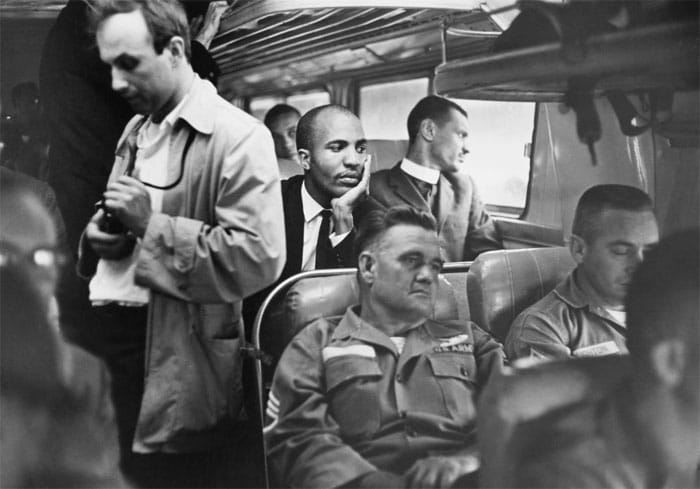
For more than a half century, the once-robust relationship between the Jewish and Black communities has gradually withered. Growing doubts about Israel among minority voters have created one of the most significant divisions within the Democratic Party and therefore one of the greatest challenges to bipartisan support for the Jewish state. 

Stories about the Freedom Riders and other Jewish leaders in the civil rights movement, as well as the coalition that the communities formed on behalf of then-Mayor Tom Bradley in the 1970’s and 80’s, have grown musty with age, and sporadic efforts to re-create those relationships with other underrepresented communities has met with mixed success at best. 

That’s why it’s worth paying attention to the Urban Empowerment Action PAC, a new political action committee organized by Jewish and Black leaders to support candidates who are “dedicated to the educational empowerment and economic uplift of Black communities.” This is the type of language that we’ve heard periodically over the years as similar partnerships have occasionally been attempted, but usually without much lasting impact. 

But this group has something different that could help it succeed. It has a target.

The new super PAC has made it clear that they are committed to defeating congressional incumbent Rashida Tlaib (D-Mich) in her primary campaign for re-election this summer, and they have promised to raise $1 million on behalf of fellow Democrat Janice Winfrey, the Detroit city clerk who has filed to run against Tlaib. In stark contrast to Tlaib, a charter member of the so-called “Squad” and anti-Israel firebrand, Winfrey has outlined a strong Zionist agenda that is attracting broad Jewish support.

Urban Empowerment Action is supporting other candidates too, including Representative Nikema Williams (D-GA), an incumbent facing no credible opposition in her own re-election campaign. But their financial involvement in those other races is much smaller: their most important priority by far is the defeat of Tlaib.

The campaign against Tlaib isn’t solely about Israel. Longtime Democratic civil rights and political activist Bakari Sellers, who is advising the PAC, points to Tlaib’s vote against President Biden’s bipartisan infrastructure bill last year and other criticism of Biden since taking office. Sellers also noted that the retirement of Representative Brenda Lawrence, Michigan’s only Black congresswoman, would leave the state without an African-American representative in Congress. But Sellers has long been active on behalf of pro-Israel causes and has stated that Winfrey’s support for Israel was a key reason for the group’s backing.

Even while the Squad continues to grow its membership, defeating Tlaib would send a strong signal of the political ramifications of such ardent anti-Zionism.

Tlaib’s strident anti-Israel language has made her the country’s harshest critic in Congress. She is the only member of Congress who has stated that Israel should not exist as a Jewish state and recently introduced a resolution in the House to formally recognize the “nabka,” the term that many Palestinians use to describe the establishment of Israel in 1948. Even while the Squad continues to grow its membership, defeating Tlaib would send a strong signal of the political ramifications of such ardent anti-Zionism.

There are several other organizations that have supported pro-Israel candidates in key Democratic primaries in Ohio, North Carolina and other states this year. But the collaboration with the Black community under Urban Empowerment Action’s banner is unique. Electing more allies of Israel to Congress – in both parties – is critically important, but these first steps toward rebuilding relationships between Jews and other minority communities are just as necessary. Accomplishing both tasks simultaneously is even better.

At the same time these outreach efforts move forward in national politics, the California Jewish Legislative Caucus has been making similar progress in state government. The Jewish Caucus has dramatically increased its involvement with their colleagues who represent other ethnic and racial groups, both helping those members to better understand the challenges faced by Israel and American Jews, and by demonstrating their commitment to helping these other communities achieve their goals.

It took many years for these relationships to deteriorate to their current state of disrepair. And those bridges will not be rebuilt overnight. But these are early and important steps in the right direction: they deserve our applause, our admiration and our support.


Dan Schnur is a Professor at the University of California – Berkeley, USC and Pepperdine. Join Dan for his weekly webinar “Politics in the Time of Coronavirus” (www/lawac.org) on Tuesdays at 5 PM.

A New Black-Jewish Coalition Read More »

The McMansion Invasion

Today I watched as one of my favorite houses, one block up from mine, was hauled away like trash in a dumpster truck, a million pieces of wooden shards, crumbled plaster, and hunks of concrete. Two days ago, it was a house like mine, a classic mid-1920s Spanish Colonial with a red tile roof and graceful lines, a place that for nearly a century many families called home. I will miss this inviting, cream-colored stucco home with green trim, similar and yet not quite exactly like any other on the block. 

When I first saw the “For Sale” sign on the lawn, I should have guessed it would have a date with the wrecking ball. While real estate agents often advertise these vintage homes as “charming,” increasingly, they lure buyers with the phrase “development opportunity!”  

I had just turned the corner when I saw the massive truck turning from the property onto the street, chugging down the block with the remains of the home in its container. I pulled over to watch and observe a moment of respectful silence. Block-by-block and house-by-house, buyers are knocking down these old beauties, eviscerating the original architectural charm of neighborhoods like mine throughout the city. Right next door to this now-empty lot, a California Craftsman home was razed several months ago; a house easily triple the size of that Craftsman is under construction.

In 2008, the City of Los Angeles passed the Baseline Mansionization Ordinance to prevent new home building that was out of scale with the neighborhood. The ordinance has been updated twice since 2015 to close the loopholes that actually encouraged the building of “McMansions,” such as exemptions for “green” buildings. Walk past almost any home-construction site in the area and you’d be shocked to learn that the ordinance limits new home size to forty-five percent of lot size. Yet the city keeps selling permits for these big box structures, which tower over their neighbors and literally darken their landscapes. Aside from the occasional Cape Cod, Craftsman, or updated Spanish style, most new home construction is angular, boxy, and impersonal.  

We moved to Pico-Robertson in 1999 from Venice, wanting a more vibrant Jewish community as our four kids were growing up. I nearly dismissed my house when I first saw it and its “For Sale By Owner” sign. It was pretty, with an arched living room picture window, but it looked so small from the outside. The minute I stepped inside, though, I wanted it. The living room was surprisingly spacious with a domed ceiling and elaborate molding. It was a classic, old-style L.A. home, with archways throughout and art deco tile in the bathroom. They sure don’t design homes like this anymore. At nearly 2,500 square feet, it was far larger than our previous home, plenty big for our family and for hosting overnight guests, which was important to us. 

The home-ownership future of our local kids remains uncertain. I would gladly sacrifice a considerable amount of the value of my house in exchange for more modest prices that would keep young families here who want to stay here.  

But my once-modest neighborhood is now accessible only to the wealthy. Two of our kids and their spouses bought homes in Texas and Virginia. The home-ownership future of our local kids remains uncertain. I would gladly sacrifice a considerable amount of the value of my house in exchange for more modest prices that would keep young families here who want to stay here.  

I’m a capitalist, and realize that developers wouldn’t build these behemoths unless there was a market for them. But developers — like all people running a business — also have an ethical obligation to consider the short- and long-term impact of how they make money. They are flagrantly ignoring building ordinances, shrinking inventory of moderate-sized homes, accelerating real estate inflation, and changing the character of the neighborhood both architecturally and economically.  

Change is inevitable and also has its positive side. For example, those who have left L.A. are helping smaller Jewish communities elsewhere grow and thrive. Families still committed to staying here are pushing the boundaries of the Jewish community further east and south of Pico-Robertson. Still, the city should enforce its long-ignored ordinance that is meant to protect the historic and charming character of these neighborhoods. Developers don’t seem to care.


Judy Gruen’s latest book is “The Skeptic and the Rabbi: Falling in Love with Faith.”

The McMansion Invasion Read More »

Have You Ever Heard of the Farhud?

Warning: The following contains graphic imagery and language. 

Last week, I conducted an informal survey: I asked five Ashkenazi friends and five Iranian-Jewish friends in Los Angeles if they had heard of Kristallnacht, the antisemitic pogrom that occurred in Germany in 1938. All of them said yes. 

I then asked if they had heard of the Farhud, a deadly pogrom against Iraqi Jews during June 1-2, 1941, in which hundreds were murdered and raped. Out of ten friends in Los Angeles, nine of them had not heard of the Farhud.

And then, a strange thing happened: I asked ten friends in Israel if they had ever heard of the Farhud, given that hundreds of thousands of Israelis have grandparents or great-grandparents of Iraqi Jewish descent. Nine of them also responded that they didn’t know what it was. 

I’m not an Iraqi Jew (I’m a neighboring cousin from Iran), but as of the 81st anniversary of the Farhud last week, I’m on a mission to expose as many Jews and non-Jews to the atrocities that were committed against this once-vibrant community as a result of a heinous combination of Muslim antisemitism and Nazi propaganda. 

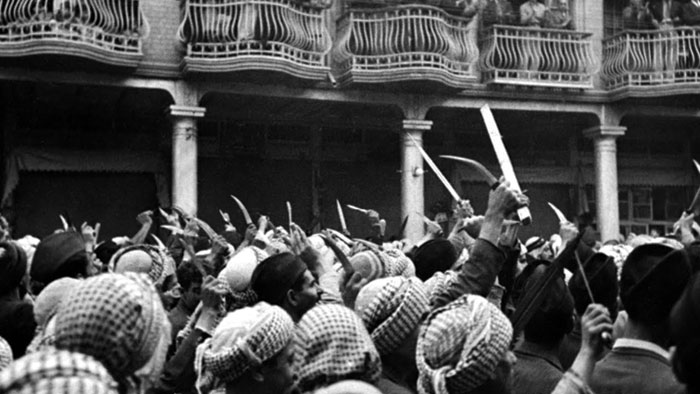
The Farhud (“pogrom” in Arabic) occurred in Baghdad during the Jewish holiday of Shavuot. Muslim Iraqi mobs screamed “Cutal al yehud” (“Slaughter the Jews!”) and butchered nearly 200 Jews (some estimate that number is closer to 1,000). Hundreds were raped; over 1,000 were injured and over 900 homes were destroyed. The Farhud was the closest Iraqi Jews came to experiencing their own mini version of a genocide. One thing is certain: Jews who survived the Farhud were traumatized for the rest of their lives. 

Shortly before the Farhud, assailants had compiled a list of Jewish homes and businesses. Jewish leaders begged local authorities for mercy, but to no avail. Jews were beheaded; Jewish babies were slaughtered (some Jewish family threw their babies over rooftops, hoping they would be caught in blankets below to save them); murderers waived severed limbs and other body parts, including in one case, the breast of a young Jewish woman (who had been raped). Perpetrators raped Jewish girls at a local school. Six girls were actually abducted to a village nine miles away. 

Learning about the Farhud is not for those with weak stomachs. But here are some key facts about this dark moment in the history of Middle Eastern Jewry that everyone should know: 

Nazism Found An Enthusiastic Partner In Arab Nationalism

The Middle East and North Africa were an enormous hub of Nazi activity, and that included actual SS boots on the ground (particularly as far as Nazi masterminds who collaborated with Egyptian leaders were concerned). Many of us have seen the infamous 1941 photo of Palestinian leader Haj Amin al-Husseini, the Mufti of Jerusalem, in conversation with Adolf Hitler. 

Hundreds of Libyan Jews starved to death in Italian-controlled Libya during the Holocaust; most Jews in Cyrenaica were sent to the Jado concentration camp (250 kilometers south of Tripoli). Hundreds were sent to camps in Europe. The Nazis had a long-term strategy for the Middle East, and that included propagandizing Berlin as a friend of downtrodden Muslims everywhere. If they could successfully align with fanatics in the region, Nazi leaders surmised, they might convince jihadists to actually fight Germany’s enemies (beyond Jews). 

Before the Farhud, the Nazis began to broadcast Radio Berlin in Arabic throughout the Arab and Muslim world. Hitler’s “Mein Kampf” was not only translated into Arabic, but printed in a local Baghdad newspaper, thanks to Fritz Grobba, Germany’s charge d’affaires in Baghdad. In 1933, he bought Al-Alem Al Arabi (a Christian Iraqi paper) and published Arabic translations of “Mein Kampf” in installments. 

Whereas the Nazis had Hitler Youth (Hitlerjugend), Iraq created the Futtuwa, a pre-military youth movement that was active in the 1930s and 1940s. These youth attended the Nazi rally in Nuremberg in 1938; when they returned home, they popularized a chant in Arabic: “Long live Hitler, the killer of insects and Jews.”

For further information on Nazi activity in the Middle East, I recommend reading “Nazis, Islamists, and the Making of the Modern Middle East” by Barry Rubin and Wolfgang G. Schwanitz (Yale University Press, 2014). 

Where There’s Anti-Zionism, Jews Will Always Be Killed

I’m particularly fascinated by one aspect of the Farhud that’s worth sharing: In 1941, seven years before the establishment of the modern State of Israel (which antisemites continue to use as justification for isolating, defaming and attacking Jews today), Muslim Iraqis who led the pogroms accused Iraqi Jews of being Zionist sympathizers in the conflict between Jews and Arabs in then-Mandatory Palestine. They also accused Iraqi Jews of working with the British in colonizing Iraq. Does any of this sound familiar? I’m reminded of post-revolutionary Iran (1979-today), whose regime identifies Zionism as a capital offense. Maybe that’s why every few months, there’s a story about a Jewish leader in Iran denouncing Israel publicly or “proudly” attending an anti-Israel rally. 

Here’s the worst part about Iraq’s history of violent antisemitism today: Whereas other Arab countries, including the former behemoth of Arab nationalism, Egypt, have made peace with Israel, two weeks ago, Iraq’s Parliament passed a law criminalizing relations with “the Zionist entity.” Anyone who violates this new law, including businessmen, faces life imprisonment or even the death sentence. The government said it was only reflecting the will of the people. Hundreds gathered in Tahrir Square (yes, it shares its name with the famous Tahrir Square from Egypt’s 2011 revolution) in central Baghdad to celebrate the passing of the law. 

How’s that for progress 81 years after the country shamefully allowed for the mass slaughter of its ancient Jewish population in Baghdad? Even the regime in Iran had the decency to criminalize Zionism over 40 years ago, rather than today. 

For The Last Time, Jews Are Not White.

I can nearly guarantee that certain American celebrities who believe that the Holocaust was a “white-on-white” crime don’t know that Nazism spread its hideous tentacles throughout the Middle East.

I can nearly guarantee that certain American celebrities who believe that the Holocaust was a “white-on-white crime” don’t know that Nazism spread its hideous tentacles throughout the Middle East. I’ve also never believed that Jews are white (if that’s the case, why are we the target of white supremacists?), but I challenge anyone who weaponizes race against Jews by calling us white and privileged to see photos of brown-skinned Iraqi Jews running out of their destroyed homes in 1941 and screaming in horror, and to tell me that these Jews are white (or privileged). 

And then, there’s the deeply offensive and untruthful argument that Israel ethnically-cleanses Palestinians. Do you know which once-thriving Jewish population was actually driven out — completely — from the Arab Middle East? Iraqi Jews. And if you want to get technical, Libyan Jews. And Syrian Jews. And Yemenite Jews.

Three to five Jews remain in Iraq, from a former population of over 135,000 before the Farhud (including 90,000 who lived in Baghdad). Forty or so Jews remain in Syria; while six Jews are still in Yemen. These are estimates and some of the numbers might actually be smaller. 

Not a single Jew remains in Libya. I’m not a mathematician, but something about that wreaks of ethnic cleansing. 

Anyone who knows even minimally about Jewish history knows that modern-day Iraq was one of the most important epicenters of Jewish learning. The Babylonian Talmud was completed there, and Jews have had a continuous presence in the region since they were brought there as captives after the Babylonians conquered the Kingdom of Judea in the sixth-century BCE. That means that for nearly 3,000 years, Jews lived in present-day Iraq. Again, only three to five Jews remain there today.

The Farhud not only marked the beginning of a mass exodus of Iraqi Jews from the country, but tragically, it also marked the end of an ancient Jewish community. 

The Farhud not only marked the beginning of a mass exodus of Iraqi Jews from the country, but tragically, it also marked the end of an ancient Jewish community. 

I shouldn’t have been surprised that my Israeli friends had not heard of the Farhud. A recent poll found that half of Israelis that were polled knew about Kristallnacht; only seven percent had ever heard of the Farhud. That, in itself, is another tragedy. 

For more information on the Farhud, read Edwin Black’s “The Farhud — Roots of the Arab-Nazi Alliance in the Holocaust” (Dialog Press, 2010).


Tabby Refael is a Los Angeles-based writer, speaker, and civic action activist. Follow her on Twitter @TabbyRefael

Have You Ever Heard of the Farhud? Read More »