
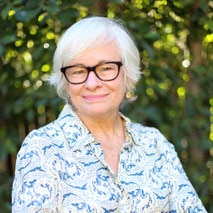

Mine was never a perfect body. Boyish before gender fluidity was a thing, my teen years were spent waiting for breasts to appear, while skipping desserts so that my waist didn’t balloon into the inevitable size 12 that was my destiny, judging by my DNA. In the 1960s, I was that girl who did not fling off her top at Woodstock to frolic in the mud. Instead I went home early to unwind and take a bath.
Between my small breast size, a tummy that refused to lie flat and hair that frizzed, public nudity and all forms of moisture were my natural enemies. As a result of those insecurities, I didn’t really learn to swim when the other, less neurotic kids, got in the pool. By adolescence, I always had my period when it was time to swim—a legitimate excuse at Jewish summer camps no matter the frequency. I couldn’t handle the thought that all eyes would be focused on my total lack of cleavage instead of my perfect back stroke.
I finally gave up on perfecting my looks at about 50. Between a freelance career and contending with my husband’s mid-life crisis, I had more than enough to worry about at that point. I hired a teacher and learned how to swim properly in a friend’s backyard pool. Thanks to a kind instructor who believed in praise, within a few weeks I was slicing through the water mindlessly. My new passion was so powerful that concerns about my hair and the age spots on my now stylish small chest melted away.
By the time I was putting on miles in public pools, sexy swimsuits were out of the question. To swim efficiently I pulled on a structureless black Speedo, scrunched my graying hair into a hideous neon swim cap, and donned insect-like iridescent goggles that wore the raccoon circles around my eyes into permanent grooves. At last I started showering with strangers—an exposure that had terrified me in the past.
It was not that I stopped caring about my looks past a certain age. It was more that I stopped caring about what everyone else was thinking about my looks. After all, this is Los Angeles. Exactly no one was appraising my looks inside or outside the pool anymore. I’m sure of it. As the driver explained a few years ago after he hit me with his car, “I didn’t see you.”
There is a liberation that comes with no longer caring about the male or female gaze. The irony is that it came so late in my own life that I regret not enjoying my beauty and my freedom earlier.
There is a liberation that comes with no longer caring about the male or female gaze. The irony is that it came so late in my own life that I regret not enjoying my beauty and my freedom earlier.
Now that I am unself-conscious enough to swim in public pools and get naked in locker rooms here is what I can report: There are bronzed high school and college athletes with the longest legs on the planet; women my age who do full makeup and hair after a swim; scars across bellies and breasts that speak of battles won and sleepless nights; random stomachs that sag and butts that stay perky. There’s the high-pitched screech of girls meeting after a summer apart and women, even older than myself, leaning on walkers as they change out of their muumuus for water aerobics.
Of course, there are loads of adorable screaming babies enduring a hell of their own. The other day, as I pulled on my granny pants next to the tiniest little girl dressed in nothing but her swim diaper and tiny barrettes, I couldn’t help but wonder what was going through her fresh new mind. As she stared at me in wonderment, I felt like saying:
“Don’t worry, kid. This saggy, spotty thing won’t happen to you for a long, long time. In the meantime, get in there and get wet.” Don’t waste a minute.
Los Angeles food writer Helene Siegel is the author of 40 cookbooks, including the “Totally Cookbook” series and “Pure Chocolate.” She runs the Pastry Session blog.

































