
“Can I wear my bat mitzvah party dress to Stanley’s funeral?” my daughter Hannah asked me. “Otherwise, I won’t get a chance to wear it,” she explained.
Stanley is a family member in Miami who passed away last week after seven weeks on a ventilator with Covid-19. We attended his funeral by Zoom.
Hannah’s bat mitzvah took place in March at the last open synagogue in Los Angeles the day before it closed. The next day, the venue closed; the party was canceled. Hannah knows she won’t have a party until it’s safe to do so – until a vaccine is developed and we are all vaccinated. Therefore, the party will most likely be a Quinceanera or a Sweet Sixteen party, by which time she will have outgrown the navy blue dress we bought for her bat mitzvah party that she never got to wear. With all joyful gatherings canceled for the foreseeable future, Hannah has no occasion to wear the dress, so she wore it to the Zoom funeral.
Hannah’s question encapsulated the sorrow of this period of time. I sure wish she had been able to dance in that dress at her bat mitzvah party instead of wearing it in front of the screen at Stanley’s zoom funeral. The Coronavirus stole that simchah (celebration) from our family and replaced it with a long ordeal of Stanley’s illness and later his funeral. On Memorial Day, as we remembered those who died in the Armed Forces, I also remembered Stanley and all those who have died in this war with the Coronavirus.
We now enter the holiday Shavuot, when the Torah was given on Mount Sinai – the joyful pinnacle of the Jewish year toward which we’ve been counting the days for seven weeks since Passover. But it sure is hard to find joy as we walk through the valley of the shadow of death.
At Mount Sinai, when God gave the first two commandments, God spoke in the singular. The rabbis asked: Why did God speak in the singular when speaking to a crowd of 600,000 people. A collection of interpretations called the Mekhilta explained that God spoke in the singular because the people had “lev echad” – one heart. Even though each person, was separate, since they had one collective heart, they could be spoken to as one.
Perhaps that’s the Torah of these times. With all this isolation, we are still one heart – even if that heart is breaking.
I thought of that teaching as I watched the Zoom funeral of Cousin Stanley with family members and friends from all over the world gathered in boxes on the screen. We were more isolated than ever – since we couldn’t fly to gather in person. We couldn’t give hugs to the immediate family at the gravesite. But somehow still, we were of one heart.
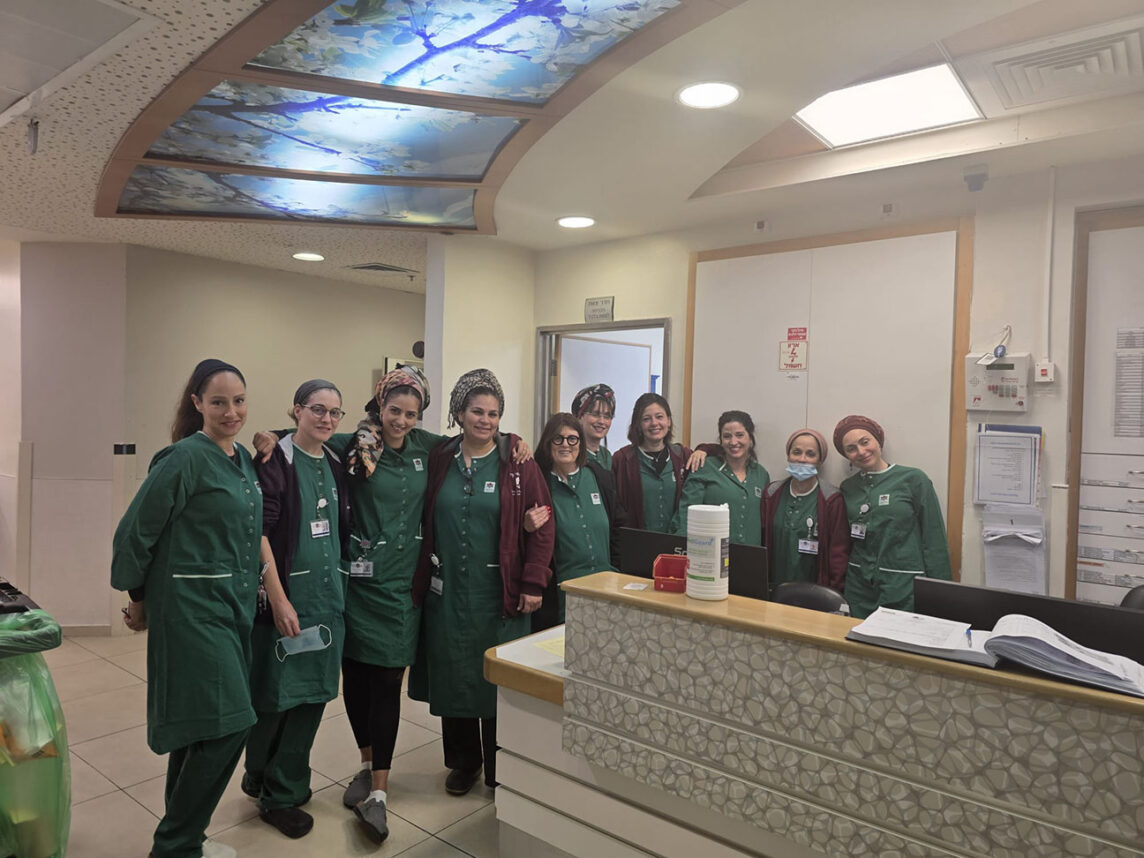
On Sunday morning, I attended by Zoom the graduation of my Cousin, now Dr. Rose Bayer, from Medical school at the Ben Gurion University of the Negev in Beer Sheva. At the medical school graduation, they talked about the challenges of becoming a doctor in this time of pandemic and the work being done to combat the disease. How poignant that I watched in Los Angeles, as my aunt Laurie, Rose’s mom, who recently recovered from Covid-19 under Rose’s care and my Uncle Ronnie, watched the graduation in Connecticut while other family watched from all over the world. Then later in the afternoon, I officiated at the Shivah of my cousin Stanley in Miami who died of Covid-19. I missed being there in person to hug my family, and yet how remarkable that I could attend both events in one day without even leaving my home.
Perhaps that’s the Torah of these times. With all this isolation, we are still one heart – even if that heart is breaking. Although we can’t express our love physically, the love is still there nonetheless. I’ll take simchahs over sorrows any day, but whatever life brings, we’ll be there together – same station, same heart, same dress.
Rabbi Ilana B. Grinblat is the vice president of community engagement for the Board of Rabbis.