
“When Adar begins, joy increases.” But not at the Kotel.
I was there for Rosh Chodesh to celebrate with Women of the Wall (WOW) on its 30th anniversary. Over the years I’ve prayed with WOW whenever I am in Jerusalem on Rosh Chodesh. Being with friends, praying out loud, is meaningful and normal for me.
But after Friday morning I wonder what “normal” means.
Last week, Jerusalem was plastered with billboards:
“Keep the Kotel Normal.”
Some excerpts, roughly translated:
“For 30 years the Reformim have desecrated the holiness of the Kotel. A handful of women create provocations for recognition in a movement that encourages assimilation. Our struggle is not just about the Kotel; their next targets will be conversion, marriage, kashrut and other religious issues. This a struggle about the Jewish character of the state of the Jews. Friday these women will celebrate 30 years of activity. They intend to bring a thousand people to the Kotel, causing damage to generations. The only way to protect prayer conducted according to halachah is if thousands of Jews come to the Kotel this Friday.”
Thousands of ultra-Orthodox students, teenaged boys and girls, were bused in, making it impossible for the more than 500 women who came with WOW to pray. We were spit on, pushed and, in several cases, physically assaulted. Some of the women had panic attacks; it is a miracle that no one was trampled to death. But even more terrifying, and ultimately more tragic, was the hate in the faces of these ultra-Orthodox girls. They were indiscriminant about whom they shoved, including several older women, one of whom is a famous Orthodox scholar. Our more than 200 male supporters also were harassed. It was clear we were in danger, with the police unwilling or unable to keep us safe. So for the first time in 30 years we stopped midway during our prayer and with great difficultly worked our way toward Robinson’s Arch, where we completed the service.
Keep the Kotel normal. Is this what “normal” will look like?
“What is provocative about wanting to pray at the Kotel?”
Why are these ultra-Orthodox rabbis so fearful of “a handful of women” that they brought busloads of young religious students to stop us from praying? It had to cost a lot to bring buses and coordinate this campaign. Who actually paid? Was this outpouring intended to send a message before the elections? How dare the police blame WOW for provocation? What is provocative about wanting to pray at the Kotel? Especially now, when, after all those years, the right of women to pray out loud wearing tallit and tefillin has been affirmed by the courts.
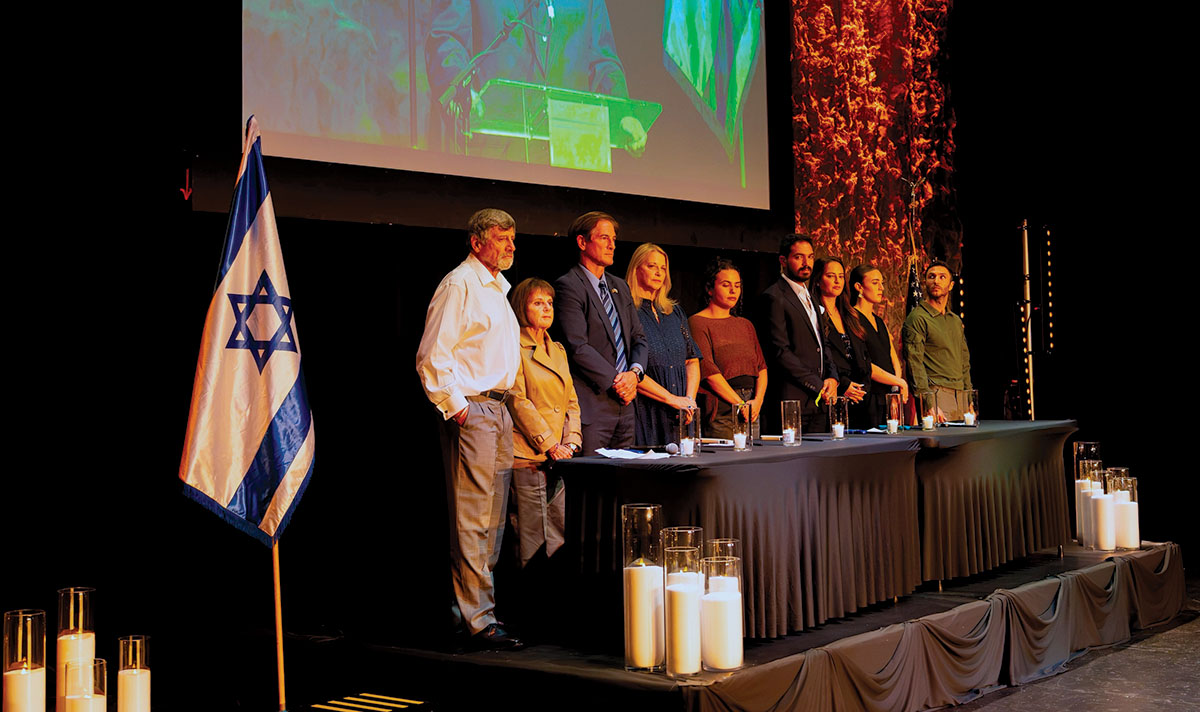
In contrast to the Friday experience, the evening before was celebratory. One of the tributes was a video from former chair of the Jewish Agency Natan Sharansky, who said: “The compromise we negotiated in 2016 will eventually be implemented. It is only a matter of time.” Another highlight was WOW’s honoring the paratroopers of 1967. As they received their award, one said: “This award should go to you. We captured the Wall and then we gave the keys over to generals who gave the keys to one of the most extreme factions in Israel. We didn’t liberate the Kotel. It is still a prisoner. You are the paratroopers who will liberate the Kotel.”
This anniversary is a testimony to how much we’ve accomplished in 30 years. First, we have put the issue of religious pluralism at the center of the Jewish conversation. Second, our persistence and our willingness to compromise has brought us close to our goal. Leaders of many of the major parties in Israel (except Likud) responded to the events with a commitment to implement the Kotel Compromise negotiated in 2016 but later frozen by the government under ultra-Orthodox pressure. Third, on March 6, the attorney general clarified in a precedent setting letter to the Rabbi of the Wall: “Your claim that women’s prayer with a cantor is not in accordance with local custom is
not correct.”
In other words, the way Women of the Wall want to pray is in accordance with “local custom,” i.e. normal.
May the time come soon when “normal’ means there is more than one way to be a Jew and there is room for everyone at the Kotel. Then joy will really increase.
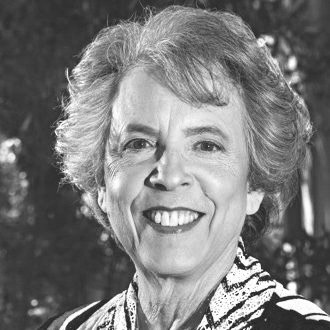
Laura Geller is Rabbi Emerita at Temple Emanuel of Beverly Hills.