


At the beginning of summer, life changed in the Upper East Side apartment I share with my 9-year-old son, Alexander. Although it was a positive change, a change I’ve been wanting for years, it was still fairly dramatic for him.
I promised Alexander all sorts of things to help make the transition easier. “We’re going to finish decorating,” I told him. “And we’re going to make it beasal” — a word he uses to mean uber-cool. “We’re finally going to get a puppy. And we’re going to make this into a party apartment — with all of your friends coming over and hanging out.”
During a thorough apartment detox, I came across a small tile that the super had found behind the stove. The tile was sky blue, engraved with Arabic calligraphy. Though I had no idea what it said, it was too beautiful to throw away. I set it aside on the kitchen counter and prayed it said something positive.
Meanwhile, Alexander wasn’t dealing well with the transition. His anger and sadness made me sadder than I had ever been — how could I hurt my son? — even though I knew that it was all for the best. When he escaped to a gorgeous camp in Westchester every day, I tried to make the apartment more beasal for his return.
Weekends were hardest for him. Most of his friends had gone to sleepaway camps. We took trips, but the thing that helped us the most was a Saturday afternoon basketball class in Central Park run by Ameen, a sheikh at the local mosque. The weekly class allowed Alexander to be challenged by boys much older, and he gained new confidence.
Ameen and I would sit and watch the boys play — an array of ethnic diversity amid the natural diversity of the park. Each week, Ameen looked into my eyes as though he was examining the health of my soul. He knew exactly what to say to calm me and to make Alexander glow.
School started, and with it Alexander became more sensitive and vulnerable again. I tried to compensate by having over a steady stream of his friends. But that wasn’t always comforting. Kids can say mean things, most often when they don’t know what to say.
On Yom Kippur, after returning from services, we heard a faint knock on the door. “Hi, I’m Waseif from Yemen,” a strikingly beautiful woman said. “We moved in next door. In my culture we bring food to our new neighbors.” Before I had a chance to say, “So do we,” Waseif handed me a box of cookies. Then her 14-year-old son, Reese, came to the door and said hey to Alexander; soon her daughter, Anaya, a 7-year-old firecracker, waltzed in. Two puppies followed.
“On Simchat Torah, we bless the movement, the transition, the essential cycle of life — one door closes and another one opens.”
Suddenly, our apartment was filled with warmth, light and joy. The boys bonded over technology; Anaya entertained us with her gymnastic moves; and Waseif and I talked as though we had known each other our entire lives.
Then I remembered the tile.
“Please,” I asked Waseif, “what does this mean? I found it here, in the kitchen, after my ex-husband moved out.” Tears welled in her eyes. “Baraka,” she said. “It means blessing…. Like your B’racha.”
Stunned, I had to verify this with my Egyptian friend, Marwa. She confirmed it and added: “We have a saying: ‘Al Haraka Baraka. In movement there is blessing.’ ”
For the next few days, there was a lot of movement between our apartments. Waseif taught me how to apply makeup “like Cleopatra.” Alexander gave Anaya some of his stuffed animals. Reese helped me fix a bed issue.
We finally came full circle with a challah sandwich. Alexander is hard to please for packed lunches, but I recently had made him a challah and turkey sandwich that was a big hit. I was making him another when Reese asked for one too.
“Have you ever had challah?” I asked. He shook his head, shyly. “Well, you don’t have to eat it if you don’t like it.” He loved it.
There is, indeed, blessing in movement, in finding peace and serenity in unexpected places, in opening our hearts and souls to let in light.
On Simchat Torah, we bless the movement, the transition, the essential cycle of life — one door closes and another one opens. But we only find it, as Waseif said, when we are ready to see it.
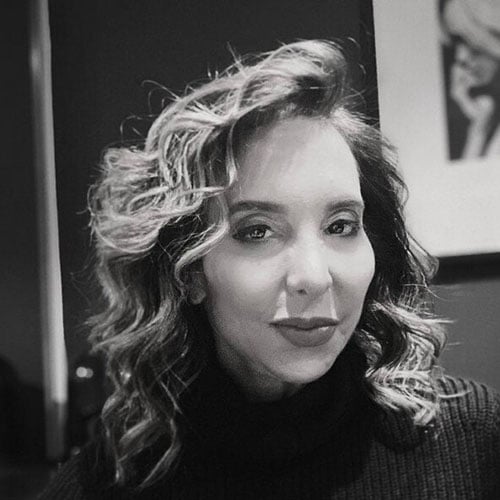
Karen Lehrman Bloch is an author and cultural critic living in New York City.

































