
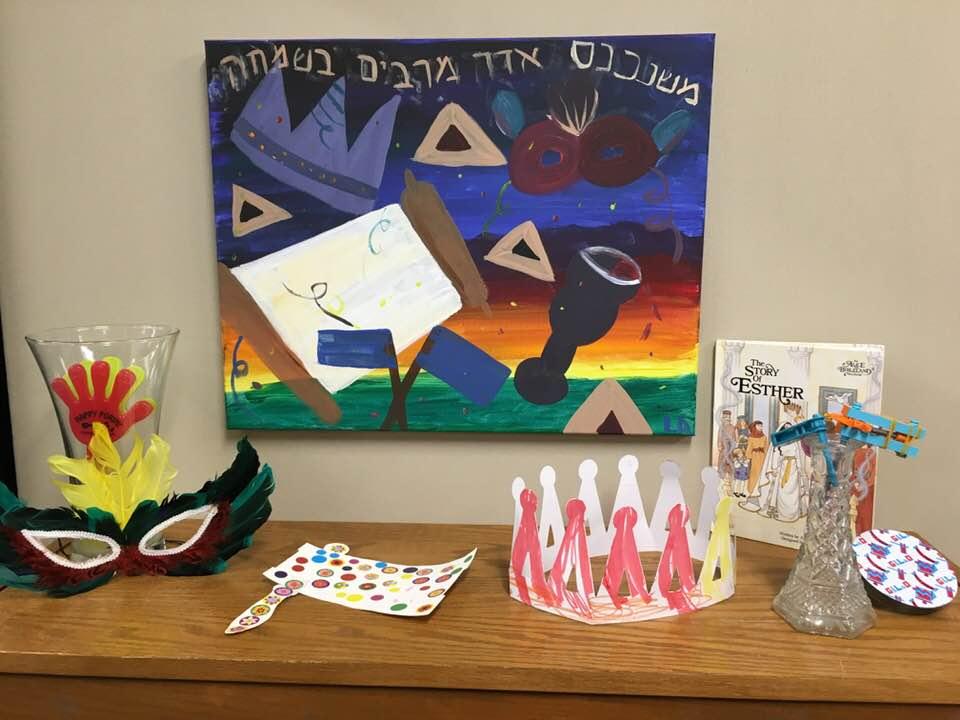
A wise biblical literature professor of mine frequently reminded us, “If anyone ever read this, they’d ban it.” It is both a hilarious and poignant statement that I find myself thinking about as I get ready for my favorite holiday of the year, Purim. Like most Jewish kids, I grew up with the pretty tame Purim story, usually acted out by the synagogue clergy and staff in a schmaltzy shpiel. As I grew older I eventually read “The Whole Megillah” and understood not only the meaning of that phrase, but how the Book of Esther is anything but tame.
Let us start with the most obvious—King Ahasuerus was an idiot who partied too much. Three years into his reign, he threw a party for his servants for one hundred and eighty days and then another one the people of Shushan for a week after that (Esther 1:4-5). Essentially, he partied for six months and did so while his showing off his gold and silver. As if that was not enough, he then orders Vashti to come before his friends so he can show off how beautiful a queen he has. What exactly is meant by her refusal to “show the peoples and the princes her beauty” (1:11), as well as her being banished from the kingdom, are matters of numerous interpretation, but she clearly stood up for herself and refused to be made a mockery by blindly obeying her husband. A feminist way ahead of her time! Why then is Vashti not regarded with the same heroism as Esther? Did I miss that part of the shpiel?!?!
One could argue that Ahasuerus was merely drunk or living as a king would in that time period, but then along comes Haman (shake those groggers!) and Ahasuerus’ blind approval to annihilate the Jewish people (chapter 3). Unlike Vashti, Ahasuerus does what he is told without a second thought. So not only should we be celebrating Vashti (and Esther, of course!), but we should also remind ourselves to NOT be like Ahasuerus, showing off our wealth, expecting others to blindly do what we tell them and in return, not participating in something without stopping to truly understand what it is we are doing. To say nothing of the later violence and commentary about the sexual innuendos regarding what happened when Esther appeared before the King. This is obviously not a part of Jewish education for young children!
To be fair, children should probably not be taught the “Whole Megillah” as described above. However, I do believe there are critical messages all ages can get from the story of Purim:
- Stand up for what you believe is right. Whether it is protecting your individual honor and dignity (Vashti) or that of your people (Esther) or just not standing idly by while someone else is made to suffer (don’t be like Ahasuerus!), be like the two feminine heroines of the story.
- Be proud of who you are. Being a minority is difficult, but we should all remember the strength of Esther, Moses, Judah Maccabee and Jewish martyrs throughout history who embraced their Judaism and gave us the freedom to put on those ridiculous costumes we will wear tonight.
- A recent article from the Jewish Telegraphic Agency (JTA) also parallels Esther’s coming out as a Jew to those in the LGBTQ community. The costumes serve as a metaphor for hiding one’s true identity with the hope that after the holiday is over, they will be shed and one’s true identity will be unmasked.
Finally, I would be remiss if I did not note that tomorrow is also a joyous holiday for our Hindu friends, Holi. While sharing a calendar date, it is also remarkable how much these two holidays share in common. Like Purim, Holi celebrates the victory of good over evil and is celebrated with great joy (colors and bonfires). It is a celebration of spring and a time to relax and be with friends.
So as those in the Jewish and Hindu communities celebrate tonight and tomorrow, I think it is important to continually note we are more alike than different and all can come together to celebrate the good in the world. It sure is a lesson we all need now, no matter how old or how young we are.
Hag Sameach!
Lisa Rothstein Goldberg is a social worker and Jewish educator, currently working at Ivy Tech Community College in Sellersburg, Indiana. She and her husband, Matt, JCRC Director in Louisville, live in Louisville with their two young daughters.