December brings the annual heartfelt and heated Christmas/ Chanukah–dilemma conversations. In my 30 years as congregational rabbi, I convened many meetings about “>St. Nick’s and the “> Belgium.
Chanukah’s Money
Money and Chanukah go way back. In ancient Israel striking, minting, and distributing coins expressed Chanukah’s message of freedom. After the rededication of the ancient Jerusalem Temple, Syria’s King “>Simon Maccabee, “I turn over to you the right to make your own stamp for coinage for your country” (“>Ba’al Shem Tov (1698–1760), rabbis often traveled to distant villages to give instruction to impoverished and illiterate Jews, generally refusing payment. However, at Chanukah, the instructors accepted coins and food as tokens of gratitude. Chanukah gelt paid for Jewish education.
St. Nick’s Coins Save Family
I realized that the St. Nicholas tradition we happened upon in chocolate-suffused Belgium may explain Chanukah gelt, or the other way around. As we savored Belgium, we learned that St. Nicholas, the patron saint of sweets, journeyed distances to reward children with gold-covered chocolate coins. The festival associated with his birthday, December 6, 270 (approximately), has been relished in Western Europe since the thirteenth century. One of the several St. Nicholas Golden Legend miracle stories, written in 1275 by “>Genoa, records that Nicholas tossed bags of gold coins to an impoverished father in order to provide his daughters with dowries, thus saving them from prostitution. Today, rituals related to the celebration of the feast day of St. Nicholas in Belgium, the Netherlands, Germany, and the United States use gold-covered chocolate, geld. Youngsters collect chocolate coins from their shoes on the morning of December 6, following the previous night’s visit by St. Nicholas, or as the Dutch call him, Sinterklaas (later Santa Claus).
St. Nick’s geld surprisingly and sweetly flows right into Chanukah’s gelt. These Christian and Jewish golden coin stories, each originating from the Mediterranean area, each of them centuries old, each with inspiring accounts of courage and liberation, also indulge and nurture a love of chocolate. These Jewish and Christian customs may melt some of those December dilemmas on this fork of the chocolate trail.
****
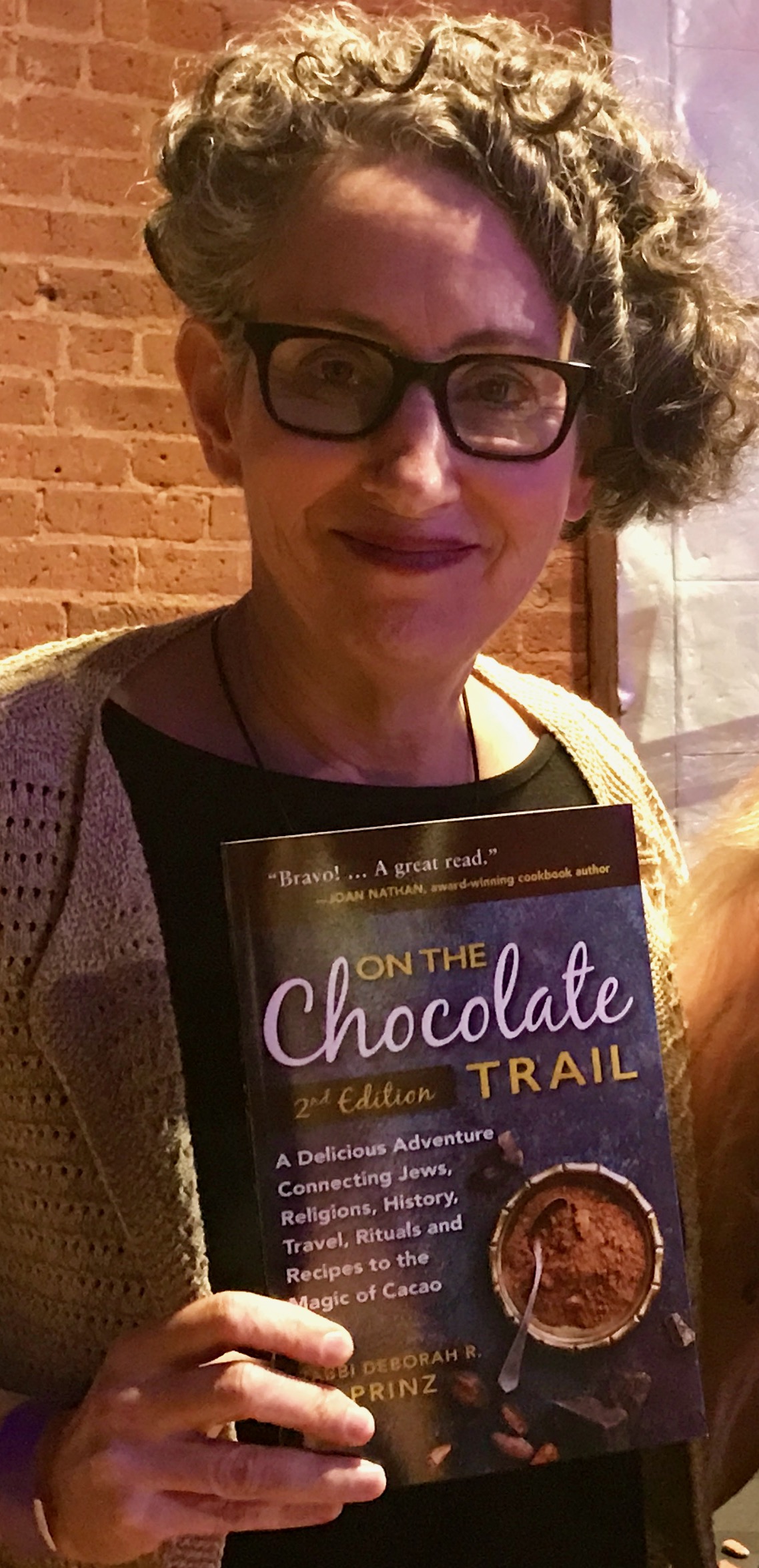
Rabbi Deborah R. Prinz’s book, On the Chocolate Trail: A Delicious Adventure Connecting Jews, Religions, History, Travel, Rituals and Recipes to the Magic of Cacao, published by Jewish Lights, makes a great Chanukah gift (bundle it with gelt). Used in adult study, school settings, book clubs and chocolate tastings, it also contains delicious recipes. Rabbi Prinz speaks around the world about chocolate and religion, including in the “>website.