Israeli cinema took center stage as the 38th Israel Film Festival in Los Angeles opened with a sold-out red-carpet gala at the Writers Guild Theater in Beverly Hills, bringing together Israeli filmmakers, actors, Hollywood figures and members of the local Jewish community.
The Nov. 18 festivities opened with welcoming remarks by Festival Founder and Executive Director Meir Fenigstein; Israel’s Consul General to the Pacific Southwest Modi Ephraim; Festival Chairman Alon Shtruzman; and Sharon Lieblein, director of entertainment at the Jewish National Fund-USA.
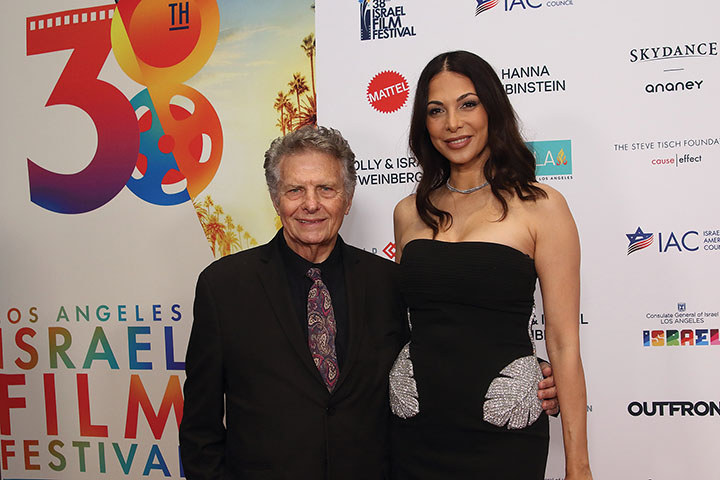
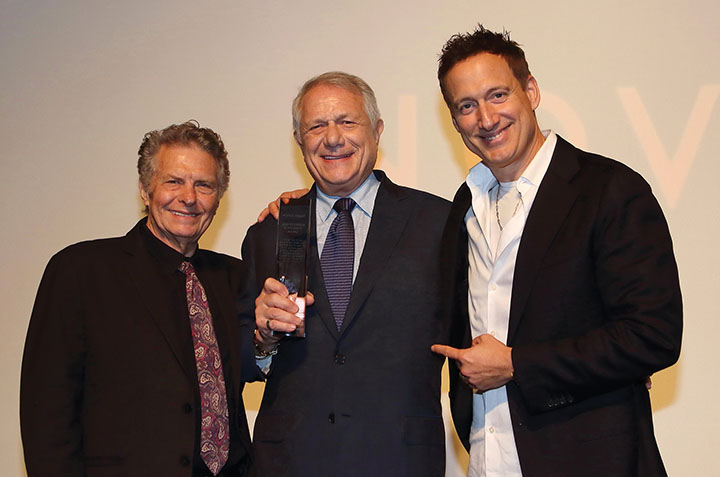
One of the evening’s highlights was the presentation of the 2026 Israel Film Festival Lifetime Achievement Award to United King Films CEO and Co-Founder Moshe Edery. Actor Moran Atias presented the award, which was accepted on Edery’s behalf by Albertino Matalon, co-founder of Screen iL.
Producer Kevin Bright, best known for his work on “Friends” and “The Bridge,” received the festival’s 2026 Career Achievement Award. Comedian Elon Gold presented the honor, recognizing Bright’s distinguished career in television and film.
The evening also featured the LA premiere of “Tell Me Everything,” written and directed by Moshe Rosenthal. The Israeli film, which won 10 Ophir Awards, Israel’s equivalent of the Academy Awards, was selected as Israel’s submission for Best International Feature Film at the 99th Academy Awards.
“One of the greatest joys of this festival and the reason I have been doing it for so many years is the opportunity to celebrate the incredible talent of Israeli filmmakers,” Fenigstein said during opening remarks. “Every film begins with a dream, a vision and the courage of telling a story, and tonight we have the good fortune of those extraordinary storytellers.”
Ephraim, who assumed his position as consul general in September, said he had witnessed the remarkable solidarity, passion and resilience of the Los Angeles creative community since taking office. He also highlighted Israel’s influence on the international entertainment industry, noting that despite its small size and the relatively small number of Hebrew speakers, Israeli storytelling has reached audiences around the world.
Bright, accepting his award, addressed the challenges facing Jewish artists and storytellers amid rising antisemitism. “Today in the face of growing antisemitism around the world I hope this occasion can be a rallying cry for Jewish storytellers everywhere,” he said. “Let’s tell stories about who we are in today’s world with all our differences, our humor and our dreams.”
Among the guests were actor Mike Burstyn, filmmakers Ruthy Pribar, Alon Gur Arye and Reut Akkerman and music producer David Fishof. They were treated to dishes catered by Simon Catering, featuring Moroccan cigars, burekas, skewers and an elaborate dessert table.
Comedian Sunda Croonquist served as master of ceremonies.
By Ayala Or-El, Contributing Writer
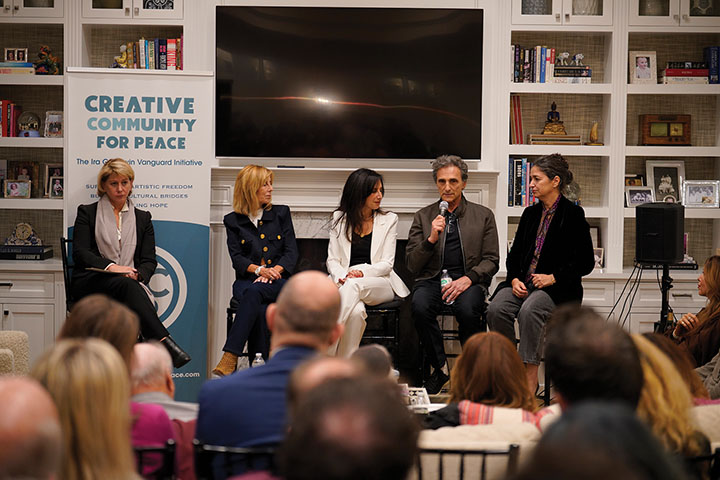
On Nov. 16, filmmakers Nancy Spielberg, Wendy Sachs, Lawrence Bender and Roni Aboulafia gathered before an intimate crowd in a private home in Encino and looked at recent documentaries that have been sharply critical of Israel while gaining prominence at major festivals and award ceremonies. Among the films discussed was “NAZA,” a controversial documentary directed by two Israelis that spotlights Israeli military targeting systems and accuses the IDF of pursuing reckless strategies that caused unnecessary civilian casualties in Gaza.
The discussion, moderated by TheWrap Founder and Editor-in-Chief Sharon Waxman, was part of a Creative Community for Peace’s (CCFP) panel examining “The Ethics of the Edit: Truth, Context and Israel in Documentary Film.” It was the latest gathering of CCFP’s Ira Gershwin Vanguard Initiative.
During the discussion, the panelists questioned whether films like “NAZA” meet the standards of verification, corroboration and context that nonfiction filmmaking demands, where documentary journalism ends and advocacy begins and what responsibility festivals, critics and award bodies carry when they elevate this work. They also discussed the pressures on Israel’s own documentary industry, from financing and co-productions to festival access, distribution and what Waxman described as “essentially an unspoken boycott on Israeli films rights now.”
Sachs – whose 2025 documentary film “October 8” explored the rise of antisemitism on college campuses, social media and city streets following the Hamas-led Oct. 7, 2023, attack – spoke about the challenges she faced in trying to get her film seen. She told a story of submitting her film to an East Coast-based festival only to be rejected because, as a festival curator later confided, the film’s politics didn’t gel with the event organizers’ beliefs.
Amidst an arts world brimming with anti-Israel bias, Sachs called on Jewish philanthropic dollars to increase support for entertainment and cultural projects that present Israel and Judaism in a more nuanced and sophisticated way.