My girlfriend "E" was the first to declare what others had been observing for a while.
"God sure is having a good laugh," she said. "You write a column called ‘A Woman’s Voice.’ And yet you have no voice."
The irony had crossed my mind.
Lance Armstrong, the bicyclist, had testicular cancer. Beverly Sills, the opera singer, has two daughters who are deaf. Is there "meaning" in the fact that I, who have for some years traveled the country public speaking, and whose professional identity is hung up on the moniker of this column, cannot be heard?
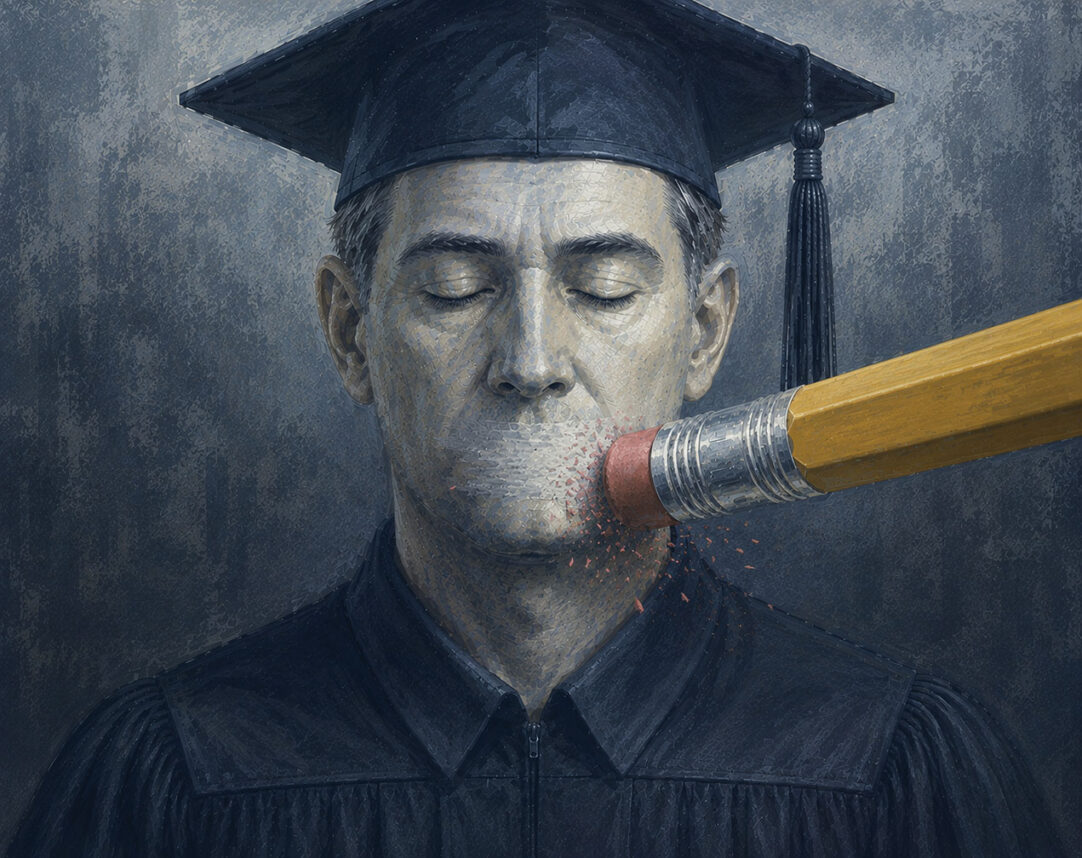
I haven’t had a speaking voice in more than a month. I whisper, a frog croaking through the bulrushes.
My right vocal cord is paralyzed. While speaking, which I assure you doesn’t hurt, I puff like I’m running a marathon. I take an hour to eat scrambled eggs.
Still, if you ask me, God has nothing to do with it.
The loss of a voice carries a surprising spiritual threat: friends act as if some crucial part of me were gone. Inside my head, I still yammer away, brilliant on the topics of WorldCom, ImClone and Israel. But when I open my mouth, I become like Hannah before the Tabernacle. My every chortle and grimace is subject to misinterpretation.
The phone rings. The caller is disoriented: Who am I? I rush to reassure them: I’m OK. I feel fine. When I had chemotherapy, I continued to sound like myself. I would call my parents in New York right after treatment ended. Sitting tall, I was convincingly strong and congruent.
These days, without a voice, identity is not so much gone as taken on faith. I have faith that the situation is only temporary. My community has faith that I’ll be restored to myself, New York accent and all.
We are known by how we sound. Sound — our laugh, our cry, the song we hum — is the beginning of identity.
We know that God stands watch at night by the natural and unnatural sounds of the universe: the roar of the wind, the bray of the ass, the bark of a dog, the sound of a baby’s cry.
I listen for God’s comfort at night, and offer the silence of praise.
But is God laughing?
Judaism has struggled since the Holocaust to remove God from the nation’s "Most Wanted" list — the "intervening punisher God" with a wicked sense of humor.
As for you and me, the good people that bad things happen to, we’re our own worst enemy: we keep asking "Why?" as if there’s an answer. We remain committed to a God who can’t wait to pull the tablecloth out from under us.
We seek out "God the sadistic entertainer" when all other explanations fail. Lacking all other reasons, we fall back to a punitive concept, that we deserve punishment; that perhaps God never liked us to begin with.
But illness has shown me another God, one of comfort. The "loathsome trickster God" offers nothing, not even to say, "I don’t know."
There is no reason why this has happened. Life is inherently unpredictable. Diseases, like lung cancer, have more ups and downs than a soap opera. Like "Anna Karenina" you laugh or cry, and sometimes both.
It’s funny, at least to me, that since losing my voice, I can’t interrupt anyone, not even to tell a joke. I have learned to listen to news reports rather than comment on the haircut of the newscaster. Now that I listen to conversation, I’m no longer the smartest person in any room, so far as you could tell.
The condition won’t last forever. Soon, I’ll have a silicon implant that has nothing to do with breast enhancement. I’m told it will smooth out my vocal cord will restore my voice to normal. I’m saving my best repartee until then.
"Man plans and God laughs," is what we say in difficult times, as if God were Henny Youngman.
If so, God can find me right here.