All the Tenacity
in the World
Neglected by publishing and the press, author Robert AnthonySiegel is out pitching his funny first novel by himself
By Robert Eshman, Associate Editor
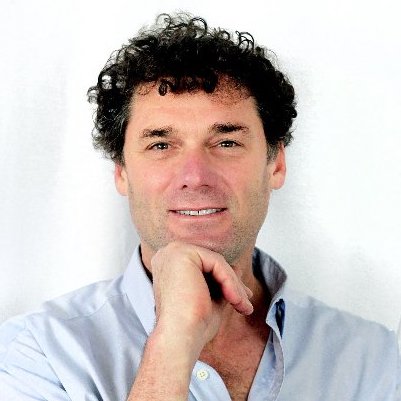
For Robert Anthony Siegel,April is indeed the cruelest month.Siegel’s first novel came out in April — that was kind. But so didnovels by Norman Mailer, Saul Bellow and Philip Roth. That was very,very cruel.
As book reviewers wrote fevered mini-tomes, dissecting the latestworks by the greats, and publishing-house publicity budgets emptiedto push Saints Norm, Saul and Phil, Siegel’s exceptionally funny andentertaining novel, “All the Money In the World,” received zeroattention.
It was as if the gods of Jewish literature decided to schlep downfrom their pantheon all at once just to crush poor Siegel. “It didn’thave a chance,” he says of his book.
There was a flattering one-paragraph mention in The New Yorker,but that was it. The big newspapers passed. Despite the novel’s TomWolfe-like characters and Elmore Leonardesque structure, Hollywooddidn’t come knocking. The book sold 3,000 copies from a printing of4,500. “Really, really stinky,” says Siegel, in a telephoneinterview. “Worse than a thin volume of avant-garde poetry. Itwouldn’t even register as a disaster.” The publisher told Siegel thatif he wanted publicity, he could pay for it himself.
And that’s what Siegel has done. Using connections and cold calls,he has pitched for book reviews and interviews, and has arrangedreadings in bookstores across the country. On Thursday, Aug. 28, at 7p.m., he will read at Dutton’s Brentwood Bookstore. What’s remarkableis that he doesn’t bemoan his fate as a victim of publishing’scontinuing abandonment of the unknown novelist. Getting published atall was a big enough break, he says. “All I really ever wanted to dois write.”
Siegel’s own life roughly parallels that of Jason Glasser, the sonof his novel’s protagonist. Born into a family of lawyers — hisfather is a Manhattan criminal defense attorney, his mother a lawyerfor the city government — Siegel attended Harvard, then went on topursue graduate studies at Tokyo University and the University ofIowa Writer’s Workshop.
Determined to be a novelist, he supported his habit with years ofodd and even odder jobs — selling office furniture to Japanesecorporations, leading Japanese tourists around Manhattan. When he hitbottom as a door-to-door salesman, his father hired him as aparalegal. The job put Siegel in contact with both the high rollersand lowlifes that populate the New York legal world, and he dulypopulated his book with them.
He thought that the too-complicated, over-the-top legal thrillersof John Grisham, Scott Turow, et. al. paled in comparison to the realthing. “They weren’t very thrilling,” Siegel says of the others’novels. “I realized nobody has ever talked about this world like Icould talk about it.”
But the characters who provide the book its emotional depth areJason Glasser’s family members, whom Siegel based loosely oninhabitants of his own family tree. In one of the book’s most vividpassages, a battered knot of these characters returns for alate-night cruise through the Lower East Side of their childhood.”It’s their roots, and it’s my roots,” says Siegel. “Their pastexplains their relationship to work, to money, to luxury and thequest for status.”
As to whether there’s any fact in the fictional character of LouGlasser, whose son watches him get convicted on criminal charges,Siegel takes the Fifth. “He’s had his ups and downs,” Siegel says ofhis father, Stanley, “but he’s still an attorney.”
In fact, Siegel says that his family was entirely supportive ofhis literary effort. He worked on his novel for four years beforelanding a publisher and then spent two years completing it.Meanwhile, his Harvard peers went on to their junior partnerships andWall Street jobs.
“I felt that desperation intensely,” says the 35-year-old author.”They’d go out to celebrate something, and I literally couldn’tafford to go.”
Siegel now works as an editor at State University of New York atStony Brook while he’s writing his next novel, which uses the worldof medicine for background.
Meanwhile, he keeps creating any opportunity he can to promote”All the Money in the World.” His reading at Dutton’snot-so-coincidentally coincides with another reason for his trip toLos Angeles: Three days after the reading, Siegel will marry novelistKaren Bender at a ceremony in Santa Monica.
Watching Father Fail
Our story begins with Lou Glasser. A successful criminal defenselawyer, Glasser is a man of great skill and large appetites. When wemeet him on the first page of Robert Anthony Siegel’s moving andentertaining first novel, “All the Money in the World” (Random House,$23), Glasser is eating the second of two breakfasts.
Not long afterward, the sixtysomething lawyer discovers that hislongtime client, a millionaire drug importer, has cut a deal withfederal attorneys, implicating Glasser.
As the lawyer’s life unravels, it is up to his Harvard-educatedson, Jason, to make sense of the catastrophe, to determine hisfather’s guilt or innocence, and to try to get on with his own life.
Ambiguity abounds: Maybe Lou Glasser is totally innocent, or maybenot. “Everybody gets a little dirty,” says Lou to his son, a littletoo-offhandedly. “You get splashed.”
The book is too much fun to give away. Suffice it to say that thepain of Glasser pere’s downward spiral is somehow soothed by theawareness and insight that it draws forth from Glasser fils. This isa coming-of-age story — Jason watches his father’s predicamentunfold like a hard-bitten morality tale. What he takes away is muchmore than his father ever learns.
To say that Siegel is not yet the equal of Tom Wolfe is only a wayof praising by faint damnation. From WASP lawyers to overachievingDA’s to Rocco Petruccio — a night-school-trained lawyer who dealt in”the bottom of the criminal status hierarchy…especiallyprostitutes, whom he handled like a wholesaler, giving pimpsdiscounts for volume” — Siegel comes as close as Wolfe did in”Bonfire of the Vanities” to capturing the petty competitions andmajor stakes of New York law.
The lessons of Jason’s Jewish forebears echo across these pages.Most painfully, there’s grandfather Morris, a bricklayer crushed bythe Depression who becomes a petty gambler, raising sons who haveeven greater yearnings and hardly more scruples. Toward the book’send, the three Glasser men — Lou, Jason and Uncle Eddy —