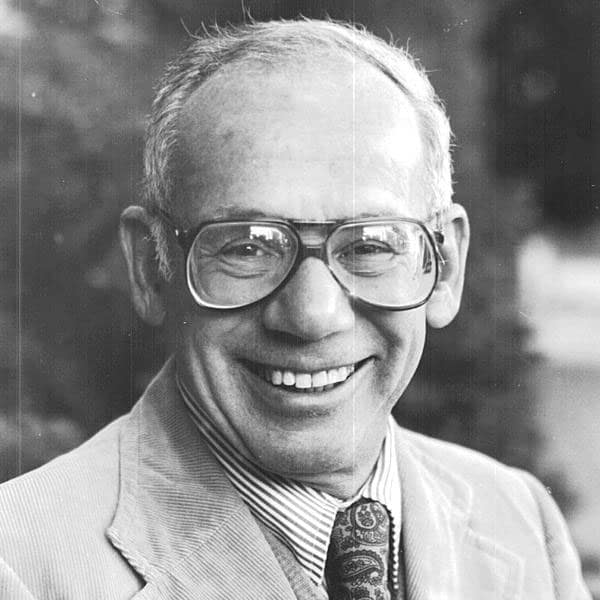
Dr. Barry MunitzDr. Barry Munitz, who started life in a “lower-middle-class” environment in Brooklyn, has been named president and chief executive officer of the $4.2 billion J. Paul Getty Trust.
As head of the world’s richest and most far-reaching foundation, Munitz sees his role as “the single most influential arts and humanities voice in the country,” he said.
With almost unlimited funds at his disposal, Munitz will be in charge of the $1 billion Getty Museum and Center — scheduled to open on Dec. 16 — and six institutes devoted to research, education, conservation, management, information technology and financial promotion in the arts and humanities.
Speaking from his office as chancellor of the 23-campus California State University system, Munitz said in a phone interview that he owed most of his outlook and career to “the heritage, humanistic values and passions” instilled in him in a Jewish home and neighborhood during the first 22 years of his life.
Recalling his childhood, Munitz said: “I was raised in a Conservative Jewish home, moderately kosher, and lower-middle-class.”
His father was a certified public accountant, and his grandparents on both sides emigrated to the United States from the Ukrainian city of Lvov.
Munitz, now 56, received his early education at Erasmus High School in Brooklyn and earned a bachelor’s degree in classic and comparative literature at Brooklyn College, then a predominantly Jewish and working-class commuter school.
After receiving his doctorate from Princeton, Munitz launched a career that has encompassed professional service in the public, corporate, cultural and educational sectors of American society.
In the field of higher education, he has been an instructor and administrator at UC Berkeley, the University of Illinois and the University of Houston.
In Houston, where he managed successive careers as university chancellor and a top-level business executive from 1976 to 1991, Munitz was an active board member of the local Anti-Defamation League chapter.
“Barry was one the best thinkers and wisest men I have ever come across,” said Tom Neumann, who served as the Houston ADL director during most of that period and is now executive director of the Jewish Institute for National Security Affairs in Washington. “Especially on issues of education and pluralism or when we dealt with conflicts, we always turned to Barry for insights and resolution.”
Neumann’s appraisal is echoed by David Lehrer, regional ADL director in Los Angeles. Although Munitz is not an ADL board member here, he has frequently participated in ADL-sponsored seminars and conferences focusing on education, affirmative action and black-Jewish relations.
“Barry is exceptionally bright, competent and thoughtful,” said Lehrer. “He doesn’t give the kind of pat answers we tend to hear from academic administrators.”
The encomiums heaped on Munitz have been so enthusiastic and universal that “they sounded like my obituary,” he said.
Munitz brings to his new position a philosophical perspective that he summarizes by saying, “In a society that is increasingly technical and uncivil and fragmented, there is a core of humanistic value that should be the adhesive.”
In the Getty post, which he will assume in early January, Munitz succeeds Jewish business executive and academic Harold M. Williams, a former chairman of the U.S. Securities and Exchange Commission.
Two of the finalists for the Getty presidency, mentioned in press reports, were Harvard University President Neil Rudenstein and California Institute of the Arts President Steven Lavine.